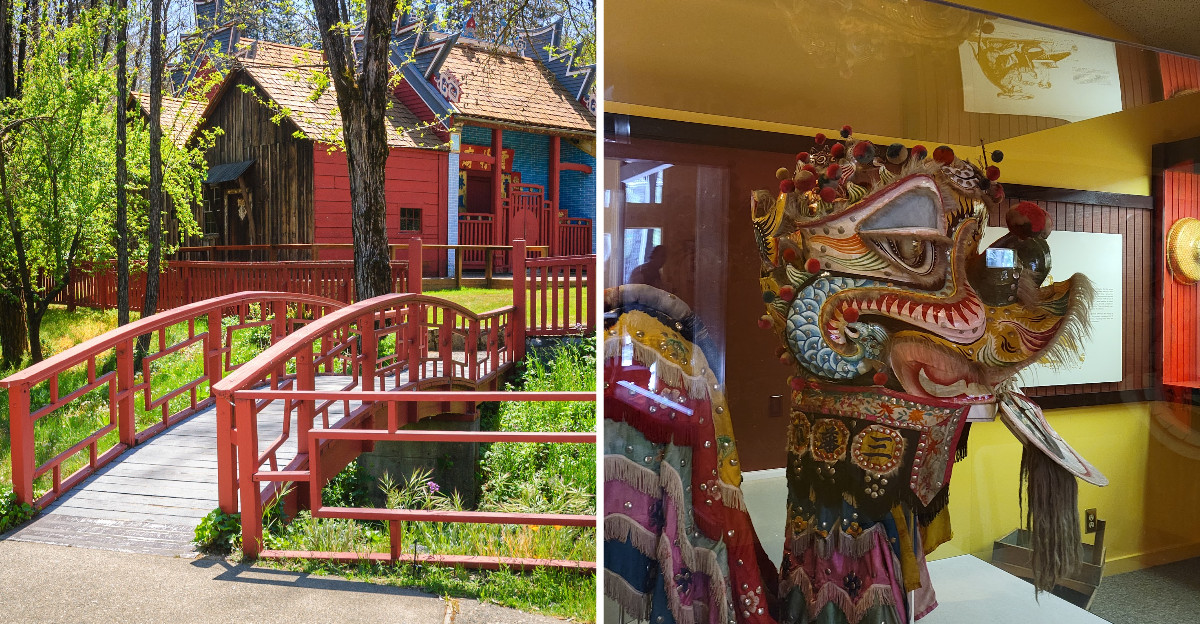
Incense drifting out an open door in a small mountain town stops you cold, and the smell is sweet and soft enough to pull you inside without a second thought. Bright blue paint marks a temple that sits quietly beside a creek, its color faded but still vivid against the pines.
I stepped through the door and found something that is not a museum piece frozen behind glass. Hand-painted banners hang from the walls, a carved altar shipped across the ocean more than a century ago rests in the corner, and the whole room carries the weight of prayers offered for generations.
People still come here to light incense, leave offerings, and mark the Lunar New Year with a lion dance that fills the street outside. The building dates back to the 1870s, but it never stopped being a place of worship.
Stepping back into the sunlight, the reason this is called living history becomes clear. Places like this preserve the past, and this one keeps it breathing.
California is lucky to have it.
The Temple of the Forest Beneath the Clouds
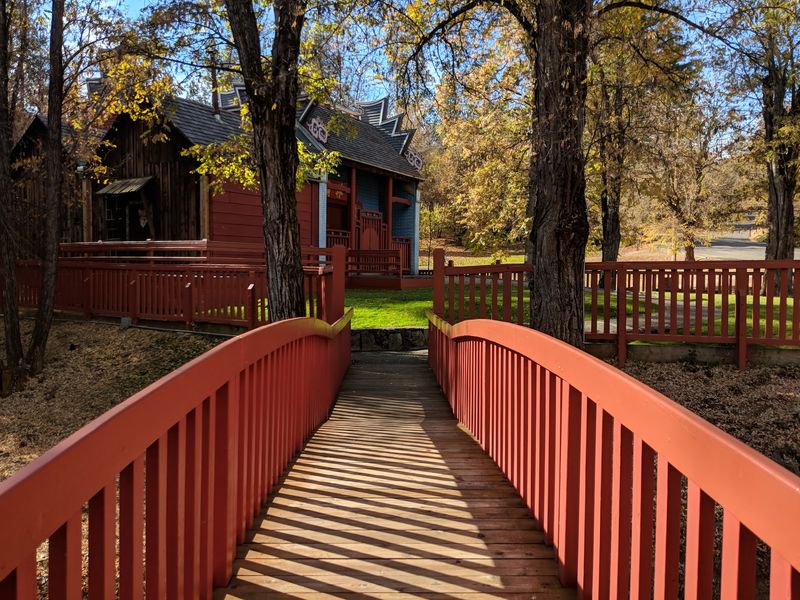
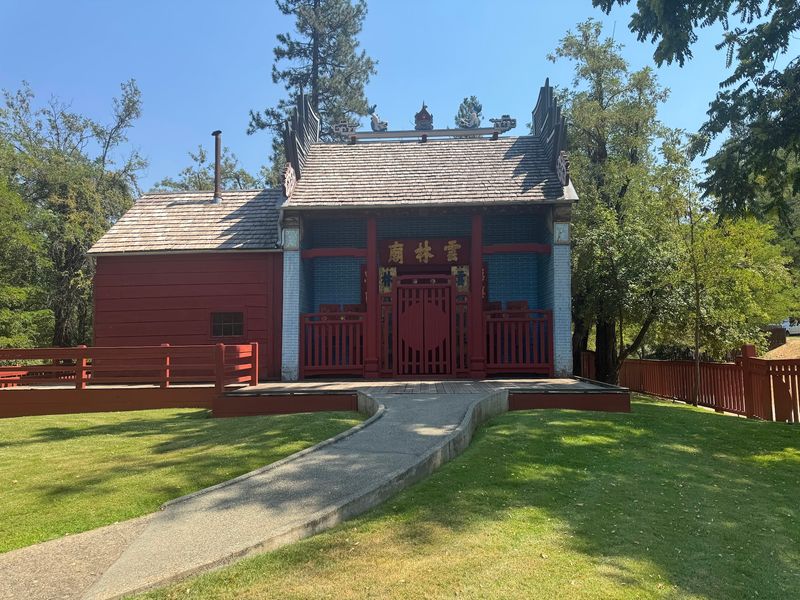
Its poetic name caught my attention before the building even did. Locals know it as the Weaverville Joss House, but the Chinese name, Yun Lin Miao, translates to The Temple of the Forest Beneath the Clouds.
Once you look up and see the wooded hills of Trinity County pressing in around the roofline, the name suddenly makes complete sense. Some translations render it as The Temple Among the Trees Beneath the Clouds, which feels just as fitting on a foggy morning.
Taoist worshippers built the first version here around 1853, during the wild years after the 1849 Gold Rush. Fires destroyed those earlier structures, and the temple standing today dates to 1874.
The word Joss itself has a curious backstory. Portuguese traders used it as a catch-all term for Chinese temples, and English speakers borrowed it without ever changing it back.
What struck me most is how modest the building looks from the road. There is no towering gate or grand staircase, just a small blue structure that has quietly outlasted nearly every other Chinese temple in the state.
Its humility is honestly part of the charm.
Gold Rush Miners Who Built It
Thousands of Chinese immigrants arrived in California chasing the same dream everyone else was chasing in 1849. Many of them landed in Trinity County, and Weaverville grew into one of the biggest centers of Chinese life in the region.
They came for gold, but they also came for safety. Weaverville was considered a somewhat safer place than other camps, though prejudice and unfair taxes followed them here too.
Miners pooled their earnings to build a place where they could pray, gather, and feel a little less far from home. That community effort is what created the first Joss House on this spot.
I keep thinking about the sheer distance involved. These were people who crossed an ocean, worked brutal hours in cold creeks, and still found the time and money to raise a temple.
Mining tools displayed on site make the connection feel real. You can see the shovels, pans, and handmade implements that turned river gravel into a living.
Understanding that backstory changes how the temple feels. It stops being decoration and becomes a monument to people who refused to lose their culture.
An Interior Frozen in 1874
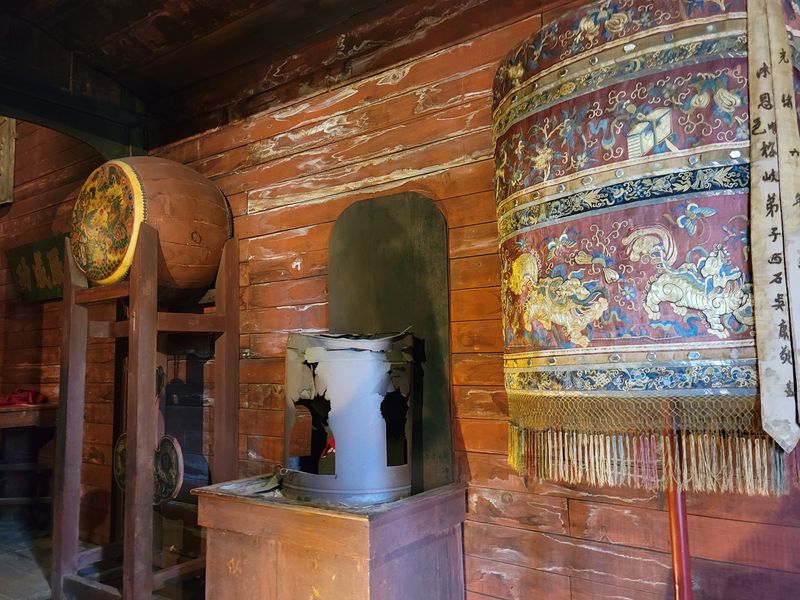
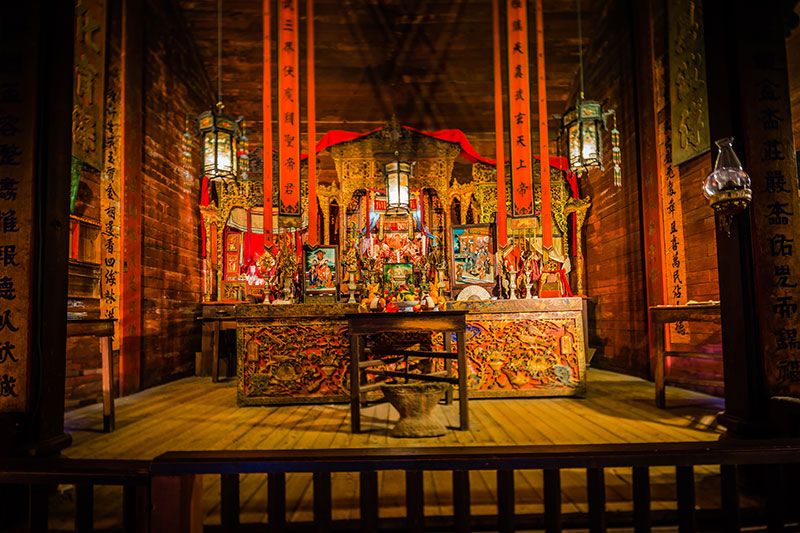
Very few historic buildings can claim what this one can. The interior looks almost exactly as it did in 1874, with electric lights and a few protective railings being the only real additions.
Carved altar pieces were made in Canton, shipped to San Francisco in 1873, then carried up the Sacramento River by riverboat. The final stretch to Weaverville traveled by cart, a slow journey of roughly a week over rough mountain roads.
Standing among those original furnishings, I found myself talking in a whisper without meaning to. The room is small, dim, and crowded with detail in the best possible way.
Painted banners hang overhead, covered in calligraphy that took years of brush training to master. Silk lanterns tell stories in tiny illustrations, and one design reportedly reaches back to Tang Dynasty tales from over a thousand years ago.
Incense smoke has settled into the wood over 150 years, giving the air a faint sweetness that no museum could recreate.
Photographers should note that the light is low and the space is tight. Slow down and just look instead.
Blue Paint, Dragons, and Spirit Screens
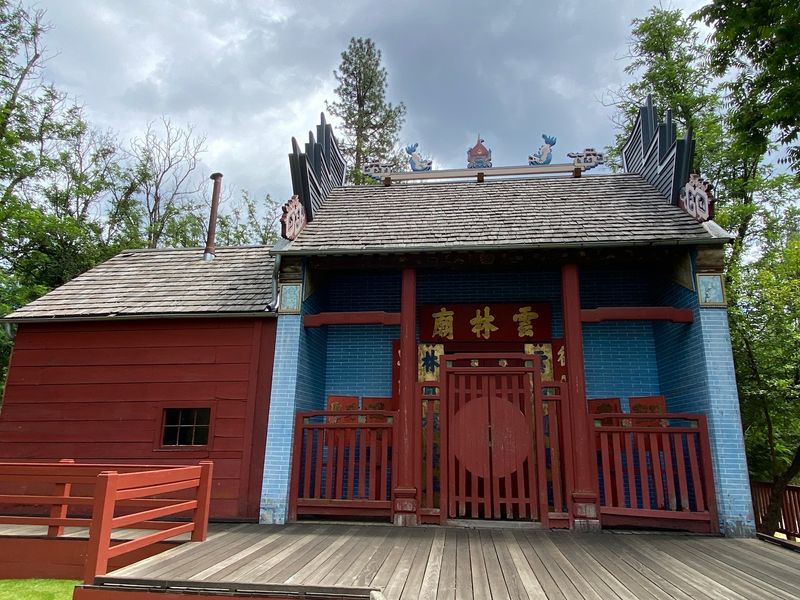
Color choices here were never random. The front of the temple is painted a vivid blue because blue symbolized heaven, and the white lines drawn across it imitate the tile work seen on temples back in China.
I stood out front for a while just tracing those painted lines with my eyes. From a distance they look decorative, but up close they are clearly doing the work of expensive materials nobody could ship this far inland.
Up on the roof sit two Chow Win Dragon Fish. Tradition holds that these creatures guard wooden buildings against fire, which feels especially meaningful given that earlier temples on this land burned down.
Doorways hold another surprise. The thresholds are built unusually high, and a spirit screen blocks the straight path inside.
Both features come from the belief that evil spirits cannot climb over barriers or turn corners. Watch your step going in, because those raised thresholds catch visitors off guard constantly.
Fanciful gables and carved cornices finish the picture. Small touches like these announced a Chinese presence in a rough frontier town.
More Than a Place to Pray
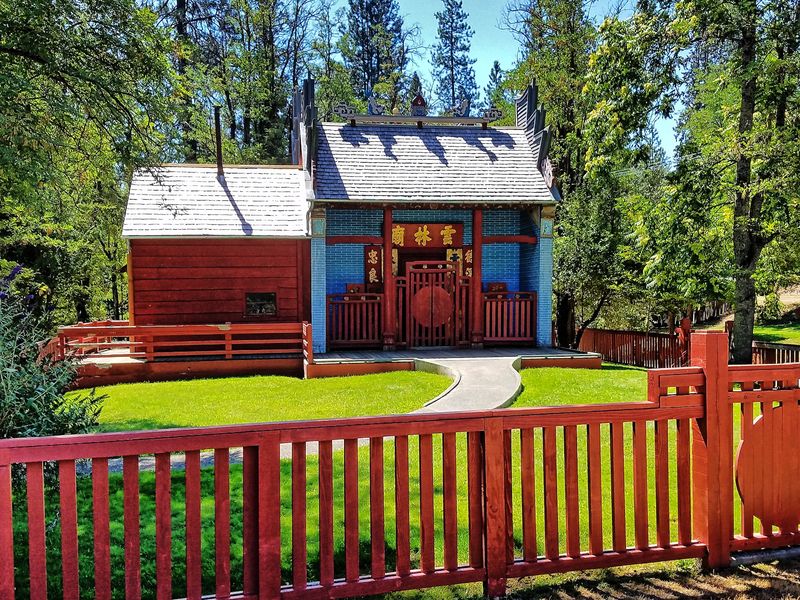
Calling it only a temple sells the place short. During its busiest decades the Joss House worked as a social hall, a fraternity house, and even a hotel for travelers passing through the mountains.
Picture a building that served as church, community center, and inn all at once. For Chinese miners facing discrimination and extra taxes aimed squarely at foreigners, that combination mattered enormously.
Newcomers could find a bed, news from home, and people who spoke their language. Older residents could settle disputes and organize support for one another.
I love that layered purpose because it explains why the building still feels warm rather than solemn. It was designed for people, not just ceremony.
Guides explain how the surrounding neighborhood once bustled with Chinese businesses and homes. Almost none of that streetscape survives today, which makes the temple’s survival even more remarkable.
Walking the grounds afterward, I tried to imagine the noise of a crowded Sunday here. Voices, cooking smells, footsteps on the porch.
Only the temple remains to tell that story now.
Moon Lim Lee and the Fight to Save It
Without one determined man, this temple might have quietly fallen apart. Moon Lim Lee descended from one of Weaverville’s early Chinese settlers, and he became trustee in 1938 after the robbery shook the community.
He spent years pushing for the building’s protection. Repairs, advocacy, paperwork, the unglamorous work of preservation.
In 1956, Moon Lim Lee and his wife Dorothy donated the temple to the California State Parks system. That single act guaranteed the site would survive beyond any one family’s ability to maintain it.
Their motivation went past the building itself. They wanted Californians to recognize how much Chinese immigrants contributed to the state’s history.
Later, in 1983, he founded the Weaverville Joss House Association. That group still supports the park today.
I think about how easily this story could have ended differently. Countless Chinatowns and temples across the West were demolished or simply abandoned.
Somebody has to care enough to fight, and here somebody did.
His name deserves mention every time this temple gets praised.
Rare Treasures That Survived History
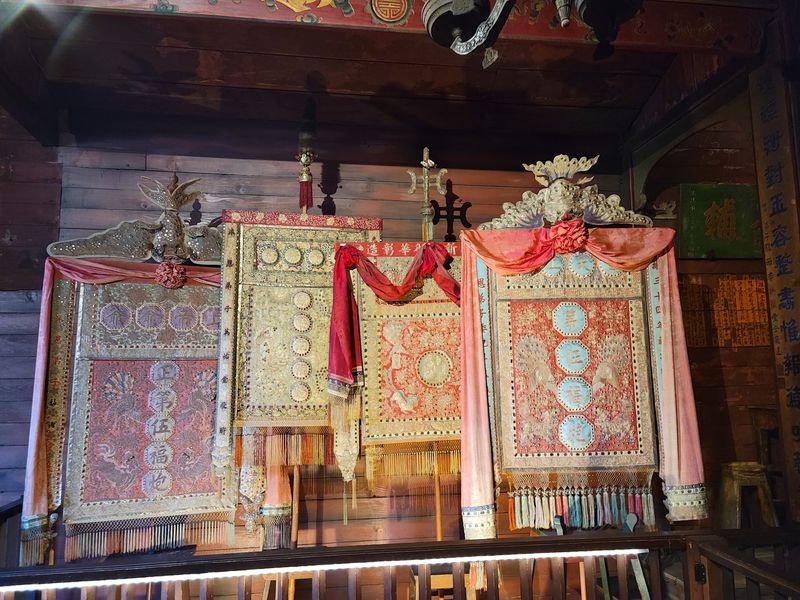
Something unexpected happens here fairly often. Visitors from China arrive and discover objects they have never seen anywhere, not even at home.
The reason is painful. During the Cultural Revolution, enormous numbers of China’s religious and cultural artifacts were destroyed or dismantled.
Items shipped to Weaverville in the 1870s were far away from all of that. They sat safely in a small mountain town while similar pieces disappeared elsewhere.
Historians consider the temple an intact, complete example of a rural-style Chinese temple from that period. Not a reconstruction, not a partial restoration, but the real thing.
Art objects, historical photographs, ceremonial pieces, and everyday tools fill the collection. Each one crossed the Pacific with someone who chose to bring a piece of home along.
That thought stuck with me more than any single artifact did.
State park staff know the collection deeply, and questions tend to unlock long, fascinating answers.
If you have any interest in art or world history, budget extra time. An hour barely scratches the surface of what is stored inside these walls.
Lion Dances and Moon Festivals
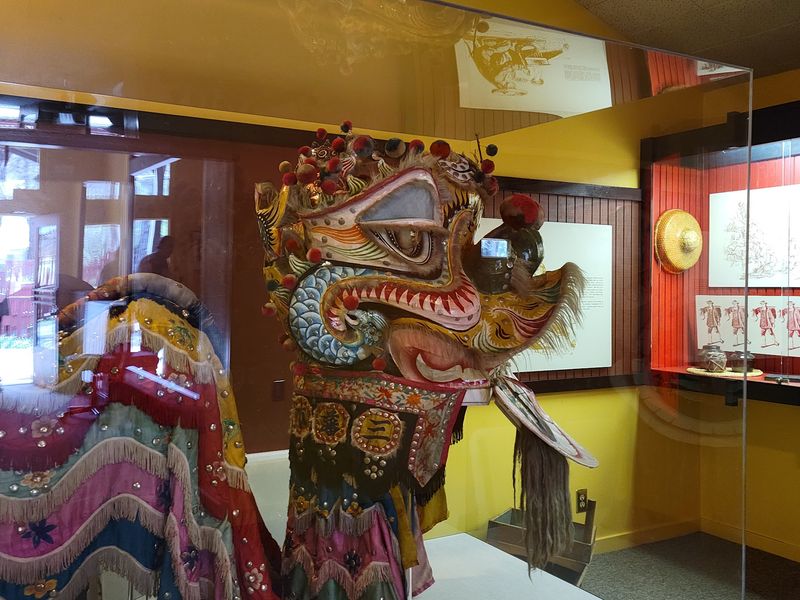
Drums, cymbals, and a bright lion costume moving down Main Street. That happens here, in a small Trinity County town, every Lunar New Year.
The Chinese New Year Lion Dance takes place in January or February depending on the calendar. Another lion dance rolls out over Fourth of July weekend, which is a delightfully Californian mashup.
Come autumn, the Mid-Autumn Moon Festival brings its own celebration to the grounds. Each event turns the park from a quiet historic site into a gathering place.
Worship continues year round too. Visitors are welcome to step up to the altar, light incense, and take part respectfully if they feel moved to.
That openness surprised me. Most historic buildings keep you behind a rope.
Donations largely fund the temple’s events and upkeep, so dropping something in the box genuinely helps.
If your travel dates line up with a festival, rearrange things to be here.
Watching a 150-year-old temple fill with music and incense smoke beats reading about it on any plaque, I promise.
Planning Your Visit to the Park Grounds
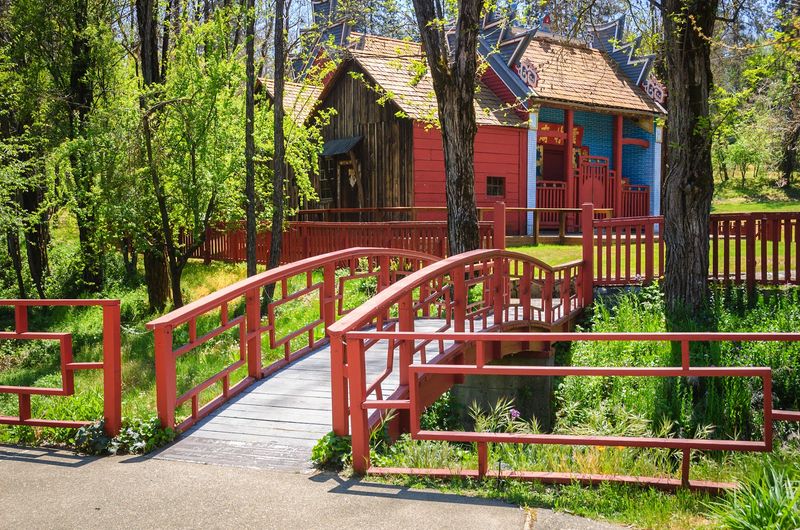
Beyond the temple itself, the grounds are genuinely pleasant. A shaded picnic area sits near a small footbridge, and public restrooms make it an easy stop on a longer road trip.
Opening days run Thursday through Sunday from 10 a.m. to 4 p.m., with the park closed Monday through Wednesday. Hours have shifted seasonally over the years, so a quick phone call at 530-623-5284 saves disappointment.
Entry to the visitor center and exhibit house comes first, with Chinese objects, informative labels, and a small gift selection. Temple admission carries a modest fee.
Weaverville itself rewards wandering. Historic storefronts, mountain views, and the vast Trinity Alps Wilderness sit right on the doorstep.
I paired my visit with an aimless walk through town and regretted nothing.
Bring a light layer, since mountain afternoons cool off fast.
The site became a California State Historic Park in 1956 and remains the oldest continuously used Chinese temple in the state.
Address: 630 Main Street, Weaverville, California
