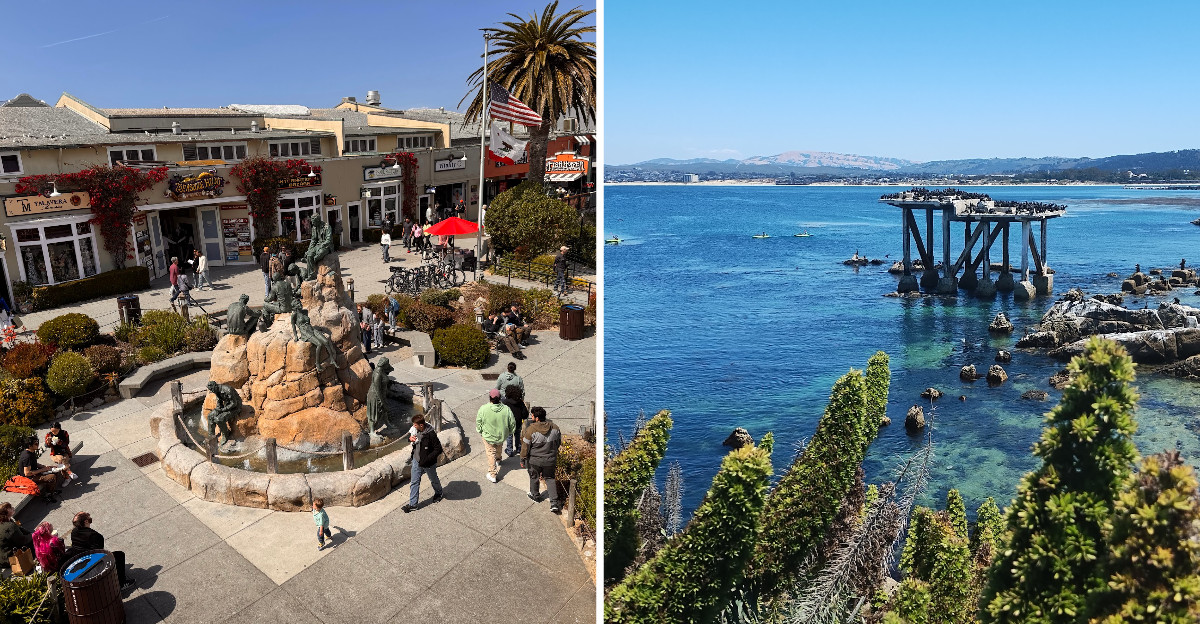
Barking sea lions drift up off the rocks below old factory walls, a sound that follows you along this stretch of California coast. I came for the famous aquarium but kept stopping to stare at rusty pipes, faded sardine labels, and sky bridges hanging over the street like old metal hallways.
Decades ago, this waterfront was packed with more than 30 canneries that sent millions of cans of sardines around the world. Then the fish nearly vanished, and the industry fell apart almost overnight.
Today the same buildings hold shops, restaurants, hotels, and one of the best ocean museums I have ever visited. Salty hair, cold hands, and a story that could not be stopped when telling friends.
The past and present share the same walls here, and the sea lions keep barking through it all. Pelicans perch on pilings, and the smell of salt and old wood hangs in the air.
The aquarium draws crowds, but the real history is in the buildings themselves.
A Quiet Shoreline That Turned Into a Fish Factory Town
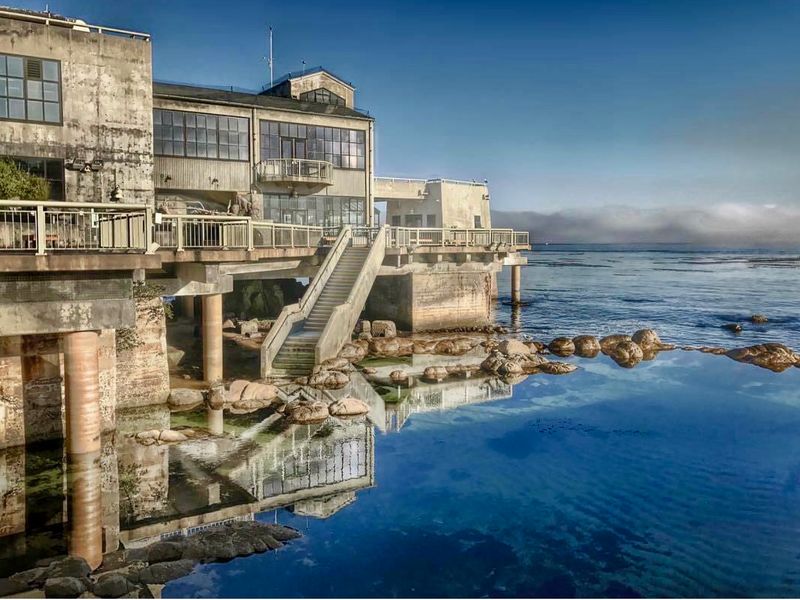
My mind always drifts backward in time when I first catch sight of the old buildings leaning over the water. Before tourists arrived, this street had a much plainer name, Ocean View Avenue, and it was mostly rocks, waves, and small fishing camps.
Chinese fishing families and Portuguese whalers worked these waters long before sardines became big business. Their boats and drying racks gave Monterey its first taste of life tied to the sea.
Things changed fast in 1908, when the Pacific Fish Company opened one of the earliest canneries on the shoreline. Better fishing gear and new canning machines made it possible to process huge amounts of fish, and World War I created a hungry market for food that would not spoil.
The numbers still surprise me. In 1915 the canneries packed about 75,000 cases of sardines, and by 1918 that number had jumped to around 1.4 million cases.
Picture a sleepy coast turning into a noisy, smoky factory zone in just a few years. When you visit, look closely at the foundations and pilings under some buildings, because they hint at how close to the waves those early workers labored.
The Sardine Capital of the World at Full Speed
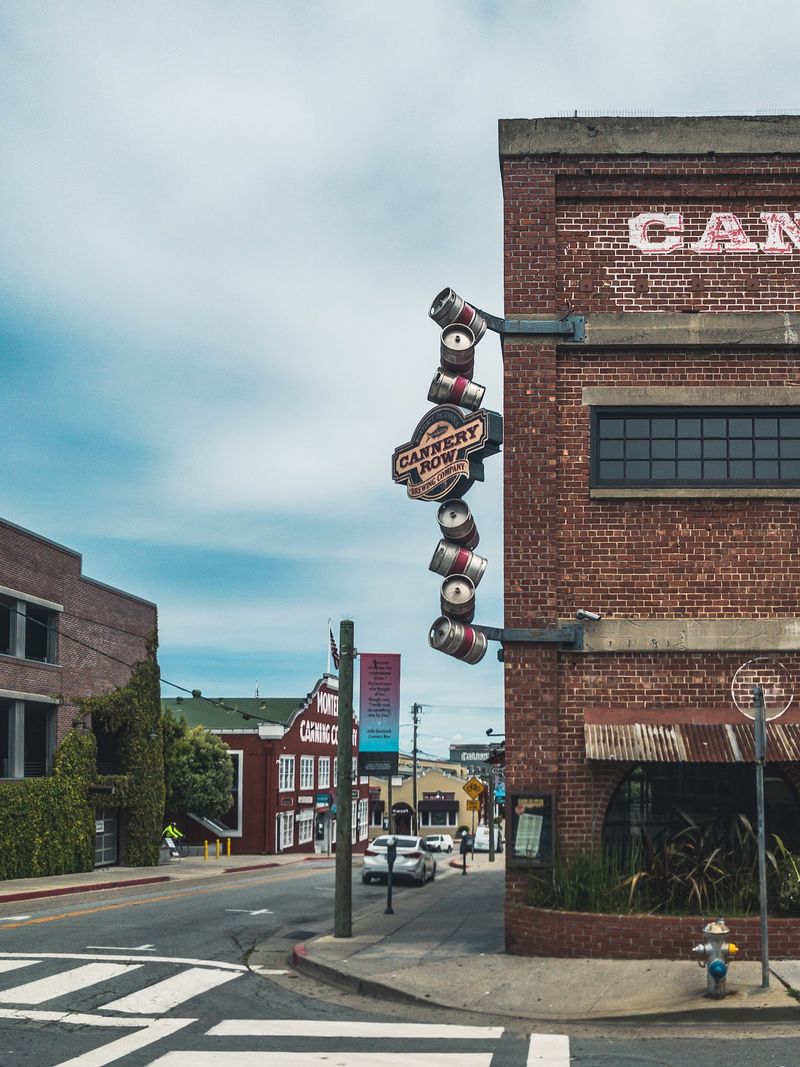
Oval tins stacked sky high, whistles blowing, and a smell you could probably taste from a block away. By the early 1940s, that was everyday life here, with more than 30 canneries lining the street.
Monterey earned a big nickname during these years, the Sardine Capital of the World. World War II pushed production even higher, since those famous oval cans helped feed soldiers and allied nations far from home.
One detail I love spotting today is the enclosed sky bridges crossing over the road. Back then they carried fish and supplies between buildings, and several still show the names of the old companies painted on their sides.
It helps to imagine the noise level while you stroll. Machines clanged, tin rattled, trucks rumbled, and conveyor belts never seemed to rest during a big catch.
Here is a fun trick for your visit. Keep your eyes on the sidewalks, because colorful vintage sardine labels are set into the walkways, and each one shows a different brand that once came out of these factories.
Kids tend to turn it into a scavenger hunt, and honestly, so did I, counting how many designs I could find before lunch.
Night Boats, Loud Whistles, and Long Shifts
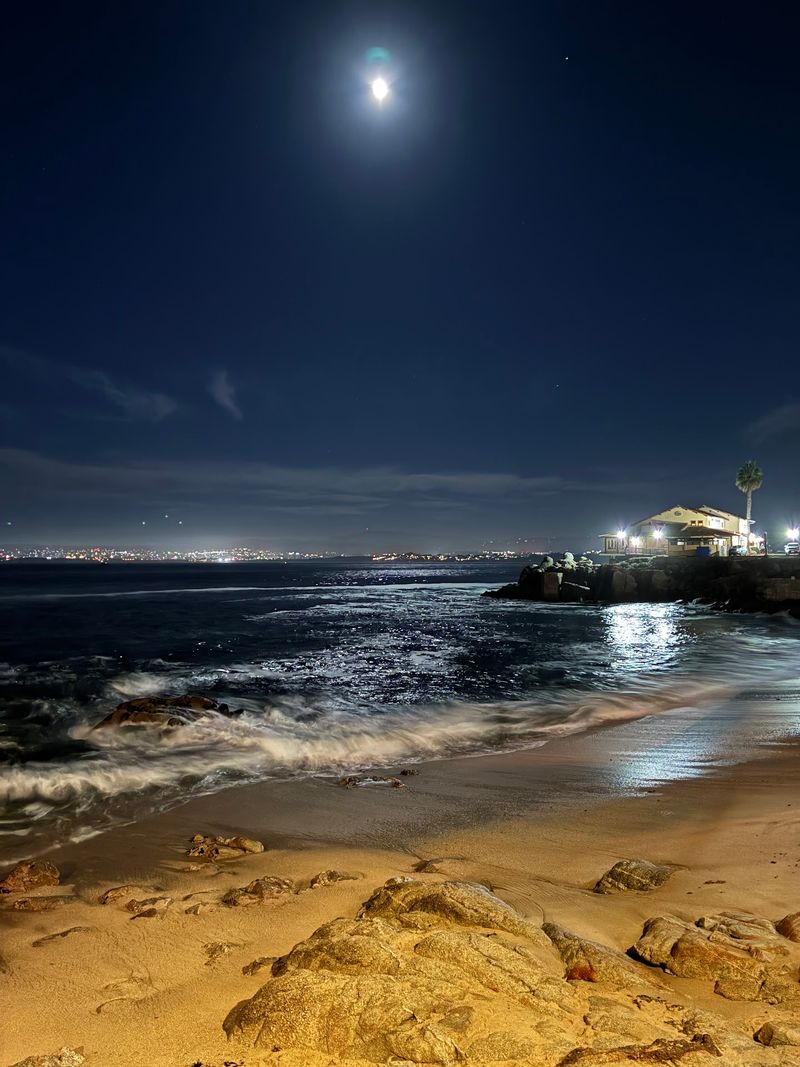
Sardines were caught mostly at night, and that fact alone made me look at the dark bay differently. Fishermen watched for the glow of phosphorescence, a natural shimmer that lit up the water when big schools of fish moved together.
Once the boats came in, the canneries needed hands right away. Each factory had its own whistle with a special sound, so workers knew exactly when their cannery was calling them in, even in the middle of the night.
Many of these workers were immigrants from different parts of the world. Their shifts were long, cold, wet, and very smelly, and early on there were almost no safety rules to protect them.
It gives me real respect for the families who built this place. Whole neighborhoods depended on the rhythm of the fish, the boats, and those whistles.
When you visit, pause near the water after sunset. The lights of the town ripple across the bay, and it is easy to imagine small boats heading out to hunt for that silvery glow.
Interpretive signs along the street share more about these workers, so take a few minutes to read them. They add faces and feelings to the old brick walls.
How a Book Gave the Street Its Name
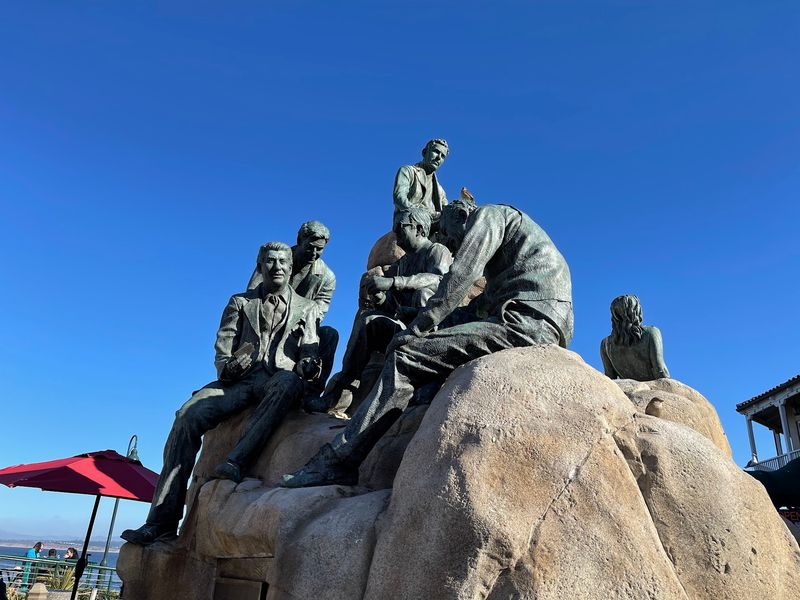
Some streets get famous because of a building, but this one got famous because of a book. John Steinbeck published his novel Cannery Row in 1945, painting a gritty and colorful picture of life among the factories.
Readers loved it so much that the California city officially renamed Ocean View Avenue as Cannery Row in 1958. I find that pretty amazing, since the name honors both the writer and the canneries themselves.
A great stop for fans is the Cannery Row Monument in Steinbeck Plaza. Steinbeck sits at the top, surrounded by bronze figures that bring to mind the kinds of characters found in his story.
Just down the street sits 800 Cannery Row, a plain wooden building that once held the Pacific Biological Laboratory. Marine biologist Ed Ricketts worked here, and he inspired the character known as Doc in the novel.
The lab is not always open to visitors, but you can still peek down the alley beside it. Look for old concrete containers outside that once held preserved sea creatures.
My tip is to read even a few chapters before your trip. Suddenly every corner feels like a page coming to life, and the walk becomes a lot more personal.
The Day the Silver Schools Stopped Coming
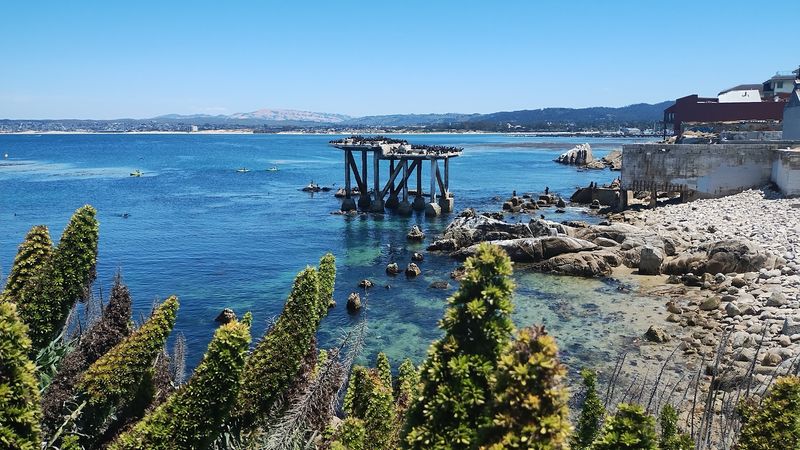
After World War II, the fish simply stopped showing up in big numbers. Boats came back nearly empty, and one cannery after another shut its doors, with the very last closing in 1973.
For years people blamed overfishing alone. Large modern purse seiners, introduced in 1928, made it possible to scoop up enormous catches, and the way sardines swim in tight schools made them easy targets for nets and sonar.
Later research told a bigger story. Scientists found that long ocean temperature cycles, a bit like El Niño but lasting much longer, played a huge role.
Warmer periods favored sardines, while cooler ones helped anchovies take over. Some scientists nicknamed the warm stretches El Viejo and the cool stretches La Vieja, which I think is kind of charming.
Pollution also added pressure, including DDT, urban runoff, and munitions dumped after the war. All these problems together pushed the sardines to the edge.
The Pacific sardine fishery was even closed from 1967 to 1986, and again in 2015, so the population could recover. Standing by the bay, it is a powerful reminder that the ocean has its own schedule, and people need to pay attention to it.
From Empty Factories to a Waterfront Comeback
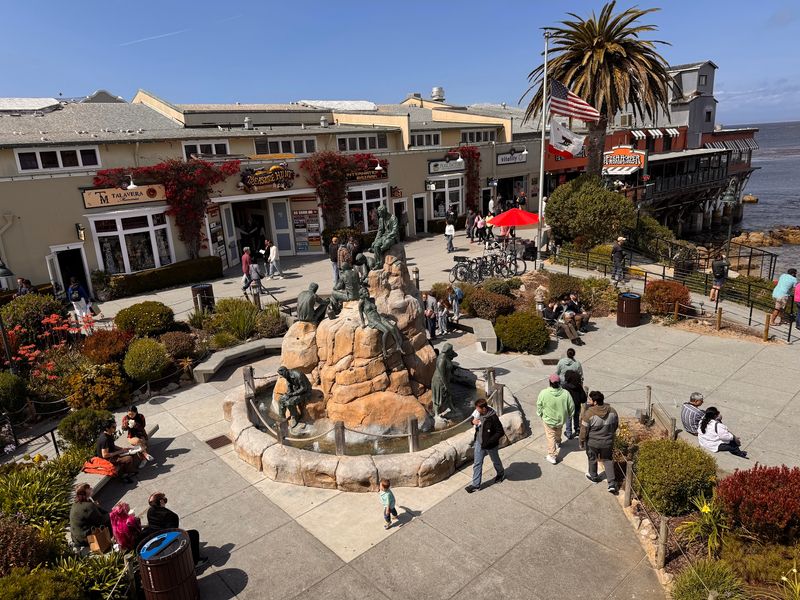
Empty buildings and rusty machines sat along the shore for years, and plenty of people probably thought the street was finished. Luckily, Monterey had other plans.
By 1968, a revival had started. Entrepreneurs Ted Balestreri and Bert Cutino opened The Sardine Factory restaurant inside an old cannery building, and that move helped spark a wave of new life.
Bit by bit, the factories were fixed up and filled with shops, art galleries, restaurants, and hotels. The big bones of the canneries stayed, so you still get those tall walls, wide windows, and industrial touches everywhere.
I really enjoy how the past was kept instead of erased. You can grab a snack, browse souvenirs, then look up and spot an old company name on a sky bridge overhead.
Bring a jacket, even in summer. The ocean air here stays cool, and a sweater makes lingering outside much more pleasant.
Classic cars often cruise down the street too, which fits the vintage mood perfectly. I caught myself snapping photos of shiny old bumpers right next to weathered cannery signs, and it felt like two eras saying hello to each other.
Otters, Trails, and Ocean Fun on the Old Cannery Grounds
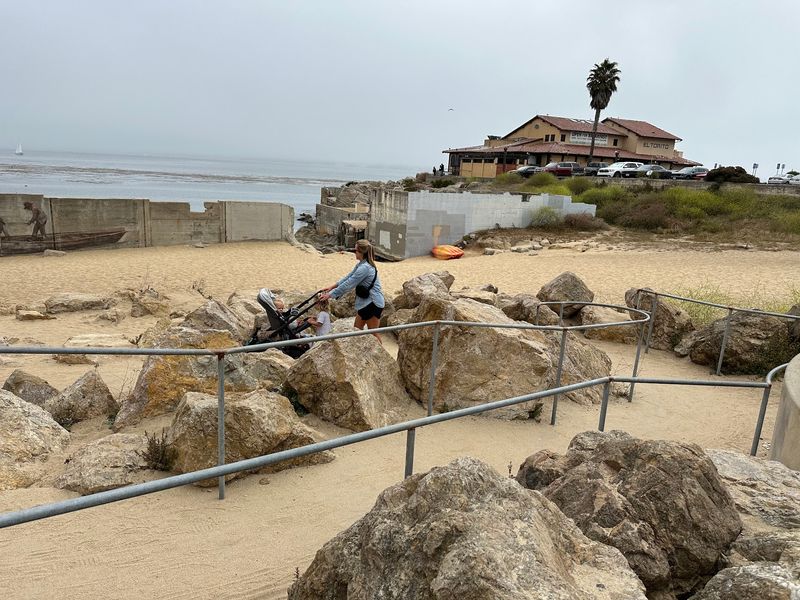
Honestly, my favorite twist in this whole story is the Monterey Bay Aquarium. It opened in 1984 on the site of the old Hovden Cannery, so a place that once packed fish now helps protect ocean life.
Inside, I could have watched the sea otters for hours. Hammerhead sharks glide past, and giant swirling schools of anchovies shimmer like moving silver, which feels like a fitting nod to the bay’s history.
Outside, the Monterey Bay Coastal Recreation Trail follows the path of old Southern Pacific Railroad tracks. It is flat and easy for walking or biking, with sea lions lounging on rocks and seabirds soaring overhead.
Kayaking on the calm bay is another great way to spot otters up close in the wild. Keep a respectful distance so they can nap and snack in peace.
Families have plenty of options on rainy or foggy days. Treasure Hunt: The Ride offers pirate-themed fun, Oscar’s Playground is packed with arcade games, and escape rooms plus a mirror maze add even more adventure.
Sunset over the water makes a perfect ending to any visit.
Address: Cannery Row, Monterey, California 93940
