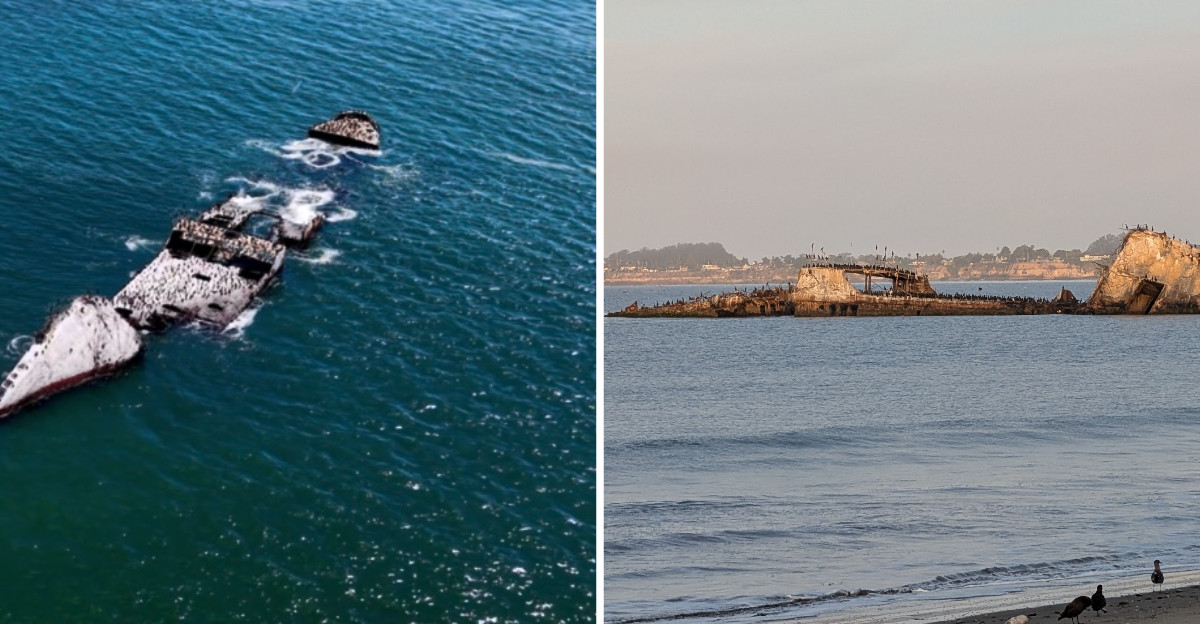
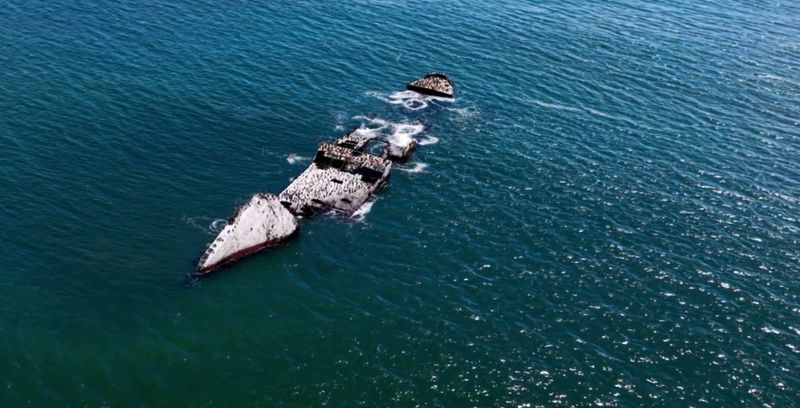
Pelicans lining up along a broken deck like they own the place is not what most people expect on a quiet beach walk. Out past the waves sits a gray, cracked hull made of concrete, which sounds impossible until you see it floating there.
This California landmark has a story that sticks for weeks. The ship once had a ballroom, a heated swimming pool, and a restaurant where people danced and dined above the water.
Standing in the sand, grinning at the idea of a party boat that never actually sailed anywhere, is unavoidable. Built in the 1910s, it was towed to its current spot and eventually stripped down, but the hull refused to sink.
Pelicans and cormorants claimed it as a rookery, and fishermen cast lines from the beach nearby. The concrete ship has outlasted storms, tides, and decades of curiosity.
It is a piece of maritime history that refuses to disappear. The wild, wonderful life of this odd vessel is worth telling one chapter at a time.
A Wartime Tanker Made of Stone
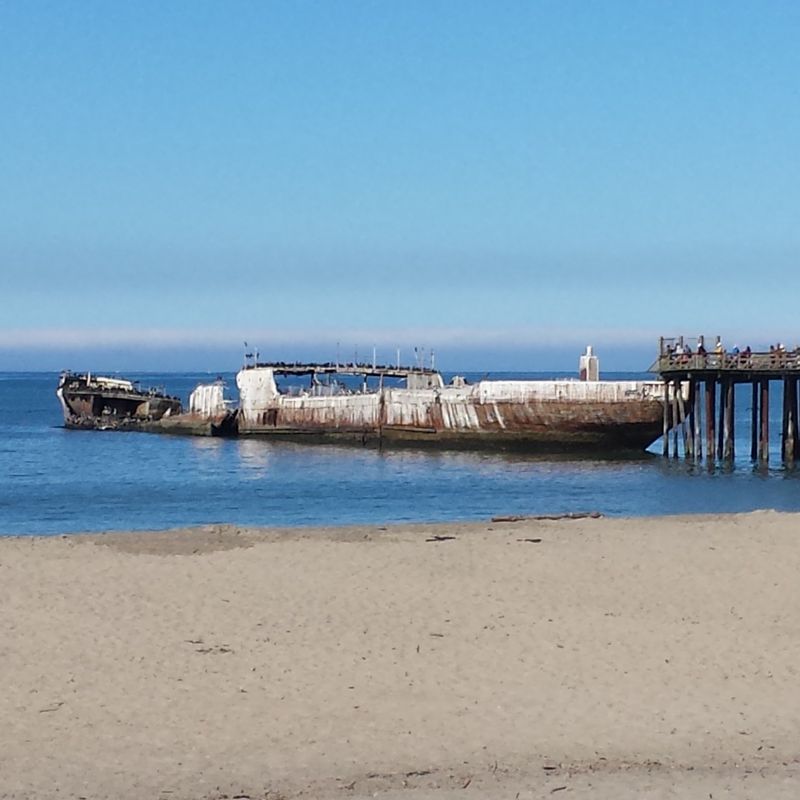
My first reaction to hearing the words concrete ship was a laugh, because rocks sink and everybody knows it. Then I read how the SS Palo Alto actually came to be, and the idea started to make a lot of sense.
During World War I, steel was hard to find, so the United States needed a clever backup plan.
President Woodrow Wilson approved an emergency fleet of ships built from concrete. The San Francisco Shipbuilding Company in Oakland took on the job and shaped a massive oil tanker out of the gray stuff we usually see in sidewalks.
It was launched on May 29, 1919.
Here is the twist that makes me smile. The war had already ended by the time the ship was finished, so it never carried fuel for the military at all.
Instead, the giant tanker sat in San Francisco Bay for about ten years, waiting for a purpose that never came. I picture it parked there like a huge gray whale taking the longest nap in history.
Fun fact for your next trivia night: concrete ships float because their hulls are shaped to push aside lots of water, just like steel ones do. Shape matters more than material, which surprised me more than I expected.
Towed South for a Brand New Life
Sometimes the best ideas come from looking at something old and asking, what else could this be? That is exactly what happened in 1929, when a group called the Seacliff Amusement Company spotted the unused tanker.
Where others saw a forgotten hulk, they saw a party waiting to happen.
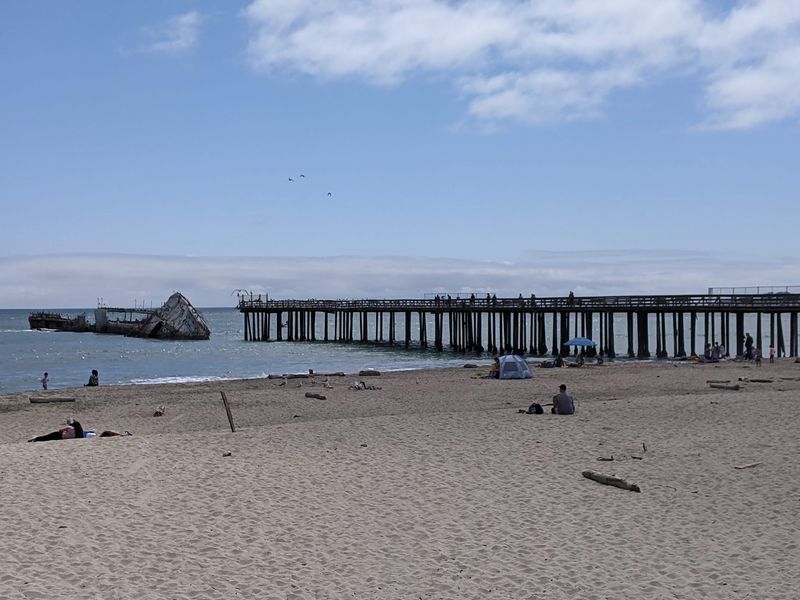
The company bought the SS Palo Alto and had it towed down the coast to Seacliff State Beach in Aptos. In January 1930, crews sank it on purpose a short distance from shore, settling it firmly onto the sandy bottom of Monterey Bay.
From that day on, the ship was never going anywhere again.
I love how bold this plan was. Imagine telling your friends you want to park an oil tanker next to the beach and turn it into a fun zone.
To get guests aboard, the company built a long pier stretching from the sand out to the ship. Families could stroll right over the waves and step onto the deck without getting their shoes wet.
When I visited, I tried to picture that first opening season, with the smell of salt air and the buzz of excitement drifting across the water. It must have been quite the sight for anyone driving along the coast.
Dancing the Night Away in the Rainbow Ballroom
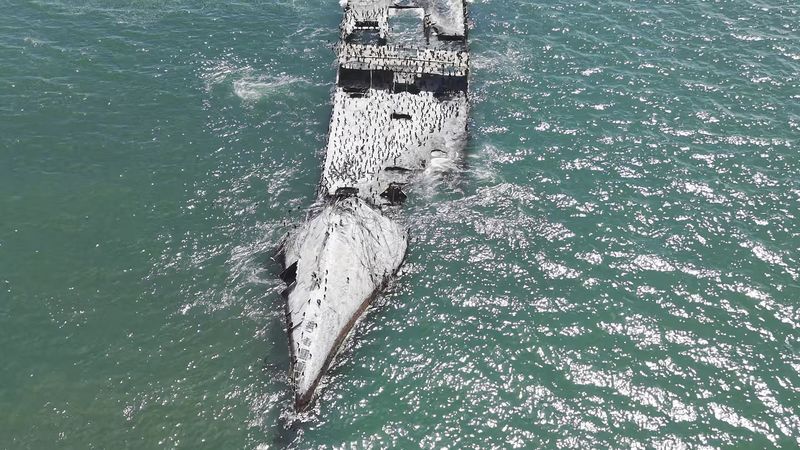
Picture a summer night in 1930, music floating over the water and the sound of shoes tapping across a polished floor. The crown jewel of the new SS Palo Alto was the Rainbow Ballroom, a roomy dance hall built right onto the ship.
I can almost hear the band warming up when I think about it.
The Roaring Twenties had just wrapped up, and people still loved to dress up and move to lively tunes. A ballroom floating near the beach must have felt like the coolest spot on the whole coast.
Guests could twirl with the ocean all around them, which is a view no regular dance hall could ever match.
Right next to the fun was the Fish Palace restaurant, where visitors could grab a meal while gazing at the bay. A café served snacks too, so nobody had to leave hungry.
There were also midway games on board, the kind you might find at a county fair. Kids and grown-ups could test their luck and skills between dances.
When I stood on the beach looking at the cracked hull, I found it amazing that so much laughter once filled that space. It reminded me that even the quietest places can hold the loudest memories.
A Heated Pool on Top of the Ocean
Only in California would someone build a swimming pool on a ship that was already sitting in the ocean. And honestly?
I think it was a genius move.
The SS Palo Alto had a heated pool measuring about 54 feet long. Anyone who has dipped a toe into Monterey Bay knows the water can be shockingly chilly, even in summer.
A warm pool gave swimmers the ocean views without the teeth chattering.
I tried to imagine the scene: kids cannonballing into warm water while waves crashed just a few feet away against the concrete hull. Parents might have lounged nearby, soaking up the sunshine and watching seabirds glide past.
It sounds like the perfect beach day, just a little fancier.
Swimming was a hugely popular pastime back then, and public pools were a big deal in many towns. Having one on a ship made the Seacliff attraction stand out from every other spot along the coast.
Today, there is no sign of the pool left. It was stripped away years ago along with the other fun features.
Still, whenever I see swimmers bobbing near Seacliff now, I think about those lucky folks who once floated in warm water on top of the sea.
Hard Times, Cracks, and a One Dollar Deal
Good times on the SS Palo Alto lasted only about two years, which still makes me a little sad. The Great Depression swept across the country, and people simply had less money for dancing and games.
By 1932, the Seacliff Amusement Company went bankrupt.
Bad luck kept coming that same year. A strong winter storm slammed into the ship and cracked it right through the middle.
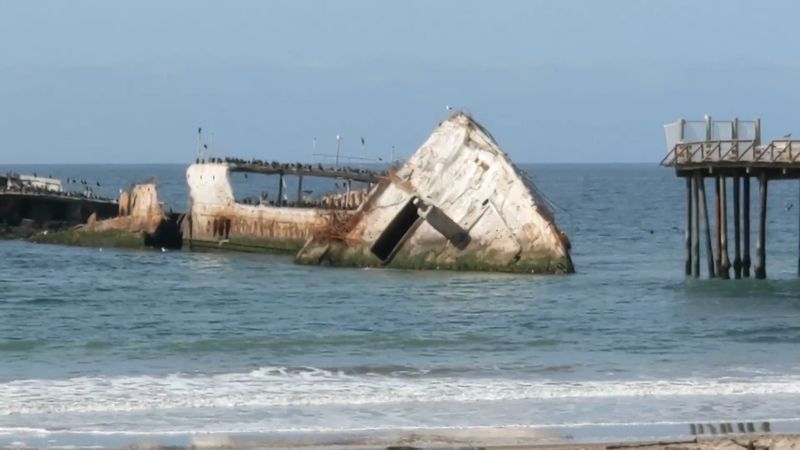
With the party over, workers stripped away the ballroom, the pool, the restaurant, and the games. What remained was a bare concrete shell sitting quietly in the surf.
Then came one of my favorite details in the whole story. In 1936, the State of California bought the ship for just one dollar, which might be the best bargain in state history.
The ship got a calmer job as a public fishing pier. For decades, people walked out along the old deck, dropped their lines into the water, and waited patiently for a bite.
I find something comforting in how the ship kept being useful, even after its glamorous days ended. It went from a lively nightclub to a peaceful hangout, and plenty of families made happy memories there in a whole new way.
Pelicans, Mussels, and a Living Reef
Bring binoculars. That is my number one tip, because the real stars of the SS Palo Alto today have feathers.
Over the years, the ocean kept chipping away at the old hull. Storms in 1963, 1978, 1980, and 1983 caused serious damage, and the ship eventually closed to visitors.
A huge storm in January 2017 tore off the stern, and more fierce storms in January 2023 battered both the ship and its pier.
Yet nature saw an opportunity. The broken ship now works as an artificial reef, giving fish plenty of nooks and hiding spots below the waterline.
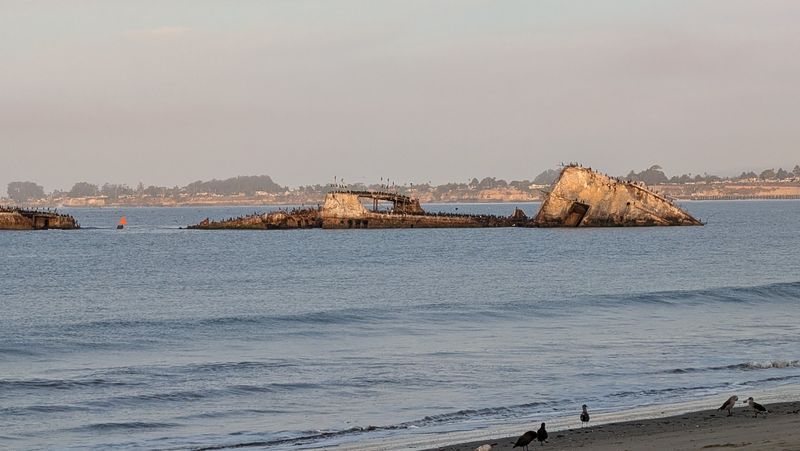
Mussels and anemones cover the concrete like a bumpy, colorful blanket. Above the water, pelicans and cormorants gather in big groups, stretching their wings to dry in the sun.
I spent a long time just watching the birds squabble over the best perches. It was better than any nature show I have seen on TV.
If you visit, keep your distance and let the wildlife do its thing. Watching quietly from the sand gives you a front-row seat without bothering anyone, and the birds will happily put on a show while you enjoy the salty breeze.
Visiting the Cement Ship Today
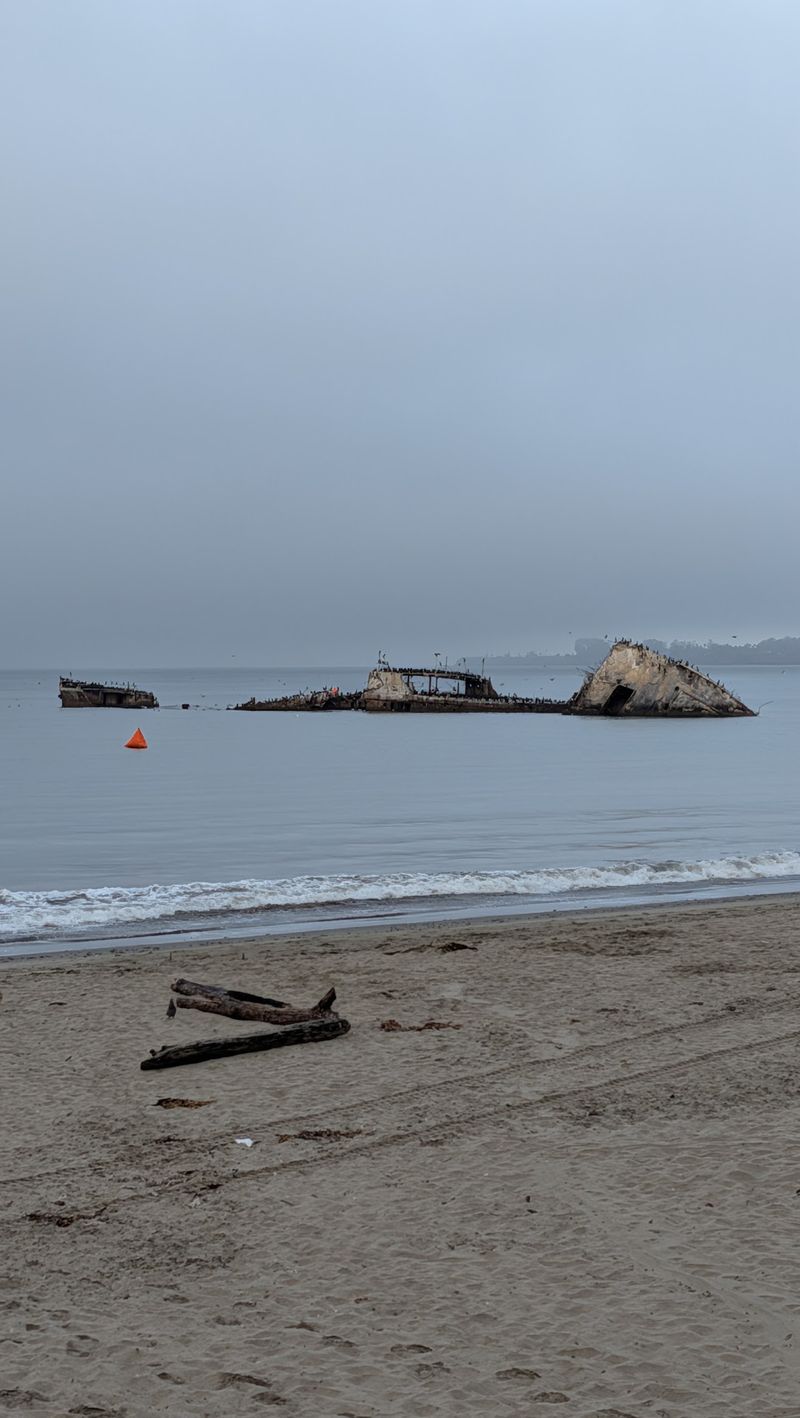
My favorite way to see the ship is in the late afternoon, when the light turns golden and the old hull glows softly against the water. You can no longer walk on it, and the pier that once led out there was removed in spring 2023 after storm damage.
Even so, the view from the beach is absolutely worth the trip.
Seacliff State Beach has a wide sandy shore that is great for slow walks and picnics. From almost anywhere along the sand, you can spot the bow, stern, and parts of the middle section still poking above the waves.
For a deeper look at the story, stop by the visitor center at the park. Exhibits there share the ship’s history and explain the marine life that now lives around it.
A few simple tips will help your day go smoothly. Wear layers, because coastal weather changes quickly, and pack snacks so you can linger without rushing.
I left with sandy shoes and a head full of stories about dancers, swimmers, and fishermen from long ago. Few places pack a century of history into one view, and that is what makes this spot so special.
Address: 201 State Park Drive, Aptos, CA 95003
