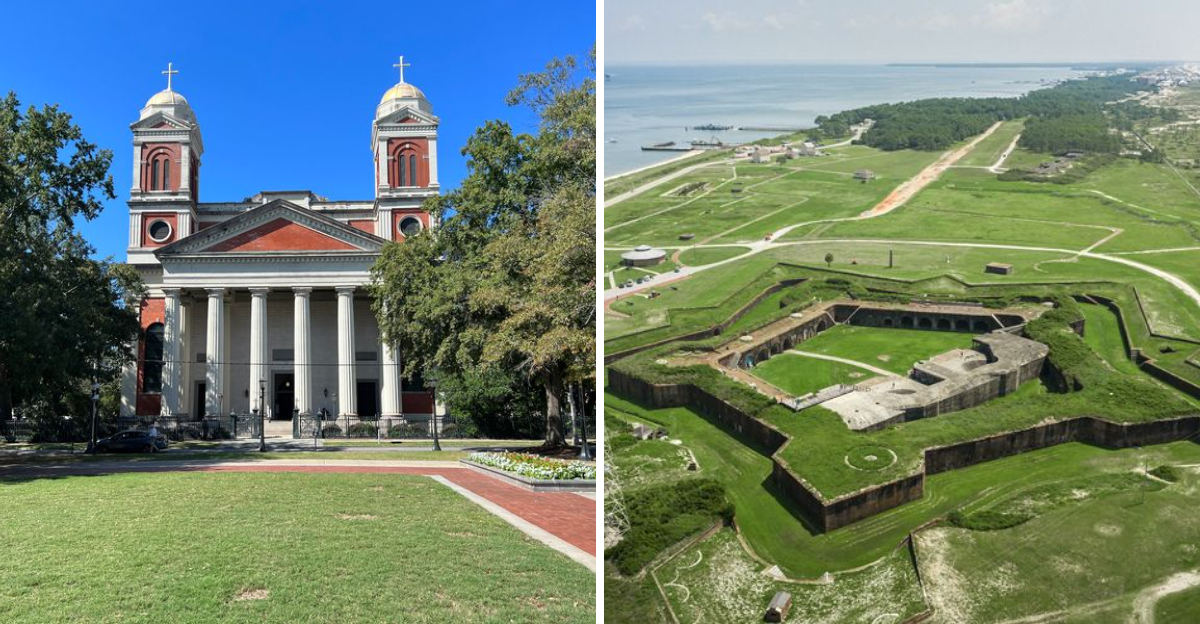
The walls may be quiet now, but they have seen a lot. From bustling commercial centers to grand homes and historic theaters, Alabama’s oldest surviving buildings preserve stories from eras that can otherwise feel impossibly distant.
Some were connected to major industries, others to prominent families, politics, entertainment, or everyday community life. A few have changed dramatically over the decades, while others retain remarkably recognizable features from when they were first built.
Walking around these structures is therefore about more than admiring old architecture. It is an opportunity to see physical evidence of the people, businesses, and events that helped shape the communities around them.
1. Joel Eddins House, Huntsville
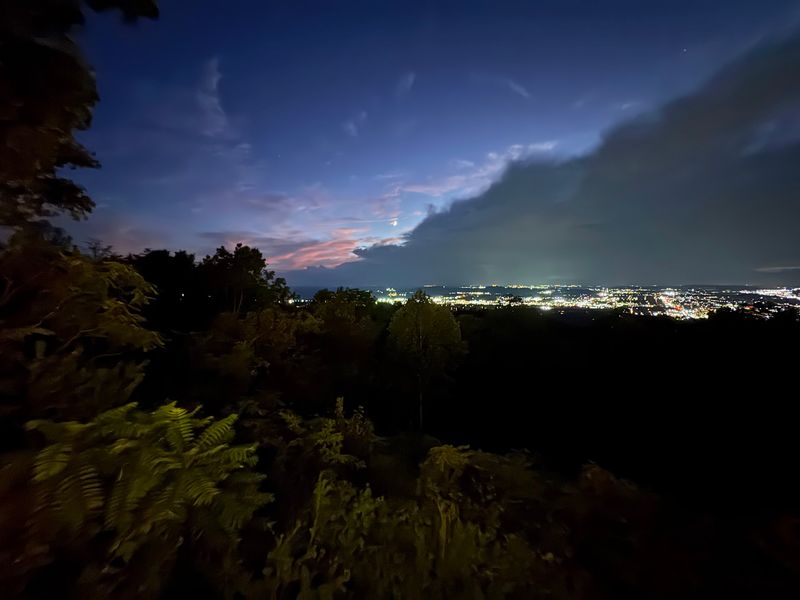
My first stop turned out to be the oldest documented building in the entire state, and it is a log cabin. Built in 1810, the Joel Eddins House feels wonderfully unfussy after all the grand courthouses I had pictured in my head.
The logs are thick, dark, and squared by hand, and the hall-and-parlor layout inside is rare enough that architecture buffs travel just to see it. Two rooms.
That is basically the whole plan.
What I found remarkable is that the house did not always sit up on this mountain. It originally stood near Ardmore in Limestone County before being carefully taken apart and moved to Burritt on the Mountain in 2007, a rescue effort that saved it from disappearing entirely.
Wandering the grounds, you get sweeping views over the valley, which makes the contrast even stronger between the sleek modern city below and the pioneer world preserved up here.
Inside, the floorboards creak in a way that feels honest rather than staged. I lingered near the hearth, imagining winter mornings when a fire was the only heat anybody had.
Give yourself extra time, because the surrounding historic park includes other relocated structures, gardens, and walking trails. Early in the day is best, when the air is cool and the crowds are thin.
Address: 3101 Burritt Dr SE, Huntsville, AL 35801
2. Weeden House Museum, Huntsville
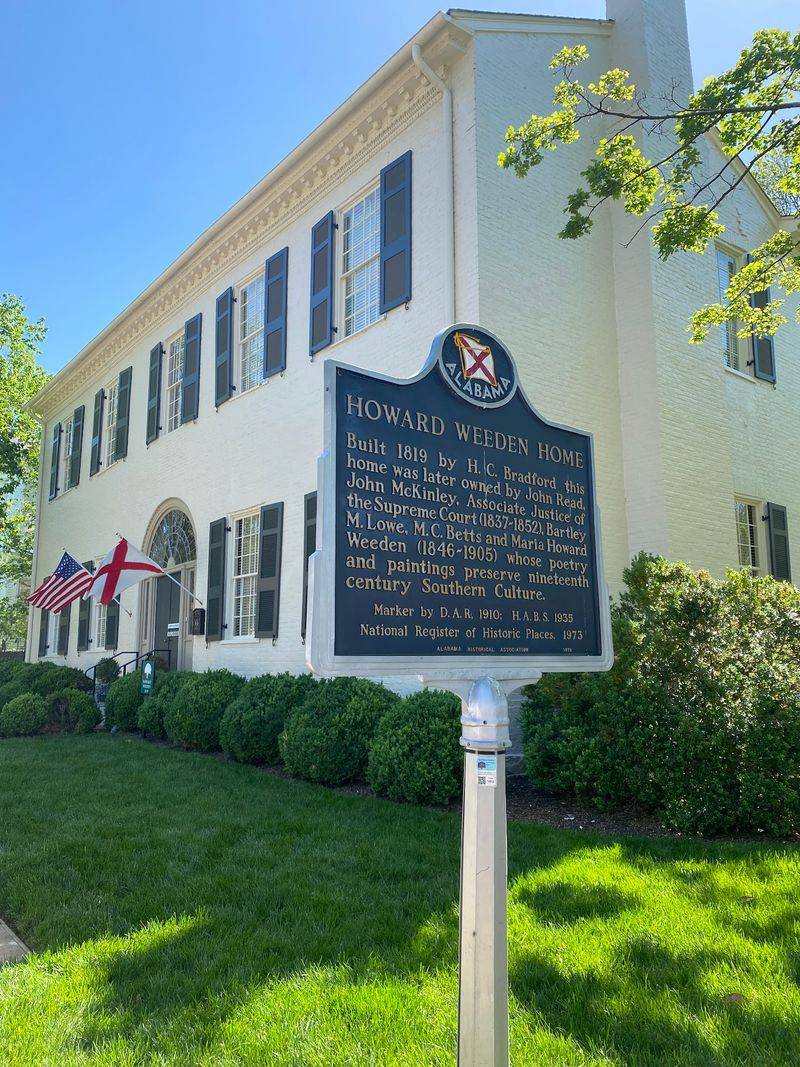
A short drive across town brought me into Twickenham, a neighborhood so thick with old brick and older oaks that it slows your pace automatically. The Weeden House sits right in the middle of it, dating to about 1819.
The fanlight above the front door caught my eye first, all delicate leaded glass that somehow survived two centuries. Inside there is a spiral staircase and hand-carved mantels that still look crisp.
Here is the detail I keep repeating to people: the walls are roughly fourteen inches thick, and the bricks were made from soil dug in the yard. The house is literally built from its own ground.
This was the birthplace and lifelong home of Maria Howard Weeden, an artist and poet who earned national attention for her watercolor portraits of formerly enslaved people, each paired with a poem. She taught art in these rooms to help support her family, working through years of fragile health.
During the Civil War the home was taken over to house Federal officers, which adds another strange chapter to its story.
Rooms are compact and full of small objects worth studying closely, so I would skip the rush. Guided visits explain far more than plaques ever could, and the garden out back is a lovely spot to sit afterward.
Address: 300 Gates Avenue, Huntsville, AL 35801
3. Gorgas House Museum, Tuscaloosa
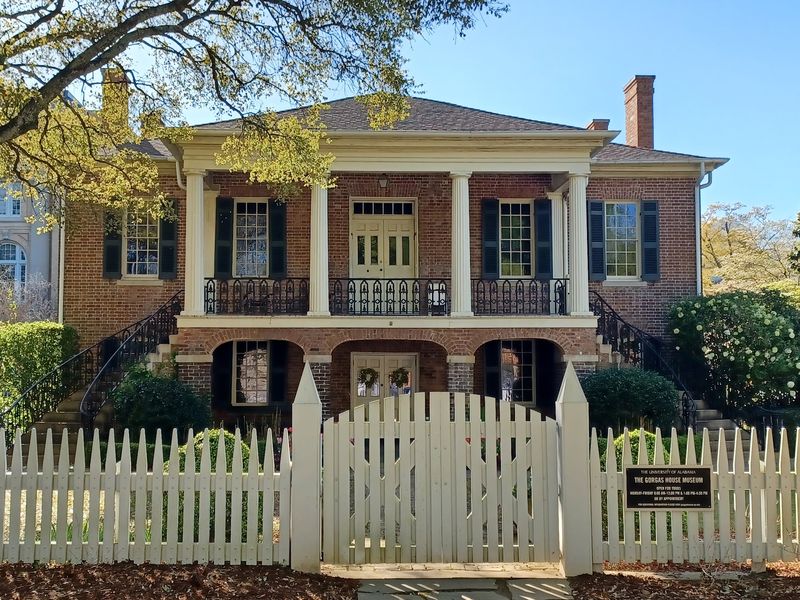
Tuscaloosa surprised me. I expected stadium energy and found, tucked among the oaks of the University of Alabama campus, a small 1829 building that has outlasted almost everything around it.
The Gorgas House is the oldest structure on campus, and its resume is honestly ridiculous. Over the years it worked as a student dining hall, a steward’s residence, a lecture space, a post office, and even a campus hospital.
Survival is the real headline here. When Union troops burned much of the campus in 1865, this was one of only four main buildings left standing, which explains why it feels almost protective as you approach.
From 1879 to 1953 the Gorgas family lived here, and their furnishings still fill the rooms alongside nineteenth-century artifacts. You get a genuine sense of household life rather than a sterile display.
The curved twin staircase out front is the photo everybody takes, and I understand why. It gives the modest brick building a quiet dignity.
I liked visiting on a weekday when students were drifting past with backpacks, completely used to walking by a building older than the state’s railroads. Combine it with a slow campus loop and you have an easy, rewarding afternoon.
Address: 810 Capstone Drive, Tuscaloosa, AL 35487
4. First White House of the Confederacy, Montgomery
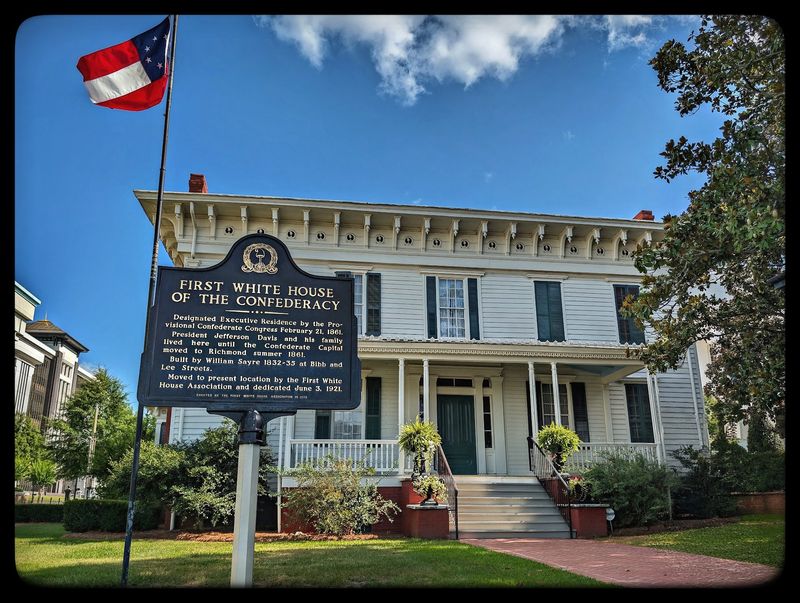
Montgomery moves at a governmental pace, all wide avenues and stone steps, and then this white Italianate house appears across from the Capitol grounds looking almost residential.
Built between 1832 and 1835 by local merchant William Sayre, it carries far more weight than its size suggests. Jefferson Davis and his family lived here from February to May of 1861, during the earliest months of the Confederacy, before the capital shifted to Richmond.
Only a few months. Yet those months shaped an enormous amount of American history.
The house did not always stand where it does now. It originally sat at Bibb and Lee Streets and was moved to its present location in 1919, then dedicated in 1921 after a considerable preservation effort.
Inside, the period furnishings and personal items make the rooms feel oddly ordinary, which is exactly what makes the visit hit differently. History happened in parlors, not just on battlefields.
I found it worth pairing with a broader walk through downtown Montgomery, where the layers of the city’s past sit close together and demand some thinking. Go in with an open mind and read the interpretive material carefully.
Parking nearby is straightforward, and the surrounding Capitol complex is pleasant to stroll.
Address: 644 Washington Avenue, Montgomery, Alabama 36104
5. Magnolia Grove, Greensboro
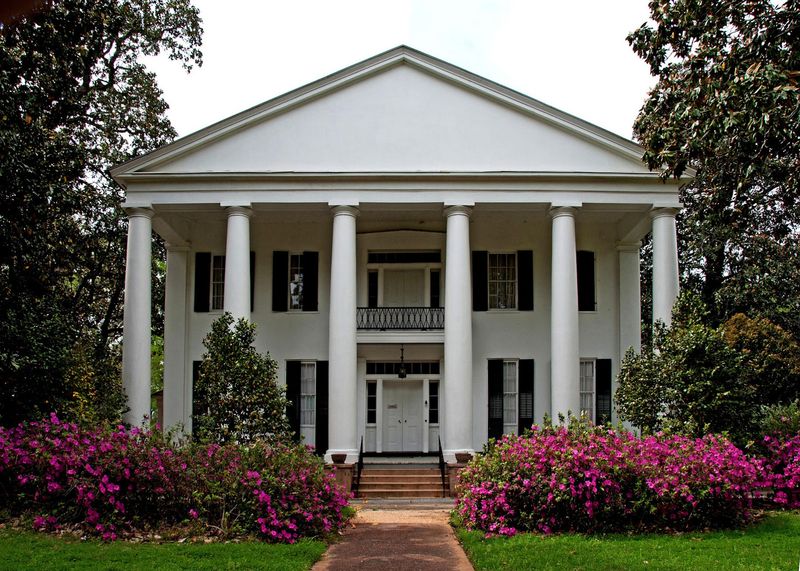
The drive into Greensboro is all farmland and small-town quiet, and then a grove of enormous magnolias opens up around a columned mansion that looks straight out of a history textbook.
Magnolia Grove was built around 1840 for Isaac and Sarah Croom, and the fifteen acres of fragrant magnolias gave the place its name. The bricks were made locally, tying the structure firmly to the soil it sits on.
Greek Revival architecture can feel cold in photographs. In person, with shade dappling the columns and cicadas going strong, it is warmer than expected.
Richmond Pearson Hobson, a Spanish-American War hero who later served in Congress, spent his boyhood here, and traces of the family remain throughout the rooms.
What stayed with me most was not the main house. The detached kitchen and the slave house on the property carry interpretive exhibits that address the labor and lives that made this grandeur possible, and skipping them would mean missing the truest part of the story.
It is a thoughtful, well-handled presentation that asks visitors to hold beauty and hard history at once.
Bring water, wear something breathable in summer, and take the full walk around the grounds instead of just the interior tour.
Address: 1002 Hobson St, Greensboro, Alabama 36744
6. Joseph T. Smitherman Historic Building, Selma
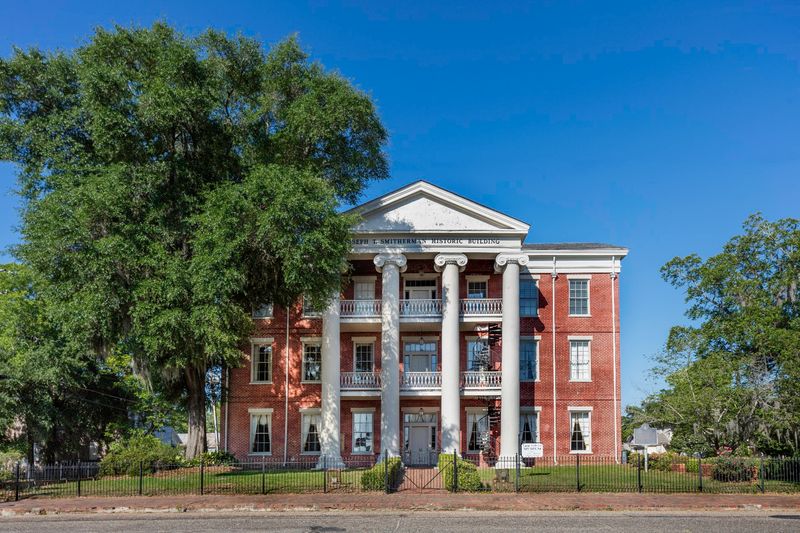
Few buildings have changed jobs as often as this one, and I mean that literally. Constructed in 1847, it opened as the Central Masonic Institute, a school created by local Masons to educate orphans and children of struggling members.
Then the Civil War arrived and the classrooms became a Confederate hospital. From learning to loss, all under one roof.
After the war it served as the Dallas County Courthouse from 1866 to 1901, handling the paperwork of a region rebuilding itself. Between 1911 and 1960 it operated as Vaughan Memorial Hospital, once again caring for the community.
Now the Greek Revival structure houses the Vaughan-Smitherman Museum, and the collections inside trace Selma’s long and complicated story across generations.
What struck me standing outside was how commanding it looks from the street, tall columns and a cupola perched above the surrounding rooftops like it is keeping watch.
Selma itself deserves unhurried time. The city holds some of the most significant chapters in American civil rights history, and this building fits into a much wider walk through those streets.
Check visiting hours before you arrive, since smaller museums often keep limited schedules, and allow at least an hour inside.
Address: 109 Union St, Selma, AL 36701
7. Cathedral Basilica of the Immaculate Conception, Mobile
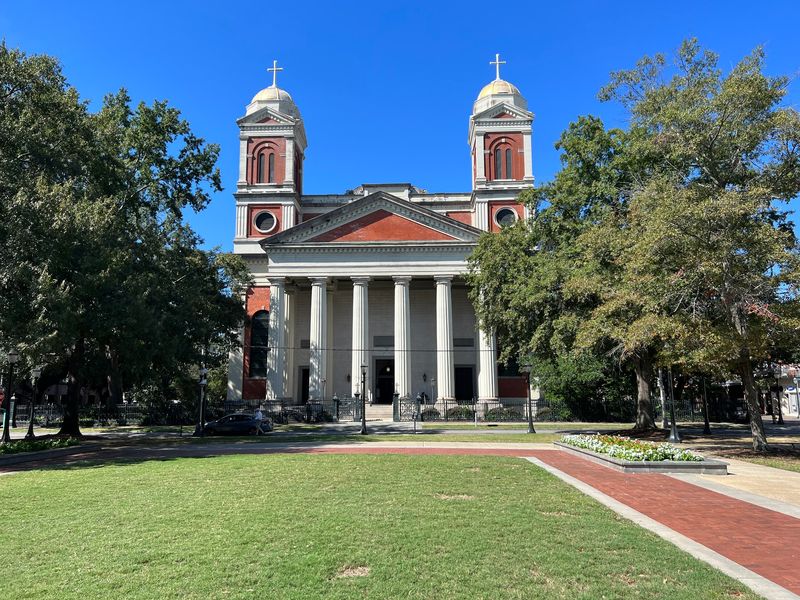
Mobile smells like salt air and old brick, and the city wears its age proudly. The cathedral downtown stopped me mid-sentence when I first saw it.
Consecrated in 1850, the building follows a grand Roman basilica design, with a portico held up by eight enormous Doric columns. The cornerstone went down in 1835, but money troubles meant the twin towers and portico were not finished until the 1870s and 1880s.
Patience, apparently, was part of the construction plan.
Catholic worship in this city goes back much further than the building itself. The first Catholic parish on the Gulf Coast was established here in 1703, which puts the roots of this congregation deep into colonial history.
In 1962, Pope John XXIII elevated the structure to a minor basilica, recognizing both its heritage and its standing in the community.
Inside, the scale hushes everybody automatically. Stained glass throws colored light across the floor, and the ceiling seems to pull your gaze upward whether you intended it or not.
Visits are best outside of service times, and quiet respect goes a long way. Afterward, the surrounding downtown blocks make for an easy stroll past ironwork balconies and shaded squares that feel a world away from the interstate.
Address: 2 S Claiborne St, Mobile, AL 36602
8. Fort Morgan, Gulf Shores
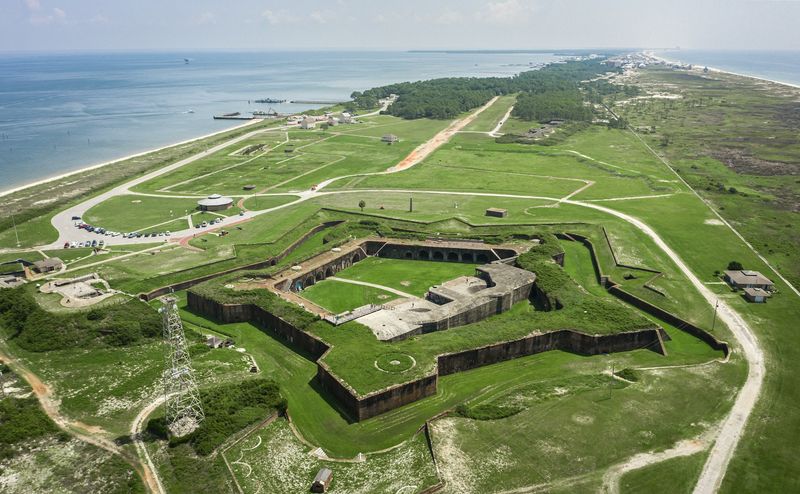
Ending a road trip beside the water was a good decision, and Fort Morgan makes it even better. Wind comes off Mobile Bay hard enough to rearrange your hair permanently.
Construction started in 1819 and wrapped up in 1834, producing a massive Third System masonry fort guarding the mouth of the bay. Roughly forty million bricks went into it, many laid by enslaved African American masons whose skill is still visible in every curve of the arches.
That number is hard to picture until you walk the ramparts.
The fort played a central role in the Battle of Mobile Bay in 1864, one of the most famous naval clashes of the Civil War. Its usefulness did not end there either, with intermittent service through the Spanish-American War and both World Wars.
Wandering the tunnels, I kept ducking under low arches and popping out into bright sunlight, which is oddly fun. Kids seem to love it for the same reason.
Bring a hat and sunscreen, because shade is limited once you climb up top. The drive out along the peninsula is scenic, and the ferry across the bay makes a memorable alternative route if the timing works out.
Address: 110 AL-180, Gulf Shores, AL 36542
9. Stagecoach Tavern, Mooresville
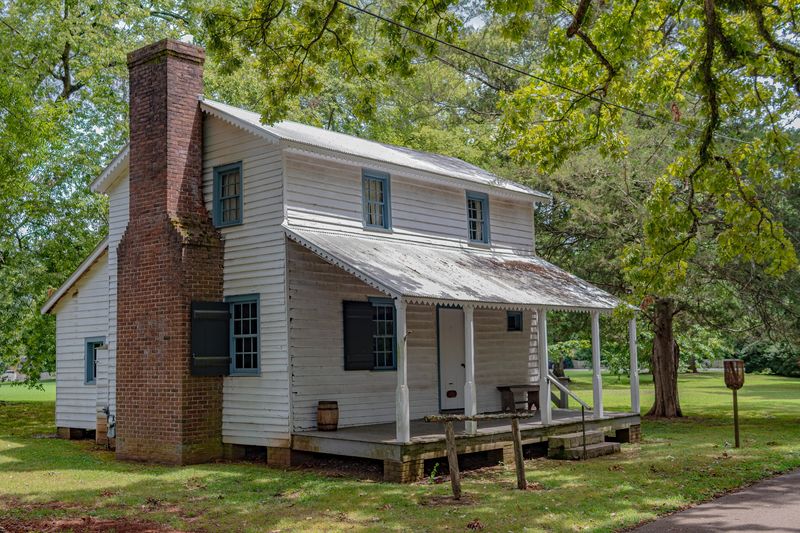
My journey continued to the tiny, tree-shaded village of Mooresville, where time seems to have stopped entirely. Tucked along High Street sits the historic Stagecoach Tavern, constructed around 1821.
It is widely celebrated as the oldest remaining frame public building anywhere in the state of Alabama. The small building originally functioned as a tavern and inn, constructed by Griffin Lampkin to house weary travelers.
In the early nineteenth century, an Act of Congress established a new mail route between Mooresville and Huntsville. Because of this, the tavern quickly doubled as the town’s first post office, with riders delivering mail on horseback.
Future president Andrew Johnson even spent time working as a tailor’s apprentice right down the street in 1842. Today, the exterior retains its weatherboard siding and classic early-American simplicity, standing out among the historic churches and homes.
Because the village does not operate public restrooms or commercial strips, it feels incredibly quiet and authentic. The building is typically opened to the public for select holiday events and guided group tours.
Walking past the old tavern gives you a clear sense of what Alabama looked like before the arrival of modern highways.
Address: 4936 High Street, Mooresville, AL 35649
