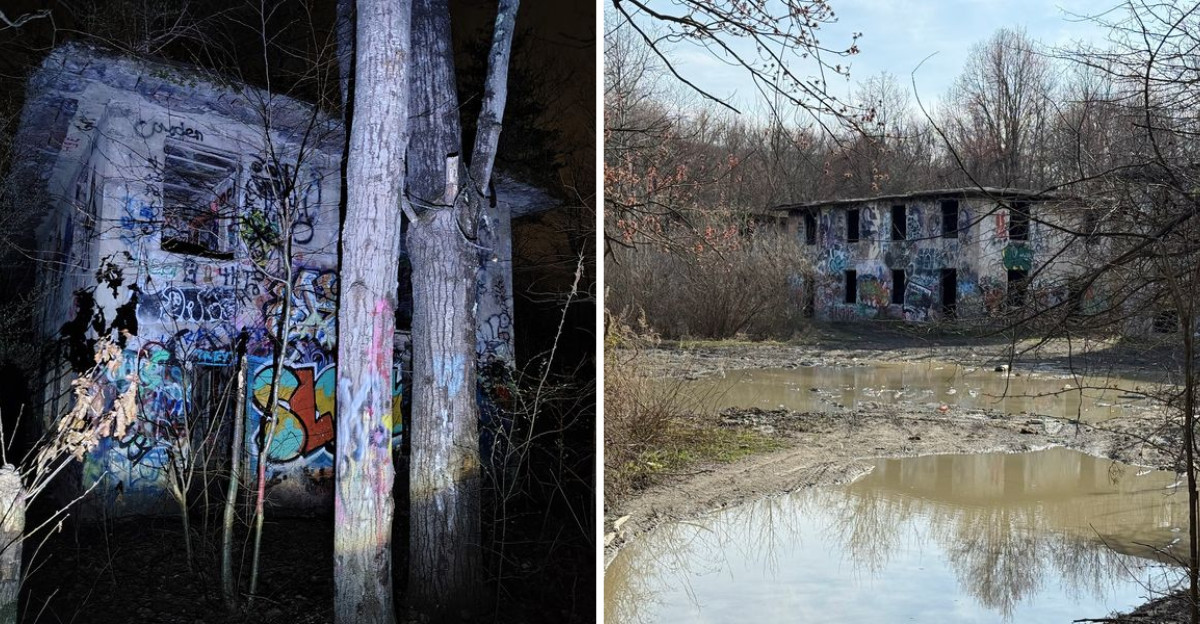
Twenty concrete duplexes sit in a rough square in a Pennsylvania woods, built in 1911 for coal company families, and the first gray shell appears through the trees after a muddy, unmarked trail that is honestly a little confusing.
I heard about this place from a friend who described it as a small ghost town hiding in plain sight, and I could not stop thinking about it until I finally went.
Graffiti covers almost every wall, some of it genuinely beautiful, and the quiet is so complete you can hear your own boots squelching in the damp ground.
What surprised me most was how solid the buildings still feel, over a century after the last family locked the door, the concrete holding its shape against the push of roots and weather.
The floor is cracked in places, and the windows are empty, but the walls still stand straight.
This place taught me more about the region’s coal history than any museum ever has, and it did it without a single plaque or velvet rope, just the weight of the buildings and the silence of the forest that has been reclaiming them for years.
The Railroad Dream That Started It All
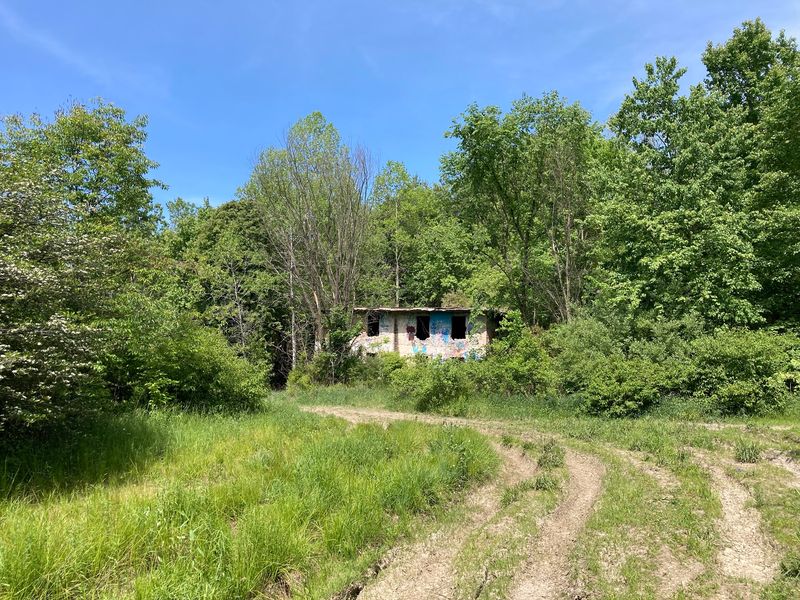
Back in 1911, the Delaware, Lackawanna and Western Railroad’s coal division decided it wanted to show the world what modern worker housing could look like. The project went up near the Truesdale Colliery, and the company called it the Garden City of the Anthracite Region.
That name sounds grand, and honestly the ambition behind it was real. Sidewalks, electric street lights, playgrounds, a baseball field, and tennis courts were all part of the original plan, which was unusual for a coal patch town.
What I find fascinating is how selective the whole thing was. Out of roughly 1,700 company employees, only about 40 families were chosen to move in, and residency was limited to English speaking workers holding higher value jobs like foremen, shopmen, and technicians.
Construction wrapped up in 1913, and the first families settled in that same year. Standing among the ruins now, I kept trying to picture children running between those buildings while the colliery hummed nearby.
The gap between the dream and what actually happened is the whole story here, and knowing that background before you visit makes every crumbling doorway hit differently.
Poured in a Single Day, The Steel Mold Trick
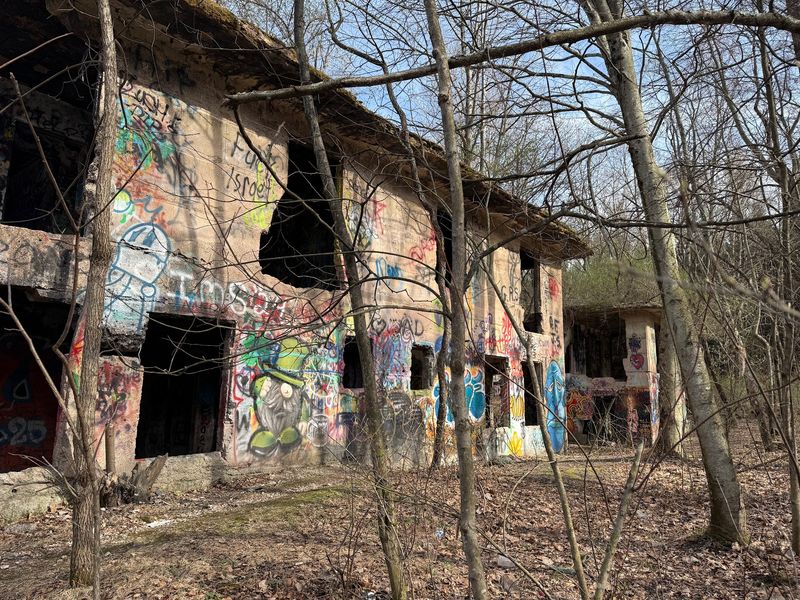
Here is the detail that made my jaw drop. Using a clever system of portable hinged steel molds, the railroad could pour an entire two-family house in a single day.
The mixture itself was a product of its time and place. Reinforced concrete with iron rebar, coal cinders, and crude oil blended right in, which was considered cutting edge engineering in the early 1900s.
Architects would file the look under International Style, though from the ground it reads as blunt and boxy. I ran my hand along one wall and could feel the pebbly cinder texture still poking through the paint layers.
Each duplex gave both halves seven rooms. Living room, dining room, and kitchen downstairs, then four bedrooms upstairs, which was genuinely spacious for the era.
You can still trace the room divisions when you walk inside, and the stair openings are obvious even where the steps have crumbled away.
Fast construction was the whole selling point, and it worked beautifully. Nobody seemed to ask whether a solid concrete box would actually be comfortable to live in through a Pennsylvania February, which turned out to be the question that mattered.
Why Living Inside Concrete Went Wrong Fast
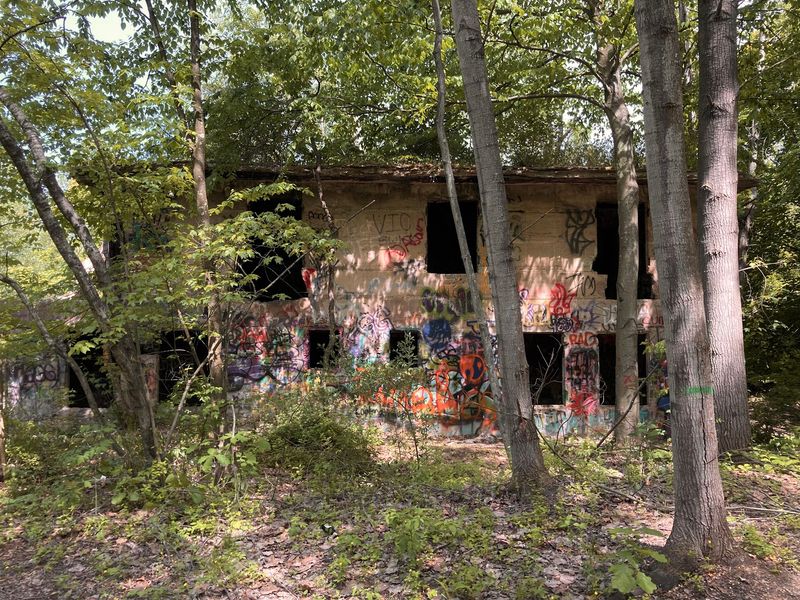
Concrete, it turns out, is a terrible insulator. Families who moved into these houses found themselves fighting cold and damp almost from the start, and Pennsylvania winters are not gentle.
Condensation built up so badly that clothing stored in upstairs closets reportedly froze solid. Paint peeled off the walls in sheets, and plaster kept dropping away no matter how often it was patched.
Poking my head into one of the shells on a damp morning, I could immediately understand the complaint. Even with no roof and open windows, the air inside felt colder and heavier than outside.
There was another problem waiting downstairs, or rather out back. Indoor plumbing was never installed, so each building had concrete outhouses and coal bins behind it.
Imagine walking out into that damp cold in the middle of the night. The word utopian starts to feel like a stretch pretty quickly.
I think that contrast is what makes the place so gripping. Somebody engineered these homes to last forever and somehow skipped the part about whether anyone could stand to sleep in them.
When Dynamite Lost to a Concrete Wall
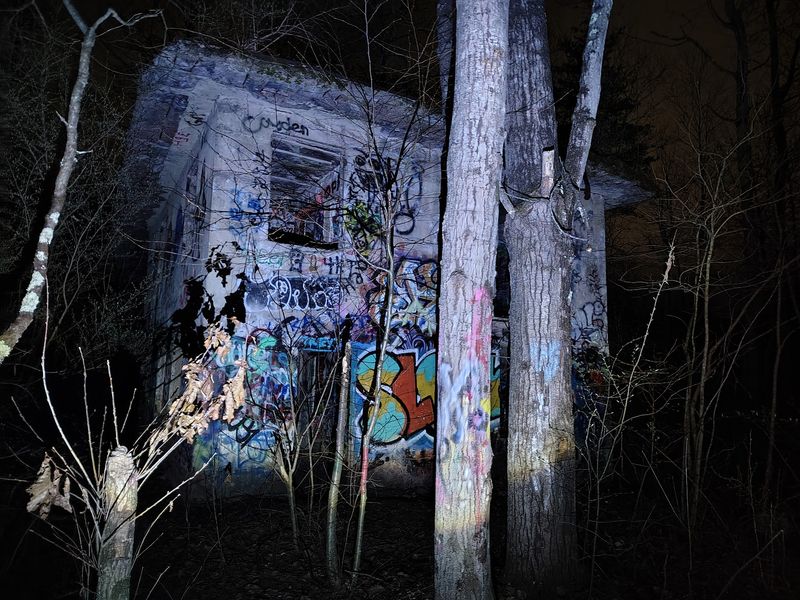
The demolition attempt might be my favorite piece of this story. Wanting the site gone, the company reportedly packed one building with around 100 sticks of dynamite and lit it up.
The blast blew out windows and doors. The concrete shell barely flinched.
Faced with structures that refused to break apart, and a demolition bill that would only climb, everyone involved gave up and left the buildings standing. That stubbornness is exactly why you can visit today.
You can still see the evidence when you look closely. Window and door openings gape wide with ragged edges, while the walls around them stay thick and square and weirdly intact.
I kept touching the corners because they felt so solid compared to the collapsed roofs above. Rusted rebar pokes out in places like bones, and it holds firm.
There is something almost funny about a building winning a fight against explosives and then quietly losing to rain, frost, and a hundred years of vines. Nature took the slow route and got the job half done anyway.
Graffiti That Belongs in a Gallery
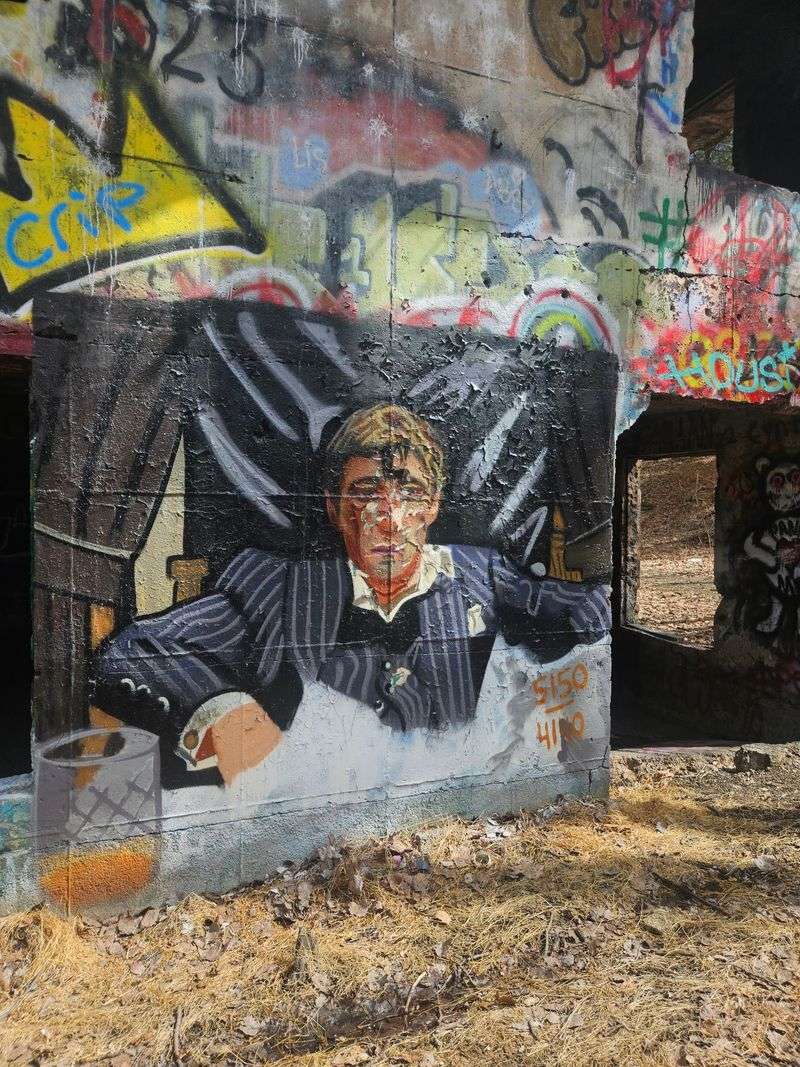
Color is the first thing that hits you here, which is not what I expected from a coal era ruin. Nearly every surface wears spray paint, layers deep, and some of it is legitimately skillful.
Full wall murals sit next to quick tags and stencils. Interior rooms turn into little painted caves, and stairwell openings frame bright patches like accidental artwork.
Visitors regularly mention the artistry, and I get why. One piece I saw covered an entire gable end in blues and golds that looked planned rather than tossed off.
The paint keeps changing too, which means no two visits give you the same walls. That constant turnover makes photography here weirdly rewarding.
My advice is to slow down and actually look inside each duplex rather than just circling the outside. Some of the best work is tucked into back rooms where light comes through broken ceilings.
Bring a camera you do not mind getting muddy. Between the gray concrete, green moss, and neon paint, the color contrast does most of the work for you.
The Swimming Pool Nobody Talks About
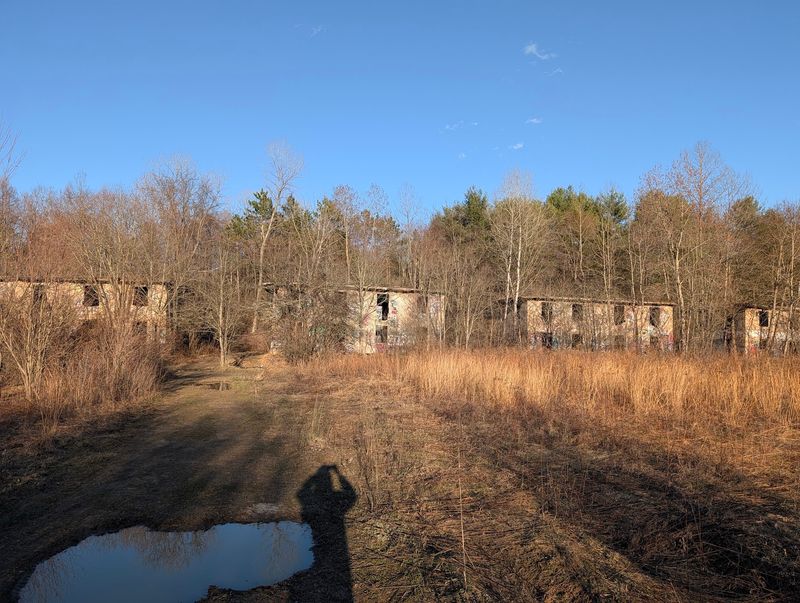
Among the original amenities was a concrete swimming pool, which sounds like a genuine luxury for a company housing project in 1913. Families would have had a real neighborhood gathering spot.
The pool did not last. After a boy drowned there in 1914, it was filled in, and that was the end of it.
Reading about that before my visit changed how I looked at the open ground in the middle of the site. What reads today as just another muddy clearing carried real weight for the people who lived here.
You will not find a marker or a sign pointing it out. Like most of Concrete City, the details only exist if you bring them with you.
That is honestly the biggest reason I recommend doing your homework first. Visitors say the same thing over and over, that knowing the history transforms the walk from a graffiti hunt into something closer to a memorial stroll.
Playgrounds, tennis courts, sidewalks, and street lights all vanished the same way. Only the stubborn concrete shells kept their shape.
Finding the Trail Without Losing Your Mind
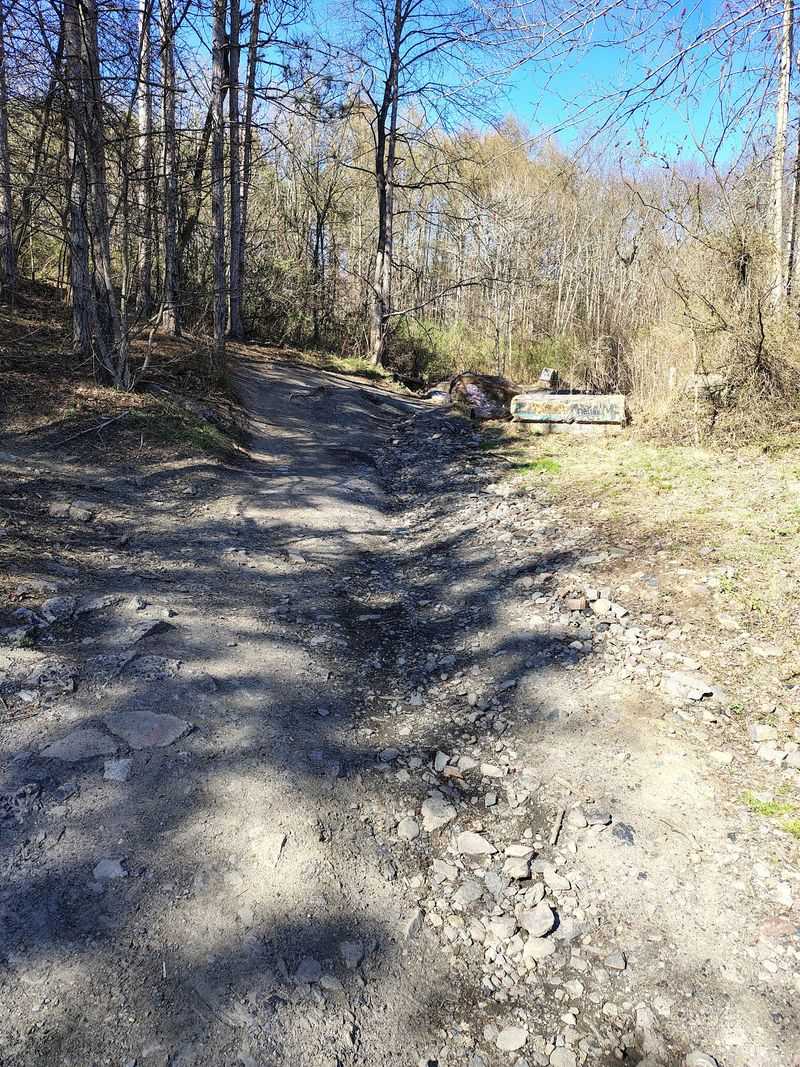
Getting in is the part people underestimate, so let me save you some circling. There is no parking lot and no entrance sign, just a rutted mud road heading into the woods.
Visitors commonly park along nearby streets and walk in from there, with the shoulder near the crossroads and the power line corridor being the usual reference points. Some describe graffitied concrete blocks marking where the footpath starts.
Others park along Front Street and walk up Hughes Street to a gate, then follow the muddy trail to the ruins. One of the closer entrances has been gated at times, so stick to the accessible path rather than crossing anything questionable.
The first stretch drops steeply before flattening out into a wide, easy walk of just a few minutes. Then the houses appear through the trees on your left.
A short slope brings you down into the site, gentlest right beside the first building. I fumbled this at first and slid the last few feet on my heels.
Give yourself daylight and patience, and it is genuinely straightforward.
Boots, Mud, and Broken Glass Reality Check
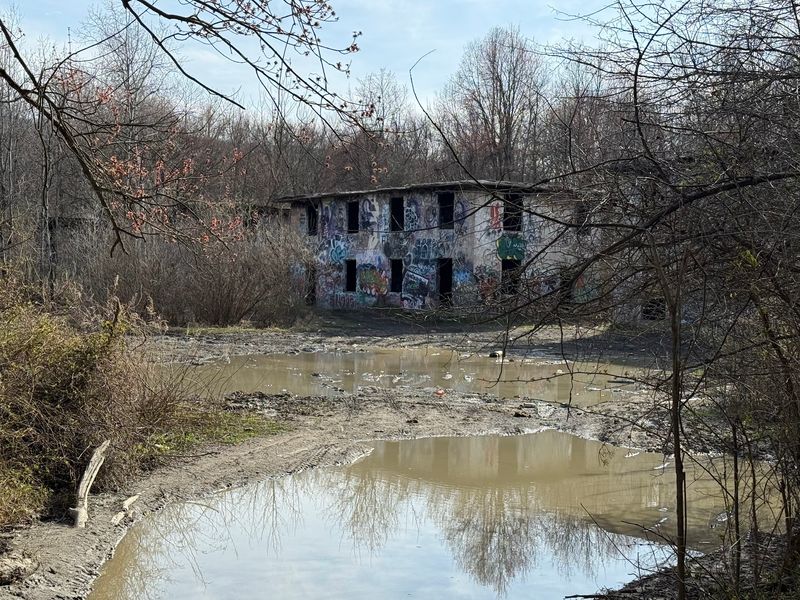
Nobody exaggerates about the mud. The roads inside Concrete City are rutted and soft, partly because off road drivers use them, and rain turns the whole place into soup.
Sturdy hiking boots or rubber boots are the single best thing you can bring. Pants you do not care about come a close second.
Broken glass covers a lot of the paths and floors, along with rubble and stray metal. Footing inside the buildings gets slippery when wet, and some stairwells are crumbling badly.
Poison ivy grows around the site too, which is one more reason to cover your legs. Several visitors specifically advise leaving dogs at home because of the glass and sharp debris.
Roofs and floors have collapsed in places, so climbing around is entirely at your own risk. I stayed on ground level for most of it and still saw everything I wanted to see.
Pack water, a snack, and a small trash bag. Regulars keep asking people to carry out whatever they bring in, and that request seems more than fair.
Planning a Visit That Actually Sticks With You
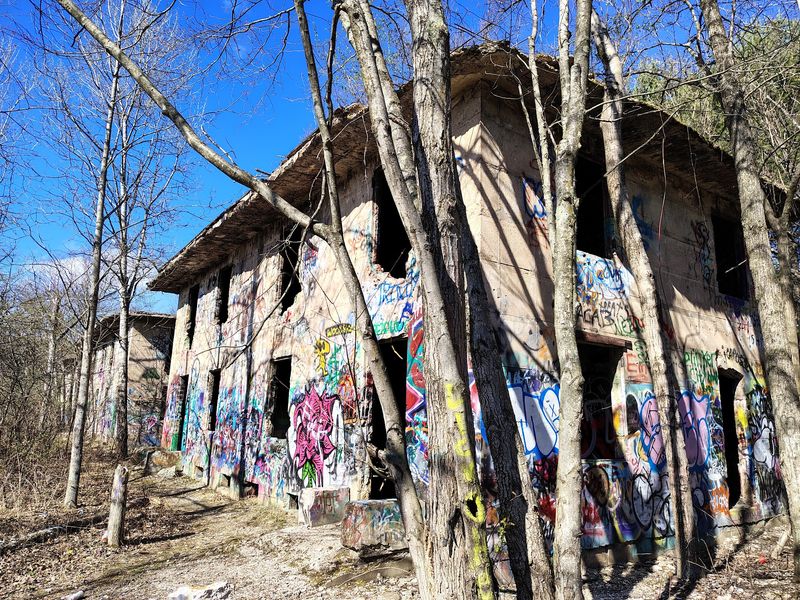
Give yourself real time here, because rushing wastes the place. All twenty or so duplexes share the same design, yet each one has weathered differently and holds different paint.
Families do visit, and some describe it as an approachable first abandoned site for curious kids who like exploration videos. Reading the history together beforehand pays off, since children will absolutely ask why anyone built houses out of solid concrete.
Cooler months bring better visibility and less mud, so late fall through early spring is my pick. Mornings tend to be quietest, and the site is technically accessible around the clock.
Bring a packed lunch if you want to linger. There are no facilities, no water, and no shelter beyond the roofless buildings themselves.
GPS coordinates sit at roughly 41 degrees 11 minutes north, 75 degrees 58 minutes west, on the boundary between Hanover Township and Nanticoke in Luzerne County. Cell service can be spotty, so screenshot your directions.
Leave with your trash and your photos, nothing else. Address: 372 Davison Dr, Hanover, Pennsylvania 18706.
