Codebreakers, spies, hidden messages, it sounds like something out of a movie. But this Maryland museum brings that world to life, and it is completely free to explore.
The National Cryptologic Museum dives into the history of intelligence and code breaking, from the early days of cryptography to modern cybersecurity. You can see real artifacts, try your hand at decoding messages, and learn about the people who shaped secret communication.
It is the kind of museum that surprises you with how engaging it is. The exhibits are hands on and fascinating, and it is all hidden inside an unassuming building.
A destination that sparks curiosity and leaves you with a new appreciation for the art of secrecy.
The Enigma Machine Up Close
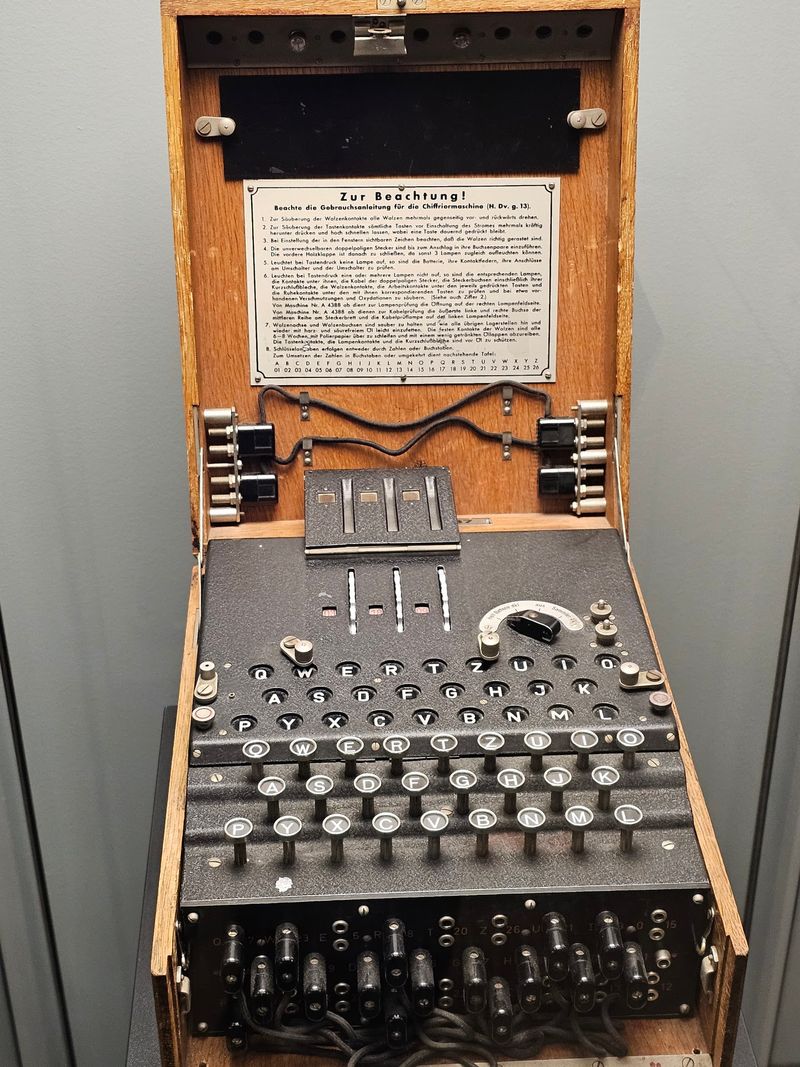
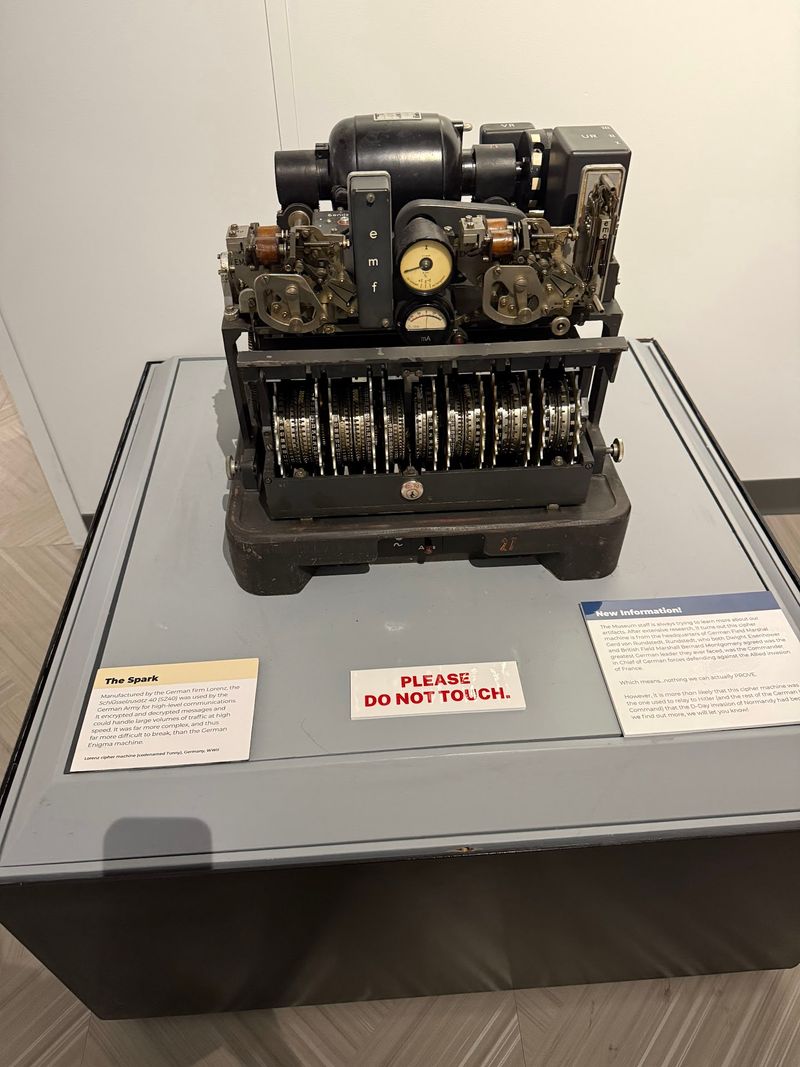
Few moments in a museum hit quite like seeing a real Enigma machine sitting just a few feet away from you. These compact, typewriter-like devices were used by Nazi Germany during World War II to send encrypted military messages, and for a long time, Allied forces had no idea how to crack them.
The fact that they eventually did is one of the most dramatic intelligence stories in modern history.
The National Cryptologic Museum has genuine Enigma machines on display, and sometimes visitors can actually interact with them. That hands-on element makes a huge difference.
You stop thinking of it as a dusty artifact and start understanding it as a working piece of technology that once held life-or-death information.
The machine operates through a series of rotating wheels called rotors that scramble letters as they are typed. Each rotor setting creates a different encryption, meaning the possible combinations numbered in the billions.
Breaking it required not just brilliant minds but also captured machines and code sheets from the field.
Alan Turing and a team at Bletchley Park in England are often credited with cracking the Enigma, using a device called the Bombe to systematically work through possible settings. The museum has a U.S.
Navy Bombe on display as well, giving full context to both sides of this cryptologic puzzle. Seeing both machines together in one space is genuinely remarkable.
It connects the problem to the solution in a way that no textbook ever quite manages to do.
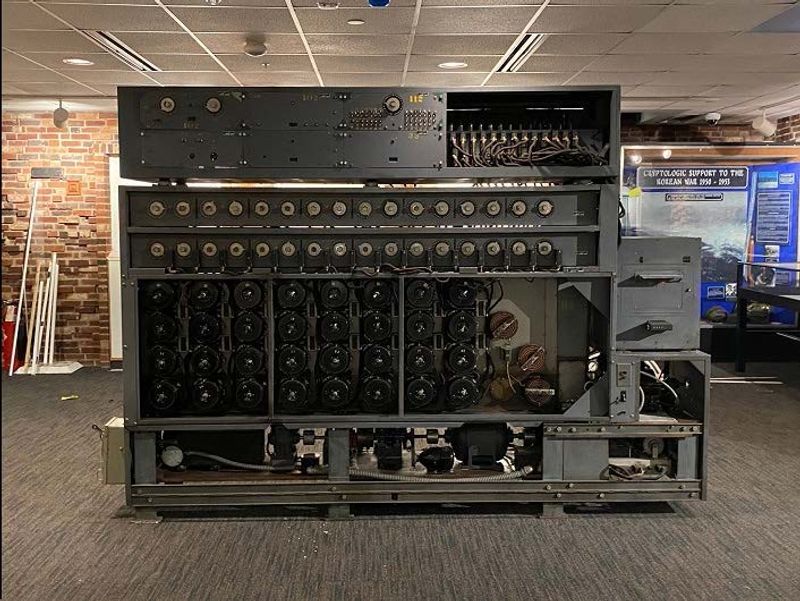
The U.S. Navy Bombe and the Art of Codebreaking
Most people have heard the name Alan Turing, but the massive mechanical effort behind cracking Enigma codes often gets overlooked. The U.S.
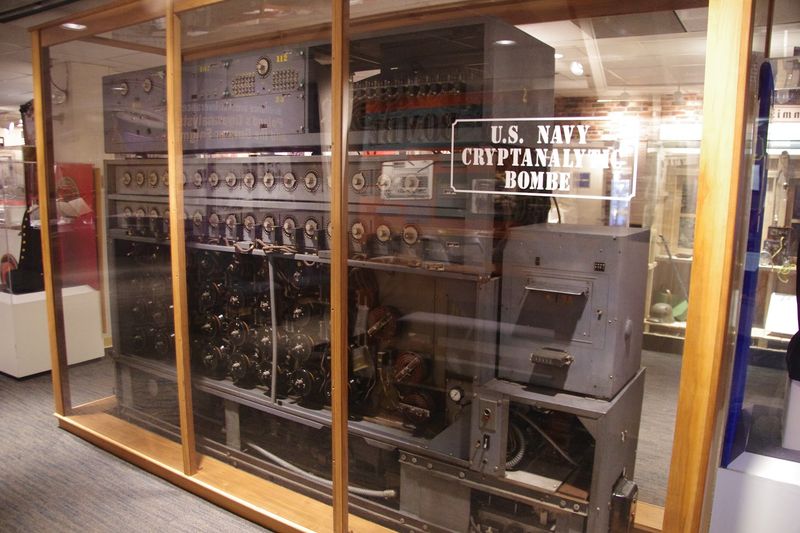
Navy Bombe on display at the National Cryptologic Museum changes that. This enormous machine, packed with rotating drums and complex wiring, was built to systematically test possible Enigma settings until the right one was found.
The scale of the Bombe is the first thing that gets you. It is not a sleek computer or a small gadget.
It is a wall of mechanical logic, clicking and spinning through possibilities at a speed that human minds alone could never match. Seeing it in person makes the codebreaking effort feel tangible and almost overwhelming in its ambition.
During World War II, dozens of these machines ran around the clock in secret facilities. The intelligence gathered from decrypted messages, known as ULTRA, gave Allied commanders critical advantages in battles across Europe and the Atlantic.
Historians widely believe this intelligence shortened the war by years.
What makes the museum’s presentation so effective is that it does not just show you the machine. It explains the process, the people, and the stakes involved.
Informational panels walk visitors through how the Bombe worked alongside human analysts who narrowed down possible settings using linguistic clues called cribs. The combination of human intuition and mechanical speed was what finally cracked one of history’s most complex ciphers.
It is a powerful reminder that some of the greatest breakthroughs happen when creativity meets persistence.
George Washington, Spy Master
Before there was an NSA, before there were satellites or encrypted emails, George Washington was already running one of the most effective intelligence networks in American history.
The National Cryptologic Museum pays real tribute to this side of the Founding Father that most history classes skip right over.
Washington understood early on that information could win battles that armies could not.
During the Revolutionary War, Washington organized spy rings and used coded letters to pass critical information between agents. He employed invisible ink, ciphers, and carefully constructed cover stories to protect his sources.
Some of these techniques were surprisingly sophisticated for the era, and they worked well enough to help turn the tide against a far better-equipped British force.
One of the more fascinating details highlighted in the exhibit is how Washington personally managed his intelligence operations, often reviewing coded reports himself. He was not just a general delegating spy work to others.
He was actively involved in designing the systems that kept his network secure.
The exhibit draws a clear line from Washington’s methods to modern intelligence practices, showing how foundational these early efforts were to what eventually became the U.S. intelligence community. It adds a whole new dimension to a figure most people think they already know well.
Honestly, learning about Washington as a spymaster is one of those moments where history suddenly feels alive again. It makes you want to go back and reread everything you thought you already knew about the American Revolution.
Native American Code Talkers and Their Unbreakable Language
One of the most moving sections of the National Cryptologic Museum is the tribute to Native American Code Talkers. Their story is one of courage, ingenuity, and a painful irony that deserves to be understood fully.
The same indigenous languages that the U.S. government once tried to suppress became one of the most powerful communication tools in American military history.
During both World Wars, Native Americans from various nations used their native tongues to transmit sensitive military communications. The languages were so complex and so little known outside their communities that enemy forces had virtually no chance of decoding them.
It was an unbreakable cipher built not in a lab but through generations of living culture.
The Navajo Code Talkers are perhaps the most well-known group, serving prominently in the Pacific Theater during World War II.
But the museum broadens the story to include contributions from earlier conflicts and other nations as well, giving a fuller picture of how widespread and vital this practice was.
What hits hardest is the context. Many of these men had grown up in a country that actively discouraged them from speaking their own languages.
Yet they stepped forward to serve and to protect those same communities with their voices. The exhibit handles this history with appropriate depth and respect.
It is not just a military story. It is a story about identity, resilience, and the unexpected ways that heritage can become a shield.
Plan to spend some time here. It earns it.
The Zimmermann Telegram and a War-Changing Decode
A single decoded message helped pull the United States into World War I. That is not an exaggeration.
The Zimmermann Telegram, sent in January 1917 by German Foreign Secretary Arthur Zimmermann to the German ambassador in Mexico, proposed a military alliance against the United States.
British intelligence intercepted and decoded it, then passed it to the Americans, and the political fallout was enormous.
The National Cryptologic Museum features an exhibit on this pivotal moment, and it is a great example of how intelligence work can change the course of world events without a single shot being fired.
The telegram proposed that Mexico attack the U.S. in exchange for help reclaiming Texas, New Mexico, and Arizona.
When the contents became public, American outrage helped shift opinion toward entering the war.
What makes this story so compelling from a cryptology standpoint is the layered complexity involved.
The message was encoded using a German diplomatic cipher, and British codebreakers at Room 40 had to be careful about how they revealed their knowledge without tipping off Germany that their codes had been broken.
The reveal was handled through careful intelligence maneuvering.
The exhibit explains both the decoding process and the diplomatic aftermath clearly enough for younger visitors to follow while still offering enough depth for history buffs. It is one of those stories where the behind-the-scenes work mattered just as much as anything happening on the battlefield.
The telegram is a small document with an enormous legacy, and the museum treats it exactly that way.
Cold War Technology and the Race to Stay Secret
The Cold War section of the National Cryptologic Museum has a different energy from the World War exhibits. It feels less like history and more like something that was happening just yesterday.
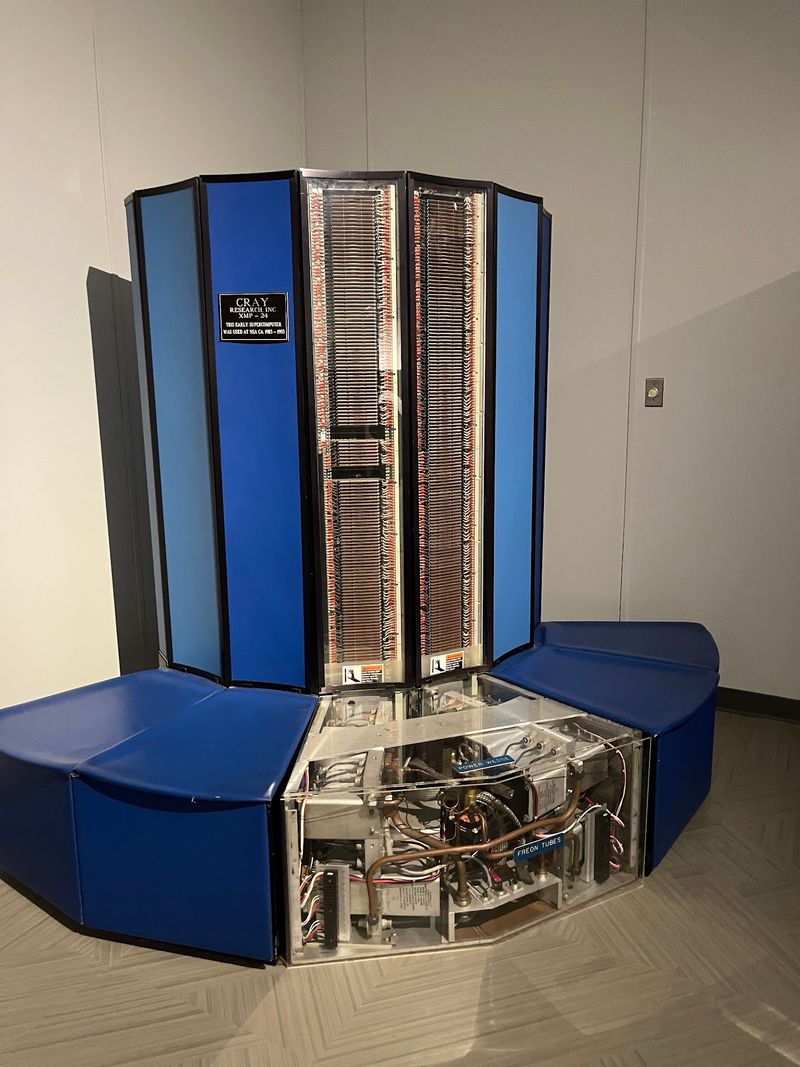
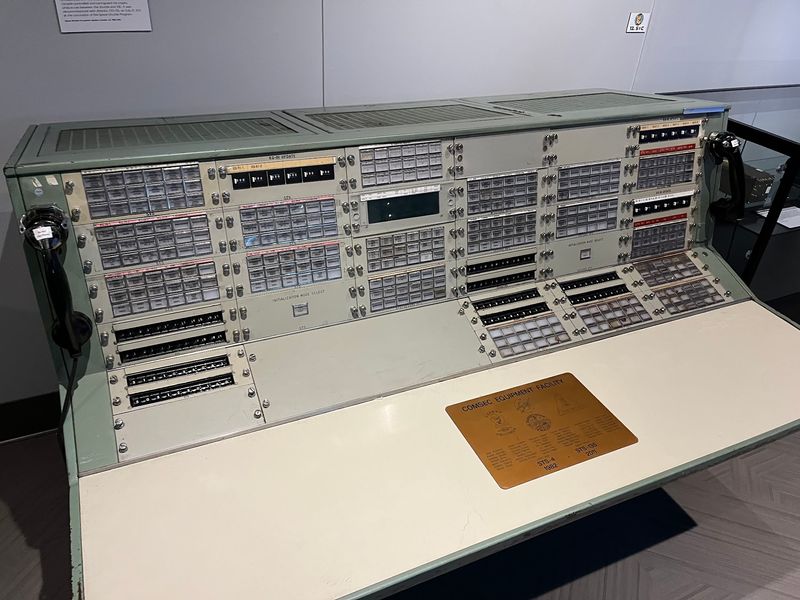
The technology on display, from secure telephones to early supercomputers, is bulky and strange-looking by today’s standards, but each piece represents a genuine arms race in the world of secrets.
Secure telephone units like the STU-I, STU-II, and STU-III are on display, showing how the U.S. government worked to protect sensitive voice communications from Soviet eavesdropping. These were not consumer products.
They were carefully engineered systems used by officials who needed to discuss classified information over standard phone lines.
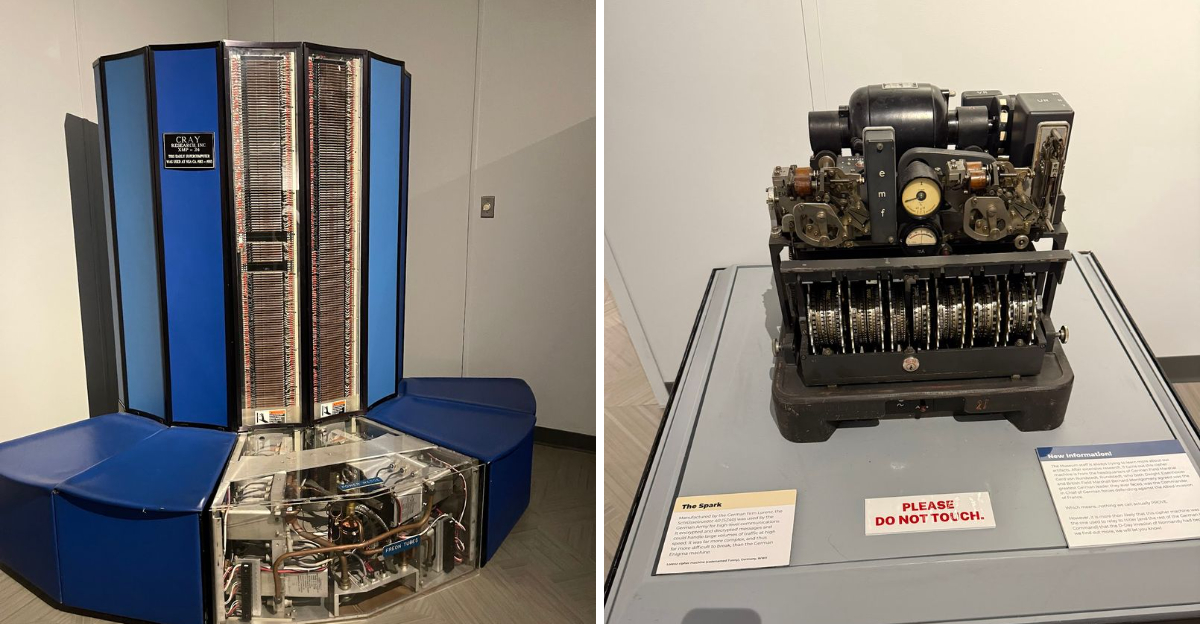
The museum also houses early supercomputers including the Cray Y-MP Ziegler and FROSTBURG, machines that once represented the absolute cutting edge of computational power. They look almost comically large compared to the devices in your pocket today.
But in their time, they were critical tools for processing enormous amounts of intercepted data and breaking foreign codes.
There is also a Russian Fish machine on display, a German multichannel intercept teletype captured during World War II and later used to gather intelligence on Soviet communications.
The fact that captured enemy equipment became a key intelligence tool is a fascinating detail that the exhibit explains well.
The Cold War section as a whole is a reminder that the battle for information never really pauses. It just changes shape, changes tools, and moves into new territory with every passing decade.
National Vigilance Park and the Reconnaissance Aircraft Outside
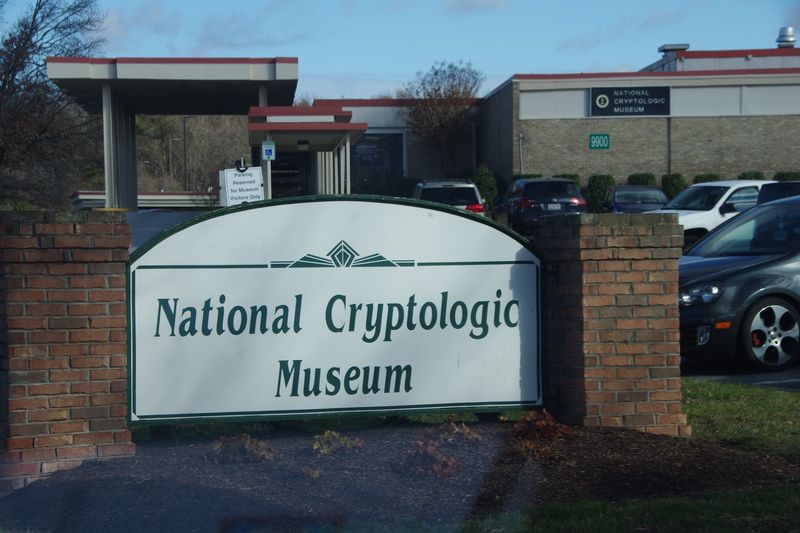
Right outside the museum, there is an unexpected bonus that a lot of visitors almost walk right past. National Vigilance Park sits adjacent to the building and holds a collection of full-size reconnaissance aircraft that once played real roles in U.S. signals intelligence operations.
It is free, open air, and genuinely impressive in a way that sneaks up on you.
The aircraft on display include a U.S. Army Beechcraft RU-8D Seminole, a Lockheed C-130 Hercules modified to resemble a reconnaissance variant, and a U.S.
Navy Douglas EA-3B Skywarrior. These are not replicas.
They are actual aircraft that have real operational histories, and the plaques nearby explain what each one was used for and why it mattered.
The park also serves as a memorial to the crew members who lost their lives during intelligence-gathering missions. That weight is felt when you read the names and details.
These were not combat deaths in the traditional sense, but they were people who died in service of gathering information that protected others. The park honors that sacrifice quietly and with dignity.
Kids especially tend to love this part of the visit because the aircraft are enormous and right there at eye level. Adults tend to slow down and read more carefully once the scale of the memorial sinks in.
It is a good combination. The park adds outdoor breathing room to what is otherwise an indoor experience, and it extends the museum’s story in a way that feels natural and important.
Do not skip it.
The Research Library and Interactive Learning Resources
Not every visitor to the National Cryptologic Museum knows about the research library hidden inside, and that is a shame because it is genuinely useful.
The library holds an interactive database of the museum’s collection, photographs of artifacts, and a wide range of unclassified and declassified books and documents on cryptologic history.
For students and researchers, it is a real resource, not just a display.
One of the most notable materials available is access to the VENONA documents. These are declassified records from a secret U.S. program that worked to decrypt Soviet intelligence communications from the 1940s through the 1980s.
The program revealed the identities of numerous Soviet agents operating inside the United States and contributed significantly to Cold War counterintelligence efforts.
The library is not just for academics. Curious visitors can use the interactive database to learn more about specific artifacts they saw on the museum floor or to explore topics that caught their interest during the tour.
It is a great way to go deeper without needing a university library card or a background in intelligence history.
For younger visitors, the museum sometimes provides ciphers to solve as they move through the exhibits. That kind of active engagement makes history feel like a game rather than a lecture.
The whole museum is built around the idea that learning should feel rewarding, and the library is the quieter, deeper extension of that philosophy.
Address: 8290 Colony Seven Road, Annapolis Junction, Maryland 20701.
