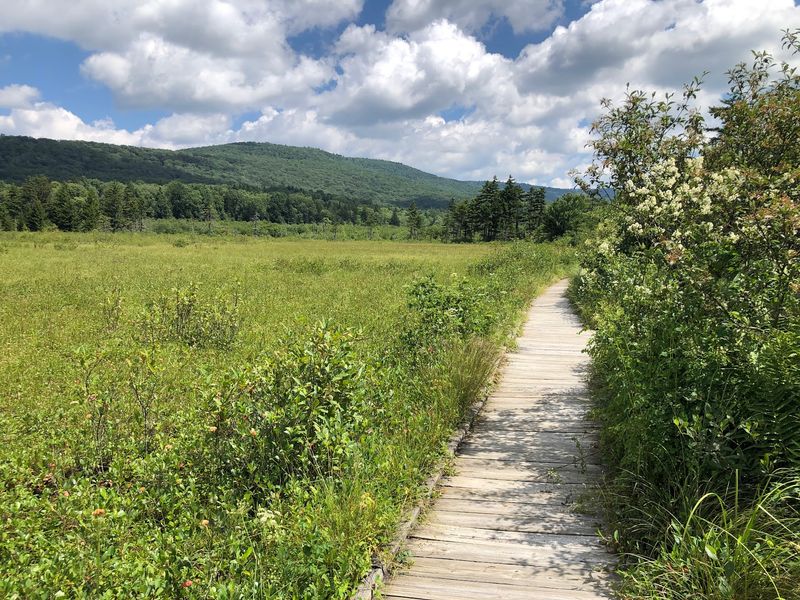
Purple pitcher plants catch and digest insects in a mountain bog that feels like it belongs in northern Canada. And yes, it sits right here in West Virginia.
The ground out there is spongy peat, built from partly decayed plant matter. In some spots, that layer runs 10 to 20 feet deep.
I like how the whole thing is a leftover. When the Ice Age cooled this part of the world, northern plants moved south, and some of them never left.
They’re still growing in a bog high in the Allegheny Mountains.
You don’t need hiking boots or a passport to see it. A wooden boardwalk loops right through the middle, and nobody charges admission.
I can’t imagine a cheaper way to visit a slice of the far north. So how did a scrap of tundra end up holding on this far south?
A Patch Of The Far North Holding On In The Allegheny Mountains
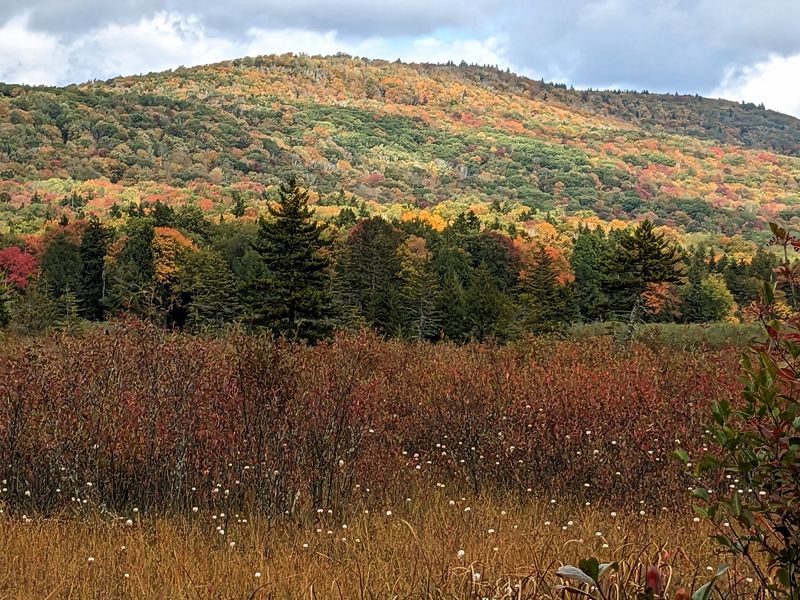
High in Pocahontas County, the Cranberry Glades Botanical Area protects about 750 acres of rare mountain wetland. It sits inside the Monongahela National Forest, managed by the USDA Forest Service.
The botanical area holds the largest collection of bogs in West Virginia. That alone makes it a standout, but the bigger story is what grows there.
Many of the plants here normally belong in boreal bogs far to the north. Folks up in Canada call those wetlands muskegs, and the Glades resemble them closely.
Some northern species reach the southernmost point of their range right here.
The bog floor sits at roughly 3,400 feet in elevation. That height keeps the air cool and the ground wet for much of the year.
Those conditions are exactly what northern plants need to stay comfortable.
So the name makes sense once you see it. Cranberries really do grow here, tucked among mosses and sedges on a soggy mountain basin.
For a family travel stop, it’s an easy sell. Parents get a genuine scientific oddity, and nobody needs special gear to enjoy it.
The real reward is standing in a landscape most people assume requires a long flight north.
Thank The Glaciers For This Strange Little Basin
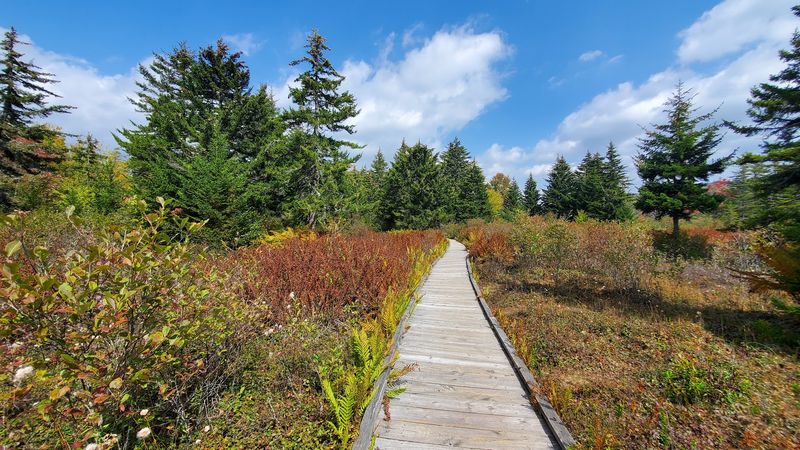
Funny thing about this Ice Age leftover: the glaciers themselves never actually reached it. The massive ice sheets stopped well north of West Virginia.
Their influence still traveled south, though. The colder climate pushed northern plants down into the Appalachians, where they found new homes in cool, wet mountain pockets.
When the ice retreated, the climate warmed across most of the region. Many of those northern plants faded from lower ground over time.
In this high, chilly basin, they held on.
Sources commonly date the beginnings of the bog to roughly 10,000 to 12,000 years ago. That’s a long run for a soggy patch of mountain ground.
The secret is peat. Wet, acidic, low-oxygen conditions slow down decay, so dead plants pile up instead of breaking apart.
Layer after layer, the bog built itself into a deep, spongy sponge.
Scientists often describe places like this as relict ecosystems. In plain terms, it’s a living leftover from a colder chapter of history.
That’s what earns the tundra comparison. Nobody’s claiming caribou wander through, but the plant life tells a story the rest of the state forgot long ago.
Half A Mile Of Planks Keeps Your Feet Out Of The Muck
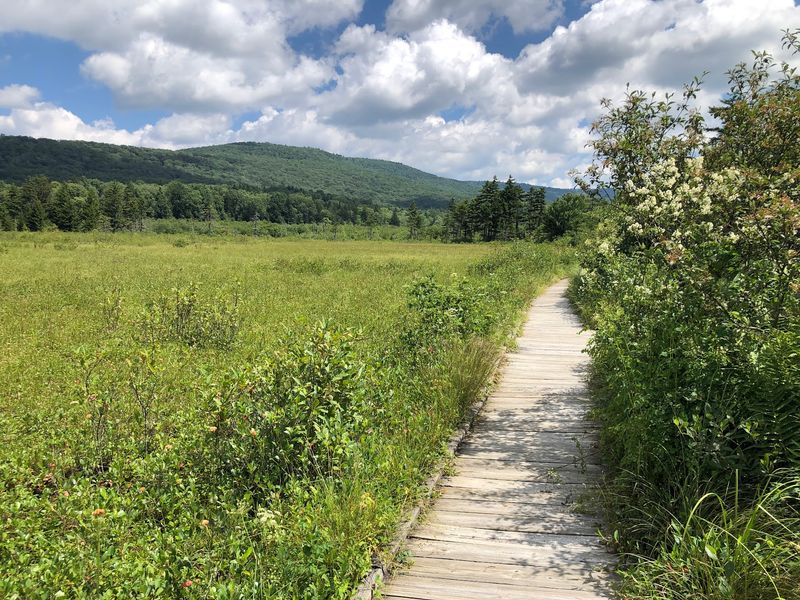
Stepping straight onto the bog would be a terrible idea. The peat is soft, the plants are fragile, and your shoes would not thank you.
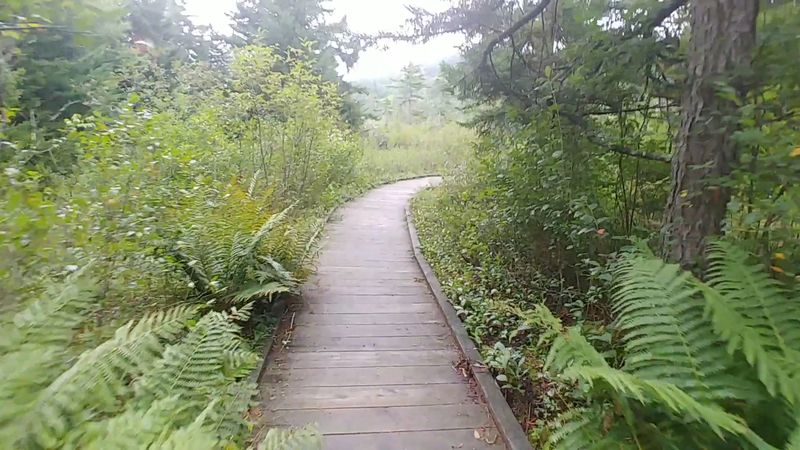
That’s why the Forest Service built a boardwalk. The loop runs about half a mile and carries you into two of the four main bogs.
From the parking area, a wooden path heads through the woods before opening onto Round Glade. The loop then passes different glade types and crosses Yew Creek into Flag Glade.
Names of the areas are carved right into some of the planks. Small interpretive signs along the way explain the plants and wildlife around you.
The walk is mostly level, with only a few dips. Most people can finish it in about an hour, unless they stop often for photos.
A beaver dam and den have been spotted in a creek section near Flag Glade. Keep your eyes on the water as you pass.
One firm rule applies here. Stay on the boardwalk the whole time, both for your safety and for the plants that have survived thousands of years without footprints.
Bug-Eating Plants Are The Stars Of This Show
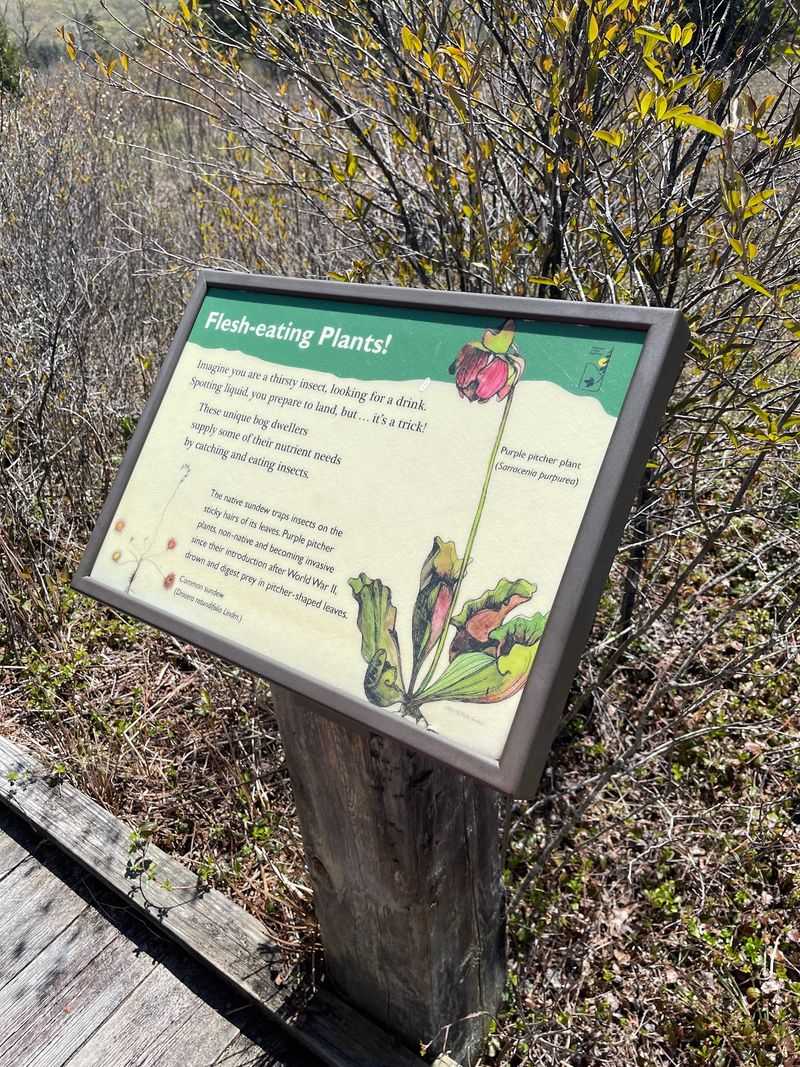
Plants that eat insects sound like something from a sci-fi movie. At the Glades, they’re just part of the neighborhood.
Bog soil is acidic and short on nutrients. Two carnivorous plants solved that problem by catching their own protein: the purple pitcher plant and the sundew.
Pitcher plants grow tube-shaped leaves that hold water. Insects slip in and can’t climb back out, which turns the leaf into a slow digestive trap.
Sundews take a stickier approach. Their tiny leaves wear glistening hairs that hold insects fast, a bit like nature’s flypaper.
Spotting them takes patience, since sundews are quite small. Pitcher plants are easier to pick out once you know their reddish, vase-like shape.
Kids usually love this part, but adults get hooked too. It’s hard not to feel a little impressed by a plant that figured out how to order takeout.
Remember to look only, never touch or pick. These plants are protected, and their survival here depends on visitors leaving everything exactly where it grows.
Bring a camera with a decent zoom. A close shot of a pitcher plant makes a great trophy from the trip.
Cranberries, Moss, And A Cast Of Rare Bog Characters
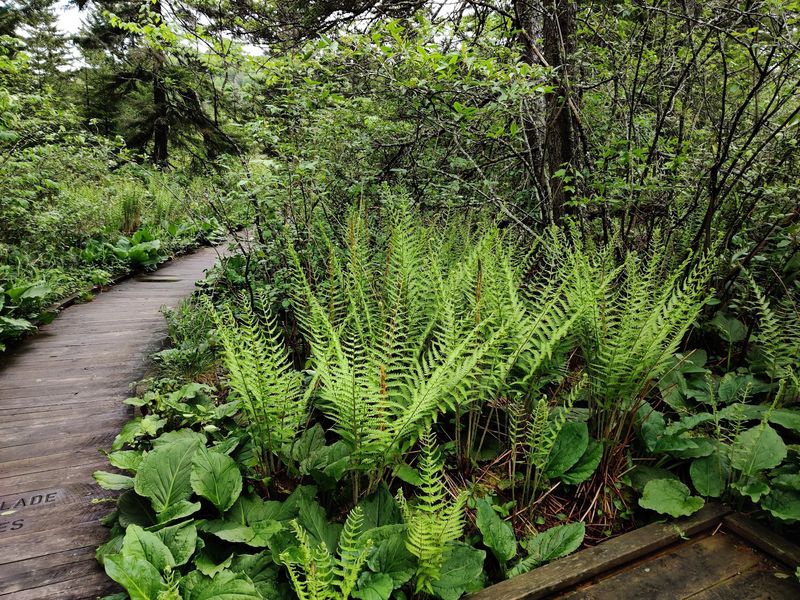
Yes, there are actual cranberries. The bog’s namesake grows low among the mosses, small and easy to miss if you’re rushing.
Sphagnum moss forms much of the bog’s living carpet. It soaks up huge amounts of water and helps keep the ground acidic, which shapes everything else that grows here.
Reindeer lichen, a pale and spongy growth, adds another northern touch. The name alone fits the tundra theme nicely.
Watch for bog rosemary and buckbean as well, two less common species on the plant list. Skunk cabbage also shows up in wetter spots, living up to its name.
Ferns and many kinds of fungi fill in the edges where bog meets forest. Walking the loop twice can reveal details you missed the first time.
The mix changes with the calendar. Spring brings fresh growth and blooms, while late fall can paint the open bog in deep red tones.
It’s a good place to slow down and read every sign. Each plant has a reason for being here, and most of those reasons trace back to the cold climate of long ago.
Warblers Overhead And Frogs Underfoot
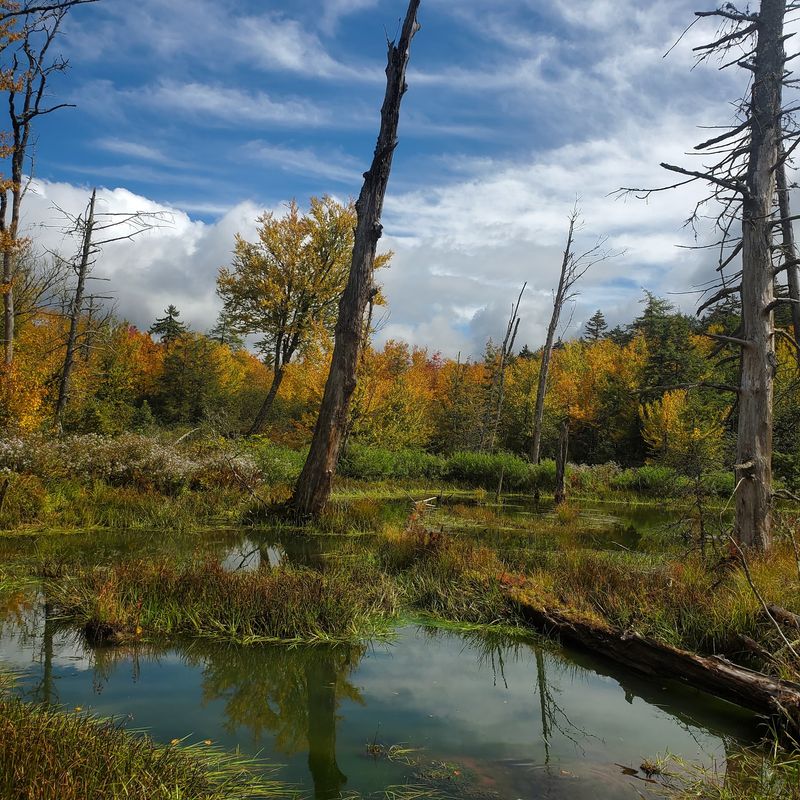
Plants may steal the spotlight, but the Glades are far from quiet. Birdlife is a big part of the appeal.
Warblers are commonly found here, and birders often bring binoculars for that reason. Early hours tend to be good for hearing songs across the open bog.
Down at boardwalk level, frogs, fish, and chipmunks keep things busy. Harmless water snakes have been seen near the creeks too.
Beavers have left their mark as well. A dammed section of creek with a den has been noted along the loop near Flag Glade.
The Forest Service also points out that black bears live in the area. You’re unlikely to have trouble, but it’s smart to keep food packed away and stay aware.
For parents, this section of the trip is a free nature lesson. Kids can count birds or hunt for frogs while adults enjoy the calm.
A small field guide or bird app adds a lot to the walk. Matching a call to a name feels surprisingly rewarding when you’re standing in a bog that belongs farther north.
Your Best First Stop Sits Just Down The Road
Context makes the bog much more fun. That’s where the Cranberry Mountain Nature Center comes in.
The center sits near the junction of Routes 39 and 150, close to the road that leads to the boardwalk. It offers exhibits about the rare Appalachian ecosystem and its Ice Age roots.
Stopping there first helps you know what to look for. Pitcher plants are easier to spot once you’ve seen a picture of them.
Seasonal nature programs are also offered at times. Those can be a great way to learn from Forest Service staff who know the area well.
Here’s the catch. The center operates seasonally and can be closed in the colder months, so it’s wise to check ahead with the Forest Service.
Even when the building is closed, a few wooded trails near it remain open for walking. You won’t leave empty-handed.
Think of it as the trailer before the movie. A quick look inside sets up the whole story, and the boardwalk delivers the main event.
Free Admission Makes This An Easy Yes
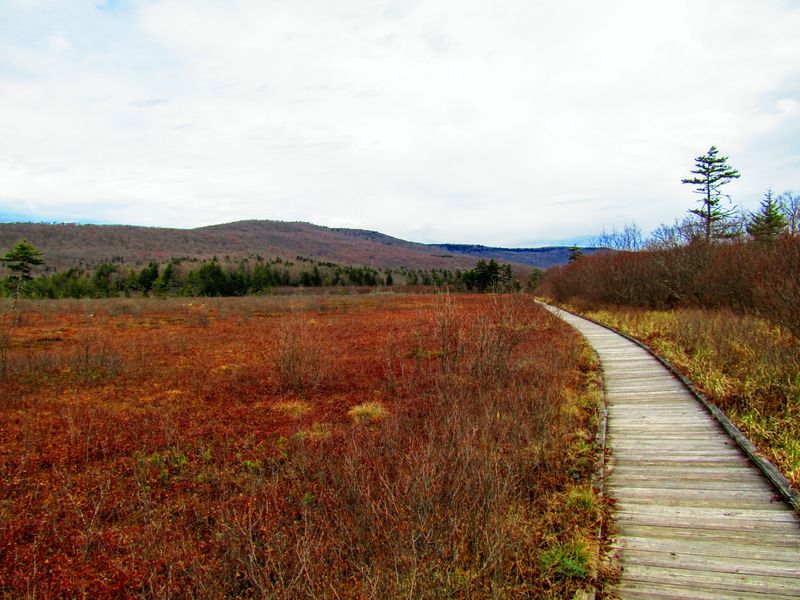
Good news for anyone watching the travel budget: there’s no fee to walk the boardwalk. That’s a rare bargain for a place this unusual.
Hours listed for the site run 6 AM to 10 PM most days, with a slightly later 8 AM opening on Mondays. Daylight is still your best bet for actually seeing anything.
The parking area is modest, with room for roughly a dozen vehicles. Restrooms sit at the lot, and a small picnic area is up the hill nearby.
A picnic lunch turns this into a full, low-cost outing. Just pack everything back out and keep food stored away from curious bears.
Accessibility needs a mention. The boardwalk has uneven spots and no handrails, and resting places are limited, so it isn’t suited to wheelchairs.
Older walkers or anyone who needs support might want a walking stick. It can make the loop much more comfortable.
Families with young kids generally find it easy. The short length means nobody gets worn out before the fun runs out.
Slick Boards And Mountain Weather Deserve Respect
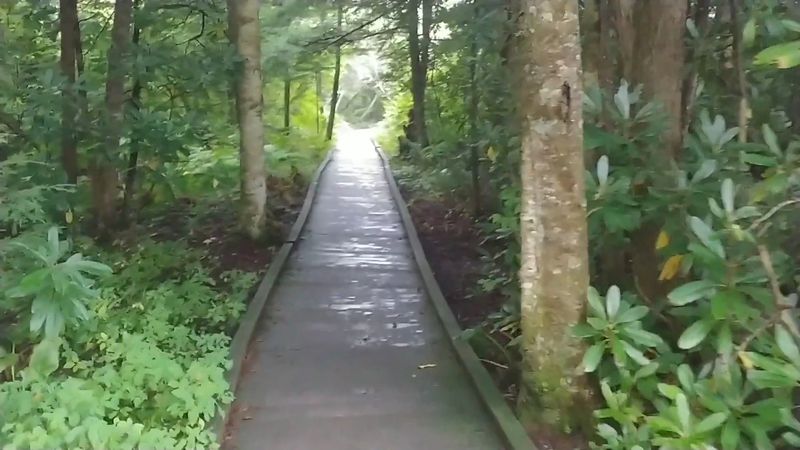
Rain turns those wooden planks into something close to a skating rink. Posted signs warn about it for good reason.
Wet boards can be very slippery, especially right after a shower. Good shoes with real grip make a huge difference.
On a damp day, take it slowly and be willing to turn around. The bog will still be there next time.
Mountain weather at this elevation can shift fast. Fall visits call for warm layers, since chilly and unpredictable conditions are common.
Winter brings its own rules. Forest Road 102 and the nature center may close in the cold season, so access isn’t guaranteed.
Spring offers fresh blooms but can be muddy. Fall delivers bright foliage and that striking red tint across the bog.
Cell service is very limited out here. Download maps before you leave and tell someone your plans.
Fill your gas tank before heading in, too. Stations are scarce in this corner of West Virginia, and nobody wants that kind of adventure on the way home.
How To Find A Bog At The End Of A Forest Road
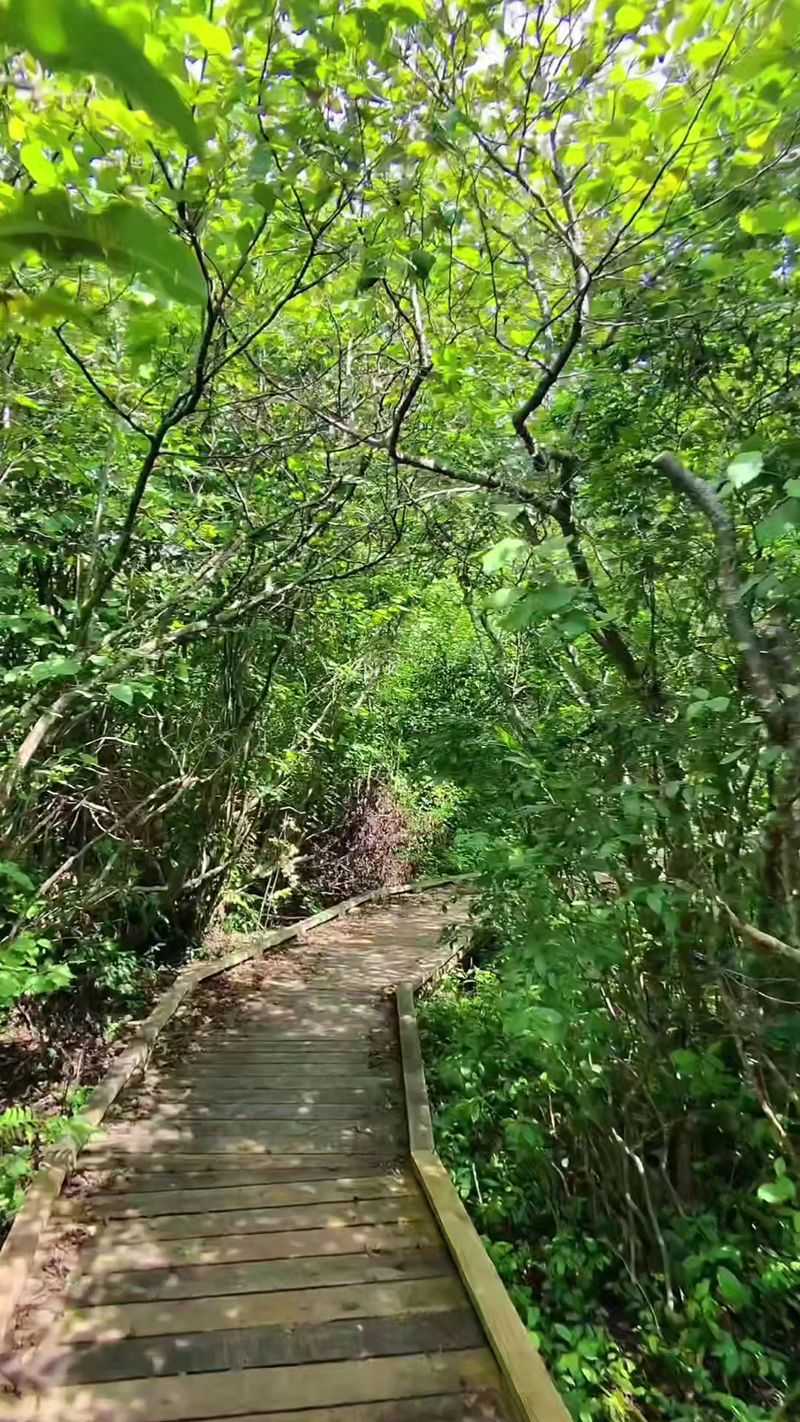
Getting there is half the adventure, but it’s simpler than it sounds. The Glades sit in Pocahontas County, along the scenic Highland Scenic Highway region.
Start by heading toward the junction of Routes 39 and 150, near the Cranberry Mountain Nature Center. From there, take Forest Road 102 north for about a mile.
The listed mailing address for Cranberry Glades Botanical Area is Hillsboro, WV 24946. In practice, following the brown Forest Service signs is the easiest way to arrive.
The parking area is right off FR 102. The boardwalk path begins from the lot, about a quarter mile from the main loop.
Because coverage drops out, print directions or save an offline map before leaving town. Your phone may give up long before you reach the bog.
Traffic on these roads is usually light. That makes the drive peaceful, but it also means help can be far away.
Plan the trip around daylight. Winding mountain roads feel much friendlier when you can see every curve ahead.
A Short Walk That Sticks With You Long After
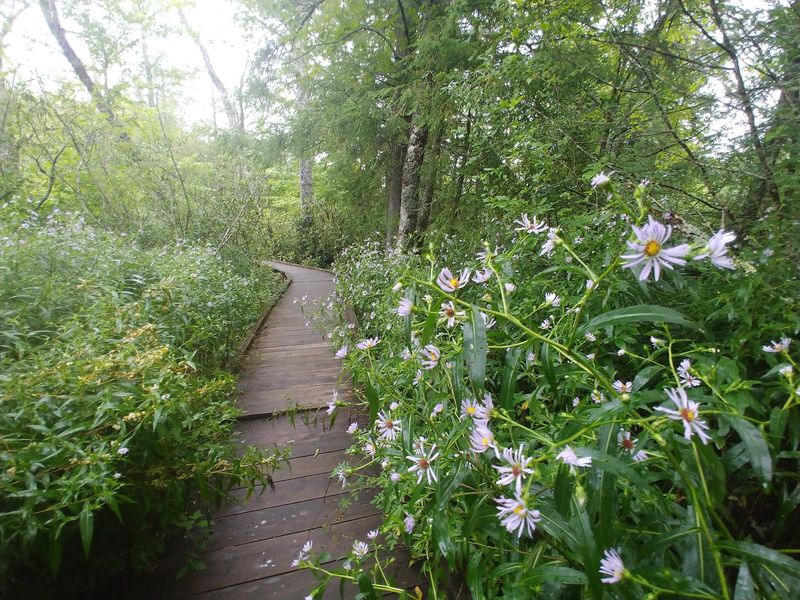
An hour on a boardwalk shouldn’t feel like a trip to another latitude. Somehow, this one does.
Cranberry Glades Botanical Area packs Ice Age history, carnivorous plants, and northern mosses into one easy, free loop. Few stops in West Virginia offer that much story for so little effort.
It works best for curious adults, birders, photographers, and families who like learning outdoors. Thrill seekers might want to add a longer hike nearby.
Luckily, that’s easy. The nearly 50,000-acre Cranberry Wilderness sits next door, with trails for serious backcountry time.
Timing matters more than at most parks. Dry days, mild seasons, and an open nature center make the visit smoother.
Still, even a gray afternoon has charm. Mist over the bog only adds to the far-north feeling.
My honest take is simple. If you’re anywhere near Pocahontas County, this deserves a spot on the list.
Bring good shoes, a full gas tank, and a little patience. Then go meet the plants that outlasted the Ice Age and decided West Virginia was a fine place to stay.
