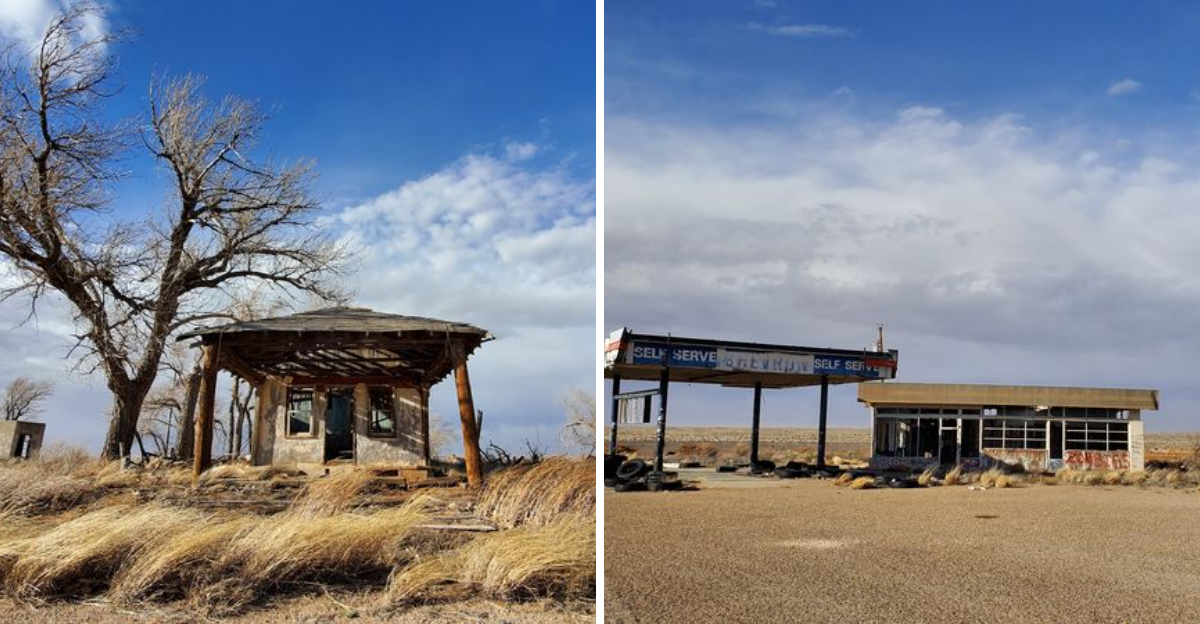
A faded motel sign creaks in the wind. The gas station has not sold fuel in decades.
And the only sound is the occasional car passing through on its way to somewhere else. That is the feeling of this Texas ghost town.
It is unsettling, quiet, and strangely beautiful. The buildings are crumbling, the streets are empty, and the whole place feels frozen in time.
You can walk through and imagine what it was like when Route 66 was alive and this town was full of travelers. Now it is just a shell, a reminder that even busy places can be forgotten.
It is not the kind of stop you plan, but it is the kind you remember. A quiet, eerie piece of Texas history.
The Borderland’s Beginning, A Railroad Dream
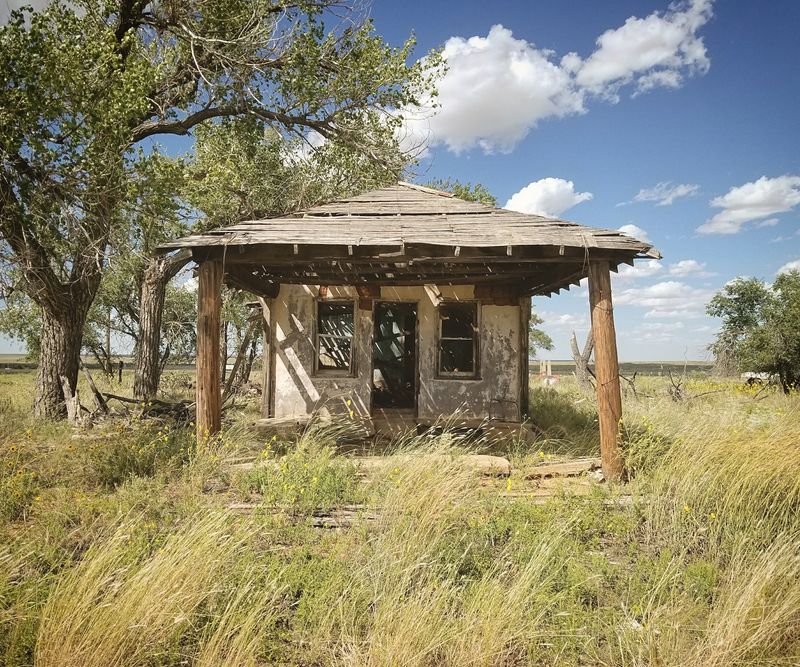
Glenrio did not grow from a grand vision or a settler’s homestead. It was conjured almost accidentally by the ambition of a railroad company pushing iron tracks across the remote Texas Panhandle around 1901.
The settlement carried the plain, utilitarian name of Rock Island at first, a direct nod to the Chicago, Rock Island and Pacific Railroad that made its existence possible.
By 1908, the railroad rechristened the community Glenrio, a lyrical mashup of Scottish and Spanish that loosely translates to “valley river.”
Given the utterly flat, treeless, riverless terrain surrounding it, the name feels almost like a private joke. It is the kind of detail that makes you smile when you learn it.
Those early years revolved entirely around the railway. Cattle were loaded, freight was shipped, and ranchers from the surrounding land depended on this small outpost to connect them to the wider world.
Then, in 1917, the Ozark Trail, an early automobile route predating Route 66, began funneling curious motorists through town. Suddenly Glenrio had two identities: a railroad hub and a road stop.
Entrepreneurs took notice and small businesses began appearing along the dusty main drag. The community was modest but purposeful, a scrappy little town carving its place into the high plains.
That original railroad energy, raw and practical, planted the seed for everything Glenrio would eventually become during its golden years on the Mother Road.
Where Two States Converge, Peculiar Divisions Emerge
Few towns in America can claim to exist in two states simultaneously, but Glenrio pulls it off with a kind of accidental genius.
The Texas and New Mexico state line cuts right through the heart of the community, and for decades, savvy business owners turned that invisible boundary into a very visible advantage.
The arrangements that emerged were clever, sometimes funny, and always practical.
Mail delivery alone was its own logistical puzzle. The post office sat firmly on the New Mexico side of the line, yet trains delivered the mail on the Texas side.
Someone had to physically carry those sacks across the border every single day. It is a small detail, but it perfectly captures the quirky reality of life in a split-border town.
The geographic division shaped commerce in bigger ways too. Deaf Smith County on the Texas side operated under dry county rules, prohibiting certain beverage sales.
Business owners simply shifted their establishments a few yards west into New Mexico to operate legally. Meanwhile, because gasoline taxes ran higher in New Mexico, every service station in Glenrio planted itself firmly on the Texas side, offering drivers a better deal on fuel.
These were not loopholes so much as adaptations, the kind of resourceful thinking that defined frontier communities. Glenrio residents were not just surviving a remote location; they were actively outsmarting it.
That ingenuity, born from necessity and geography, gives the town a character that feels entirely its own, even now in its silent, abandoned state.
The Mother Road’s Embrace, A Golden Age
Route 66 arrived in Glenrio’s life like a rescue, and the town grabbed hold with both hands. When U.S.
Highway 66 officially replaced the Ozark Trail in 1926, it transformed this modest railroad stop into a genuine destination on one of the most celebrated roads in American history.
Travelers heading east or west across the country passed directly through Glenrio, and they needed food, fuel, and a place to sleep.
The response was immediate and enthusiastic. Motels with handpainted signs appeared almost overnight.
Cafes fired up their griddles and kept the coffee hot around the clock. Service stations multiplied, each one eager to catch the eye of a driver rolling in from miles of empty highway.
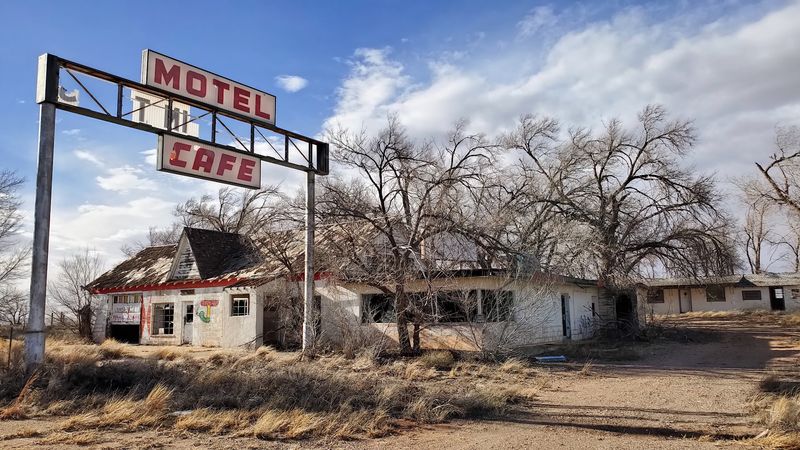
The Texas Longhorn Motel became the town’s most recognizable landmark, its sign cheerfully declaring itself either the first or last motel in Texas depending on which direction you were headed.
From the 1930s through the 1960s, Glenrio hummed with a particular kind of energy that is hard to imagine standing in its silence today. Families on cross-country adventures, truckers on long hauls, and restless young Americans chasing the horizon all stopped here.
The town was a flash of life in the high desert, a place where the road suddenly felt generous and welcoming. Those decades represent Glenrio at its absolute peak, full of noise and motion and purpose.
The memory of that vitality makes the present-day quiet feel even more profound, like a held breath that was never released.
Echoes of Prosperity, Fading Facades
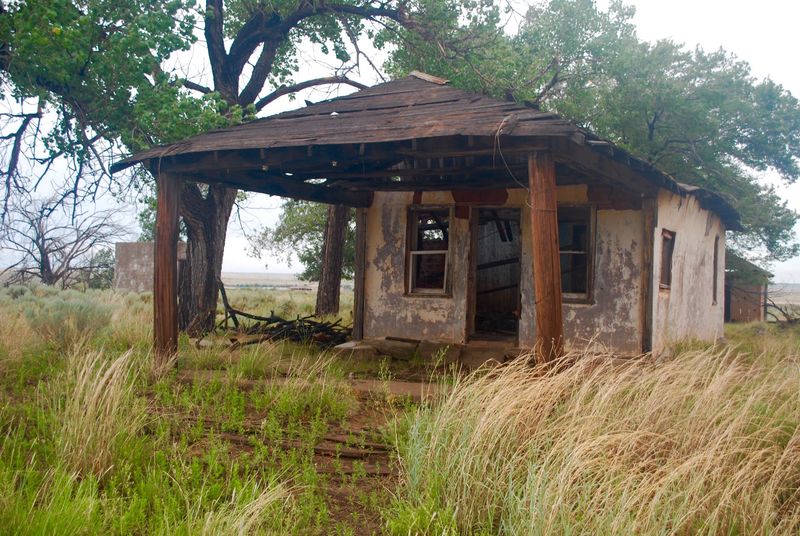
The buildings left standing in Glenrio are not just ruins. They are documents.
Each cracked wall and rusted hinge tells you something specific about the era when they were built, the optimism baked into their designs, and the speed with which that optimism evaporated.
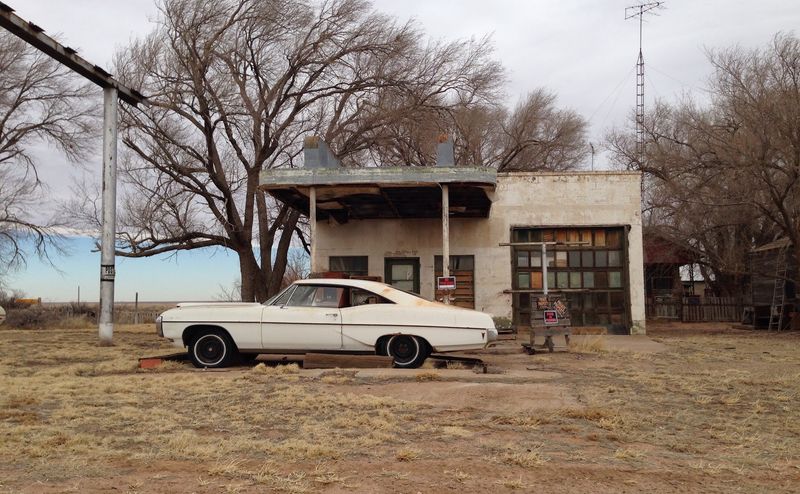
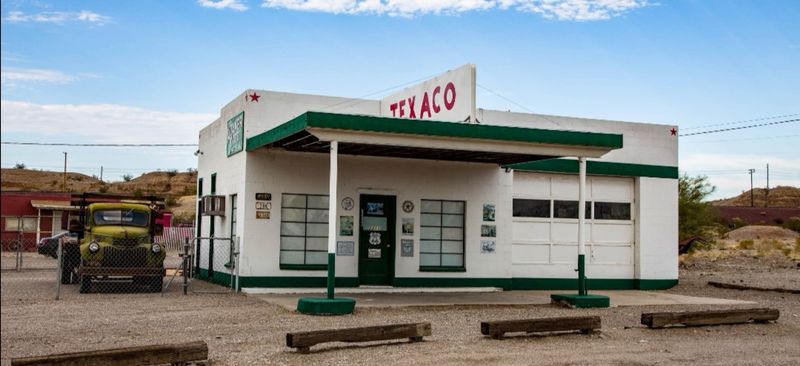
Several structures, including the old Texaco station and the Little Juarez Diner, were built in the Art Moderne style, all smooth curves and aerodynamic lines that were deeply fashionable in mid-century America.
The Little Juarez Diner, known earlier as the Brownlee Diner, is one of the more fascinating stops on any Glenrio walk. This modest building reportedly inspired a structure in the animated film “Cars,” which gives it an unexpected brushstroke of Hollywood fame.
Knowing that detail as you stand in front of its weathered facade adds a slightly surreal layer to the whole experience.
The Texas Longhorn Motel and Cafe is perhaps the most iconic surviving structure, even in its damaged state.
Parts of the motel have been demolished over the years and the roof collapsed long ago, but its famous roadside sign was reportedly restored by 2026, a small but meaningful act of preservation.
These buildings, though stripped of their function, have taken on something new. They are now the main attraction, drawing photographers, history enthusiasts, and curious road-trippers who want to touch something real from America’s past.
The faded facades are not failures; they are the most honest version of the story Glenrio has left to tell.
A Slow Decline, The Interstate’s Shadow
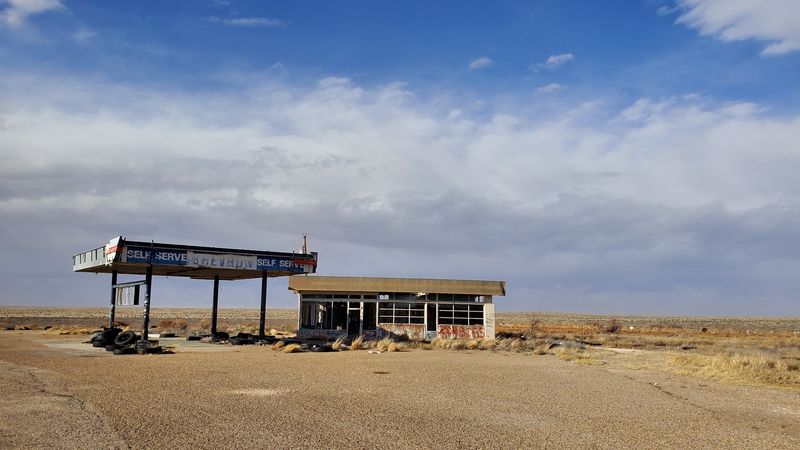
Progress has a way of being ruthless without meaning to be. For Glenrio, the blow came in stages, each one quieter and more final than the last.
The first significant crack appeared in 1955 when the Rock Island Railroad depot officially closed. The trains that had given the town its original reason for existing simply stopped coming.
It hurt, but Route 66 traffic kept things breathing.
Then Interstate 40 arrived. By 1973, the new highway was complete, slicing efficiently across the region and bypassing Glenrio entirely.
Drivers who once had no choice but to roll through town now had a faster, straighter option that never brought them anywhere near the old main street. The effect was swift and merciless.
Businesses that had survived on the steady drip of road traffic found themselves with almost no customers at all.
One by one, the signs came down, the lights went out, and the owners packed up and left. A population that had hovered around 30 people during the town’s busiest years dwindled to nearly nothing.
By the time the 21st century arrived, Glenrio was functionally empty. The story of its decline is not unique on Route 66; dozens of towns suffered the same fate when the interstate system reshaped American travel.
But Glenrio’s decline feels particularly sharp because of how complete it is. There are no half-open shops, no struggling holdouts.
Just empty buildings and the wind moving through spaces where people used to live and work and stop for pie.
Silence Reigns Supreme, A Ghostly Stillness
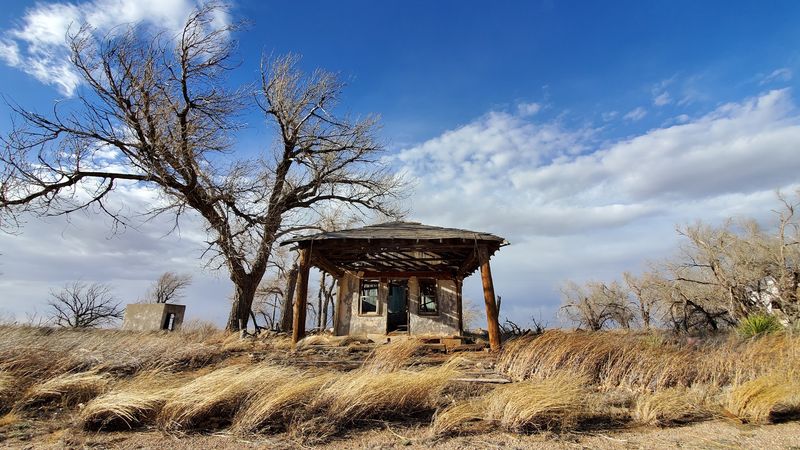
The silence in Glenrio is not peaceful in the way that, say, a quiet park is peaceful. It is a different kind of quiet entirely, one that presses against your ears and makes you hyper-aware of your own breathing.
When I cut the engine and stepped out, the only sounds were the wind and the soft crunch of gravel under my boots. That was it.
No traffic, no voices, no background hum of modern life.
The emptiness has a physical quality. It fills the space between the buildings and settles into the doorways of the abandoned structures like something with weight.
Graffiti tags on some of the walls add a strange, contemporary texture to the decay, proof that people still find their way here even if they don’t stay long. The contrast between the old architecture and the new spray paint is jarring in a way that is oddly interesting.
There is a melancholy beauty to all of it that is genuinely difficult to describe to someone who hasn’t stood there. The buildings are not dramatic ruins in the cinematic sense.
They are just ordinary structures, motels and diners and gas stations, that have been slowly unmade by time and weather and neglect. That ordinariness is what makes it affecting.
These were everyday places built by everyday people, and their absence feels personal somehow. Glenrio invites a kind of quiet contemplation that is rare in modern travel, a chance to sit with the fact that things end, communities fade, and the land eventually takes back what it was given.
Crumbling Icons, Photography’s Allure
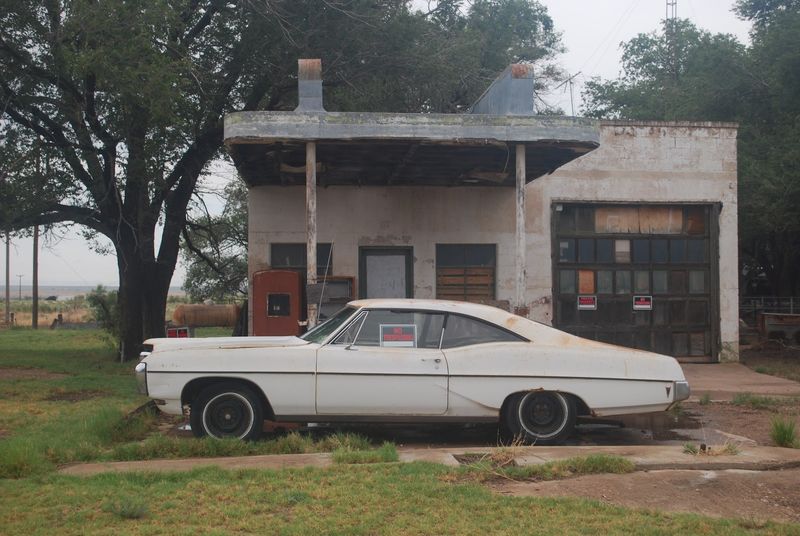
There is a particular kind of light in the Texas Panhandle that photographers chase specifically. It is flat and honest and almost too bright, and it does something extraordinary to weathered surfaces.
Every rusted pump, every buckled wall, every sun-bleached sign in Glenrio seems to glow under that light in a way that makes the decay look almost intentional, like someone arranged it all for a shoot.
The old Texaco station is the most photographed spot in town, and it earns the attention. A white Pontiac Catalina sits parked out front, seemingly forgotten there decades ago, and the combination of the vintage car and the crumbling station creates a tableau that feels cinematic.
I spent more time circling that building than I expected to, finding new angles each time.
The shell of the Texas Longhorn Motel offers a different kind of subject, more raw and exposed. The open doorways and collapsed sections let in the sky, framing shots that feel both architectural and elemental.
The post office building, though gutted inside, still holds its shape with a quiet dignity that photographs beautifully from the right angle. Visiting Glenrio with a camera, even just a phone, transforms the experience from passive observation into active engagement.
You start noticing things you would otherwise walk past: a particular curl of peeling paint, a shadow falling across a broken threshold, the way the horizon shows through a missing window. The ruins reward attention, and that attention makes the visit feel richer and more personal.
A Glimpse of Revival, A Lingering Question
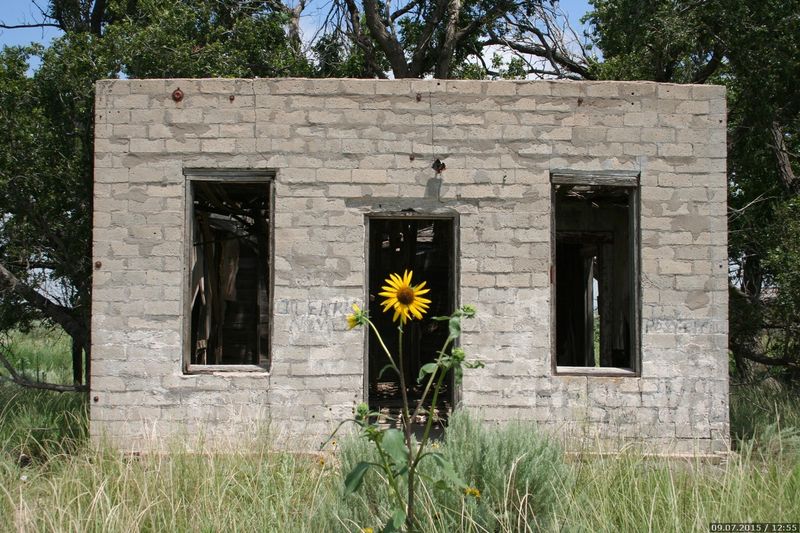
Not everything about Glenrio points toward permanent erasure. In 2007, the Glenrio Historic District was officially added to the National Register of Historic Places, a recognition that carries real weight.
The designation acknowledges the town’s role in American road history and helps protect the 17 remaining abandoned structures and the original Route 66 roadbed from being demolished or developed without consideration.
That kind of official recognition matters more than it might seem. It signals that someone with authority looked at these crumbling buildings and said, yes, these are worth keeping.
It opens the door to preservation funding and draws the attention of historians, conservationists, and organizations dedicated to Route 66’s legacy. The restored Texas Longhorn Motel sign, reportedly completed around 2026, is one small but visible result of that renewed interest.
One of the most human details in Glenrio’s story is that Roxann Travis, daughter of Joe Brownlee who once ran the diner, still lives in the family home behind the old Texaco station. Her presence is a living connection to the town’s history, a thread that has not yet been cut.
Whether Glenrio eventually finds a new identity as a preserved historic site, a Route 66 landmark, or something else entirely remains genuinely uncertain. That uncertainty is part of what makes it compelling.
It is not a finished story. The question of what happens next to this peculiar borderland town is open, and that openness feels like its own kind of invitation to keep paying attention.
Beyond the Ruins, The Enduring Spirit of Route 66
Leaving Glenrio takes a moment of mental adjustment, like surfacing from water. The drive back onto the interstate feels almost too loud, too fast, too full of the present tense.
The experience lingers in a way that most roadside stops simply do not. There is something about the totality of Glenrio’s silence that resets your expectations for what a place can be.
Route 66 is famous for its nostalgia, but Glenrio pushes past nostalgia into something more honest. It does not offer a cleaned-up version of the past.
No gift shop, no restored diner serving retro milkshakes, no curated experience designed to make history feel comfortable. What it offers instead is the unvarnished thing itself, the actual remnants of a community that lived and died by the rhythms of American travel.
Putting your feet on the original roadbed and looking east or west along the cracked old pavement, you feel the scale of what Route 66 actually was. Not a theme, not a brand, but a road that connected real people to real places across a very large country.
Glenrio sits at the edge of Texas and New Mexico, geographically and symbolically, a place that belongs to both states and fully to neither. That in-between quality suits it perfectly.
It is a reminder that the most memorable places are often the ones that resist easy categorization, the ones that make you feel something complicated and stay with you longer than you expected.
Address: Historic Route 66, also called State Loop 504, Glenrio, Texas.
