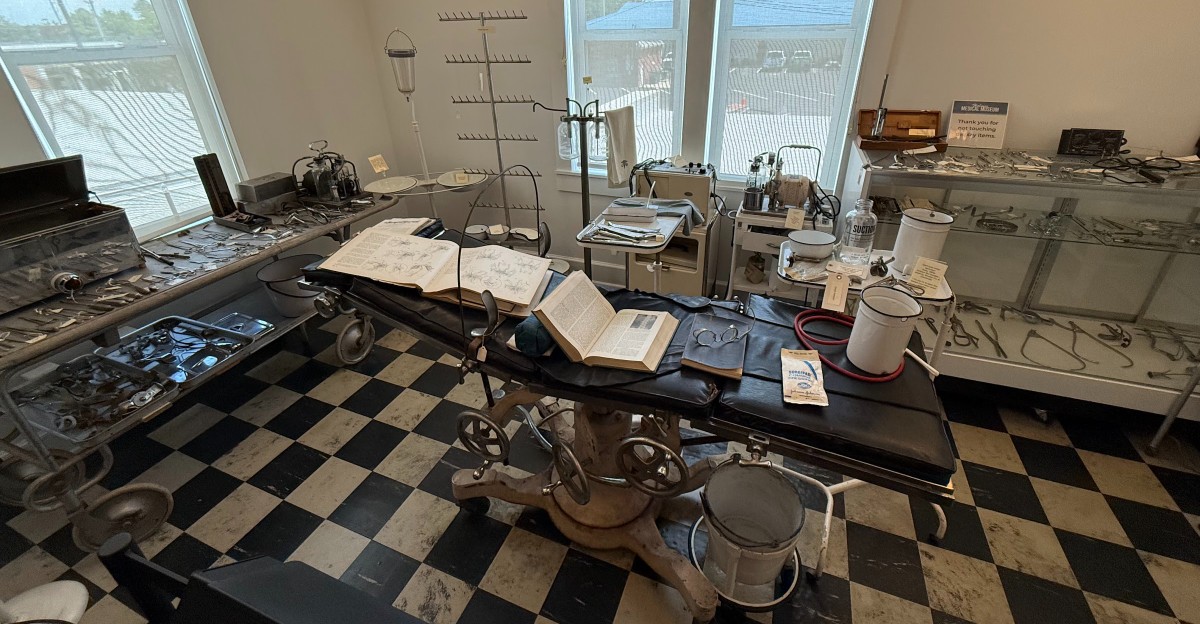
An old X-ray machine upstairs once gave off about 30 percent more radiation than modern versions. That’s the kind of detail waiting in a tiny hospital that never really changed its clothes.
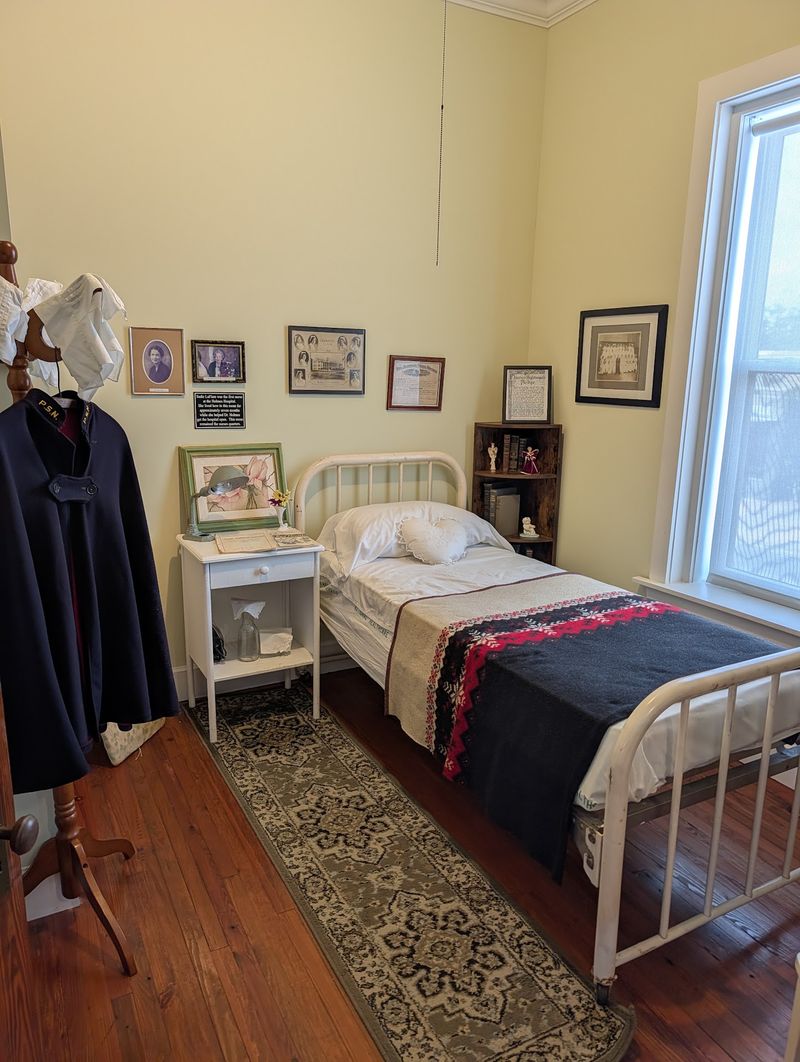
The rooms still look ready for patients. There are surgical rooms, separate wards for men and women, a pharmacy, and a full human skeleton keeping watch.
I like how this Alabama spot mixes real history with a little shiver. Visitors have reported crying babies, tugs on their sleeves, and an ether machine that feels colder than everything around it.
I can’t decide which part sounds more unsettling, the stories or the steel tools.
So what happens when a small-town hospital closes its doors but keeps almost everything inside? You get a museum that feels like the staff only stepped out for lunch.
And admission costs nothing, which makes curiosity very easy to say yes to.
A Hospital Frozen Mid-Shift Is Waiting Upstairs
Most museums gather old things into a new building. The Holmes Medical Museum flips that idea, because the building itself is the main artifact.
It sits inside Baldwin County’s first hospital, which treated patients from 1936 to 1958. The interior remains largely unchanged from those working years, so you’re touring the real rooms, not a stage set.
Historically, the place was called Sibley Holmes Memorial Hospital. It was a small, seven-room facility on the second floor of a downtown building.
That size is part of the charm. Everything feels close, personal, and a little too quiet in the best spooky way.
The hall moves you from room to room like a patient on an old-fashioned journey. You’ll pass a waiting room, surgical rooms, an X-ray room, patient wards, and a pharmacy.
Signs along the way explain what each room was used for. That makes it easy for kids and grown-ups to follow the story without a medical degree.
Free admission makes this an easy stop, though donations are welcome. Plan to come Monday through Saturday, between 10 AM and 3 PM.
Sundays and major holidays are off the schedule. Even a frozen-in-time hospital needs a day off.
Three Generations of Doctors Built Something Bigger Than a Building
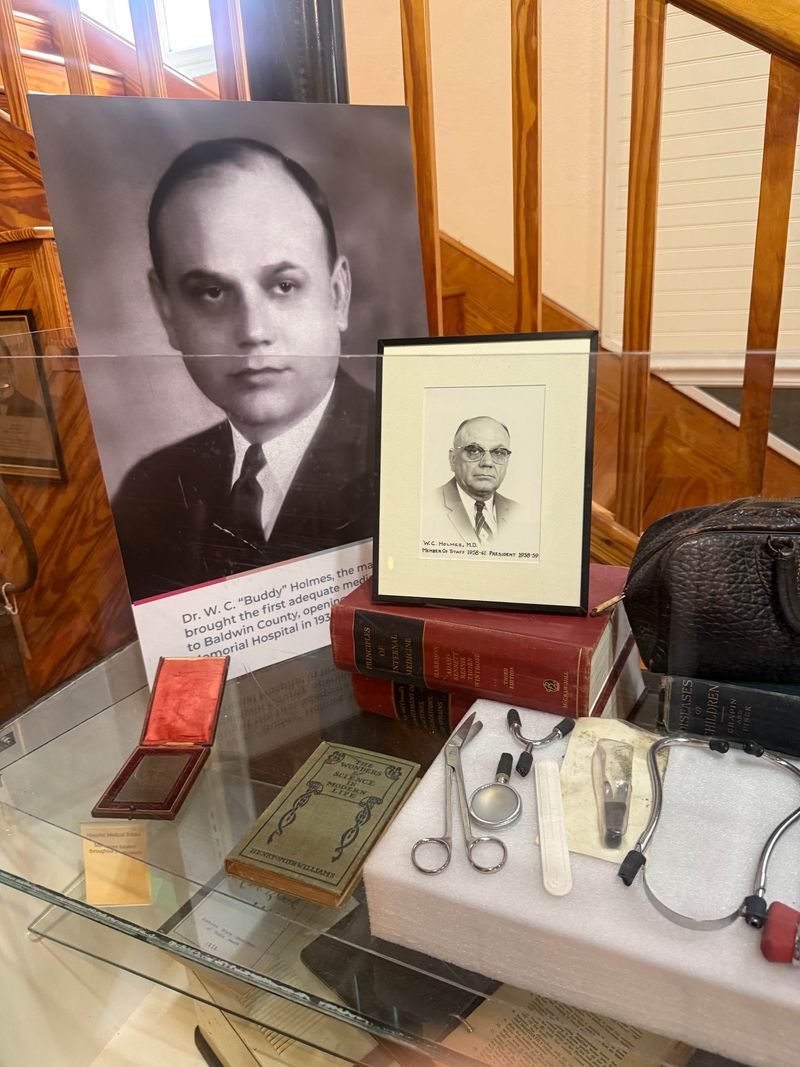
Dr. Sibley Holmes dreamed up this hospital, but he never saw it open. He passed before the doors welcomed their first patients.
His son, Dr. W.C. “Buddy” Holmes, carried the plan forward with his wife, Philomene, a nurse. Together they opened the hospital in 1936.
Later, Dr. Sibley Holmes’s grandsons, Dr. W.C. Holmes and Dr. Jimmy Holmes, ran it as surgeons.
That’s a lot of family stitched into one small hospital.
The story didn’t end when the wards went quiet in 1958. The Holmes surgeons became the first surgeons at South Baldwin Regional Hospital, now South Baldwin Regional Medical Center.
So the museum isn’t just about tools. It shows how one family helped shape medical care in this corner of Alabama.
I believe that’s what makes the place feel warm under all the cold steel. Real people worked long hours in these rooms for their neighbors.
Docents share stories about Baldwin County’s early medical pioneers and community history. Ask questions, because the human side gives every scalpel and bed more meaning.
Many families in Foley have roots tied to this building. Some of the people born here may live just down the road.
Brace Yourself for Tools That Look Borrowed From a Dungeon
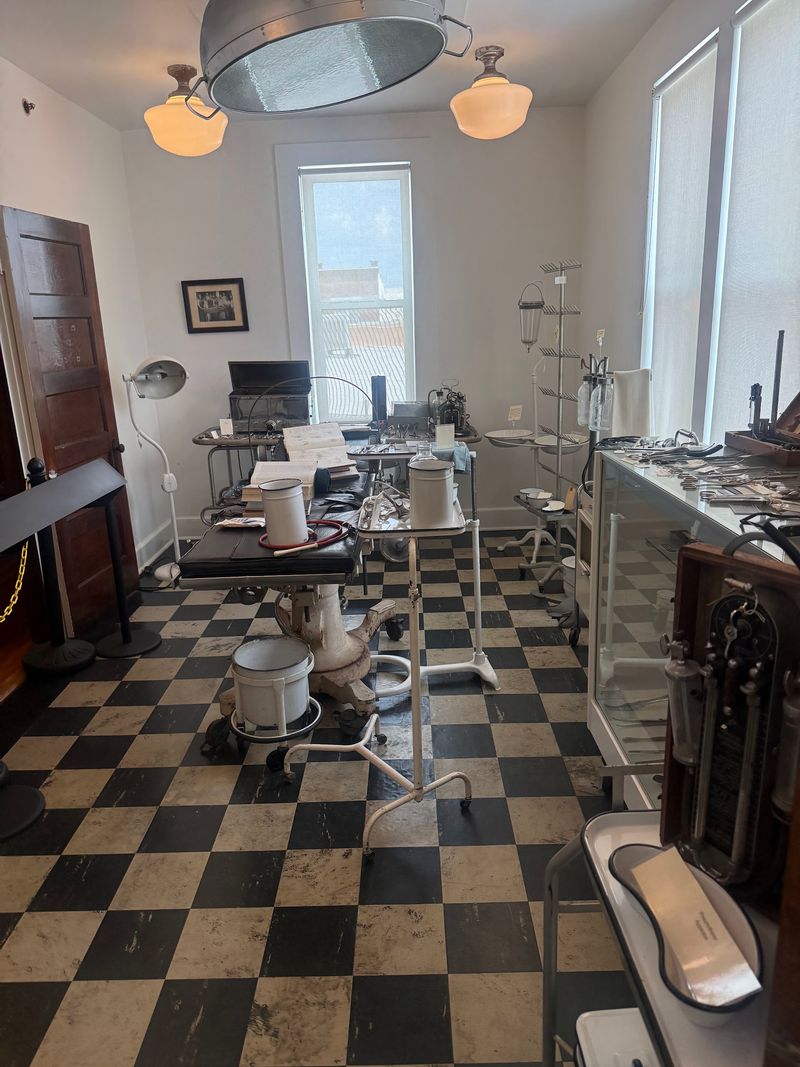
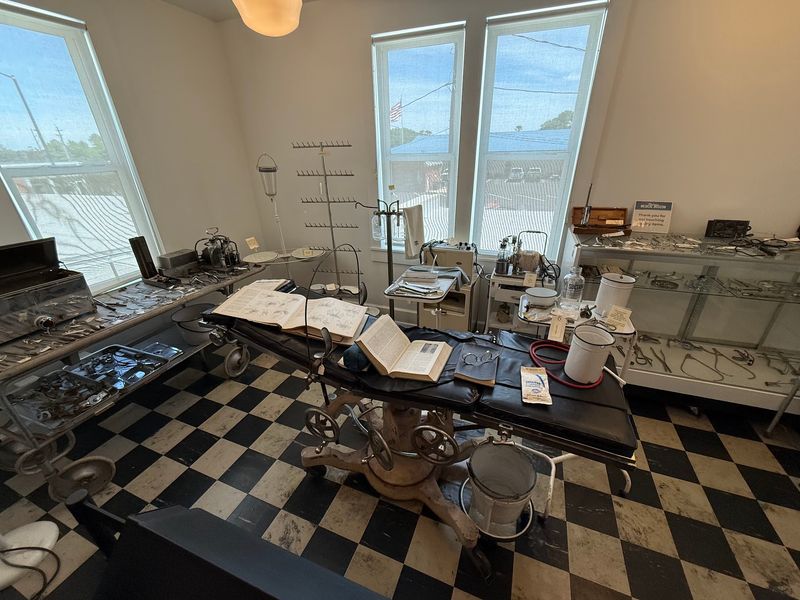
Steel saws, clamps, and blades line up here like they’re waiting for a nervous patient. By modern standards, some of them look like cruel and unusual punishment.
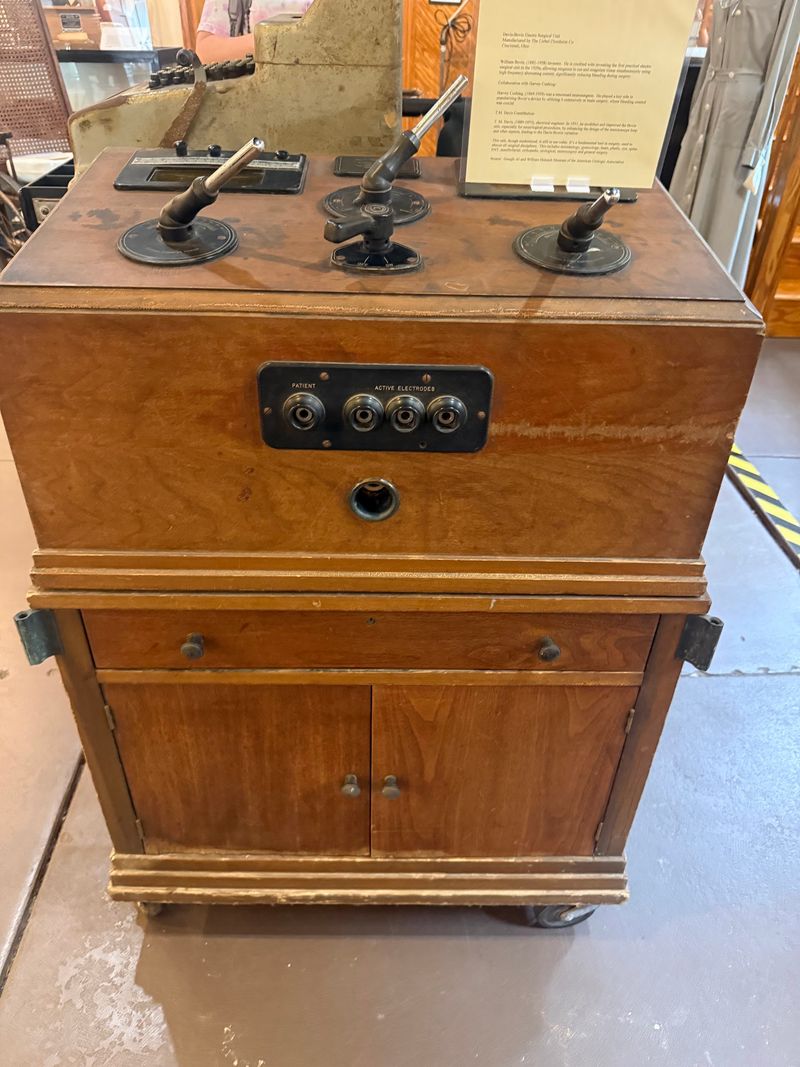
The museum displays original medical artifacts, equipment, and surgical instruments from the early 20th century. These tools were practical, sturdy, and very honest about their job.
The surgical rooms are where the mood really shifts. Bright, clean, sterile spaces somehow feel slightly frightening when you know what happened there.
Pay attention to the ether machine in the surgical wing. Paranormal investigators have noted it feels noticeably colder than nearby equipment.
Whether that’s science or something stranger is up to you. Either way, it’s a great excuse to stand very still for a moment.
For curious kids, these rooms spark great conversations about how far medicine has come. A quick comparison with a modern doctor’s visit makes the history click fast.
The displays are up close, so you can study details without squinting across a giant hall. Take your time and read the signs.
Bring a little courage and a lot of gratitude for anesthesia. You’ll leave pretty thankful for modern operating rooms.
Say Hello to the Museum’s Bony Favorite
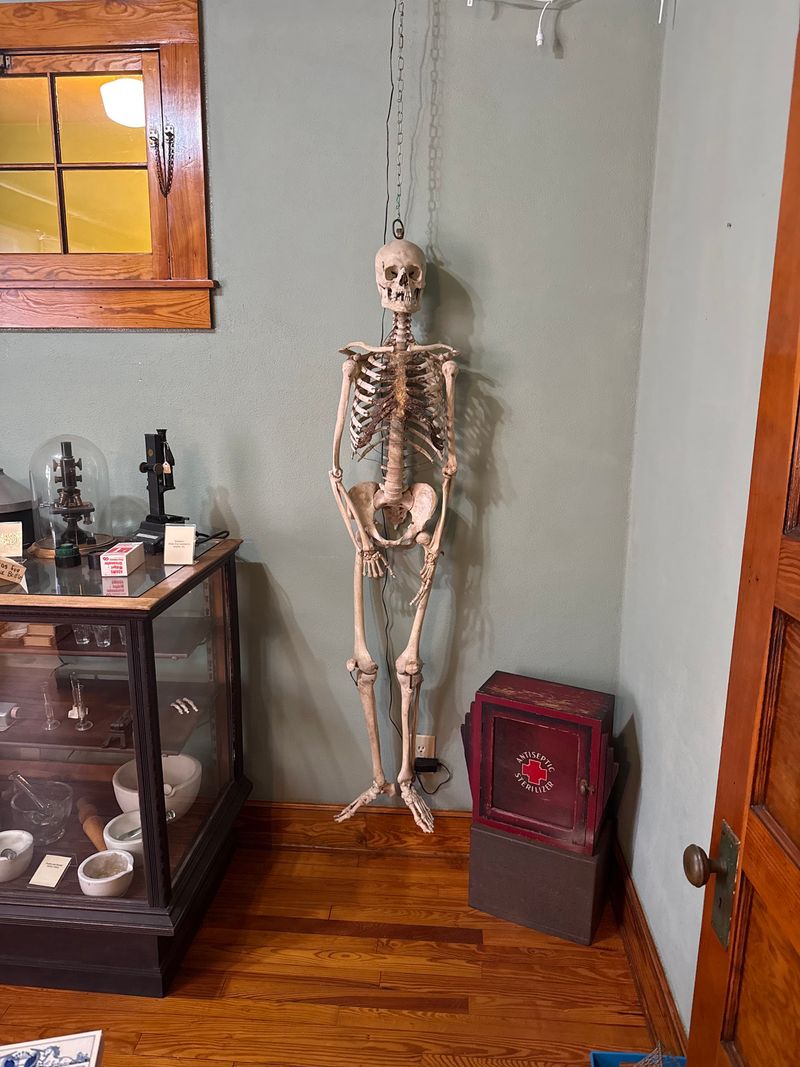
He doesn’t talk much, but the skeleton might be the most popular resident in the building. Young visitors especially love this complete human skeleton on display.
Right nearby, the X-ray room adds even more wow factor. Its vintage equipment includes a machine that gave off about 30 percent more radiation than modern versions.
That number tends to make adults wince. Early X-rays were a huge breakthrough, but safety rules had plenty of catching up to do.
Kids can connect the skeleton with the X-ray machine pretty easily. Bones on display, bones on film, and suddenly science class feels a lot cooler.
It’s a smart pairing for families. You can talk about how doctors learned to see inside the body before fancy scans existed.
Parents of younger children may want to preview a few rooms first. The skeleton is usually a hit, though the surgical spaces feel more intense.
Phones out is a good idea here, as long as you’re respectful of the displays. A photo with the skeleton is basically required.
Just don’t expect him to smile for the camera. Actually, wait, he’s always smiling.
Tiny Incubators Tell the Sweetest Part of the Story
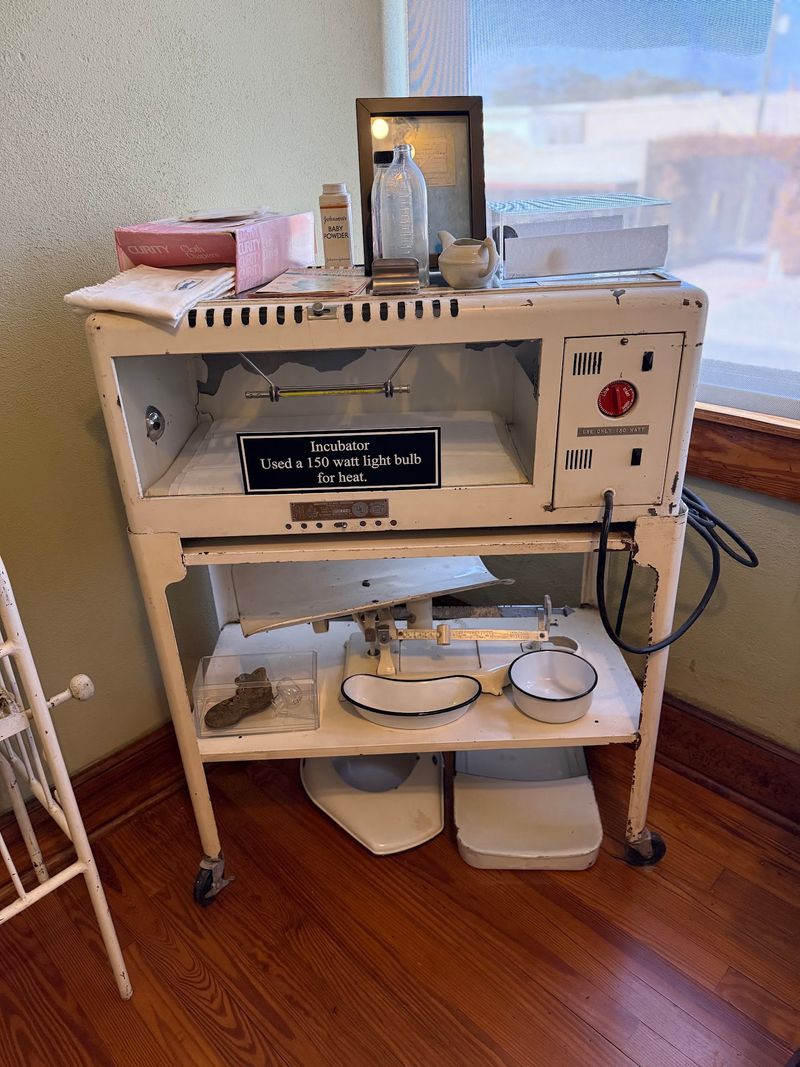
Hundreds of local babies started life inside these walls. That gives the maternity ward a softer, more tender feeling than the surgical wing.
An early newborn incubator sits among the exhibits. You’ll also spot devices once used to correct pigeon toes, which look pretty odd to modern eyes.
The patient wards were separated for men and women. Walking through them helps you picture how hospital life ran in a small Southern town.
One of my favorite details is the museum’s Baby Wall. Staff collect baby pictures of people born at the hospital between 1936 and 1958.
That turns history into a family album. If someone in your family was born in Foley during those years, this could be a fun connection.
NFL quarterback Kenny Stabler was among the babies born here. Not bad for a seven-room hospital.
Of course, this area also feeds some of the eerie stories. Visitors have reported hearing babies crying when no infants are around.
Sweet and spooky at the same time? That’s a combination only an old hospital could pull off.
Fake Cures Get Their Own Hilarious Hall of Shame
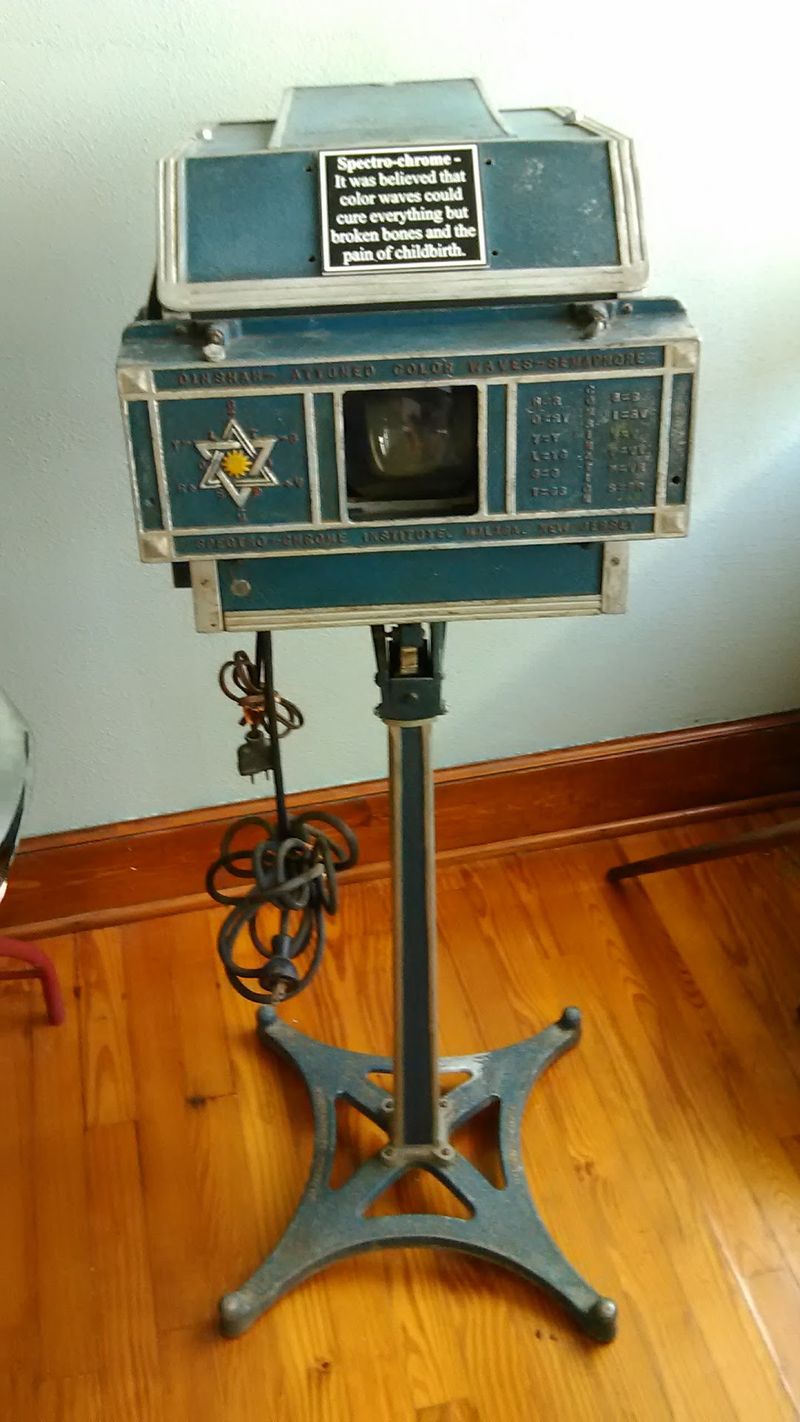
Miracle machines, odd gadgets, and bold promises fill a room you won’t want to skip. It’s dedicated to medical quackery and hoax items.
These pieces were donated after the building’s 1990s restoration. Each one shows how people once fell for cures that sounded amazing but didn’t work.
It’s funny, a little sad, and very educational. Some devices look like props from an old science fiction movie.
The pharmacy area offers a more serious contrast. Antique medicines sit beside tools that doctors once used to mix prescriptions by hand.
Compounding medicine took skill, patience, and steady hands. Seeing those tools makes a trip to a modern pharmacy feel wonderfully simple.
Many items here came from local residents. That gives the collection a personal feel, like the whole community helped fill the shelves.
Look closely at the old bottles and labels. Their fonts, colors, and wild claims are worth a few minutes of study.
Here’s a fun challenge for families: guess what each strange device was supposed to fix. The real answers are often stranger than your guesses.
Ghost Stories Follow This Place Down Every Hallway
Atlas Obscura listed this museum among the 15 strangest in Alabama. The reputation didn’t come from the bone saws alone.
Visitors have reported feeling tugs on their clothing when nobody else was around. Others say they’ve captured unexplained voices on recordings.
Paranormal investigations have documented orbs on film and sudden temperature drops. Some also describe a mysterious drumming sound.
There are even reports of a young boy’s apparition in the downstairs area. Docents have shared accounts of others witnessing ghostly happenings too.
Skeptics can still enjoy every room without believing a word. The history alone is plenty fascinating.
Believers, though, may want to linger in the wards past the surgery room. A few people point there as the spot that feels most active.
The museum aims to recreate the strangely contradictory mood of mid-20th century hospitals. Clean and clinical, yet a little unsettling, all at once.
That’s probably why the eerie label sticks so well. Even on a sunny afternoon, the hush up there feels heavy enough to notice.
Look Up From the Sidewalk and Spot the Striped Awning
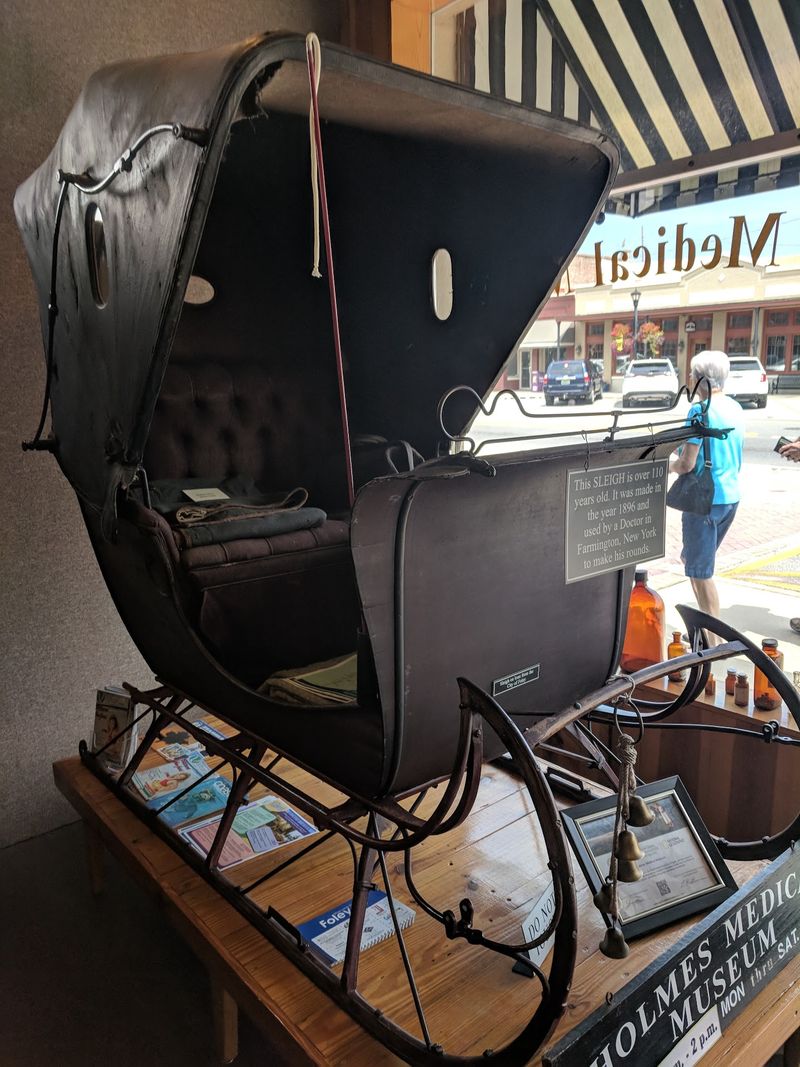
From the street, nothing screams operating room. A charming storefront with a classic black and white striped awning greets you instead.
The museum occupies the second floor of the historic Stelk Building. Downstairs once held a general store and later a 1920s drugstore, which is now a used bookstore.
Picture patients climbing upstairs for surgery while shoppers browsed below. Small-town life clearly made smart use of every square foot.
You’ll find the museum at 111 W. Laurel Avenue, Foley, AL 36535.
It sits in the heart of downtown, near the intersection of Highway 59 and Highway 98.
The building was restored in the 1990s. Later, Hurricane Sally damaged it in September 2020, leading to a long repair period.
It reopened in January 2022, which is great news for history fans. The Holmes Medical Museum came back ready for another chapter.
It’s also bigger inside than many folks expect from the front. Give yourself about an hour so you’re not rushing through.
Keep an eye on that awning as your landmark. Those stripes are easy to spot.
Make a Whole Afternoon of Downtown Foley
Rainy beach day on the Alabama Gulf Coast? This museum makes a perfect indoor backup plan.
Once you’ve seen the wards, downtown Foley has plenty more to explore. Stacey’s Olde Tyme Soda Fountain is close by for a nostalgic treat.
The Copper Kettle Tea Bar is another nearby option. It’s a cozy way to talk over the skeleton, the quackery room, and any ghost stories.
Flower fans can follow the Wilbourne Antique Rose Trail. It adds a gentle, colorful contrast to all that surgical steel.
Pine Street Park offers space for kids to stretch their legs. After a quiet museum, a little running around goes a long way.
Shoppers can head to Foley Riviera Square, an outlet mall. That makes this an easy stop on a bigger day trip.
The Holmes Medical Museum fits nicely into a short schedule. It’s free, it’s central, and it’s open six days a week.
Drop something in the donation box on your way out. Keeping a time capsule this well preserved isn’t cheap, and this one earns its keep.
