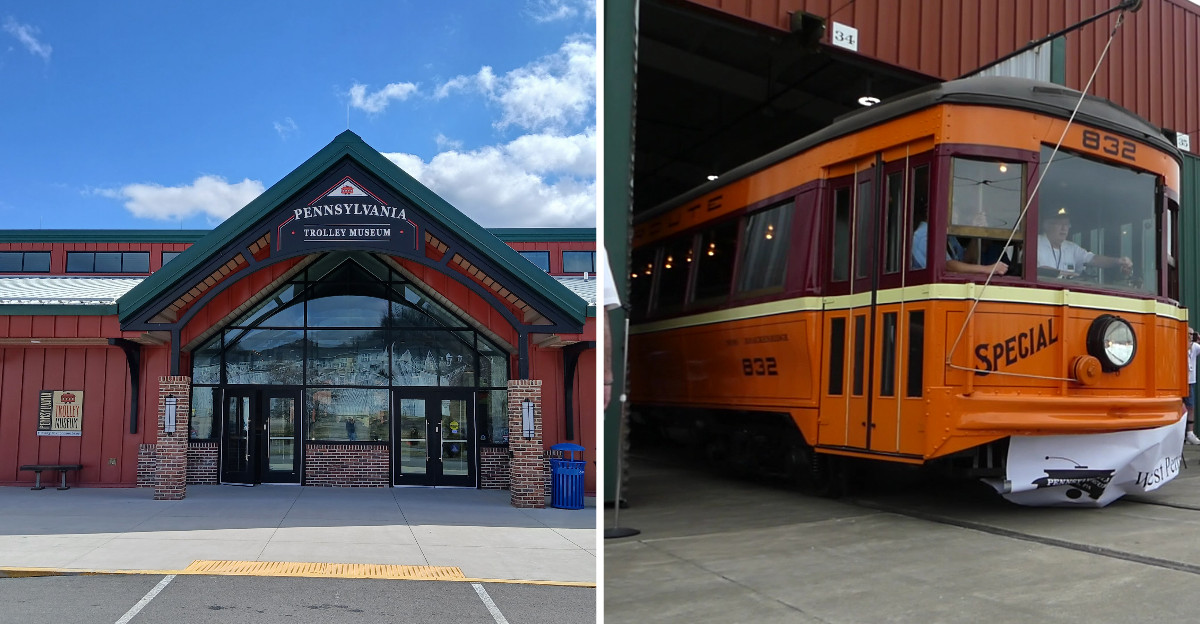
Streetcars built more than a century ago still roll through green Pennsylvania farmland, their wooden window frames rattling and motors humming underfoot. A conductor waved passengers aboard, rang the bell twice, and sent the car rolling out into the countryside on a four-mile round trip.
What was expected was a quiet hour looking at old machines behind ropes. Instead, the museum stopped feeling like a museum at all.
More than fifty streetcars live here, gathered from cities across the continent, and a surprising number still move under their own power. Tracks run past fields and trees, and the ride feels like stepping into a working piece of the past.
These cars once carried people to work and school in cities that eventually paved over the rails. Now they get a second life, and visitors get to ride them.
That is worth the drive.
The Four-Mile Ride Through Washington County Countryside
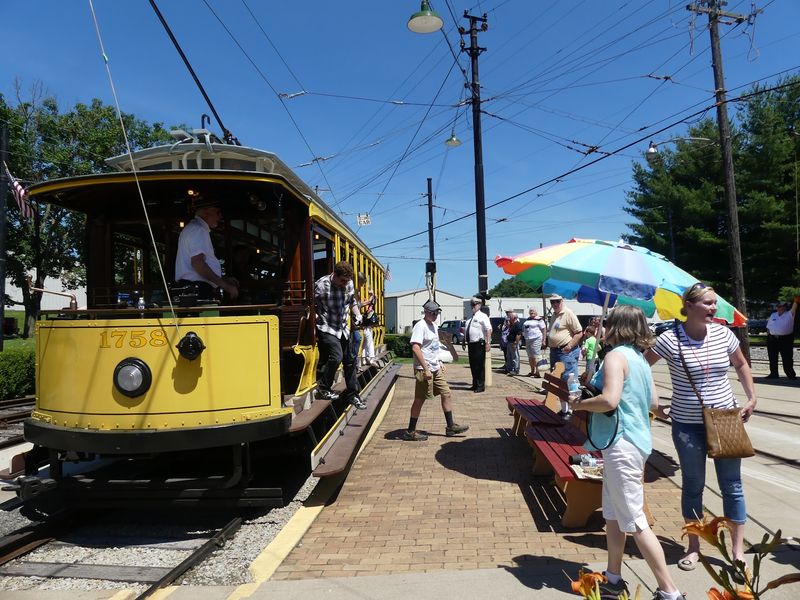
My favorite part of the whole visit happened before I looked at a single exhibit label. The conductor punched a ticket, the bell rang, and the car eased forward onto a stretch of private track that runs out through fields and woods.
The round trip covers about four miles, and it moves at a pace that barely tops 25 miles per hour. That turns out to be exactly right.
Windows stay open on warm days, so you get grass smells, birds, and the low electric hum that old streetcars make when they pull away from a stop. I noticed deer in the tree line on the way back, which nobody had promised me.
Your admission covers unlimited rides for the day, and the crews rotate which cars are running. So if you linger, you might ride two or three completely different vehicles from different decades.
The conductors talk while you roll, pointing out what the controls do and how the poles catch the overhead wire. Kids tend to hang on every word once they realize someone is actually driving the thing.
Ride early, then ride again near closing time. The light gets softer, the cars feel emptier, and the whole trip takes on a slower, quieter mood.
New Orleans Car 832 and Its Famous Desire Connection
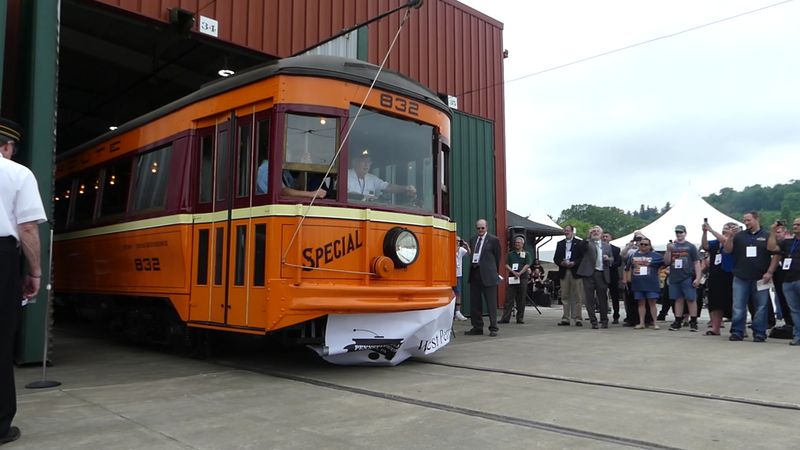
Some vehicles carry a story bigger than their steel frame, and car 832 is one of them. Built for New Orleans, it once worked the city’s streets, including service tied to the Desire line that gave a famous play its name.
Seeing it in Pennsylvania feels slightly unreal. A streetcar from the Gulf Coast, parked a few hundred miles from the Ohio River, with its mahogany-toned interior still intact.
The proportions are different from the Pittsburgh cars nearby. Narrower, with a shape that reads Southern rather than industrial Northeast, and seats that look built for shorter city hops.
I stood in the doorway for longer than I planned, mostly thinking about how many thousands of people climbed those same steps on their way to work. That is the strange gift of this place.
The cars are not props. They did real jobs for real decades.
Staff and volunteers are happy to explain how 832 traveled north and what restoration it needed. Ask them, because the details rarely make it onto a sign.
If you only remember one car from your visit, it will probably be this one. The literary link hooks you first, but the craftsmanship is what holds your attention.
Pittsburgh’s Yellow Cars and the Terrible Trolley
Anyone who grew up around Pittsburgh recognizes the color instantly. Those cream and yellow streetcars once threaded through neighborhoods all over the city, and two of them sit here, polished and proud.
The paint scheme is bold in a way modern buses never manage. Bright, cheerful, unmistakable from a block away.
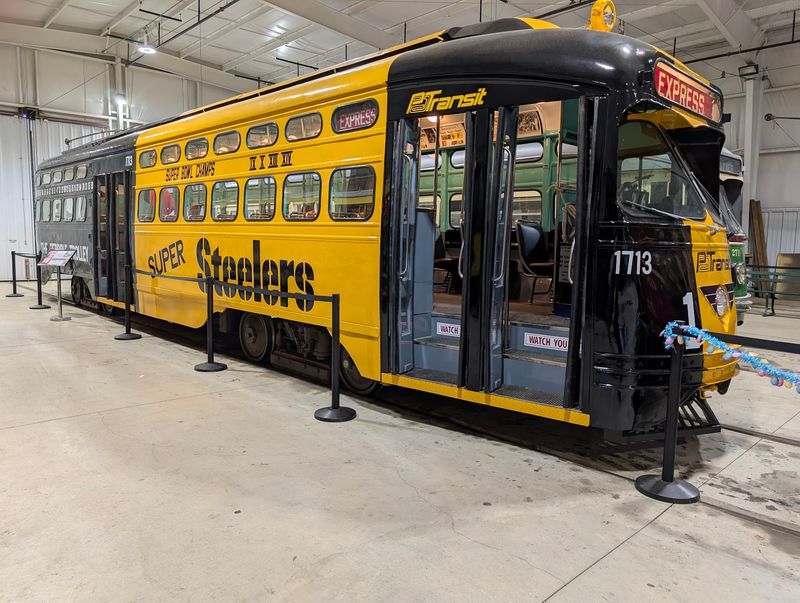
Parked not far off is the black and gold car that visitors call the Terrible Trolley, a nod to the Steelers and the region’s love of its football team. It photographs beautifully, and locals clearly get a kick out of it.
What surprised me was how different these mid-century cars feel compared to the older wooden ones. Smoother lines, bigger windows, seats built for longer commutes across a spread-out city.
You can step aboard several of them, sit down, and look out at a view that thousands of Pittsburghers once took for granted every single morning.
Older residents visiting with grandkids often pause here the longest. The cars pull memories loose, and you hear pieces of those conversations while you walk around.
Bring a camera and shoot from a low angle. The front ends of these streetcars have real character, and the display building lighting makes the paint glow without any editing tricks.
Car 3487, the 1905 Survivor Still Standing Tall
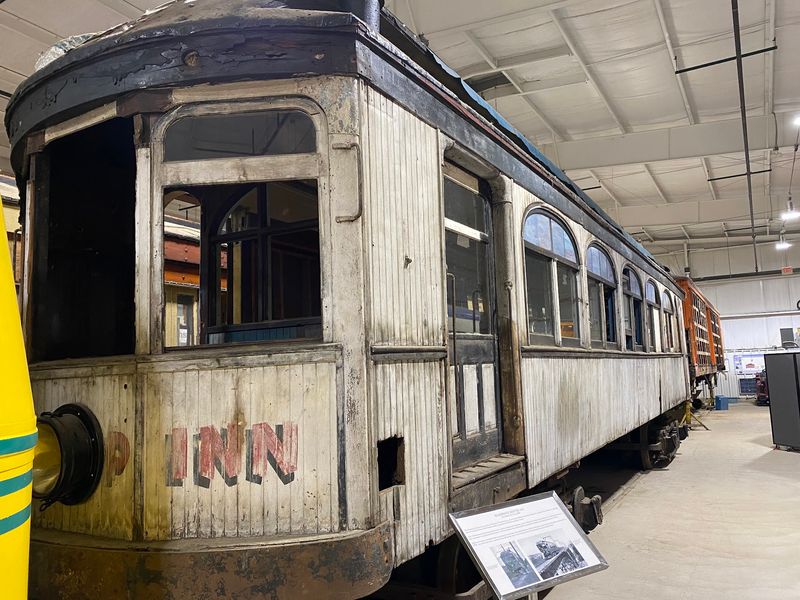
Built in 1905, Pittsburgh Railways Co. 3487 counts among the oldest pieces in the collection, and it looks every bit its age in the best possible way. Dark varnished wood, tall narrow windows, hardware that seems more furniture than machine.
Cars like this ran when paved roads were still a novelty in much of America. Passengers wore hats.
Streets were shared with horses.
Standing beside it, the difference between 1905 and the 1940s streetcars nearby becomes obvious. Craftsmanship was still done by carpenters, not stamped out of sheet metal.
I kept noticing small details. Hand-lettered numbers, ceiling slats, the kind of metal grab handles that feel cool to the touch even in summer.
Preserving something this old is not simple. Wood swells, finishes crack, and every replacement part has to be researched or fabricated from scratch.
That is where the museum’s restoration crews earn their reputation, and why the collection holds up so well under close inspection.
Take a slow lap around 3487 and look underneath at the trucks and motors. The engineering is beautifully plain, built to be repaired by hand with simple tools.
It is a quiet exhibit compared to the ride, but it may be the most historically valuable thing in the building.
An Open-Sided Car All the Way From Rio de Janeiro
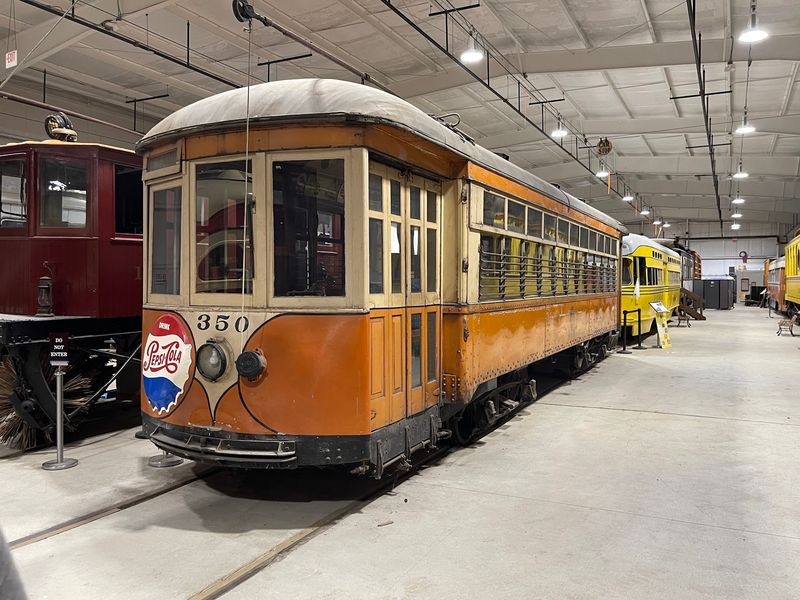
Tucked among the American cars sits something that makes people stop and squint: an open-sided streetcar from Rio de Janeiro, Brazil. No windows, no walls, just benches and running boards and fresh air on every side.
It looks like a vacation on wheels. Which, in a tropical city climbing steep hills, makes perfect sense.
Riders in Rio hopped on and off from the sides, hanging onto poles while the car climbed. Safety standards were clearly different, and the design tells you a lot about the place it served.
Seeing it next to enclosed Pennsylvania cars built for snow and sleet is a small lesson in geography. Same basic technology, completely different lives.
Museum guides usually enjoy explaining how this one arrived and why it matters to the broader story of electric transit worldwide. Streetcars were never just an American idea.
The bright color scheme also breaks up the room visually, which helps when you are working your way through dozens of vehicles.
My advice is simple. Compare it directly with a heavy enclosed car from Toledo or Cincinnati, then imagine riding each one in January.
You will never look at a city bus stop the same way again after that little thought experiment.
Inside the Trolley Display Building
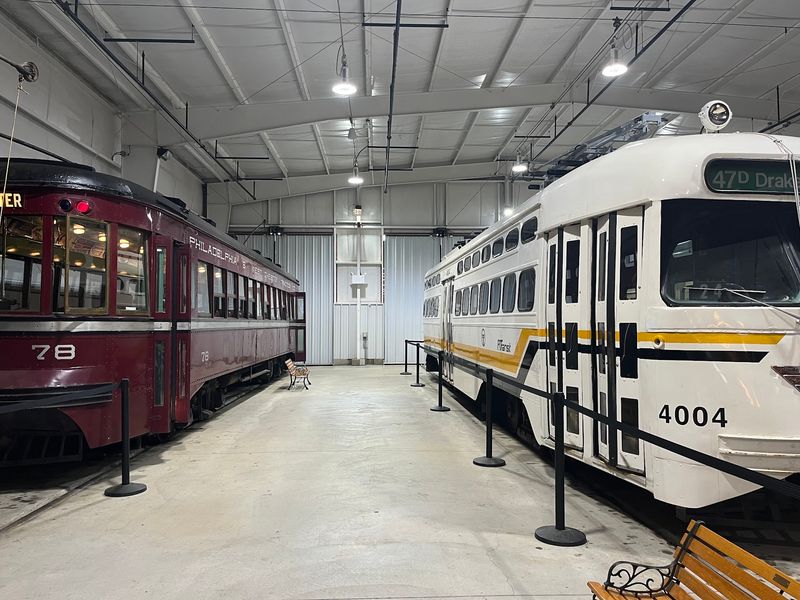
Rows of tracks, roughly twenty to thirty cars, and the faint smell of old wood and electrical equipment. The display building is where the collection really sinks in.
Streetcars from Pennsylvania, Ohio, and West Virginia sit alongside cars from Toledo and Cincinnati. Freight cars and maintenance vehicles fill out the lineup too.
Many are open, so you can climb aboard and sit where passengers sat. Some have interior lights switched on, which makes the varnish and advertising cards look almost new.
I liked reading the old route signs above the windows, names of streets and neighborhoods that mostly no longer have rails. The cars outlived their own cities’ systems.
Work cars deserve a look, since they show the unglamorous side of running a transit network. Somebody had to grind rails and haul supplies at 3 a.m.
Behind the scenes tours are sometimes offered for visitors who want to see vehicles still awaiting restoration. If you are the type who reads engine plates, ask about it.
Give yourself a solid hour in here, minimum. The building looks smaller than it is, and the details reward slow walking.
Photographers should note the lighting is warm and steady, so a phone camera handles it fine without flash.
The Welcome and Education Center That Changed Everything
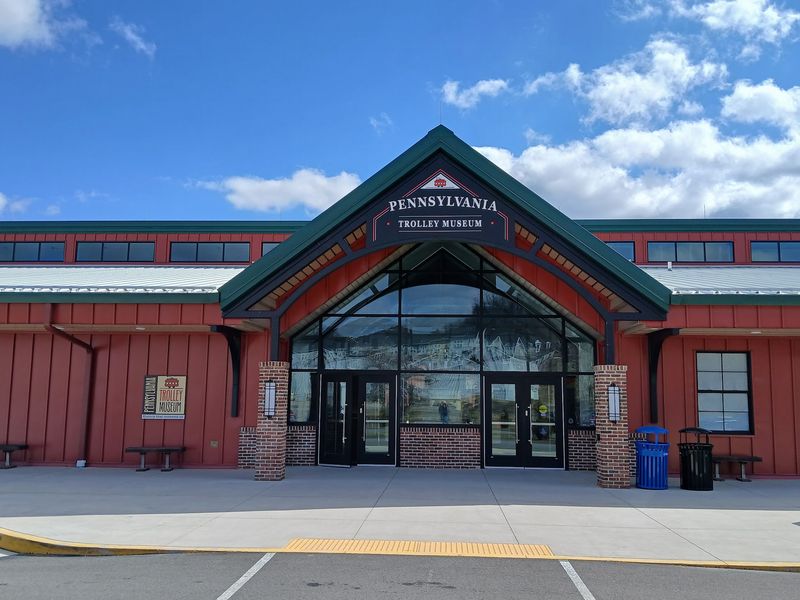
Opened in November 2023, the Welcome and Education Center is the reason repeat visitors keep saying the place feels brand new. Bright, open, easy to navigate, and packed with hands-on exhibits.
There is a theater space, interactive displays that actually work, and a trolley simulator that kids line up for. Adults quietly line up too.
I spent a while at the exhibits explaining how motors, brakes, and overhead wires cooperate to move several tons of streetcar. Push a button, watch it happen, understand it in about ten seconds.
The gift shop leans into regional history with trolley and railroad items plus western Pennsylvania odds and ends. Better than the usual keychain wall.
Something I did not expect: more than 900 solar panels help power the operation, so on sunny days the whole system runs on sunlight. Electric transit, powered by the sky.
Over 200 volunteers handle restoration, operations, and guiding, and their enthusiasm shows in how much they want to explain things.
Start your visit in this building rather than rushing to the platform. The context makes the rides and the display barn mean far more.
Hours run Thursday through Sunday, 10 a.m. to 4 p.m., so plan around the closed days.
Address: 1 Electric Way, Washington, Pennsylvania
