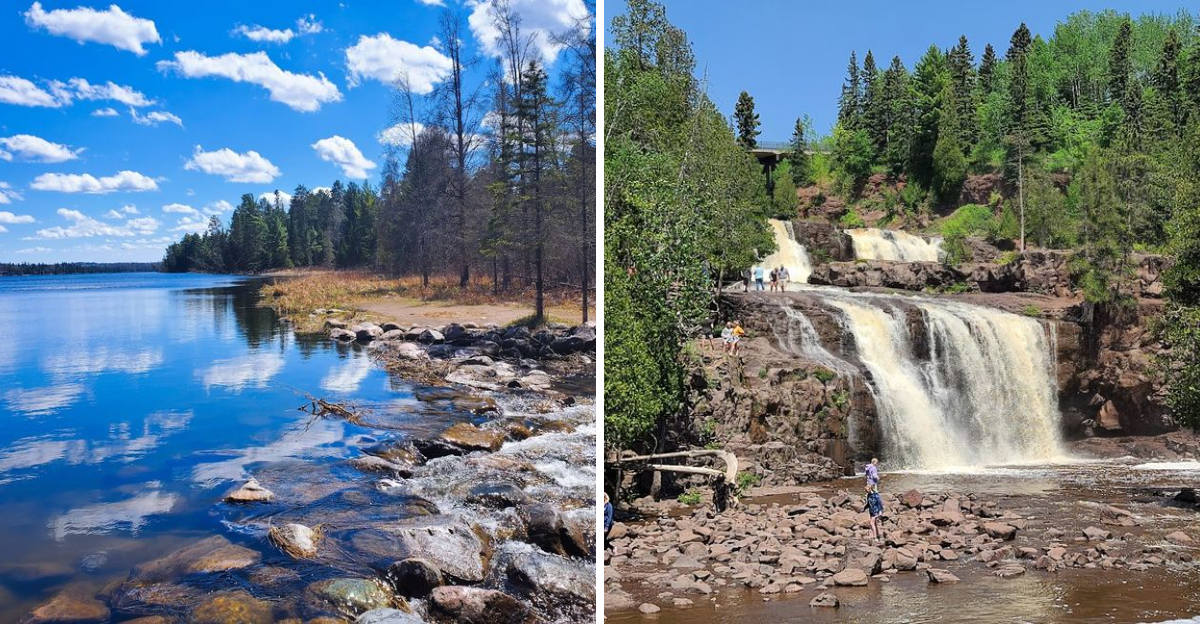
Some places look so beautiful that you wonder if your eyes are playing tricks on you. Minnesota has several state parks that fall into that dreamlike category.
Waterfalls tumble over ancient lava flows while rainbows form in the mist without any warning. Cliffs rise straight up from crystal clear lakes that reflect the sky like a perfect mirror.
You walk through forests where the only sound is wind moving through pines and the occasional splash of a fish jumping. The light changes everything here.
Morning turns the rocks golden while sunset paints the water pink and orange. Some parks have rocky shores that resemble the Pacific coast without the long drive.
Others hide quiet lakes where you can paddle for hours without seeing another boat. Minnesota did not have to work hard to make these places stunning. Nature did all the work. The state just decided to protect them so everyone could share in the magic.
You will take photos and they will not capture the full feeling. That is fine.
Some experiences are meant to stay in your memory rather than on your phone. Pack a tent or just come for the day. Either way, prepare to be amazed.
1. Tettegouche State Park, Silver Bay, Minnesota
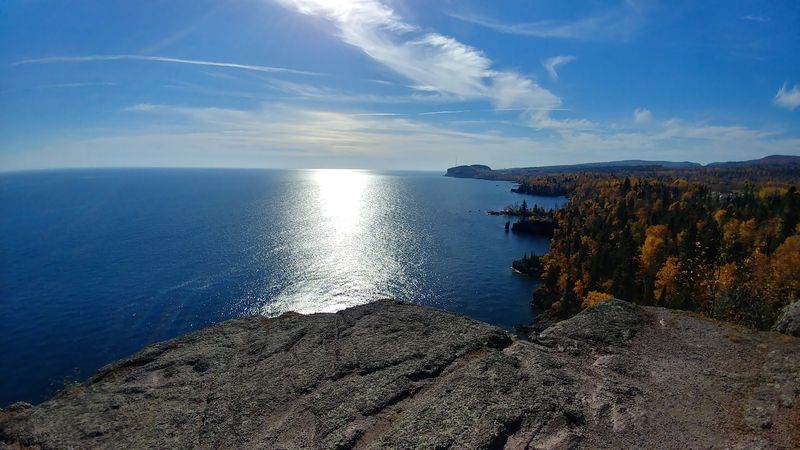
Lake Superior does not whisper. At Tettegouche State Park near Silver Bay, Minnesota, the lake roars, and the cliffs answer back.
This park sits along the rugged North Shore and features some of the most dramatic scenery in the entire Midwest. Palisade Head, a 350-foot volcanic cliff rising straight from the lake, is one of the most photographed spots in Minnesota.
Tettegouche also contains four inland lakes, two waterfalls, and miles of backcountry trails that wind through birch forests and over rocky ridgelines. The High Falls of the Baptism River drop 60 feet, making them the highest waterfall entirely within Minnesota.
The park is a serious draw for rock climbers, with Palisade Head offering technical routes with views that reward every difficult move. Hikers can access the Superior Hiking Trail directly from within the park.
Winter transforms Tettegouche into a frozen wonderland. Ice climbers flock here when temperatures drop and the waterfalls freeze into stunning curtains of ice.
Camping options range from drive-in sites to remote backpacking shelters perched in the woods. The park also has a camper cabin right on the shore of Lake Superior, which books up fast every season.
2. Judge C.R. Magney State Park, Grand Marais, Minnesota
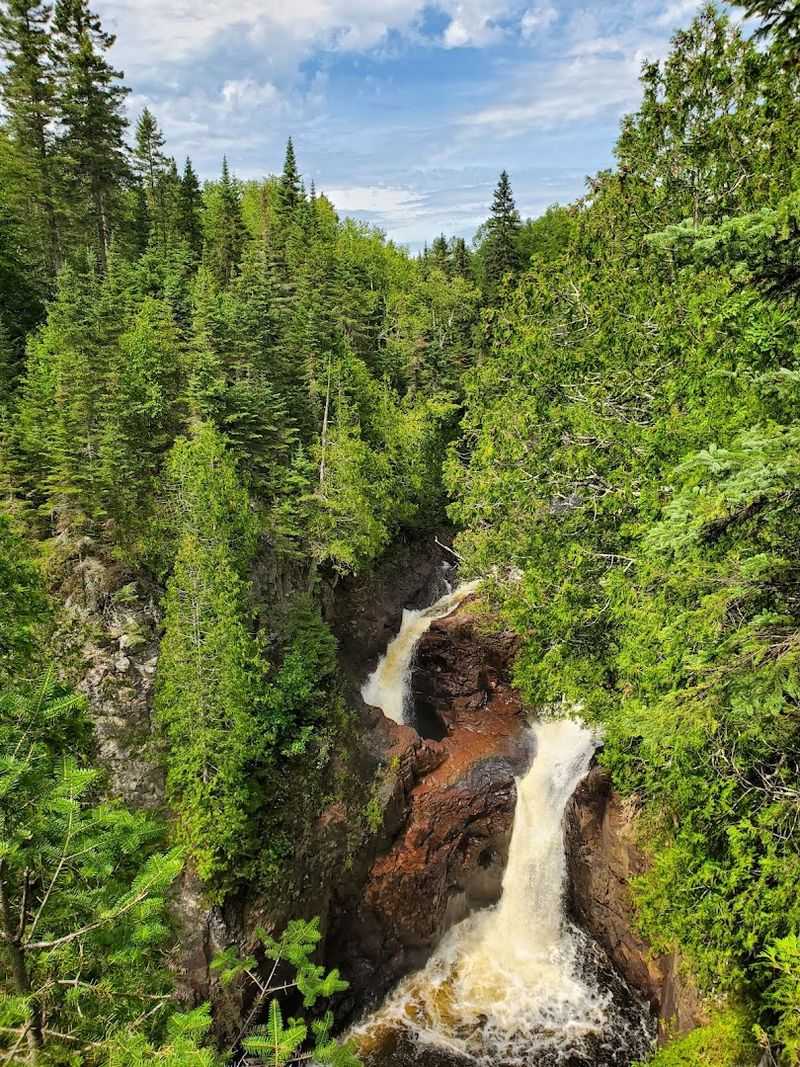
Half a river vanishes into a hole in the ground here, and nobody has fully explained where it goes. That mystery alone makes Judge C.R.
Magney State Park worth the drive.
Located near Grand Marais in northeastern Minnesota, this park is home to the famous Devil’s Kettle waterfall. The Brule River splits at a rocky outcrop, with one half continuing downstream and the other half disappearing into a deep pothole in the basalt bedrock.
Scientists and curious visitors have dropped dye, ping-pong balls, and even GPS devices into the kettle. None have surfaced in any known location.
It remains one of the most genuinely puzzling geological features in the United States.
The hike to Devil’s Kettle is about two miles each way and involves a steady climb through dense boreal forest. The trail rewards effort with views of both the upper and lower falls of the Brule River along the way.
The park sits in a remote stretch of the North Shore, which means crowds are lighter than at more well-known stops. That quiet adds to the eerie, almost otherworldly atmosphere around the kettle.
Spring and early summer bring high water levels that make the falls especially powerful. The surrounding forest is rich with wildflowers, ferns, and the kind of deep green that only grows in northern Minnesota.
3. Minneopa State Park, Mankato, Minnesota
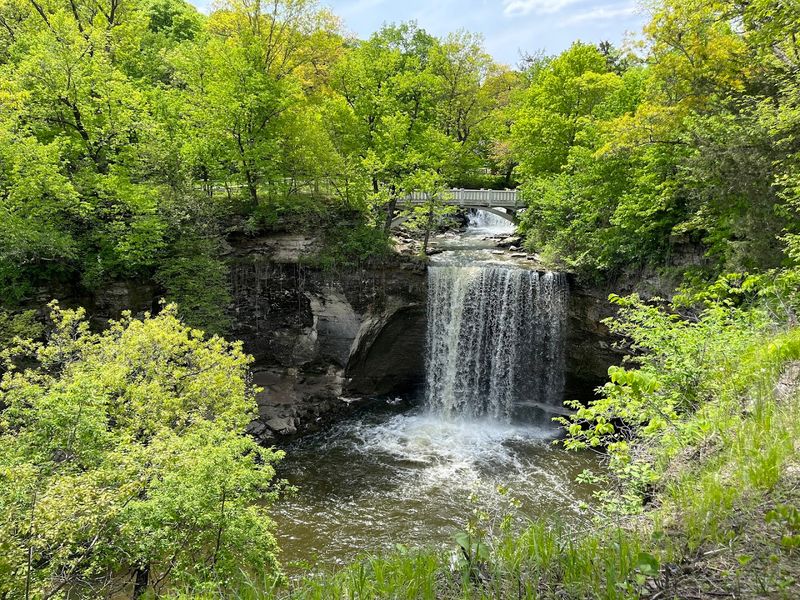
Bison and waterfalls in the same park sounds like a combination that should not work, but Minneopa State Park near Mankato, Minnesota, pulls it off beautifully.
The park’s name comes from a Dakota word meaning “water falling twice,” which perfectly describes the two-tiered Minneopa Falls. The falls drop through a sandstone and limestone gorge that feels surprisingly dramatic for southern Minnesota.
A short, easy trail loops around the falls and through the gorge, making this one of the most accessible waterfall experiences in the state. The stone steps and bridges along the trail were built by the Civilian Conservation Corps in the 1930s and add a historic charm to every visit.
On the other side of Highway 68, the park’s bison unit is home to a free-roaming herd of American bison. A paved drive loops through the prairie where the herd grazes, and sightings are common throughout the year.
Watching bison move across an open prairie just minutes from a waterfall gorge creates a strange and wonderful sense of time travel. Southern Minnesota does not always get credit for scenery, but Minneopa changes that conversation.
The park also has a campground and picnic areas that make it a great base for exploring the greater Mankato region.
4. Whitewater State Park, Altura, Minnesota
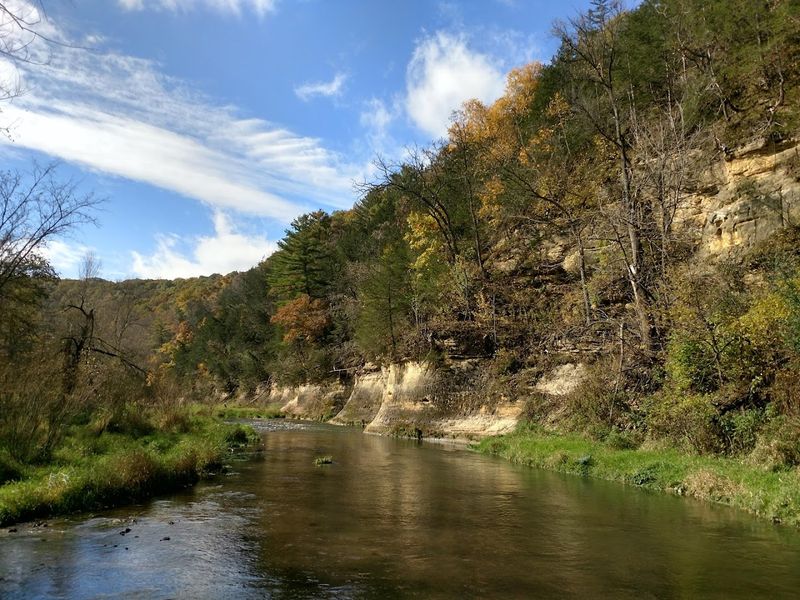
There is a valley in southeastern Minnesota that looks like it belongs in a different part of the country entirely. Whitewater State Park near Altura is that valley.
The Whitewater River runs cold and clear through a deep limestone canyon, fed by natural springs that keep the water temperature remarkably consistent year-round. The result is one of the best trout fishing streams in the state, drawing anglers from across the Midwest every season.
Steep bluffs rise on both sides of the valley, and the trails that climb them reward hikers with sweeping views of the surrounding Driftless Area landscape. This region was never flattened by glaciers, which explains the dramatic topography that sets it apart from most of Minnesota.
Wildflowers are exceptional here in spring. The valley floor and bluff slopes support a diverse mix of plants, including wild columbine, trillium, and bloodroot, that bloom in colorful waves from April through June.
White-tailed deer are nearly guaranteed sightings along the river corridor. Wild turkeys, great blue herons, and various songbirds make the park a solid destination for wildlife watching as well.
The campground sits close to the river, and falling asleep to the sound of moving water is one of the underrated pleasures of staying here overnight. Whitewater also has a swimming area and a nature center with programs for families.
5. Interstate State Park, Taylors Falls, Minnesota
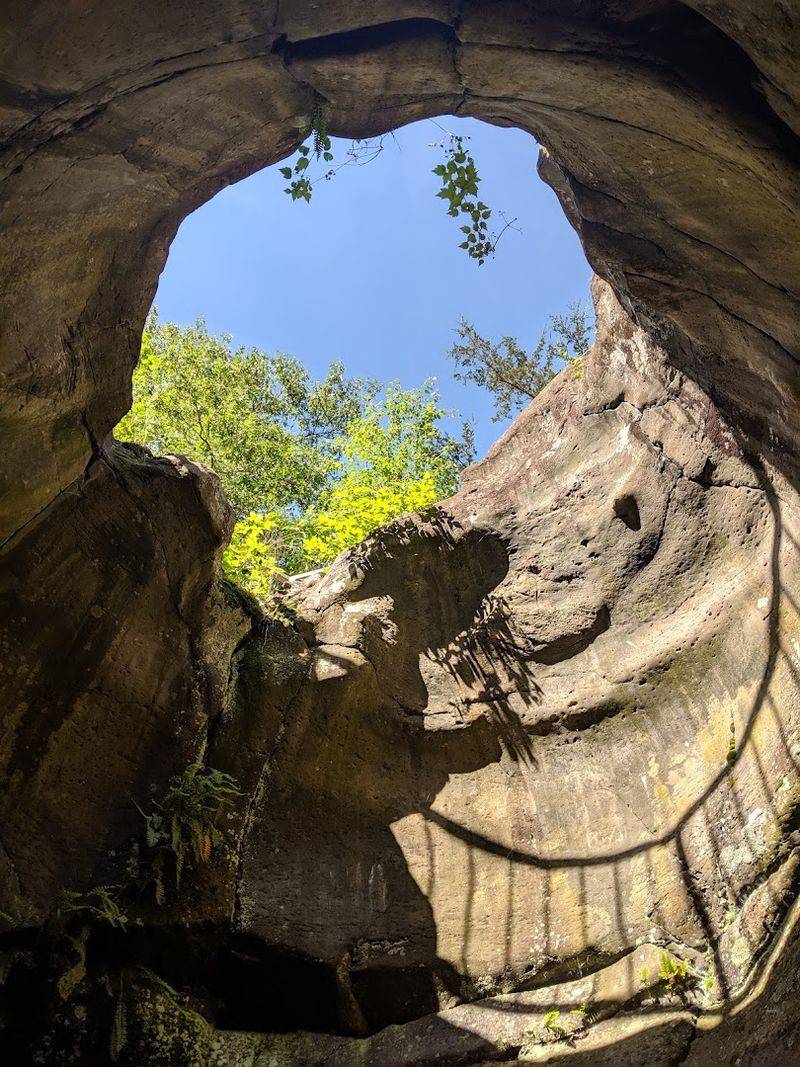
Imagine standing at the edge of a canyon carved by one of the most powerful floods in Earth’s history. That is the starting point at Interstate State Park near Taylors Falls, Minnesota.
The park sits along the St. Croix River on the border between Minnesota and Wisconsin, and it contains some of the most geologically significant rock formations in the entire Midwest. The glacial potholes here are among the largest and deepest ever discovered, drilled into billion-year-old basalt by swirling rocks during ancient glacial floods.
The Pothole Trail winds through this surreal landscape of smooth, circular holes carved into dark rock, some reaching depths of over 60 feet. The formations look almost artificial, like something a sculptor would create rather than a glacier.
The St. Croix River canyon adds dramatic scenery to the geological interest. Rock climbers use the basalt walls regularly, and the views from the top of the bluffs are genuinely stunning in every season.
Boat tours on the St. Croix River operate from the park during warmer months, offering a completely different perspective on the canyon walls. The river itself is a National Scenic Riverway, protected for its exceptional natural beauty.
The charming town of Taylors Falls sits right outside the park entrance, with local shops, restaurants, and historic architecture that make a full day trip feel well-rounded.
6. Cascade River State Park, Lutsen, Minnesota
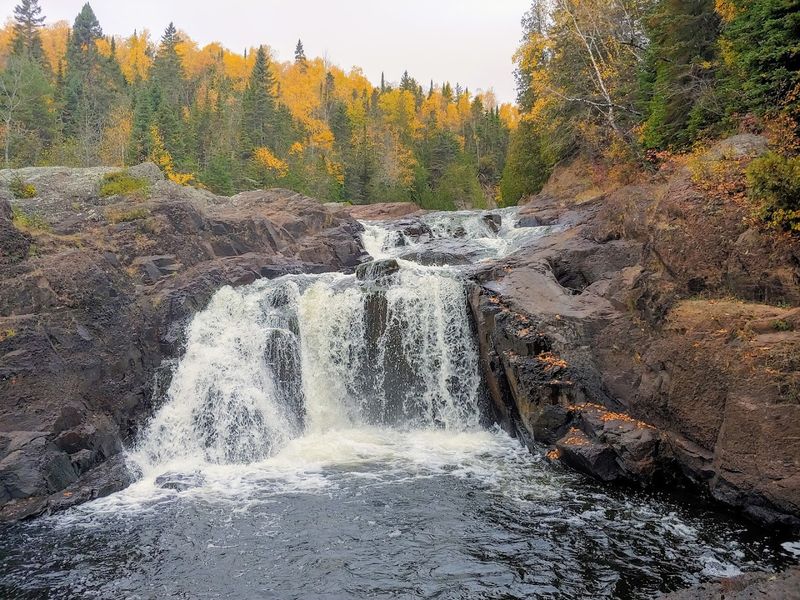
The Cascade River does not slow down for anyone. It charges through a series of waterfalls and gorges on its way to Lake Superior, and keeping up with it on foot is one of the great hiking experiences on the North Shore.
Cascade River State Park near Lutsen, Minnesota, follows this fast-moving river through a tight, dramatic gorge lined with dark basalt and brilliant green moss. The trail system includes multiple overlooks and creek crossings that keep the experience dynamic from start to finish.
The main waterfall loop is about three miles and passes by five distinct falls, each with its own character and volume. The gorge walls close in tightly at certain points, creating a sense of depth and enclosure that feels almost underground.
The park connects directly to the Superior Hiking Trail, which opens up longer routes for backpackers heading north or south along the ridge above the lake. Backcountry campsites along the trail offer solitude and views that few people ever see.
Fall is the prime season at Cascade River. The combination of golden birch and orange maple against the dark rock and white water creates a color palette that photographers actively plan trips around.
7. Gooseberry Falls State Park, Two Harbors, Minnesota
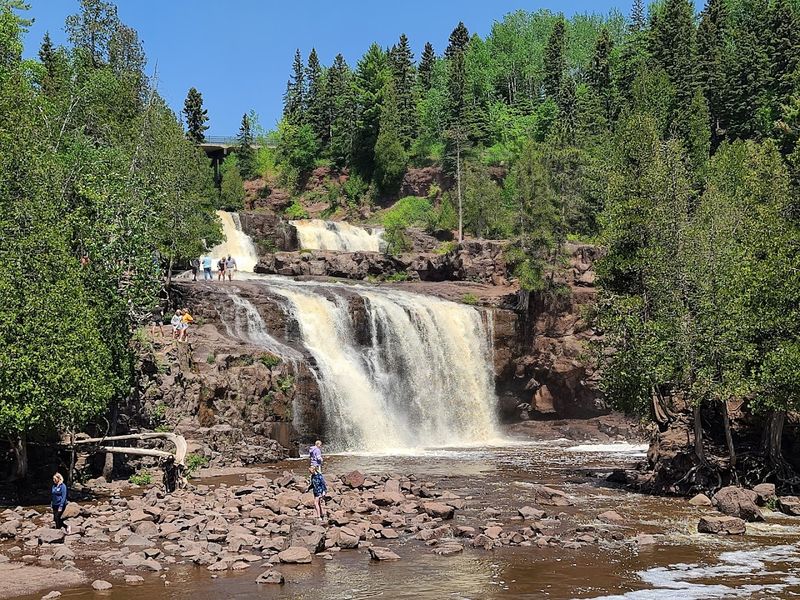
Five waterfalls in one park sounds like a rumor until you are standing in the middle of it all, completely speechless.
Gooseberry Falls State Park near Two Harbors, Minnesota, is one of the most visited parks in the state, and it earns every single one of those visitors. The Gooseberry River drops through a series of falls over ancient volcanic rock before emptying into Lake Superior.
The Upper, Middle, and Lower Falls are the main attractions, but the Fifth Falls trail leads deeper into the park for those who want a quieter experience. The basalt formations around the falls are over a billion years old, giving the whole landscape a raw, ancient feeling.
The park is extremely accessible. A paved trail connects the parking area to the main falls, making it easy for families with young kids or visitors with mobility needs to enjoy the views.
In summer, the river pools below the falls invite wading and exploration. Fall foliage frames the dark rock with brilliant color, creating conditions that make every photo look professionally edited.
Winter visits reveal a completely different park, with ice formations building up around the falls in shapes that look almost architectural. The park’s visitor center has exhibits on the geology and natural history of the area.
8. Blue Mounds State Park, Luverne, Minnesota
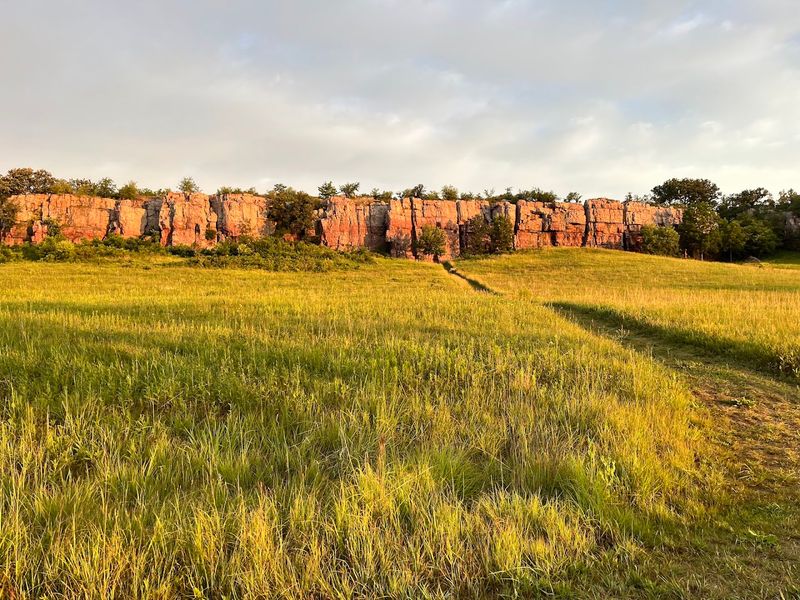
A 1,500-acre tallgrass prairie with a bison herd and a 100-foot quartzite cliff feels like a scene from a western film, not a Minnesota state park. Blue Mounds near Luverne delivers exactly that.
The Sioux quartzite outcrop that gives the park its name glows pink, purple, and red depending on the light. At sunset, the cliff face lights up in colors so vivid that the first-time visitor tends to stop walking and just stare.
The bison herd here roams a large enclosed prairie section of the park. The animals are visible from several trail viewpoints, and watching a bison herd move across a tallgrass prairie is one of the most powerful wildlife experiences in the upper Midwest.
Blue Mounds also has a fascinating astronomical feature. The cliff’s eastern end aligns precisely with the sunrise on the spring and fall equinoxes, a fact that suggests the site held significance for Indigenous peoples long before European settlement.
Wildflowers cover the prairie in summer, with purple coneflower, black-eyed Susan, and blazing star creating dense, colorful patches across the landscape. Birders come for the prairie-nesting species, including upland sandpipers and dickcissels, that are rare elsewhere in the state.
9. Afton State Park, Hastings, Minnesota
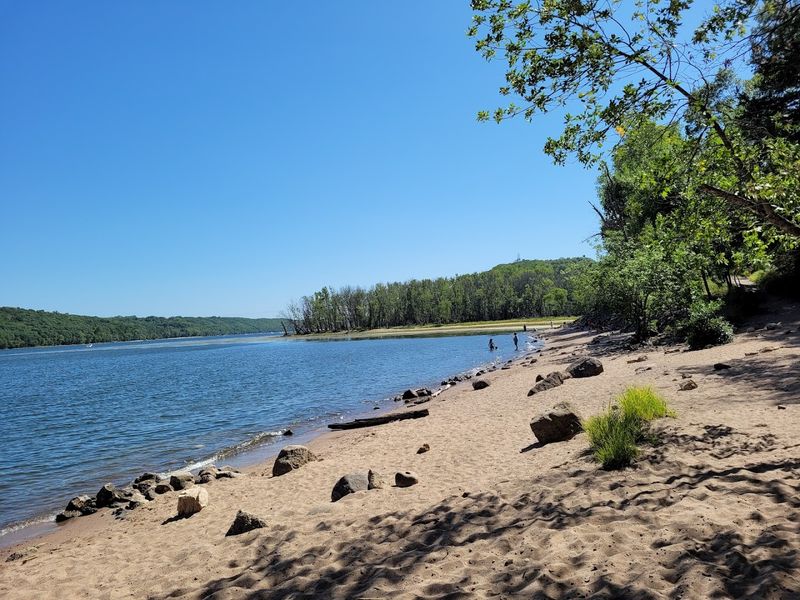
Just 30 minutes from the Twin Cities, there is a park that feels like it should be much harder to reach. Afton State Park near Hastings, Minnesota, sits above the St. Croix River valley with views that stop seasoned hikers mid-stride.
The park features deep ravines, restored tallgrass prairie, and miles of trails that drop steeply to a sandy riverbank along the St. Croix. The elevation changes are real and rewarding, making Afton one of the more physically engaging parks in the metro region.
Native wildflowers blanket the prairie sections in summer, with blazing star, prairie smoke, and bergamot creating a rolling sea of color across the hillsides. The restoration work done here over the decades is one of the quiet success stories of Minnesota conservation.
The St. Croix River frontage gives the park a resort-like quality in summer. Swimmers, paddlers, and sunbathers all share the sandy beach at the bottom of the bluff, and the climb back up is just enough to earn the view.
Afton also has a backpacking loop with primitive campsites for those who want an overnight experience close to the city. Watching the sun set over the St. Croix from a ridgeline campsite while knowing Minneapolis is 20 miles away is a genuinely surreal feeling.
10. Itasca State Park, Park Rapids, Minnesota
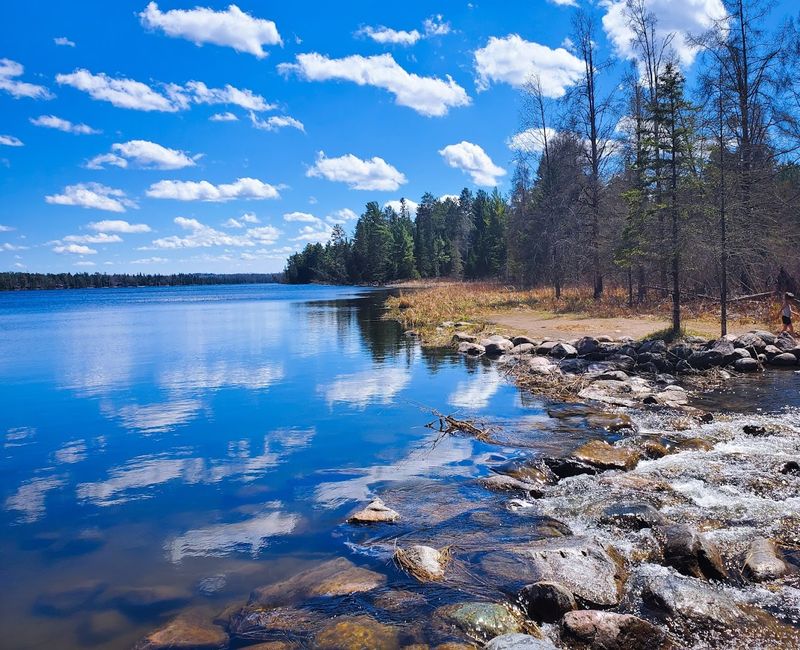
Walking across the Mississippi River on stepping stones sounds like something out of a storybook. At Itasca State Park in Park Rapids, Minnesota, that is exactly what you can do.
This is where the great Mississippi River begins its 2,340-mile journey to the Gulf of Mexico. The headwaters are shallow enough to cross on foot, which makes for one of the most memorable photo moments in any Minnesota park.
Beyond the headwaters, Itasca covers more than 32,000 acres of forests, lakes, and hiking trails. The park has over 100 lakes within its boundaries, with Lake Itasca being the crown jewel.
Old-growth red and white pines line the Wilderness Drive, some standing over 300 years old. The Bison Kill Site and the Native American burial mounds add a layer of history that makes exploring the trails feel meaningful.
Itasca is one of Minnesota’s oldest state parks, established in 1891. It has full camping facilities, a historic lodge, and boat rentals that make it easy to spend multiple days here.
Spring brings wildflowers along the forest floor. Fall turns the whole park into a canvas of red, orange, and gold.
