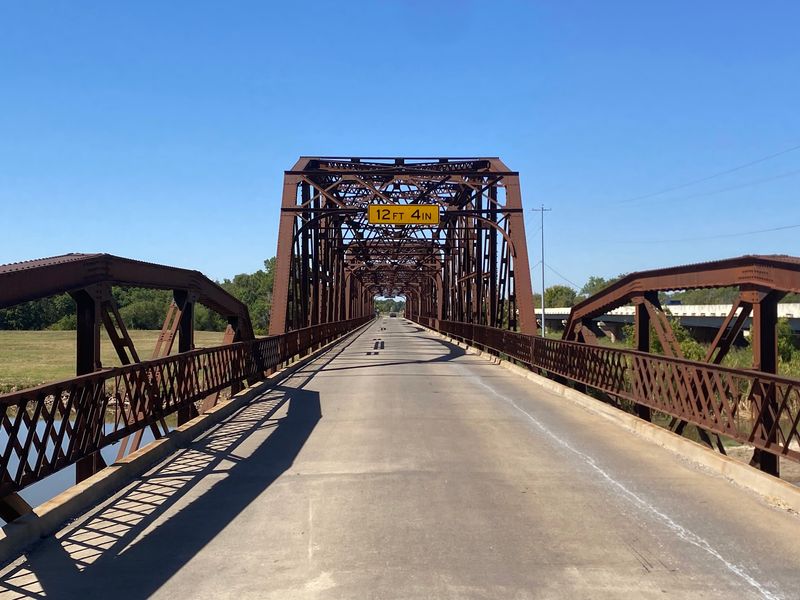
Some Oklahoma landmarks announce themselves with billboards. This one just sits there, rusting quietly at the edge of a lake, waiting for you to notice that the road narrows and the pavement changes under your tires.
I crossed it the first time by accident, slowed to a crawl without meaning to, and then turned around at the next chance to do it again. That is the kind of place this is: a hundred-year-old piece of steel that still makes grown adults grin like kids and reach for their cameras.
A Steel Crossing at the Edge of Bethany
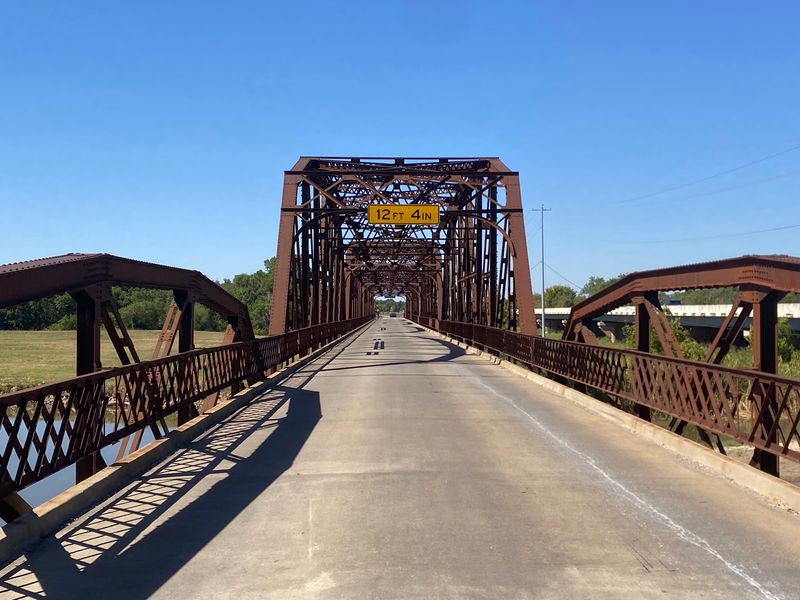
Tucked at 8703-8709 Overholser Dr in Bethany, Oklahoma, the Lake Overholser Iron Bridge sits where the North Canadian River slips into the north inlet of Lake Overholser. Locals pronounce the lake name with a wink, something close to Hold-her-closer, and once you hear it you will never say it the other way again.
Built in 1924, the steel truss span predates Route 66 itself by two years, then got folded into the Mother Road and carried travelers for more than three decades. It is classified as a historical landmark, and it still functions as a real bridge you can drive across.
What catches most people first is the width. Two lanes, barely, with steel framework close enough on either side that you instinctively lift off the gas and check your mirrors.
Oklahoma City sprawl sits just minutes east, yet standing at the railing you would swear you had driven an hour into the country. Birds, water, wind through the grasses, and a rust-colored skeleton of American engineering that somehow outlasted almost everything built around it.
Born in 1924, Two Years Before the Mother Road
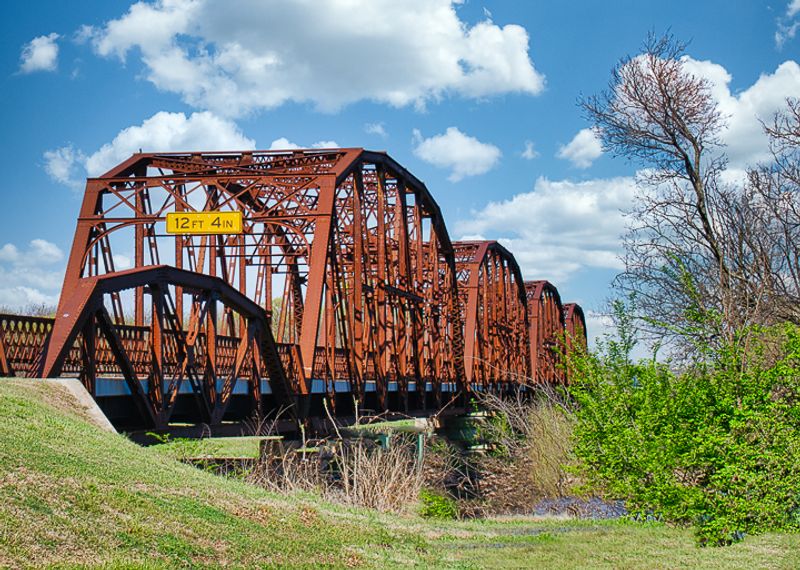
Here is a detail that surprises people: the bridge was already standing when Route 66 was born. Crews finished it in 1924, and when the Mother Road was commissioned in 1926, planners simply routed traffic across what was already there.
For more than thirty years, this narrow steel span carried the cross-country stream of families, truckers, and dreamers heading west. Millions of tires rolled over these approaches before the Interstate system pulled traffic away and left the old alignment to the locals.
Plenty of bridges from that era were torn down once they stopped being useful. This one got refurbished instead, spared because of its historical value and, frankly, because it photographs beautifully.
Visitors often mention how rare it feels to touch original infrastructure from the 1920s that still does its job. You are not looking at a replica or a museum piece behind glass.
With Route 66 marking its centennial in 2026, interest in these early alignments has climbed sharply, and travelers stopping here say they wanted to see the real thing while the anniversary buzz is building.
Why the Lanes Feel So Tight
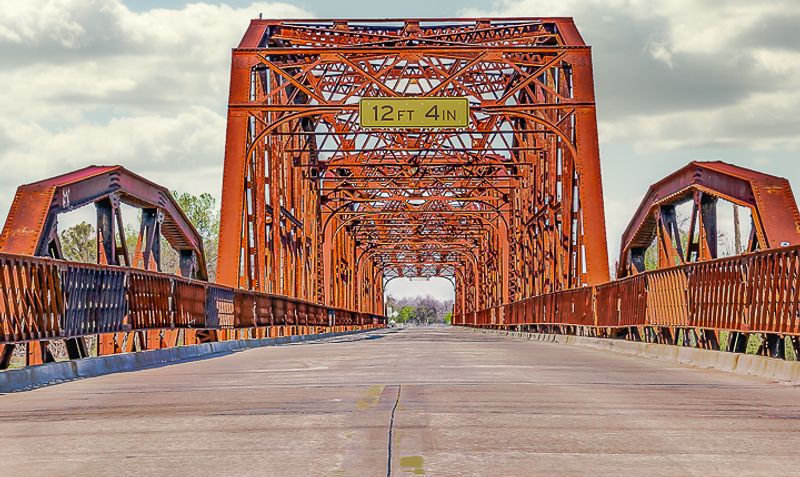
Modern bridges are built with generous shoulders and forgiving margins. Nothing about a 1924 design assumed pickup trucks, dually towing rigs, or drivers holding coffee.
Cross it once and you understand immediately why everyone slows. The steel members rise close on both sides, the lanes are genuinely tight, and there is a real understanding required between you and whoever is coming the other way about respecting your half of the pavement.
One longtime visitor described it as a perfect example of the old narrow bridges where passing drivers have to pay attention to their lane, and that is exactly right. The experience is not scary so much as it is focused.
Curiously, that pinch is part of the appeal. People say driving across gives them a sense of what travel felt like when Route 66 was the main artery west, when highways demanded attention instead of cruise control.
Plenty of folks cross, turn around at the far side, and come right back for a second pass. No shame in that.
It takes maybe ninety seconds and costs nothing.
Rust, Rivets, and the Draw for Engineering Fans
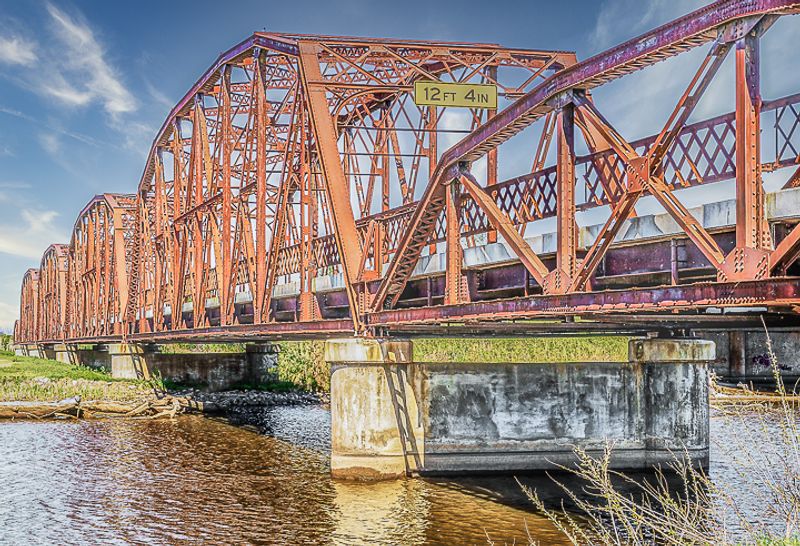
Steel this old wears its age honestly. The bridge is rust-colored and genuinely rusty in spots, and nobody seems to mind, because the patina is half the charm.
Engineering shows up repeatedly in what visitors talk about. Look up as you walk and you can trace how the truss members hand loads off to each other, how rivets and gusset plates hold a span together using methods largely retired from modern construction.
One visitor put it well, calling it a delight for anyone who appreciates the work required to build something that endures. Nearly a century of Oklahoma heat, ice storms, and wind, and it is still standing and still carrying cars.
Kids who like how things are built tend to get genuinely interested here, especially when you point out that every one of those connections was placed by hand.
Fair warning for purists: the more famous Pony Bridge near Hinton is longer and more dramatic, and some visitors call this one a shorter cousin. That comparison is honest, but it undersells how satisfying this span is up close.
Golden Hour and the Camera Crowd
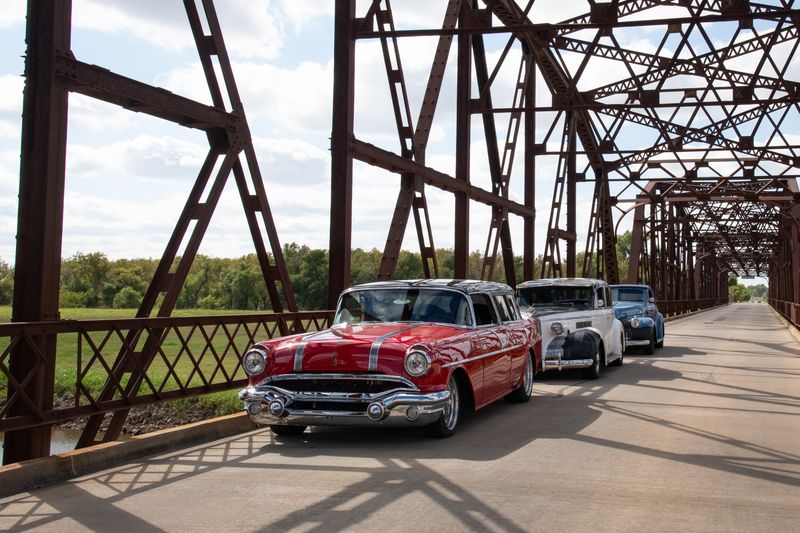
Photographers have quietly claimed this place. Morning light pours straight through the superstructure, and one visitor described driving across at dawn, turning around, and crossing again just to catch the sun rising through the steel.
Sunset works just as well from the opposite angle, with the lake water flattening out and the rust catching that late orange glow. Drone pilots show up too, since the open water and long lines of the truss make for clean overhead frames.
Photo opportunities come up constantly in what people share about the spot, and the reason is simple geometry: repeating steel shapes, a big sky, and reflective water all in one frame.
Night visits have their own character. One traveler noted that after dark the area gets genuinely dark, which gives you a truer sense of how lonely the Mother Road felt between towns in the old days.
You do not need fancy gear. A phone, decent light, and five minutes of patience will get you something worth framing on the wall at home.
Paddling the Water Beneath the Span
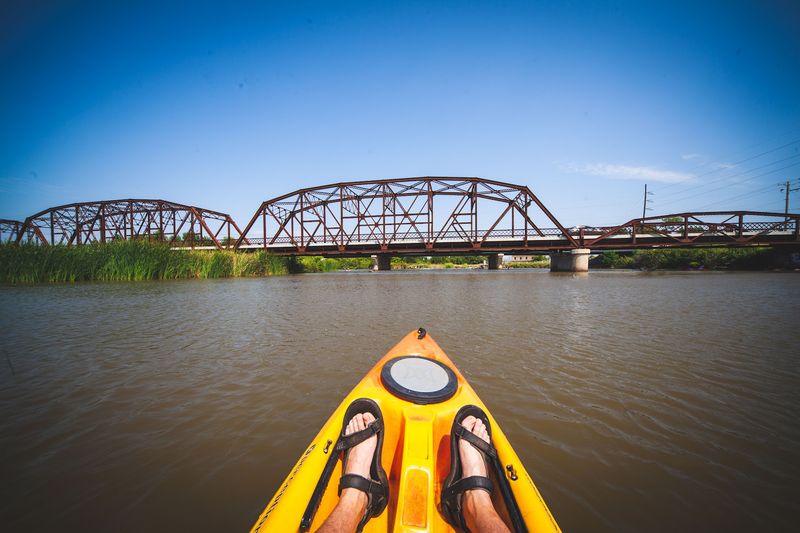
Bring a kayak and the whole visit changes. The launch is easy, parking sits roughly twenty feet from the shore, and the water below the bridge stays calm enough for beginners and paddleboarders.
Paddlers describe weaving through a channel lined with native grasses that grow around ten feet tall, gliding under bridges, and feeling completely removed from the city despite being minutes from it. Ducks dive in and out of the reeds.
White storks occasionally skim inches above the surface.
Boat permits are required for the lake. One regular reported paying about six dollars for a day permit or roughly thirty dollars for an annual one, available from various area vendors, though prices and sellers can change, so confirm before you load the boat.
Fishing draws its own crowd. The lake side tends to fish cleaner, while the river side hides a fair amount of submerged tree debris that will snag your line.
Weekends bring more people, but several paddlers say they have rarely found it crowded out on the water.
Birds, Grasses, and the Refuge Across the Water
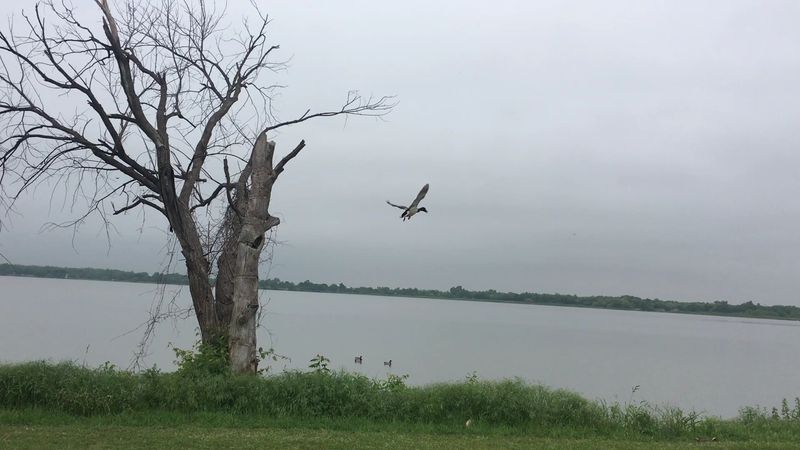
Stand still for a minute and the soundtrack takes over. A wildlife refuge sits across the water, and visitors regularly mention the constant chatter of birds filling the air around the crossing.
Tall native grasses line the channels, herons and ducks work the shallows, and the whole pocket feels far more rural than a spot this close to Oklahoma City has any right to feel.
Spring and fall bring the best of it. Migration seasons add variety to what shows up, temperatures stay pleasant, and the wind is usually easier to tolerate than in the depths of an Oklahoma July.
Winter has its own devoted fans. One regular walks the area with dogs during the cold months specifically because it thins out, leaving quiet paths and unobstructed views.
Honest note about the setting: modern traffic runs on the parallel bridge nearby along the current Route 66 corridor, so road noise drifts in. It does not ruin the peace, but this is not wilderness silence.
Bring binoculars if you have them. The refuge side rewards patience.
Walking Trails, Picnics, and an Easy Afternoon
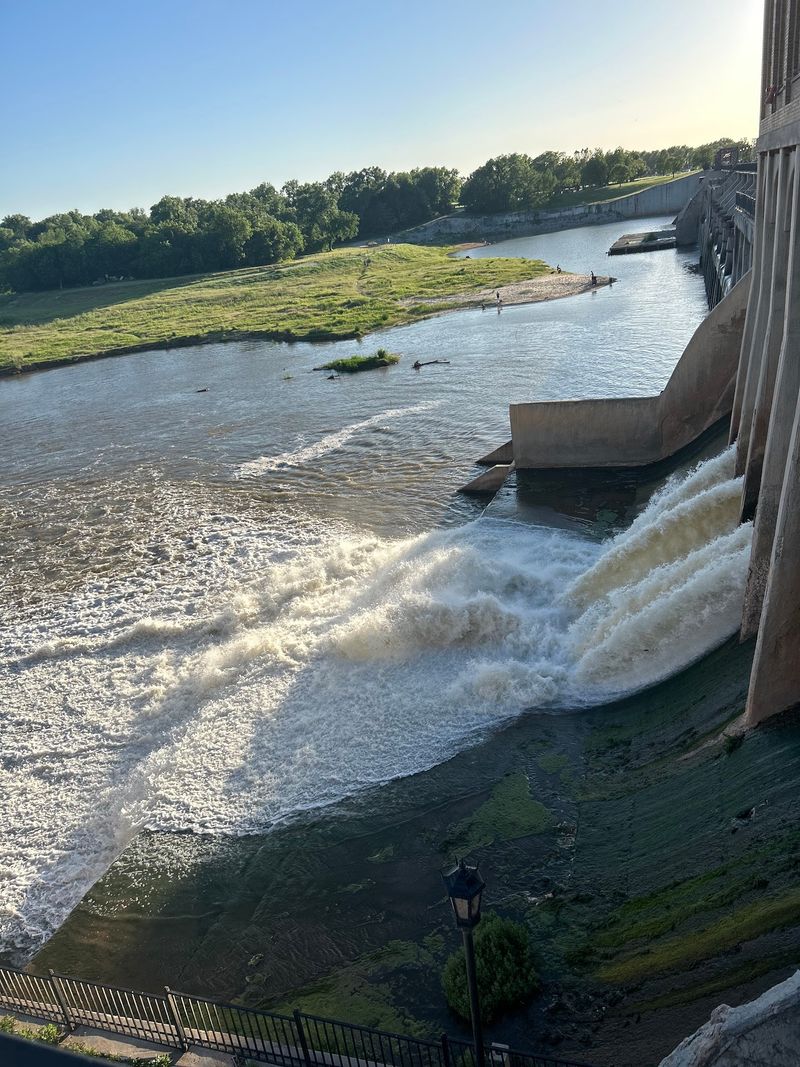
Legs cramped from the highway? Good news.
A small park sits beside the crossing with room to spread a blanket, and walking trails follow the shoreline for anyone who wants more than a quick photo stop.
Families use it as a reset button. One parent brings a daughter out here regularly just for fresh air and open space, which tells you plenty about how approachable the place is.
Cyclists share the paths, and on pleasant weekends the trail fills with walkers, dogs, and a steady stream of bikes, so keep an eye out rather than wandering in a daydream.
Hiking and walking come up often in what people mention about the area, alongside how peaceful it feels once you settle in.
Cross the bridge and you can reach the Lakeview farmers market side, which turns a ten-minute stop into a decent little outing if the timing lines up.
Nothing here is polished or expensive. It is grass, water, old steel, and a bench, which is exactly the kind of afternoon that sticks with you.
Getting There, Hours, and What It Costs
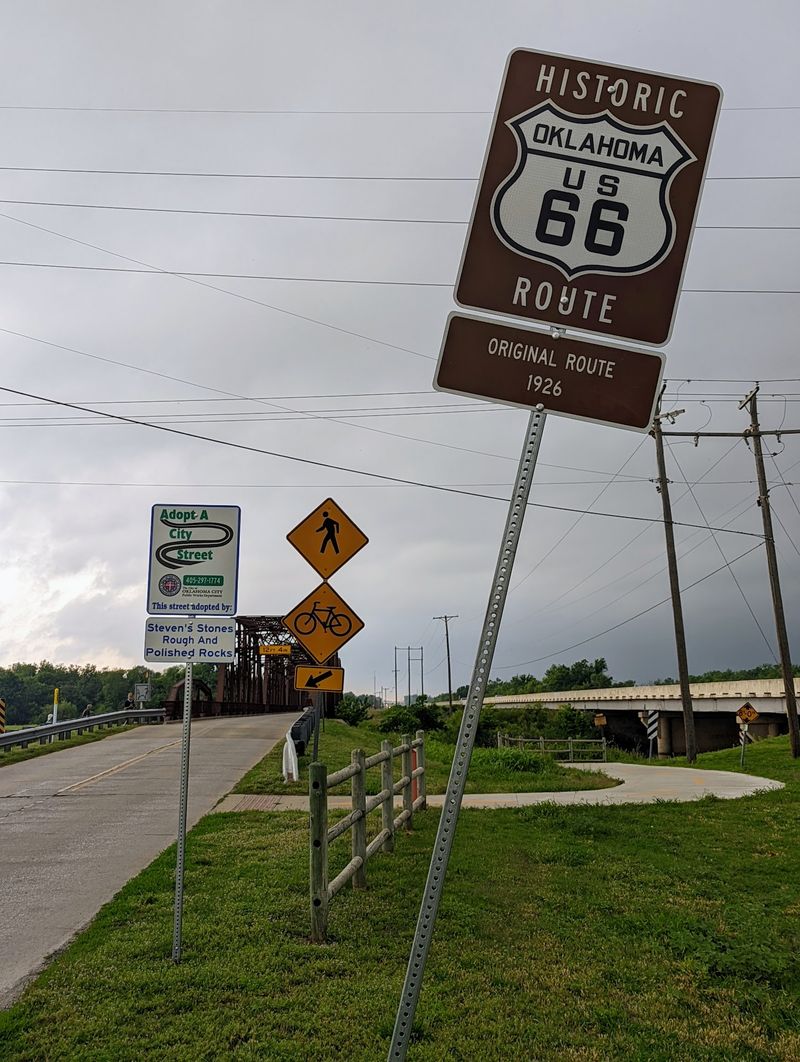
Cost of admission: nothing. The landmark is open twenty-four hours a day, seven days a week, with no gate, no ticket booth, and no season to work around.
Finding it is straightforward. Aim for 8703-8709 Overholser Dr in Bethany, just off the NW 39th Street corridor that still carries the historic Route 66 designation, roughly fifteen minutes northwest of downtown Oklahoma City and a bit over an hour and a half from Tulsa.
A small parking area near the span lets you pull off, stretch, and take pictures without standing in the roadway. Park close to the shore if you are unloading a boat.
Budget accordingly: the bridge itself is free, while lake boat permits ran about six dollars daily or thirty dollars annually according to one frequent paddler, though those figures may have shifted.
Timing tip for Oklahoma summers, plan for early morning or evening unless you enjoy midday heat with no shade.
Most people spend fifteen to thirty minutes here. Paddlers and picnickers easily stretch it to half a day.
Worth the Detour Off I-40
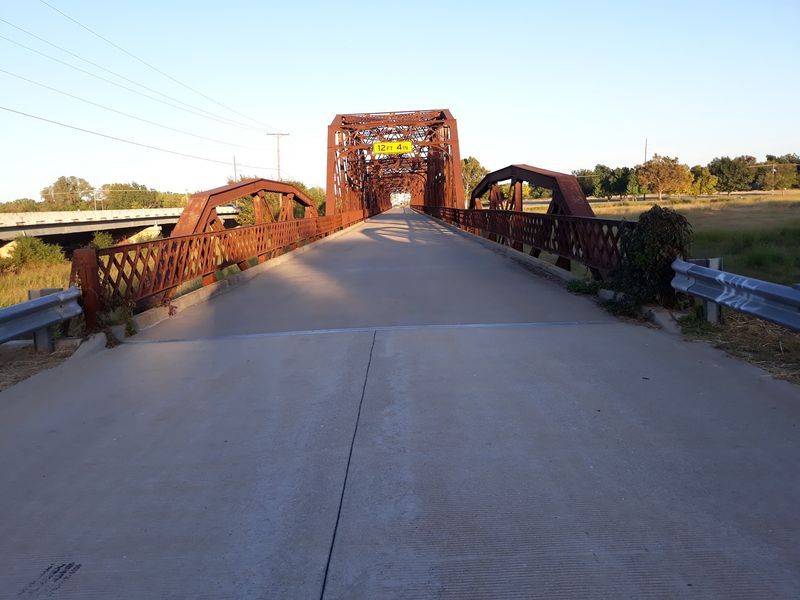
Expectations matter here. One honest visitor summed it up by saying there is great history but not much to see, and that is a fair read if you arrive hoping for a full attraction with exhibits and a gift shop.
What you get instead is a genuine piece of 1924 engineering you can drive, walk, photograph, and paddle beneath, all for free, all day, every day.
Route 66 travelers should absolutely build it into the itinerary. Oklahomans who have driven past a thousand times might be the ones most surprised, since the thing they have taken for granted is one of the few functional steel bridges left from the original alignment.
Pair it with a paddle, a picnic, or a sunrise, and a five-minute curiosity turns into a morning worth remembering.
The centennial of the Mother Road arrives in 2026, and crowds along these old alignments will likely grow. Going now, while the lot is quiet and the light is yours alone, feels like the smarter play.
Slow down. That is the whole point.
