Wool woven on a North Carolina hillside once warmed a president, and that fact alone was enough to send me up a winding mountain road on a bright morning. Windows down, the air sharp enough to wake me better than any alarm, I drove past grand old hotels and arrived at a cluster of stone and timber buildings that once rang with the clack of dozens of looms.
A small craft school for local children started it all, and a wealthy philanthropist poured her heart into the project until it grew into something much bigger. Today the old workshops hold a free museum, a dye house frozen in time, and galleries full of handmade art.
Walking through those rooms, the story of a piece of cloth becomes the story of a community. Leaving with a head full of tales and a new respect for the people who made it all happen.
A Craft School With Big Dreams
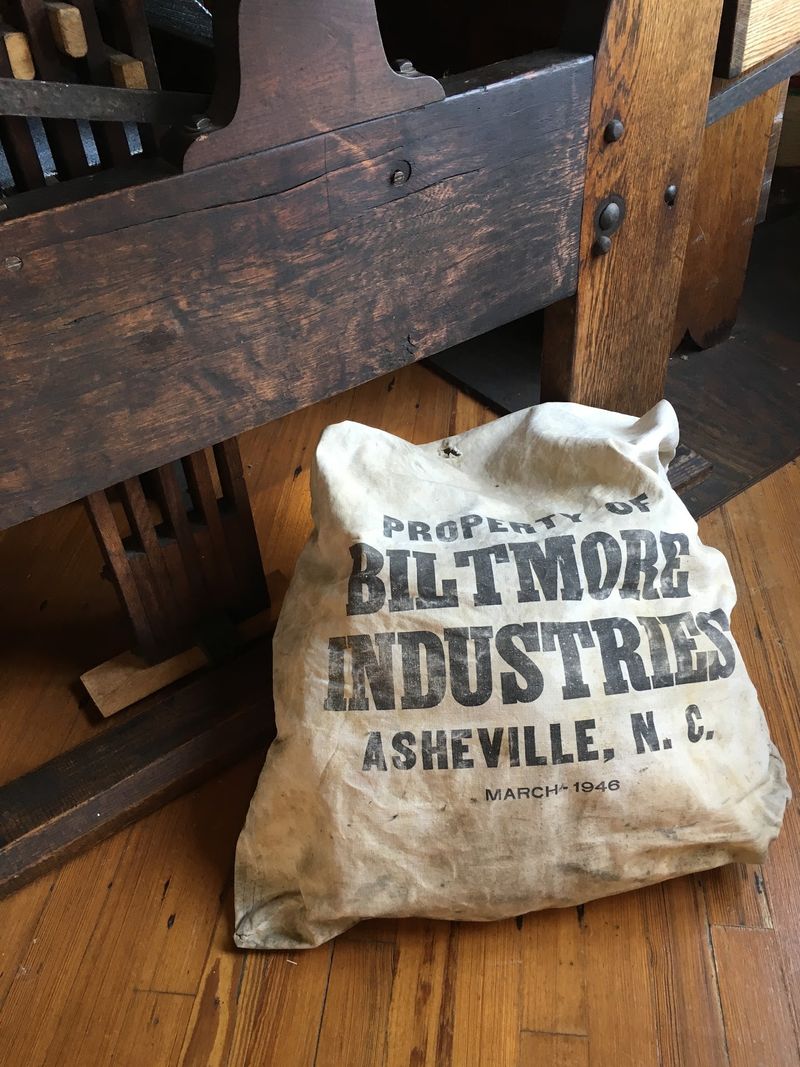
My favorite part of any origin story is how small it starts, and this one begins with a humble classroom in Biltmore Village. Back in 1901, George and Edith Vanderbilt set up a craft school for local young people, many of them children of workers on the estate.
The goal was simple and kind: teach useful skills that could lead to real jobs.
Two teachers, Eleanor Vance and Charlotte Yale, guided students through woodworking and weaving. Picture kids learning to carve and shape wood while others worked yarn into cloth, slowly and carefully.
Appalachian crafts were fading back then, so this school helped keep old mountain skills alive.
I love that the early pieces were sold to tourists who were already flocking to Asheville for its fresh air and scenery. That little stream of visitors gave students a reason to take pride in their work.
It also proved that handmade goods from these hills had real value.
If you visit Biltmore Village today, take a slow stroll and notice the charming cottage-style buildings. They help you imagine the setting where everything began.
Knowing this backstory first makes the later chapters of Biltmore Industries feel even more impressive when you finally reach the museum up the road.
Edith Vanderbilt, the Quiet Champion
Some people lend their name to a project, while others roll up their sleeves, and Edith Vanderbilt clearly belonged to the second group. She became the school’s biggest supporter, giving her time, energy, and money to grow the weaving and woodworking programs.
Her focus paid off. Under her care, the school trained talented weavers who could produce cloth with real skill and beauty.
She saw these crafts as more than a hobby, since they could offer families in the mountains a steady way to earn a living.
What strikes me most is how forward-thinking that was for her time. She was helping people build independence, not just handing out charity.
That idea of lifting up a community through its own talent still feels fresh and meaningful today.
When you learn about her role, you start to see Biltmore Industries in a new light. The famous fabric that came later grew from roots she planted with patience.
A good tip for visitors is to read the museum’s displays about the early years slowly. Those small panels and photos reveal how one person’s steady belief helped shape a business that would reach all the way to the White House, which is still pretty amazing to think about.
A Big Move Up the Hill
Life changed fast after George Vanderbilt passed away unexpectedly in 1914. Edith faced a mountain of new responsibilities, and in 1917 she made the tough choice to sell the craft business.
The buyer was Fred Seely, son-in-law of the man who owned the grand Grove Park Inn. Seely had big plans, so he moved the whole operation from Biltmore Village to a group of buildings right next to the inn.
He named it Biltmore Industries, and people also called it the Biltmore Homespun Shops.
Honestly, the North Carolina location was a smart move. Hotel guests could wander over, watch weavers at work, and buy fabric to take home.
That kind of steady foot traffic turned a school project into a true business with national reach.
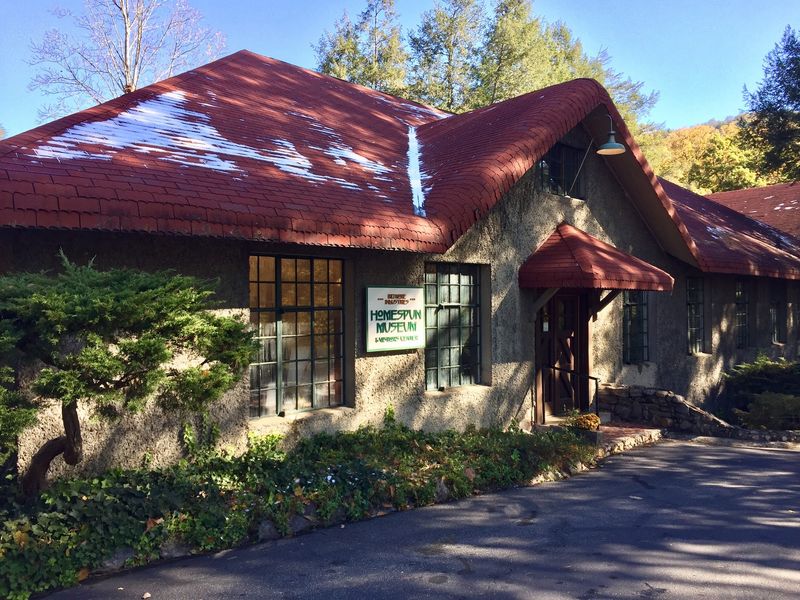
The buildings themselves are a treat to see now. Their stone walls, sloping roofs, and cozy English cottage style blend nicely into the wooded hillside.
I found myself pausing just to admire the rooflines and the way sunlight hit the old walls.
Here is a handy tip: pair your visit with a stroll around the Grove Park Inn grounds nearby. The views stretch across the mountains, and you will understand why Seely picked this spot for his shops.
Looms That Never Seemed to Rest
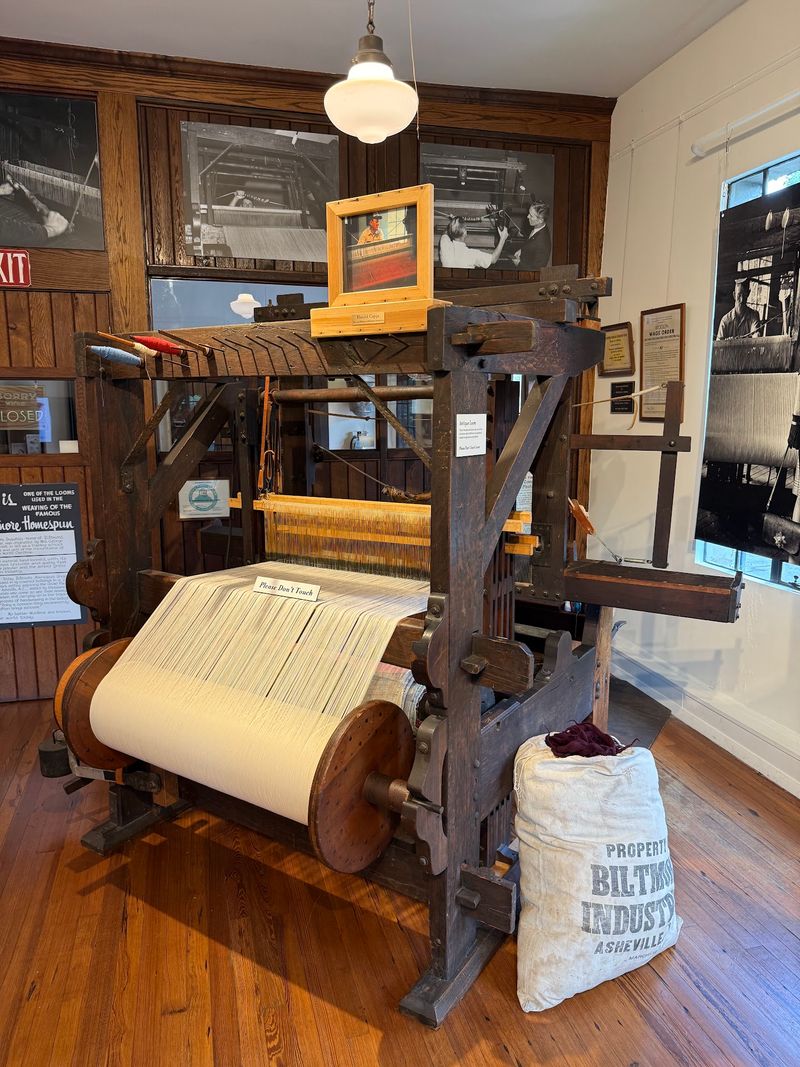
Forty looms. Sometimes forty-five.
At its peak in the late 1920s, Biltmore Industries kept that many machines working steadily, and together they turned out somewhere between 700 and 950 yards of cloth each day.
These were large, people-powered looms, many inspired by designs from Sweden. The yarn itself was not handspun, but the weaving was done by skilled hands, which gave every length of fabric its own personality.
Up to 100 workers kept the whole place humming.
One detail made me smile. The wool was often hung outside in the dry mountain air to help keep it from shrinking later.
It is such a simple, clever trick, and it shows how closely these workers paid attention to every step.
I tried to imagine the sound of all those looms clacking at once. It must have been loud, rhythmic, and oddly soothing, like a giant wooden heartbeat.
The fabric they made, known as Biltmore Homespun, became famous for its rich textures and lasting quality.
When you visit, look closely at the machines on display. Notice the wear on the wood where hands pushed and pulled for years.
Those tiny marks tell a story about hard work better than any sign ever could.
Coolidge Red, Hoover Gray, and White House Wardrobes
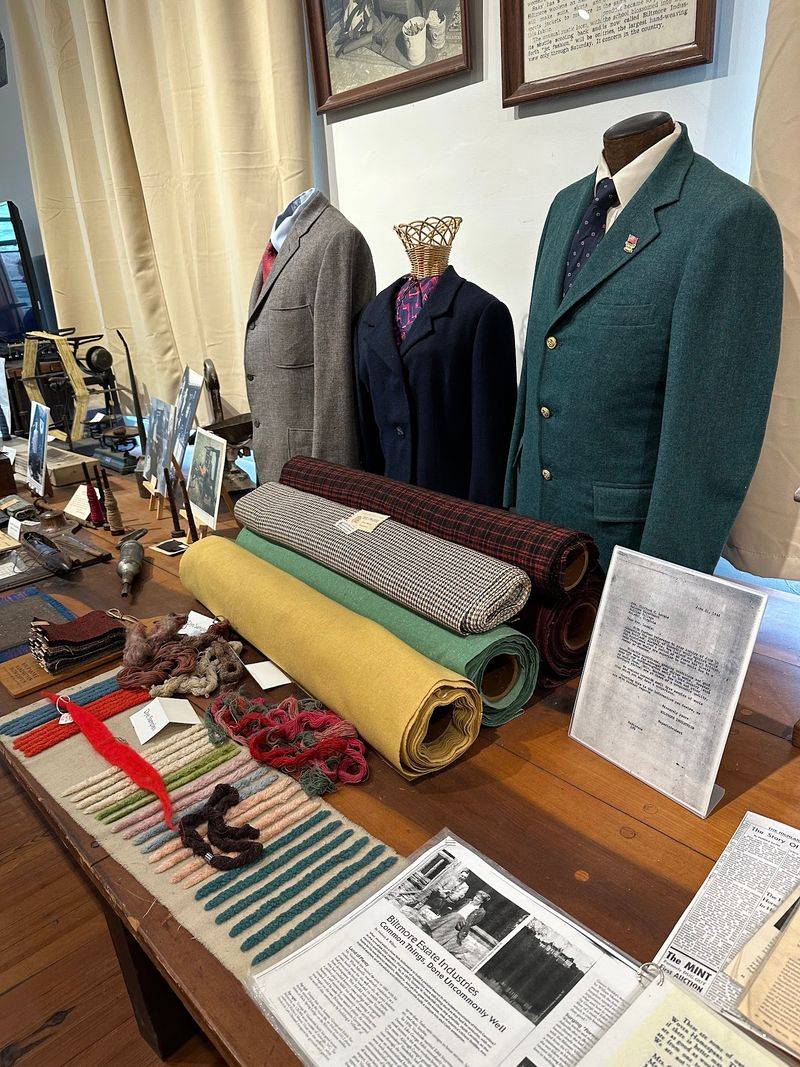
Imagine having a color named after you. That is exactly what happened to First Lady Grace Coolidge, who loved Biltmore fabric so much that a shade was called Coolidge Red in her honor.
She was not alone. President Herbert Hoover got his own custom color too, known as Hoover Gray.
President Franklin D. Roosevelt was a fan of the company’s crisp white wool, and a huge loom was even given as a gift to the Roosevelts.
Eleanor Roosevelt paid a visit to the workshops in 1934. She later wrote letters praising what she bought, and those letters are now treasured pieces of the collection.
Reading about her trip made the whole story feel wonderfully real to me.
The fan list did not stop at politics. Famous names like Thomas Edison, Henry Ford, and Helen Keller also bought Biltmore Industries textiles.
That is quite a lineup for a business that began as a small school for local kids.
So the next time you pull on a cozy wool sweater, think about this mountain workshop. A piece of cloth made here once traveled to the most famous house in America.
It is a fun fact to share with friends, and it never fails to surprise people.
Tough Times and a Final Thread
Every good story has a rough patch, and Biltmore Industries faced several. The Great Depression hit hard, since fewer people could afford fancy handmade fabric, and production began to slide.
Then came synthetic fabrics in the 1940s. These new materials were cheaper to make, which made hand-loomed wool harder to sell.
In 1942, Fred Seely passed away, and the business lost its main driving force.
Hope returned in 1953 when Harry Blomberg took over. He helped the company grow again for a while, which I found really encouraging.
Still, the golden years slowly faded, and weaving carried on at a smaller scale.
Finally, in 1981, the looms went quiet and the factory closed. It is a little sad to think about, yet the ending was not really an ending.
The buildings, tools, and memories stayed right where they were, waiting for new visitors.
This chapter taught me something useful. Even beloved businesses have to adapt when the world changes around them.
Learning how Biltmore Industries lasted for decades through wars, money troubles, and new technology gives you a deeper respect for the people who kept it going. Take a moment in the museum to think about the weavers who stayed until the very end.
The Dye House Frozen in 1981
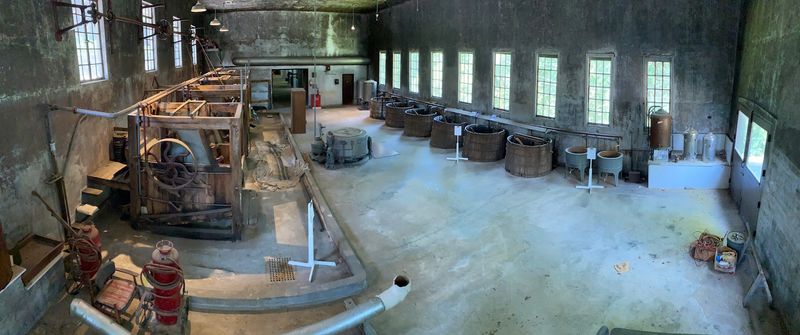
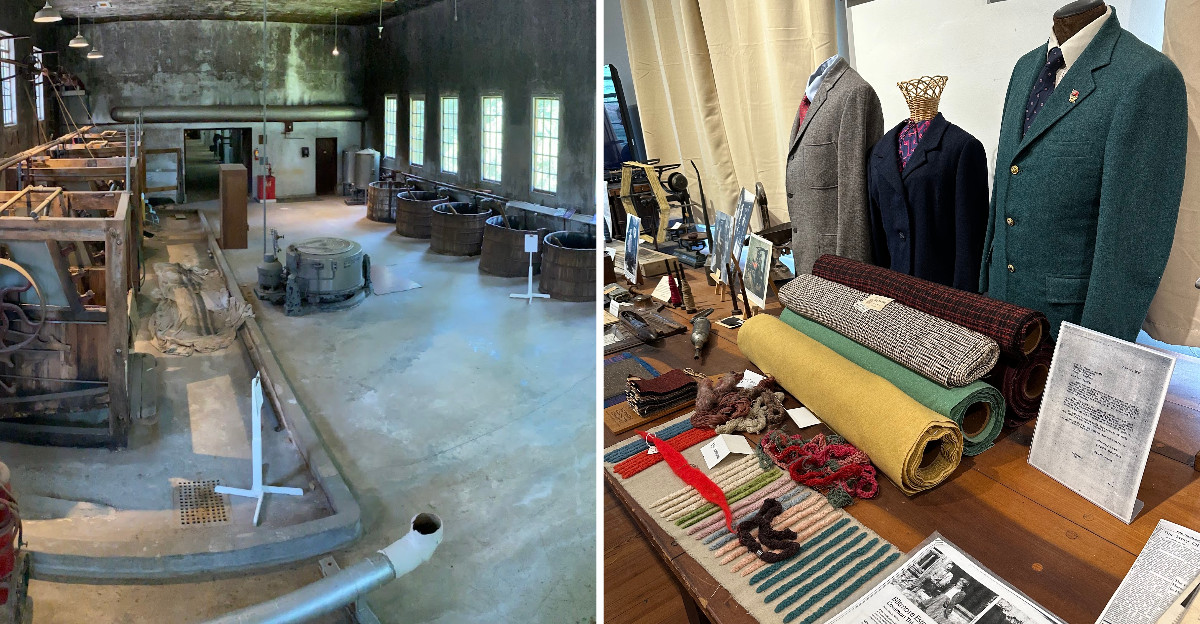
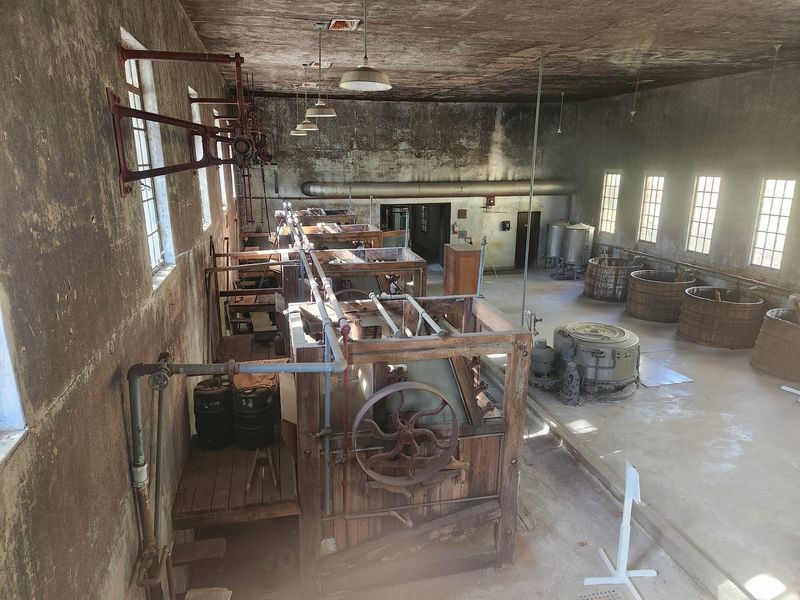
Peeking through the windows of the Historic Dye House gave me goosebumps. It looks almost exactly the way it did on closing day in 1981, as if the workers just stepped out for lunch and never came back.
Wool is still on the looms. Original carding machines, which comb wool fibers so they line up neatly, sit ready for work.
You can also spot mule spinners and big dye vats where yarn once soaked up its rich colors.
Here is a practical tip. For safety reasons and to protect the historic space, you cannot wander inside on your own.
Access comes with a guided private tour, so plan ahead if you want the full experience.
Even without a tour, the overlook and windows give you a great view. Kids tend to love spotting the odd machines and guessing what each one did.
I played that game myself and got more wrong than right, which made it even more fun.
This building shows the hands-on side of fabric making better than any book. You see the raw steps behind every famous yard of Biltmore Homespun.
Honestly, it is one of the most memorable corners of Asheville I have seen, and it costs nothing to look.
Grovewood Village and the Homespun Museum Today
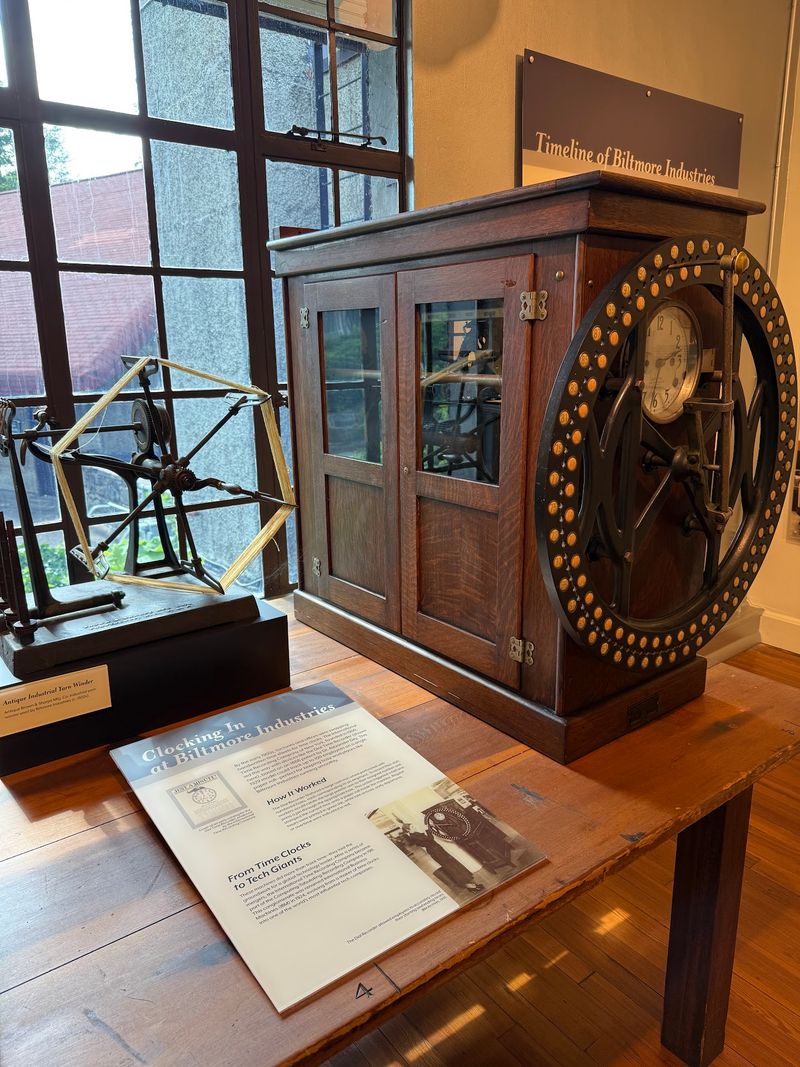
Free museums are my weakness, and the Biltmore Industries Homespun Museum is a gem. Housed in the old weaving buildings, it now sits within Grovewood Village, a lively spot filled with history and art.
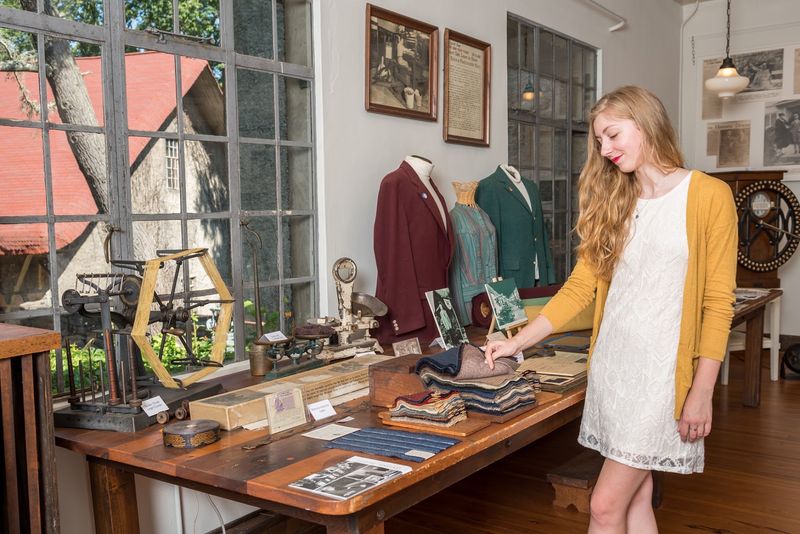
The museum is small, basically one room, but it is packed with historic photos, machinery, and stories. You can show yourself around at your own pace.
Donations are welcome, and parking is free, which makes the visit easy on any schedule.
Hours run from 10 AM to 5 PM every day of the week. Next door, the Grovewood Gallery shows off modern handmade crafts from talented artists, and an antique car museum lets you get close to shiny old vehicles with hand-crank motors.
I suggest giving yourself at least an hour or two to see everything. Start with the museum for the backstory, peek at the dye house, then browse the gallery.
Seeing old and new crafts side by side really connects the dots.
By the end, you will understand how a tiny weaving school helped make Asheville the creative town it is today. That feeling stuck with me long after I drove back down the hill.
Address: 111 Grovewood Rd, Asheville, North Carolina 28804
