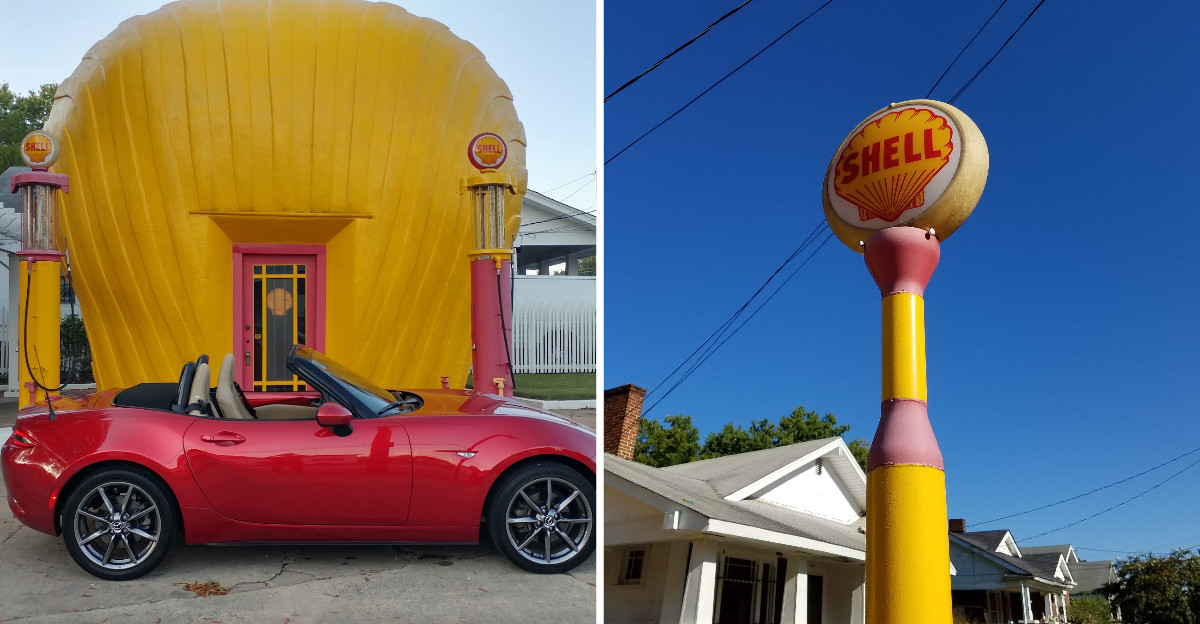
Laughter comes first when a giant yellow-orange seashell appears on a quiet residential corner. This odd little building once served as one of eight shell-shaped gas stations built across the region in the 1930s.
Today it stands alone, the very last of its kind, wearing that title proudly. The bright color stands out against ordinary houses and shade trees, impossible to miss.
Parking nearby and staring longer than planned is a common reaction. Roadside history like this does not shout for attention.
It simply sits there, patient and cheerful, waiting for someone to notice. North Carolina keeps this survivor in plain sight, a reminder that gas stations once looked like a storybook page.
Visitors often stop for a quick photo and end up staying much longer. Quirky landmarks reward curiosity, and this one delivers.
A Bold Idea From 1930
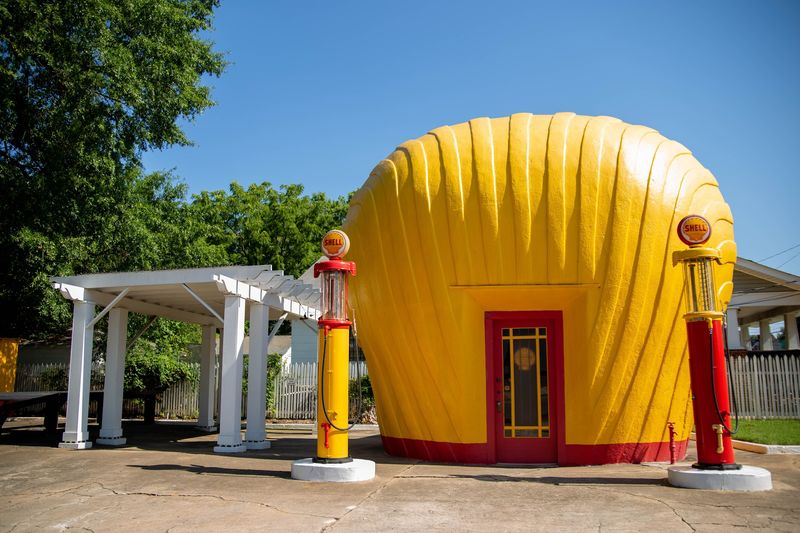
Back around 1930, a young company called Quality Oil decided a plain billboard just would not cut it. Founders Joseph Glenn and Bert Bennett had started selling Shell products in North Carolina, and they wanted drivers to remember them.
Their answer was wonderfully simple. Why not make the gas station itself look like the Shell logo?
I love how direct that thinking is, because nobody driving past could possibly miss the message.
The company built eight of these shell stations around Winston-Salem, including one in nearby Kernersville. Running a gas station in the 1930s was not always a big moneymaker, so the real goal was attention.
A wild, eye-catching shape helped Quality Oil look fresh, clever, and ready to compete with the big names.
Cars were becoming a symbol of freedom at that time, and families were hitting the road more than ever. Roadside businesses had to fight for every glance from a moving windshield.
A giant seashell on the corner did that job beautifully.
When you visit, picture the station brand new, with fresh paint shining in the sun. It helps you understand just how surprising this sight must have been for drivers almost a century ago.
Curves, Stucco, and a Patent
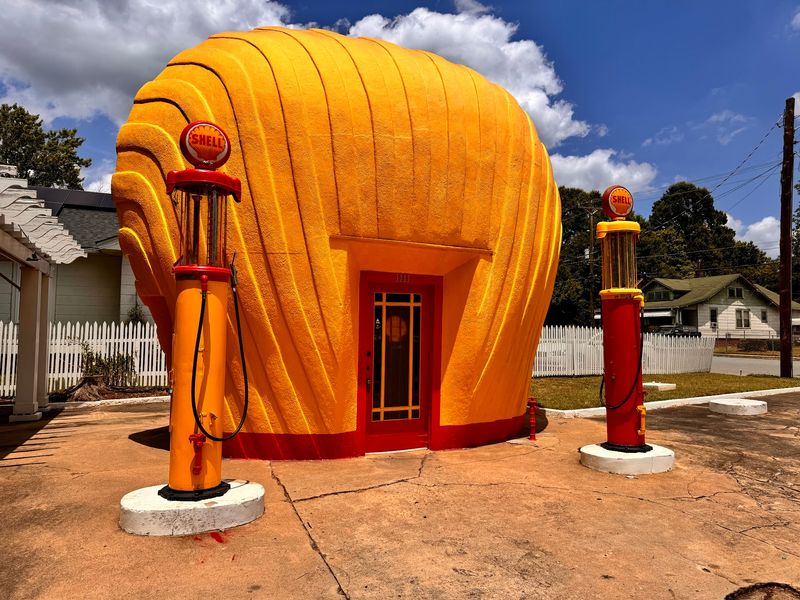
Run your eyes along the ridges and you will notice they fan out just like a real scallop shell. The building is one story tall and reaches about 18 feet high, which makes it big enough to feel grand but small enough to feel cozy.
Here is a fun fact that surprised me. The shell shape was actually patented on November 25, 1930, so this design was officially one of a kind.
Builders created it with a frame of bent wood and wire. Then they covered that frame with stucco and painted it a bright yellow-orange to match the Shell trademark.
It is a little like a giant art project that also happened to sell gasoline.
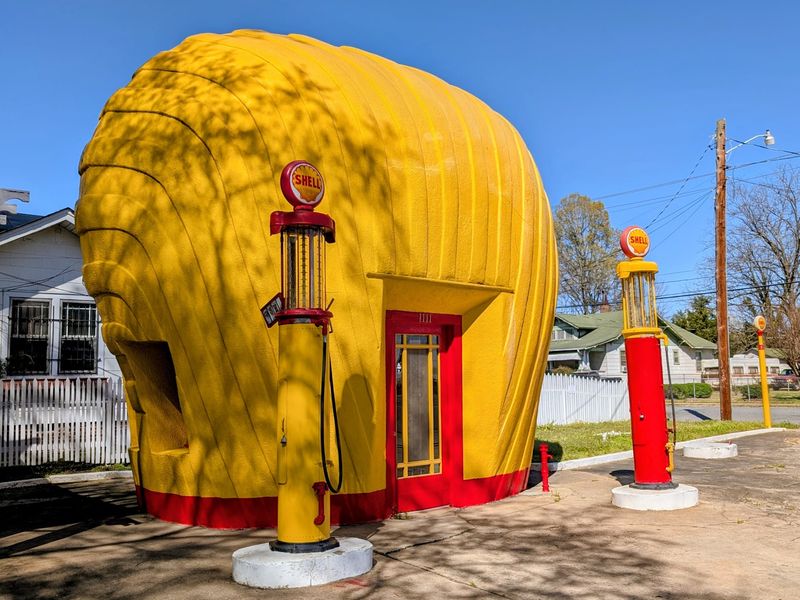
The front has a centered doorway, and deep windows sit tucked into the curves. Two windows are on the west side and one is on the east side, so walk around slowly to catch them all.
My tip is to look at the building from a few different angles. Straight on, it looks like a classic seashell.
From the side, the curves get more dramatic and you can really see how much care went into shaping it. Morning light makes the color especially warm.
From Fuel Stop to Lawn Mower Shop
Some buildings retire quietly, but this one kept finding new jobs. For roughly two decades, the station served drivers in the Waughtown area of Winston-Salem and folks traveling along Route 150.
As time went on, gas stations started looking more alike. Companies preferred boxy, practical designs that were easy to copy, and the age of fun novelty buildings slowly faded.
Sometime in the 1950s, this shell stopped pumping gas for good.
That could have been the end of the story. Instead, the little building got a second career as a lawn mower repair business during the 1970s and 1980s.
I find that part kind of charming. Imagine dropping off your mower at a giant seashell and picking it up a week later, all tuned up and ready for summer grass.
The way people kept using it says a lot about the neighborhood. Locals clearly saw value in this odd little structure, even when its first purpose was long gone.
While you stand outside, try imagining the sounds from both eras, first the rumble of old engines at the pump, then the buzz of small motors being fixed inside those rounded walls.
A First for the Whole Country
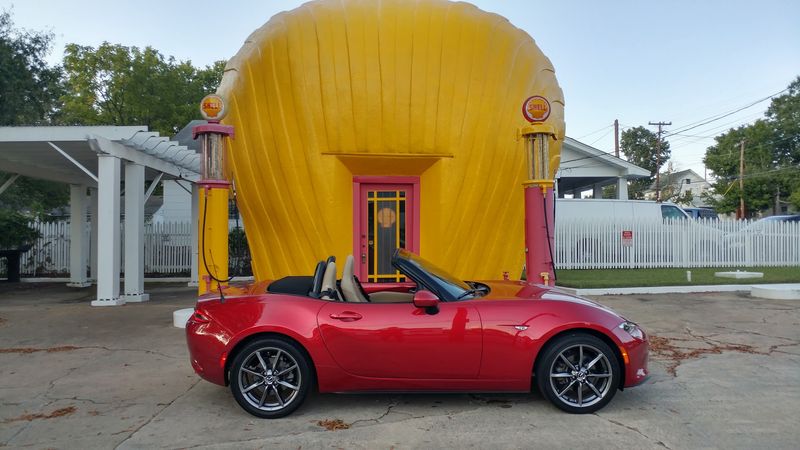
May 13, 1976, was a big day for this little shell. On that date, it was added to the National Register of Historic Places.
Even better, it became the first individual gas station in America to earn that honor. Think about how many gas stations exist across the country, and this one got there first.
That is quite a bragging right for a building shaped like seafood.
Being on the National Register means experts agreed the station tells an important part of American history. It shows how businesses used creative design to grab attention during the early days of car travel.
For me, knowing this changed how I looked at it. At first it seemed like a funny photo stop, but it is really a respected piece of the nation’s story.
Kids especially might enjoy hearing that a gas station can be as historic as an old courthouse or a famous home.
If you are traveling with young ones, turn this into a mini lesson. Ask them why someone would build a gas station shaped like a shell, then share the answer.
It is an easy way to make history feel playful instead of dusty, and they will remember it.
Saved by Caring Hands
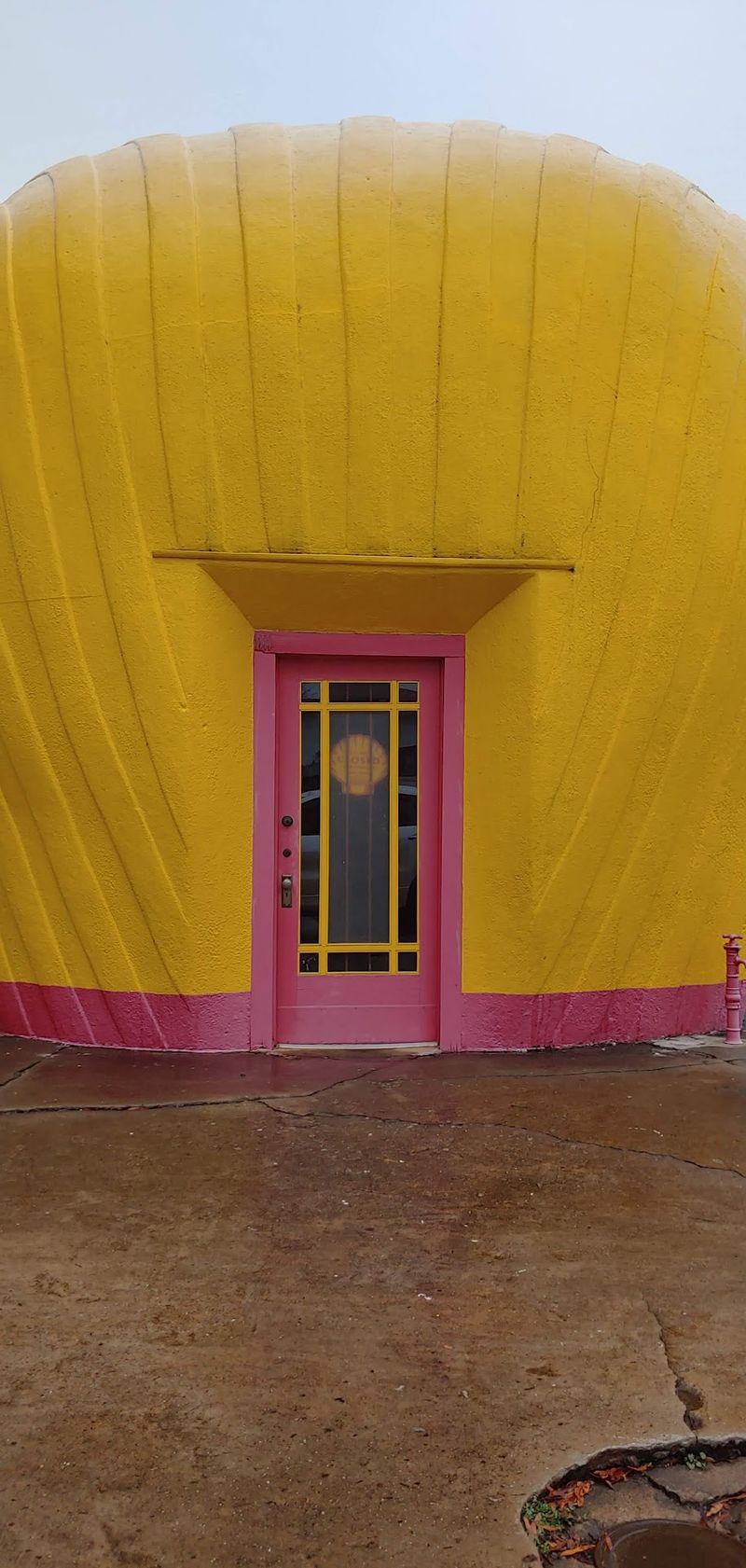
Old buildings need friends, and this shell found a great one. In the 1990s, Preservation North Carolina, a nonprofit group that protects historic places, took on a careful restoration project.
The work took about a year. Crews peeled away layers of faded yellow paint to uncover the original yellow-orange color underneath.
They also repaired the original front door and fixed a long crack that had been patched with black tar.
I always appreciate these small details. Fixing a crack sounds simple, but doing it the right way on a historic building takes real patience and skill.
Preservation North Carolina even ran a regional office inside the station until 2011. So for years, people who saved old buildings worked inside one of the coolest old buildings around.
Today the property is privately owned, but the group holds protective covenants on it. In plain words, that means rules are in place to keep the shell safe and preserved far into the future.
When you see how fresh the paint looks and how tidy the grounds are, you can thank that teamwork. It is a hopeful reminder that quirky landmarks can survive when people decide they matter.
Peeking Through the Glass
Okay, confession time. I pressed my face right up to the front door glass like a curious kid at a bakery window.
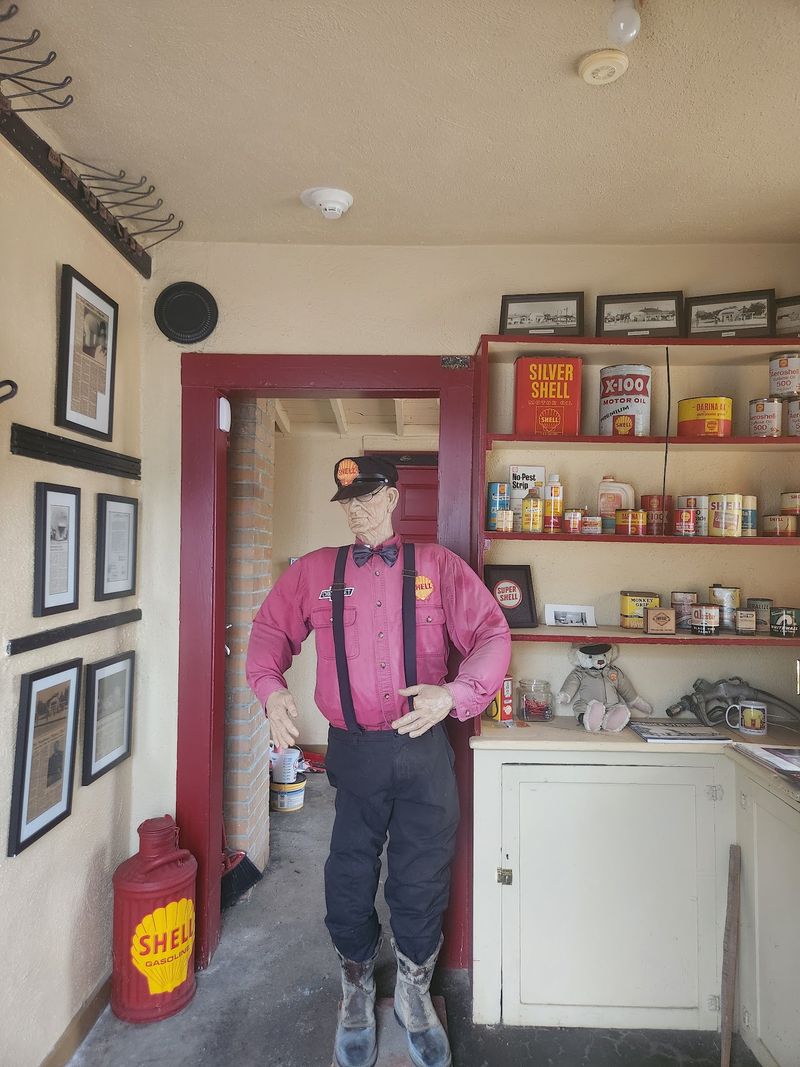
The station is not open for business, but the inside is set up like a tiny museum honoring itself. Framed newspaper articles about the opening hang on the walls.
Black-and-white photos sit on shelves next to old Shell signs and vintage cans.
There is even a coffee table book opened to a picture of the station, which made me smile. It is a building showing off a book about itself, and honestly, it has earned that.
Originally, a small office and bathroom were boxed inside the stucco shell. Now that compact space holds all these treasures, packed in neatly so you can spot something new each time you shift your angle.
A few visitors have mentioned a figure standing inside, so do not jump if you see someone staring back. Bring a little patience, because glare from the sun can hide details.
Cupping your hands around your eyes helps a lot. Take your time here, since this peek inside is where the history really clicks.
Tips for a Smooth Little Visit
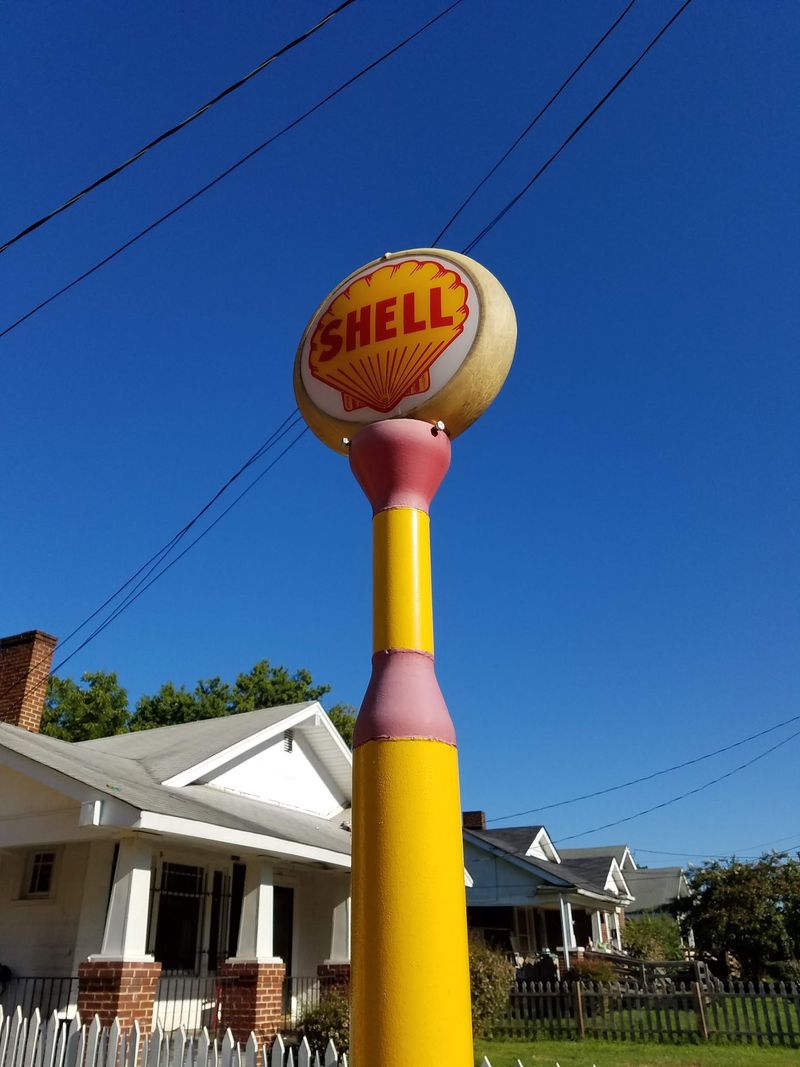
Plan for a short and sweet stop. Most people spend somewhere around ten to twenty minutes here, snapping photos and peeking inside, and that is totally fine.
The shell sits on a neighborhood street corner, so parking space is limited. Pull in carefully, be respectful of the homes nearby, and keep noise low.
Daytime visits are best, both for safety and for that gorgeous sunlit color.
Photos are the main event. Try a wide shot that includes the whole curved shape, then move closer for the ridges and windows.
A low angle makes the shell look extra dramatic against the sky.
Visiting with a friend makes it more fun, too. Someone can take your picture posing beside the giant scallop, which is basically required.
I took way more shots than necessary and have zero regrets.
Since the visit is quick, pair it with other spots around Winston-Salem. The city has a deep history and plenty of interesting architecture to explore.
Think of this shell as a cheerful bonus stop on a bigger day out.
Address: 1111 E Sprague St, Winston-Salem, NC 27107
