Quiet villages in northwest Ohio can give you goosebumps. Cornfields and college buildings surround a small town where every NFL game ball begins its life.
Watching real people cut leather, stitch panels, and pull laces tight with their own hands is something else. The smell of fresh cowhide hits the moment the tour starts.
Knowing that every Super Bowl touchdown traces back to one factory in Ohio makes the trip feel special. The factory has been making footballs for decades, and the process has not changed much.
Workers take pride in every stitch, and the tour lets you see each step up close. The building itself is modest, but the history inside is huge.
Leaving with a new appreciation for the craft is unavoidable. Football fans and anyone who loves seeing things made with care will find this place worth the drive.
Ohio keeps this kind of surprise in plain sight.
A Small Town With a Giant Claim to Fame
My first impression of Ada was how calm it felt. There are tidy porches, a college campus, and roads that roll past farmland, so it is hard to believe this place touches every NFL Sunday.
About 6,000 people live here, yet the village has a story most big cities would envy. Wilson Sporting Goods moved its football production to Ada in 1955 after buying the old Ohio-Kentucky Manufacturing plant.
Since then, the town has quietly turned out the official ball of pro football, a leather classic nicknamed The Duke.
Here is a fun fact I loved learning. The Duke has been the NFL game ball since 1941, and the Ada factory is its longtime home, which means locals can honestly say every touchdown in the league started right down the street.
The factory is the town’s second-largest employer after Ohio Northern University. Because of that, lots of families have some connection to football making, whether it is a parent, a cousin, or a neighbor.
My tip for visitors is simple. Give yourself extra time to drive around before your tour, since the slow pace of Ada helps you appreciate how much heart goes into such a famous product.
The Bright New Factory on Highland Avenue
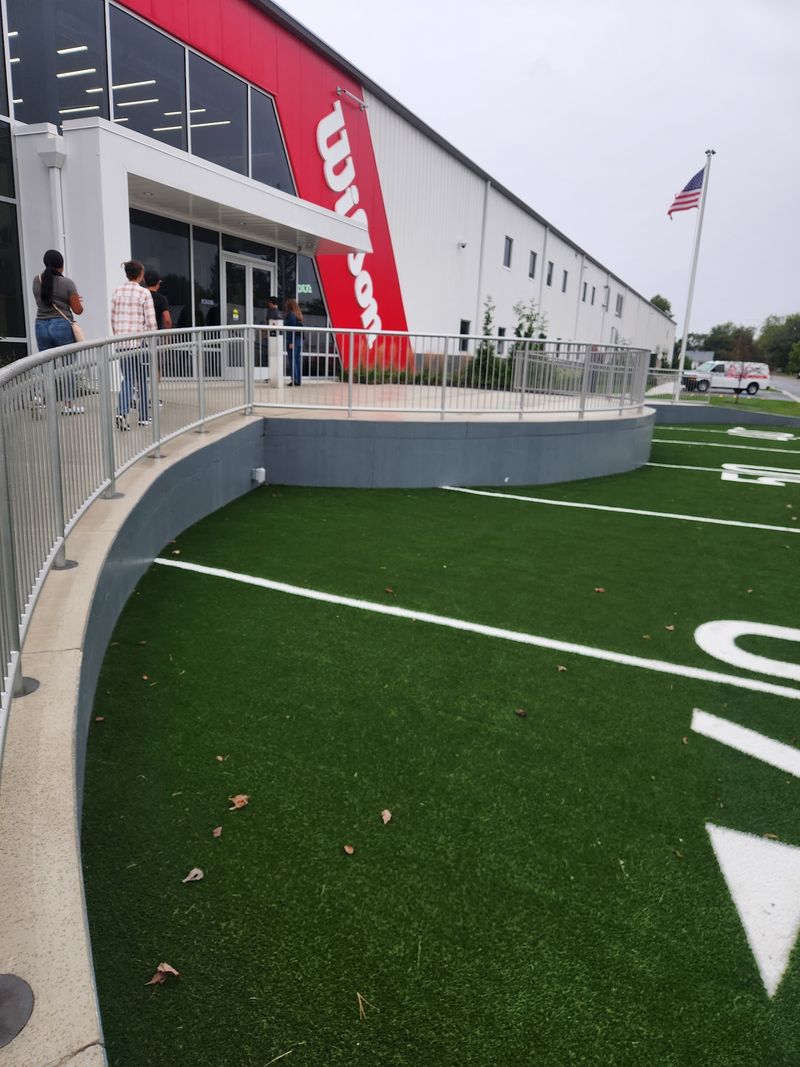
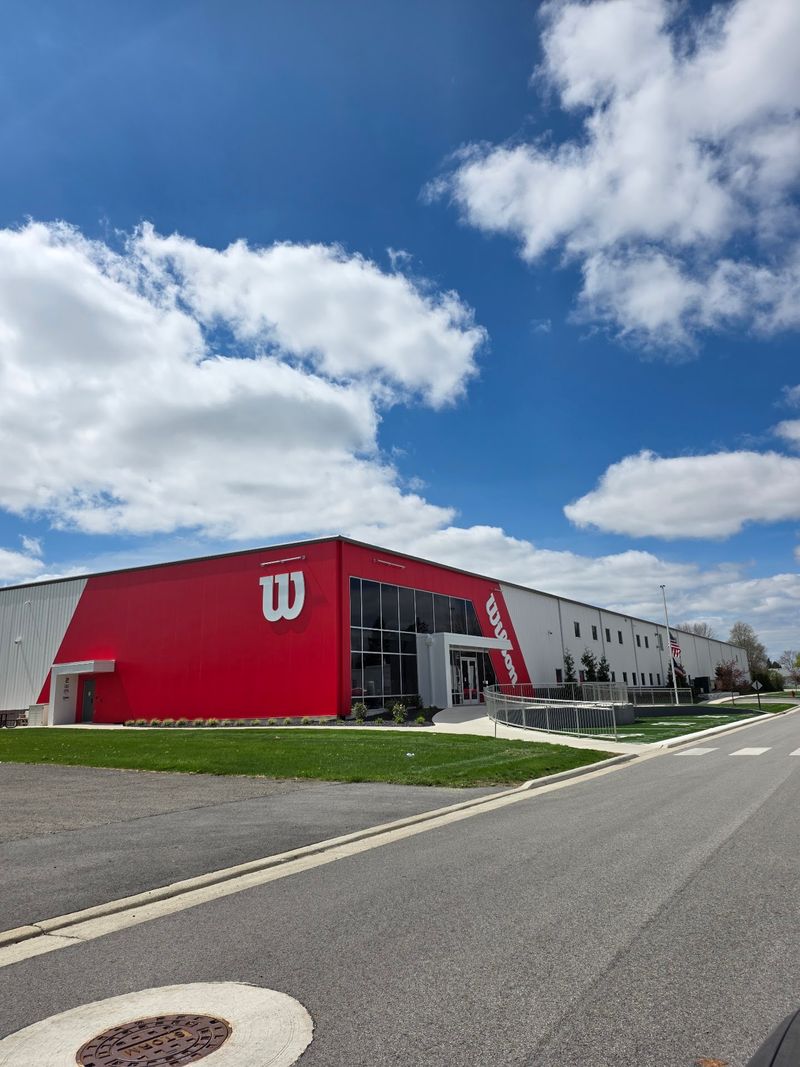
Pulling into the parking lot, I noticed how fresh and modern everything looked. Wilson opened this new facility in May 2024 on the same street as the original plant, and it nearly doubled their production space.
Inside, the building is bright, clean, and air conditioned, which made the hour on my feet feel easy. The tour floor stretches roughly the size of one and a half football fields, and there are no stairs to climb.
Restrooms are close by, so families with little kids or older relatives can relax.
Getting here is painless too. Ada sits just a few minutes off Interstate 75, and the lot has plenty of room, even for RVs.
I would suggest booking tickets online ahead of time, because group sizes are limited. Arriving about 15 minutes early is smart, since it gives you a chance to look around the lobby before things begin.
Keep the schedule in mind when planning. Tours run Monday through Thursday from 8 AM to 3:30 PM and Friday mornings until noon, with weekends closed.
From Raw Cowhide to Four Perfect Panels
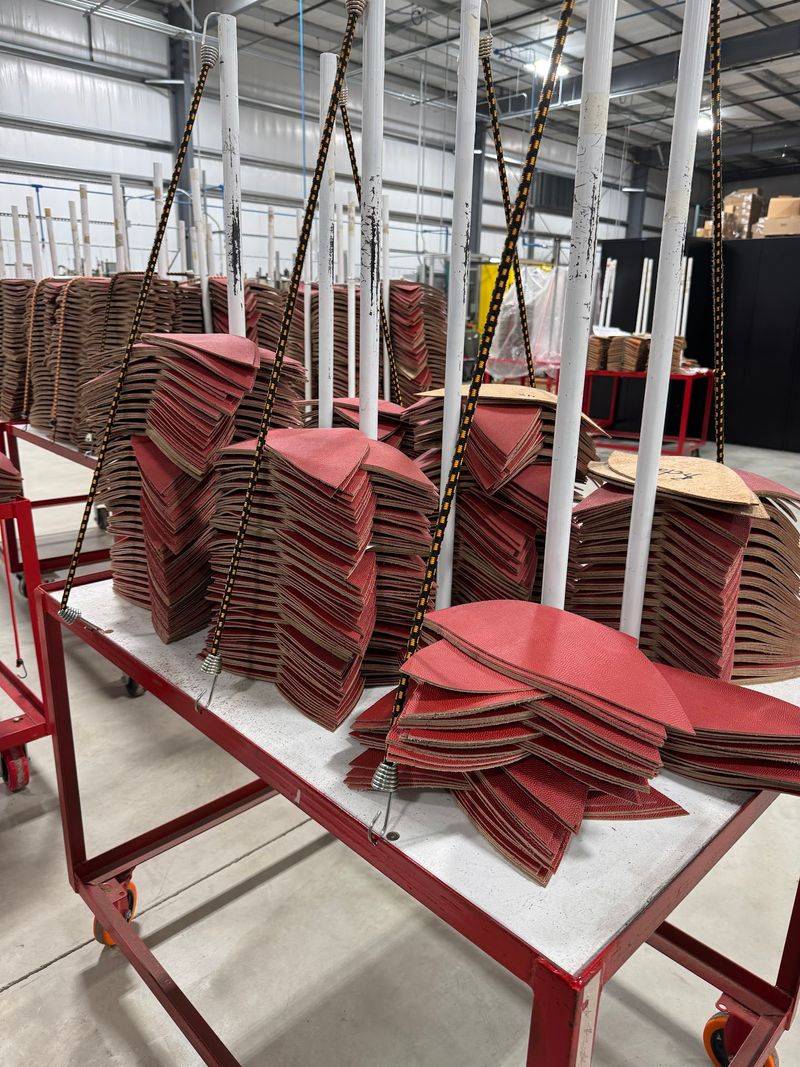
Leather came first, and honestly, I did not expect it to smell so good. Big sheets of brown cowhide arrive at the factory, and the journey of every football starts right there.
Workers cut four panels for each ball. They pay close attention to color, matching the pieces so all sides of the finished football look the same.
It sounds like a small detail, but once you notice it, you start seeing how much thought goes into every step.
The scale surprised me even more. Around 2,500 footballs are produced each day, and the full process includes about 20 separate steps from cutting to final inspection.
After cutting, the panels get stamped with logos and markings. Watching a plain piece of leather suddenly carry that famous Wilson name was oddly satisfying, like seeing a blank page become a story.
If you bring kids, this is a great spot to ask questions. Guides happily explain why certain leather is chosen and how panels are checked for flaws.
A little curiosity here makes the rest of the tour more meaningful, because you will understand exactly where each ball begins.
Stitches, Steam, and a Tricky Turn
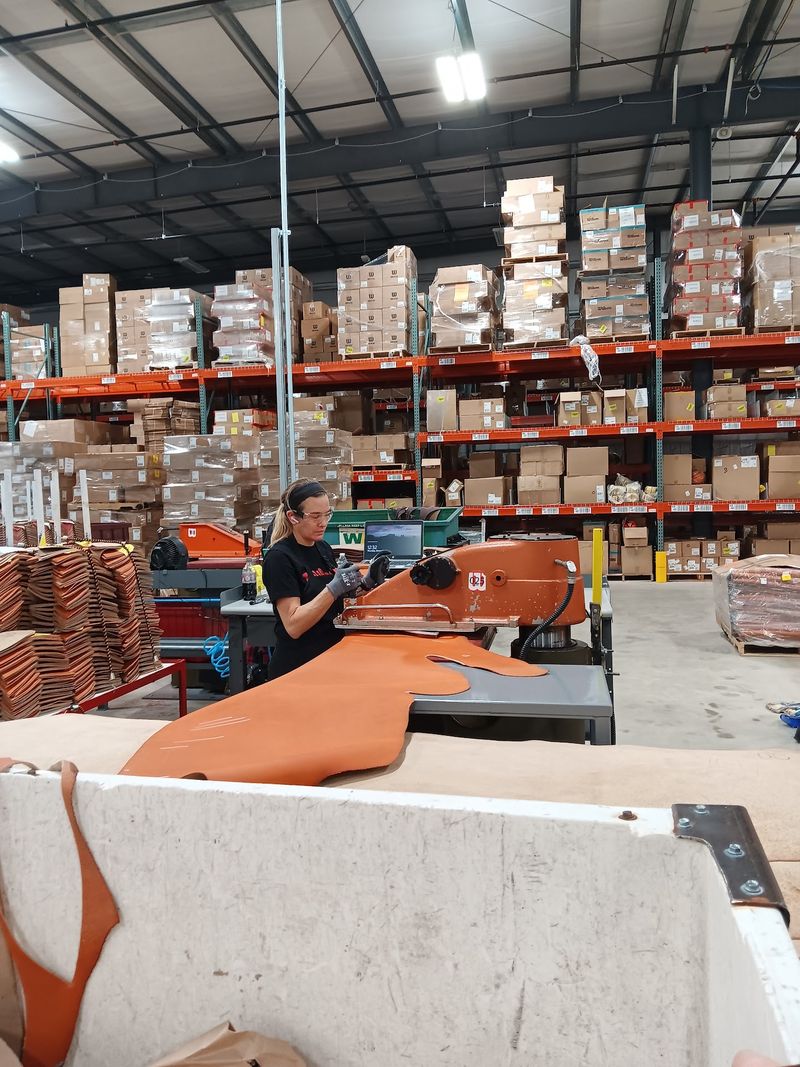
Some of the sewing machines I saw looked older than my grandparents. Many date back to the mid-1900s, and they still hum along beautifully, which says a lot about how well things were once built.
The panels are stitched together inside out. That way, the seams hide inside once the ball is finished, giving NFL footballs their smooth, clean look.
Next comes my favorite part. The sewn leather is steamed to soften it, and then a worker flips the whole thing right side out by hand, which takes real strength and skill.
I tried to imagine doing that over and over during a shift. My hands ached just thinking about it, and I gained serious respect for the people at those stations.
This area of the factory shows why so many steps involve zero automation. Machines could probably handle some of it, but human hands can feel the leather and adjust in ways a robot cannot.
Watch the workers closely here instead of rushing ahead. The rhythm of stitching and turning is calming, almost like watching a baker knead dough, and it is the moment I realized these footballs truly are handmade.
Lacing Up the Perfect Spiral
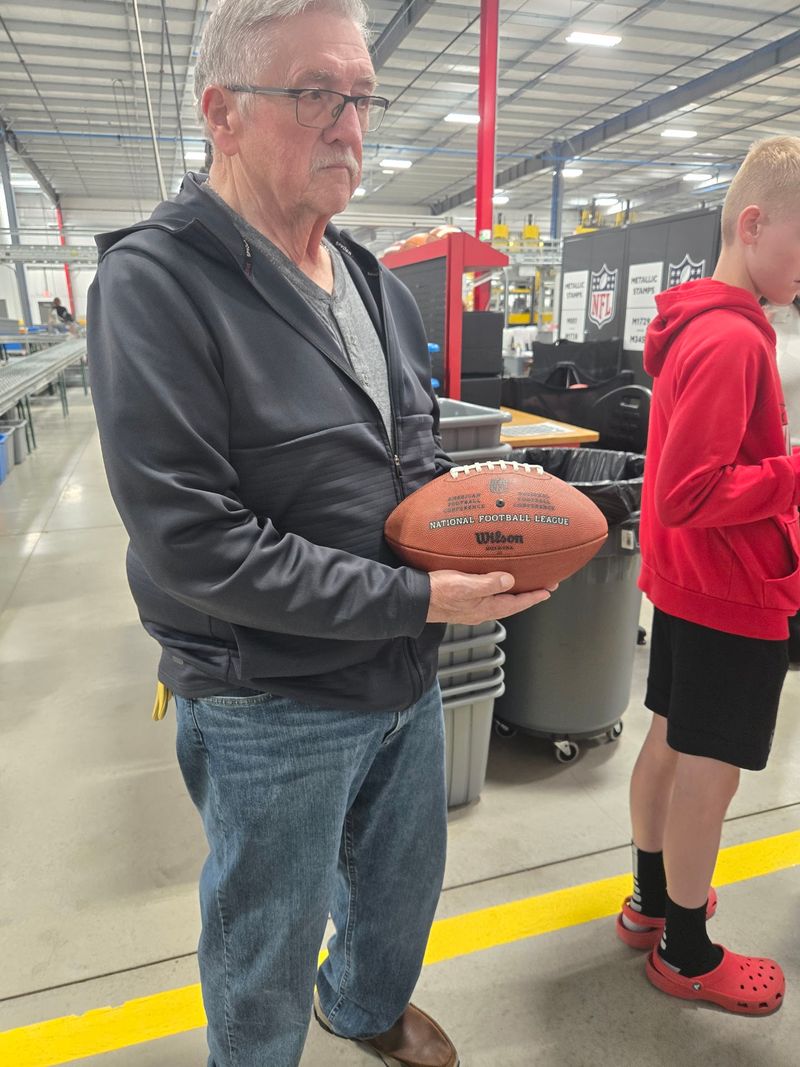
Ever wonder why a great quarterback can throw such a tight spiral? A lot of it comes down to the laces, and the lacing station in Ada is where that magic happens.
First, an air bladder gets tucked inside the ball. Then a worker uses a pointed tool called an awl to pull the laces through the holes, one by one, entirely by hand.
Consistency matters more than speed at this step. Every ball needs the same tension and spacing, since uneven laces could change how it feels in a player’s grip.
After lacing, balls are weighed, measured, and inspected. Checks happen at several stages, so problems get caught early.
By the time a football is boxed and ready to ship, it has passed through the hands of around 50 different workers. That number stuck with me, because it turns every ball into a small team project.
I left this station holding footballs differently. Now when I grip one, I think about the person who pulled each lace tight.
If you play catch with your family later, point out the laces and share this story, because it makes an ordinary toss feel a little more special.
The Overnight Rush for Super Bowl Balls
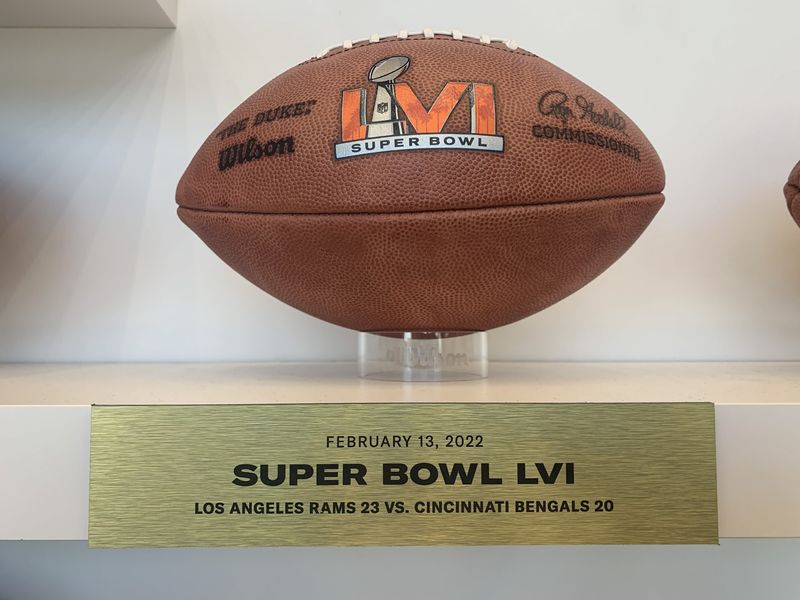
Picture this. The conference championship games end on a Sunday night, and while fans are still celebrating, the Ada crew is already getting to work.
As soon as the Super Bowl matchup is set, the factory jumps into action, sometimes working through the night. The first batch of specially stamped balls must ship within about 18 hours, giving players time to break them in before practice.
Plant Manager Andy Wentling has described a tradition where the team holds a pizza party to watch the championship games. Once the final whistle blows, everyone heads straight to their stations.
Each team receives 108 footballs, with 54 for practice and 54 for the game. Kickers get an extra 12 balls, so the total climbs past 200 for the big event.
Katie Long, one of the most skilled employees, sews the balls used on the field during the Super Bowl. She has shared that fans often cannot believe the balls are completely handmade.
Hearing all this changed how I watch the big game. Next February, notice the ball during kickoff and remember a crew in Ohio stayed up late so it could be there.
Museum Treasures, Souvenirs, and Ada Beyond the Factory
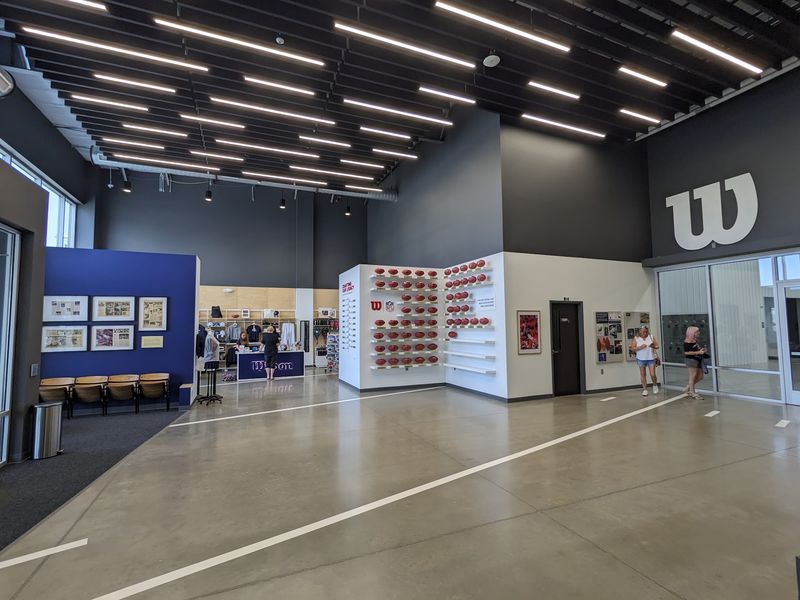
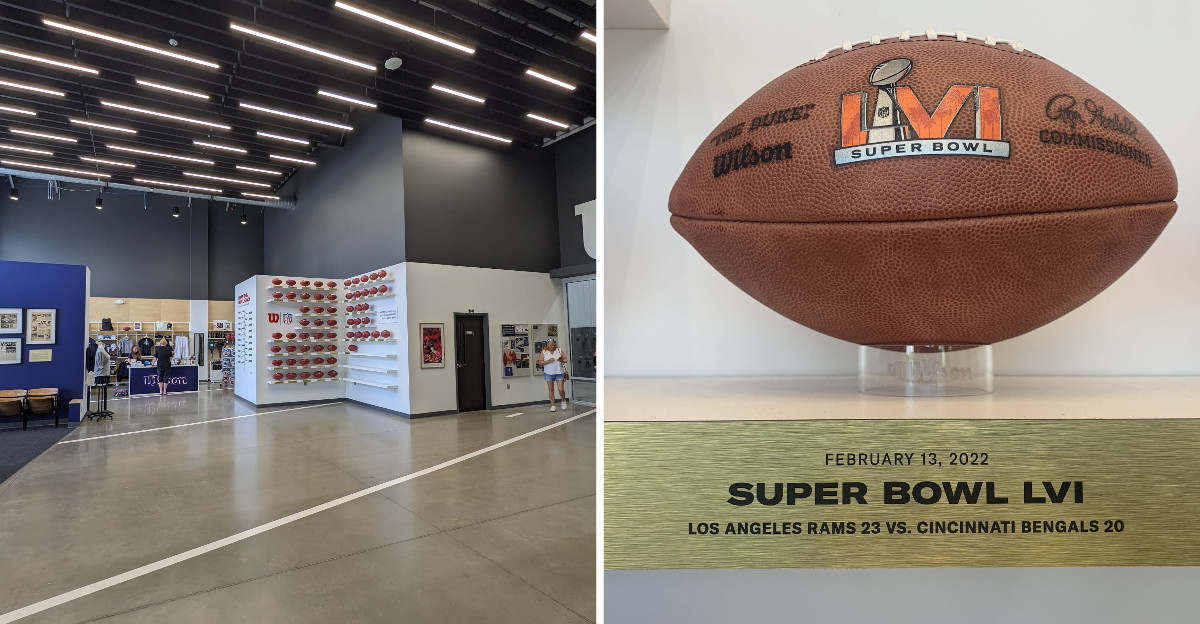
My favorite surprise came at the end of the tour. The museum area holds sports memorabilia going back to the 1940s, including made-in-Ada footballs from every Super Bowl.
Seeing the balls lined up was like flipping through a scrapbook of NFL history. I lingered longer than planned, spotting how designs changed over the decades.
The retail shop sells footballs crafted right on site, plus Wilson heritage apparel. You can even customize a ball with your name, which makes a great keepsake for a young fan.
Some visitors also mentioned a play area for tossing a football, and kids loved signing their names at the end.
Part of each tour fee supports local youth sports, and first responders and military members get in free. That felt like a kind touch.
Do not leave town right away. War Memorial Park offers a pool, playground, and picnic shelters, while the historic Ada Depot displays a Pennsylvania Railroad caboose.
The Pierstorf Family Pharmacy Museum at Ohio Northern University and the cozy Ada Theatre round out a relaxed afternoon.
If you visit in August, catch the Made in Ada Wilson Football Festival and its famous football drop.
Address: 517 E Highland Ave, Ada, OH 45810
