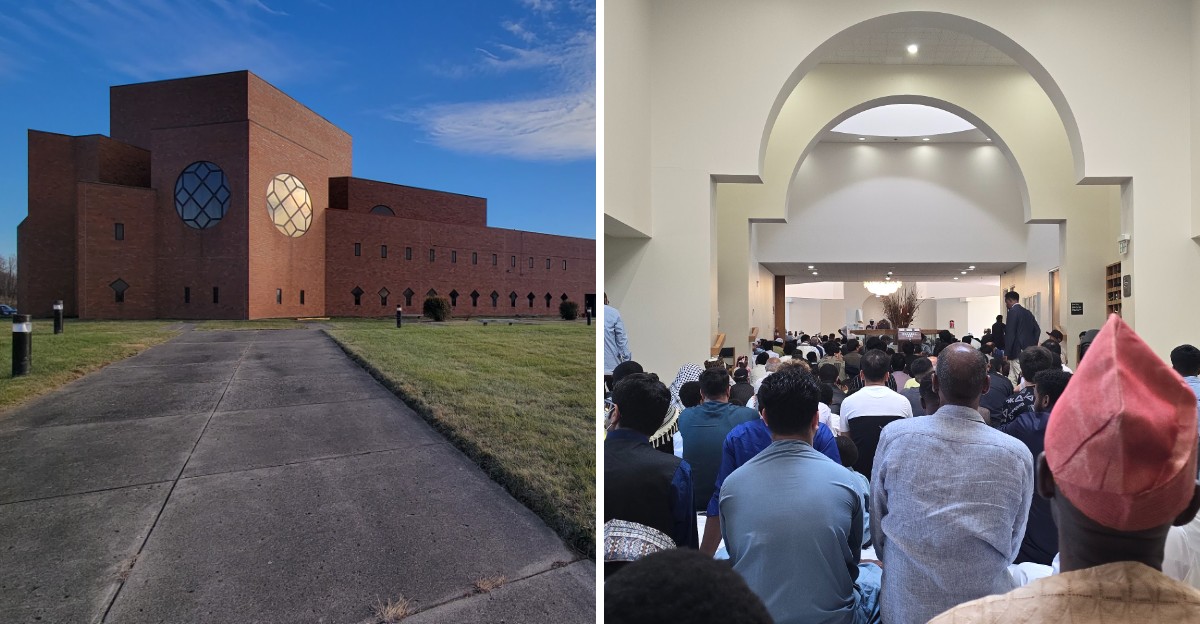
A mosque with no minarets and no visible domes stands in the middle of cornfields. Its architect skipped the classic look on purpose and built the whole thing around geometry instead.
The prayer hall follows an eight-pointed star made from two overlapping squares. Big round windows on the outside throw patterned light across a plain, calm interior.
I like how something so quiet on the outside hides that much math on the inside.
And this is no small-town chapel. The building serves as headquarters for one of the largest Muslim organizations on the continent, right here in Indiana.
National programs, a magazine, and a massive yearly convention all trace back to this spot.
So how did a farm field become home base for that much work? The story starts with a group of college students.
A Group of College Students Started Something Huge
Back in 1963, a group of international students at the University of Illinois Urbana-Champaign formed the Muslim Students Association. That small campus club grew into the Islamic Society of North America, now headquartered in Plainfield, Indiana.
The growth didn’t happen overnight. In 1976, the group bought 123 acres of land near Plainfield and moved its offices into buildings already standing there.
Plans for a mosque and more facilities came in January 1978. Those plans focused on a 42-acre slice of the property.
The official organization you know today took shape in 1982. Four separate groups merged to create the Islamic Society of North America as a single body.
I believe that origin story is the best part. A student club rarely outlives its founders’ graduation, let alone builds a national headquarters.
Think about how many campus groups fade once members move on. This one kept going, kept organizing, and eventually picked a quiet spot in central Indiana to call home.
When you visit, remember that the brick walls hold decades of planning. Every office, prayer space, and program traces back to a few students who wanted a place to gather.
That’s a pretty impressive glow-up for a college club.
No Minarets, No Outer Domes, and That Was the Point
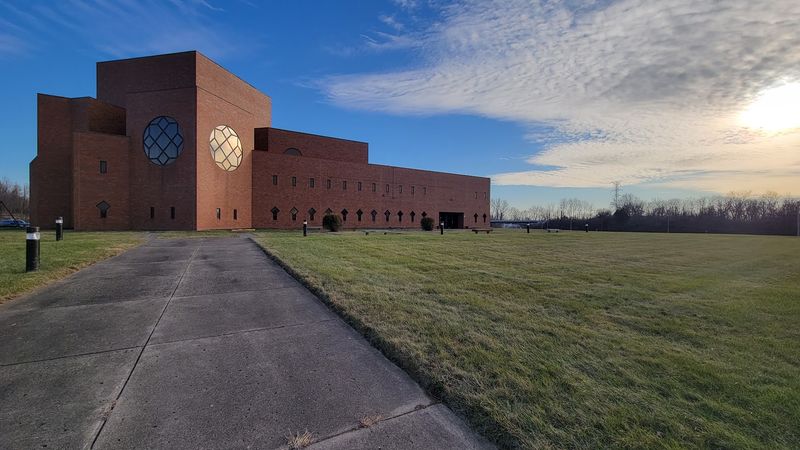
Dr. Gulzar Haider, a Pakistani-Canadian architect, designed the mosque with a bold idea. He left out the minarets and domes most people expect to see.
Instead, he leaned hard into geometry. The outside is mostly plain brickwork with very little decoration.
The windows do the talking. You’ll spot rectangular ones, keyhole-shaped ones, and four large round windows on the second story.
Haider wanted the building to feel sympathetic to North American indigenous architecture. He chose not to copy historic Islamic styles or modern versions of them.
That choice makes the Islamic Society of North America building feel at home in the Midwest. Brick and open farmland pair together surprisingly well.
Some folks drive past expecting a golden dome on the skyline. They might miss the building’s purpose entirely at first, which is kind of the charm.
Take a slow look at the facade when you arrive. The keyhole windows hint at tradition without shouting about it.
Architecture fans will appreciate how restrained the whole design feels. It proves a sacred space can be thoughtful and striking without fancy ornaments stacked on top.
Honestly, less really does turn out to be more here.
The Domes Are Hiding Inside, Like a Secret
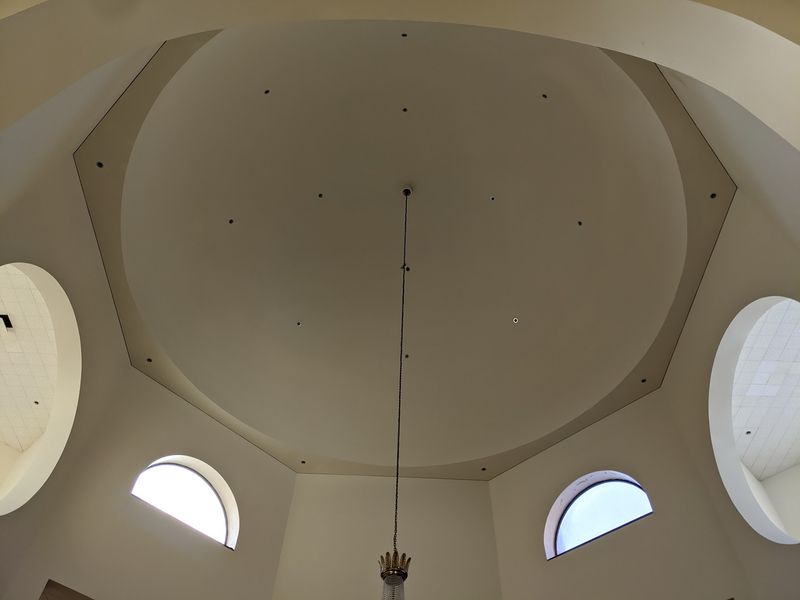
Surprise: the building does have domes. Three of them sit within the interior structure, just not visible from outside.
The prayer hall layout is clever. Two squares overlap to form an eight-pointed star, and a dome rises right above the center.
That shape isn’t random decoration. It gives the room a balanced, centered feel that pulls your eyes upward.
Inside, the space stays plain on purpose. You won’t find walls crowded with busy patterns or heavy ornament.
Light becomes the artwork. Large round windows carry geometric motifs, so sunshine spills in and creates patterns across the room.
I can’t imagine a better way to decorate a calm space. The design changes through the day as the sun moves, so the room never looks exactly the same twice.
If you’re visiting respectfully outside prayer times, notice how quiet the simple surfaces make everything feel. Plainness here isn’t boring.
It clears room for thought.
Math class rarely looks this peaceful. Squares, stars, and circles all work together, and the result feels both modern and timeless at once.
Cornfields, a Long Driveway, and a Fountain Courtyard
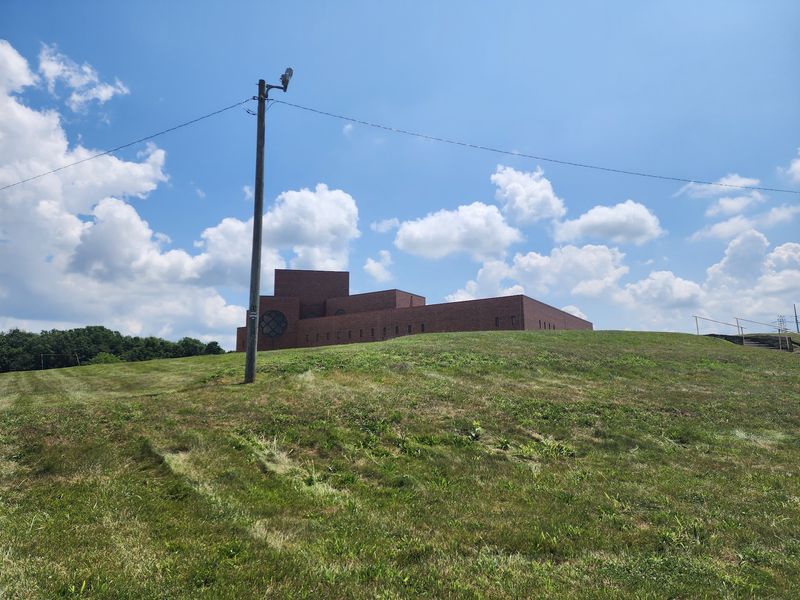
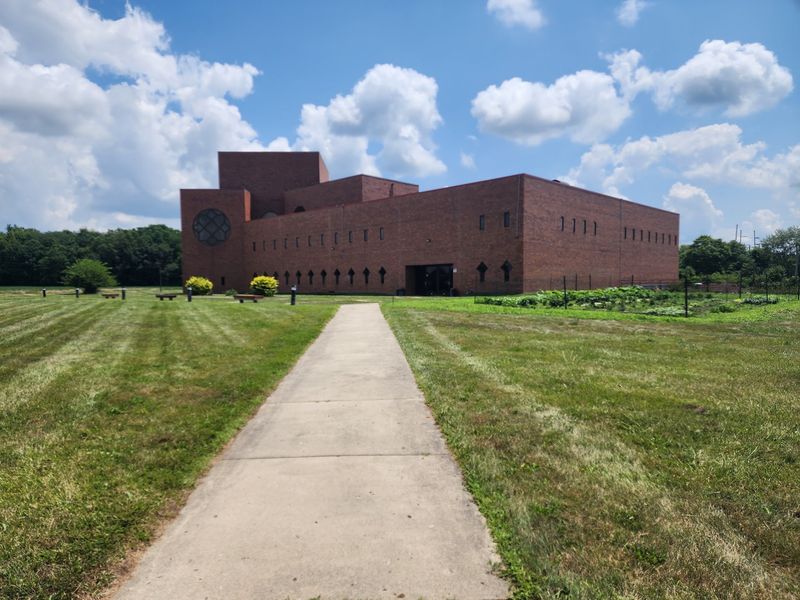
Getting there feels a bit like a countryside road trip. The mosque sits among cornfields, and a long driveway carries you toward the building.
That approach builds a little anticipation. Open sky and rows of crops stretch around you before the brick walls come into view.
Once you reach the building, look for the courtyard. It runs along the northwest facade and holds a fountain.
The courtyard is paved with concrete and brick. Those materials match the main building, so everything feels connected.
The full address is 6555 S County Rd 750 E, Plainfield, IN 46168. Plug it into your map app, because rural roads in Indiana can all start to look alike.
Parking is plentiful for cars. Truck drivers should know there’s only room for a bobtail cab, since trailers have no space to turn around.
The rural setting gives the Islamic Society of North America headquarters a calm, spacious mood. Traffic noise and crowded sidewalks simply aren’t part of the picture.
Bring a little patience for that final stretch of driveway. The payoff is a distinctive building framed by wide Midwest farmland.
Use the Back Door, Seriously
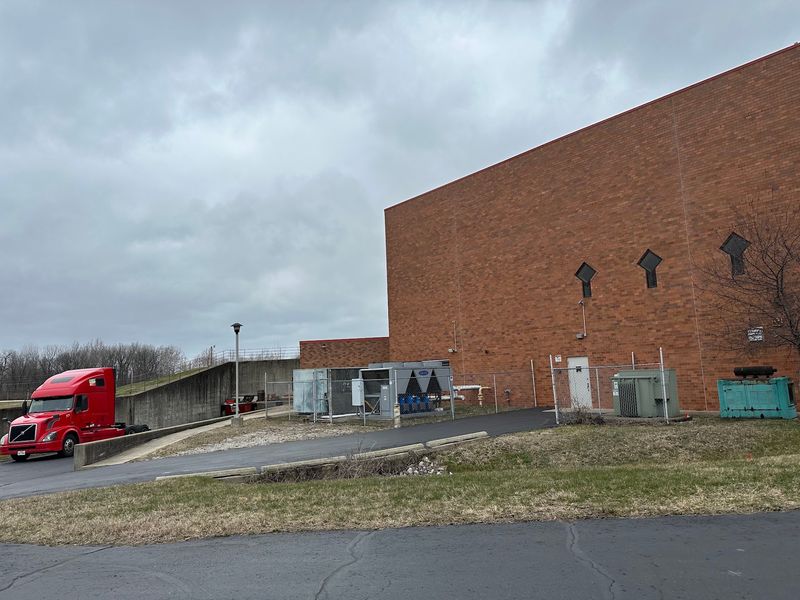
Here’s a tip that can save you from a confusing moment. The front doors stay locked outside of Jummah times for security reasons.
Plenty of travelers have pulled up, tugged the front door, and figured the place was closed. Don’t be that person.
Head for the back parking lot instead. The rear door entrance stays open from Fajr to Isha every day, according to the center.
Office hours are a separate thing. The administrative side runs weekdays from 9 AM to 5 PM and closes on weekends.
Friday prayer is the big weekly gathering. The khutbah time can shift with the seasons, so check before you go.
The center posts Jummah times on its website under the local section. Daily prayer times change often, so they share those through a WhatsApp group you can request to join by email.
Plan ahead and your visit will go smoothly. A few minutes of checking beats a long drive followed by a locked door.
Travelers on I-70 or heading toward St. Louis sometimes stop to pray. Knowing the back entrance trick makes that pit stop a whole lot easier.
A Library Plan That Dreamed Big
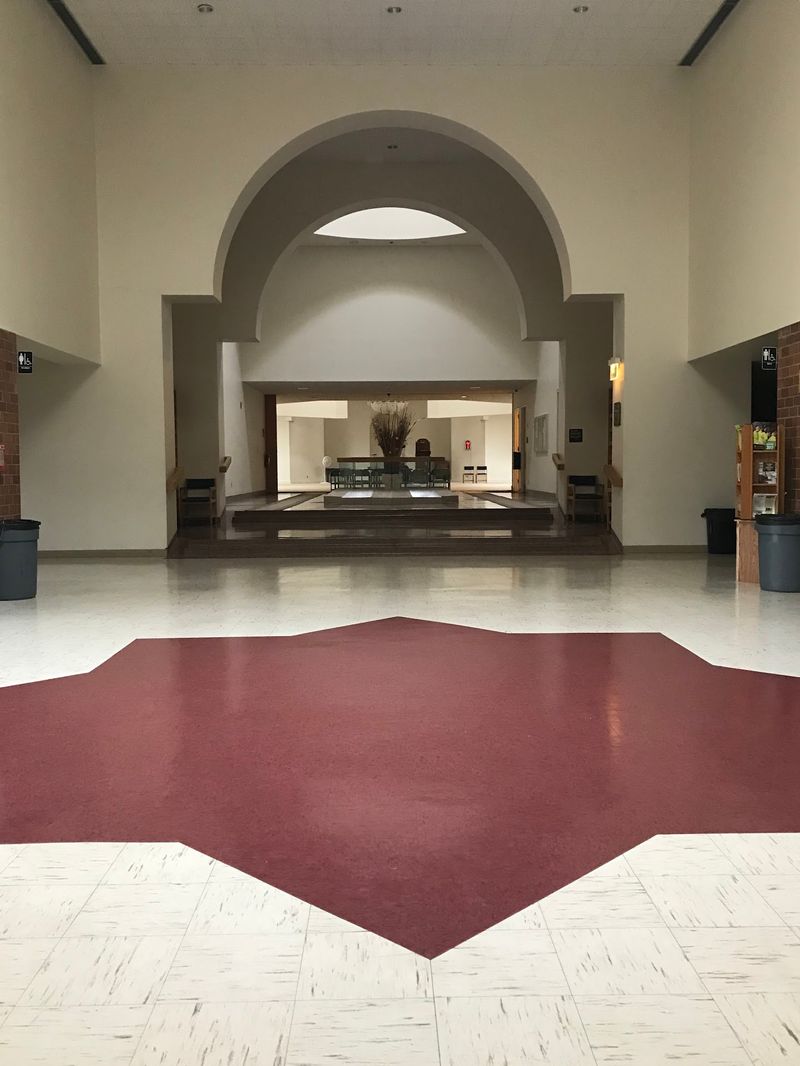
Ambition ran high in 1981. Early plans for the Plainfield headquarters included a library meant to hold around 300,000 titles, films, slides, and videotapes.
That’s a staggering number for a building in the middle of farmland. The plan also included a dedicated mezzanine for women.
Reality turned out a little different. A 2012 article reported that the library wasn’t heavily used.
Much of that space has since become offices. The remaining books were consolidated into a smaller area.
I like this detail because it feels honest. Big organizations change over time, and buildings adjust to fit how people actually use them.
Those offices now support national work. Staff at the Islamic Society of North America handle programs that reach communities far beyond Indiana.
The multi-million dollar headquarters was fully finished in January 1983. The mosque itself was completed in 1981 and in use by 1982.
So the walls you see today hold layers of history. Old plans, new purposes, and plenty of paperwork all share the same brick shell.
Libraries rarely get a second career this busy.
The Work Reaching Far Past Hendricks County
Plenty happens behind those round windows. The headquarters supports youth programs, chaplain support, scholarships, education forums, and matrimonial services.
Not bad for an office building surrounded by corn.
The organization also publishes Islamic Horizons. It’s an award-winning magazine that comes out every two months.
Interfaith work is a big focus too. The group promotes collaboration with other faith communities and encourages civic engagement.
Teachers have even brought school groups for field trips. One group of about 100 middle schoolers came to learn about the religion and its beliefs.
That kind of openness matters. Students can ask honest questions and leave with a clearer picture than any textbook offers.
Scholarship programs reach students across the country. A small Indiana office helps fund education for people who may never set foot in Plainfield.
If you’re a teacher, scout leader, or community organizer, consider reaching out about a group visit. Call ahead and plan during weekday office hours.
Learning about your neighbors works best face to face. This campus makes that easier than you might expect.
Eid Mornings Bring the Whole Community Together
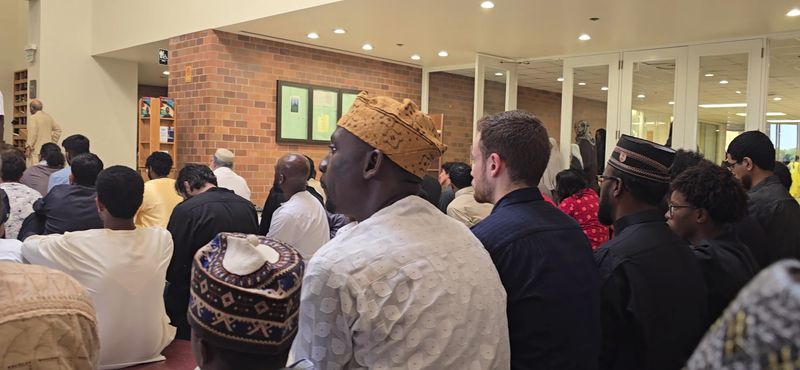
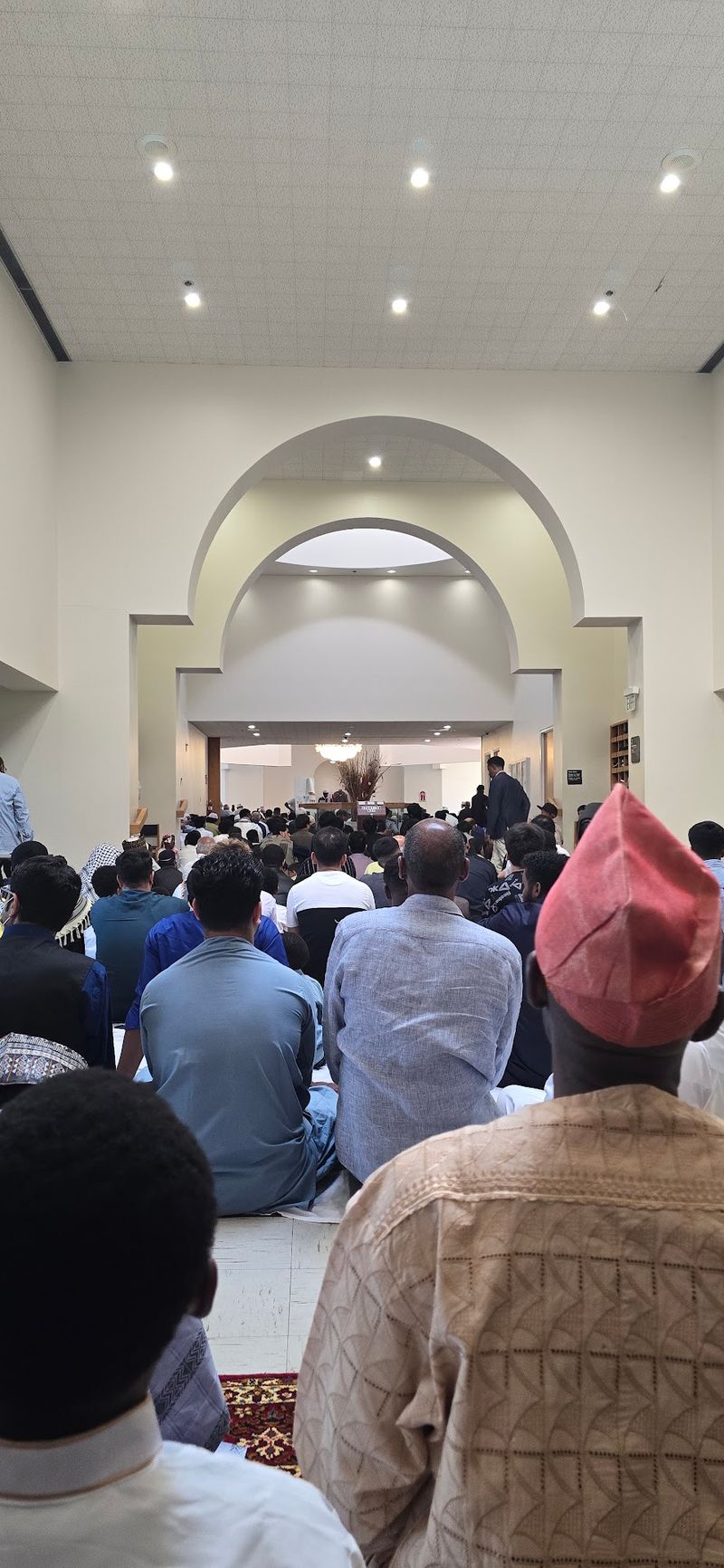
Holidays transform the place. Eid al-Fitr prayer draws Muslims from the Indianapolis area to meet, pray, and celebrate together.
For a community spread across a big metro region, that’s a rare chance to gather in one spot. The wide grounds help make it possible.
Ramadan brings its own rhythm. The local community uses the masjid for activities like Tarawih prayers and Iftar meals.
Daily prayers and Friday Jummah keep the building active through the rest of the year. Imams rotate rather than one person leading every week.
That rotation brings fresh voices and different perspectives. It suits a headquarters representing a broad, continent-wide community.
If you’re not Muslim but curious, holidays may not be the best first visit. Those days are busy and focused on worship and family.
A quiet weekday visit or an organized tour works better for questions. You’ll get more time and attention that way.
Still, it’s nice knowing this Indiana campus serves as a true community center. It isn’t only offices and history.
Real celebrations fill those rooms every year.
Why This Quiet Campus Punches Way Above Its Weight
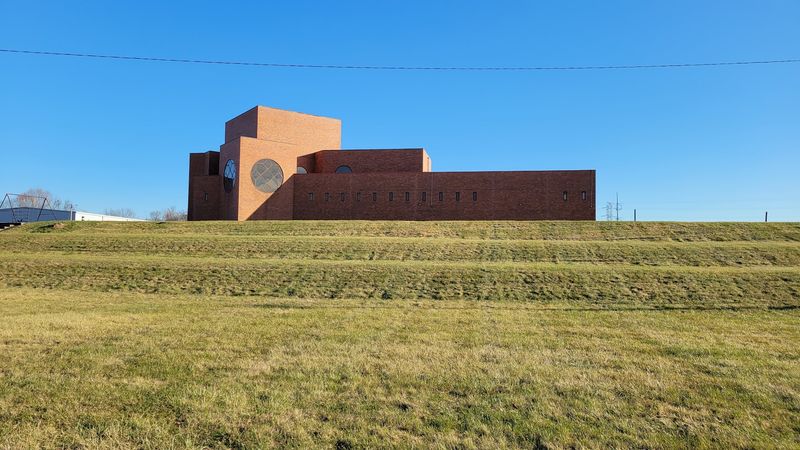
Size isn’t everything, but 42 acres helps. That’s the portion of land set aside for the mosque and related facilities.
Construction began in 1980 despite local opposition and some ugly incidents of vandalism. The project pushed forward anyway and stands today as a landmark.
That persistence says a lot about the people behind it. They built something lasting on land where many neighbors didn’t want it.
Today the Islamic Society of North America ranks among the largest Islamic organizations on the continent. Its annual convention counts as the largest regulated gathering of Muslims in the United States.
The convention itself travels, landing in cities like Rosemont, Illinois. Still, the planning starts back in Plainfield.
Indiana doesn’t always come to mind as a center for national religious groups. This campus quietly changes that picture.
Next time you’re near Indianapolis, swing by for a look at the architecture. Respect prayer times, use the back entrance, and enjoy the cornfield views.
Few people know this place exists. Now you’re one of the few who does, and that’s a fun fact worth sharing at dinner.
