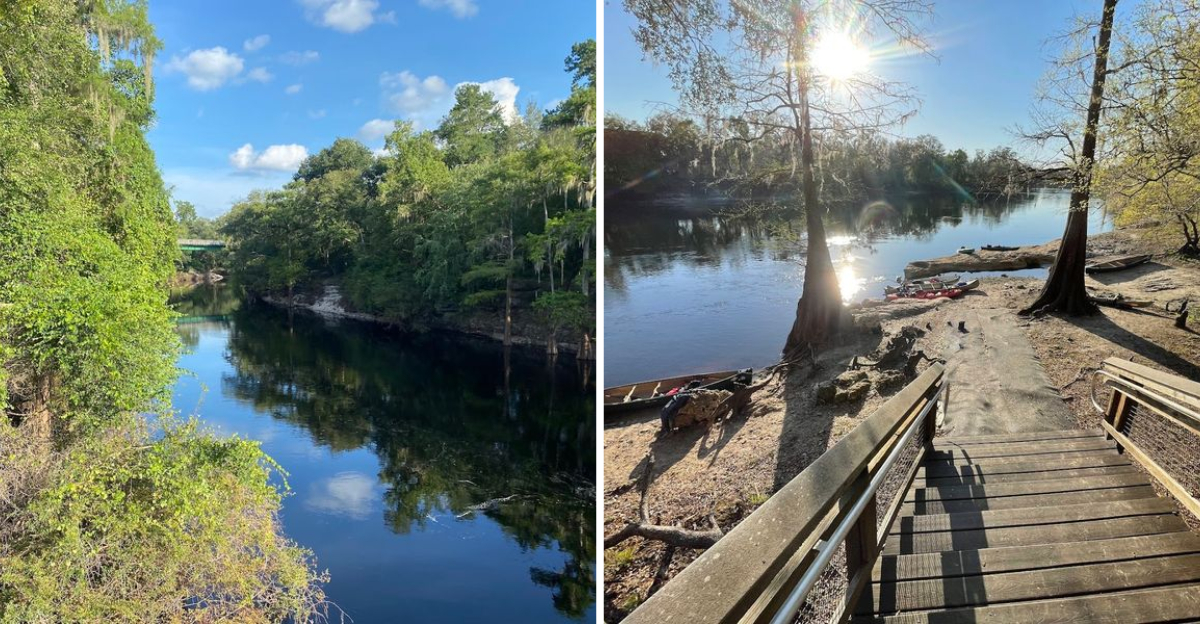
There is a stretch of North Florida where the river runs so dark it looks like brewed tea poured straight from the earth, and honestly, nothing quite prepares you for seeing it in person.
This river near White Springs is one of those rare places that feels untouched, like the rest of the world simply forgot to show up. Tall bald cypress trees line the banks, their long arms draped in curtains of Spanish moss that sway in the warm, humid air.
The water is stained deep amber and brown by tannic acid leaching from decaying vegetation, giving it that wild, mysterious look you only see in a handful of rivers on the planet.
I stood at the water’s edge watching the current glide past, dark and silent, and felt a strange sense of calm I was not expecting. White Springs is small, unhurried, and full of stories that the river has been keeping for centuries.
Come see it for yourself, just bring bug spray.
The Dark, Tea-Colored Water of the Suwannee River
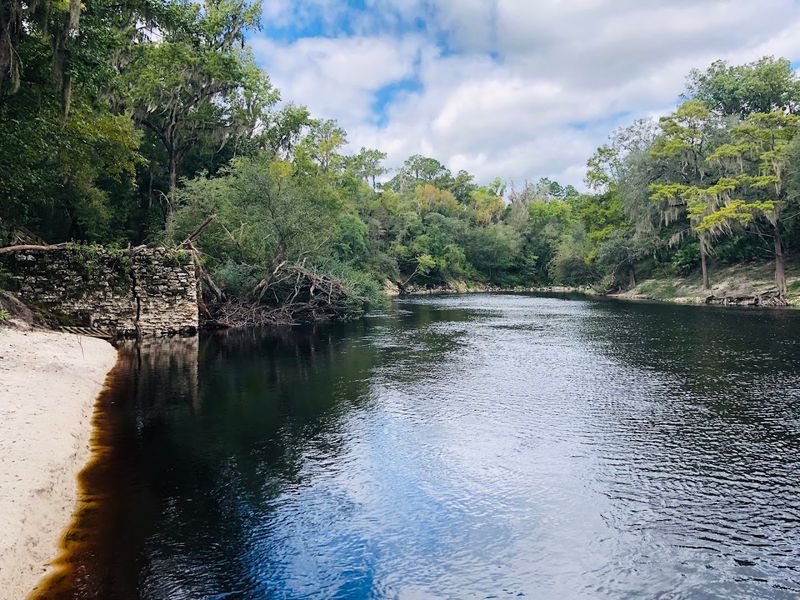
Most people see a brown river and assume something is wrong. The Suwannee tells a completely different story.
Its deep, tea-like color comes from tannic acid that dissolves out of decaying plant matter, especially palmetto roots and peat deposits from the Okefenokee Swamp in Georgia, where the river begins its long journey south.
The concentration of dissolved organic matter in the Suwannee is nearly ten times higher than in most other rivers around the world. That sounds extreme, but the water is not polluted.
It is simply rich with natural chemistry that has been building for thousands of years.
Stretching approximately 246 to 266 miles from the Georgia swamps to the Gulf of Mexico, the Suwannee is federally designated as a wild river. That status is not handed out easily.
It reflects just how unspoiled and ecologically significant this waterway really is.
Floating on a kayak and looking down into that inky water is a strange, grounding experience. You cannot see very deep, but somehow that opacity makes it feel more alive, more secretive.
The Suwannee holds its mysteries close, and that is part of what makes it so unforgettable.
Cypress Trees and Spanish Moss Along the Banks
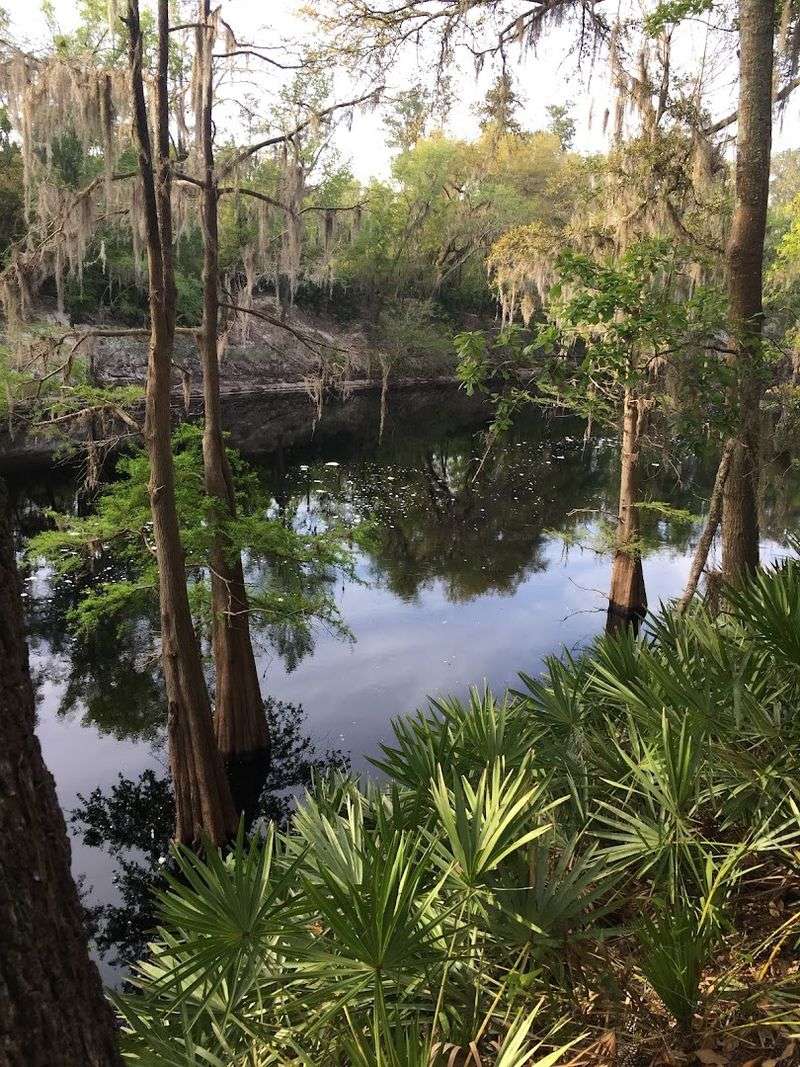
The first thing you notice on the river is not the water. It is the trees.
Bald cypress trees rise from the shallows like ancient sentinels, their wide bases flared out into the muddy bank, their crowns reaching high above the waterline. Some of these trees have been growing here for hundreds of years.
Spanish moss hangs from nearly every branch, long and silver-gray, catching the breeze in slow, hypnotic waves. Despite its name, Spanish moss is not actually a moss at all.
It is a flowering plant that absorbs moisture and nutrients directly from the air and rainwater, making it entirely self-sufficient without harming its host tree.
It also plays a real role in the local ecosystem. Bats shelter among its strands.
Parula warblers weave it into their nests. Insects find cover in its dense tangles.
What looks like decoration is actually a working part of the forest.
Paddling beneath a canopy of cypress and moss on a quiet morning feels genuinely cinematic. The light filters through in thin gold beams, the water barely makes a sound, and the whole scene holds a kind of stillness that is hard to find anywhere else in Florida.
White Springs and Its Healing Mineral Springs History
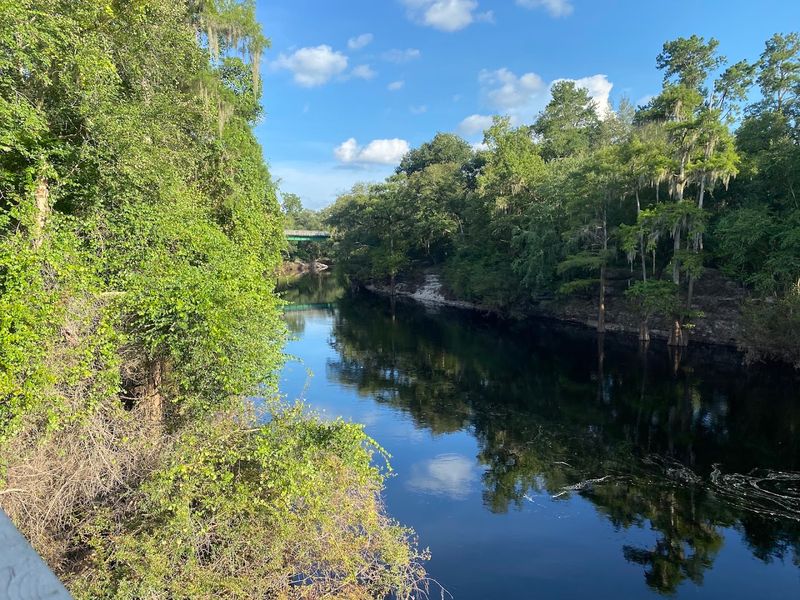
White Springs is a town that earned its name honestly. The White Sulphur Springs that bubble up here were considered sacred healing grounds long before European settlers arrived.
Native American tribes including the Timucuan and Apalachee reportedly visited these waters for healing, and the spring site served as a kind of neutral ground between groups separated by the river.
By the 1800s, word had spread about the spring’s supposed medicinal properties, and the town became one of Florida’s very first tourist destinations. Luxury hotels and boarding houses filled the area.
Visitors arrived hoping the sulfur-rich water would cure various ailments. The spring itself was eventually enclosed with concrete and coquina walls, and a multi-story bathhouse was built around it in the early 1900s.
The spring no longer flows as it once did, but the history layered into this small town is fascinating. White Springs was also used as a refuge for displaced families during the Civil War, earning it the nickname Rebels Refuge.
Wandering through town and reading about all of this gives you a real sense of how much life has passed through such a quiet, unassuming place. History tends to settle in small towns and stay there.
Stephen Foster Folk Culture Center State Park
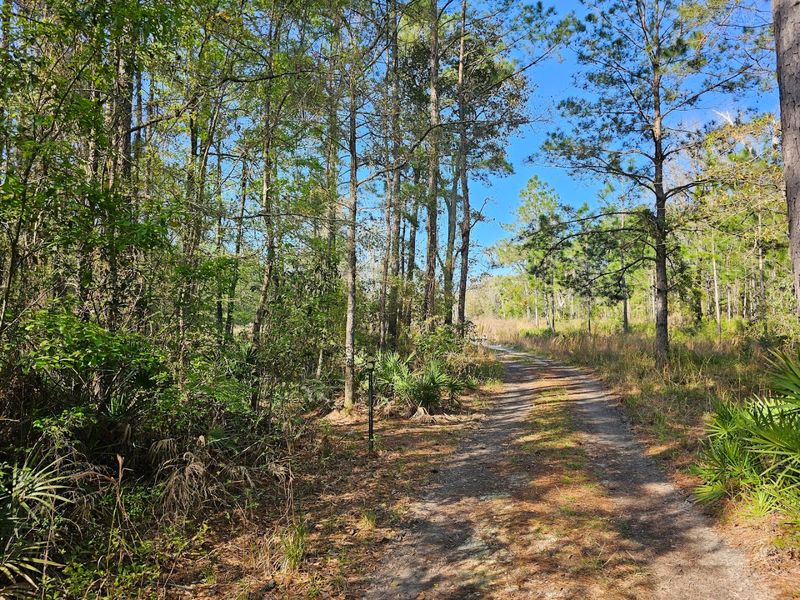
Stephen Foster never actually visited Florida. That fact always gets a reaction.
Yet his song Old Folks at Home, which opens with the line Way down upon the Suwannee River, made this waterway famous around the world. To honor that legacy, the Stephen Foster Folk Culture Center State Park was established in White Springs in the 1950s, and it remains one of the most charming cultural stops in North Florida.
The park features a museum dedicated to Foster’s life and music, along with live craft demonstrations that rotate through traditions like quilting, blacksmithing, and weaving. It is the kind of place where you can spend a couple of hours without realizing how much time has passed.
One of the park’s most distinctive features is its 97-bell carillon tower, which plays Foster’s compositions throughout the day. Hearing those bells drift across the river while you sit on a bench beneath the trees is genuinely lovely in a low-key, unexpected way.
The park is open daily from 8 a.m. to sundown, with the museum and tower open from 9 a.m. to 5 p.m. Address: 11016 Lillian Saunders Drive, White Springs, FL 32096.
Paddling the Suwannee River Wilderness Trail
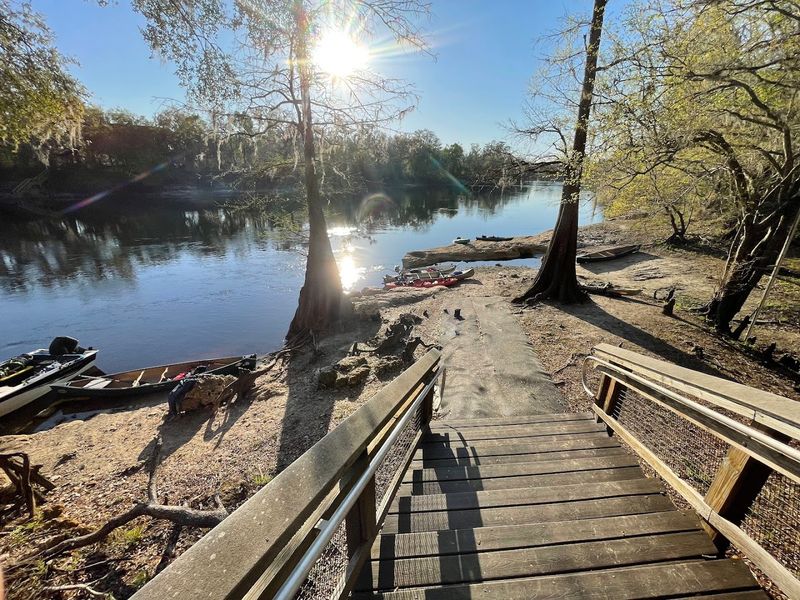
White Springs sits right at the edge of one of the best paddling routes in the entire Southeast. The Suwannee River Wilderness Trail stretches for miles and gives kayakers and canoeists access to some of the most remote, beautiful stretches of blackwater river in Florida.
Local outfitters in the area offer rentals and shuttle services, which makes the logistics a lot easier than you might expect.
The river moves at a comfortable pace through most of this stretch, though there is some current to be aware of. Beginners can handle it with basic paddling skills, but the river does not let you zone out completely.
It keeps you engaged without ever feeling threatening.
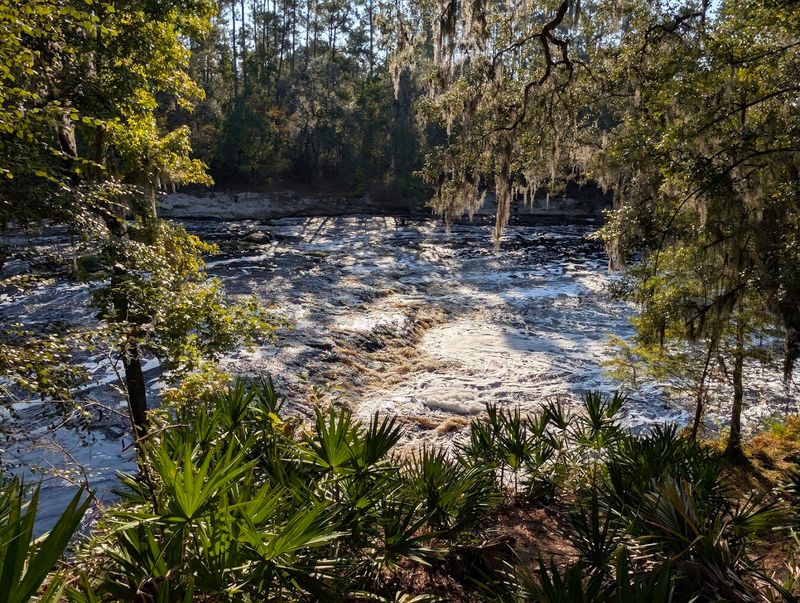
Big Shoals, located a few miles upstream from White Springs, is particularly worth mentioning. It contains Florida’s only whitewater rapids, a genuinely surprising feature for a state most people associate with flat, calm water.
The rapids at Big Shoals and nearby Little Shoals add a burst of energy to an otherwise serene paddling experience.
Watching the landscape change as you drift downstream, from open sandy banks to tight cypress tunnels, is the kind of slow adventure that resets something in you. The river does the work.
You just have to show up.
Wildlife Along the Suwannee River Basin
The Suwannee River basin is home to an astonishing range of wildlife, and White Springs sits right in the middle of it. Alligators are a common sight along the banks, usually sunning themselves on logs or slipping quietly into the water as a kayak approaches.
Turtles stack up on fallen branches. Otters pop up unexpectedly and then vanish just as fast.
Bird activity here is constant. Herons, egrets, ospreys, and kingfishers work the water at all hours.
The area around White Springs is part of the Florida Wildlife Corridor, a connected network of lands and waters that allows animals to move safely across the state. That connectivity is why the biodiversity here feels so rich.
Two species in particular make the Suwannee genuinely special in a scientific sense. The Suwannee alligator snapping turtle is found nowhere else on Earth.
The Gulf sturgeon, a federally threatened species, maintains its largest remaining population right here. Seeing a sturgeon leap from the water is reportedly startling and unforgettable in equal measure.
Autumn adds another layer to the experience. Tupelo trees and red maples shift into deep crimson and burgundy, coloring the riverbanks in a way that most people never associate with Florida.
It is a real surprise.
Hiking and Biking Trails Around White Springs
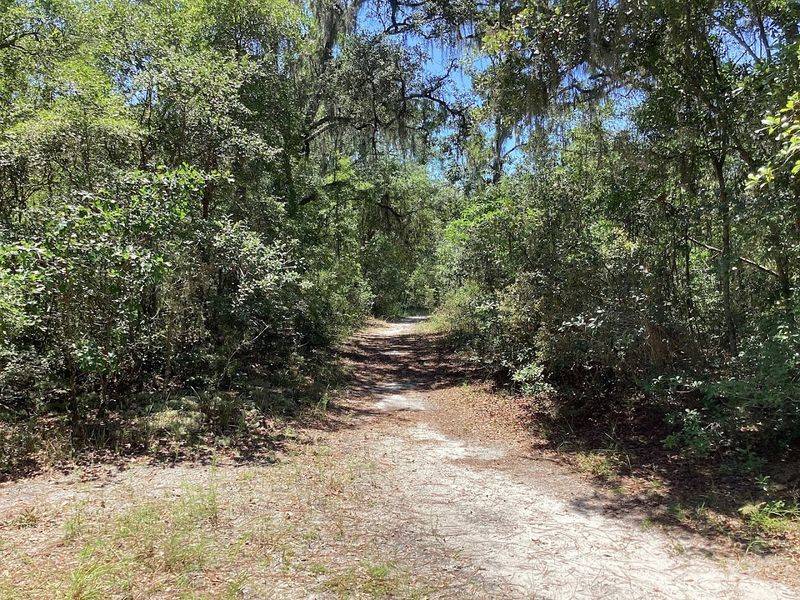
White Springs holds a distinction that outdoor enthusiasts genuinely appreciate. The town is recognized as a Florida Trail Gateway Community, which means it serves as an official entry point for the Florida National Scenic Trail.
Miles of hiking and biking routes branch out from here in multiple directions, covering terrain that ranges from easy riverside walks to more demanding backcountry paths.
The Bridge to Bridge trail is a local favorite for good reason. It follows the river between two historic bridges and offers open views of the Suwannee from elevated banks.
The combination of water, forest, and changing light makes it one of those trails where you keep stopping to look around instead of pushing forward.
Big Shoals State Park, located just upstream, is the go-to destination for mountain bikers looking for a challenge. The trails there wind through dense forest and scrub, with enough elevation change to keep things interesting by Florida standards.
Hikers can also reach the overlook above the rapids, which is one of the more dramatic natural viewpoints in North Florida.
Beyond the physical activity, these trails pass through plant communities rich with wild azaleas, spiderlilies, ferns, and buttonbush. Every season brings something different.
Spring bloomers give way to summer greenery, and fall color takes over before you know it.
