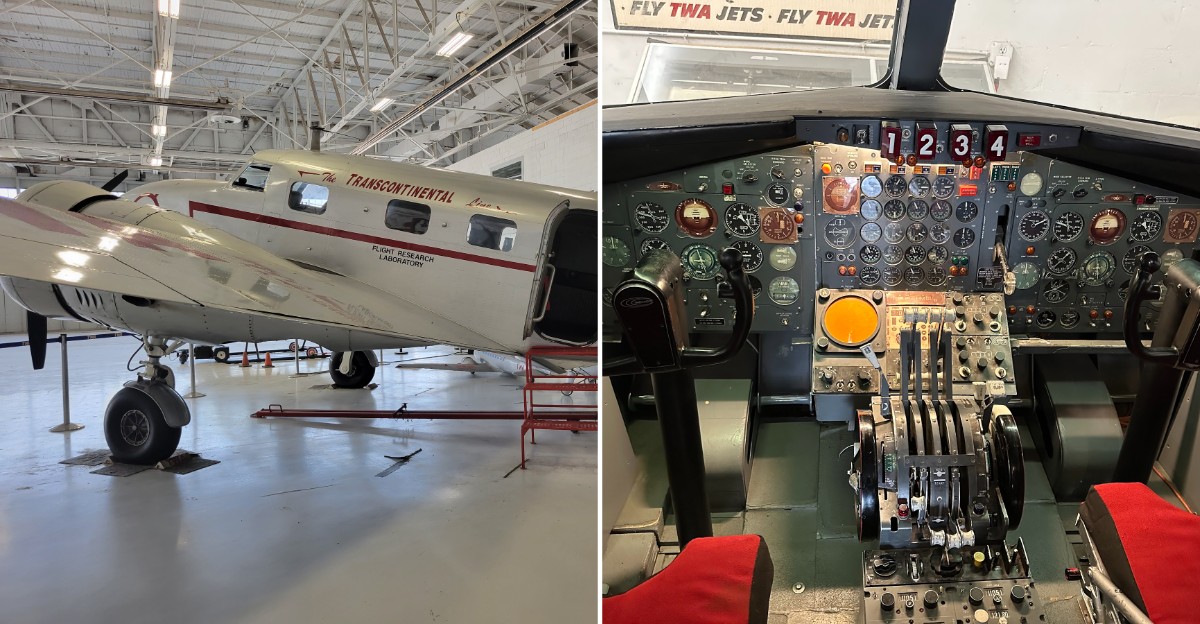
It is hard to play it cool when a full-size airliner is sitting a few feet away from you. This Missouri aviation museum fills a former TWA site with aircraft, engines, uniforms, photographs, flight gear, and all kinds of airline memorabilia.
The planes are the obvious stars, but the smaller details are what make the visit stick. Old crew uniforms, passenger items, and cockpit equipment show how different commercial flying once felt.
The museum’s connection to TWA’s Kansas City history gives everything a little more weight, too. You are not looking at random aviation pieces collected in one building.
You are exploring a place directly tied to the airline’s story, with plenty of reminders of the era when air travel felt very different from today.
The Original Headquarters Building Itself
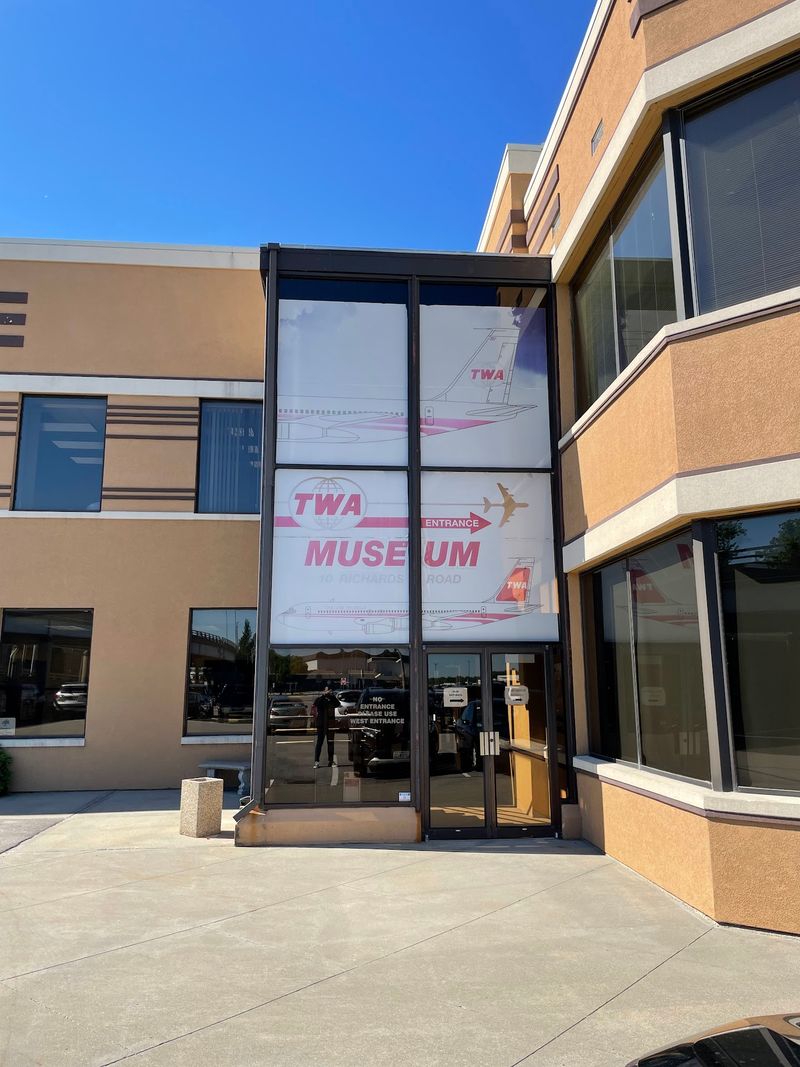
Before you even walk through the door, take a second to look up at the building, because it is the whole reason this museum exists where it does. Trans World Airlines put its headquarters here at the Charles B.
Wheeler Downtown Airport back when commercial flying was still a wild experiment, and the structure has been standing ever since.
You are not looking at a replica or a themed space built to feel old. The walls around you actually held the offices where decisions about routes, aircraft, and passenger service got made.
Signature Flight Services shares the building today, which means there is still real aviation business happening under the same roof. That gives the place a working energy you do not usually find in a museum.
Walking in feels a bit like stepping through a door that leads backward, and the ceiling heights and hallway proportions give away the era immediately. Little architectural details keep showing up if you pay attention.
Kansas City has plenty of landmarks, but this one earns its spot because the history is baked into the bricks rather than printed on a sign. Give yourself a minute outside before heading in.
The 1937 Lockheed Electra 12A Junior
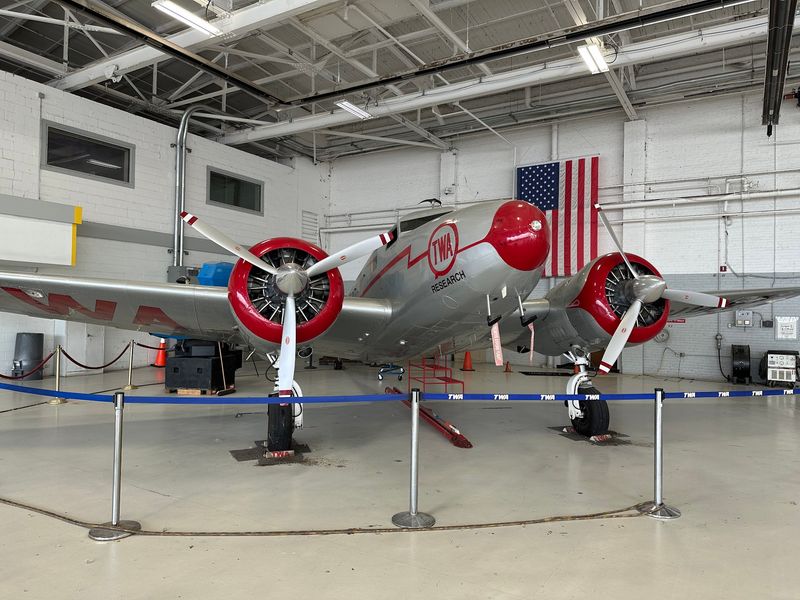
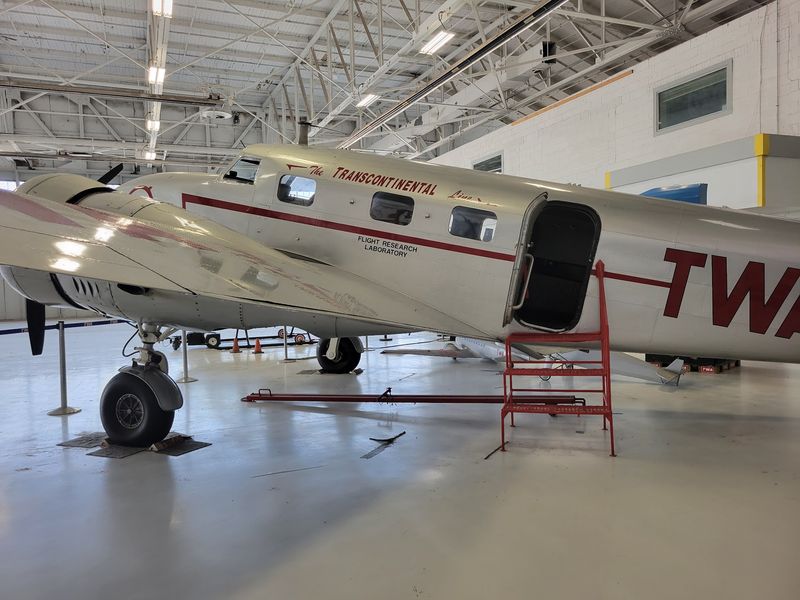
Here is the one that stops people in their tracks, and you will find it at the TWA Museum, 10 Richards Road, Kansas City, MO 64116. A full-size Lockheed Electra 12A Junior sits right there, gleaming and complete, not chopped up or tucked behind glass.
The connection that makes it extra interesting is Amelia Earhart, who flew an aircraft very much like this one. Kansas City sits close to her roots, so seeing the type parked here feels like the story came full circle.
What surprises most visitors is how small the cabin looks compared to anything flying today. Air travel in that era was a genuinely different experience, closer to riding in a fast little club than boarding a bus with wings.
Walk slowly around the nose and you can appreciate the riveted skin, the twin engines, and the tail shape that defined the look of that whole generation of aircraft. Photographers tend to linger here longer than anywhere else in the place.
Bring someone who claims they do not care about planes, and watch them change their mind in about thirty seconds flat.
Howard Hughes And The Moonliner II Rocket
A rocket inside an airline museum sounds like a mistake until you learn who ordered it. Howard Hughes, who controlled TWA during some of its boldest years, commissioned the Moonliner for the airline’s Kansas City headquarters, and a full-size replica of the Moonliner II stands in the museum today.
The design screams a certain kind of optimism about space travel, all sleek nose cone and swooping fins, the sort of thing that looks like it belongs on a vintage magazine cover. It is genuinely tall, so you end up craning your neck.
There is a Disneyland link too, since the original Moonliner concept was tied to TWA branding at the park. That detail alone tends to surprise people who thought they knew the story.
Standing next to it, you get a feel for how much ambition was floating around the airline industry back then. Companies were not just selling seats, they were selling a picture of the future.
If you are traveling with kids, this is usually the thing they remember on the drive home. Rockets have that effect, no matter how old you are.
Cockpit Trainers From Real Jetliners
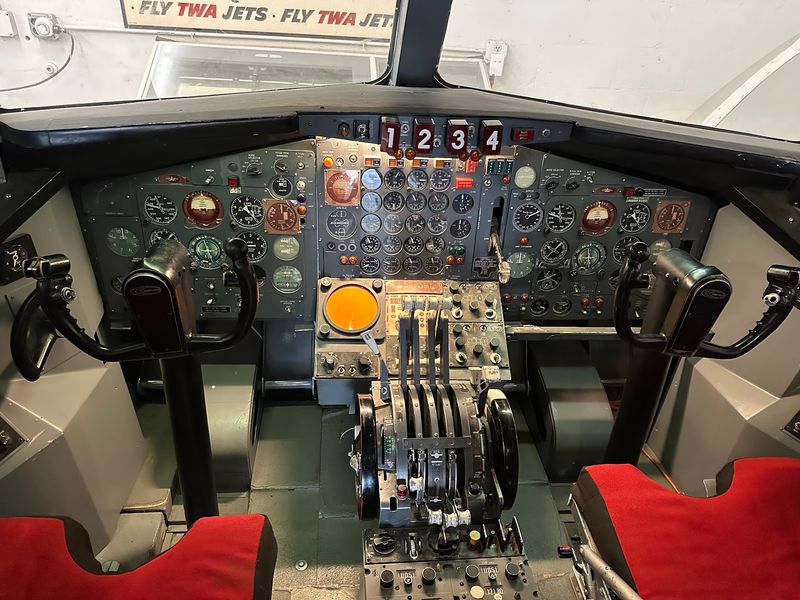
Ever wanted to sit where the pilots sit without buying a ticket? The museum has full-size cockpit trainers pulled from actual airliner types, including the Boeing 707 and 727, and they are packed wall to wall with switches, dials, and levers.
Modern flight decks look like tablet computers by comparison, so these older cockpits hit differently. Every single instrument had a physical face and a needle, and pilots had to scan all of it constantly.
Standing in that space gives you a real sense of how much skill the job demanded before screens took over half the work. It is one thing to read about it and another to see the sheer number of gauges crammed into a small area.
These trainers were used to teach crews, so they are not props. The wear on the equipment tells you people spent serious hours in these seats learning their craft.
Photos never quite capture the scale, which is exactly why it is worth going in person. Give yourself time here, because the details keep revealing themselves the longer you look around.
Cabin Trainers From The DC-9 And MD-80
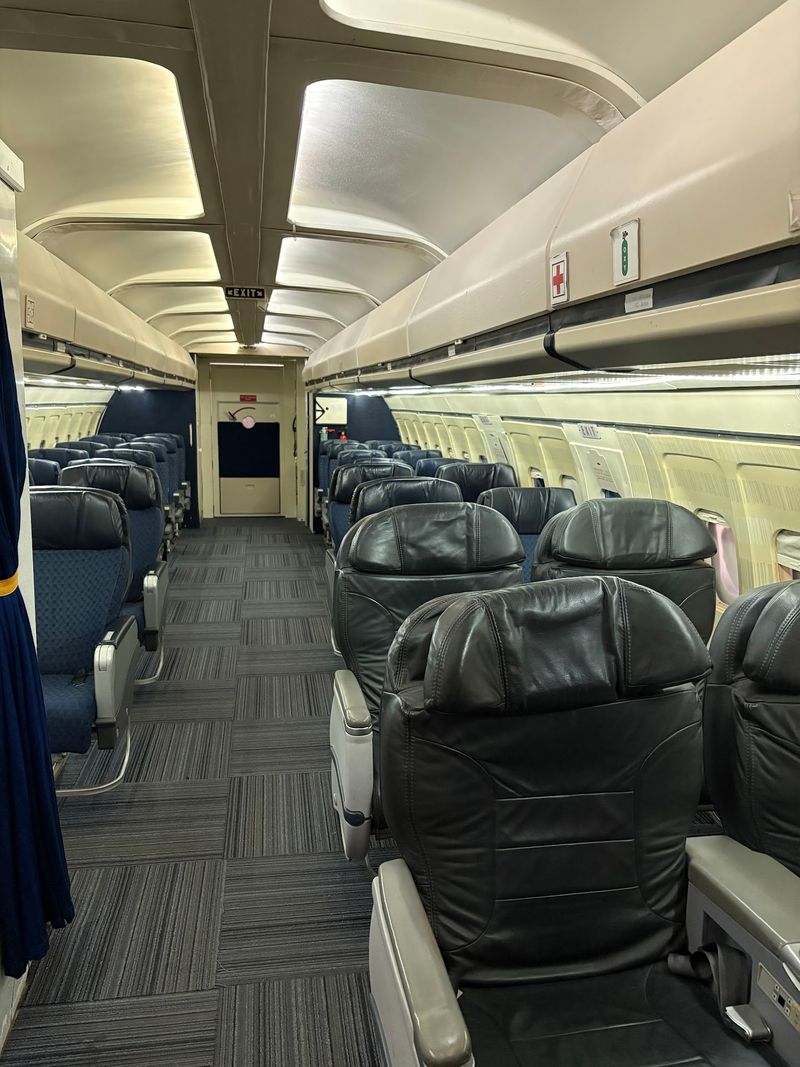
Cabin trainers might sound less exciting than cockpits, but honestly they are where the everyday story of flying lives. The museum has full-size cabin sections representing aircraft like the DC-9, MD-80, Boeing 717, and the wide-body L-1011.
Flight attendants trained in these spaces, practicing service routines and emergency procedures over and over until the movements became automatic. Seeing the actual layout helps you understand why cabin crews are so precise about everything.
Seat design, aisle width, and overhead storage all shifted over the decades, and comparing the types side by side makes those changes obvious. The L-1011 in particular represented a whole different scale of air travel.
Little touches like galley equipment and cabin signage pull the whole picture together. You start noticing things you never think about when you are actually flying somewhere.
For anyone who grew up flying during that era, walking through triggers a lot of recognition, from the shape of the bins to the color palettes airlines loved back then.
It is a rare chance to explore an airliner interior at your own pace, with nobody asking you to stow your bag or take your seat.
Guides Who Actually Worked For TWA
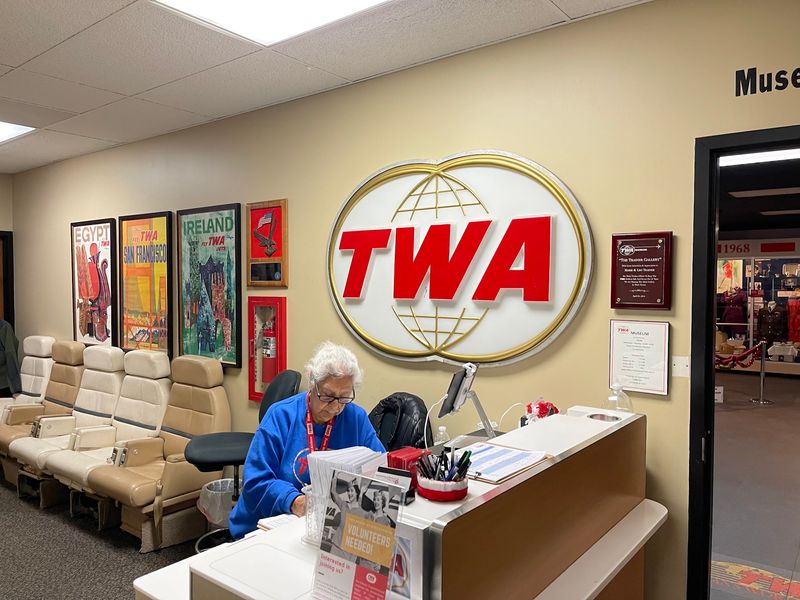
The best exhibit at this place does not sit behind a rope, because many of the museum guides are former TWA employees themselves. Pilots, flight attendants, mechanics, and office staff volunteer their time to walk people through the collection.
That changes the whole experience, since a display case can tell you what an object is but a person can tell you how it was used. The knowledge on hand here is the kind that never made it into a book.
If you are curious about something, just ask, because these are folks who genuinely enjoy sharing what they know about the airline they worked for.
Museums often struggle to connect artifacts to real human experience, and this one solves that problem by simply keeping the people who lived it in the room.
There is something quietly moving about an industry preserving its own history through the hands of the workers who built it. You feel that as you move through the exhibits.
Plan to slow down rather than rush, because the conversations are half the reason to come. Missouri has few attractions with that kind of built-in warmth.
Antique Flight Simulators You Can Study Up Close
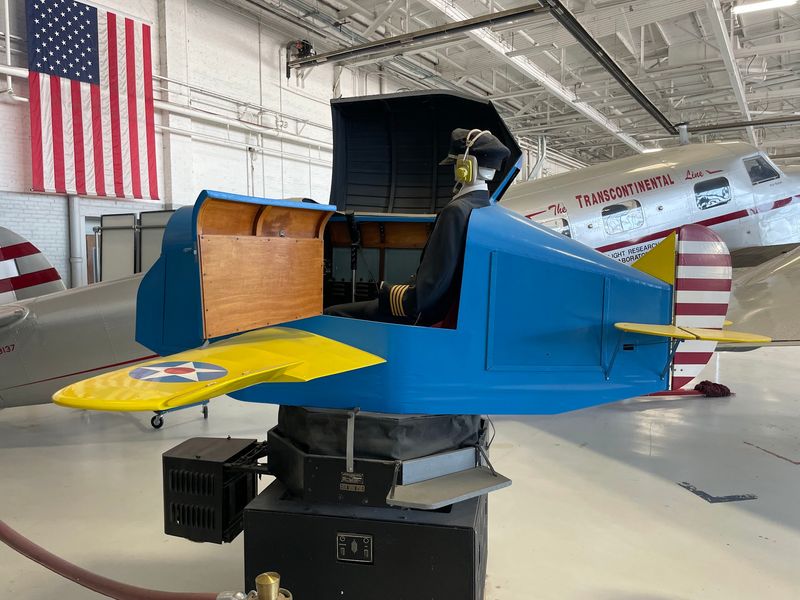
Long before computers could render a runway, pilots learned instrument flying on mechanical contraptions that look almost like carnival rides. The museum keeps antique flight simulators on display, and they are fascinating little machines.
The engineering behind them is clever in a very hands-on way, using linkages and air pressure to mimic the feel of an aircraft responding to control inputs. No screens, no software, just mechanics.
Seeing one in person helps explain how aviation training evolved from something crude into the highly realistic systems airlines use today.
Kids usually gravitate straight toward these because they look like something out of an old cartoon, while adults tend to get stuck on how the mechanisms actually work.
They also connect directly to TWA’s role in pushing instrument flying forward, which mattered enormously for making airline schedules reliable in bad weather.
Take a close look at the construction quality, because these were built to survive thousands of training hours with students yanking on the controls. Craftsmanship like that is easy to overlook in a room full of bigger attractions, but it rewards anyone who slows down.
Airmail Roots And The Birth Of Passenger Flying
Airlines did not start out carrying people, and the museum does a nice job explaining that. Mail contracts kept early carriers alive, and TWA’s story runs straight through that chapter of aviation history.
Exhibits cover how carrying letters across the country turned into carrying passengers, and how route networks got stitched together one leg at a time. Maps, documents, and equipment fill in the picture.
What clicks for most visitors is realizing how risky and improvised those early operations were, with pilots navigating by landmarks and weather reports that were mostly guesswork.
TWA played a real part in pushing the industry toward scheduled, dependable passenger service, and the displays lay out that progression clearly without drowning you in jargon.
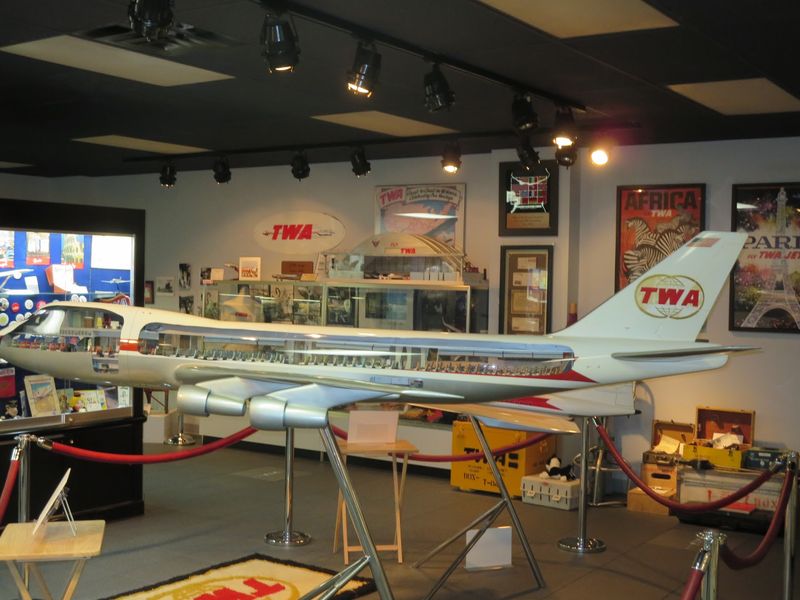
There are model airplanes throughout the collection that trace the changing shapes of aircraft across the decades, which makes the timeline easy to follow visually.
You leave with a better sense of why Kansas City mattered so much to American aviation, and why Missouri keeps showing up in stories about how flying became ordinary. Sections like this one give the bigger exhibits their context and make the whole visit hang together nicely.
The Memorial Room And Why It Matters
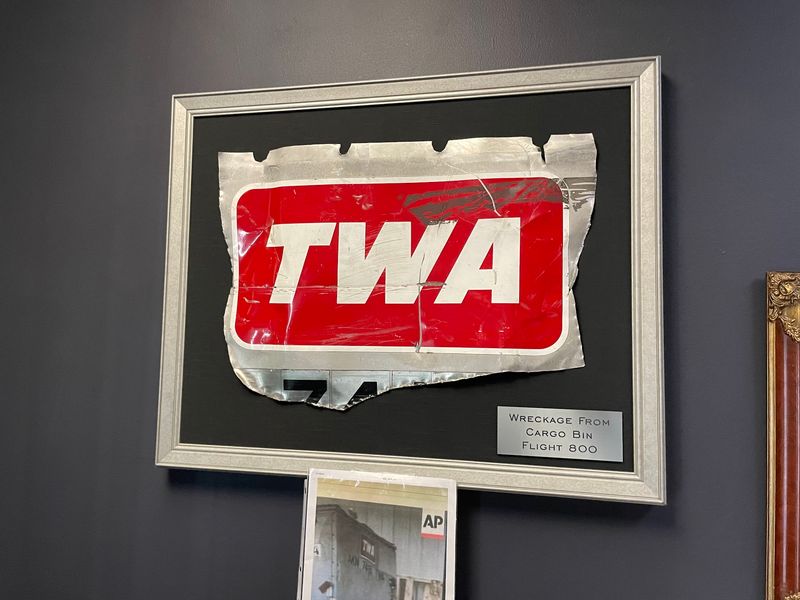
Not every part of the museum is about excitement, and the memorial room is proof of that. It is dedicated to those lost on TWA flights, and the tone shifts the moment you step inside.
Aviation history includes hard chapters alongside the triumphs, and choosing to honor that openly says a lot about the people who run this place. Nothing is glossed over.
Visitors generally move through quietly, and the space is set up to encourage exactly that kind of reflection rather than rushing on to the next display.
For former employees and families connected to the airline, the room carries real personal weight, which is another reason to treat it with care during your visit.
Having it included makes the rest of the museum feel more honest, because you are getting the complete story instead of a polished highlight reel.
When you are finished, the museum has earned a spot among the best aviation collections in the country, and travel publications have ranked it near the very top. That recognition makes sense once you have walked the whole building in Missouri and seen how much heart went into keeping this history alive.
