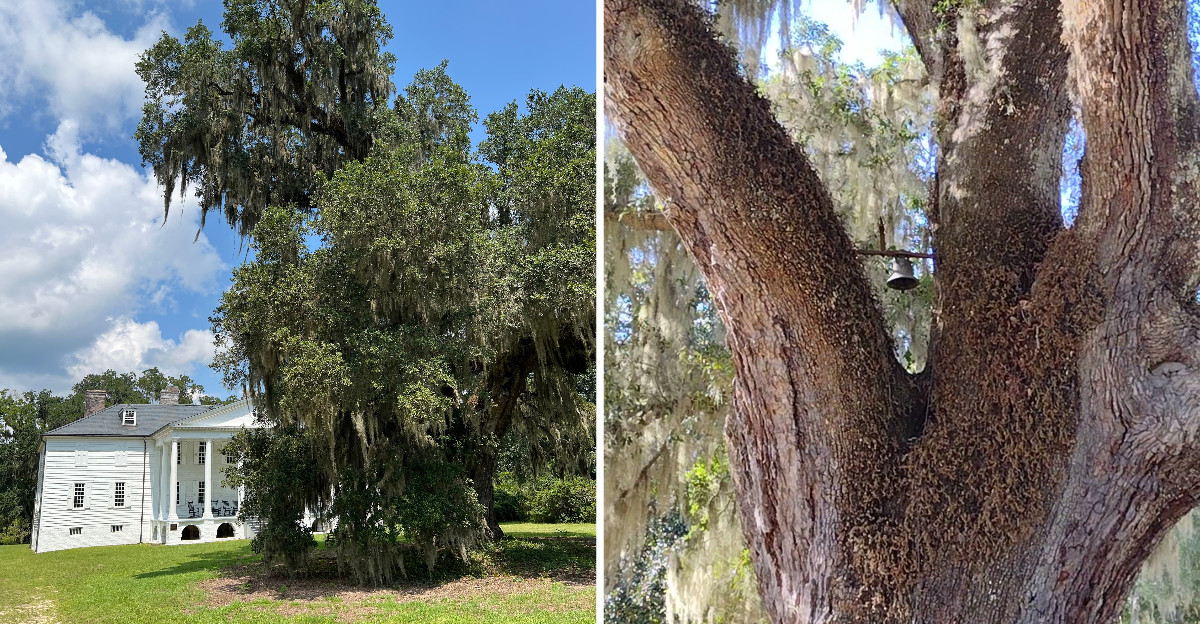
The drive out to a historic rice plantation in South Carolina starts on a highway and ends on a sandy dirt road, and somewhere in between checking the phone stopped and watching the pines go by took over. Local legend said a famous visitor once asked the owners to spare a tree, and seeing whether it was true became the reason for the trip.
It is enormous, with limbs stretching out like arms over the front lawn of a white Georgian house built in 1735. What surprised me most was how quiet the whole place felt, with birdsong instead of crowds and a ranger who clearly loved every detail she shared.
The house tells one story, the rice fields behind it tell another, and the cemeteries in the woods tell a third. Leaving with a much bigger picture of South Carolina’s past than the tree alone could offer felt like the real reward.
The Washington Oak and the Request That Saved It
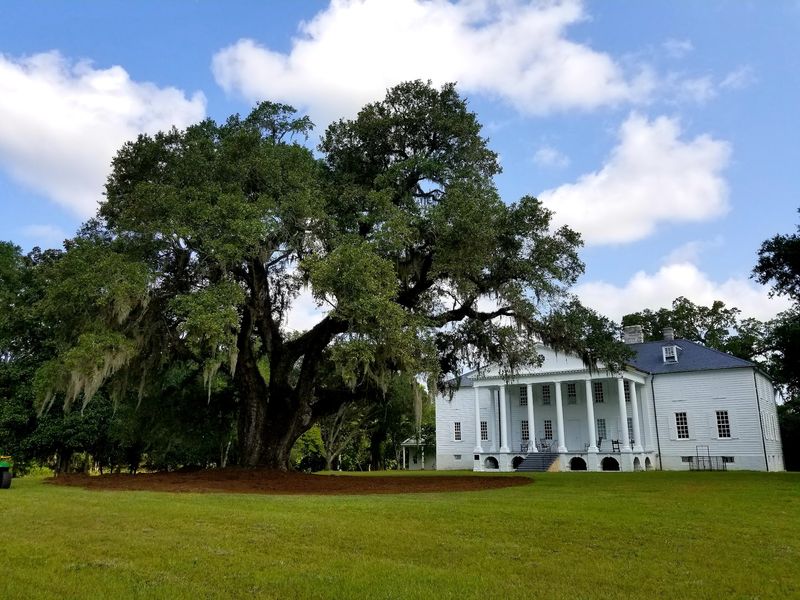
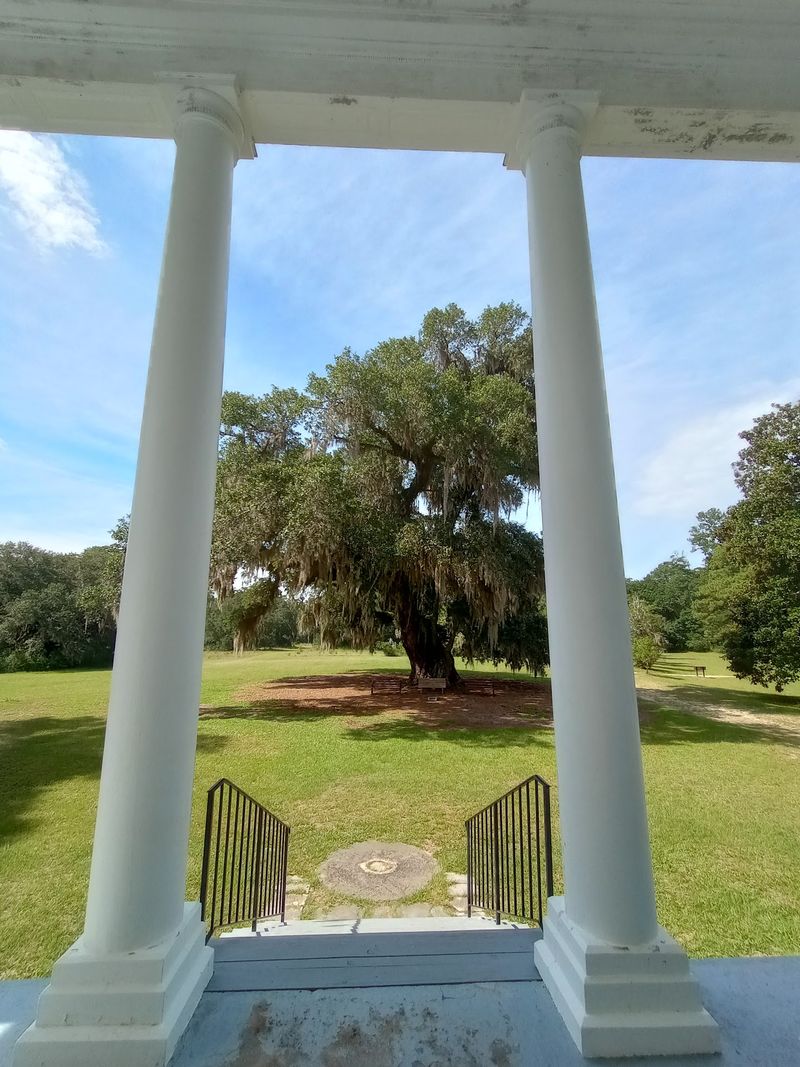
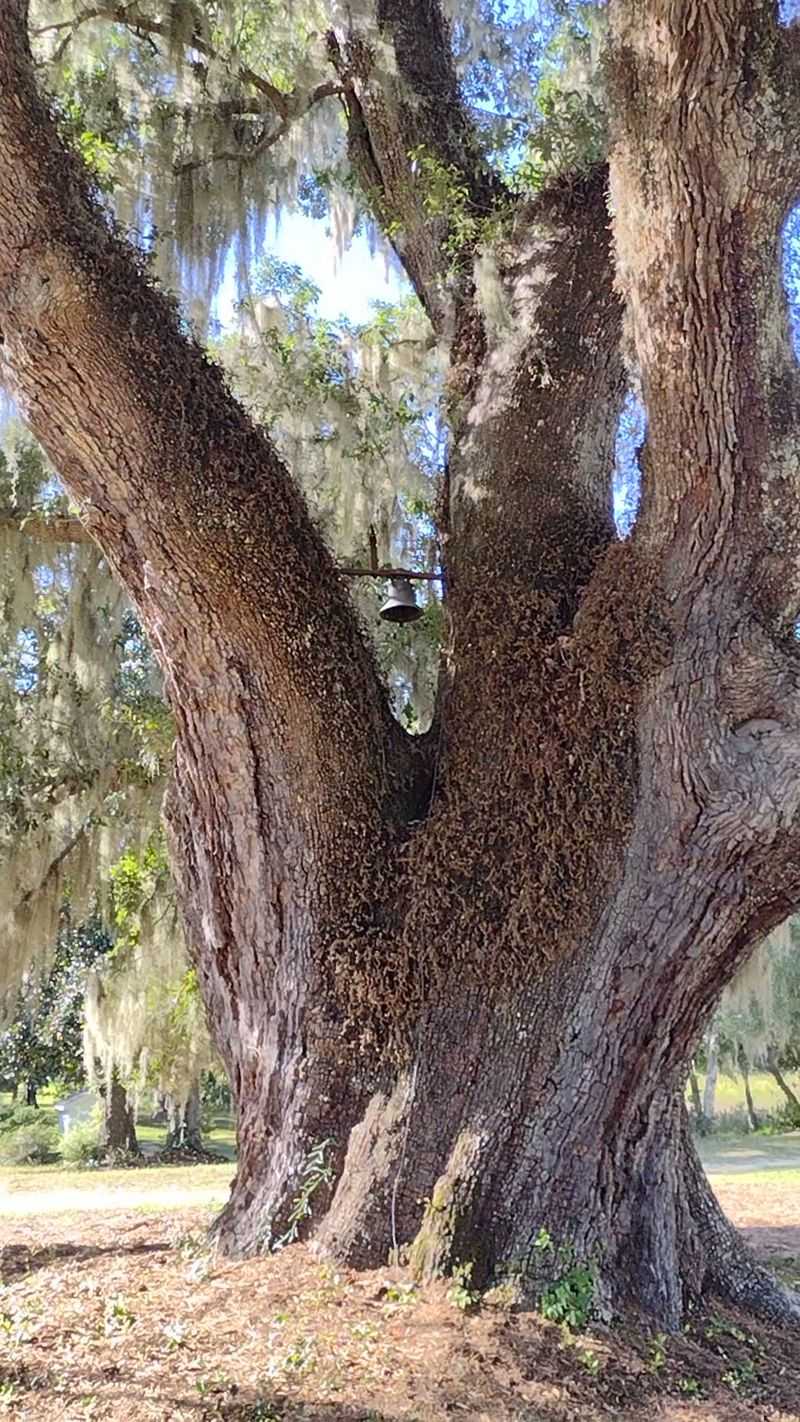
My first thought seeing the oak was that no photograph does it justice. The trunk is thick and gnarled, and the lower limbs dip so low they almost rest on the grass before rising again.
Family tradition holds that when George Washington visited Hampton in 1791 during his Southern Tour, the women of the household mentioned plans to cut the tree down because it blocked the view from the brand new portico. Washington reportedly suggested it stay right where it was, and it did.
Park staff are honest that the exact conversation is family legend rather than documented fact, though Washington’s visit itself is well recorded. Honestly, that mix of certainty and mystery made me like the story more.
Guides estimate the live oak has been growing here for centuries, long before the house went up. Sit on the lawn beneath it for a few minutes and you get a real sense of scale.
Bring a wide angle lens if you have one. Otherwise, back up toward the driveway and you might fit the whole crown in one frame.
A Mansion That Grew in Stages
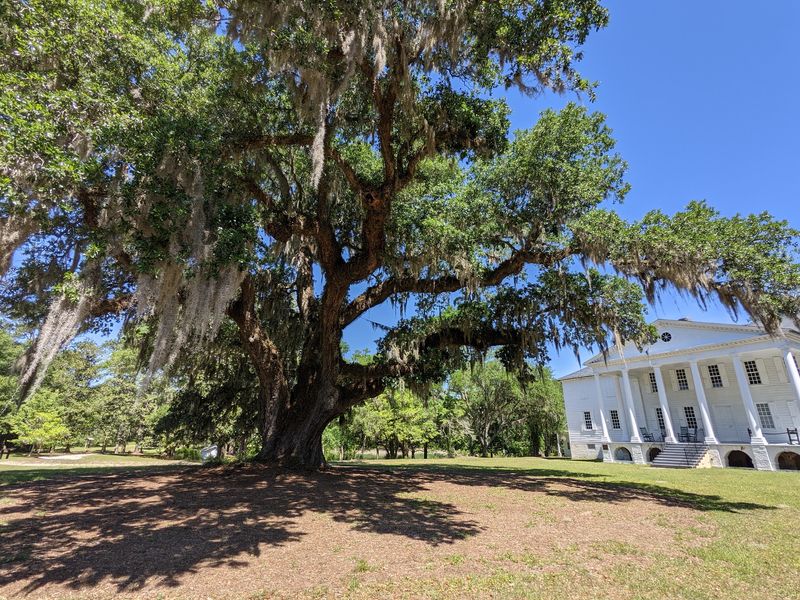
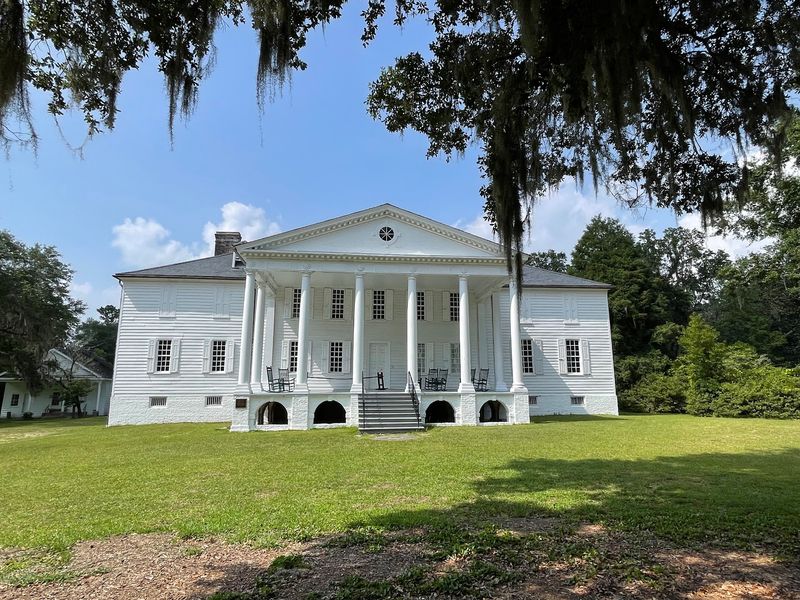
Hampton did not arrive fully formed. Noe Serre, a French Huguenot, built a modest one and a half story farmhouse here in 1735, and that little core is still buried inside the structure you see today.
Daniel Horry bought the property in 1757 and went big. He added a two story ballroom on one side and a master bedroom suite on the other, turning a farmhouse into a statement.
The showstopper is the projecting temple front, finished around 1790 and 1791, with eight Doric columns holding up a carved frieze and a pedimented gable. Architectural historians consider it one of the earliest examples of its kind in American homes.
Timing was almost suspiciously good, since the portico was completed right before Washington came through.
What I did not expect was the inside. The rooms are largely unfurnished, and sections of wall have been deliberately left open so you can see framing, old nails, and patched joints.
It reads like a cutaway diagram, showing exactly where the house was stretched, repaired, and rebuilt across two and a half centuries.
Carolina Gold and the People Who Grew It
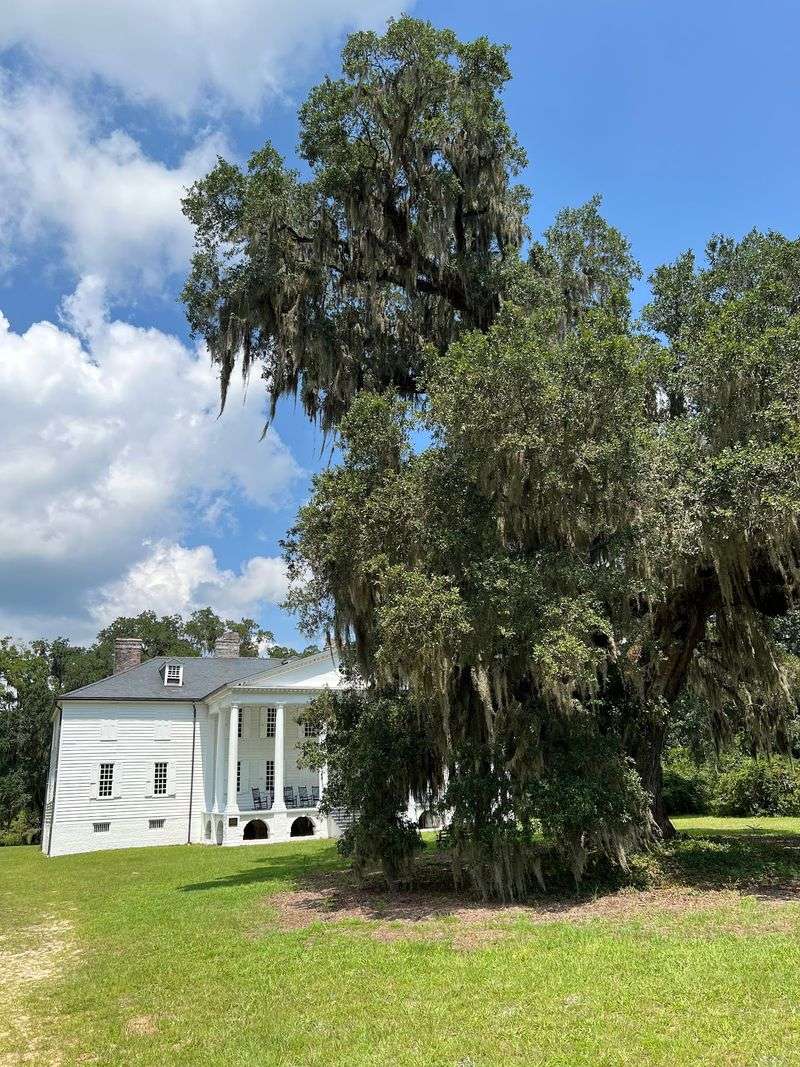
Behind the pretty lawn lies the reason Hampton existed at all. Rice, specifically the variety known as Carolina Gold, made fortunes in this part of the Lowcountry.
Growing it meant reshaping the landscape itself. Enslaved workers dug and maintained a system of banks, dikes, and trunk gates that let tidal water flood and drain the fields on schedule, and traces of that engineering are still visible along the creek.
At its height, Hampton depended on the labor of roughly 340 enslaved people. Some worked the fields, while others were carpenters, blacksmiths, cooks, and household servants whose skills built and maintained everything you walk past.
The site does not tiptoe around this. Interpretive panels and tour content lay out the contrast between the wealth enjoyed inside the mansion and the conditions endured by the people whose work created it.
One display I found especially hard to shake was an inventory listing enslaved individuals alongside assigned monetary values.
Reading those names slowed me down more than anything else on the property. Give yourself time here, because it deserves more than a quick glance.
Rangers Who Tell It Like They Lived It
Plenty of historic house tours feel rehearsed. The one I joined here did not, and that made all the difference.
Guides at Hampton move through the timeline of construction, damage, and repair, then pivot to the families who lived here and the people who were enslaved here, including descendants still connected to the surrounding area.
Questions are welcome. I asked several, and instead of getting a polite nod and a move along, I got longer answers and a couple of details that were clearly not part of the standard script.
Groups tend to be small, and on quieter weekdays you may end up with something close to a private walkthrough. That relaxed pace lets you linger in rooms rather than shuffle through them.
Because the interior is mostly unfurnished, the storytelling carries the experience. Signage fills gaps if you prefer exploring on your own after the guided portion ends.
House tours run for a fee while walking the grounds is free, so check current tour times by phone at 843-546-9361 before you make the drive out.
Trails Through Pines, Marsh, and Quiet
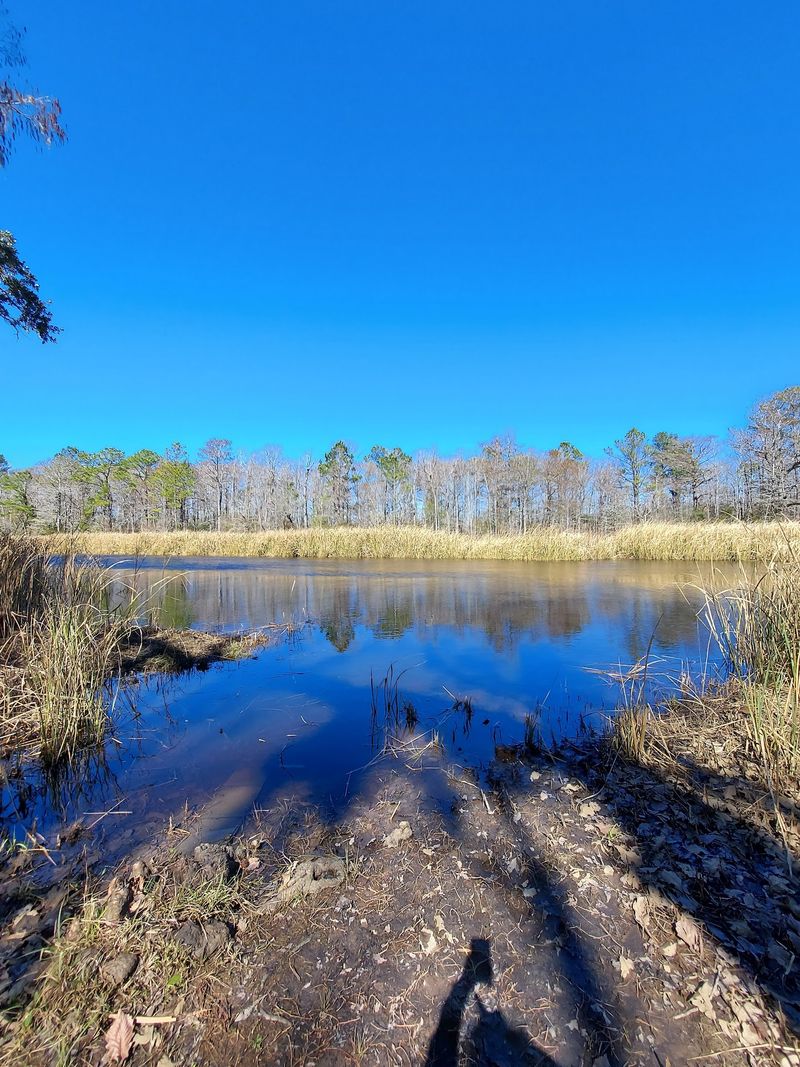
Nearly 300 acres surround the house, and most of it has gone back to woods and swamp. Walking those trails, it is easy to forget you are on farmland at all.
Paths are soft and sandy in places, cutting through pine stands before opening toward views of Wambaw Creek and the old field systems. I passed exactly two other people the whole time.
Wildlife shows up when you least expect it. Visitors have spotted armadillos wandering near the gardens, seemingly unbothered by anyone watching them.
Birdsong is constant, and if you stand still for a minute you will hear woodpeckers working somewhere in the canopy.
Leashed dogs are welcome outdoors, though they cannot go inside the mansion, which makes this an easy stop if you are traveling with a pet.
One firm piece of advice: mosquitoes here are serious business from spring through early fall. Pack repellent, wear long sleeves if you can stand the heat, or plan a winter visit when the bugs disappear and some trees are still flowering.
Two Cemeteries, Two Sides of One Story
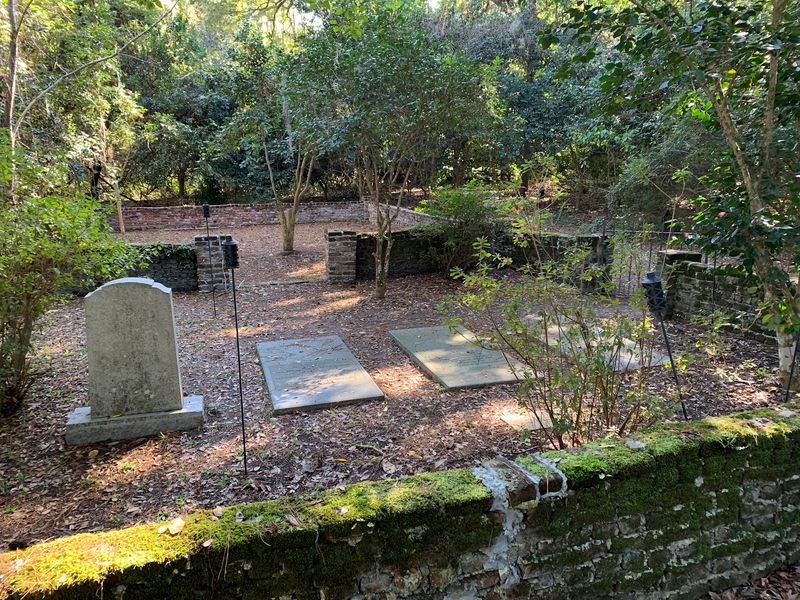
Tucked away from the main lawn are two burial grounds, and visiting both in one afternoon changes how the whole site lands.
A historic African American cemetery holds the graves of enslaved people and their descendants, families who stayed in this area long after emancipation and built lives here across generations.
Not far off, the Rutledge family gravesite marks where the plantation’s longtime owners rest, including Archibald Rutledge himself.
Standing between them, the gap in wealth and circumstance that defined Hampton feels less like a history lesson and more like something physical you can measure in footsteps.
Both spots are peaceful, shaded, and thick with Spanish moss. Leaves crunch underfoot and the road noise from the highway is long gone by this point.
Please treat these areas with the respect they deserve, staying on paths and keeping voices low.
I found them the most memorable part of the visit, more so than the mansion. They connect the grand architecture out front to actual human beings, which is exactly what makes Hampton worth the detour off Highway 17.
Archibald Rutledge and the Gift of Hampton
South Carolina’s first poet laureate lived right here. Archibald Rutledge was the last private owner of Hampton, and the property shaped nearly everything he wrote.
Across his career he produced more than 300 articles, books, and stories, many rooted in these woods and waterways. His 1941 book Home by the River describes returning to Hampton in 1937 after years away and slowly bringing the neglected house back to life.
He also planted what became known as the Wild Gardens, a loose, natural style of landscaping that blends cultivated blooms with whatever the delta decides to grow.
Spring visitors get the best of it, with flowers opening along the edges of the lawn.
In 1970 Rutledge deeded the property to the state, which is the only reason any of us can wander here today.
A marker on the grounds displays one of his poems, and reading it while standing in the landscape that inspired it is a small, satisfying moment.
Preservation decisions like his are easy to overlook until you realize how many similar places simply vanished.
Planning the Trip Out to McClellanville
Getting here is half the fun, assuming you do not mind dirt roads. The turnoff from Highway 17 leads onto unpaved lanes that rattle a bit, though any regular car handles them fine in dry weather.
Gates open at 9 am and close at 5 pm every day of the week, which gives plenty of room for a relaxed visit.
Plan on two hours minimum. Add a house tour, the trails, and both cemeteries and you can easily fill half a day.
Facilities are simple but well kept, with a small visitor center and gift shop, clean restrooms near the parking area, and the old kitchen house standing separate from the mansion.
Crowds are rarely an issue, which is part of the appeal compared to the busier plantation sites closer to Charleston.
Nearby, the historic brick church makes an easy add on stop for anyone already out this way.
Winter visits mean no mosquitoes and softer light. Spring brings blooms but bring repellent.
Address: 1950 Rutledge Rd, McClellanville, South Carolina 29458
