Brick rubble where a whole mill village once hummed, and a gravel road climbing toward a church older than the county around it, those are the kinds of finds I keep chasing on Georgia back roads.
I love that this state hides its lost towns in plain sight, not polished museums with velvet ropes and gift shops, but foundations, chimneys, cemeteries, and quiet trails where something big used to happen.
The settings feel ordinary until you read a single sign and the ground changes meaning, the abandoned railroad bed suddenly tracing the path of the workers’ daily walk, the overgrown cemetery holding names you have never heard but cannot forget.
Coastal marsh, red clay backcountry, and mountain gorges all connect in one long story about towns that nearly vanished, each stop offering a piece of a larger picture that no single museum could hold.
Bring water, comfortable shoes, and a little patience for back roads, because the best pieces are usually the hardest to reach.
1. Fort Frederica National Monument, St Simons Island
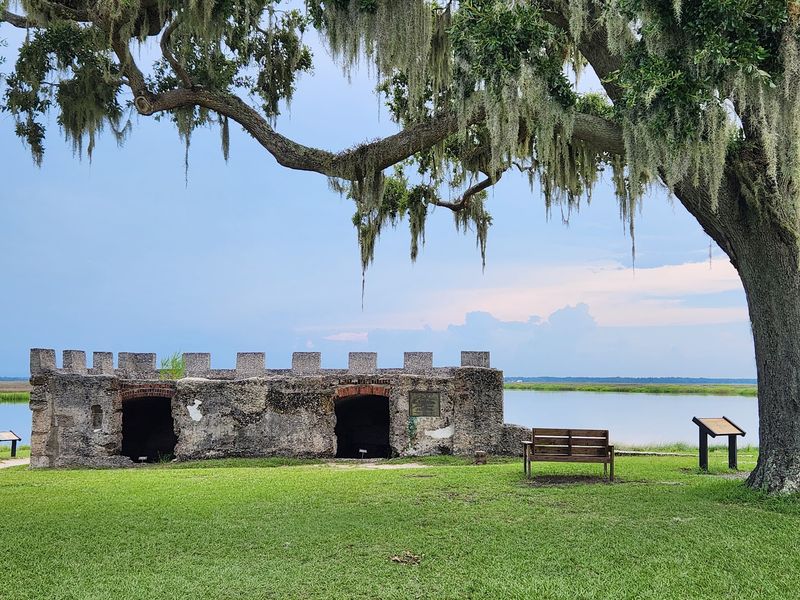
Crossing the bridges and marsh to reach St. Simons Island already feels like leaving the present behind, and the payoff at the end of Frederica Road is better than I expected.
Oglethorpe laid out this fort and town in 1736 to guard Georgia’s southern border against the Spanish, and construction continued into the 1740s. What survives are archaeological remains, low tabby walls, and outlines where houses and shops once stood.
The visitor center is small but genuinely useful. A short film covers the settlement’s rise and fall, and the displays fill in details you would otherwise walk right past.
Outside, shady trees make the walking trail comfortable even in summer, and interactive signs mark each building site. Restrooms are clean, there is a gift shop, and dogs are welcome, which is rarer than you would think at national monuments.
Admission costs nothing, parking is free in the lot or on the street, and the marsh views at sunset are worth timing your visit around. Kids do well here because the ruins are open enough to explore safely.
Saturday afternoons draw the biggest crowds, so mornings early in the week feel almost private.
Address: 6515 Frederica Rd, St Simons Island, GA
2. New Echota State Historic Site, Calhoun
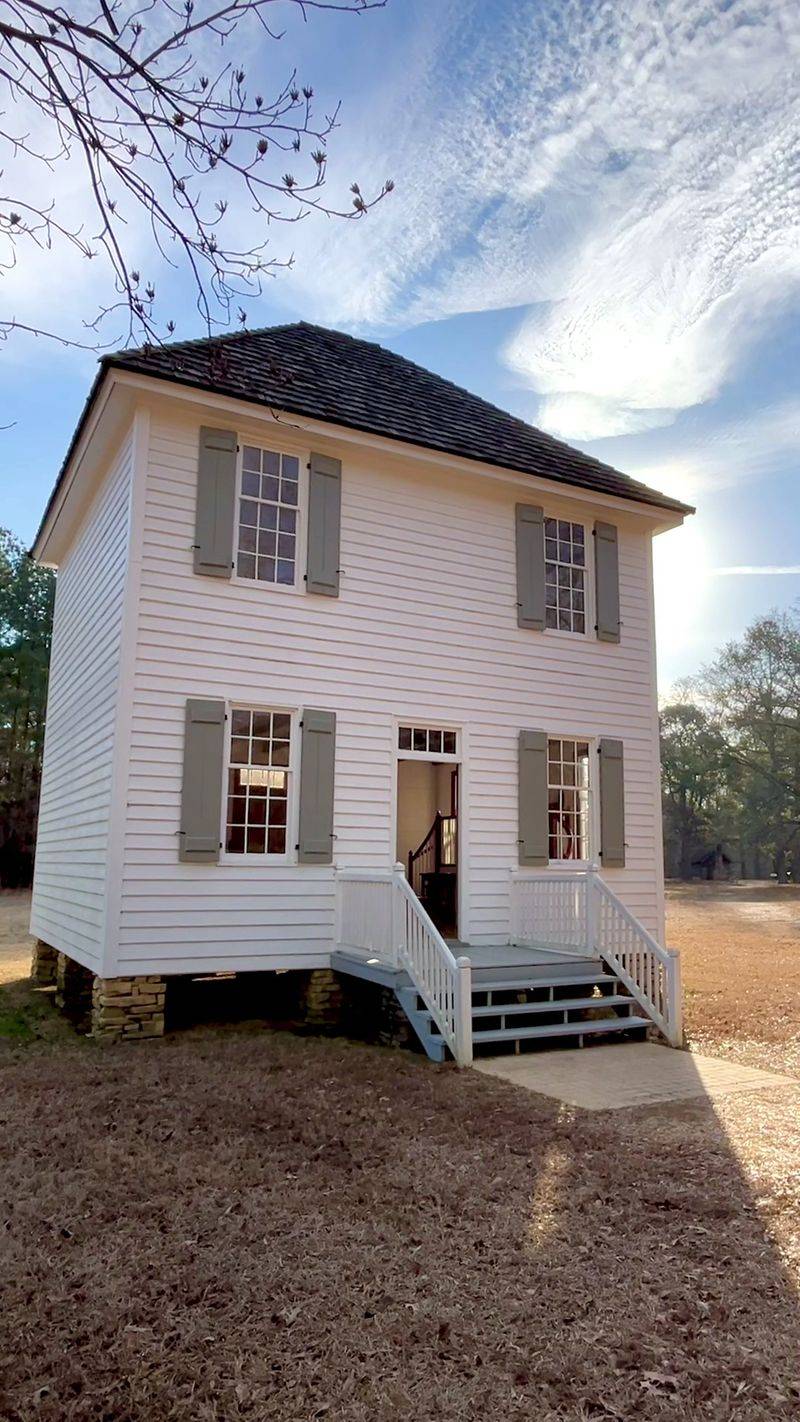
Ground zero for the Trail of Tears sits quietly off GA-225, and I still think more people should know that.
New Echota served as the capital of the Cherokee Nation, a real town with government buildings, a newspaper, and homes. Today it functions as a historic outdoor museum, with recreated buildings and trails spread across beautifully kept grounds.
The tavern is a highlight, and the guided walks turn what could be a quiet stroll into something memorable. Knowledgeable volunteers and staff explain how decisions made in these rooms reshaped an entire nation.
Start with the orientation video. It frames the history clearly before you head outdoors, and everything you see afterward lands harder because of it.
Deer wander the property regularly, along with plenty of other wildlife, which makes the walking areas pleasant even for visitors who came mostly for the scenery. Families with kids will find the pace easy and the layout forgiving.
Parking is free and on-site. Note that the gates stay closed Mondays, Sunday hours are shorter, and this preserved site ranks among the most important stops in north Georgia for anyone tracing towns that disappeared.
Address: 1211 GA-225, Calhoun, GA
3. Sweetwater Creek State Park, Lithia Springs
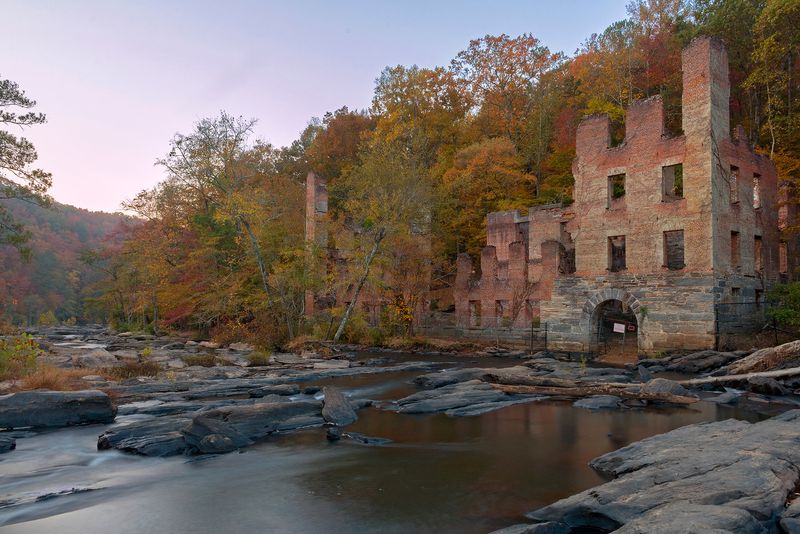
Five stories of brick wall rising straight out of the woods is not what I pictured when someone said state park near Atlanta.
Those walls belonged to New Manchester, a textile mill community burned in 1864 and never rebuilt. The Red Trail follows Sweetwater Creek right to them, and signs warn it is difficult in places, with roots and loose rock demanding careful footing.
Below the ruins the creek drops through a gorge full of pale boulders and white water. It is genuinely loud down there, in the best way.
Beyond the history, the park delivers a little of everything. There is a lake for fishing, boating, and kayaking, plus picnic tables, grills, swings, and a playground for younger visitors.
The visitor center holds informative exhibits that explain what the mill produced and how the village functioned. Signage throughout is excellent, and staff are easy to find when you need directions.
Dogs are allowed, parking is paid, and weekend afternoons get busy while weeknights stay peaceful. I would allow half a day here, because the woods, water, and ruins each pull at your attention differently.
Address: 1750 Mt Vernon Rd, Lithia Springs, GA
4. Fort Morris State Historic Site, Midway
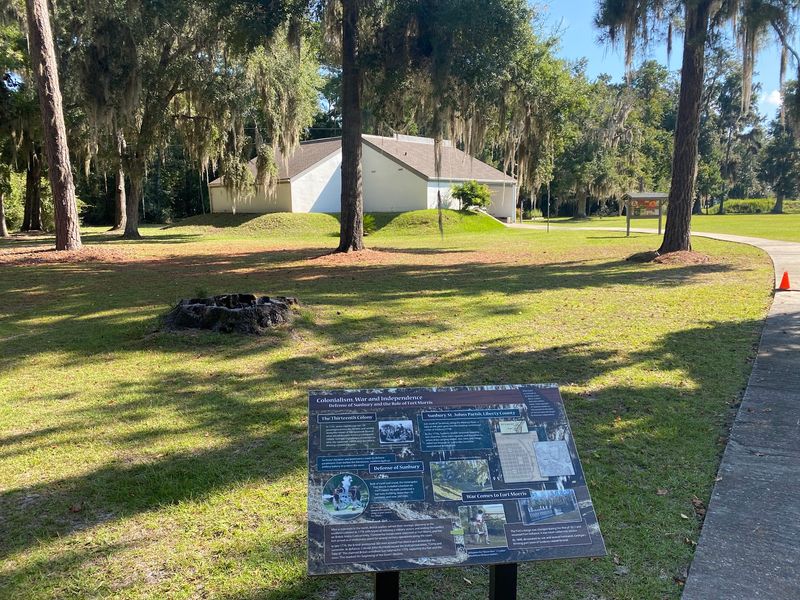
Grassy mounds do not photograph like castles, but knowing what happened on them changes everything.
Fort Morris guarded Sunbury, once a busy colonial seaport that has completely vanished. What remains are earthen ramparts you can walk across, with well-done informational displays placed at each viewpoint to explain the battles fought here during the Revolutionary War.
One unusual detail: the British later built a fort atop a tall Indian mound at this location, a combination you rarely encounter anywhere else.
The visitor center is small and works well as a starting point. Inside there is a museum plus an interactive setup of 18th and 19th century games, which turns a history lesson into something kids actually want to do.
Staff here are friendly and clearly enjoy the subject, and school groups come away energized. Picnic tables and public restrooms make it easy to linger, and the hikes stay short and manageable.
Scenery deserves mention too, since the site overlooks tidal water and marsh grass that shifts color through the day. Doors open daily at nine and close at five, and Midway itself is a historic small coastal town worth a slow drive.
Address: 2559 Ft Morris Rd, Midway, GA
5. Scull Shoals Historic Site, Watkinsville
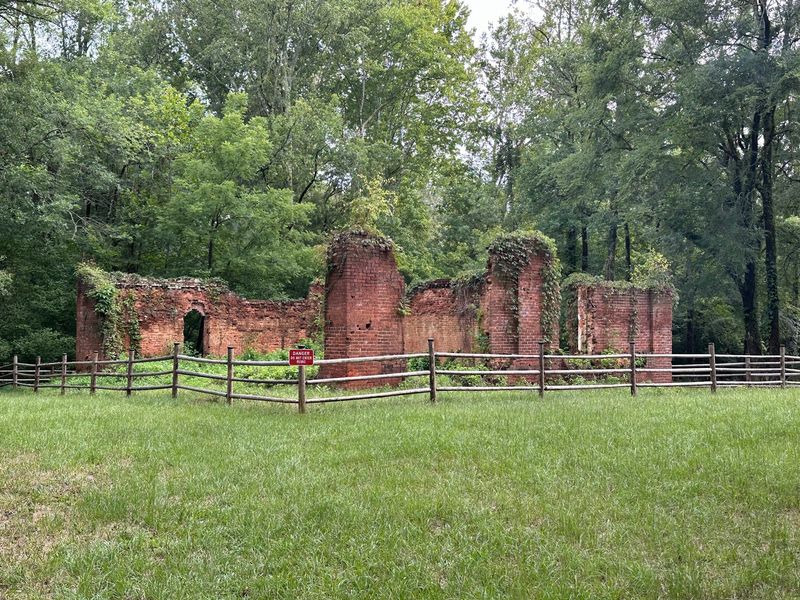
Almost three miles of gravel road stand between you and this one, and that drive is part of the experience.
Scull Shoals grew up along the Oconee River, powered by water and built on milling, including paper making that dates to 1811. Native American and DeSoto era history layers onto the same riverfront ground.
What is left today is brick rubble scattered through a clearing, plus a plaque that maps out where houses and buildings once stood. Reading it while standing in the quiet is oddly moving.
Come prepared. Footpaths get overgrown in summer, ticks are a real concern, and there are no facilities out here, so long socks and repellent belong in the car.
History and nature buffs will find the trip worth every mile of back country road. Fishing and hiking round out the visit, and the river setting alone justifies packing a lunch.
Kids handle the walking fine, though this site rewards curiosity more than playground energy. The potential of the place is huge, and I like that it has been left raw rather than dressed up for tourists.
Address: Skull Shoals Rd, Watkinsville, GA
6. Jerusalem Lutheran Church, Rincon
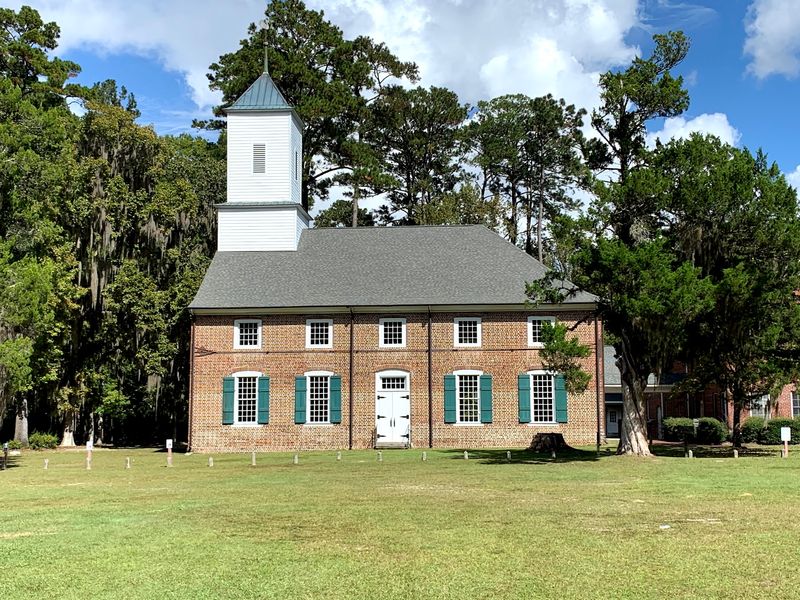
Brick laid in 1769 still holds this building together, and I find that almost hard to believe every time I see it.
The church anchors what was New Ebenezer, an 18th-century settlement founded by Salzburger refugees who arrived in Georgia looking for religious freedom. Silk, trade, and farming supported the town until the Revolutionary War brought invasion and damage it never recovered from.
Congregants have gathered here without interruption ever since, making this the oldest church building in Georgia and a rare piece of colonial architecture still in weekly use.
Around it lies the cemetery, which along with the church forms the principal surviving structure of the vanished town. Walking the rows tells you plenty about who stayed and who did not.
Restrooms are available on site, which helps since Ebenezer Road runs through quiet countryside with little else nearby. The setting near Rincon in Effingham County feels remote in a restful way.
Plan a respectful visit, keeping in mind this is an active congregation rather than a static exhibit. Bring a camera for the brickwork, and give yourself time to just stand and listen.
Address: 2966 Ebenezer Rd, Rincon, GA
7. High Falls State Park, Jackson
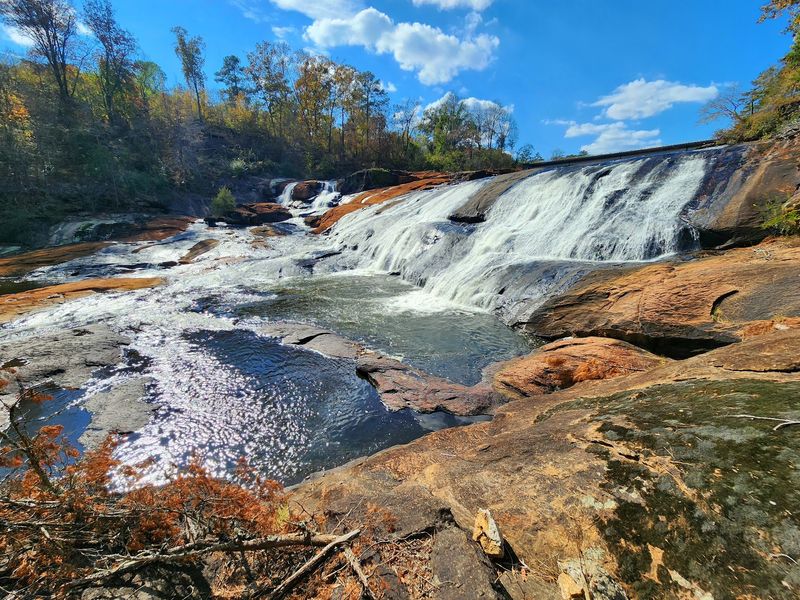
The sound hits first. Water tumbling over rock ledges carries across the whole park, and it settles your brain within about a minute.
Long before the trails, High Falls was a prosperous industrial town built around water power. When the railroad passed it by, the town collapsed, leaving mill foundations and powerhouse ruins that you can still find along the river.
A hiking trail of roughly a mile and a half loops past the best views. It does not put you directly beside the falls, but an overlook gives a solid frontal look.
At 1,050 acres, the park packs in more than history. There is a swimming pool, mini golf, a fishing lake with boating, camping and yurts, plus a playground with slides and swings.
Rangers here are helpful, washroom facilities are well kept, and picnic areas with grills sit under plenty of open space. Dogs are welcome on leash.
Only about forty miles south of Atlanta, it makes an easy spontaneous drive. Gates open at seven and close at ten, and Saturday afternoons draw the heaviest traffic by far.
Address: 76 High Falls Park Dr, Jackson, GA
8. Historic Banning Mills, Whitesburg
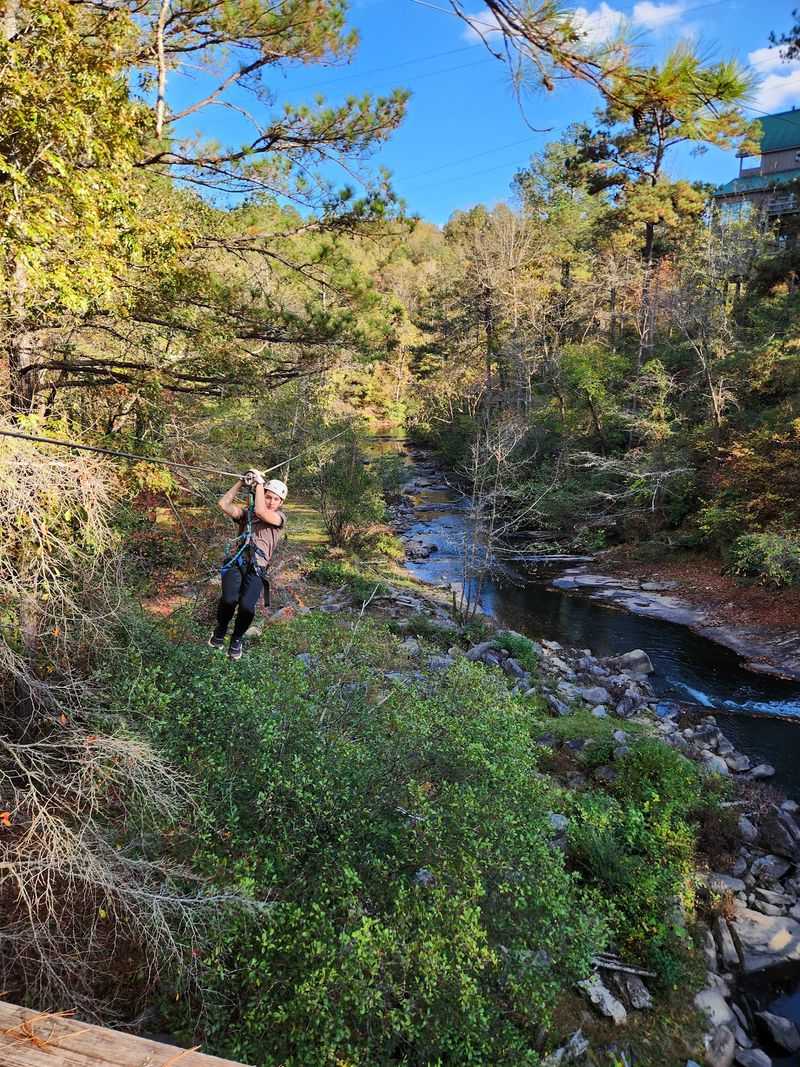
Adrenaline and archaeology rarely share an address, yet here they do.
Banning was a 19th-century textile boom community tucked into Snake Creek gorge, and its historic stone foundations still sit along the water. Scenic hiking trails and suspension bridges wind through the property, carrying you past those old ruins and above the river.
Ziplining is what most people come for, and the courses have a reputation for good reason. Skilled guides run the tours, and the network of cables stretches across the same gorge that once powered the mills.
Beyond the lines, there is rock climbing, kayaking, horseback riding, and ATV tours. Lodging on site includes treehouse-style views, and there is an outdoor pool plus a spa for the recovery half of the trip.
Facilities are well maintained, which matters when you are muddy and grinning at the end of a long day. Whitesburg itself is small and rural, so plan on the property being your whole itinerary.
Doors are open from eight in the morning until ten at night. Saturday afternoons fill up fast, while midweek evenings feel remarkably calm.
Address: 205 Horseshoe Dam Rd, Whitesburg, GA
9. Hamburg State Park, Mitchell
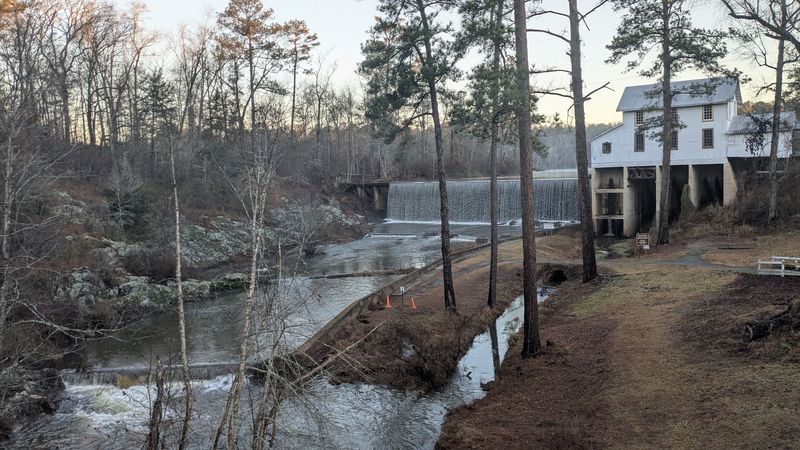
Few places feel as pleasantly forgotten as this stretch of east-central Georgia countryside.
Hamburg wraps around Hamburg Mill Lake, a small pond-sized body of water with a beautiful dam at one end. The centerpiece is a restored 1921 water-powered grist mill, the surviving heart of a mill settlement that faded away.
Tours of the gristmill explain how corn once moved from field to sack right here. Standing inside, the connection between the lake, the dam, and the vanished village becomes obvious.
Camping is the main draw for many visitors, with spacious sites and clean facilities that punch above what you expect from such a remote spot. Nature trails are well kept and there are several of them.
Families do well here thanks to a playground with slides and swings, picnic shelters, grills, and boat rentals. A trading post handles small needs, and dogs are permitted.
Quiet is the defining feature. If remote country roads and still water sound restorative rather than boring, this park will suit you perfectly.
Hours run eight to five, and parking options include a free lot.
Address: 6071 Hamburg State Park Rd, Mitchell, GA
10. Old Mill Park, Roswell
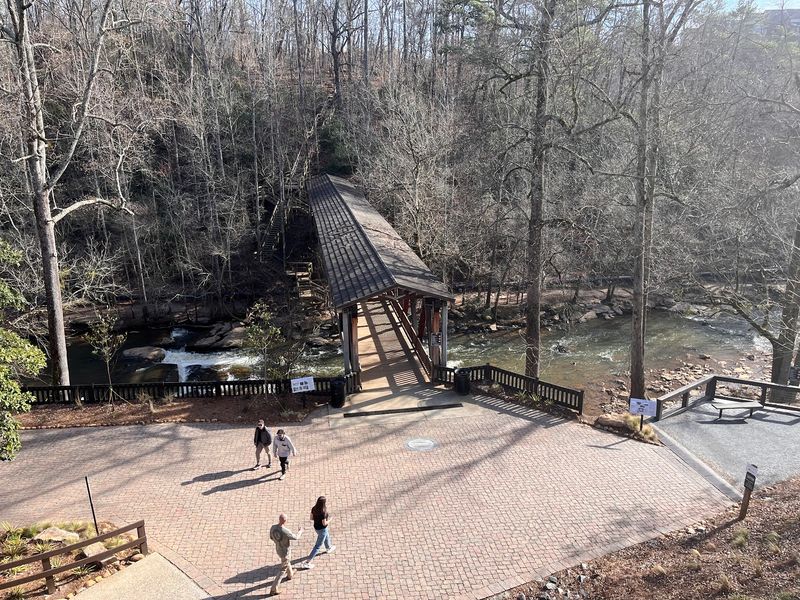
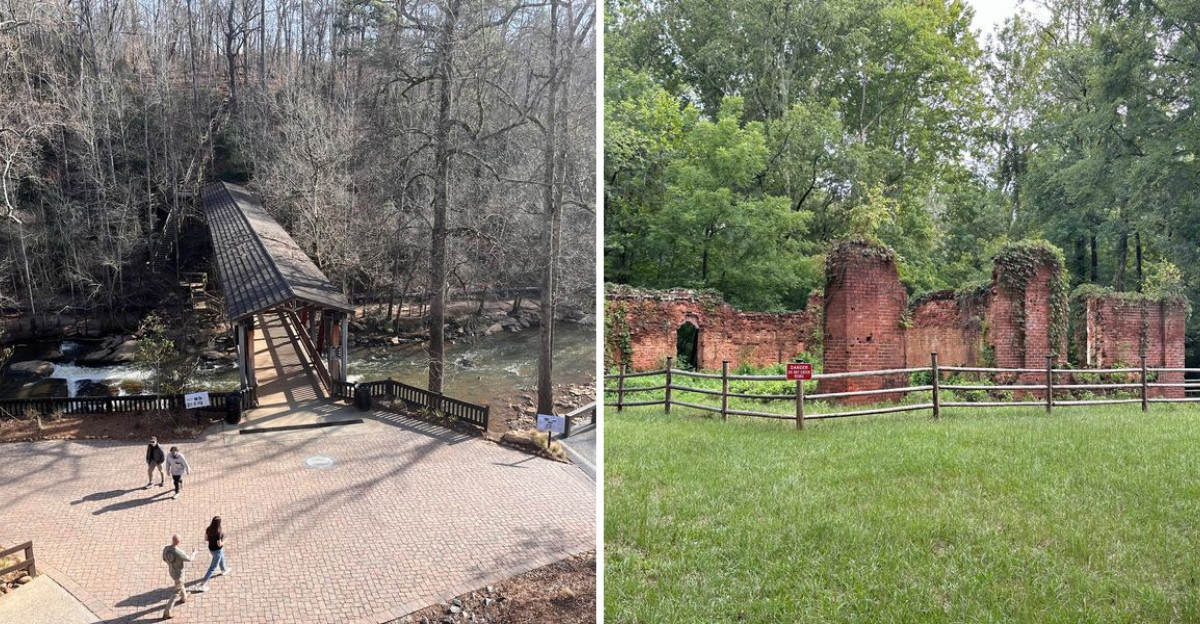
A covered bridge, a waterfall, and burned mill walls all within a short walk. Roswell packs a lot into one park.
Vickery Creek powered a cluster of cotton mills built starting in 1836, which grew into the largest operation of its kind in north Georgia. The stone remains, an old dam, and rusting machinery are still scattered across the grounds.
Informational guides explain the mill, its founder, and the town that grew around it. Seeing the old generators up close is the part that surprised me most.
Trails are well maintained and gentle enough for kids, leading past the ruins toward the creek and its scenic drops. The waterfall alone draws steady foot traffic from downtown.
Picnic tables and public restrooms are on site, dogs are welcome, and parking is free in the lot or along the street.
Gates open at 6:30 in the morning and close at 8:30 at night, which leaves room for both sunrise walks and after-dinner strolls. Tuesday and Thursday afternoons tend to be the quietest windows if you want the ruins mostly to yourself.
Address: 95 Mill St, Roswell, GA
11. Tallulah Gorge State Park, Tallulah Falls
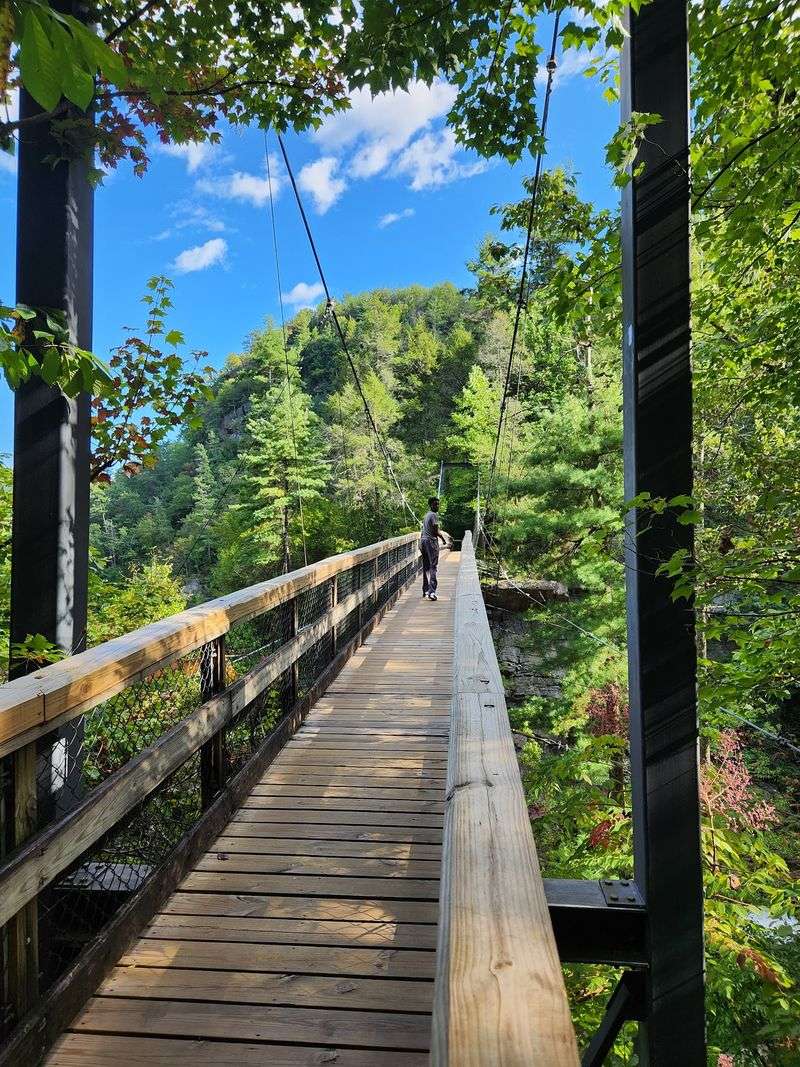
Standing water, sheer rock, and a swaying bridge. My legs remembered this hike for two days.
Tallulah Gorge cuts a thousand feet deep through northeast Georgia, and a Victorian resort town once thrived on its rim during the turn-of-the-century tourist boom. Remnants and interpretive sites around the park tell that story of visitors, hotels, and a fashionable era that eventually faded.
Suspension and rope bridges cross the chasm, with lookout points scattered along both sides. Hiking down to the gorge floor is the most rewarding option and also the most demanding, since climbing those stairs back up takes real effort.
Waterfalls anchor nearly every view, and there is a beach area for cooling off afterward.
Pay attention to closures, because certain stairways and routes are shut at times for safety. Following posted signs matters more here than at most parks.
Picnic tables, grills, restrooms, cycling lanes, campgrounds, and a playground round out the facilities, and dogs are allowed. Weekend afternoons and evenings get packed, so aim for a Tuesday or Wednesday morning instead.
Address: 338 Jane Hurt Yarn Rd, Tallulah Falls, GA
