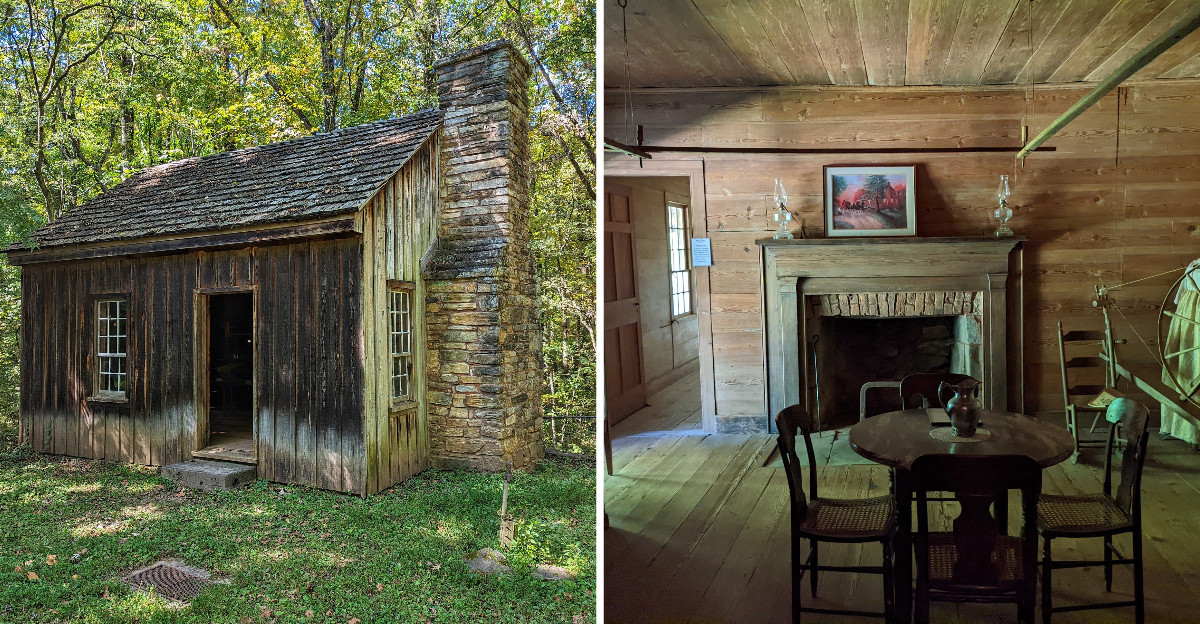
The brown historical sign on a quiet road almost went unnoticed, and passing it would have been a mistake. The long white porch appeared through the trees, stretching farther than any porch on a house that old, so stopping became necessary.
Turns out this is the last stagecoach inn left standing in Georgia, built around 1815 beside a mountain route that once carried traders, soldiers, and families over the mountains.
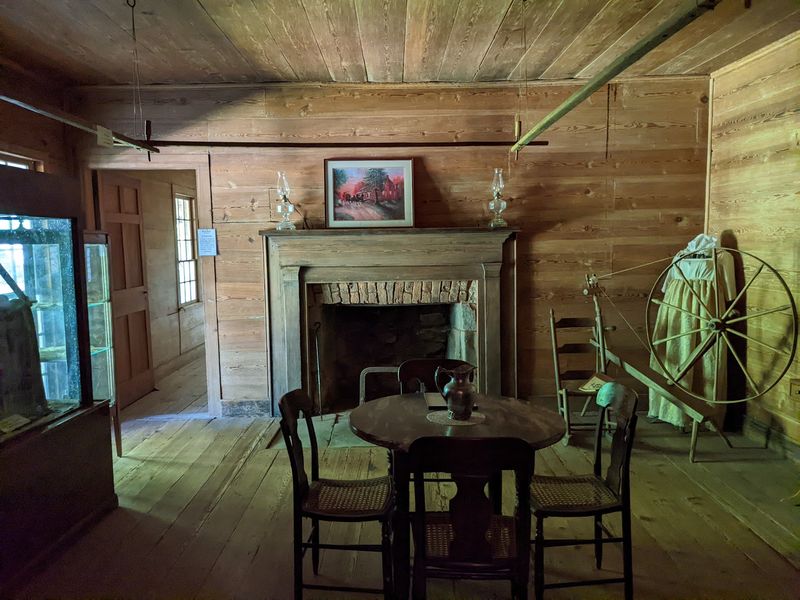
Inside, floors creak in a way that makes you walk slower, and much of the furniture has been sitting in those same rooms for roughly two centuries.
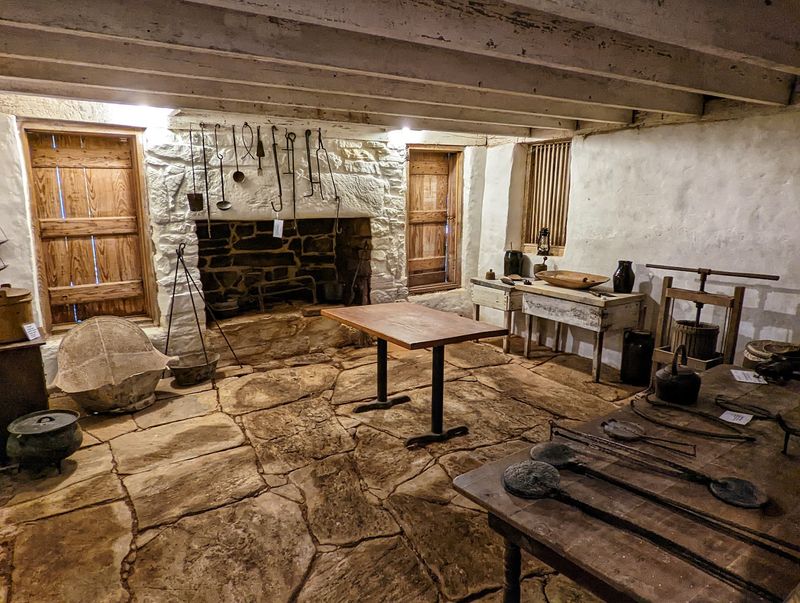
Two hours disappeared while reading plaques, ducking under short doorways, and picturing tired travelers eating supper in the basement kitchen.
History that still smells like old pine lives in this quiet corner of Georgia, and it deserves a spot on any weekend map.
A Porch That Runs Ninety Feet Long
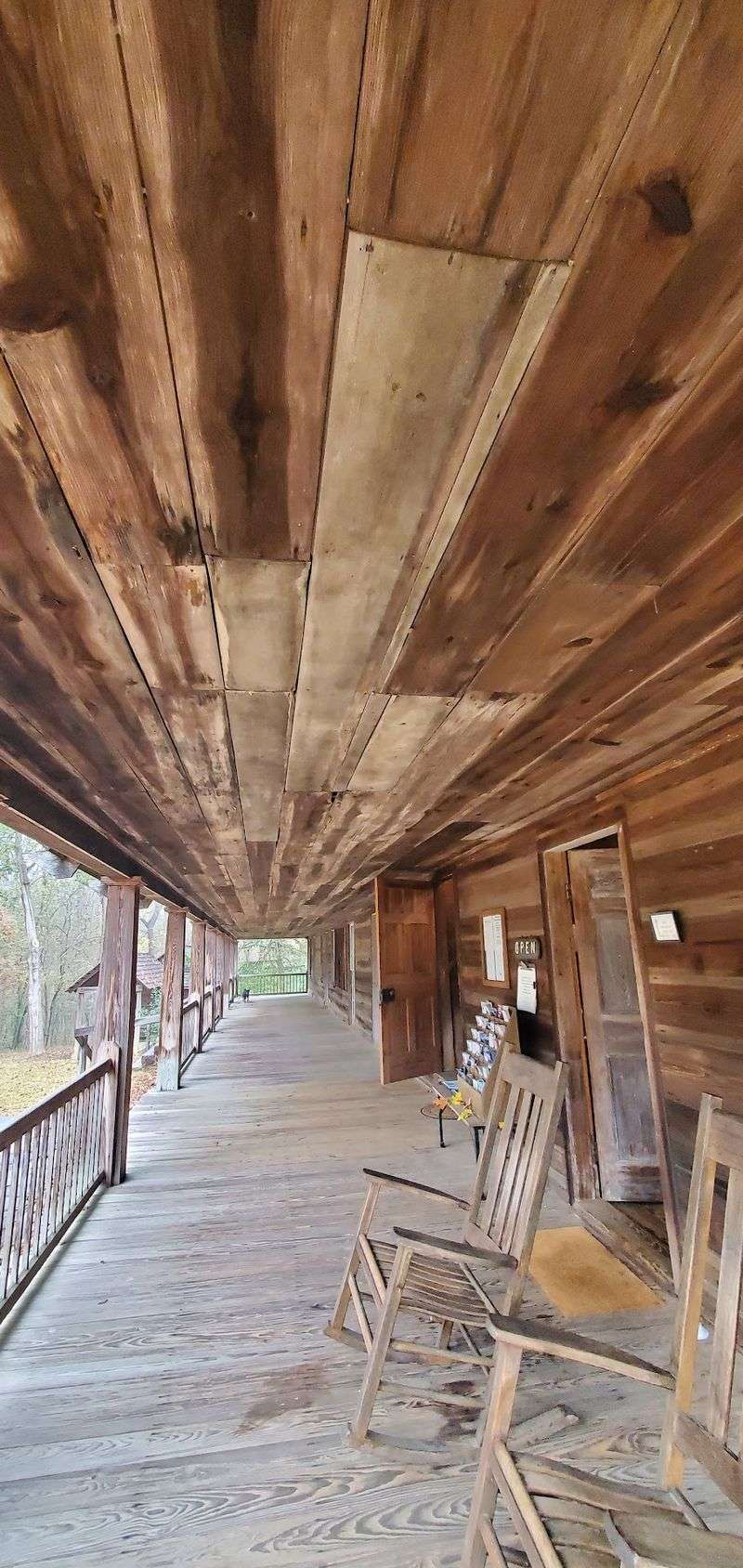
The first thing that stops you is the porch. It stretches about ninety feet, held up by eight square columns, and it feels less like a front step and more like an outdoor hallway.
I walked the whole length of it just to see how long ninety feet actually feels underfoot. Longer than you think.
Look up while you are out there, because the rafters above were hand-numbered by the builders. That was how carpenters kept track of which piece went where before power tools and blueprints existed.
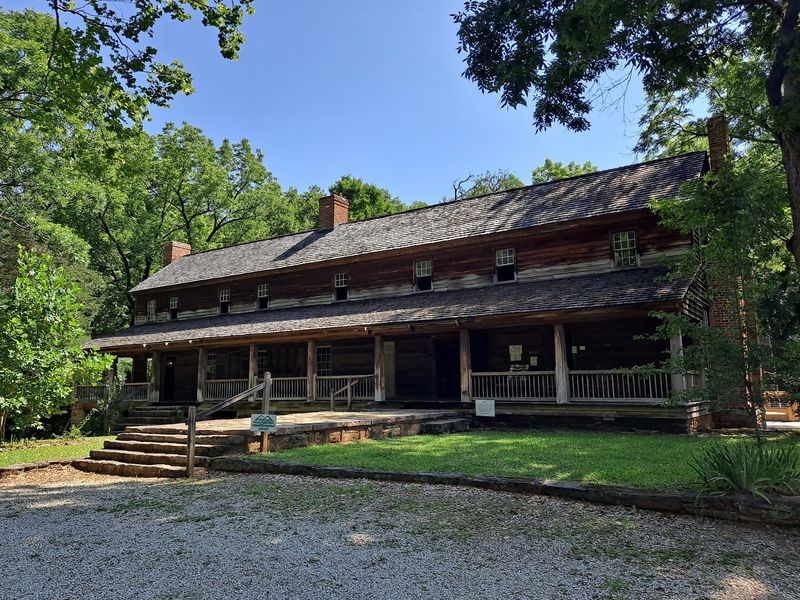
The house itself is a two-story wood-frame structure made from wide pine planking, with six chimneys poking up along the roofline. Wide boards like that came from old-growth trees, and you rarely see planks this broad in newer buildings.
Rocking chairs sit along the porch, and the shade makes it a natural place to slow down before the tour starts. From there you can look out across the lawn toward the trees and the Tugaloo Valley beyond.
Photographers, take note: late afternoon light hits the columns at an angle that makes the whole facade glow. I got my favorite shot of the trip standing on the grass, well back from the steps.
Built in 1815 Where Two Old Roads Crossed
Location explains everything about this place. James R.
Wyly put up the original building around 1815 to 1816 at the meeting point of the Old King’s Highway and the Unicoi Turnpike, a busy route over the Appalachian Mountains.
The site also sat along the Old Federal Road, which linked Georgia to Tennessee. Traffic came through constantly, and travelers needed a roof, a meal, and rest for their horses.
Wyly opened his building as an inn for people crossing the turnpike, then added more services as the area grew. Over time it worked as an inn, a trading post, and a post office all at once.
Historical accounts describe it as the most popular tavern along the Federal Post Road between Charleston and Chattanooga. Think of it as a frontier rest stop, general store, and mail hub rolled into one building.
Soldiers, traders, and Native travelers all passed this way, which makes the ground here feel busier than the quiet setting suggests today. I kept trying to imagine wagon wheels and hooves instead of the occasional car.
Reading the interpretive signs outside first helped me understand why anyone would build something this large so far from a town.
The Jarrett Family and the Tugaloo Valley Plantation
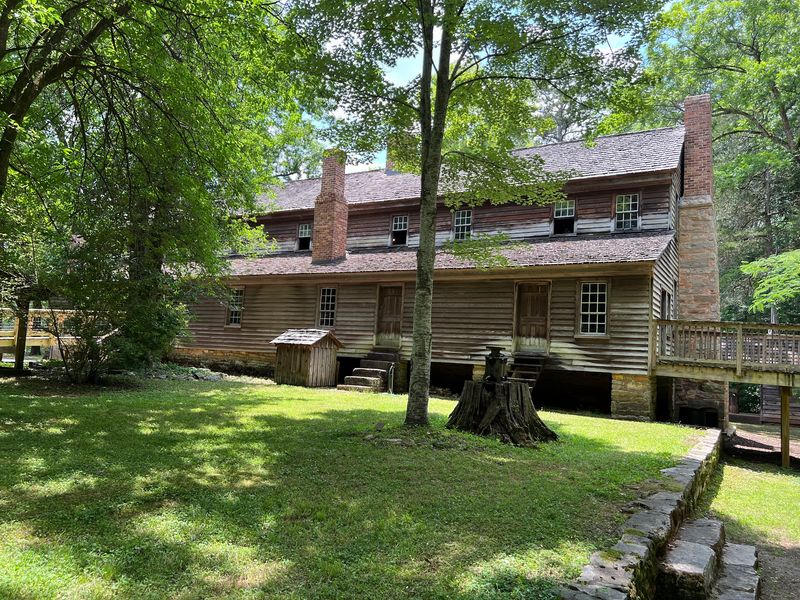
Ownership changed hands in the 1830s, and the building changed with it. Devereaux Jarrett, known as the richest man in the Tugaloo Valley, bought the property from Wyly and roughly doubled its size.
Under his name the inn became the center of a 14,400-acre plantation. Cotton was the main crop, and it was grown using enslaved labor, a part of the story the site does not leave out.
Three generations of the Jarrett family lived here, and the place was known for years as Jarrett Manor. Walking from room to room, you can feel the two purposes stacked on top of each other: public inn on one side, family home on the other.
Georgia bought the property in 1955 from Mary Jarrett White for $8,000, which is why so much of the original character survived instead of being sold off piece by piece.
What struck me most was how ordinary daily life must have felt inside a house that doubled as a business. Guests coming and going, meals being cooked below, children growing up in the middle of it.
The guides explain the family timeline clearly, so you never lose track of who lived when.
Mary Jarrett White, Georgia’s First Woman Voter
Here is the detail that surprised me most on the tour. One of the people who lived in this house, Mary Jarrett White, became Georgia’s first female voter.
Her name comes up on signage inside, and it connects a rural farmhouse in Stephens County to a much larger national story about voting rights. I did not expect to find that link out here on Riverdale Road.
She was also the person who eventually sold the property to the state, which means she had a direct hand in preserving it. Without that sale, the house might have been broken up or lost entirely.
Standing inside rooms she actually used gives the fact more weight than reading it in a textbook ever could. The chairs, the fireplaces, the windows she looked through are still right there.
If you visit with kids studying Georgia history, this is the part that tends to stick with them. A real person, a real house, a real first.
Ask the staff about her when you go through. They know the family details well and can point out which spaces connect most closely to her time here.
Original Furniture, Hidden Drawers, and Caleb Shaw’s Craftsmanship
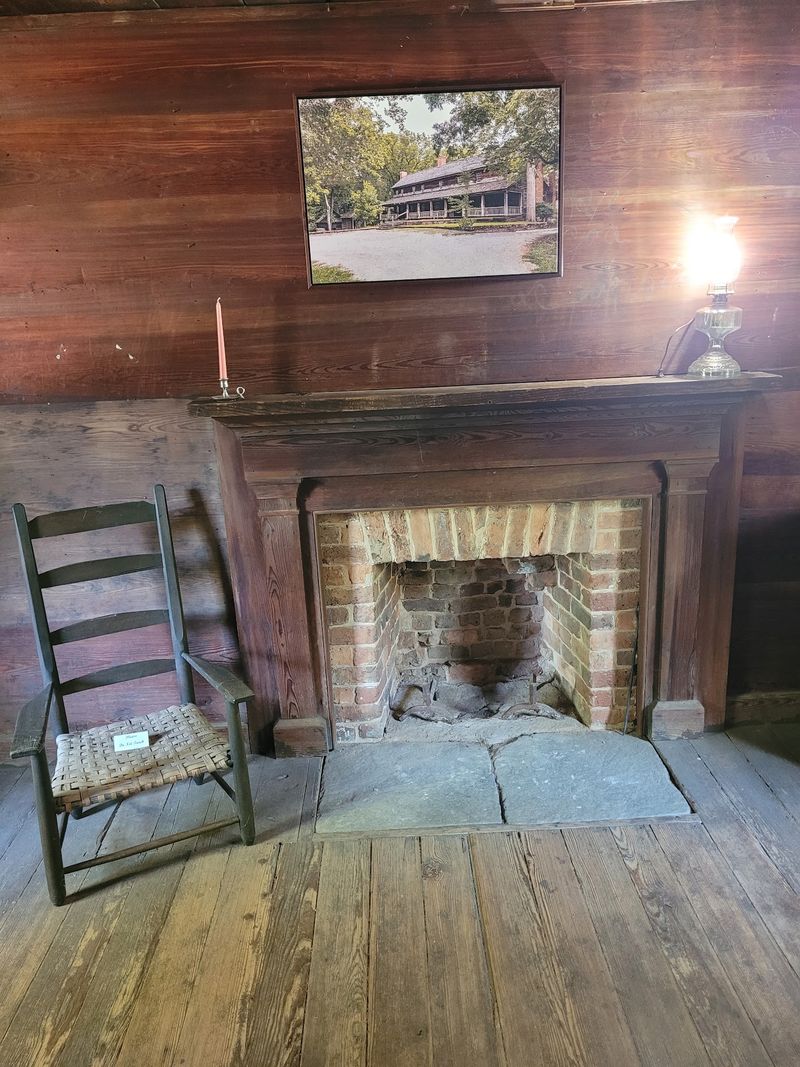
Most historic houses fill their rooms with borrowed antiques. Not this one.
A large share of the furnishings here are original to the building and have stayed in place for roughly two hundred years.
Some pieces were made by Caleb Shaw, a cabinetmaker from Massachusetts whose work is considered excellent for the period. Look closely at the joinery and you can see how much hand labor went into a single chest or table.
My favorite discovery was a fireplace mantel with hidden drawers built into it. Storage space tucked where nobody would think to look.
You will also spot rope beds, spinning wheels, and early gas lamps scattered through the rooms, each one showing a small step toward modern convenience. Nails are another quiet clue, since the type used can help date different parts of a structure.
An introductory video plays before you start, and it gives you things to hunt for as you wander. That turned the visit into a low-key scavenger hunt, which I appreciated more than I expected.
Give yourself time to read the plaques. Rushing through means missing the small details that make this collection unusual.
Down to the Basement Kitchen and the Low Doorways
Watch your head. Seriously.
Several doorways inside are noticeably short, and taller visitors end up ducking more than once.
The basement kitchen was the highlight of the interior for me. Cooking happened down there over an open hearth, and standing in that space makes you appreciate how physical feeding a houseful of travelers must have been.
Meals for guests came out of that room daily, hauled up to hungry people who had spent hours on rough mountain roads. No refrigeration, no running water, no stove dials.
Almost the entire main house is open to walk through, which is unusual for a building this old. Guides typically share some background, then let you explore at your own pace and check in now and then.
Plan on about an hour and a half if you like reading every sign, and a bit less if you move quickly. I ran long because I kept doubling back.
One practical note: the building is historic, so there is a ramp to the inn but most of the interior does not have accessible routes. Stairs and narrow passages are part of the original design and cannot be changed.
Grounds, Outbuildings, and Planning Your Weekend Visit
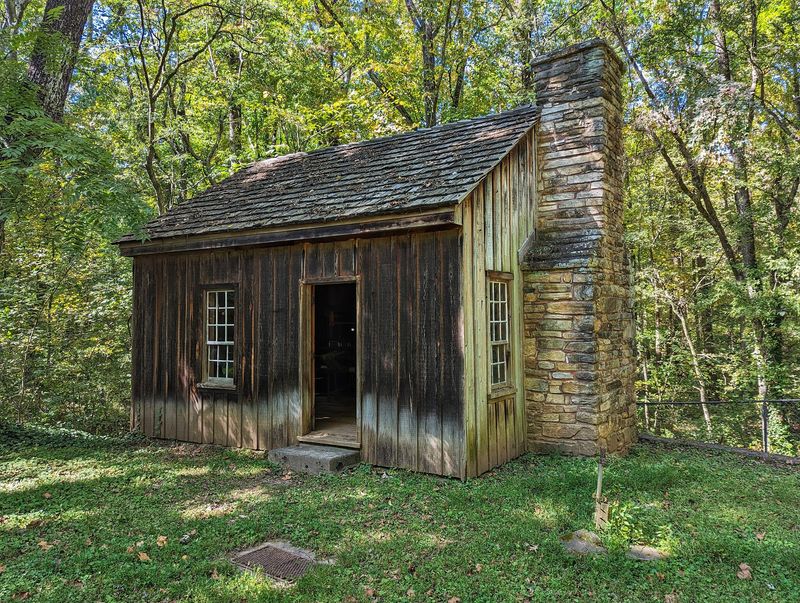
Outside the main house, the lawn is wide, tidy, and easy to walk. Reconstructed outbuildings, including slave quarters, help show how the whole property actually functioned as both an inn and a working farm.
Information podiums and placards sit along the paths, so even a short stroll teaches you something. I circled the grounds twice before going inside, mostly because the shade felt good.
Leashed pets are welcome on the outdoor trails but cannot come into the historical buildings, so bring a plan if you are traveling with a dog.
The big thing to know before driving out: the site is open Saturdays and Sundays only, from 9 AM to 5 PM. Show up midweek and you will see the exterior and nothing more.
It sits just off US-123 near the Georgia and South Carolina line, which makes it an easy add-on to a Toccoa weekend or a drive through the northeast corner of the state. Designated a National Historic Landmark in 1964, it earned that title honestly.
Address: 4339 Riverdale Rd, Toccoa, GA 30577
