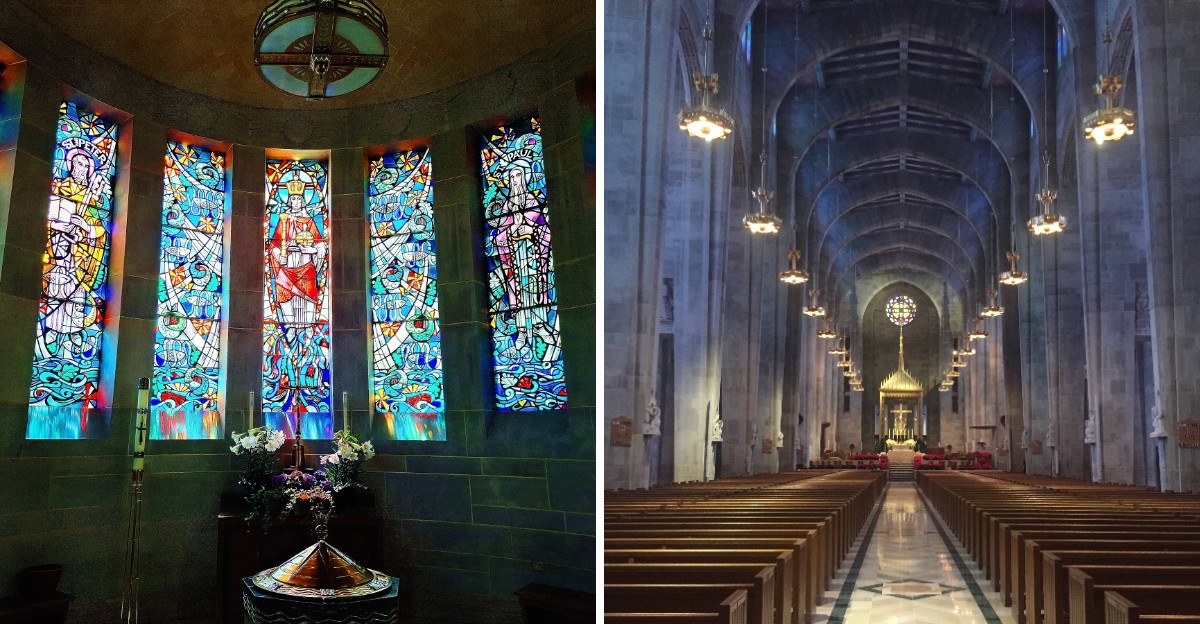
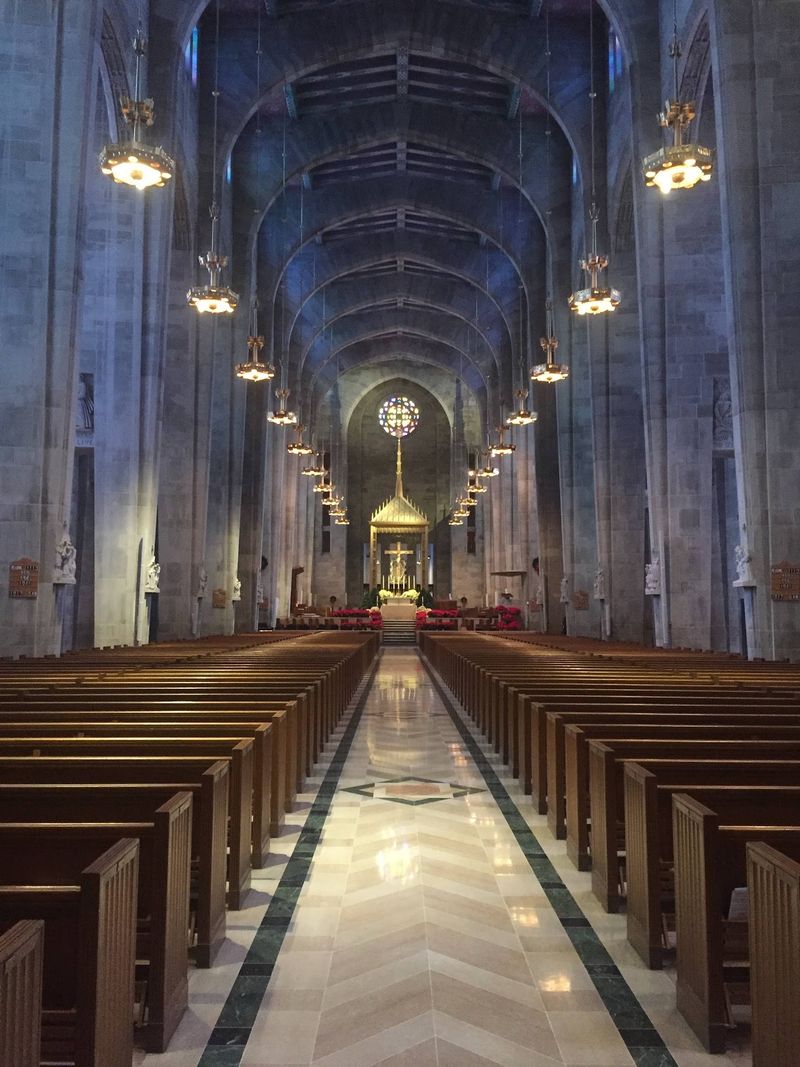
Sunlight sends blue and pink streaks across the towering stone walls of this Maryland cathedral. The stained-glass windows sit high above rows of wooden pews, and the long center aisle leads to an elaborate altar canopy.
It’s hard to know where to look first.
Outside, twin Gothic spires rise above the entrance. Inside, hundreds of stained-glass panels and carved sculptures tell religious stories, with details that are easy to miss from a distance.
Guided tours are offered after weekend Masses, giving visitors a chance to learn what the artwork represents.
I’d want to spend most of my time studying the windows. Even people who don’t usually seek out churches for sightseeing can appreciate craftsmanship on this scale.
A short visit could easily stretch longer once you start noticing the designs hiding in the stone.
A Fire, a Fortune, and a Promise Kept
Back in 1904, the Great Baltimore Fire swept through downtown. Merchant Thomas J.
O’Neill believed a miracle spared his department store.
He never forgot that moment. When he passed on, he left a bequest of 20 million dollars to build a new cathedral.
The Cathedral of Mary Our Queen grew from that gift. The city needed it, too.
The older Cathedral of the Assumption had become too small for Baltimore’s growing Catholic community.
Groundbreaking finally came in October 1954. Then something fun happened with the name.
The very next day, Pope Pius XII created a new feast honoring Mary’s Queenship.
That timing gave the church its title. Talk about perfect luck with a calendar.
The building was consecrated on October 13, 1959. Its formal dedication followed on November 15 that same year.
O’Neill’s own patron saint still gets special honor inside. One of the four side chapels belongs to St. Thomas More, a quiet thank-you to the man who paid for it all.
I love that the whole story starts with gratitude. Few buildings in Maryland can claim such a personal origin.
Knowing the backstory makes every brick feel like part of a promise.
Stop at the Front Doors Before You Go In
Slow down at the main entrance. The front of this cathedral tells a story before you even step inside.
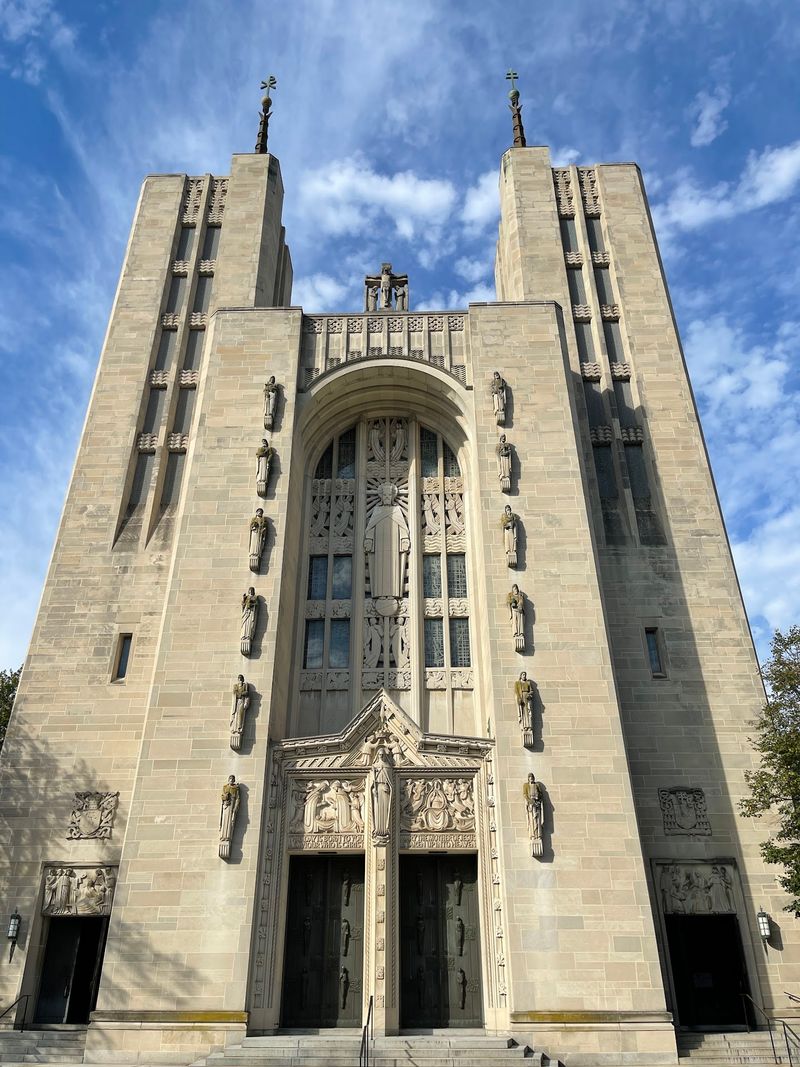
An 11-foot limestone crucifix sits above the central entrance. Nearby, a 20-foot bas relief shows Christ the Risen King.
Right above the main doors stands an 8-foot statue of Mary Our Queen. She’s the namesake, so she gets a front-row spot.
The doors deserve a close look, too. Carvings show saints along with flowers that symbolize Maryland and the Virgin Mary.
Search the stone for a Latin phrase. It reads “Ad Jesum per Mariam,” which means “To Jesus through Mary.”
Much of this artwork came from sculptor Joseph Coletti. His work across the Cathedral of Mary Our Queen includes more than 385 sculptures.
That number is hard to picture. Think of it as a scavenger hunt with no finish line.
Kids might enjoy counting how many figures they can find. Adults will probably enjoy it just as much.
Newer glass doors now welcome guests at the main entrance. They were added in a 2024 project.
Old carvings and fresh glass meet right where you walk in, which feels fitting.
Those Twin Spires Are Even Taller Than They Look
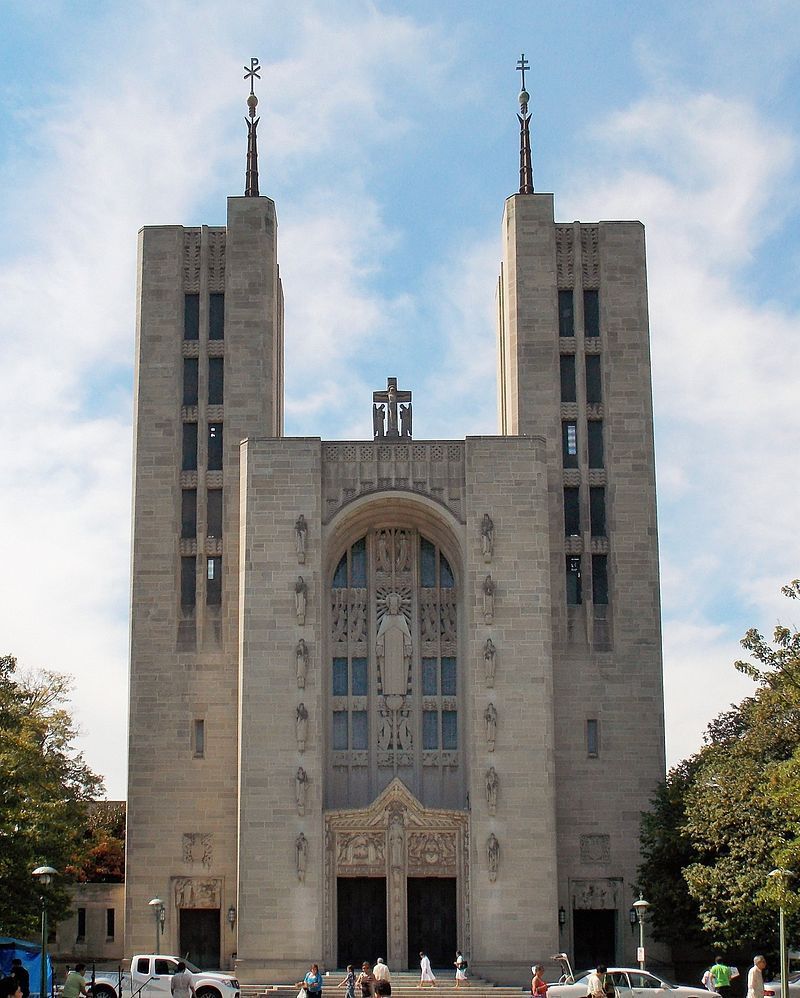
Two spires rise 163 feet over North Baltimore. You’ll spot them long before you park.
The whole building is a giant. It stretches 373 feet long and 132 feet wide.
That makes it 41 feet longer than St. Patrick’s Cathedral in New York City. Baltimore gets bragging rights on this one, and it should use them.
Now for the wild part. No structural steel holds this building up.
Builders used over 3 million bricks and 70,000 pieces of Indiana limestone instead.
That’s old-school building on a huge scale. The floor plan forms a classic cross shape facing east.
Boston firm Maginnis, Walsh, and Kennedy designed the place. They blended Gothic Revival style with sleek Art Deco touches.
That mix sounds odd on paper. In person, the clean lines and pointed arches work together beautifully.
One tower even hides a modern secret. It quietly holds a cell phone antenna that brings in money for the congregation.
So yes, a 1950s Gothic tower now helps your texts go through. I think that’s a pretty clever use for a spire.
Look up, take your photo, and enjoy the view.
Get Ready for a Whole Lot of Blue
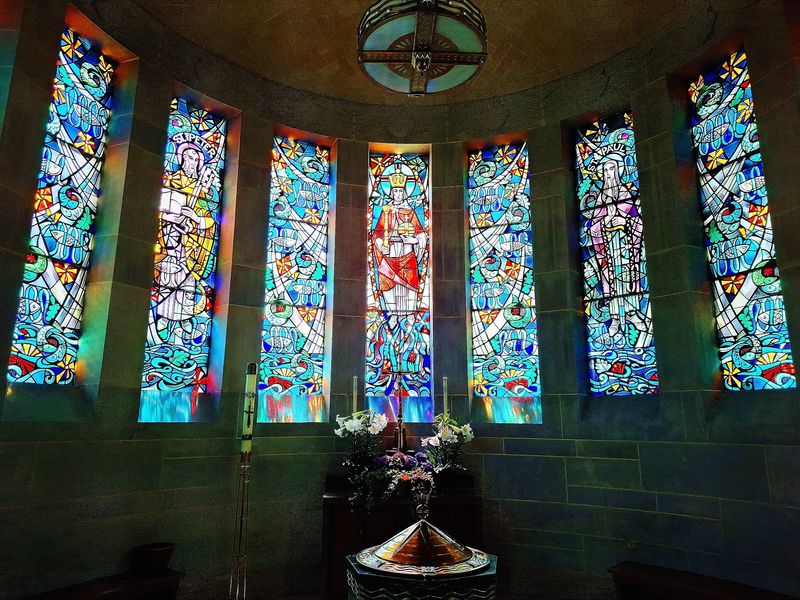
Blue. That’s the first color most people connect with this place, and for good reason.
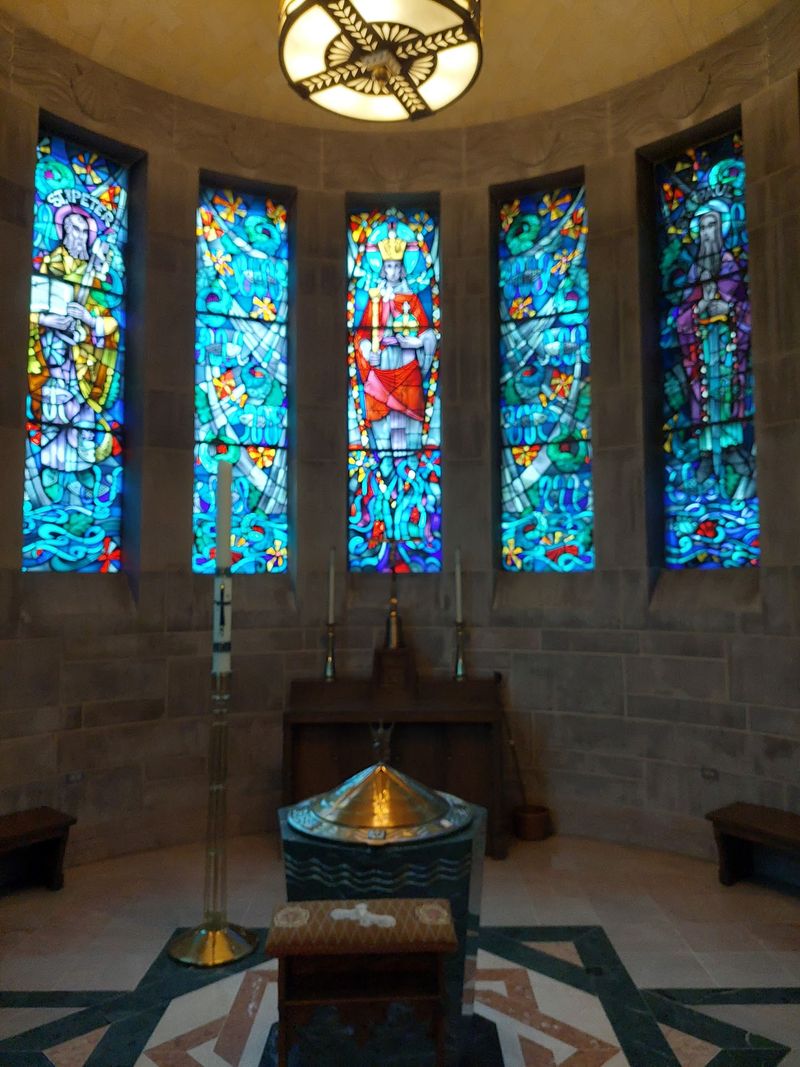
Hundreds of panels of angular stained glass fill the walls. The nave alone holds 398 panels.
Companies from America and France designed the windows. Their rich blue shades give the space a cool, dreamy glow.
The glass does more than look pretty. Colored light spills across the walls and the interior buttresses.
Many call the interior a “Bible in stone and glass.” Each window and carving helps tell sacred stories through pictures.
The angular style feels different from older Gothic windows. You can see that Art Deco influence in the sharp shapes and bold patterns.
Timing matters if you love photos. Sunlight changes how the colors fall across the stone throughout the day.
Bring a camera, but be respectful. People come here to pray, so keep the clicking quiet and skip the flash.
I believe the windows alone justify the drive. Standing under that much colored glass feels like being inside a jewel box.
Give yourself time to wander the aisles. The longer you look, the more details pop out of the blue.
Follow the Gold All the Way to the Altar
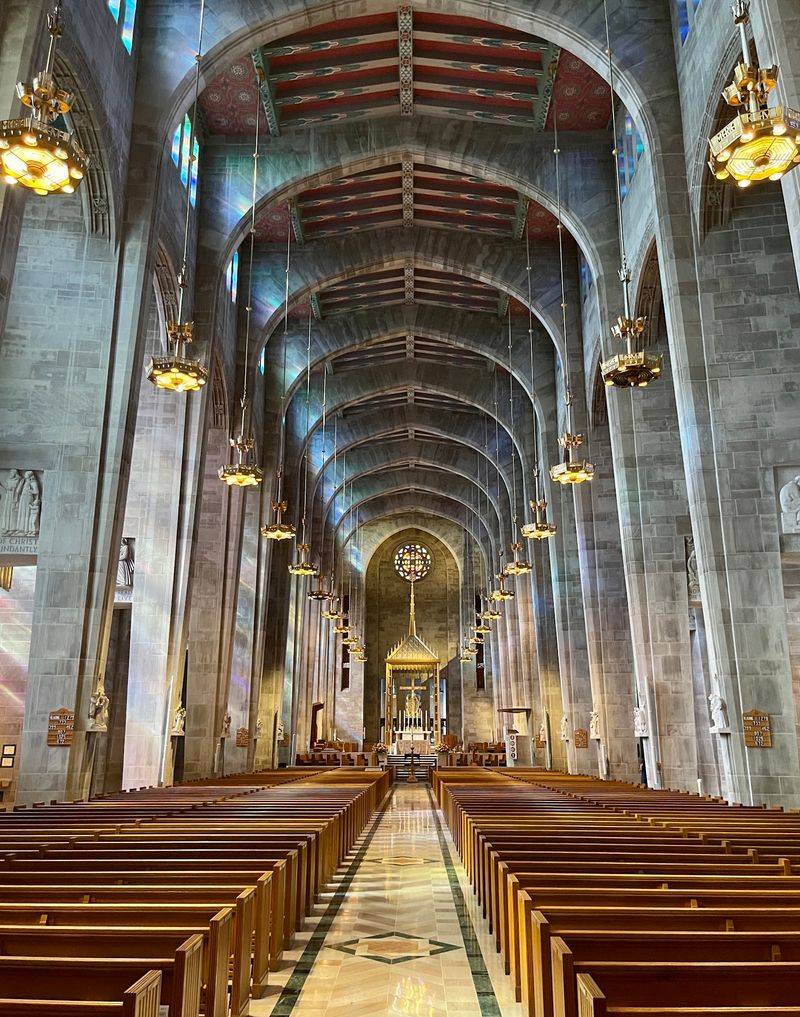
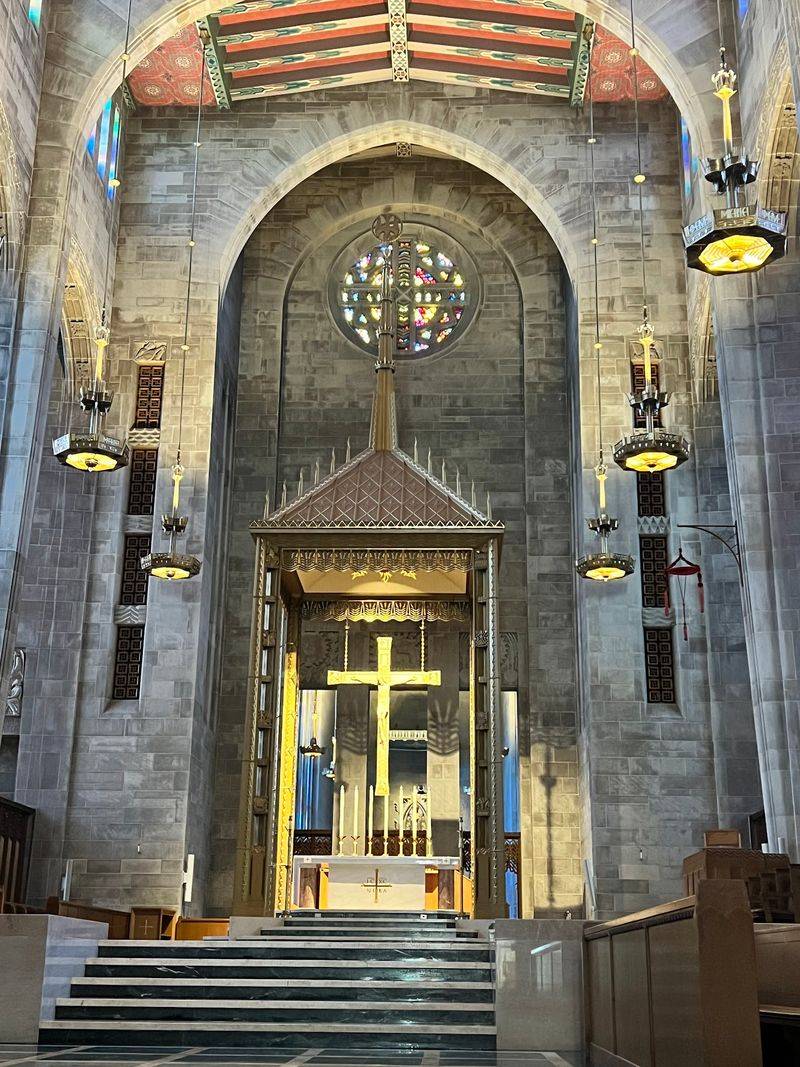
Golden chandeliers hang down the long nave. They act like arrows, pulling your eyes toward the front.
At the end waits a golden baldachin, a grand canopy over the sanctuary. Beneath it, a wooden crucifix hangs above the altar.
A railing of rose marble separates the sanctuary from the seating area. The warm pink stone contrasts nicely with all that blue glass.
Look to the left of the altar. You’ll find the cathedra, the Archbishop’s throne.
That chair is what makes a cathedral a cathedral. The Cathedral of Mary Our Queen serves as the seat of the Archbishop of Baltimore.
On the right stands a pulpit topped with a stained oak canopy. It’s handsome woodwork worth a closer look.
Recent updates gave the sanctuary fresh life. In November 2024, the high altar was adjusted so priests can face the congregation during Mass.
A month earlier, a big project swapped old incandescent bulbs for LED lights. Everything now glows a little brighter.
The room holds roughly 1,900 to 2,000 people. Even so, the space can still feel surprisingly personal when you sit near the front.
Side Chapels Hide Some Quiet Treasures
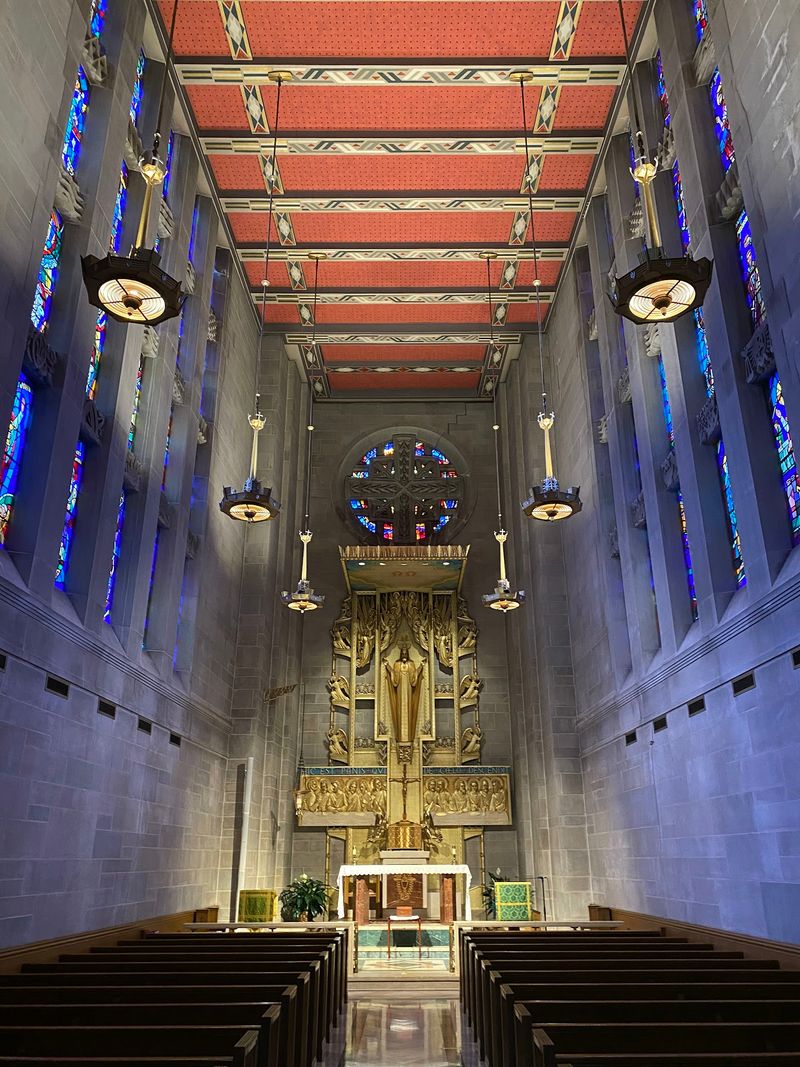
Big rooms are wonderful, but small corners often hold the best surprises. This cathedral has plenty of them.
Four side chapels line the building. They honor the Blessed Sacrament, St. Joseph, Our Lady, and St. Thomas More.
Eight more side altars celebrate different saints. Each one offers a calmer spot to pause away from the main aisle.
Walk slowly along the nave and study the buttresses. The Stations of the Cross are carved right into them.
There are 14 in all. Following them in order makes a meaningful walk, even for curious first-timers.
Below the main floor sits a crypt. It’s the resting place for several archbishops and auxiliary bishops of Baltimore.
That adds real history beneath your feet. Generations of church leaders are part of this building now.
Visitors may enter during the day for personal prayer. Just stay mindful of anyone attending Mass or Adoration.
A soft voice goes a long way here. Treat the chapels like a library for the soul.
Honestly, the quiet corners might become your favorite part. Sometimes the smallest spaces leave the biggest impression.
Two Mighty Organs Fill Every Inch With Sound
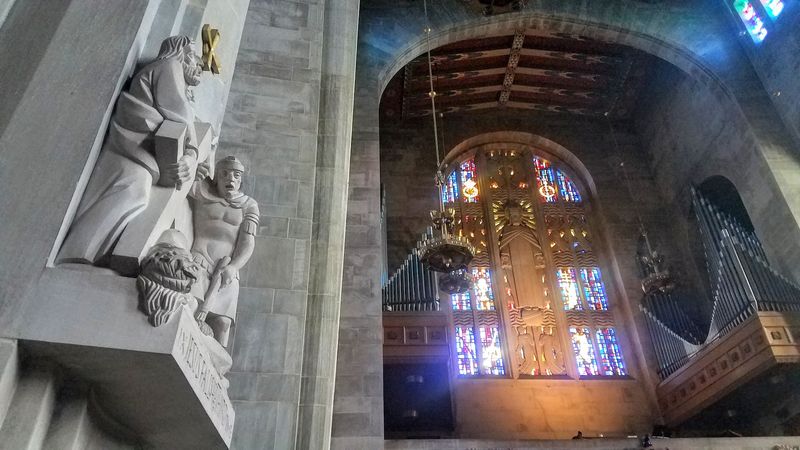
Sound travels a long way in a building this size. Luckily, the music here is built to match.
The cathedral has two large pipe organs. One sits in the main gallery, and another sits near the chancel.
The M. P.
Moller Company built both in 1959. Schantz Organ Co. restored them in 2005.
Here’s a fun number. The Great Gallery organ has 100 ranks, or sets of pipes.
The sanctuary organ adds 27 more ranks. Together, they can fill the long nave with powerful sound.
Want the full musical experience? Attending Mass is the best way to hear the organs in action.
Choir music adds another layer during services. Check the official schedule before you go, since times can change.
The building has hosted big moments too. Pope St. John Paul II visited twice, in 1976 and again in 1995.
Not many churches in Maryland can say that. It shows how important this cathedral is to the Catholic world.
Music, history, and architecture all meet in one place. I think the organs might give you goosebumps before the first hymn ends.
Let a Trained Guide Show You What You’d Miss
With 385-plus sculptures and hundreds of windows, you could easily miss half the story. A guide fixes that problem fast.
Trained Cathedral Guides lead tours after each weekend Mass. It’s an easy add-on if you’re already attending.
Private tours can also be arranged. That works well for school groups, history fans, or families planning a special trip.
A guide can point out symbols hidden in plain sight. Those Maryland flowers on the doors make a lot more sense with context.
After your tour, swing by the Library and Gift Shop. It’s open Tuesdays and Saturdays from 10 a.m. to 2 p.m.
That’s a narrow window, so plan around it. Saturday visits make it easier to fit everything in.
The cathedral itself opens early most days. Weekday hours run from 7 a.m. to 6 p.m., with shorter hours on Sunday.
Craving quiet? Weekday evenings tend to be calmer, which helps if you want space to look around.
A little planning pays off here. The Cathedral of Mary Our Queen rewards people who take their time and ask questions.
Parking Is Easy, and the Neighborhood Is Lovely
Good news for drivers: free parking is plentiful. That alone makes this trip less stressful than most city outings.
You’ll find spots around the cathedral and in tiered lots on the south side. Everything connects from the Charles Street entrance.
Plug in 5200 N Charles St, Baltimore, MD 21210. The Cathedral of Mary Our Queen sits in the leafy Homeland neighborhood of northern Baltimore.
It’s close to Loyola University Maryland. St. Mary’s Seminary and University is nearby, too.
Accessibility gets solid attention. A ramp sits on the south side of the building.
An accessible bathroom is located in the Narthex. That helps families with strollers or anyone who needs easier access.
The location feels calm compared with downtown. It’s a nice change of pace for a Maryland day trip.
Pair your visit with a stroll around the grounds. Then grab a bite somewhere nearby on Charles Street.
I can’t think of an easier way to see world-class art for free. Pull in, park, and let those spires guide you to the door.
Just don’t be surprised if one visit turns into two.
