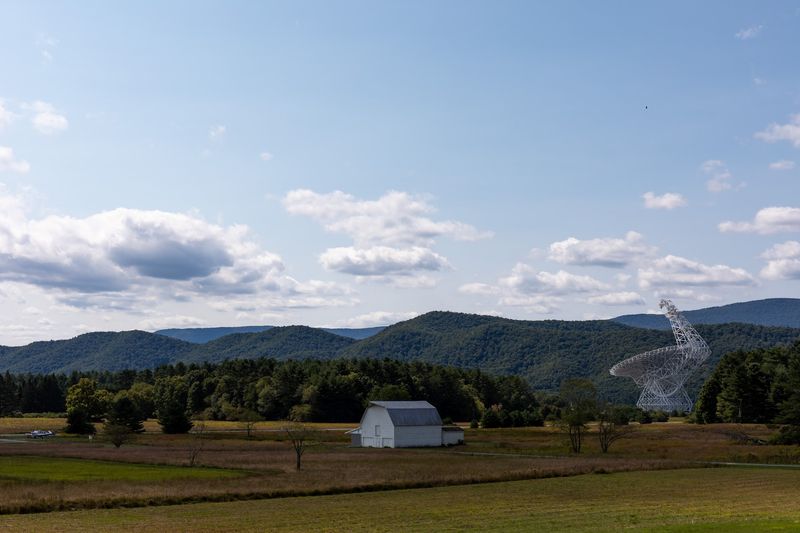
Your cell phone can turn into a pocket-sized brick once you get within ten miles of one spot in West Virginia. That isn’t a glitch, and it’s actually backed by state law.
A giant ear sits in a mountain valley, listening to faint whispers from deep space. It’s so sensitive that even a stray microwave signal could muddy its work, so the area keeps the airwaves hushed on purpose.
I love that a scientific instrument basically set the volume for a whole community, with no pings or endless scrolling. I can’t imagine a better excuse to finally put the phone down and look around.
You can walk the grounds and stand beneath one of the biggest machines on the planet, as long as you bring an old-school camera. Ready to find out what real quiet looks like?
A Mountain Valley Where The Sky Does The Talking
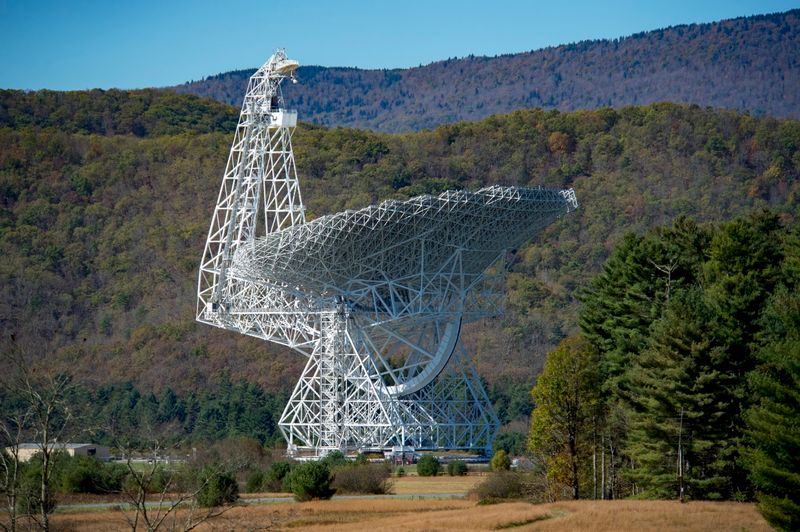
Deep in Pocahontas County, the Green Bank Observatory sits in a valley ringed by Appalachian ridges. Those mountains aren’t just pretty scenery, because they help shield the telescopes from stray radio noise.
The observatory got its start in 1956 as part of the National Radio Astronomy Observatory. In 2016, it became its own independent institution, still partly funded by the National Science Foundation.
So what actually happens here? Scientists use enormous dishes to catch radio waves drifting in from stars, galaxies, and other far-off objects.
Radio astronomy works a little like eavesdropping on the universe. The signals are incredibly faint by the time they reach West Virginia, so every bit of local chatter matters.
That’s why the little town around the observatory feels so different from almost anywhere else in the country. Cell towers, Wi-Fi routers, and buzzing gadgets all get in the way of the science.
For visitors, this means a day that runs on curiosity instead of notifications. You come for the giant telescope, and you leave having spent hours without checking a single screen.
Honestly, that might be the best souvenir of all.
Thirteen Thousand Square Miles Of Radio Hush
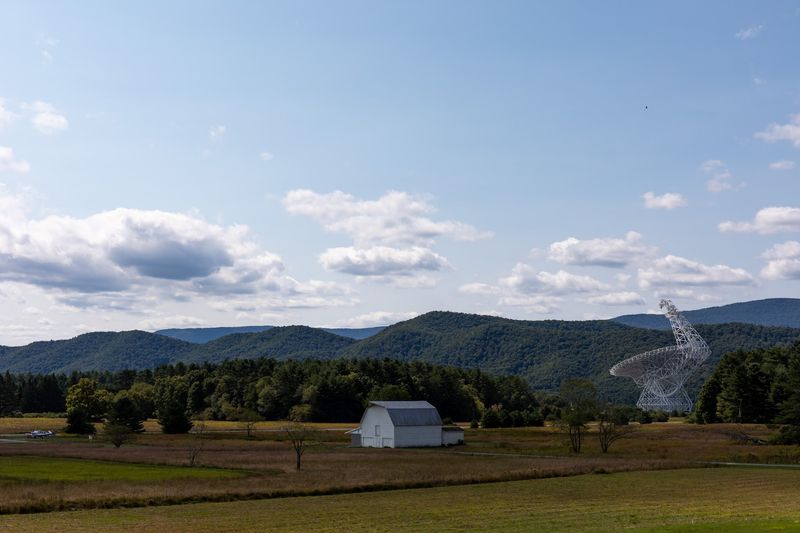
Back in 1958, the Federal Communications Commission created something you won’t find on most road maps. It’s called the National Radio Quiet Zone, and it covers roughly 13,000 square miles.
The zone was set up to limit interference for the observatory and a Navy receiving site at nearby Sugar Grove. Radio transmitters inside its boundaries face special restrictions that most Americans never think about.
Closer to the telescopes, the rules get even tighter. West Virginia’s Radio Astronomy Zoning Act covers a ten-mile radius around the site.
Within that circle, it’s illegal to operate electrical equipment that causes harmful interference with radio reception. That’s why your phone often shows zero bars long before you reach the parking lot.
Picture the practical side of that. Navigation apps may stop working, and texting your group about lunch plans becomes a guessing game.
A little planning goes a long way here. Download directions ahead of time, settle your meeting spots in advance, and maybe tell family back home you’ll be offline for a while.
It sounds inconvenient at first. Then the quiet starts to feel less like a rule and more like a gift.
The Biggest Steerable Ear On Planet Earth
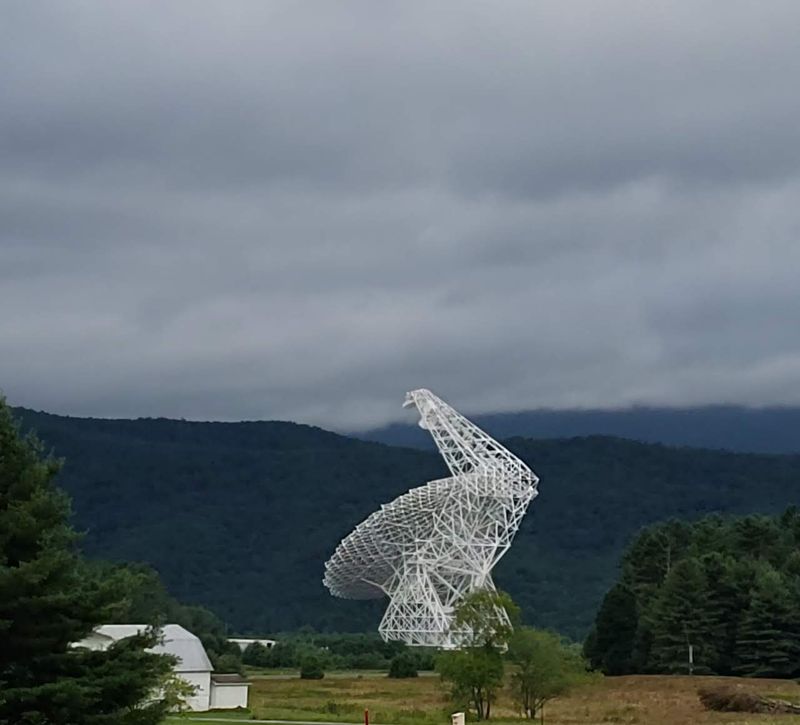
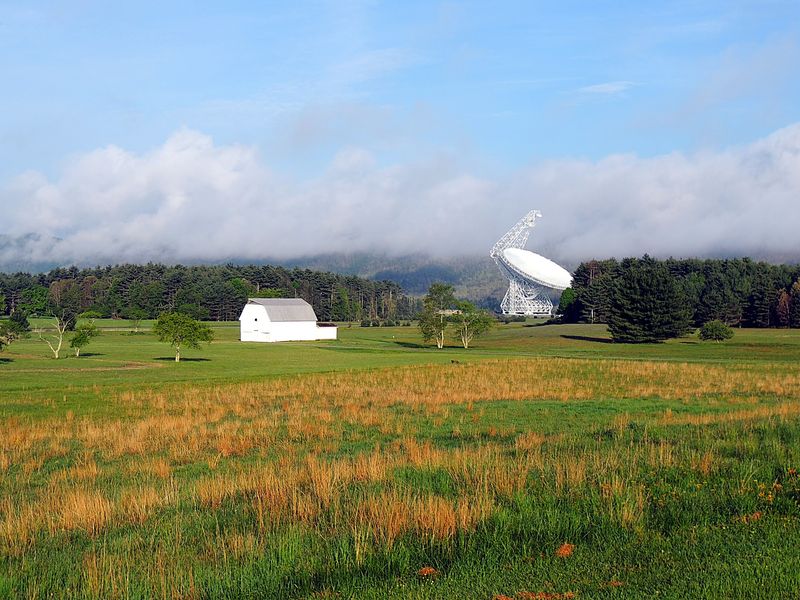
Seventeen million pounds of steel can actually turn and tilt to point at the sky. That’s the Robert C.
Byrd Green Bank Telescope, the world’s largest fully steerable radio telescope.
It stands about 485 feet tall, which is taller than the Statue of Liberty. Its dish covers roughly 2.3 acres, so you could fit a couple of football fields’ worth of surface up there.
The telescope was dedicated in 2000 and has kept busy ever since. Astronomers use it to study black holes, newborn stars, pulsars, and the expansion of the universe.
Its design is a big part of the magic. The dish has an unblocked opening, which helps it pick up extremely faint signals across a wide range of frequencies.
It also helps track near-Earth objects and asteroids. So while you’re standing there gawking, that giant dish might be keeping tabs on a space rock.
Seeing it in person feels a bit unreal. The structure looks almost delicate from a distance, then grows enormous as you get closer.
Bring patience for your neck, because you’ll be looking up a lot. Good luck ignoring the urge to stand there and simply stare.
Why Your Phone Gets Its Own Metal Box
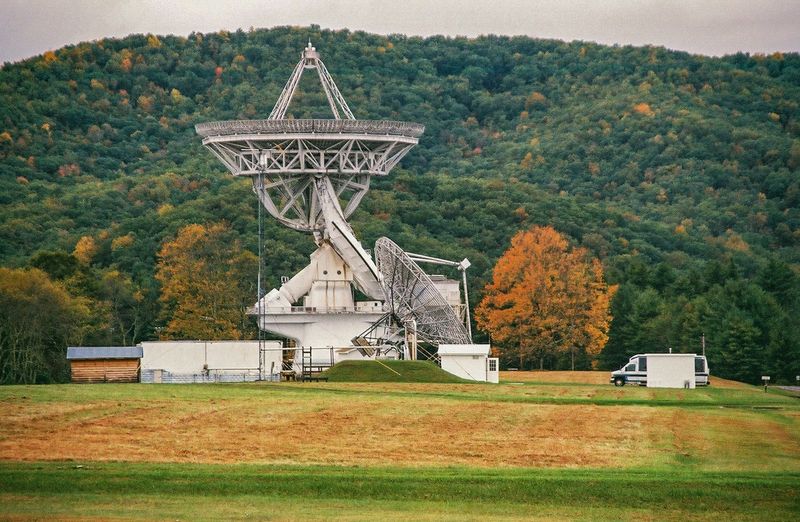
Smartwatches, digital cameras, and even car key fobs can all cause trouble near the telescopes. The Green Bank Observatory asks guests to switch off wireless signals as soon as they arrive.
Digital cameras, including phone cameras, are generally limited to the Science Center and the Observation Deck. So snap your selfies there, then power down before heading into restricted areas.
The bus tour takes things a step further. Phones get turned off and tucked away in a metal box before the ride out to the telescopes.
Hearing aids are typically fine, which is a relief for many older visitors. Still, it’s smart to check current guidance with the observatory before your trip.
Here’s a fun workaround if you love photos. Pack a disposable or film camera, and you can capture the giant dish the old-fashioned way.
There’s something nostalgic about that, especially for anyone who remembers dropping off film at the drugstore. You won’t know how your shots turned out until later.
Kids may find the whole thing baffling at first. Then again, watching them discover a camera with no screen could be half the fun.
Catching Waves Inside The Science Center
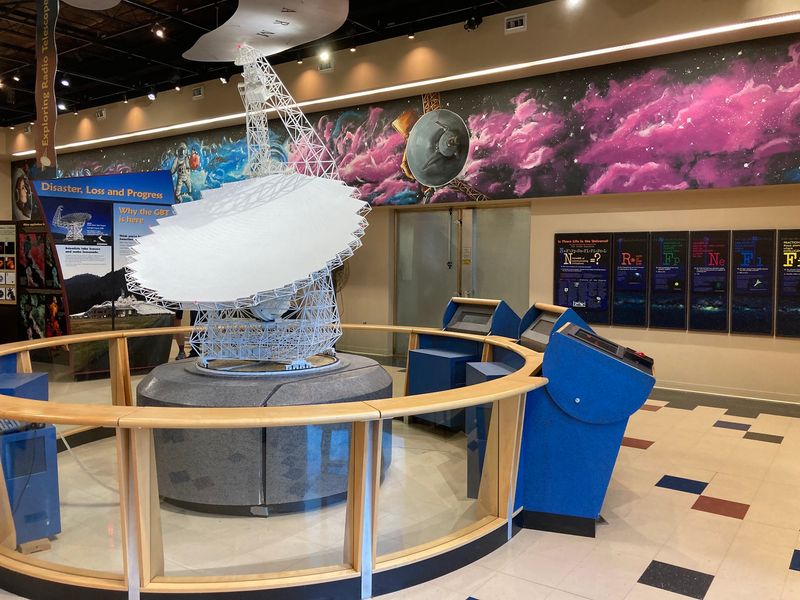
Most visits start at the Green Bank Science Center, and it’s far more than a welcome desk. Inside, the Catching the Wave Exhibit Hall explains how radio astronomy actually works.
The interactive displays lean toward younger visitors, but grown-ups get pulled in just as easily. Pushing buttons and testing ideas about invisible waves is oddly satisfying at any age.
You’ll also learn about the Quiet Zone and why it matters so much. It’s the perfect primer before heading out to see the real dishes.
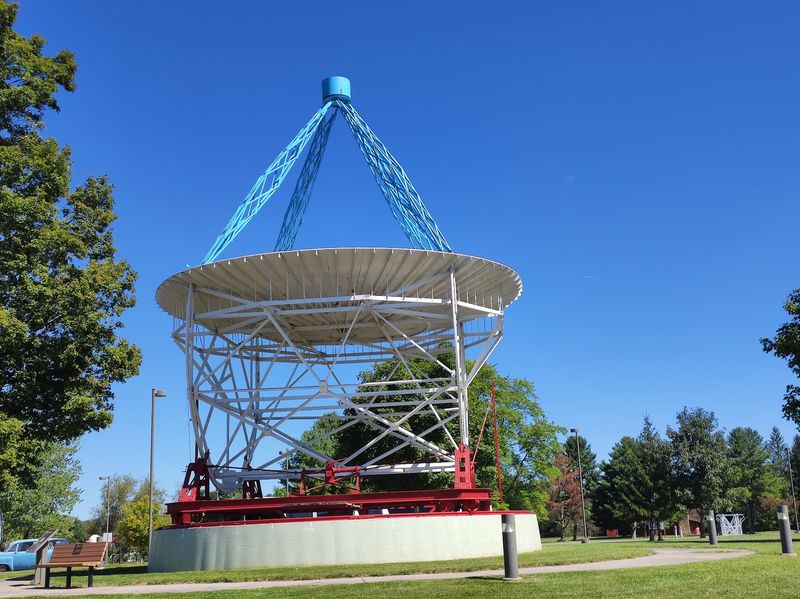
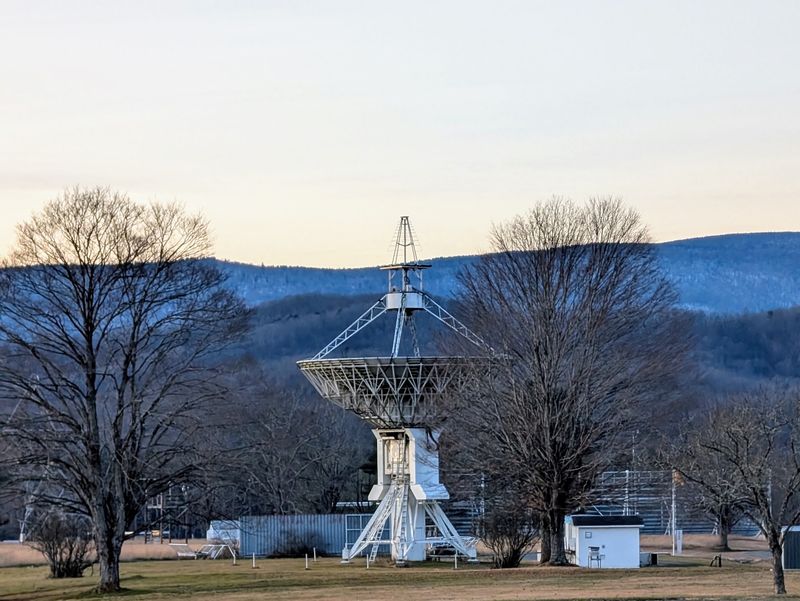
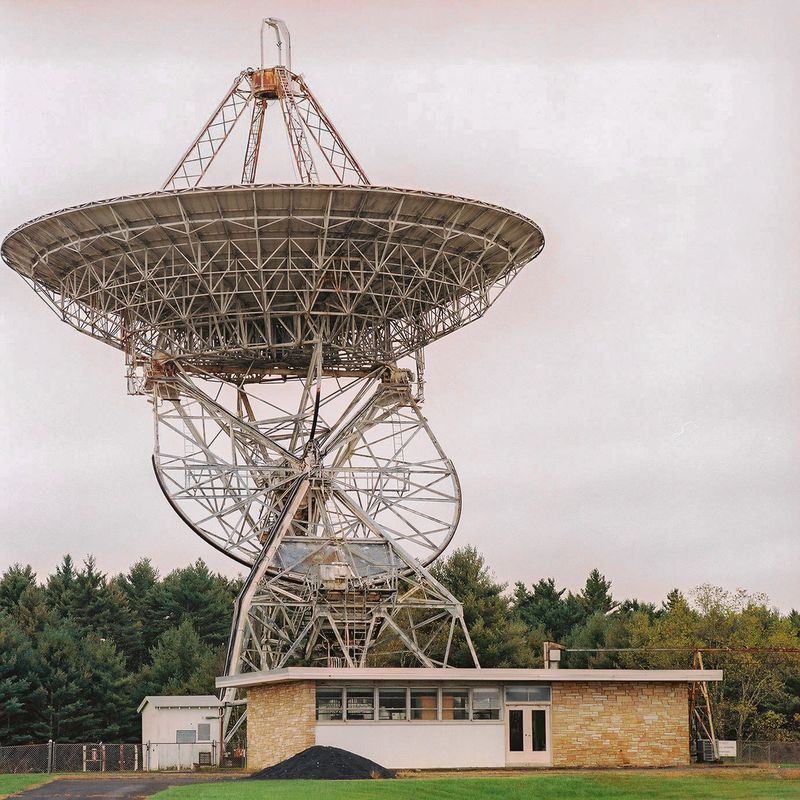
One neat detail connects past and present. A replica of an early radio telescope sits on the grounds, a nod to the pioneers of the field.
The exhibits give context that makes the later tour click. Suddenly that massive dish isn’t just big, it’s doing something you understand.
Plan to linger a bit longer than you expect. The hall packs plenty of material, and rushing through would shortchange the experience.
For parents, it’s a rare place where your own curiosity gets fed too. You might walk out explaining pulsars to your spouse at the car.
Tours That Go Deeper Than The Dish
Hop on the bus, and a guide narrates your ride past several telescopes on the way to the big one. Along the route, you’ll hear stories about the science and the surrounding area.
The standard bus tour is the easiest way to get close without a long walk. It gives you the big picture in a relaxed, seated format.
Craving more engineering talk? The High Tech Tour digs into how the Green Bank Telescope is built and operated.
Then there’s the SETI tour, tied to the Search for Extraterrestrial Intelligence. It may offer a chance to peek inside historic telescopes and chat with a radio astronomer.
Those specialty tours can book up fast, so plan well ahead. Checking the schedule before you leave home is a must.
That’s especially true because you won’t have signal to look things up once you arrive. A printed confirmation might feel old-school, but it beats guessing.
Adults with a science streak often find these tours the highlight of the trip. If you’ve ever wondered whether anyone’s out there, this is about as close as you’ll get to the listening post.
A Solar System You Can Walk Across
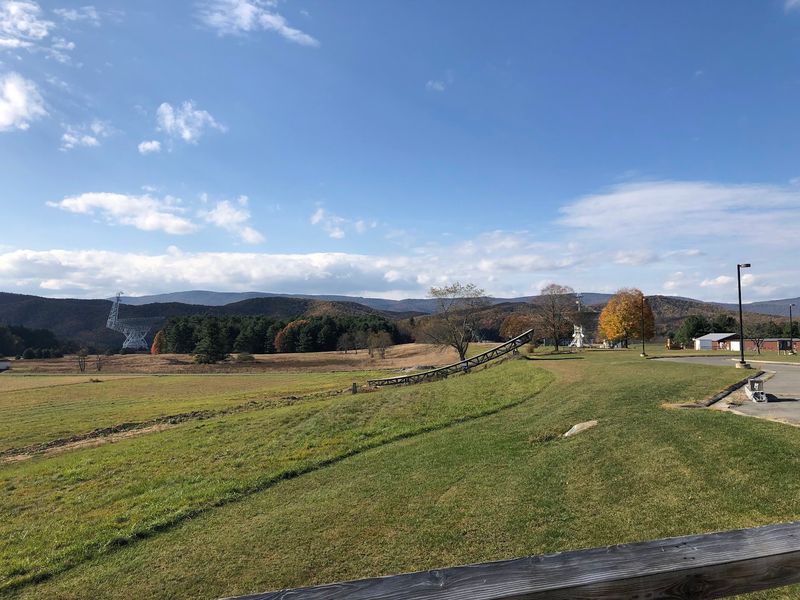
Pluto waits all the way out by the largest telescope. That’s because the road leading there doubles as a scale model of the solar system, with signs along the way.
The observatory grounds open from sunrise to sunset for self-guided walking and biking. You can follow designated trails and get surprisingly close views of the telescopes.
The out-and-back trip to the big dish runs roughly three to four miles. Comfortable shoes and a water bottle will make you much happier.
There’s a nature trail too, which can turn the return into a pleasant loop. Deer often wander the open fields, so keep your eyes peeled.
Campus trails also welcome running, cycling, and even horseback riding. Few places let you trot past world-class science equipment.
Fall might be the showstopper season. The rolling hills burst into color, framing those white dishes like a postcard.
Just remember the rule that follows you everywhere here. As you approach the telescopes, electronics need to be switched completely off, so enjoy the walk with your eyes instead of your screen.
Sandwiches, Souvenirs, And A Breather Before Liftoff
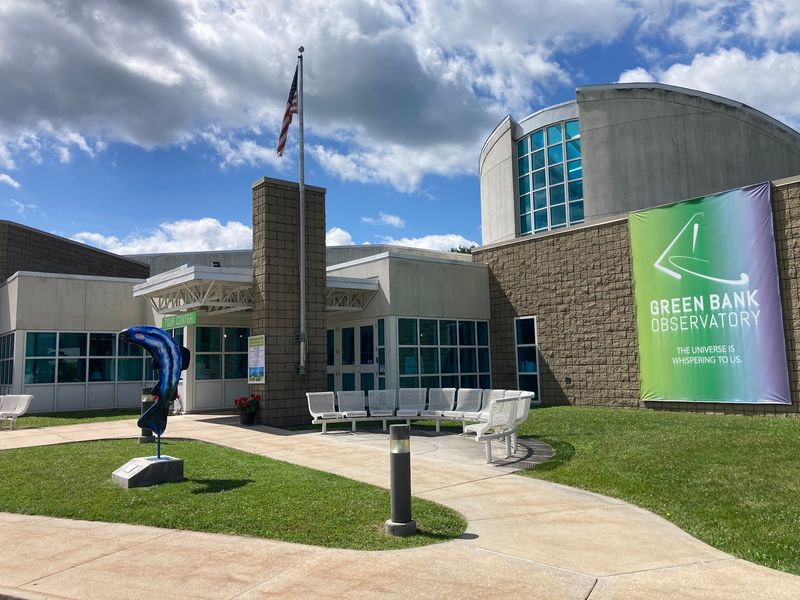
Hunger hits hard after walking around giant telescopes. Luckily, the Starlight Café sits right inside the Science Center at 155 Observatory Rd, Green Bank, WV 24944.
The menu is limited but satisfying, with lunch options like sub sandwiches and hot dogs. It’s a handy spot to rest before your bus tour pulls out.
Food choices are scarce in this rural corner of West Virginia. Grabbing a bite on site saves you from hunting around with no map app to guide you.
Next door, the Galaxy Gift Shop deserves a browse. It stocks space souvenirs alongside goods made in West Virginia.
That mix makes it a good place to find something more meaningful than a keychain. A locally made item tells the story of your trip a little better.
Prices there tend to feel friendly, which parents on a budget will appreciate. Kids can pick a small space treasure without wrecking the vacation fund.
Between the café and the shop, you can easily spend a relaxed hour. Consider it fuel for the brain before the universe gets explained to you.
Star Parties Under Seriously Dark Skies
Here’s a twist worth savoring. The same place built to listen to the sky also offers chances to actually look at it.
The observatory hosts free Star Parties, weather permitting. Staff set up optical telescopes so visitors can view the night sky up close.
With so little light pollution around, the stars can look dramatically brighter. City dwellers may be stunned by how crowded the sky suddenly seems.
Younger scientists get their own moment too. Free Family Science Labs offer hands-on experiments geared toward kids roughly ages four to nine.
Bigger events pop up as well, including a celebration called Space Rumpus. It’s built for families who want a full day of science fun.
For parents, these programs bring a welcome bonus. You get an affordable outing that feels genuinely enriching instead of just keeping everyone busy.
Schedules change, so confirm dates before making the drive. Then pack layers, because mountain nights can turn chilly even in summer, and settle back for the show.
Neighbors Who Came For The Quiet
Not everyone in town arrived because of astronomy. Some people moved here searching for relief from the wireless signals that fill modern life.
They describe themselves as having electromagnetic hypersensitivity, often called EHS. These folks report feeling unwell around cell towers, Wi-Fi, and similar devices.
Doctors and scientists don’t universally recognize EHS as a medical condition. Still, the region’s low-signal setting has drawn people who believe it helps them.
That gives Green Bank an unusual mix of residents. Researchers, longtime mountain families, and newcomers seeking refuge all share the same hushed valley.
It’s a striking reminder of how wired the rest of the country has become. Most of us never consider life without a constant signal.
For visitors, it’s a good reason to be respectful while exploring. This is a real community where people live, work, and raise families.
Spend a little time here, and you may start reflecting on your own habits. How often do you reach for that phone out of pure reflex?
The quiet has a funny way of making you notice.
Worth Building A Whole Weekend Around
Pocahontas County doesn’t stop at telescopes. A few nearby stops can stretch your trip into a memorable West Virginia weekend.
The Cass Scenic Railroad carries riders through mountain scenery in the Monongahela National Forest. Some passengers have even spotted the observatory from Bald Knob along the line.
Nature lovers should look into the Cranberry Glades Botanical Area. It’s home to the largest area of bogs in West Virginia, with rare plants to discover.
Snowshoe Mountain Resort rounds things out for active travelers. Winter brings skiing, while warmer months offer mountain biking, golf, and horseback riding.
Pairing these with the Green Bank Observatory makes the long mountain drive pay off. You get science, history, and wilderness in one trip.
Download offline maps before you leave, since signal stays spotty across the region. A paper map in the glovebox isn’t a bad idea either.
So is this place worth the effort? If you crave something genuinely different, I believe it absolutely is.
Turn off the phone, look up, and let the universe have the floor for once.
