I almost skipped it, thanks to a few stone steps, a steep hill, and a small sign I barely noticed in the Eastern Panhandle of West Virginia. Twenty minutes later, I was standing where a future president once said the view was worth sailing across an ocean, and I could not stop staring.
It turns out one of the finest seats in the state is a slab of old rock that plenty of folks walk right past. Once you hear the story behind it, you will want to climb up and see it for yourself.
A Shale Perch Above Two Rivers
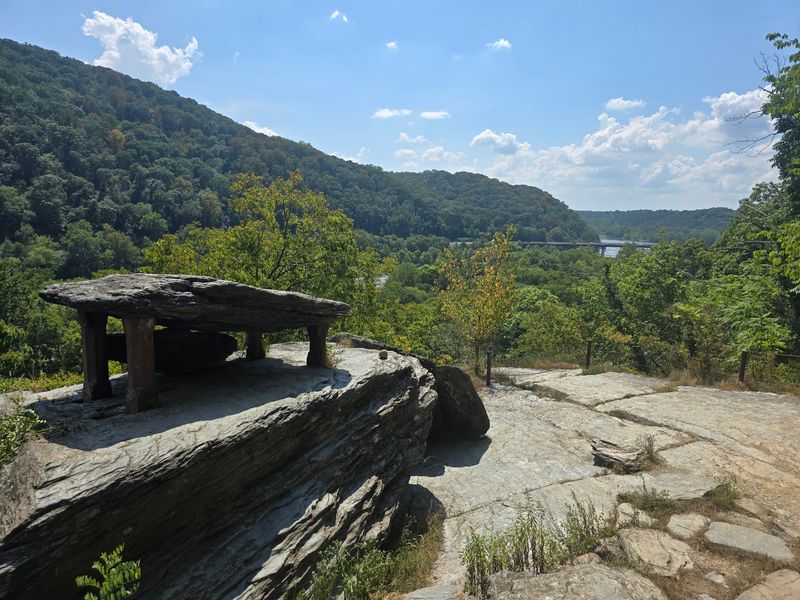
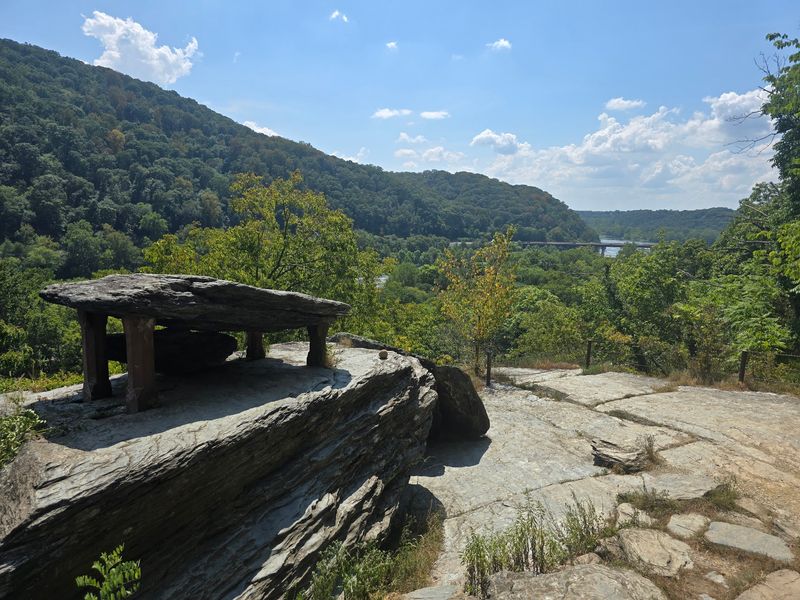
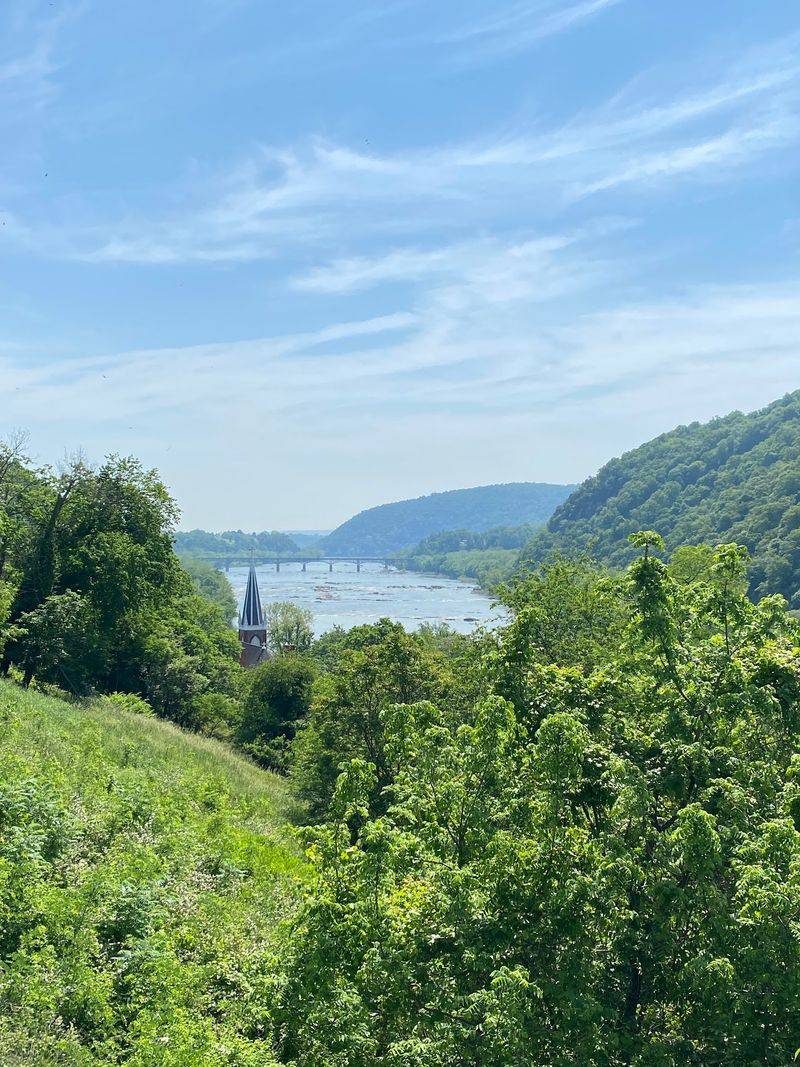
Tucked on a wooded hillside above the old Lower Town, a slab of dark stone waits for anyone willing to climb a few flights of steps. Jefferson Rock is a natural outcropping of Harpers shale inside Harpers Ferry National Historical Park, and it sits right where the Potomac and Shenandoah rivers meet.
Plenty of West Virginia landmarks announce themselves with big signs and busy parking lots. Not this one.
It asks for a bit of effort first, and the reward is a sweeping look across rooftops, rivers, and the ridges of the Blue Ridge Mountains.
From this perch, your eyes can wander across three states at once: West Virginia, Virginia, and Maryland. That alone makes it a fun geography lesson for grandkids and a satisfying moment for anyone who grew up hearing that the Eastern Panhandle was special.
The park describes the spot as a rock formation with river views, sited along the Appalachian Trail. Visitors often call it one of the highlights of a trip to town, a mix of history, scenery, and a little old-fashioned adventure.
Give it twenty or thirty minutes, as many who have made the walk suggest, and you will understand why it earned such a famous name.
October 1783 and a Famous Sentence
On October 25, 1783, a Virginia statesman named Thomas Jefferson stood on this hillside and saw something he never forgot. He was not yet president, but he was already a man with a sharp pen and a curious mind.
Jefferson later described the scene in his 1785 book, Notes on the State of Virginia. He called the meeting of the rivers one of the most stupendous scenes in nature and declared the view worth a voyage across the Atlantic.
Coming from a man who would soon cross that very ocean to serve in France, that was high praise indeed.
Back then, of course, this land was part of Virginia. West Virginia would not become its own state until 1863, which means Jefferson was admiring a corner of our home before it carried our name.
His words traveled far. Over the years, artists, writers, and curious travelers came to see whether the view lived up to the promise, and the rock eventually took on his name.
Standing there today, it is easy to picture him pausing, catching his breath, and reaching for his notes. The trees and the town have changed, yet the rivers still rush together in the same place, carving the same gap through the mountains.
The Water Gap Jefferson Called Stupendous
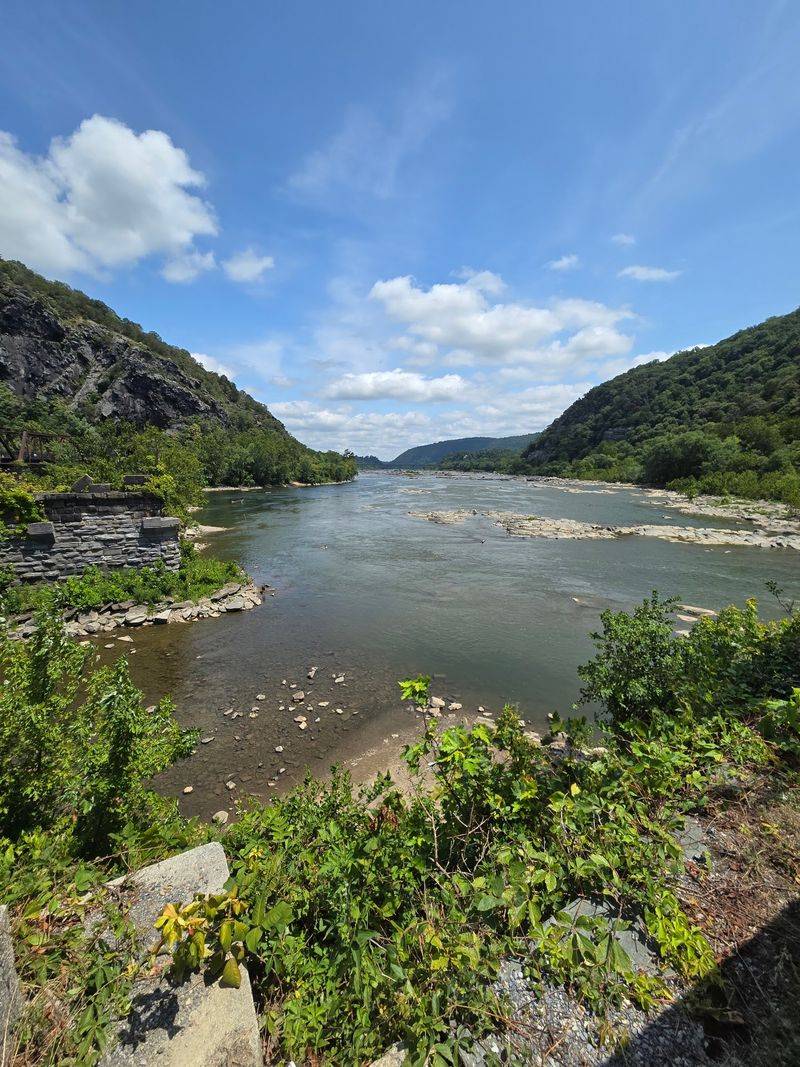
Picture two rivers racing toward each other after long journeys through the hills. The Shenandoah flows up from the south, the Potomac rolls in from the west, and right below the rock they join forces and push east together.
Geologists call the notch they cut a water gap. Over an enormous stretch of time, the moving water sliced straight through the ancient Blue Ridge Mountains, leaving steep walls of stone on either side.
Jefferson imagined the rivers tearing the mountain apart, and when you see the gap in person, his dramatic language starts to make sense.
The ground beneath your shoes is part of that story too. The rock itself is Harpers shale, the same layered stone that forms much of the hillside, and sharp eyes may spot its layers in the slab.
Visitors regularly mention the mountain views and the simple pleasure of watching the water. In late fall and winter, when the trees are bare, the scene opens even wider, and some folks feel the view is at its sharpest then.
Bring a little patience. Light changes over the ridges through the day, and the rivers can shift from silver to green to deep blue as clouds drift past overhead.
Stone Steps, Church Spires, and an Uphill Walk
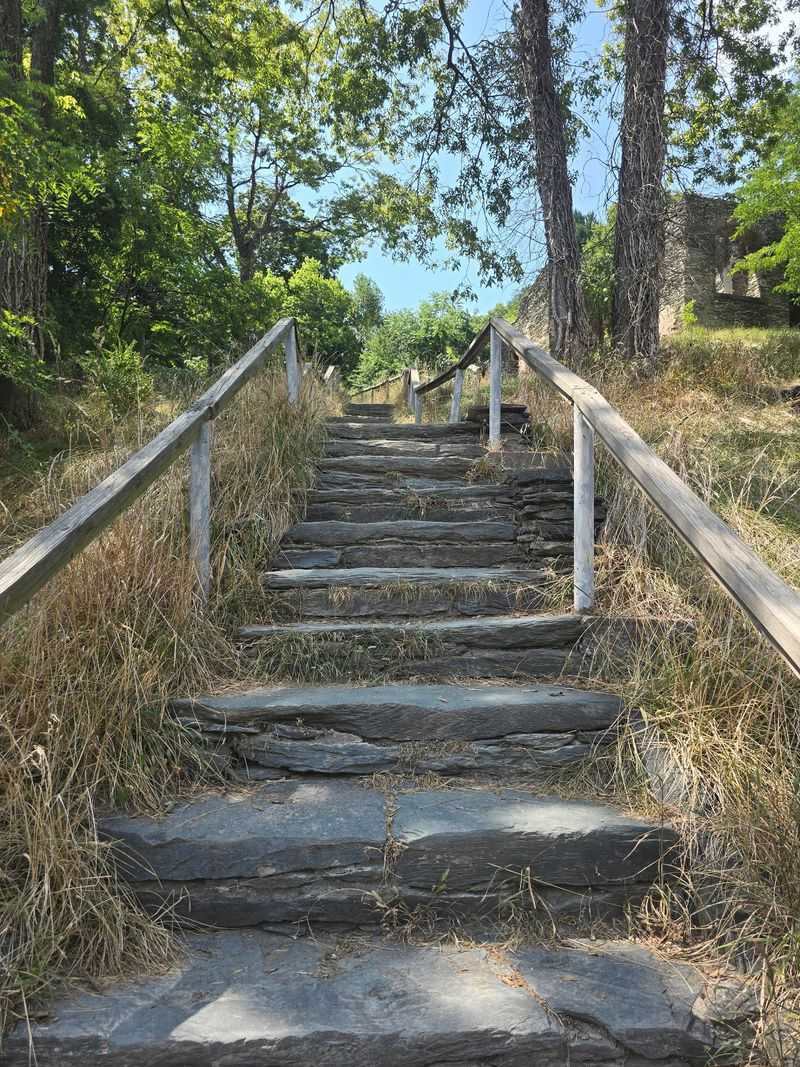
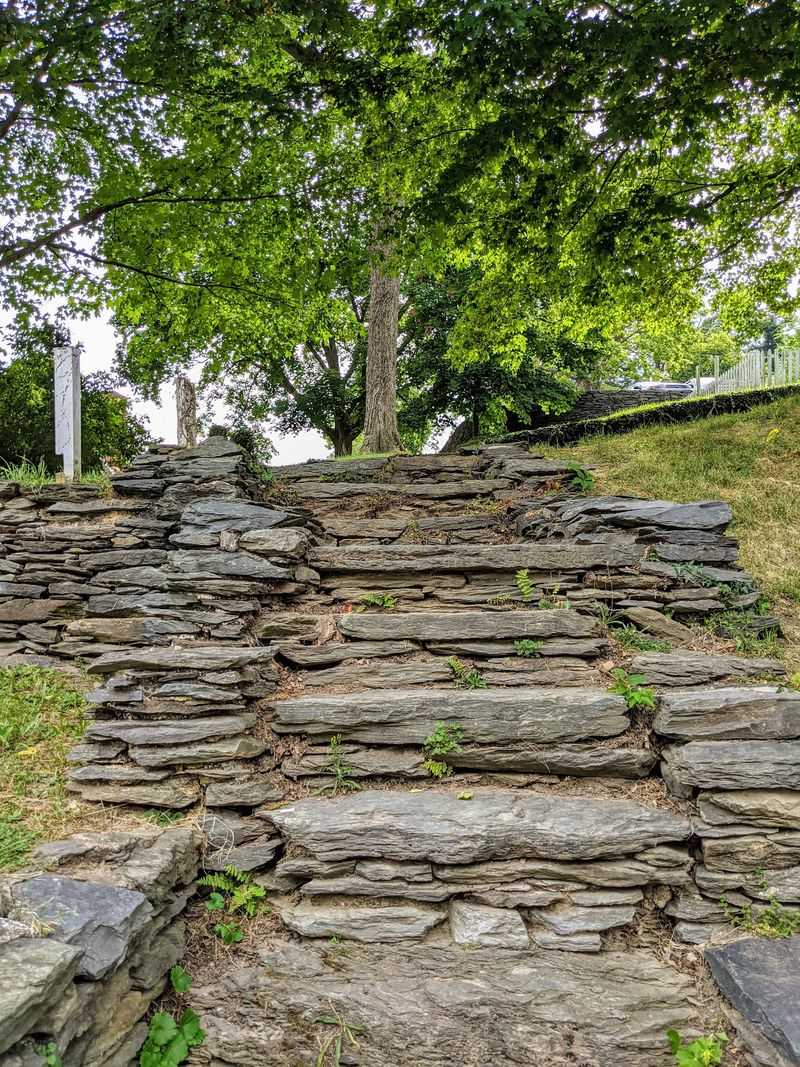
Every good view asks for a little sweat, and this one keeps its request reasonable. The walk usually starts in Lower Town, where a set of stone steps climbs the hill from High Street, tucked between museums including the African American History Museum.
Keep going and the tall spire of St. Peter’s Catholic Church appears above you. Many visitors say that once you are heading up the stairway toward that old church, you know you are on the right path.
Just beyond it, the roofless ruins of St. John’s Episcopal Church stand quietly among the trees, a moody and lovely stop for a photo.
The distance is short, but the grade is not shy. Folks describe the first stretch as pretty steep, with plenty of stone steps, and some admit it left them winded.
Railings line most sections, which helps.
Here is a handy trick shared by past visitors. If climbing is hard on your knees, you can approach from above near historic Harper Cemetery, where the walk down to the rock is quicker and parking may be easier on busy days.
Take it slow, rest on a landing, and enjoy the old stonework along the way. Nobody is timing you, and the view is not going anywhere.
Four Pillars Under a Balancing Slab
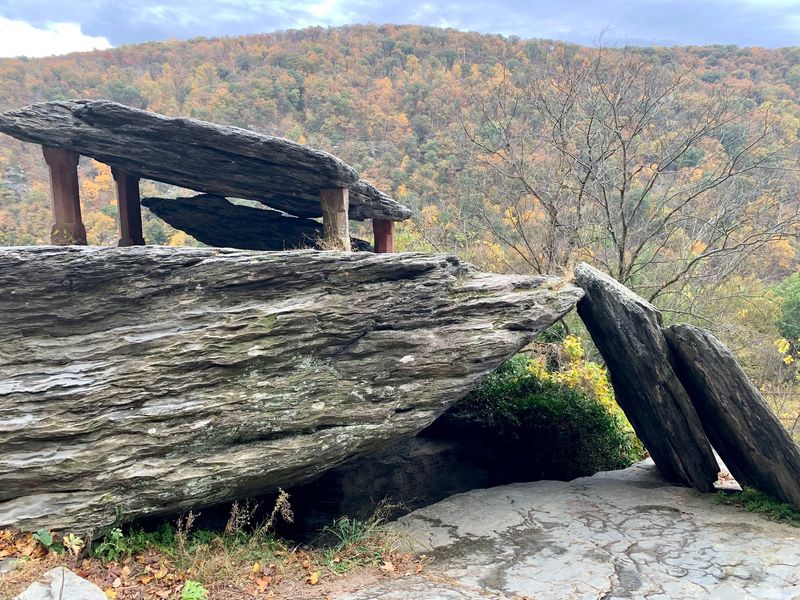
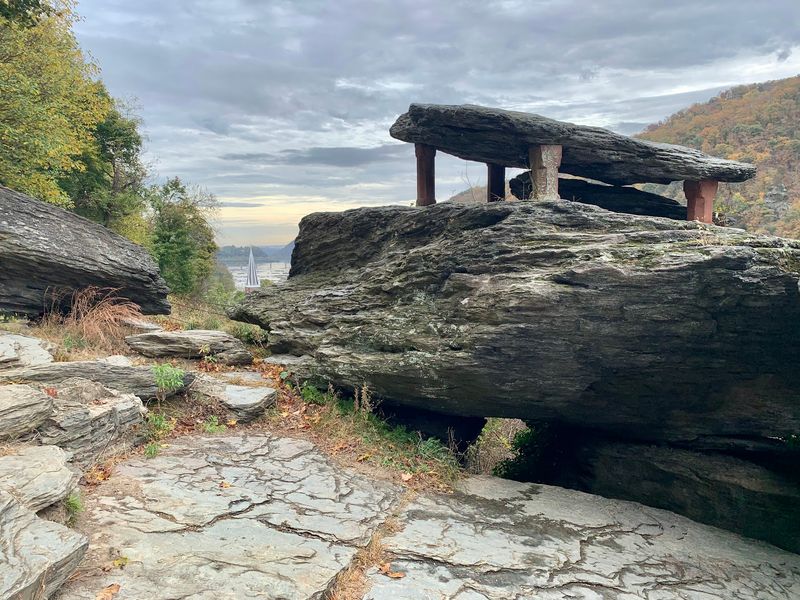
Look closely and something seems a little off about Jefferson Rock. A big flat slab sits on top of a much smaller base, almost like a tabletop balanced on a fist, and more than one visitor has called that balancing act the most interesting part of the stop.
Once upon a time, the top slab rested on a narrow natural stone foundation with nothing else holding it up. Wind, rain, and hard winters slowly wore at that base.
Early tourists eager to stand on the famous spot added their own wear, and the support grew weaker year after year.
Sometime between 1855 and 1860, workers stepped in with a clever fix. They placed four stone pillars under the slab to steady it, and those supports still hold it in place today.
Knowing that backstory changes how you see the rock. It is not just a pretty ledge but a small survivor of more than two centuries of admirers, and it reportedly has a few stories of its own to tell.
Some visitors over the years have mentioned sitting on the rock, but the park’s guidance leans the other way. Climbing on it is not advised, so admire it from the viewing area nearby and let the pillars rest easy for the next generation.
Where the Appalachian Trail Brushes By
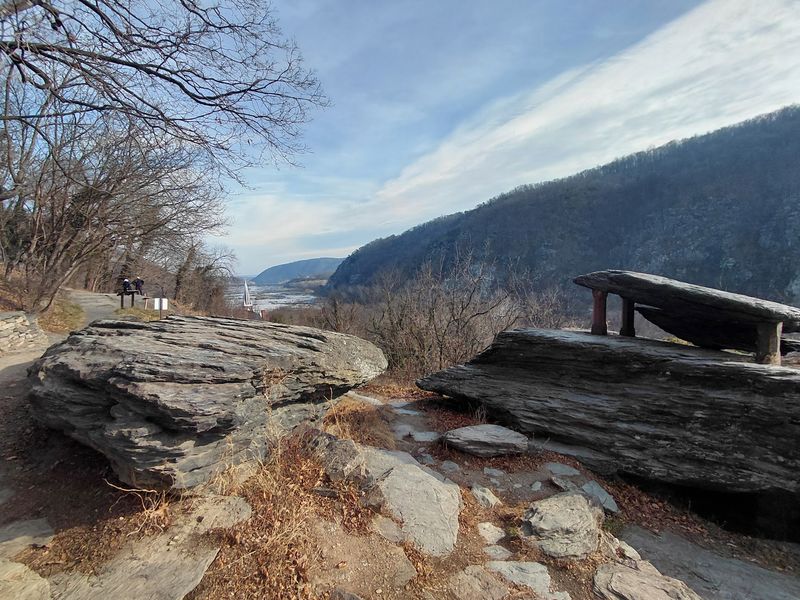
Hikers heading from Georgia to Maine pass right by this very ledge. The Appalachian Trail runs along the hillside here, which means a quick sightseeing climb doubles as a few steps on one of the most famous footpaths in the country.
Several visitors joke that they came for Jefferson and left able to say they had walked the AT. It is a small thrill, but a real one, especially for anyone who has read about long-distance hikers and wondered what the trail actually feels like underfoot.
For those covering big miles, the rock makes a natural resting point. One visitor described it as a great little place to stop and catch your breath, and you may spot folks with heavy packs doing just that.
Ambitious walkers can continue past the rock along the trail, adding extra history and forest to the outing. The path winds on through the woods above town, and the stretch offers a peaceful contrast to the busier streets below.
If you go farther, bring water and sturdy shoes. Even a modest extension can feel longer on a warm West Virginia afternoon, and the hills around here have a way of surprising flatlanders who underestimate them.
Quiet Afternoons and the Visitors It Suits Best
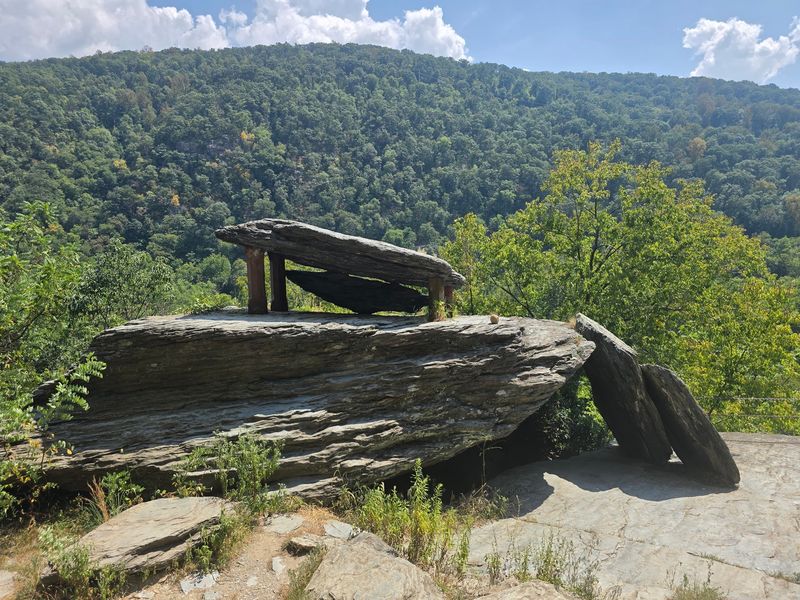
Timing can change everything here. Visitors who arrive on a weekday, especially later in the afternoon, often find the overlook nearly empty, while weekends tend to bring a steady stream of people.
When it is quiet, the mood feels almost private. There is an area to sit and relax, and the sound of the rivers drifts up the hill.
Photographers love it too, and people often mention the great photo opportunities, from wide river panoramas to close shots of the pillars and old stone steps.
So who will enjoy it most? Curious history lovers, casual walkers, couples looking for a scenic moment, and grandparents who want to show young ones where three states meet all fit right in.
Even visitors who say they are not hikers have made the climb and called it well worth the effort.
A word of caution, though. Protective barriers end near the rock, and there are steep drop-offs close by.
Anyone unsteady on uneven ground should move carefully, and small children need a firm hand.
Not every opinion is glowing. A few travelers feel the waterfront below offers views just as good, so expectations may vary.
Most, however, walk away glad they made the trip up.
Parking, Shuttles, and Practical Planning
Parking in the historic district is famously tight. Street spaces in town are limited and mostly short-term for nearby businesses, so most visitors start at the Harpers Ferry National Historical Park Visitor Center instead.
The visitor center sits at 171 Shoreline Drive, Harpers Ferry, WV 25425. According to past visitors, daily parking there reportedly runs about $10 to $15, depending on whether you arrive by motorcycle or car, and one visitor mentioned an annual option around $30.
Fees can change, so check the park website before you go, and remember to display your parking ticket.
From the lot, a shuttle bus usually carries guests down to a stop along Shenandoah Street in Lower Town. From there, it is a short stroll to High Street and the stone steps that lead uphill.
Plan on twenty to thirty extra minutes for the rock itself, longer if you linger for photos. Good shoes with solid grip are a smart choice, since the steps can be uneven and the ledge area is rocky.
The National Park Service keeps a dedicated Jefferson Rock page on its website, a handy place to confirm current conditions, shuttle details, and any trail notices ahead of your trip.
A Detour Worth the Climb
Some places shout for attention, and some simply wait for you to find them. Jefferson Rock belongs firmly in the second group, a quiet ledge that rewards a short uphill walk with a view people have admired for well over two hundred years.
Is it worth a voyage across the Atlantic? That is a tall order for any overlook.
But for West Virginians who live an hour or two away, it is absolutely worth a Sunday drive, a picnic lunch packed at home, and a slow afternoon in one of the most storied corners of the Eastern Panhandle.
The best part may be how little it asks. No fancy gear is required, just a climb, a breather, and a long look at where the Shenandoah and Potomac come together.
Bring someone who has never been, or someone who remembers visiting as a kid. Chances are you will trade stories all the way back down the steps.
You will find Jefferson Rock above Lower Town in Harpers Ferry, WV 25425, inside the national historical park. Stand where Jefferson stood, soak in the rivers and ridges, and then decide for yourself: did the view live up to his famous words?
