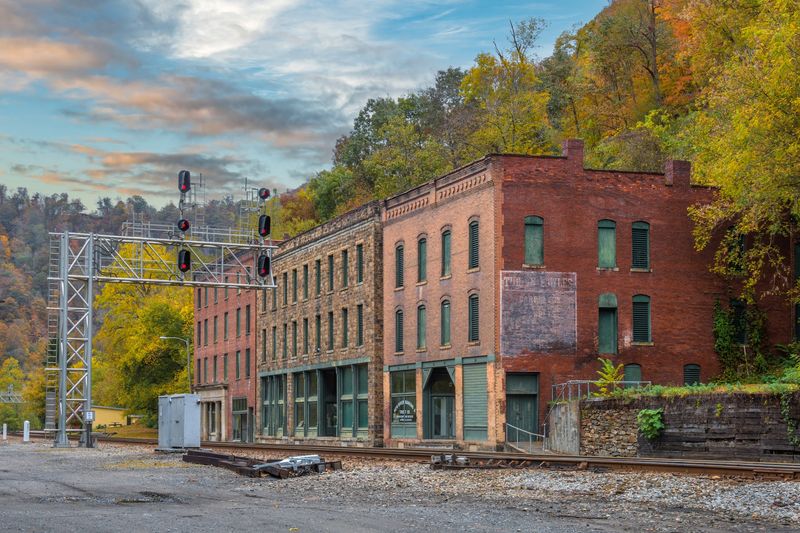
A single railroad depot in a mountain hollow once reportedly took in more freight money than Cincinnati. That means the whole city, not one busy neighborhood.
Fifteen passenger trains a day once rolled through this narrow stretch of the New River Gorge in West Virginia. Coal cars crowded the tracks, and the local banks were said to rank among the richest in the state.
Today, the official population could fit around a kitchen table. The 2020 census counted just five residents, yet the town still has a mayor and a council.
I love places like this, because the old brick buildings still stand and the trains still rumble past the river. So what exactly is left down there, and is it worth that twisty, steep drive down the mountain?
A Town The National Park Now Watches Over
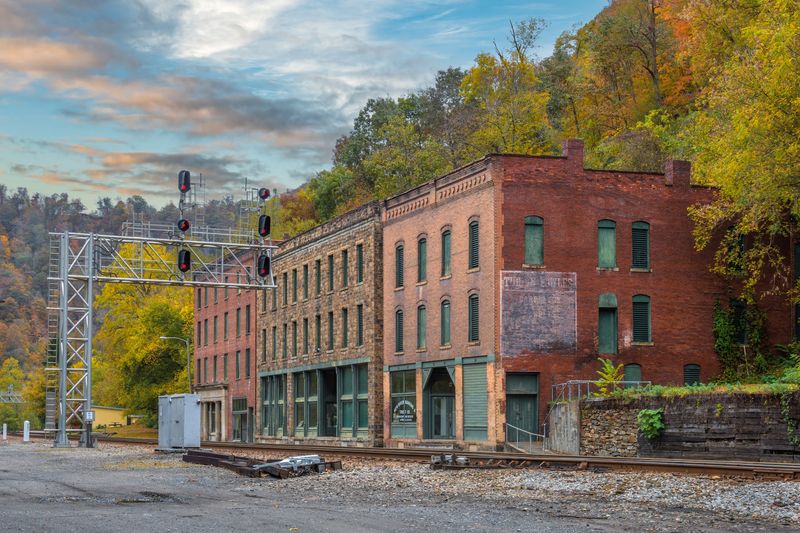
Thurmond sits at the bottom of the New River Gorge, squeezed between steep wooded slopes and the river itself. Its historic district is part of New River Gorge National Park and Preserve in southern West Virginia.
Much of the old town is now owned by the National Park Service. That ownership is a big reason the buildings never got bulldozed for something newer.
What you find today is a single row of brick storefronts facing the railroad tracks. There’s no main street in the usual sense, because the tracks were always the main street here.
Behind the commercial row, a few old homes and a church still dot the hillside. Interpretive signs along the way explain what once stood on each spot, so the empty lots still tell a story.
I like that the park chose to preserve the feel of the place instead of turning it into a theme park. Nothing here is dressed up or polished for show.
The result is a quiet, open-air museum where you set your own pace. You can spend an hour, or you can spend an afternoon reading every sign and staring up at old windows.
A Captain, A Railroad, And 73 Acres
Every boomtown needs a lucky break, and this one came in 1873. That year, William Dabney Thurmond reportedly acquired 73 acres along the river.
The timing could hardly have been better. The Chesapeake and Ohio Railway finished its main line through the gorge that same year, connecting this remote valley to the rest of the country.
Land beside a brand-new railroad in coal country was about as valuable as land got. Mines soon opened in the surrounding hollows, and their coal needed a place to be gathered and shipped.
The settlement grew into that place. Thurmond was officially incorporated in 1903, right as the coal economy in the gorge was gathering serious speed.
It’s worth remembering how cut off this spot was from everything else. For years, there was no proper road in, so the railroad was the only practical way to arrive or leave.
That isolation shaped everything about the town. Homes, shops, and businesses all faced the tracks, because the trains brought the customers, the mail, the supplies, and the money.
Life here quite literally ran on a timetable.
That Cincinnati Claim Is The Part Everyone Wants To Hear
Cincinnati had well over 300,000 people around 1910. Thurmond had a few hundred, give or take, and somehow its depot still came out ahead.
According to the National Park Service and local historians, the Thurmond depot reportedly took in more freight revenue than Cincinnati around that time. Some accounts go further and say it out-earned Cincinnati and Richmond, Virginia, combined.
So how does a tiny town pull that off? The answer is coal, and a staggering amount of it.
Mines throughout the surrounding gorge funneled their tonnage through Thurmond’s rail yard. The town is often described as the top revenue producer on the entire C&O line during its peak years.
I can’t imagine the noise of that yard on a busy day. Engines, coal cars, and crews would have filled every inch of flat ground between the cliffs and the river.
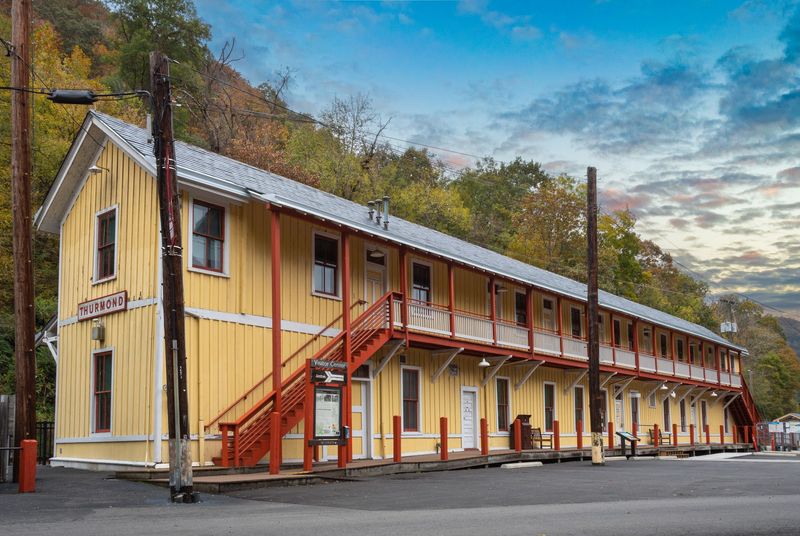
The best part is that the depot behind that famous number still stands. Today it looks much as it did in its heyday, so you can stand beside the same building that once outpaced a major Ohio River city.
That’s a pretty good bragging right for West Virginia.
Fifteen Trains A Day Once Crowded This Little Platform
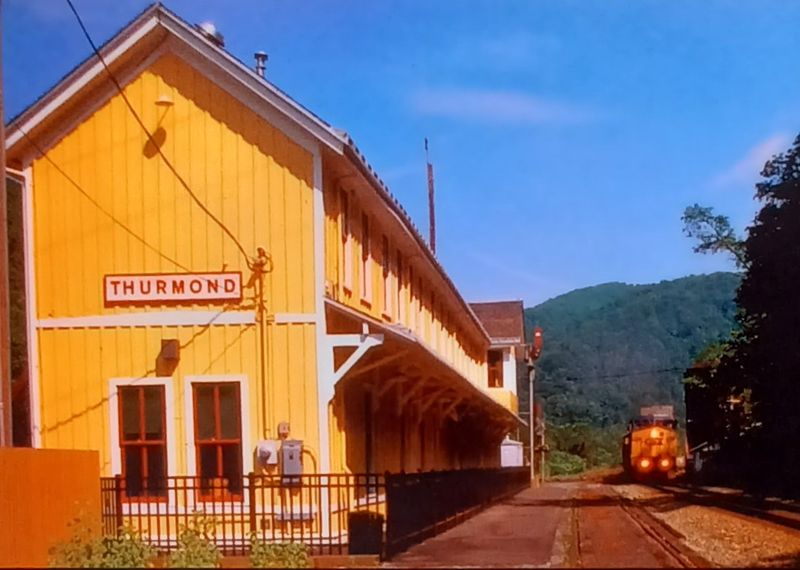
Fifteen passenger trains a day once stopped in a town you could walk end to end in minutes. That schedule alone tells you how busy this place became.
Estimates suggest somewhere around 75,000 to 95,000 passengers passed through annually during the boom years. Coal operators, salesmen, miners, families, and travelers all shared the same narrow platform.
The railroad also made Thurmond a working hub for the engines themselves. Steam locomotives needed coal, water, and regular maintenance, and the town supplied all three.
That meant jobs, and jobs meant hotels, stores, and restaurants. The town reportedly hosted hotels that stayed lively around the clock, serving a stream of people who never stopped arriving.
Standing on that platform today is a very different experience. The crowds are long gone, and the river noise often seems louder than anything else.
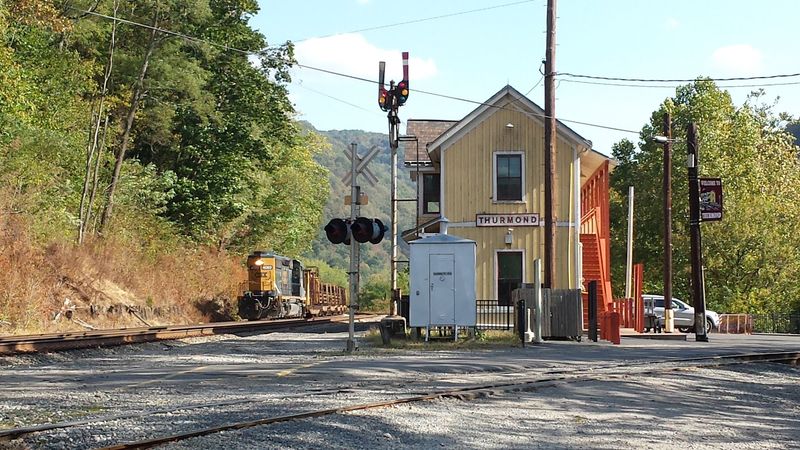
Still, the tracks are very much active. Freight trains operated by CSX regularly roll through, so you may get to hear that old rumble echo off the gorge walls.
Keep a safe distance from the rails, though, because these trains don’t slow down for sightseers.
The Old Banks Tell The Real Money Story
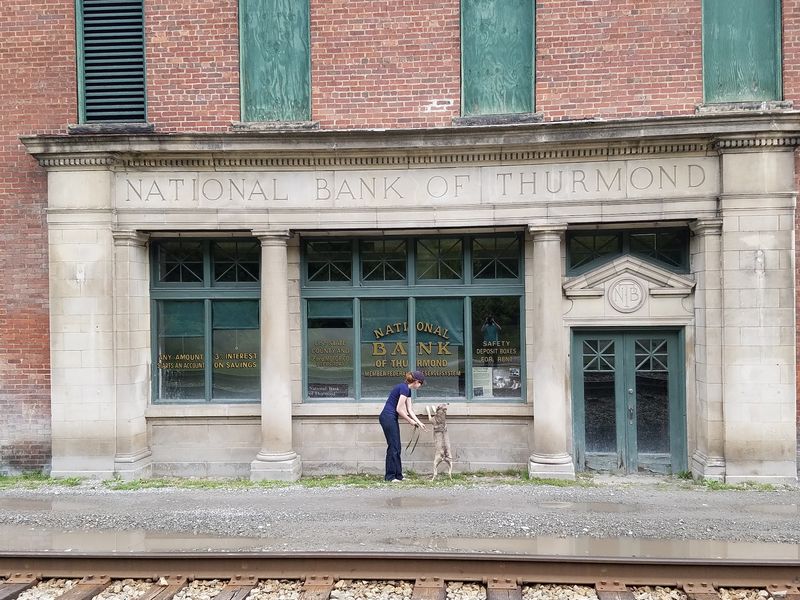
Coal barons need somewhere to keep their fortunes. In the gorge, many of them reportedly chose Thurmond, and its banks were said to be among the richest in West Virginia.
You can still see that wealth in brick and stone. The National Bank of Thurmond building remains one of the standout structures in the commercial row.
Nearby stands the Mankin-Cox Building, constructed in 1904. It once housed the Mankin Drug Company along with the New River Banking and Trust Company.
Think about that pairing for a second. You could fill a prescription and handle serious business deals under the same roof, all a few steps from the train platform.
These buildings are sturdy and handsome in a no-nonsense way. They were built by people who expected the money to keep flowing for generations.
Visitors generally can’t go inside, since the park keeps the old structures closed to the public. You can, however, stroll past and peek through a few windows.
The facades alone make it clear that this was never a sleepy little coal camp. It was a financial engine tucked against a cliff.
An Easy Walking Tour Through A Paused Moment
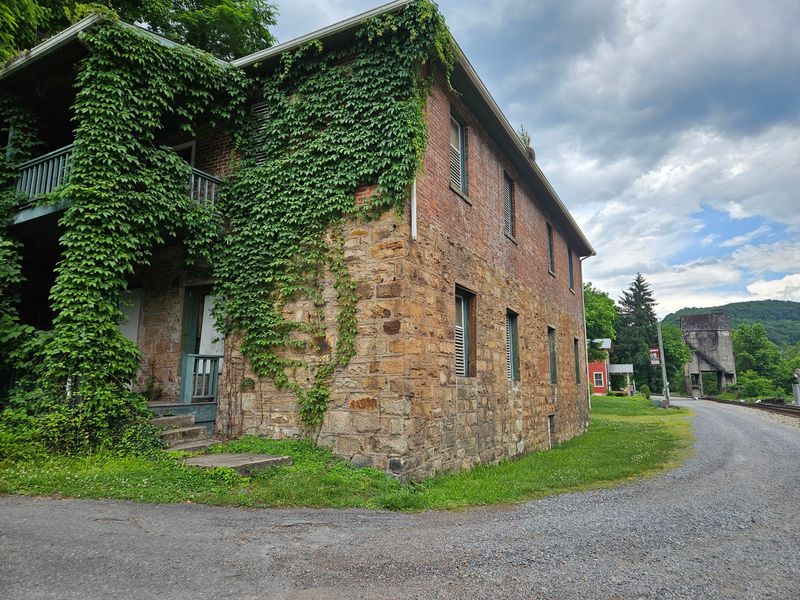
Good walking shoes will serve you better than a guidebook here. The National Park Service offers a self-guided walking tour through the historic town.
The route is mostly flat, which is a nice surprise in a place surrounded by cliffs. The surface shifts between pavement, brick, and gravel, so watch your footing in spots.
Interpretive signs mark the stops along the way. They explain which businesses, homes, and buildings once filled each lot, which helps the empty spaces make sense.
Many people finish the loop in about an hour. History lovers who read every placard could easily stretch that much longer.
You’ll pass the bank buildings, the commercial row, a church, and several older homes. Some houses look weathered and empty, which gives the whole stroll a slightly spooky edge.
One friendly reminder matters here. A handful of people still live in town, so treat private homes and yards with respect and stick to public areas.
I think the walk works best slowly. Stop often, look up at the rooflines, and let the signs fill in the details your imagination can’t.
The Depot Opens Its Doors When The Season Allows
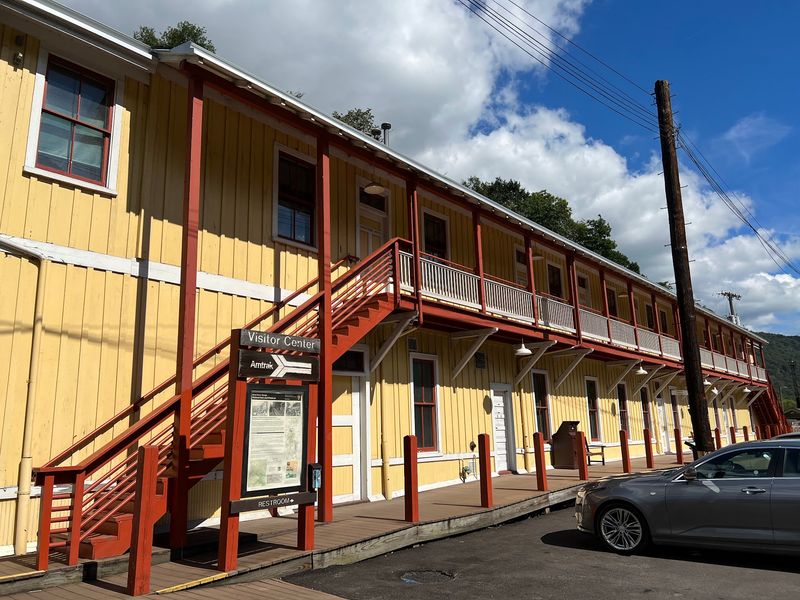
Inside the old depot, history gets a little more hands-on. The restored building serves as a seasonal visitor center for New River Gorge National Park and Preserve.
It’s a long, narrow, two-story wooden structure with a slate roof, built by the C&O in the early 1900s. The park restored it to reflect its appearance during the boom years.
Exhibits inside cover the railroad, the coal trade, and daily life in the busy town. For many people, touring the depot ends up being the highlight of the whole stop.
Park staff can answer questions and point you toward the walking tour. It’s a smart place to start before you head out to explore.
Timing matters, though. The visitor center typically opens only during the warmer months and closes for much of fall and winter.
Check the National Park Service schedule before you go, since hours can change from year to year. If you arrive when it’s closed, don’t panic.
The grounds, signs, and buildings outside are still open to explore, and an outdoor vault toilet is available even when the depot is locked.
Yes, You Can Still Catch A Real Amtrak Train Here
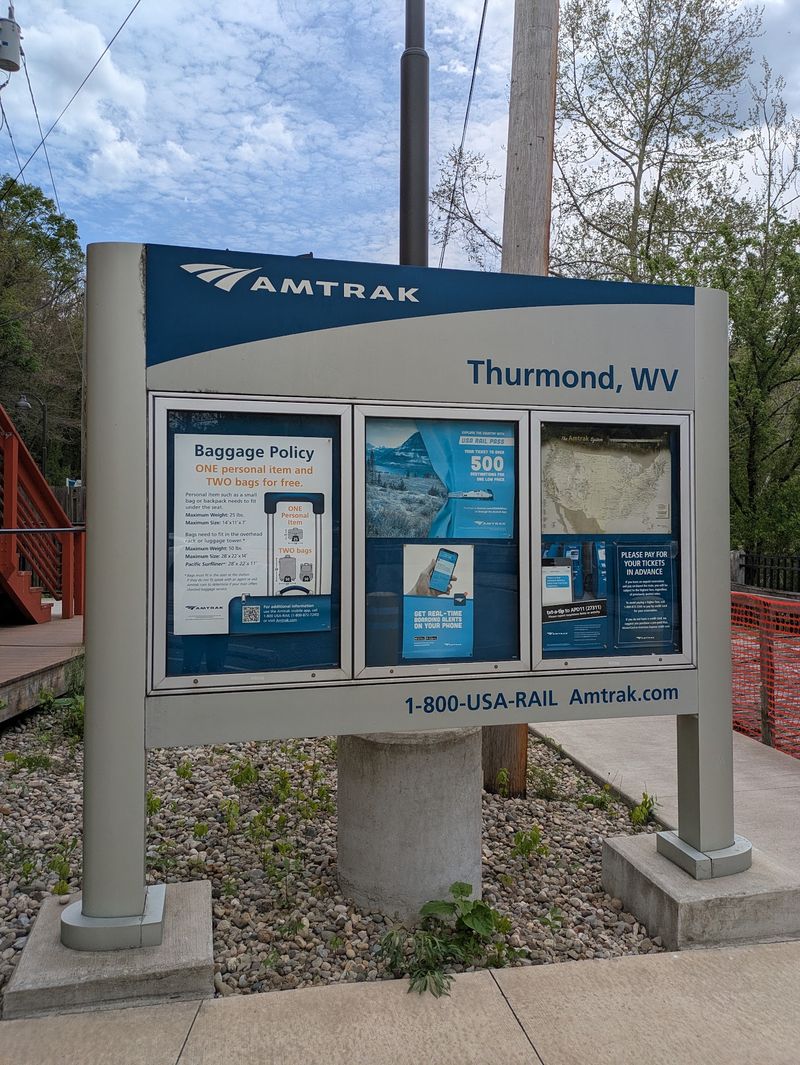
Not many ghost towns come with passenger rail service. Thurmond does, thanks to Amtrak’s Cardinal route between New York and Chicago.
The stop works as a flag stop rather than a full station. You won’t find ticket counters or Amtrak staff, so you’ll need a reservation booked ahead of time.
Here’s a detail that confuses plenty of people. The Amtrak stop and the depot visitor center are two separate things, and passengers board outside at the marked sign.
The depot building often isn’t open when the trains arrive. In bad weather, waiting in your car may be the most comfortable option.
The Cardinal doesn’t run every day, so schedules deserve a careful look. Check current times with Amtrak directly, because they shift over the years.
On a clear day, though, few train stops in America can match this setting. Rock walls rise on both sides, and the river rushes right past the platform.
I love the idea of stepping off a modern train into a town that peaked over a century ago. It’s a fun way to arrive, and it keeps the depot doing the job it was built for.
When The Steam Engines Went Quiet, So Did The Boom
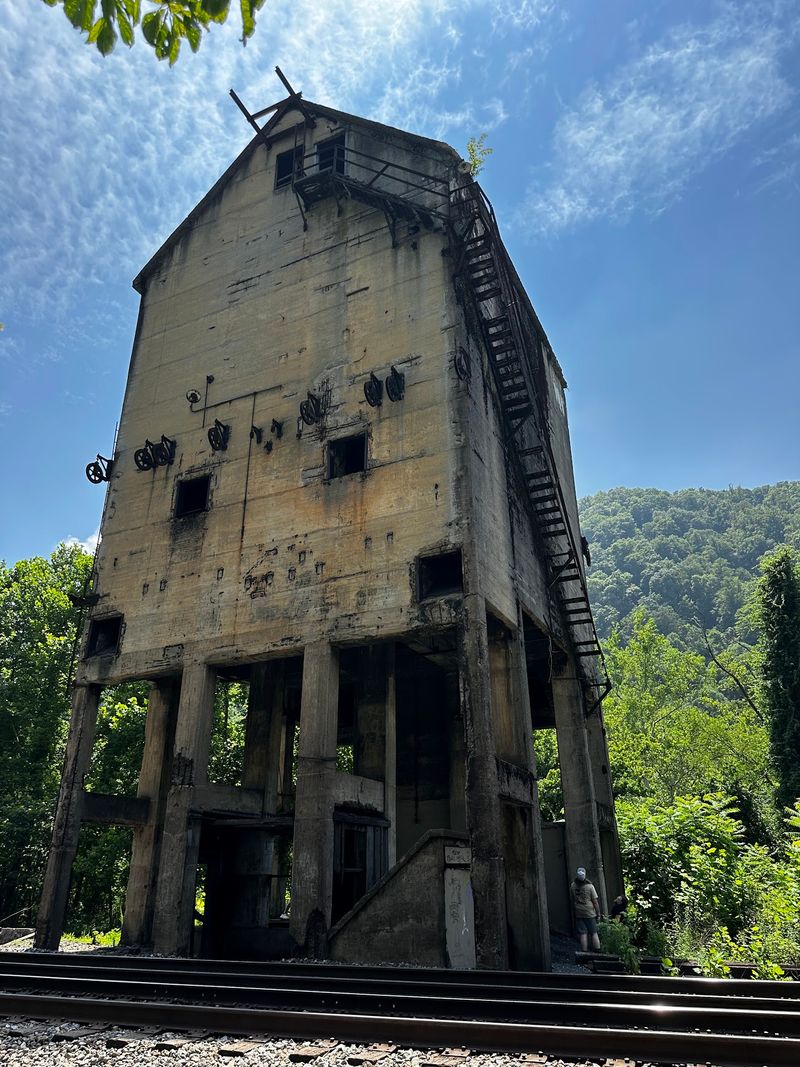
Diesel locomotives changed everything for this little railroad town. Steam engines had needed constant coaling and repair, and Thurmond had built its living around those chores.
Diesel engines needed far less of that attention. Suddenly, much of the work that kept the yard humming simply wasn’t required anymore.
Other changes piled on at the same time. Local mines began closing, and the coal that once poured through town slowed to a trickle.
Cars and better roads also chipped away at passenger rail. People no longer had to ride a train to reach the gorge, so fewer of them did.
Fires over the years also claimed some of the town’s grand old buildings. Businesses closed one after another, and families moved on to find work elsewhere.
By around the middle of the 20th century, the boom was clearly over. What remained became the quiet near-ghost town you can explore today.
I find the story more moving than sad. These buildings are proof of how hard West Virginia worked to power the country, and they still stand as a badge of that effort.
Five Residents, One Mayor, And A Whole Lot Of Quiet
Five people. That’s the official population of Thurmond in the 2020 census, which puts it among the least populated towns in West Virginia.
Even so, the town is still incorporated. It keeps a mayor and a town council, which makes for one of the smallest local governments you’ll ever hear about.
I can’t imagine the town meetings are hard to schedule. Still, there’s something admirable about a place that refuses to give up its name.
The quiet here is real and noticeable. On many days, the loudest sounds are the river, the wind, and the occasional freight train rolling through.
Some people find the empty houses and still streets a bit eerie. The town has picked up a reputation as a spooky stop, and a few folks even swap haunted stories about it.
Whether you buy into that or not, the mood is hard to shake. Streets that once held crowds now feel almost hushed.
Just remember that this is home for the residents who remain. A friendly wave and a respectful distance go a long way in a town this small.
Rail Trails And River Access Sit Just Beyond The Tracks
Coal once rolled along the path that hikers now enjoy on weekends. The Rend Trail follows an old rail line that connected nearby mines to the main tracks.
It’s an easy, mostly level trail, which makes it friendly for casual hikers and bikers alike. Along the way, you get views of the town, the New River, and Dunloup Creek.
That mix of history and scenery is the real draw. You’re walking the same route the coal took on its way to Thurmond’s busy yard.
River lovers have options too. The nearby Dun Glen Day-Use Area offers access to the New River for fishing or launching a small boat.
The New River is known for some of the best warm-water fishing in the state. Bring your own gear and check current West Virginia fishing rules before you cast.
Beyond that, the wider national park offers rafting, climbing, and plenty more. Thurmond makes a nice half-day stop within a bigger gorge adventure.
Not bad for a town of five, right? The trails give you a reason to linger after you’ve finished the walking tour.
Plan The Drive Before You Point The Car Downhill
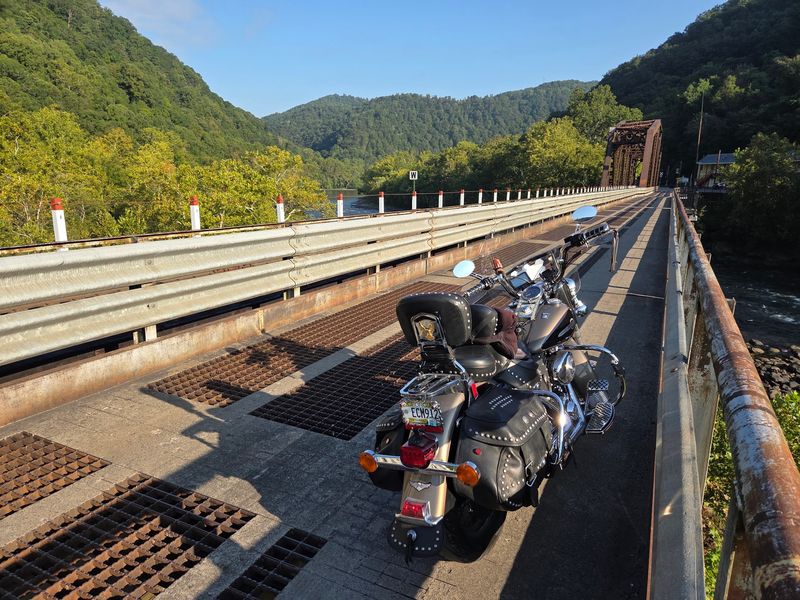
Getting there is part of the adventure, and slow and steady is the rule. Most people take U.S.
Route 19 to the Glen Jean exit, then follow signs down WV-25.
That final stretch, known as Thurmond Road, runs roughly seven miles. It winds and narrows in places as it drops into the gorge.
Big rigs should think twice. The park advises against vehicles over 25 feet long or anything towing a trailer.
Take your time on the curves and watch for oncoming cars. Drive slowly once you reach town, since the road and railroad sit very close together.
The mapped location is Hwy 25 & Hwy 2, Thurmond, WV 25936. Cell service can be spotty in the gorge, so download directions before you leave.
Facilities are limited, with an outdoor vault toilet near the depot. You won’t find restaurants or shops in town, so pack snacks and water.
Visiting the historic district doesn’t carry a separate admission fee. That makes Thurmond a budget-friendly stop, especially if you’re already exploring the national park.
Save your spending money for a good meal back up on the plateau.
Who Will Love This Place, And Who Might Not
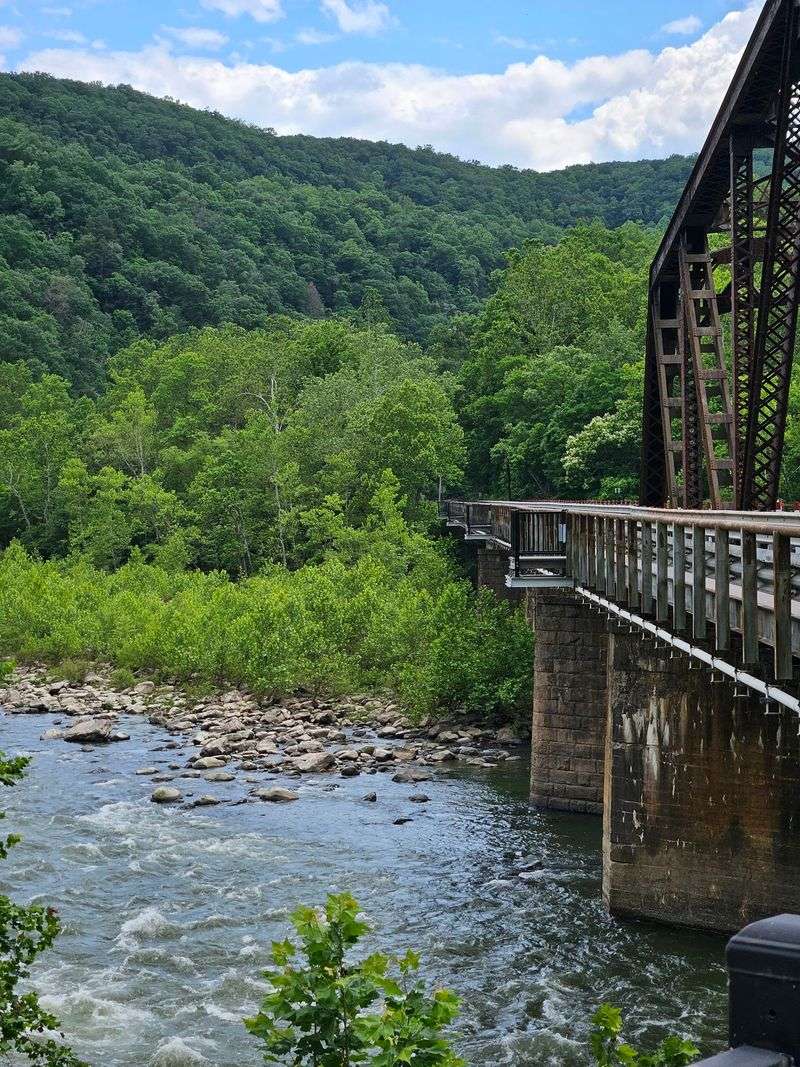
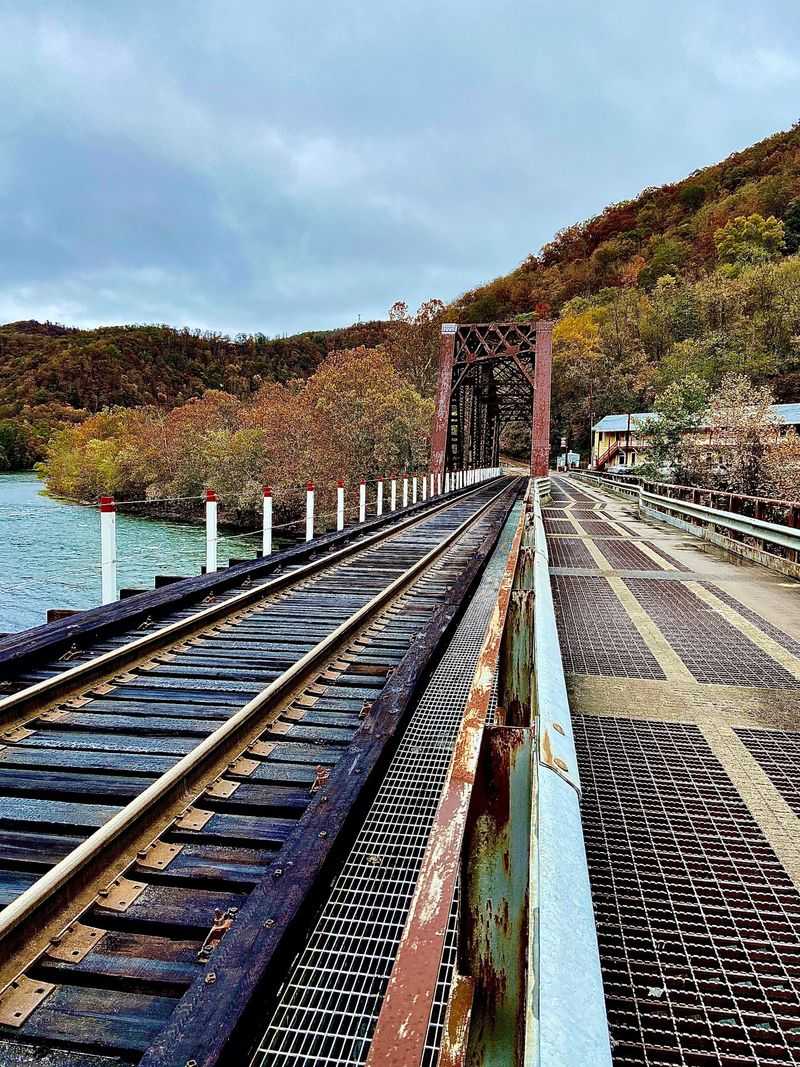
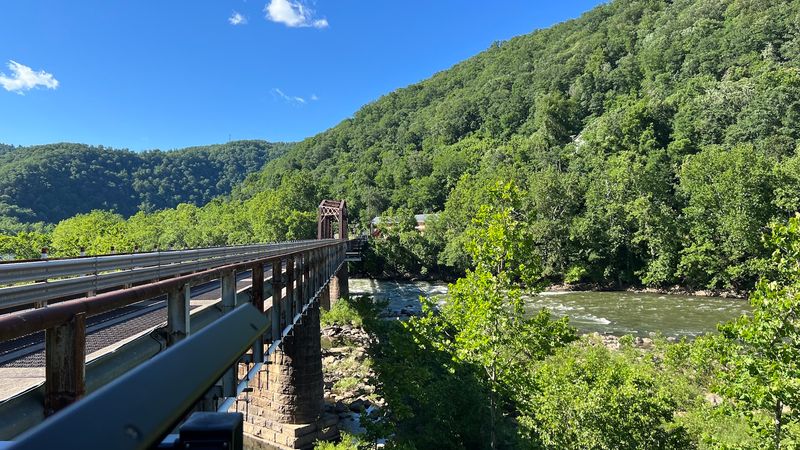
History buffs, rail fans, and photographers will probably feel right at home. The railroad bridge over the river and the old storefronts make wonderful picture spots.
Anyone curious about coal country will find plenty to chew on. The signs and depot exhibits connect the dots between the mines, the trains, and the money.
Not everyone will be thrilled, and that’s okay. If you expect a lively ghost town with buildings to explore inside, you may find it quieter than hoped.
Teens looking for thrills might be done in a short time. Adults who enjoy reading signs and soaking up atmosphere usually get much more out of it.
I believe the trick is pairing Thurmond with other stops in the gorge. Combine it with a hike, a scenic drive, or a river day for a well-rounded trip.
For West Virginians, this place carries real hometown pride. It’s proof that a tiny mountain depot once punched far above its weight.
So is it worth the trip? If faded glory, rumbling freight trains, and a jaw-dropping river view sound good, the answer is a happy yes.
