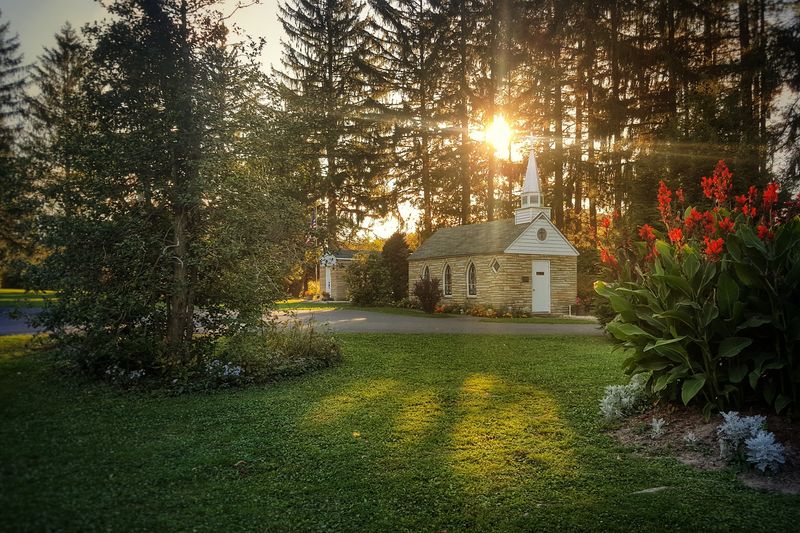
A roadside sign promises the smallest church in 48 states, and the building behind it backs up the boast. The whole stone chapel measures about 24 feet long and 12 feet wide.
Inside, six little pews face an altar draped in linen woven by the builder’s grandmother. That detail alone got me.
I like how a family heirloom ended up in a place where any traveler can see it.
This tiny landmark sits in the mountains of West Virginia, right beside a two-lane highway. There’s even a pint-sized mailing office out back with a door so narrow it feels like a joke.
I can’t imagine driving past without pulling over. So why does a church this small exist at all, and why does it still draw curious people every day?
A Stone Chapel So Small It Earned A Roadside Sign
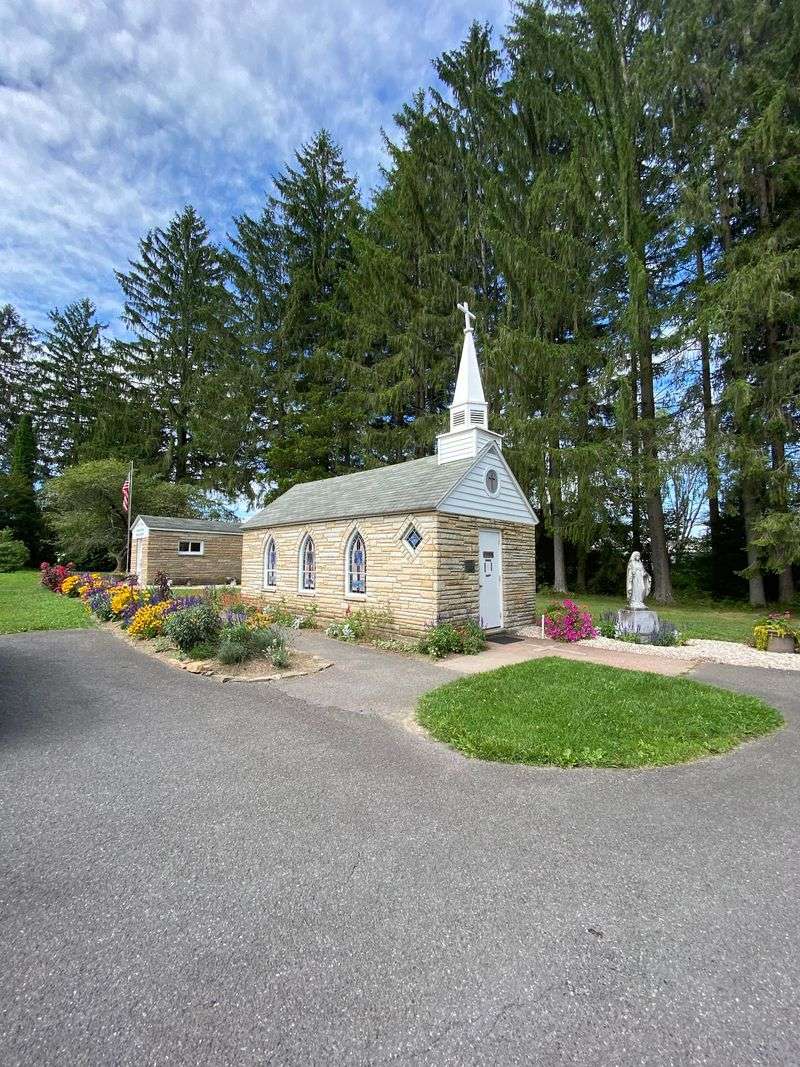
Our Lady of the Pines is a Catholic chapel along U.S. Route 219 in the Allegheny highlands.
It’s often linked with the tiny community of Silver Lake, though its mailing address lists Eglon.
The building is famous for one big claim. Its sign calls it the smallest church in 48 states, and that title has stuck for decades.
Outside, the chapel measures roughly 24 feet long by 12 feet wide. The interior shrinks to about 16 by 11 feet, which is smaller than plenty of living rooms.
Don’t mistake it for a novelty shed, though. The chapel is built of stone, crowned with a little belfry, and lit by stained-glass windows.
Visiting costs nothing to step inside. The doors are generally open daily, so travelers can wander in for a quiet minute between mountain stops.
That open-door spirit is a big part of the charm. Nobody needs a ticket, a tour guide, or a reservation to see it.
Out back, a pint-sized mailing office adds a dose of humor. A welcome center, lawn, and playground round out the grounds.
For a pull-off along a mountain road, that’s a surprising amount packed into one small lot. Fitting, right?
The Clever Math Behind The Lower 48 Boast
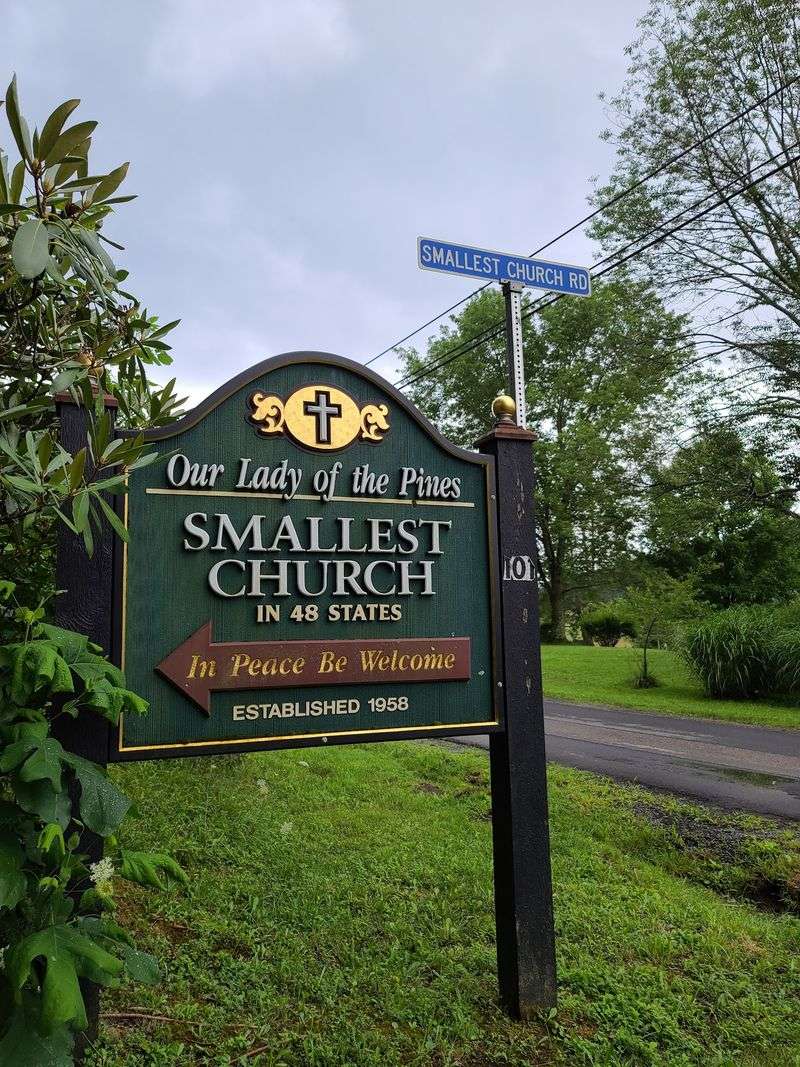
Count the stars on the flag in 1958 and the slogan makes perfect sense. Alaska and Hawaii had not yet become states when the chapel was built.
Back then, “48 states” simply meant the whole country. So the boast covered every state in the Union at the time.
Statehood for Alaska and Hawaii came in 1959. Suddenly the famous sign sounded a little more specific than its builders ever intended.
Caretakers chose to keep the original wording rather than update it. Honestly, that decision feels right for a place built on tradition.
The phrase now works as a small history lesson. It quietly dates the chapel to the final years before the nation reached 50 stars.
Is it truly the tiniest anywhere in the lower 48? Tiny-church fans may debate that, and other small chapels exist around the country.
Still, Atlas Obscura and Appalachian history writers both note the claim and the 1958 timing. The story has held steady for more than six decades.
And let’s be fair. Any church that can seat a dozen people and still fit a confessional has earned the right to brag a little.
A Memorial Built By A Lithuanian Immigrant And His Wife
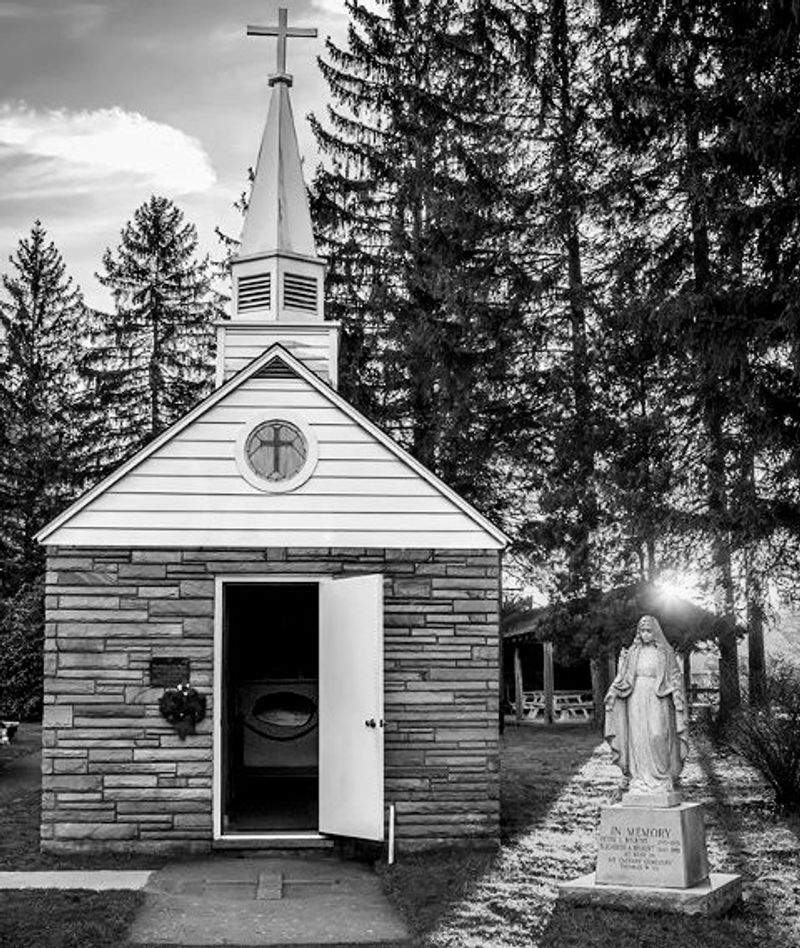
Peter L. Milkint and his wife, Elizabeth, built the chapel in 1958 as a tribute to their parents.
Peter was a Lithuanian immigrant who settled in these West Virginia mountains.
He reportedly drew inspiration from small churches he saw while traveling out west. The couple then shaped that idea into something personal and lasting.
The Milkints didn’t stop at the chapel. They once ran the surrounding land as a summer retreat with a lake and rental cabins.
Much of that lake has since returned to nature. The church and its little mailing office remain the heart of what they created.
Planning ahead mattered to them, too. Before Peter passed in 1979, the family set up a nonprofit to care for the chapel.
That choice explains why the doors still open for strangers today. The building was never meant to be locked away as a private keepsake.
I believe that’s what makes the story so moving. A couple honored their parents by sharing a sacred space with everyone driving by.
Few roadside stops carry a backstory this tender. Knowing it changes how those six pews look when you finally see them.
Six Pews And An Heirloom Altar Cloth Inside
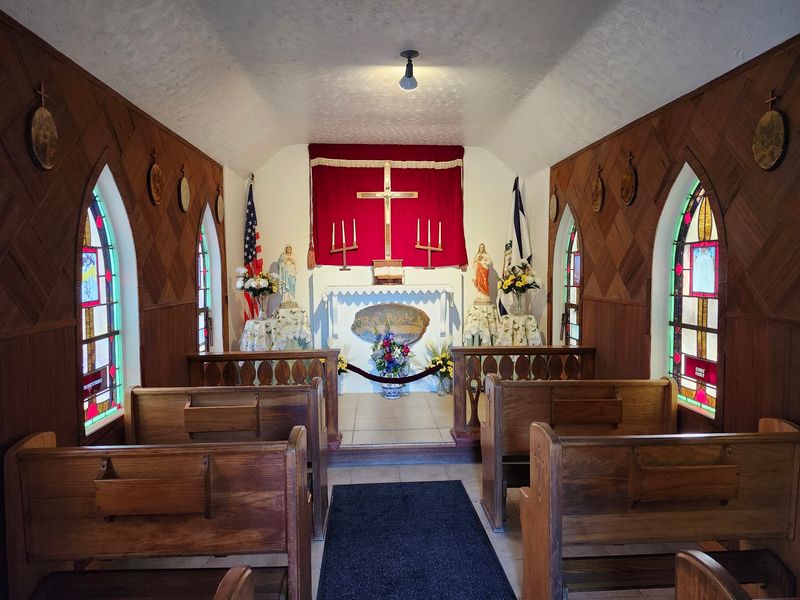
Twelve people can sit comfortably in here. Pack the aisle and add standing room, and the count reportedly stretches to about 24.
Six pews line a narrow center aisle. Every inch seems planned, yet nothing feels skimpy or rushed.
The altar holds the chapel’s most personal treasure. Its linen cover was woven by Peter Milkint’s Lithuanian grandmother more than a century ago.
Handmade altar crosses, a tabernacle, and candle holders sit nearby. Each piece adds to the homemade, heartfelt character of the room.
Along the walls hang the 14 Stations of the Cross. They appear to be carved from pine logs, a nice nod to the chapel’s name.
A statue of the Infant of Prague wears a red velvet garment. A close family friend donated that robe.
There’s also an old Bible, plus pictures and stories about the chapel’s past. Those displays help fill in the history while you stand inside it.
Spotting every detail takes longer than you’d guess for such a small room. Slow down, look closely, and the space keeps revealing something new.
Crab Orchard Stone, Lancet Windows, And A Tiny Belfry
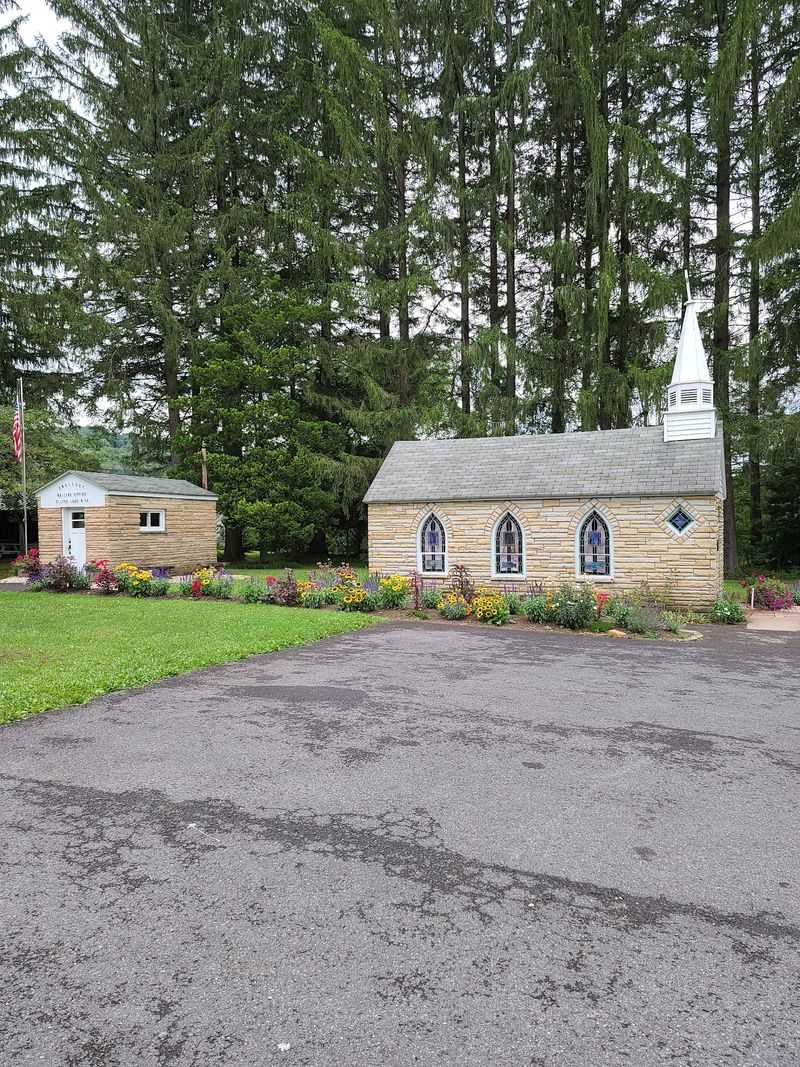
Builders in the 1950s loved Crab Orchard stone, and the Milkints followed the trend. The tan stone is laid in neat horizontal layers across the chapel walls.
That choice gives the little building real weight. It looks sturdy enough to outlast a few more mountain winters with ease.
Look up, and Gothic touches appear in miniature. Pointed lancet windows and a small belfry atop the gable roof give it classic church lines.
The chapel has six stained-glass windows. Many carry names of individuals or families, adding another layer of remembrance.
A quick heads-up for planners. Recent visitors have mentioned the stained-glass windows being out for work, so they may not be in place during every visit.
Even so, the stonework and shape carry plenty of charm. The church still photographs beautifully against the pines.
Inside, one feature makes people grin. The chapel includes what may be one of the country’s smallest confessionals.
Fitting a confessional into a room this size takes real ingenuity. The SAH Archipedia architecture entry even highlights the chapel’s thoughtful design, which says plenty about how carefully it was built.
Postcards Sent From The World’s Smallest Mailing Office
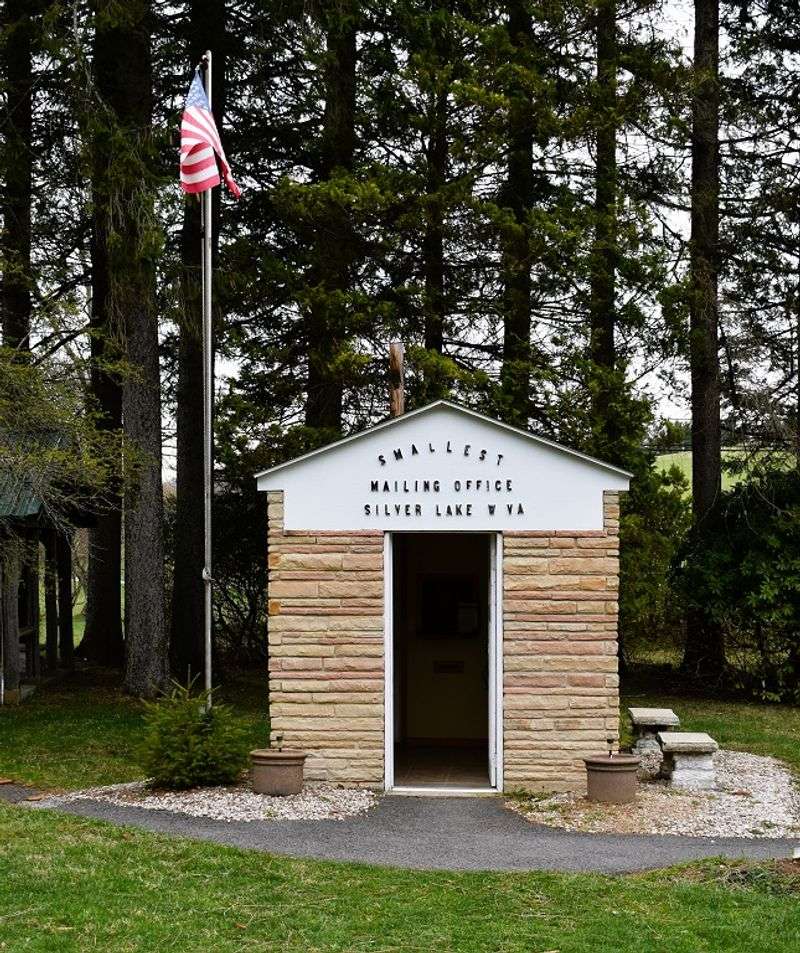
Window service every Friday the 13th. Parcel post on February 29th.
That’s the playful schedule posted inside the little mailing office behind the chapel.
The building bills itself as the world’s smallest mailing office. A sign makes clear it isn’t an official USPS post office.
Its door is famously narrow, so expect to turn sideways and laugh a bit. Kids tend to find that part especially entertaining.
Postcards showing the chapel are available for a small donation. Photos of the church have also been offered for purchase.
Here’s a smart tip. Bring a little cash and an address or two before you arrive.
That way you can write a postcard right there and send a greeting from one of the quirkiest spots in West Virginia. Grandma will love it.
The mailing office pairs perfectly with the chapel. One delivers quiet reflection, while the other delivers a good chuckle.
Together, they make the stop feel complete. It’s a fun reminder that faith and humor can share the same patch of lawn without any trouble at all.
Weddings, Wanderers, And A Holy Way Station
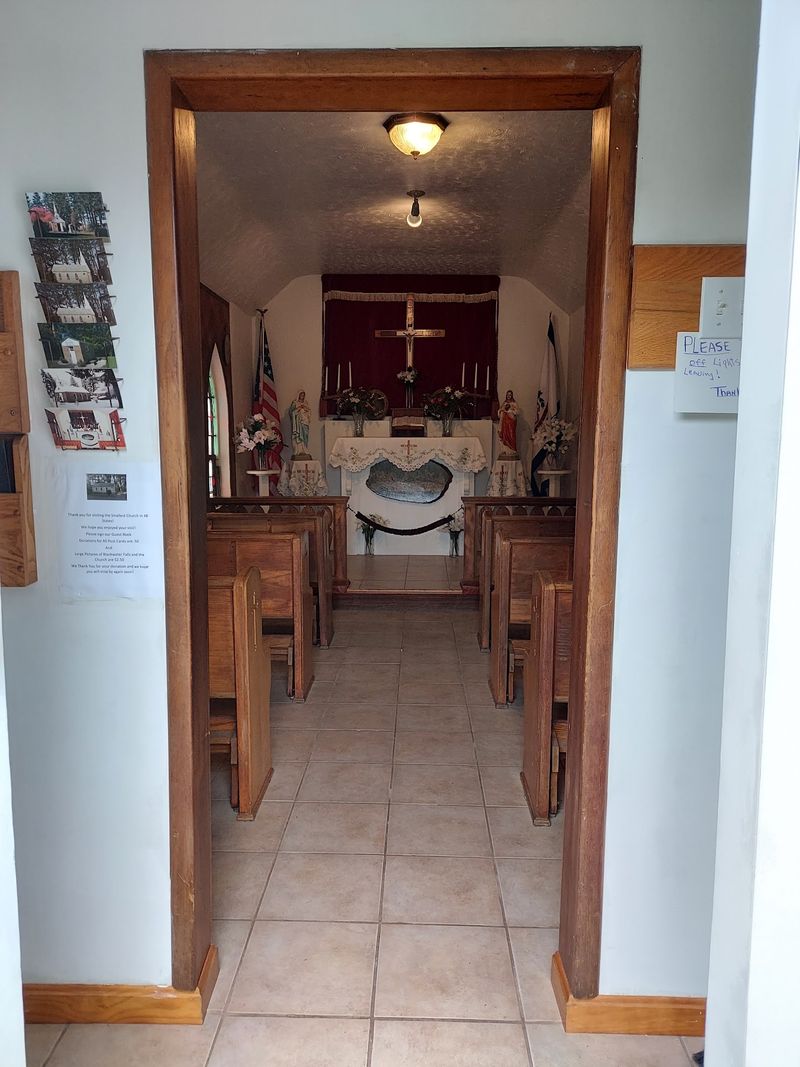
Regular weekly Mass has never been part of the routine here. Instead, the chapel serves as a holy way station for anyone passing through.
Traveling priests sometimes hold Mass inside. The chapel also hosts weddings, reportedly around ten each year.
Imagine fitting your guest list into six pews. That’s one way to keep a wedding small and sweet.
Most days, though, the visitors are travelers. Many pause, sign the guest registry, and sit quietly for a moment before heading on.
The mood suits all kinds of people. Faithful Catholics, history buffs, families, and road-trippers all find something to enjoy.
Hikers often swing by after a trail, too. It’s an easy, low-key addition to a day in the mountains, rain or shine.
Families get a bonus outside. A small playground, a wishing well, and open lawn give kids room to stretch their legs.
The grounds also include a gazebo and a pavilion that can be rented. Flowers bloom from spring through fall around a memorial statue near the church.
It’s a peaceful setting that welcomes everyone, no matter why they pulled over.
Finding The Pull-Off On Route 219
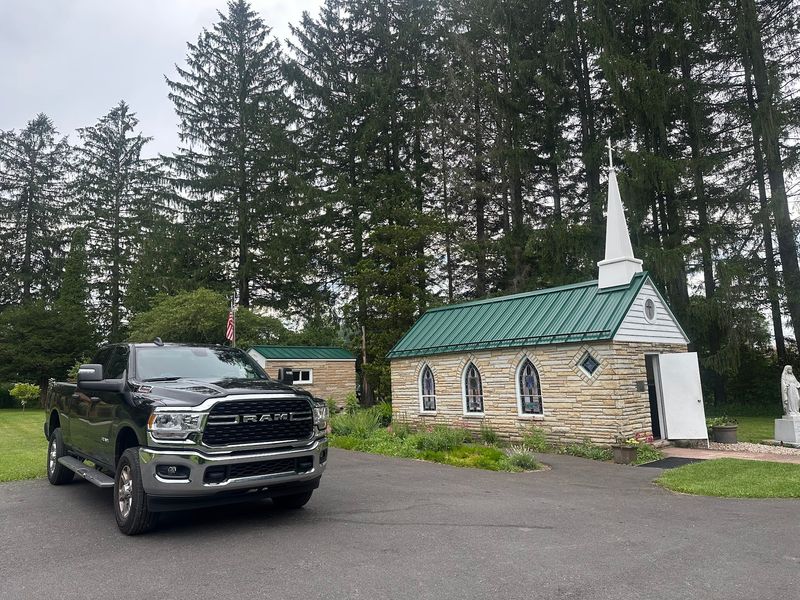
Plug in 101 Breedlove Road, Eglon, WV 26716, and you’ll land beside U.S. Route 219.
The chapel sits on a convenient pull-off right along the highway.
Blackwater Falls State Park lies roughly 20 minutes to the south. That makes this an easy pairing for a day in Tucker and Preston county country.
Some travelers stop after visiting Backbone Mountain, Maryland’s highest point, just across the state line. Canaan Valley adventures fit nicely into the same trip.
Entry is free. The chapel doors are generally open daily, though it’s wise to expect occasional closures or repairs.
Comfort got a boost in October 2023. A new Welcome Center opened with The Hope, Love and Charity Foundation, including clean modern restrooms.
That’s a big deal on a remote mountain road. Restrooms can be scarce out here.
One more practical warning matters a lot. Cell service around this part of West Virginia can be spotty.
Download your maps or plan your next stop before arriving. Otherwise, a quick visit could turn into a long, winding detour through the hills.
Why This Little Chapel Deserves A Few Minutes Of Your Day
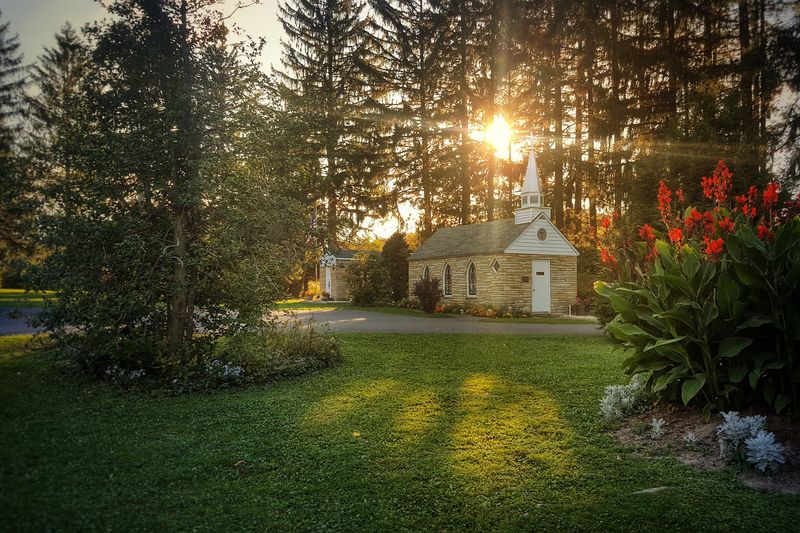
Some detours pay off in a big way, and this one costs almost no time. You can see the chapel, mail a postcard, and stretch your legs in well under an hour.
Our Lady of the Pines packs a surprising amount of heart into a tiny footprint. Family history, careful stonework, and gentle humor all share the spotlight.
The 1958 boast still makes people smile. It also reminds us how much the country has changed since the chapel first opened its doors.
I like that the Milkints built something for strangers. Their nonprofit keeps that welcome going, decades after the founders passed on.
For West Virginia folks, it’s a point of hometown pride. For visitors, it’s a memorable story to carry home.
Bring a few dollars for postcards and a friend’s address. Bring patience for the narrow mailing office door, too.
Most of all, bring a little curiosity. That’s all this small sanctuary asks before it gives back something meaningful.
Big cathedrals impress with size. This tiny Route 219 chapel wins hearts with care, and that might be the better trick.
