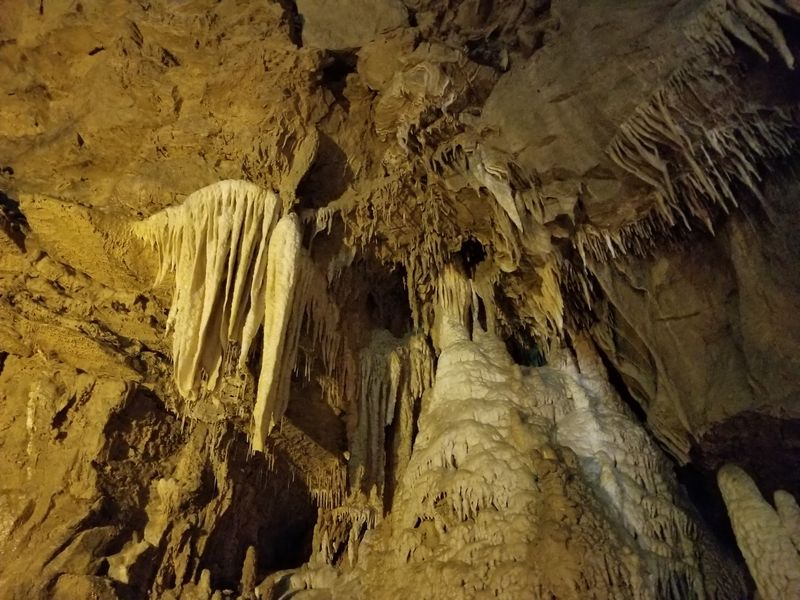
A 30-ton stalactite hangs from a cave ceiling in West Virginia, and it is still growing one drip at a time. Its name is the Snowy Chandelier, and it is reportedly one of the largest formations of its kind in the country.
The white stone really does look like frozen lace. Below it, an underground stream slips away through the rocks and simply vanishes.
I like how the whole place lets you wander on your own schedule. No guide hurries you along, so you can stare at that chandelier for as long as your neck allows.
The cave sits 120 feet down, where the air stays a steady 52 degrees all year. There is also a famous stalagmite where one man once sat for nearly 16 days.
Who volunteers for that?
A Show Cave Waiting Below Greenbrier County Farmland
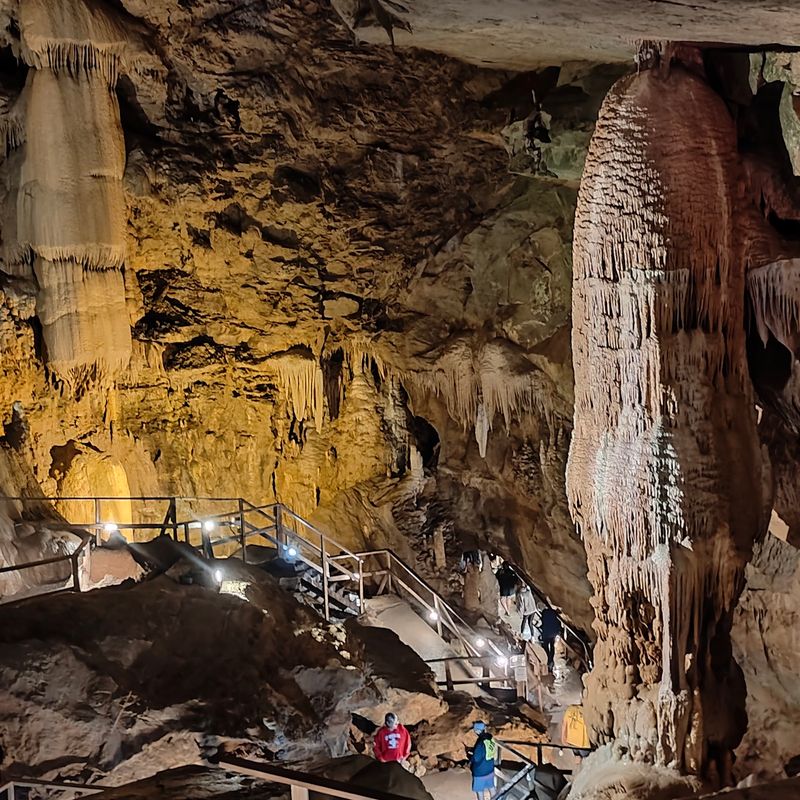
Quiet pasture land doesn’t usually announce a giant underground room. Lost World Caverns does it anyway, sitting beneath a peaceful stretch of Greenbrier County, West Virginia.
The attraction is a large show cave packed with massive stalactites and stalagmites. Above ground, you’ll find a museum, a big gift shop, a picnic area, and some animals on the farm property.
Underneath it all lies one huge chamber. The self-guided loop runs about half a mile, and many people finish it in roughly 45 minutes.
That time frame makes it an easy stop on a road trip. You get real scenery without giving up your whole day.
The cave keeps a constant 52 degrees, no matter the weather outside. In July, that feels like a gift, and in January, it feels oddly mild.
Parents often look for stops that interest grown-ups too, not just the kids. Here, the geology, the history, and a few genuinely odd stories do that job well.
Children will enjoy it, of course. Still, I believe the adults in the car may end up asking the most questions on the drive home.
From Grapevine Cave To National Natural Landmark
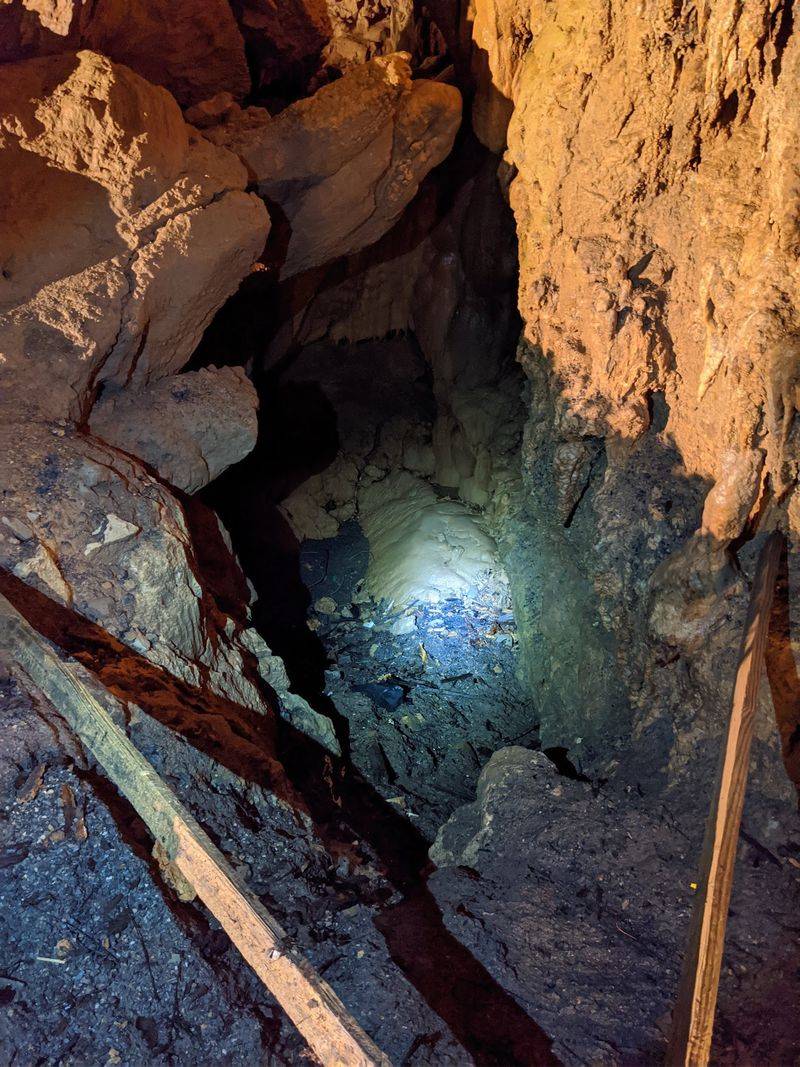
Back in 1942, researchers from Virginia Polytechnic Institute explored a deep vertical shaft in this hillside. They called it Grapevine Cave, which sounds far cozier than the reality.
Local farmers had reportedly used that original opening as a dumping spot for years. Not exactly a grand welcome for future tourists.
Everything changed in 1970, when a new entrance was dug and the caverns opened to the public. Early visitors went down a spiral stairway before a safer entrance tunnel replaced it in 1981.
In November 1973, the cave was registered as a National Natural Landmark. That federal recognition honors places with outstanding natural features, so the formations earned serious respect.
You can still see where the story began. A short walk leads to the natural entrance outside, where you can look down and understand how people first got in.
Peering into that shaft makes the modern tunnel feel like a luxury. It also gives you a real sense of how deep the main chamber sits.
West Virginia has plenty of proud local history. This little chapter, full of curious scientists and practical farmers, deserves a spot on that list.
Your Own Pace On A Half-Mile Loop
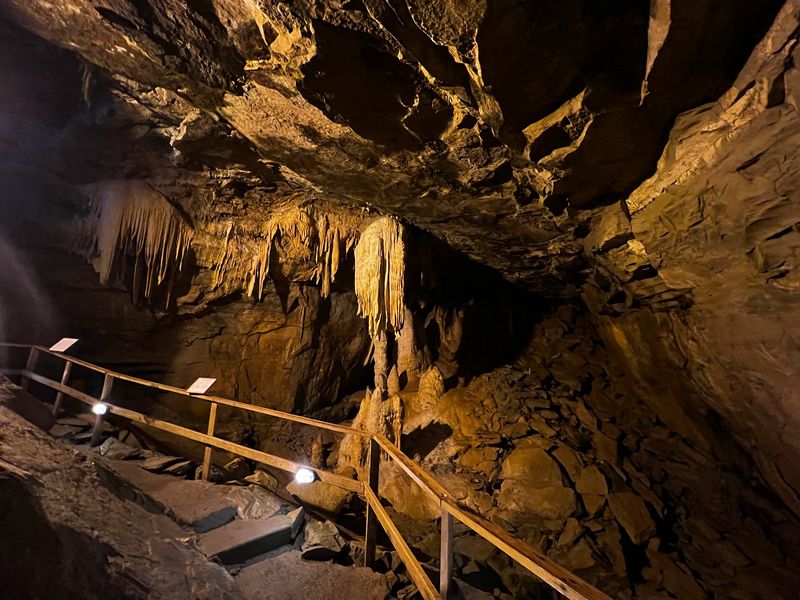
Staff give a quick history, then basically tell you to head on in. That freedom is the best part of the regular tour.
The path goes down an inclined passage with around 50 steps. Going down is easy, while climbing back up counts as your exercise for the day.
Once below, the trail follows a one-way half-mile loop. You won’t bump into folks heading the other direction, which keeps things calm.
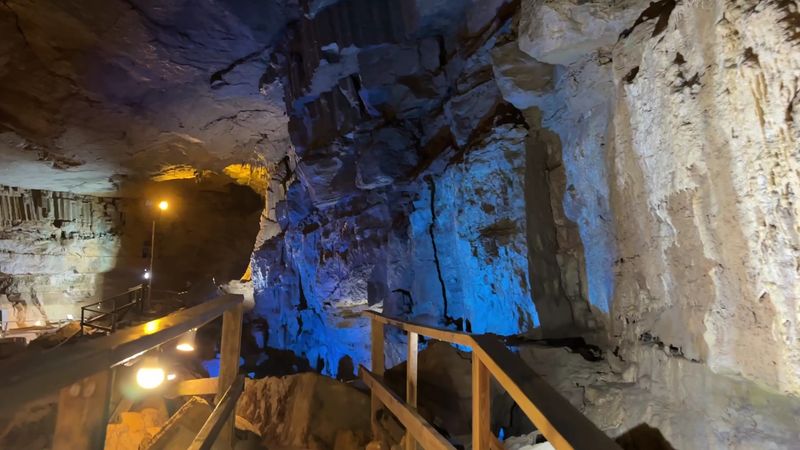
Colorful lights show off the formations, and short signs explain what you’re seeing. They inform without turning the walk into homework.
Walkways are sturdy, with solid handrails along the route. Since it is an active cave, some spots stay wet and can get slippery.
Wear shoes with good tread and bring a light jacket or hoodie. A couple of low spots may make taller people duck briefly.
Folks who struggle with stairs, uneven ground, or breathing issues may want to skip the descent. Everyone else gets to linger, snap photos, and stare upward without anyone tapping a watch.
Honestly, a guided tour could never let you stand still this long. Take advantage of it.
Thirty Tons Of Snowy White Calcite Hanging Overhead
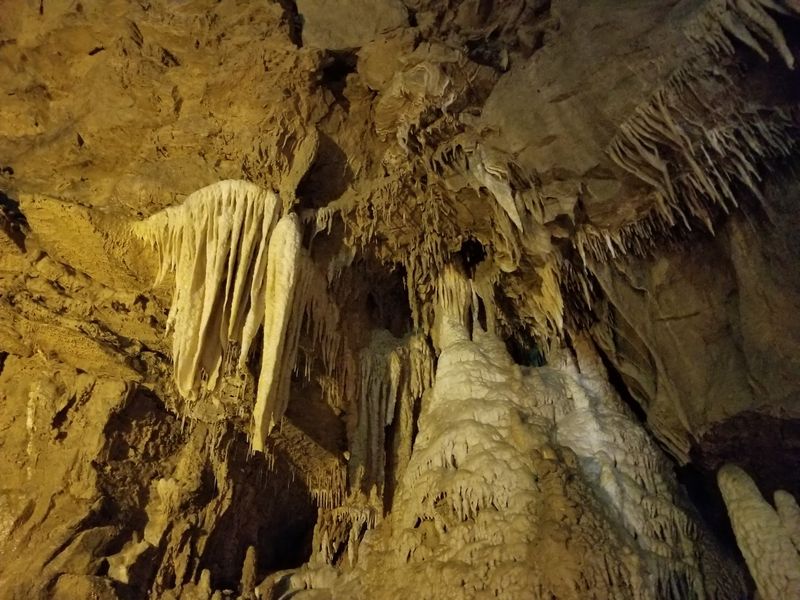
Thirty tons. That’s the reported weight of the Snowy Chandelier, and it hangs right over your head.
The formation is a compound stalactite, meaning many growths joined into one massive piece. It’s considered one of the largest in the nation.
Its bright white color sets it apart from the darker rock around it. The shape really does resemble a fancy chandelier, minus the electric bill.
Better yet, the Snowy Chandelier is still active. Water keeps dripping, adding tiny layers of mineral over very long stretches of time.
I can’t imagine how many centuries went into each inch. Standing beneath it puts your own busy week in fresh perspective.
Listen closely nearby, too. The Vanishing Stream flows under this area and disappears through the rocks, leaving only the sound behind.
That pairing of shining stone and hidden water makes this the emotional center of Lost World Caverns. It’s the kind of view people try to photograph, then admit the picture can’t match it.
Give yourself a few extra minutes here. The loop is short, so nobody will mind if you pause and look up a while.
Goliath, The Bridal Veil, And A Record-Setting War Club
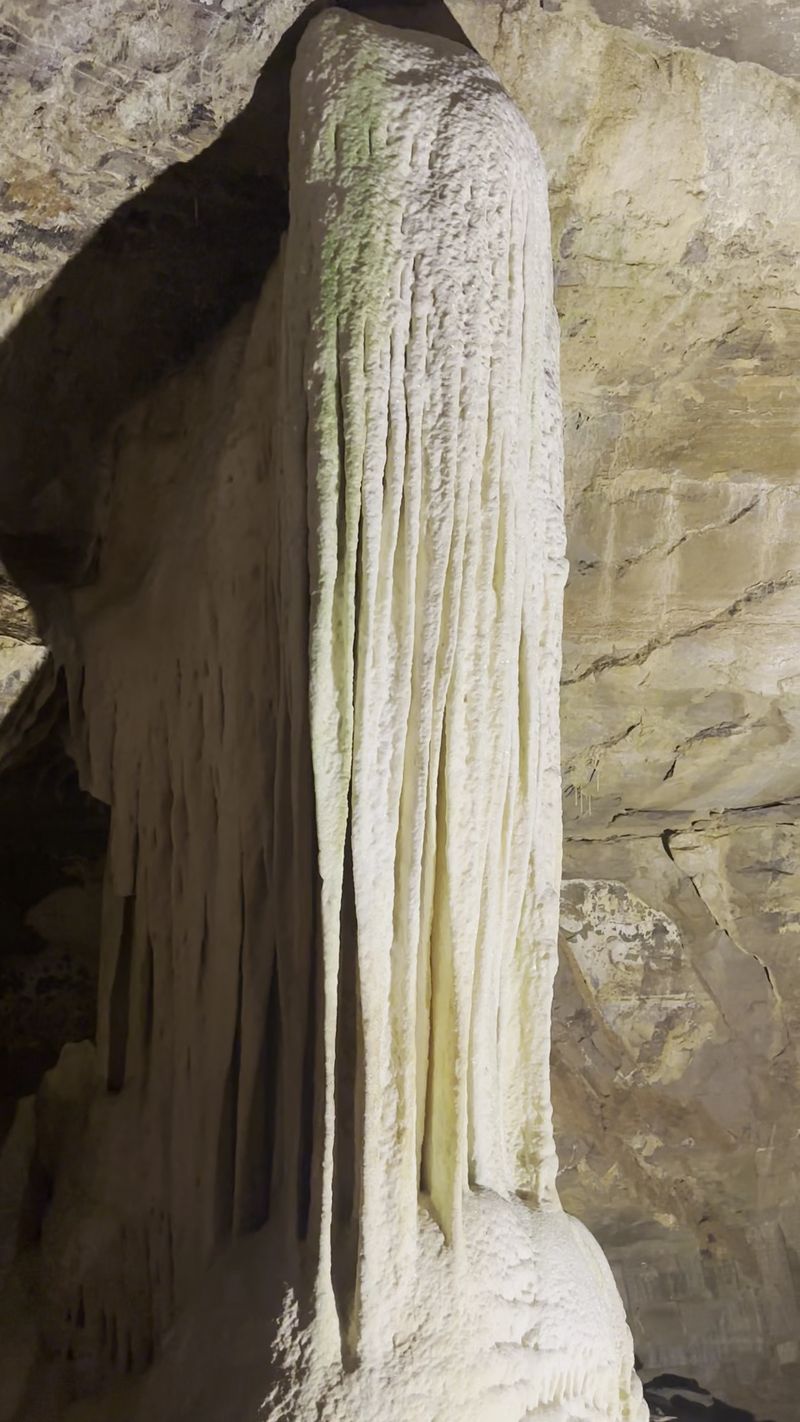
In 1971, cave manager Bob Addis climbed atop a 28-foot stalagmite and stayed there for nearly 16 days. He reportedly set an unofficial world record for stalagmite sitting.
That formation is called the War Club. It may be the only rock in West Virginia famous for its patient human guest.
Goliath brings a very different kind of fame. This giant column rises about 40 feet and is estimated to be around five million years old.
Then comes the Bridal Veil, a pale column of white calcite. Its soft flowing look explains the name instantly.
Many formations along the loop carry playful, whimsical names. Spotting what inspired each one becomes a little game for the whole group.
The scale surprises people most. These features are huge, and the chamber feels roomy rather than cramped.
Kids will probably fixate on the stalagmite-sitting story. Adults may wonder how anyone packed snacks for two weeks on a rock.
Either way, these formations give the cave personality beyond pretty shapes. Each one comes with a story worth retelling at dinner.
Crawling Through The Wild Cave Tour
Some people finish the walking loop and immediately want more. For them, the Wild Cave Tour heads into undeveloped parts of the cave.
This guided trip lasts about four hours. Expect crawling, climbing, squeezing through tight passages, and getting thoroughly muddy.
Guides lead small groups and provide the needed gear. Snacks and a home-cooked lunch are part of the package, which helps after all that scrambling.
The route reaches spots like the Angel’s Roost and the Hall of the Mountain King. Few visitors on the public path ever see those areas.
Guides here earn praise for knowledge and humor. Bad jokes in a dark tunnel somehow land better than they should.
This option suits adults and older kids who enjoy a real physical challenge. It’s not the choice for anyone nervous about tight spaces.
Wear clothes you don’t care about saving. Torn pants are a very real possibility down there.
Parents looking for a memorable adventure of their own should take note. It’s a chance to try something bold, not just supervise from the sidelines.
A Prehistoric Cave Bear In The Museum
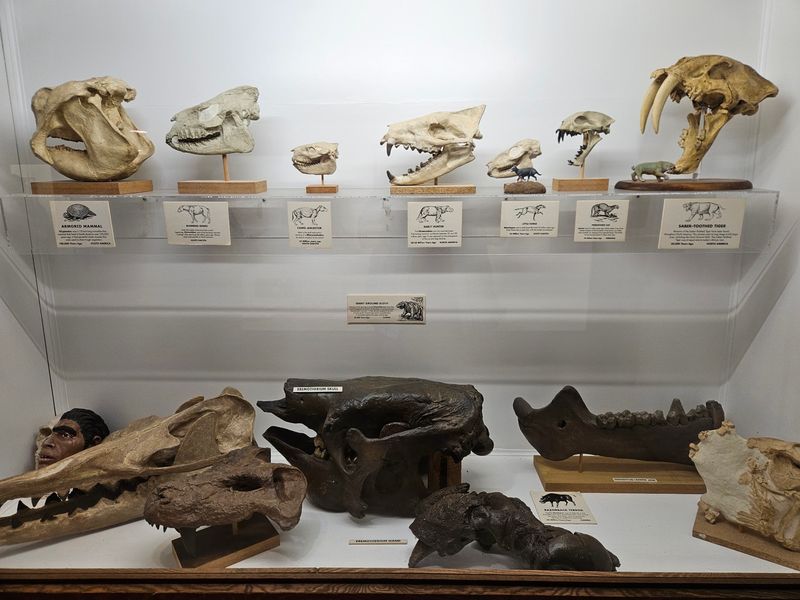
Long before tourists arrived, a short-faced cave bear apparently found its way into these depths. Its remains, known as Arctodus pristinus, were discovered inside the caverns in 1967.
Today those bones anchor the on-site natural history museum. Seeing an ancient local resident makes the cave feel even older.
The museum also features a large collection of dinosaur fossils and replicas. The dinosaur display is a clear favorite with younger guests.
Grown-ups will find plenty to enjoy as well. Some truly impressive artifacts sit alongside the familiar crowd-pleasers.
It works well before or after the cave walk. You can start with the fossils, then go underground with a better sense of deep time.
Visitors who can’t handle the steep stairs still have something meaningful to explore here. Nobody gets left in the parking lot with nothing to do.
I like that the museum ties back to the cave itself. The bear wasn’t trucked in from somewhere else, since it came right from below your feet.
That local connection gives the exhibit real weight. It’s science with a hometown address.
Geodes, Gem Mining, And Some Friendly Llamas
A 3,000-square-foot gift shop greets you, and resisting it takes real willpower. Shelves hold geodes, minerals, fossil replicas, clothing, puzzles, toys, and snacks.
Some items are genuinely rare and unusual. Rock lovers could happily spend an hour just browsing.
Gem mining adds a hands-on bonus. You sift material through a water sluice to find gemstones, minerals, arrowheads, or fossils, and you keep what you find.
Outside, a picnic area offers tables and calm country views. Packing a lunch makes the day stretch further on a budget.
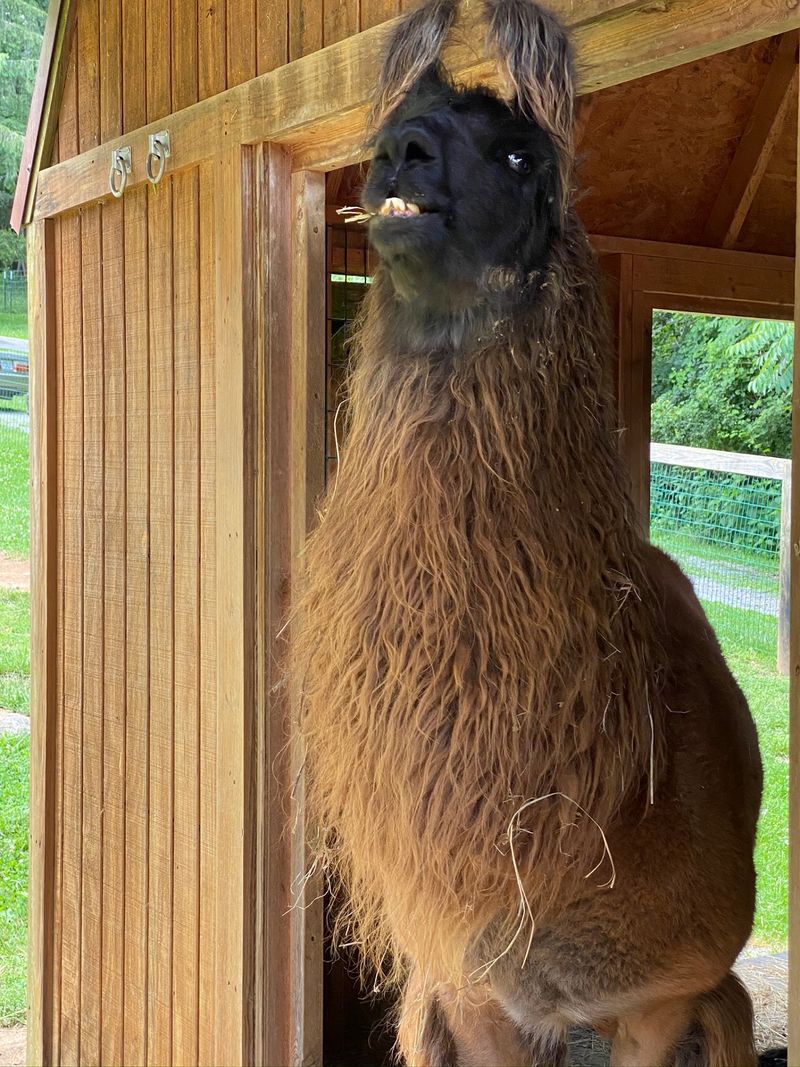
The farm property also hosts Barnyard Encounters. Horses, goats, llamas, and even a macaw may make an appearance.
A water wheel on site makes a nice photo backdrop. There’s also a wishing well, so bring a coin.
These extras turn a 45-minute cave walk into a fuller outing. That matters when you’re paying for gas and want your stop to count.
Ticket prices are widely described as reasonable, too. For families watching spending, that’s a welcome change from pricier attractions.
Planning Your Trip Just Outside Lewisburg
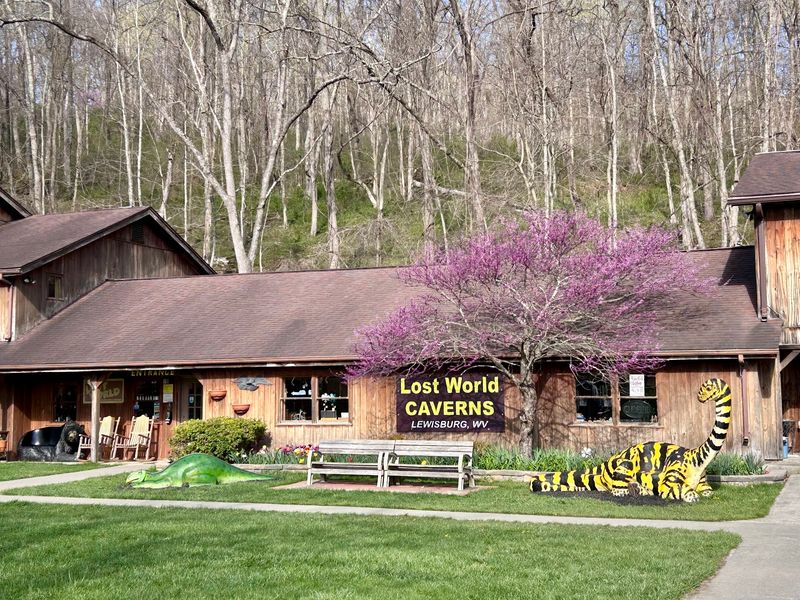
Getting here is refreshingly simple. You’ll find Lost World Caverns at 907 Lost World Rd, Lewisburg, WV 24901, just minutes from Interstate 64.
Clear signs guide you along the way. Many travelers make it a detour between bigger destinations, and few seem to regret it.
Current listings show daily hours from 9 a.m. to 4:15 p.m. Hours shift with the seasons, so check ahead before you go.
In winter, the schedule has typically shortened to weekends. The caverns also close on Thanksgiving and Christmas Day.
Arrive with time to spare before closing. The last tour starts before the doors shut, and you’ll want room to enjoy the shop afterward.
Historic Lewisburg sits close by with restaurants for a meal after your visit. That makes it easy to build a relaxed West Virginia day around the cave.
So is it worth it? For a modest price, you get a landmark cave, a 30-ton chandelier, and a man who sat on a rock for 16 days.
That’s a pretty good return on an hour. I’d call it one of the easiest yeses on Interstate 64.
