Indiana hides its best stories right beside the highway, and I drove past most of them for years without ever slowing down. Then one autumn afternoon I finally pulled off at one of those brown signs, and the whole state cracked open in ways I did not expect.
Ancient earthen mounds along a quiet river, a home that once helped families escape slavery, a utopian town built beside the Wabash, a president’s parlor tucked into a city block.
Each stop sits close enough to a familiar route that you could reach it on a whim, yet far enough into the past to change how you see the place you live.
I came home with muddy shoes, a notebook full of scribbles, and a strange new affection for this state’s history. Nine landmarks make up that route, all worth the detour you keep putting off.
Angel Mounds State Historic Site, Evansville
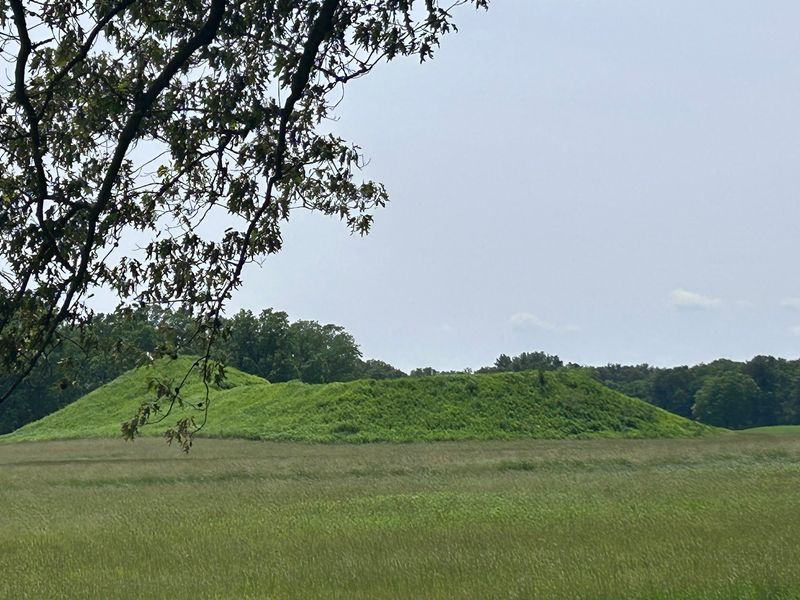
My first surprise here was the silence. Grass-covered rises spread out across the ground, and once someone explains what you are looking at, the whole field changes shape in your mind.
Between roughly 1000 and 1450 AD, this was a busy Mississippian town, the largest settlement in what we now call Indiana. Eleven earthen mounds still survive, along with traces of a defensive palisade that once wrapped around the community.
Politics, trade, religion, and daily family life all happened on this ground, centuries before Europeans arrived. It ranks among the best-preserved ancient Native American sites in the country, which feels remarkable for a place so close to a city street.
The interpretive center gave me context I badly needed, with archaeological exhibits laying out how these people farmed, built, and organized themselves. There is also a replica of a 1939 Works Projects Administration archaeology laboratory, which I found oddly charming.
Outside, mowed trails loop between the mounds and past recreated Mississippian structures. Wear real shoes.
Most of the experience happens under open sky, and the landscape itself does much of the storytelling.
What stayed with me was scale. Standing on the grass, imagining hundreds of homes and voices, made the drive along the Ohio River feel entirely different on the way back.
Address: 8215 Pollack Avenue, Evansville, Indiana 47715
Levi Coffin House, Fountain City
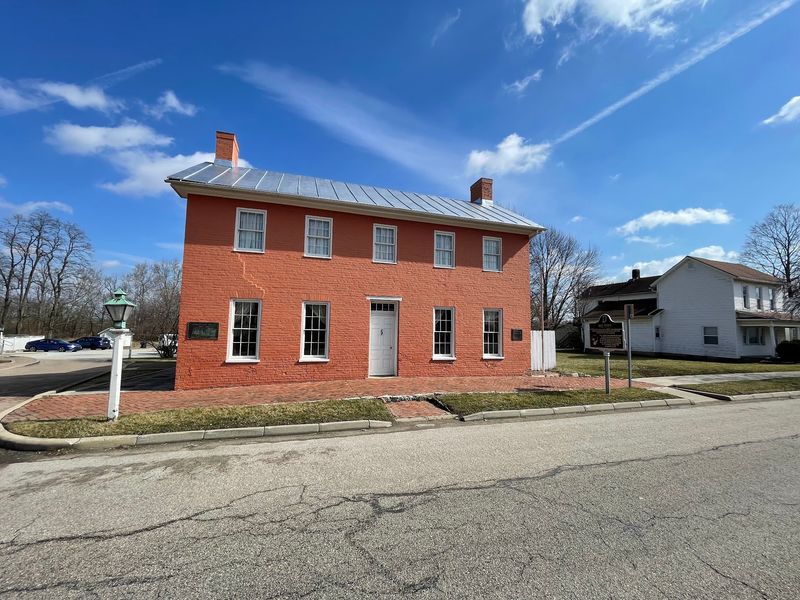
A plain brick house on a small-town corner, and yet I stood outside it for a while before going in. Some buildings carry more weight than their size suggests.
Levi and Catharine Coffin were Quaker abolitionists, and their Federal-style home became known as the Grand Central Station of the Underground Railroad. Between 1826 and 1847, an estimated 2,000 to 3,300 freedom seekers passed through these rooms.
Slave hunters never successfully breached the house. That fact comes down to clever architecture and the Coffins’ constant watchfulness, and hearing it explained aloud gave me chills.
Guided tours move through all eight rooms, restored to look as they did in the 1840s. The details are what stick with you.
There is a basement kitchen and an indoor well, both allowing food and water to reach hidden guests without anyone stepping outside where neighbors might notice. Small design choices, enormous consequences.
Today it operates as a museum, and the guides keep the focus on courage rather than drama. I appreciated that restraint.
Fountain City itself is quiet, the kind of place you cruise through in ninety seconds. Give it an hour instead, then drive on with the conversation still going in the car.
Address: 201 U.S. 27 North, Fountain City, Indiana 47341
New Harmony Historic District
Few towns have tried twice to build a perfect society. This one did, and you can still walk through the evidence on a single afternoon.
Harmonie came first, founded in 1814 by George Rapp and his Harmonist Society, a religious group pursuing Christian perfection through communal living. In 1825 the Scottish industrialist Robert Owen bought the settlement outright and renamed it New Harmony, aiming instead for a secular community built on education, science, and social equality.
Owen drew intellectuals and reformers from all over. Both experiments eventually came apart, though their influence on American education, science, and social reform outlasted them by generations.
I started at the Atheneum Visitors Center, where guided tours begin, then wandered between Harmonist and Owenite buildings. Thrall’s Opera House, the Rapp-Owen Granary, and the Working Men’s Institute all reward a slow look.
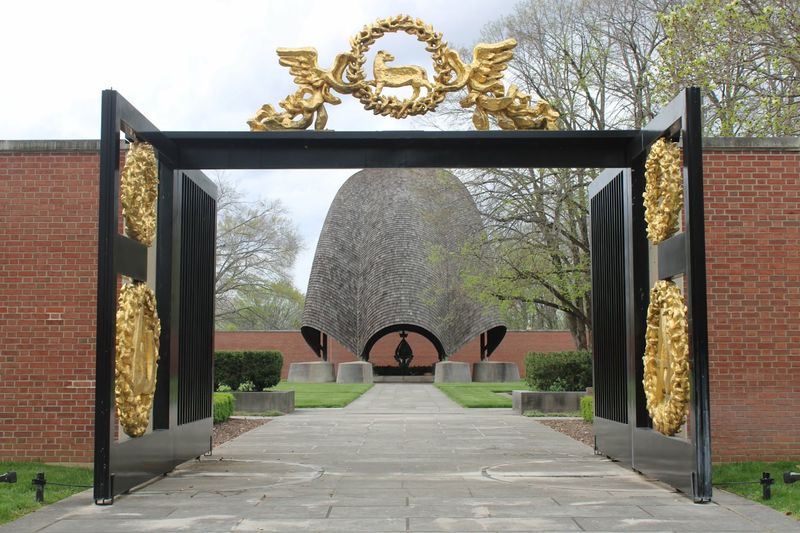
Then things get unexpectedly modern. The open-air Roofless Church, designed by Philip Johnson, sits under actual sky, and two labyrinths invite the kind of aimless walking I rarely allow myself.
Public gardens, art galleries, and views of the Wabash River fill whatever time is left. I lingered longer than planned.
Honestly, this stop feels less like a museum town and more like an ongoing conversation about how people might live together.
Address: 410 Main Street, New Harmony, Indiana 47631
Benjamin Harrison Presidential Site, Indianapolis
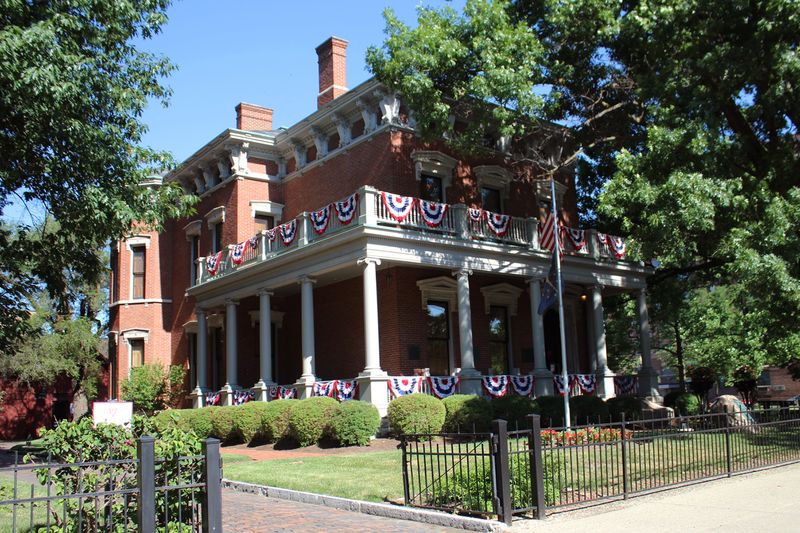
Indiana has produced exactly one U.S. President, and his house sits on a leafy Indianapolis street where I had parked more than once without noticing it.
Benjamin Harrison, the twenty-third President, lived here, and the home has been preserved with real care. The rooms trace his path from studious young man to Civil War general to the White House.
His presidency is often credited with helping usher in the Progressive Era, which is a bigger legacy than most people realize. The site does a good job connecting those dots without turning into a lecture.
Docent-led tours are the way to see it. Mine moved at a comfortable pace and left room for questions, which I asked probably too many of.
Original Harrison artifacts fill the rooms, from furnishings to personal items, and they do something photographs cannot. You start picturing an actual family eating dinner and arguing about politics upstairs.
Special events pop up throughout the year, so it is worth checking what is happening before you go. I stumbled into one by accident and it made the visit.
Because it sits so close to downtown, this makes an easy pairing with other city stops. Give yourself more time than you think you need, though.
The details pull you in.
Address: 1230 North Delaware Street, Indianapolis, Indiana 46202
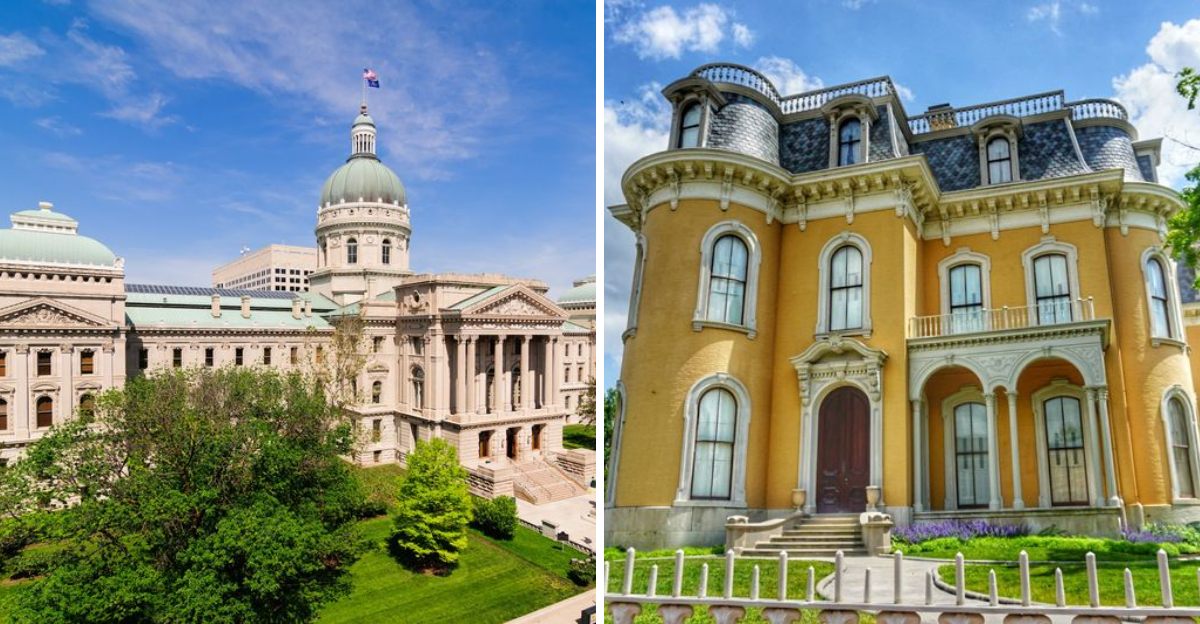
Indiana Statehouse, Indianapolis
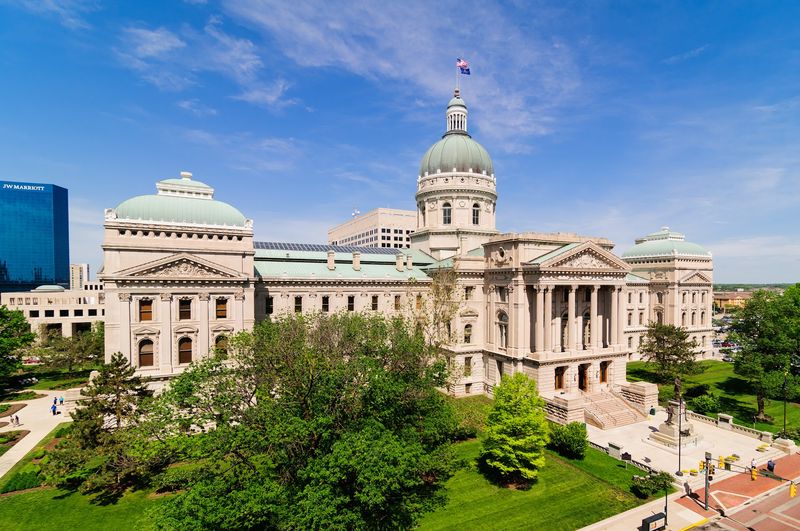
I had walked past this building for years assuming you needed an appointment to get inside. You do not, and that discovery still slightly annoys me.
Completed in 1888, the Statehouse is the fourth building to house Indiana’s government. All three branches work here, legislative, executive, and judicial, along with the Governor’s Office.
So it is a working building, not a frozen exhibit. Staff move through the halls with folders and coffee while visitors crane their necks upward.
Guided and self-guided tours are both free. The rotunda is the showstopper, with light filtering down through stained glass in a way that makes everyone stop mid-sentence.
You can also step into the historic legislative chambers and view the Supreme Court, which felt like peeking behind a curtain. I did not expect the courtroom to be my favorite part, but here we are.
Marble, brass, and carved wood are everywhere, and the acoustics turn ordinary footsteps into something ceremonial. Look up often.
Beyond the architecture, the tours explain how state government actually functions, which is genuinely useful whether you are twelve or fifty. Bring a camera and comfortable shoes.
Parking downtown takes patience, so plan an unhurried morning and combine it with a walk along the canal afterward.
Address: 200 West Washington Street, Indianapolis, Indiana 46204
Gene Stratton-Porter State Historic Site, Rome City
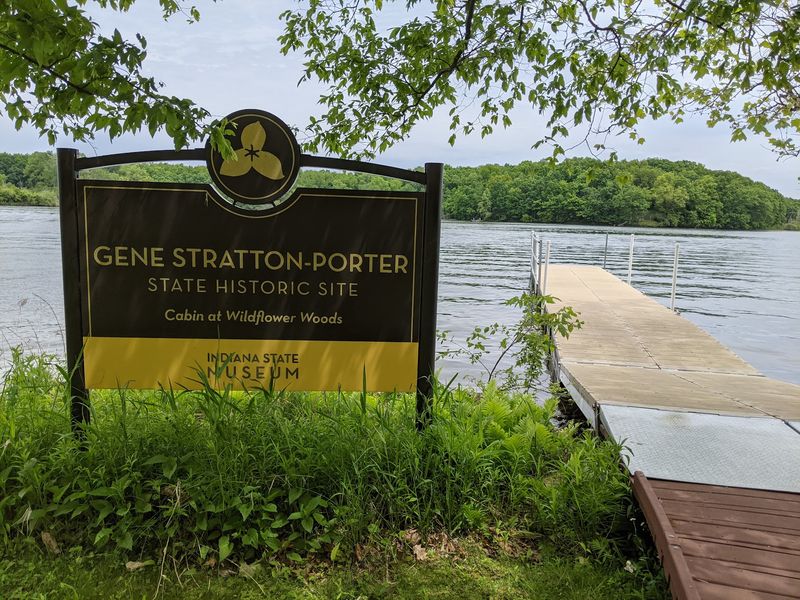
Here is a name more Hoosiers should know. Gene Stratton-Porter was an author, naturalist, and conservationist, and she built her life around this patch of woods and water.
Wildflower Woods was her home from 1913 until her death in 1924. Sylvan Lake sits nearby, and a stretch of untouched virgin forest still grows on the property, which has earned national recognition for its ecological value.
She is considered one of the world’s first nature photographers. She also argued loudly for conservation long before that was fashionable, which I find quietly heroic.
Guided tours of her 1914 cabin reveal original furnishings and personal collections, and the rooms feel lived in rather than staged. You get a sense of her habits.
Outside, 148 acres of fields, woods, and formal gardens invite slow wandering. Everything out there fed her writing and photographs, so the grounds are not scenery, they are source material.
The Carriage House Visitor Center holds exhibits on local plants and animals, including displays about moths, wildflowers, and woodpeckers. That combination tells you exactly what she paid attention to.
I went in curious about a house and left wanting to read her books. Bring bug spray in summer, and leave time to simply sit near the water.
Address: 1205 Pleasant Point, Rome City, Indiana 46784
Lincoln Boyhood National Memorial, Lincoln City
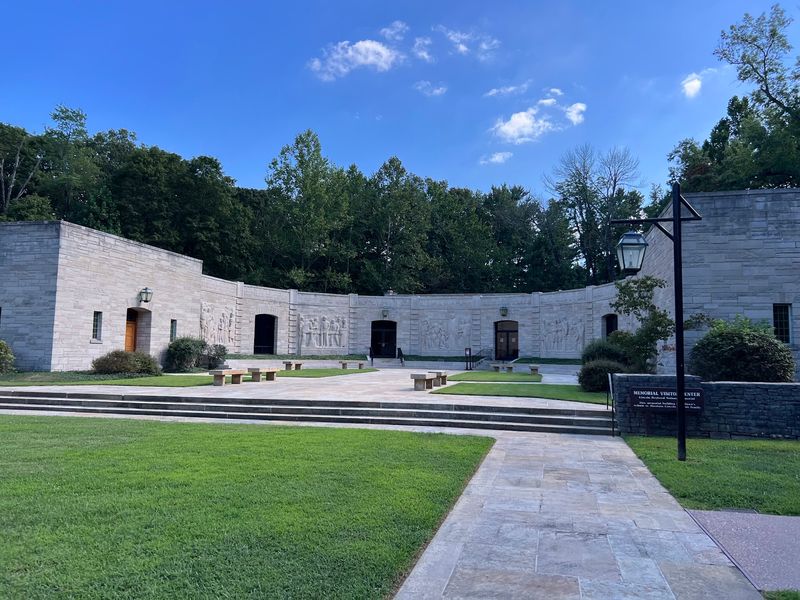
Kentucky claims his birth and Illinois claims his career, but Abraham Lincoln grew up right here in southern Indiana. That detail gets lost surprisingly often.
He lived on this farm from age seven to twenty-one, from 1816 to 1830. Fourteen formative years, spent splitting rails, reading whatever he could find, and losing his mother.
Nancy Hanks Lincoln is buried in the quiet Pioneer Cemetery on site. Standing near her grave slowed me down more than any exhibit did.
The visitor center holds a museum of artifacts, an orientation film, and memorial halls built for reflection rather than crowds. Start there, because the context helps everything else land.
Then head outside to the Living Historical Farm, where period structures and hands-on activities recreate nineteenth century pioneer routines. Kids tend to love this part, and honestly, so did I.
The wooded Lincoln Boyhood Trail makes for a peaceful walk, especially in fall when the oaks turn. Birdsong, gravel underfoot, not much else.
The memorial is also significant to the wider preservation movement, honoring Lincoln’s Indiana years specifically. That focus keeps it from feeling like a repeat of other Lincoln sites.
Plan a couple of hours minimum. Rushing through would miss the whole point of a place built around reflection.
Address: 3027 East South Street, Lincoln City, Indiana 47552
Culbertson Mansion, New Albany
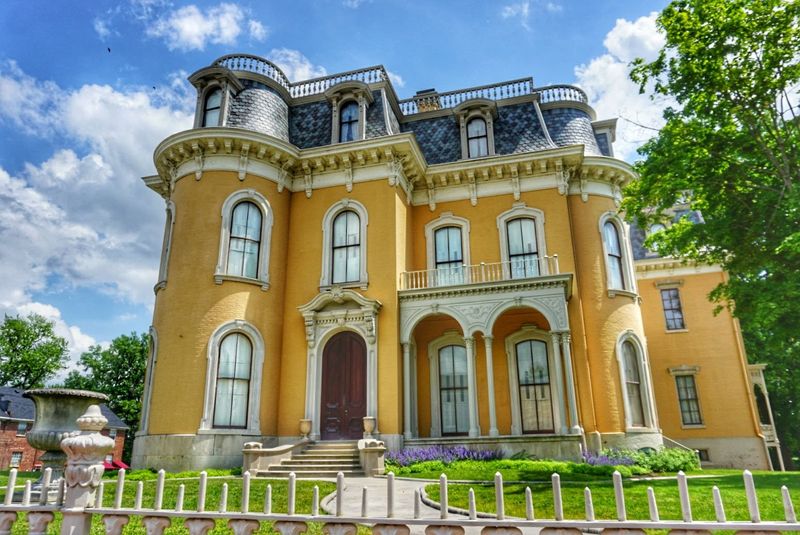
Twenty-five rooms and twenty thousand square feet, right on a New Albany street where you would never guess such excess hides behind the facade.
Built between 1867 and 1869 for William S. Culbertson, this Second Empire mansion belonged to a man once considered the wealthiest in Indiana.
He worked as an industrialist, financier, and philanthropist, and he clearly enjoyed spending.
The house is a masterclass in Victorian craftsmanship. It also shows, without much subtlety, how the very rich lived in the late 1800s.
Guided tours walk you through hand-painted ceilings, marble fireplaces, and crystal chandeliers that throw light across the rooms. The carved rosewood-grained staircase drew an audible reaction from everyone in my group.
Guides talk about the Culbertson family, their charitable work in the community, and the painstaking restoration aimed at returning the interior to its 1869 appearance. Hearing about the restoration process was unexpectedly fascinating.
Special events fill the calendar throughout the year, giving the place a different mood depending on the season. Ask what is coming up.
Look up constantly on this tour. The ceilings are where the real showing off happens, and they are easy to miss while admiring the furniture.
It makes a fitting last stop, a reminder that Indiana history includes both quiet courage and spectacular flourish.
Address: 914 East Main Street, New Albany, Indiana 47150
West Baden Springs Hotel, West Baden Springs
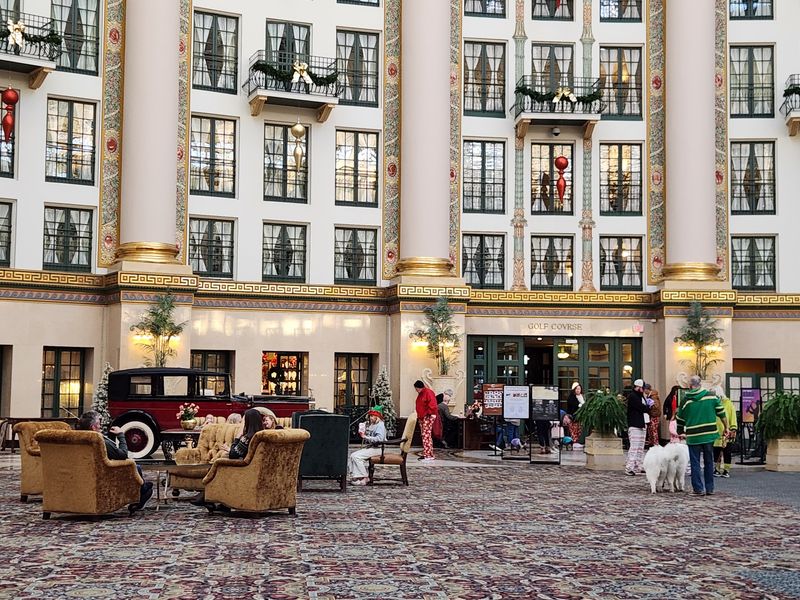
I did not expect a valley surrounded by quiet hills to hide the eighth wonder of the world. But there it sat, a sprawling luxury oasis with an immense, breathtaking dome that completely dominated the landscape from the moment I stepped inside.
Built in 1902 after a fire destroyed the original structure, this West Baden Springs Hotel belonged to an era of unvarnished American opulence. Lee Sinclair designed the masterwork as a playground for wealthy travelers chasing mineral springs, jazz, and illegal gambling.
The hotel is an engineering triumph. It features a historic 200-foot free-span atrium dome that stood unrivaled in scale anywhere on Earth until the mid-1960s.Guided tours lead you through six tiers of elegant rooms, mosaic tile floors, and a massive brick fireplace that anchors the atrium space.
The sheer acoustics under the soaring iron arches drew an audible reaction from everyone in my group. Guides talk about the hotel’s colorful past as a premier resort, a Jesuit seminary, and a forgotten ruin before a monumental restoration saved it.
Special events fill the calendar, adding to the grandeur. Look up constantly on this tour.
The immense circular skylight is where the real showing off happens, capping a spectacular flourish of Indiana history.
Address: 8670 West State Road 56, West Baden Springs, Indiana 47469
