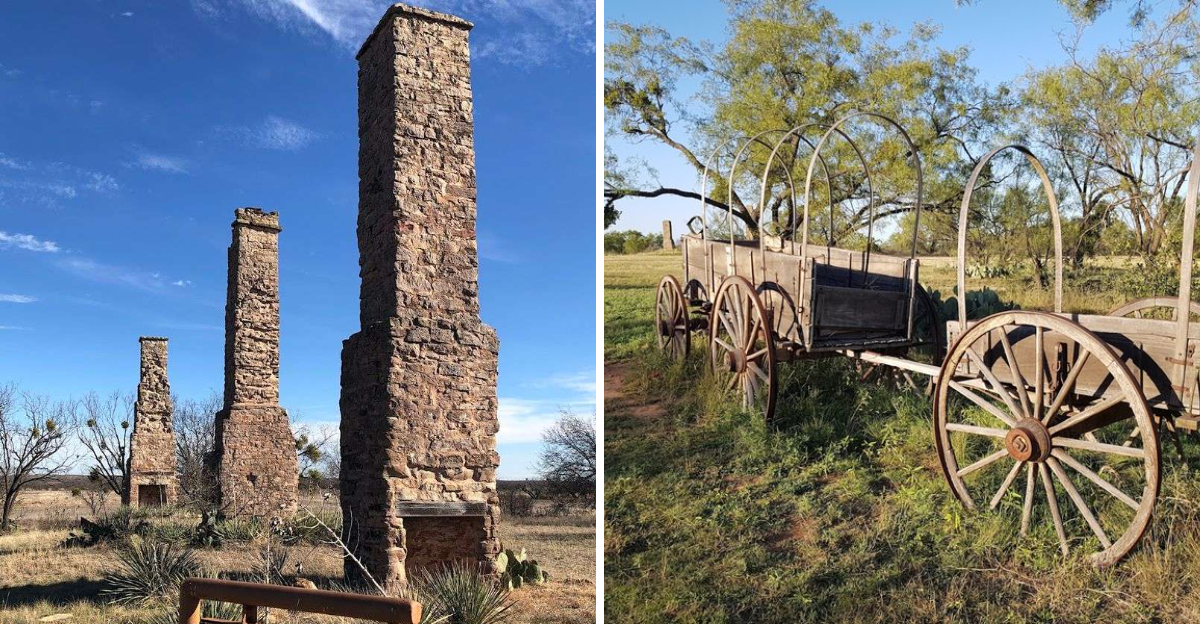
A frontier fort that was abandoned before it even had time to grow old. That is Fort Phantom Hill.
Established in 1851 and deserted just a few years later, these ruins have been standing in the West Texas landscape for over 150 years. The stone walls are weathered, the chimneys still reach toward the sky, and the whole place has an eerie, beautiful stillness to it.
You can walk among the remains, imagine what life was like for the soldiers stationed there, and feel a connection to Texas history that is hard to find elsewhere. It is not a polished museum with gift shops and tour guides.
It is raw, quiet, and hauntingly preserved. A place like this deserves a spot on your bucket list.
It tells a story that is still being written.
A Journey to the Past, The Frontier’s Edge
The grounds of Fort Phantom Hill carry a weight that you feel before you even read the first interpretive sign. This was one of the so-called “second line” of frontier forts that the U.S.
Army strategically placed across Texas in the early 1850s, designed to shield westward-moving settlers from the dangers of an untamed territory.
The Comanche and other Native American tribes held firm to these lands, and the tension between expansion and resistance defined every day of the fort’s brief existence.
Lieutenant Colonel John J. Abercrombie led five companies of the Fifth Infantry to this site on November 14, 1851.
They had a mission, a difficult landscape, and very little else to work with. The U.S.
Army initially called the post “Post on the Clear Fork of the Brazos,” a purely functional name that gave no hint of the dramatic story that would unfold here.
Settlers pushing toward California in search of gold needed protection, and Fort Phantom Hill was meant to provide exactly that. It served as a federal anchor in a landscape that had no shortage of risk.
Knowing this history as I walked the grounds made each crumbling wall feel less like a ruin and more like a chapter from a story that shaped the entire American West. The frontier was not a romantic concept here; it was a daily reality carved into every stone.
Unraveling the Mystery of the Phantom Name
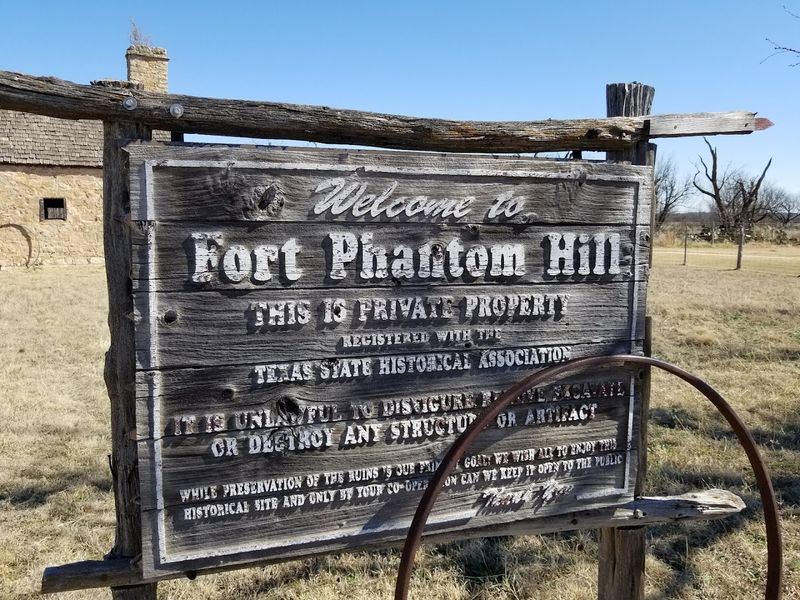
Few historical sites come with a name as intriguing as Fort Phantom Hill, and the story behind it is genuinely fascinating. The name was never official; it grew organically from a quirky geographical trick that fooled travelers crossing the flat West Texas plains.
From a distance, the hill on which the fort sits appears to rise sharply and dramatically from the surrounding terrain, a clear and unmistakable landmark on the horizon.
The closer you get, though, the more the elevation seems to melt away. The ground levels out gradually, and that bold hill you spotted from miles back simply vanishes, like a mirage dissolving in the heat.
Early soldiers and travelers found this deeply unsettling, maybe even a little eerie, and the name “Phantom Hill” stuck because it captured exactly what the land seemed to do.
I love this detail because it tells you something real about how people experienced this landscape. It was not just physically harsh; it played tricks on your perception.
The name became a kind of unofficial truth about the place, one that the soldiers never officially adopted but never stopped using either. There is something poetic about a fort named after an illusion, especially one that burned down and left behind only ghostly stone remnants.
The name fits perfectly, in ways its original inhabitants probably never intended but would certainly recognize.
A Fort Built on Hardship and Determination
Nothing about building Fort Phantom Hill was easy, and the soldiers who did it knew that from the very first day. The location, adjusted by General Persifor F.
Smith, turned out to be deeply problematic from a practical standpoint. Water was the biggest issue.
Elm Creek nearby was frequently bone dry, and the Clear Fork water was often too brackish to drink comfortably.
An 80-foot well dug near the guardhouse helped but was never fully reliable. Soldiers regularly hauled barrels of fresh water from a spring four miles upriver, a tedious and exhausting task that added to an already punishing daily routine.
Timber for officers’ quarters and the hospital had to be hauled by ox wagon from forty miles away. That kind of effort, for a post that would only last three years, is almost hard to wrap your head around.
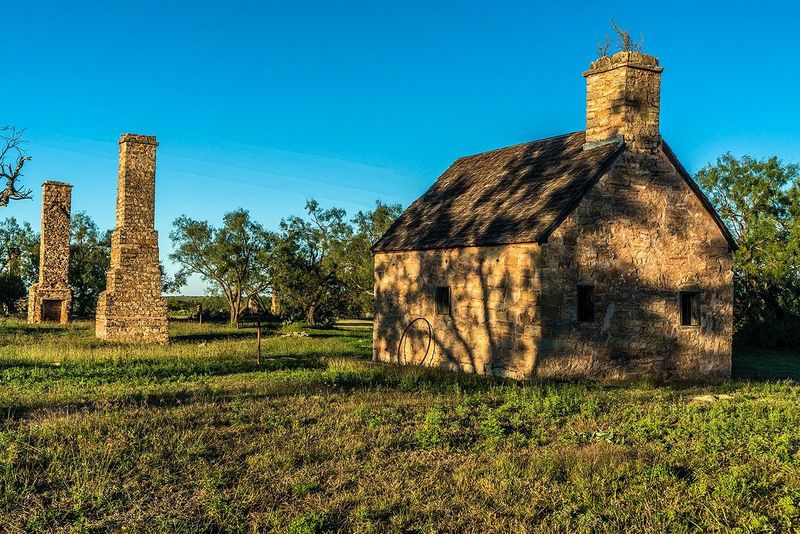
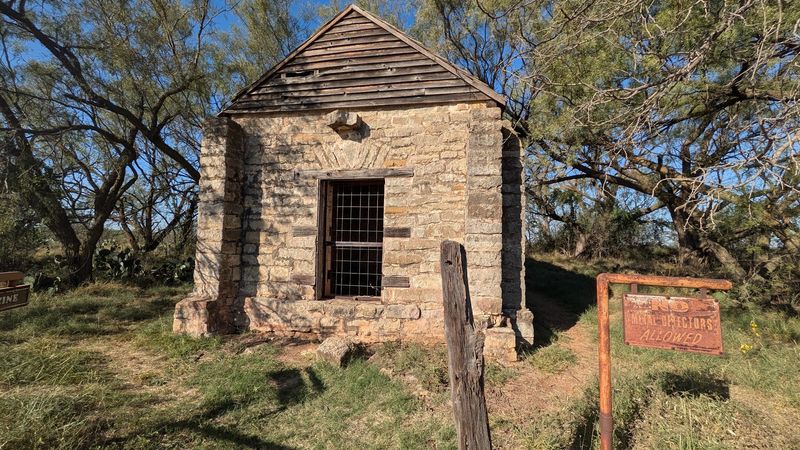
Most of the company quarters were built using jacal construction, a method involving vertical poles woven with brush and packed with mud, topped by thatched roofs. Only the powder magazine, guardhouse, and commissary storehouse were built entirely from stone.
The West Texas climate delivered freezing winters, brutal summers regularly hitting above 100 degrees Fahrenheit, fierce winds, and hailstorms that hammered the fragile structures.
Disease spread through the garrison constantly, with fevers, stomach ailments, and scurvy keeping the small hospital perpetually busy.
The soldiers endured it all, which makes the ruins feel less like failure and more like proof of something remarkable.
A Short Stint, Then the Flames
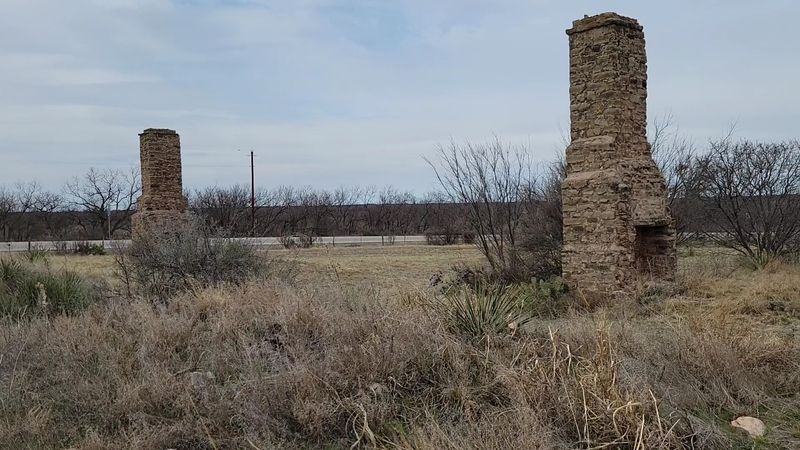
After all that effort, the U.S. Army walked away from Fort Phantom Hill on April 6, 1854, less than three years after arriving.
The reasons were practical: persistent water shortages made the location unsustainable, and the establishment of reservations elsewhere had temporarily reduced the perceived threat from Native American tribes.
It was a calculated decision, but it must have felt deeply anticlimactic to the men who had sacrificed so much to build the place.
What happened next is where history gets genuinely murky. Shortly after the garrison departed for El Paso, the fort burned.
Almost completely. The theories surrounding the fire range from a furious officer’s wife seeking revenge, to a deliberate act by departing soldiers fed up with the miserable conditions they had endured.
No one was ever definitively charged, and the truth has never been confirmed.
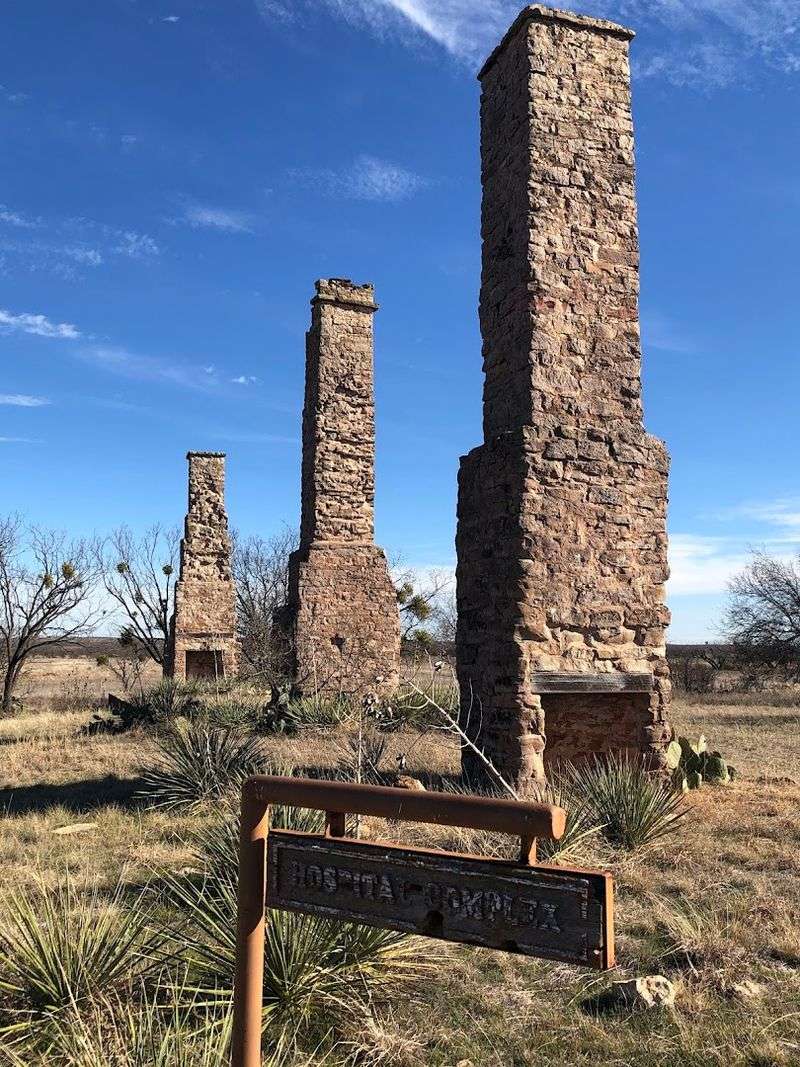
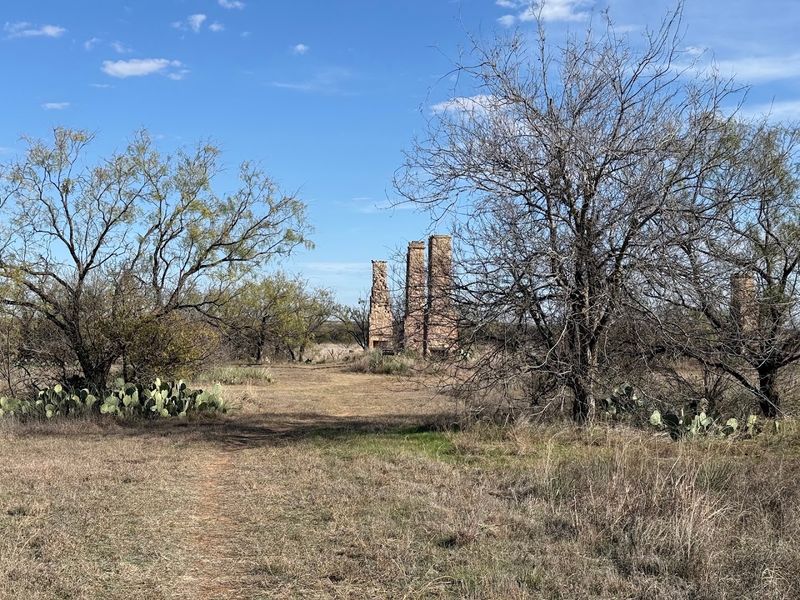
The fire left behind the stone structures, which could not burn, and stripped everything else away. Chimneys that once anchored barracks now stood alone in the open air, which is exactly how they look today.
There is something haunting about imagining that night, the orange glow rising against the dark Texas sky, the sound of timber collapsing. Whether it was rage, relief, or something else entirely that sparked the flames, the result transformed Fort Phantom Hill into the iconic ruin it remains today.
Mystery suits this place well.
From Military Outpost to Mail Route and More
Abandoned and scorched, Fort Phantom Hill could have simply faded into the Texas prairie without another chapter. Instead, it kept reinventing itself.
In 1858, the surviving stone structures were repaired and put back to work as Way Station Number 54 along the Southern Overland, or Butterfield, Mail route.
A New York Herald correspondent traveling through reportedly praised it as one of the best-constructed stations on the entire route, a sharp upgrade from its military reputation.
The Civil War brought more activity. Confederate forces used the site as a base of field operations, with units under Colonel James B.
Barry and the Frontier Battalion making use of the durable stone structures. Later, from 1871 to 1875, it operated as a sub-post for Fort Griffin.
The Buffalo Soldiers of the 9th U.S. Cavalry also fought Comanche and Kiowa forces near the site in 1869, adding yet another layer to its complex history.
A small town eventually grew up around the ruins, briefly serving as a buying and shipping point for buffalo hides during the intense slaughter of the Southern Plains herds in 1876 and 1877. It even held the Jones County seat title in 1881.
When the Texas and Pacific Railway chose a route through Abilene instead, the town declined rapidly and was largely gone by the late 1890s.
Fort Phantom Hill had hosted soldiers, mail riders, Confederate troops, and buffalo traders, a remarkable range of stories for one small patch of West Texas ground.
Walking Among the Chimneys, Echoes of the Past
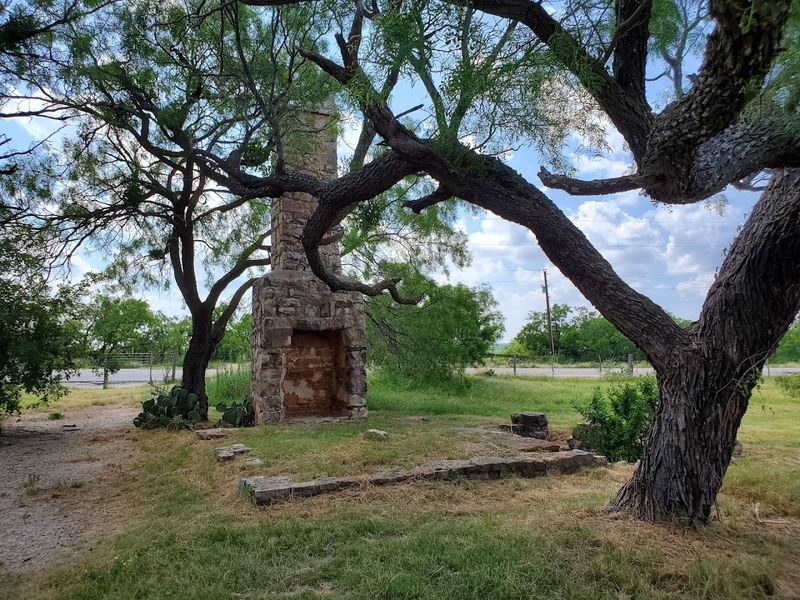
The chimneys are what get you first. There are dozens of them, rising from the flat ground like fingers pointing at the sky, each one marking the spot where a building once stood.
They are the most visually striking feature of the site, and they carry an almost surreal quality, especially in the early morning or late afternoon light when shadows stretch long across the dry grass.
Three stone structures remain relatively intact: the powder magazine, the guardhouse, and the commissary storehouse. The commissary is particularly impressive, a two-level stone building that historians recognize as one of the best-constructed structures among all the Texas frontier forts.
The guardhouse, which doubled as the garrison jail, still has a quiet authority about it. You can almost sense the stories locked inside those thick walls.
Foundations of the hospital are also visible, allowing visitors to trace the outline of the three-room building where sick soldiers spent difficult days far from home. The site covers 38 acres in total, and interpretive signs are placed throughout to help piece the layout together.
Self-guided brochures are available, and I found them genuinely useful for understanding which remnant belonged to which building.
The Fort Phantom Hill Foundation has done thoughtful work here, keeping the grounds accessible and informative without over-polishing what is, at its core, a beautifully raw historical ruin.
The Rustic Beauty of a Texas Landmark
There is a specific kind of beauty that belongs only to places that have been left mostly alone, and Fort Phantom Hill has it in full.
The site is privately owned but kept freely accessible to the public through the Fort Phantom Hill Foundation, which is a genuinely generous arrangement that ensures anyone curious about Texas history can simply show up and explore.
No admission fee, no tour group schedule to follow.
The grounds feel authentic in a way that heavily restored historical sites sometimes do not. Old capped wells dot the landscape, each one a reminder of the constant, desperate search for reliable water that defined life here.
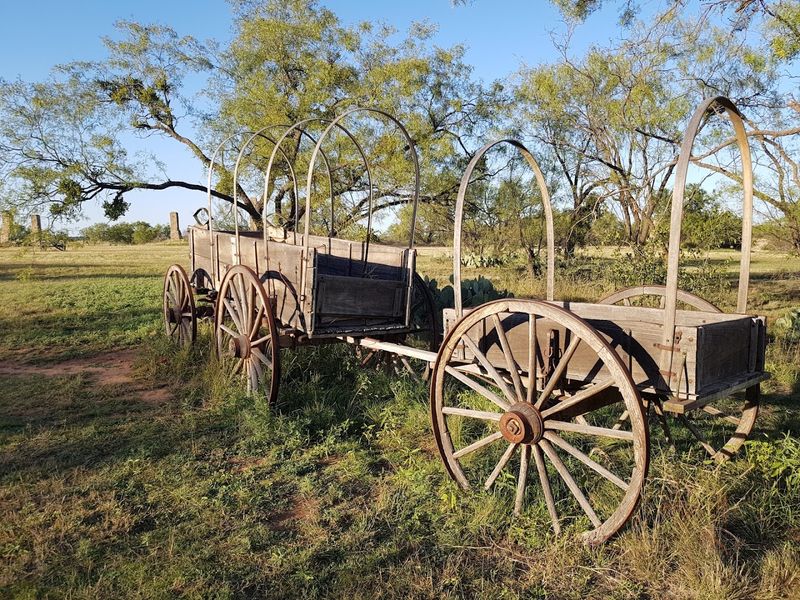
A discarded covered wagon frame sits quietly in one corner, easy to miss if you are not paying attention, but deeply evocative once you spot it. The surrounding mesquite trees and native grasses look much as they would have in the 1850s.
Visitors are asked to follow a few respectful rules: no metal detecting, no climbing on the structures, and nothing removed from this National Register Historic Site.
These guidelines exist to protect the ruins for future generations, and they are easy to follow because the site does not need anything added to it.
Just two miles south, Lake Fort Phantom Hill adds a scenic bonus, offering fishing, boating, and a local legend involving a mysterious “Lady of the Lake” that gives the area one more story worth knowing. It is a full, rewarding afternoon in one small corner of West Texas.
A Must-See for Any Texas Adventure
Fort Phantom Hill earns its place on the Texas Forts Trail not just because of its age, but because of the sheer density of history packed into its 38 acres.
Military history, frontier survival, mail routes, Civil War activity, and a brief commercial boom all unfolded here, one after another, like chapters in a novel that nobody planned but everyone contributed to.
That layered quality is rare in a single location.
The atmosphere is genuinely tranquil. Wind moves through the chimneys with a low hum, and the wide sky makes everything feel both small and significant at the same time.
I found myself slowing down here in a way I rarely do at historical attractions. There was no pressure to rush, no crowd to navigate, just open ground and an honest connection to something old and real.
Whether you approach it as a history enthusiast, a photographer chasing dramatic light, or someone who simply wants a meaningful afternoon away from the noise of modern life, this place delivers.
The resilience embedded in those stone walls, the mysteries still clinging to the fire that consumed the original fort, and the sheer visual drama of those lone chimneys against a West Texas sky combine into an experience that is hard to forget.
Fort Phantom Hill is not a polished attraction. It is something better: a genuine piece of American history sitting quietly in the open air, waiting for anyone willing to show up and pay attention.
Address: 10818 FM600, Abilene, TX 79601.
