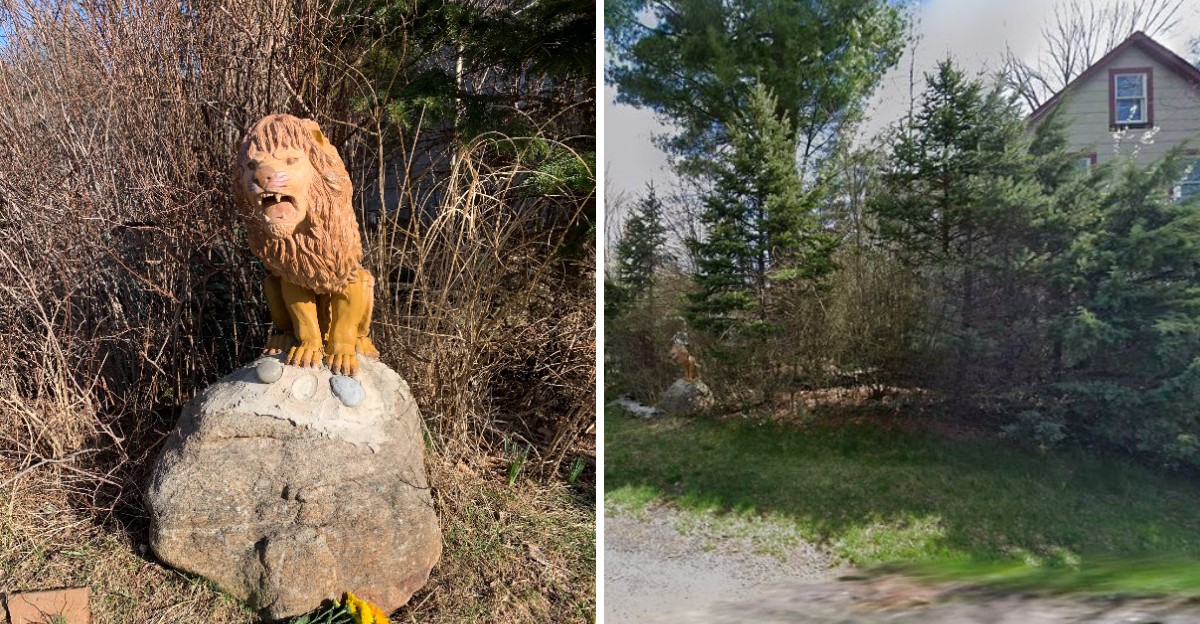
A lion statue sits on a rock by a quiet country road, and the real lion is buried right underneath it. Not just any lion, either.
This one was the first big cat to star in the famous MGM movie logo.
Yep, the original Hollywood lion rests in New Jersey. He never even roared on screen.
Movies didn’t have synchronized sound yet, so he simply looked around and let his mane do the talking.
What gets me is how easy the spot is to miss. A tall white pine shades the grave, and his trainer planted it there for an unusual reason.
The little statue could pass for a lawn ornament if you didn’t know the story.
I’d absolutely make a detour for that. Some film history lives in museums, but this piece sits along a quiet residential road.
The First MGM Lion Never Made A Single Sound On Screen
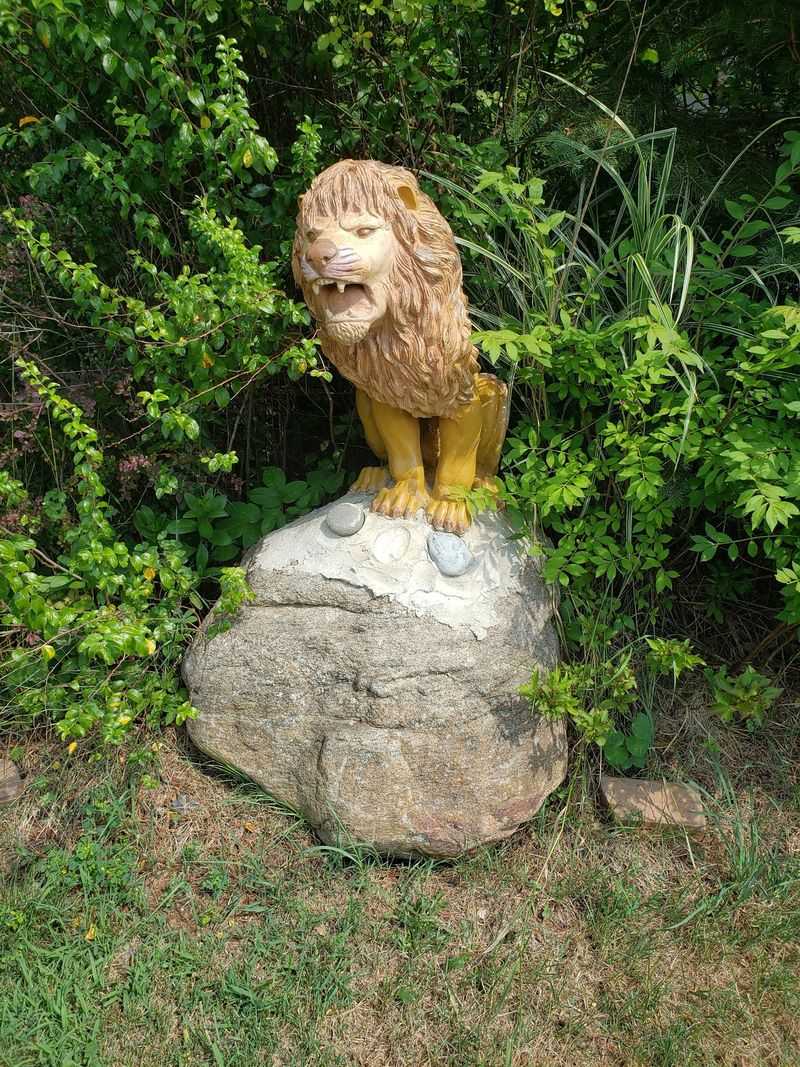
Silent movies needed a silent star, and they got a regal one. The Grave of Leo the Lion holds Slats, the very first lion to appear in the Metro-Goldwyn-Mayer logo.
Slats showed up at the start of MGM films from 1924 to 1928. Those were black-and-white movies, made before synchronized sound became common in theaters.
So what did he actually do on screen? He mostly looked around, turning his head inside that famous circle of film ribbon.
No roar, no growl, no dramatic snarl. The booming roar most people picture came later, with other lions who took over the job.
The name Leo the Lion stuck to all the MGM lions over the years. That’s why a grave honoring the very first one carries such a familiar name.
Think about how many audiences saw his face before a movie began. For a few years, Slats was basically the opening act for an entire Hollywood studio.
That kind of fame usually leads to a fancy memorial somewhere glamorous. Instead, the story takes a sharp turn toward a quiet patch of New Jersey countryside.
Honestly, that twist is what makes this place so much fun to know about.
His Story Started Far From Hollywood, In An Irish Zoo
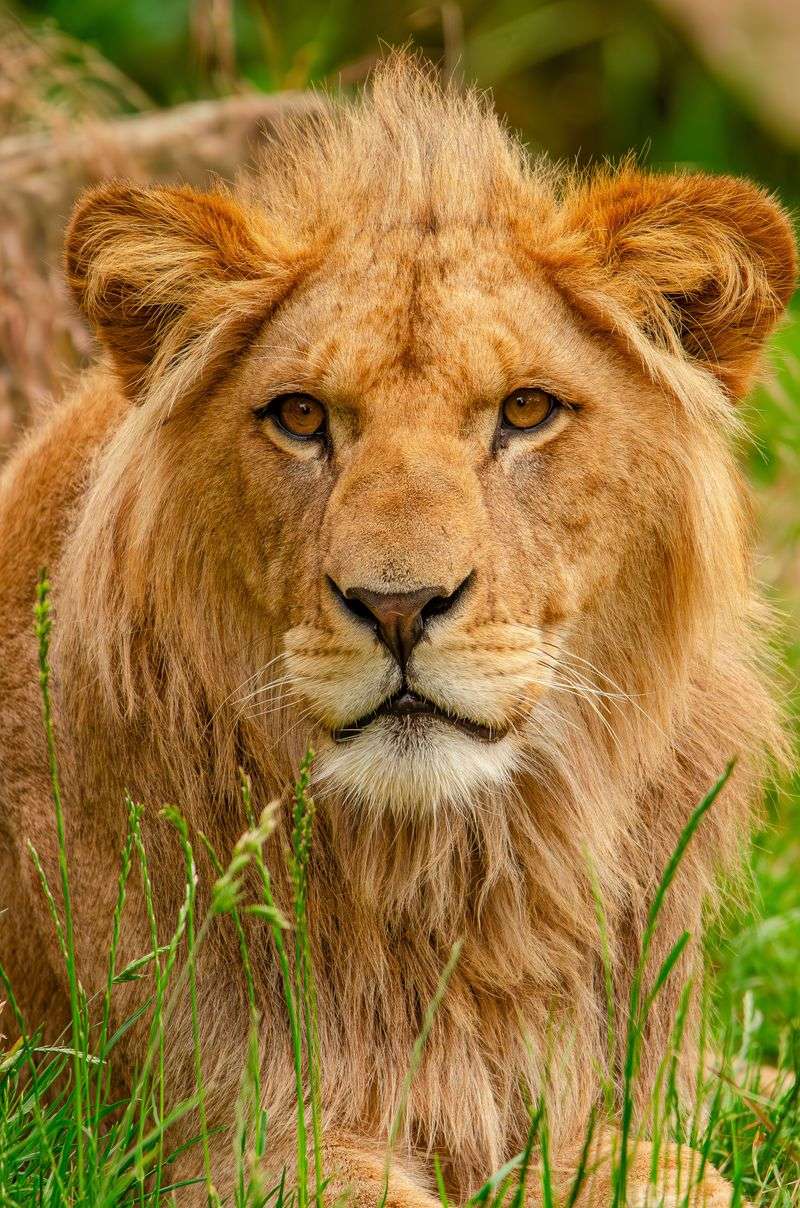
Before he was a movie icon, he was a cub named Cairbre. He was born at the Dublin Zoo in Ireland on March 20, 1919.
That’s right, Hollywood’s first logo lion started life an ocean away from California. Somewhere along the line, he picked up the much catchier name Slats.
It’s a fun detail to share with movie buffs. Most people assume a Hollywood lion came from somewhere sunny and nearby.
His Irish roots give the whole story a surprising international flavor. A lion from Dublin ended up representing one of the biggest studios in America.
Fans of the grave still remember his birthday, too. March 20 is a date that pops up whenever people talk about Slats and his roadside resting spot.
He lived to be nearly 16 years old. Slats passed in Philadelphia on February 26, 1935, years after his logo days had ended.
Here’s a little trivia bonus for your next movie night. When someone mentions the MGM lion, you can ask if they know he was Irish-born.
Odds are, they won’t. And that’s exactly the kind of fact that makes this New Jersey spot worth knowing.
The Trainer Who Brought A Movie Lion Home To The Country
Every star needs a good manager, and Slats had Volney Phifer. Phifer is often called Hollywood’s first animal trainer.
He came from a German circus family, so animals were part of his life from the start. Over the years, he trained animals for Broadway shows and films.
Phifer bought a farm along Morristown Road in 1934. The property was known as the Phifer Animal Farm and covered about 27 acres.
When Slats passed in 1935, Phifer made a very personal choice. He brought the lion back to his farm in New Jersey and buried him there.
That decision is the whole reason this grave exists. Without Phifer’s bond with Slats, the first MGM lion might have no known resting place at all.
It says a lot about how trainers felt about their animal partners. To the public, Slats was a logo, but to Phifer, he was clearly much more.
Phifer lived until 1974, long after his famous lion was gone. His farm story still lives on through that one marked grave.
Not bad for a farm most people would drive past without a second thought.
Blame New York City For This Lion Living In The Suburbs
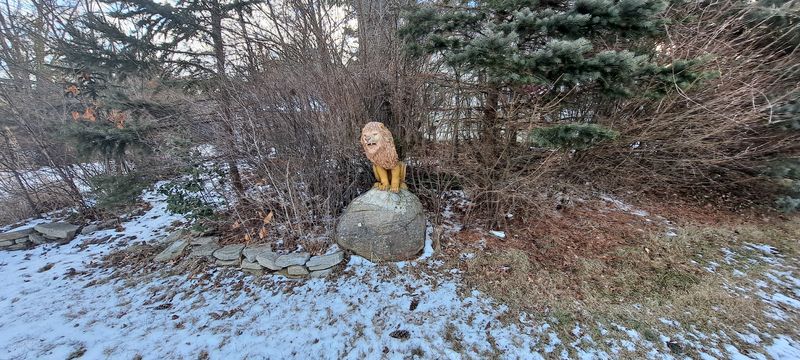
City rules can shape history in funny ways. Back in Phifer’s day, New York City laws didn’t allow people to keep exotic animals inside the city.
That was a problem for a trainer working with Broadway and film animals. Phifer needed somewhere close enough to the action but legal for lions.
His answer was a farm across the river in New Jersey. The open land gave him room to house and train his animal performers.
So a quiet country area became a home base for show business animals. It’s a strange pairing, but it made total sense for the trainer.
Today, the setting feels about as far from Hollywood as you can get. The area is calm, green, and residential, with no movie lights in sight.
That contrast is part of the charm. Glitzy studio history sits right next to everyday suburban life in New Jersey.
It also makes you wonder what other surprising stories hide along local roads. Old farms often have more drama in their past than anyone expects.
In this case, one rule in a big city sent a movie legend to a peaceful country lawn.
Blink And You Will Drive Right Past Movie History
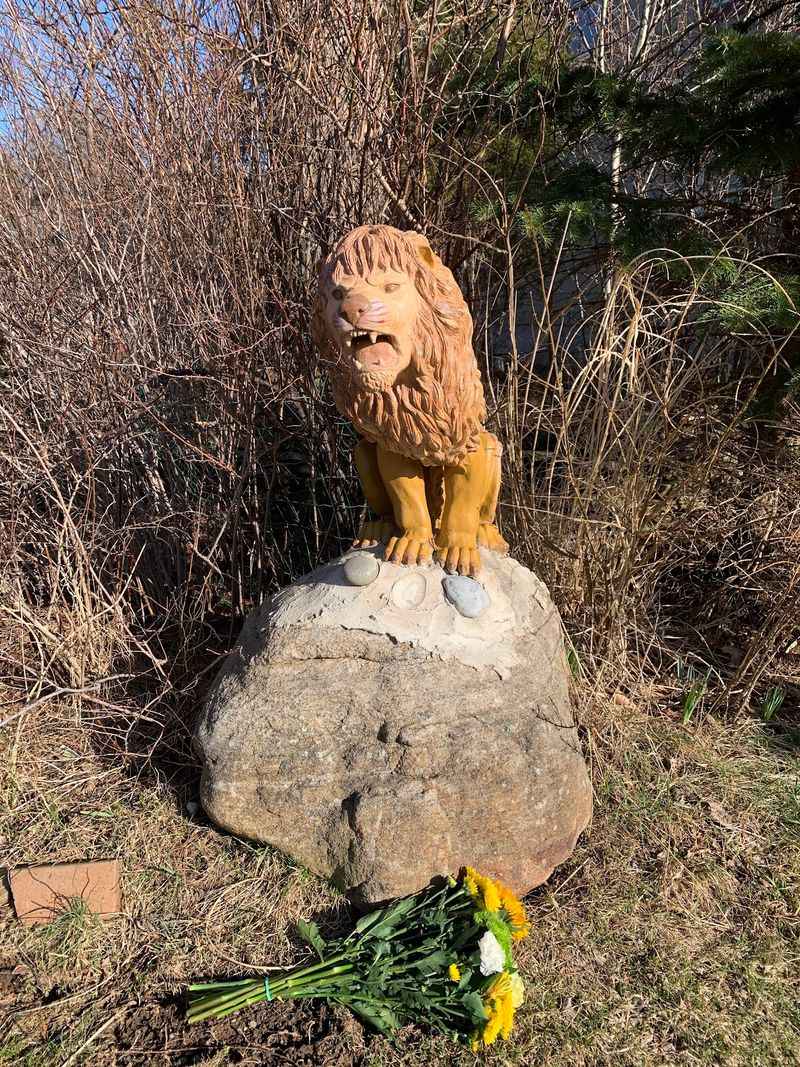
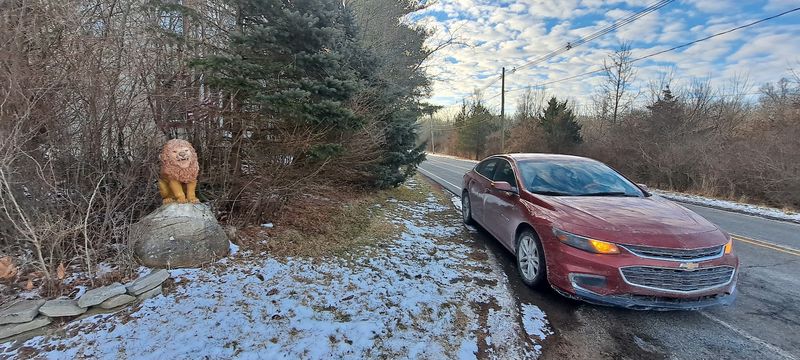
Fair warning, this landmark doesn’t announce itself with flashing signs. The Grave of Leo the Lion sits near the roadside on a quiet stretch of Morristown Road.
The address tied to the site is 215 Morristown Rd, Gillette, NJ 07933. Gillette is part of Long Hill Township in Morris County.
Historic sources describe the old farm with slightly different house numbers along the same road. That’s because the original farm property covered a much bigger area.
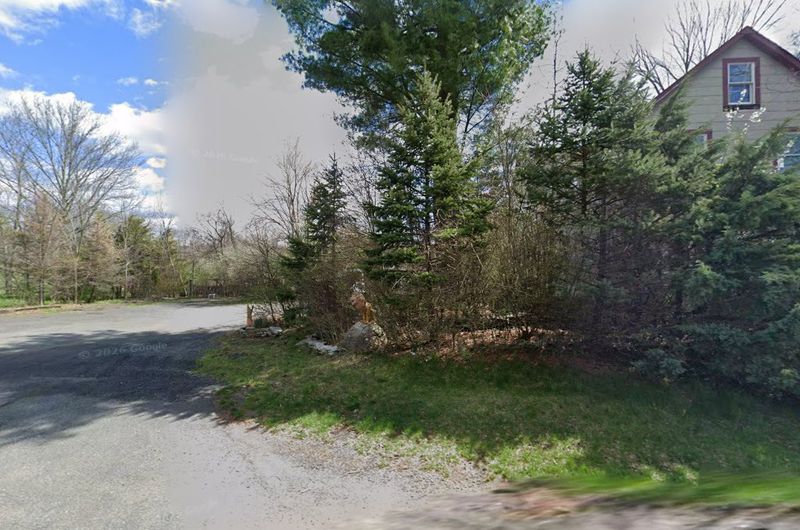
From the road, look for a small lion statue on a rock. A large white pine tree stands over the spot, which helps it stand out a bit.
Without knowing the story, it really could pass for a lawn ornament. That’s what makes finding it feel like discovering a secret.
The property is private, and the grave is meant to be seen from the road. Keep that in mind before planning anything more than a quick look.
A map pin helps a lot here. Slow down as you get close, because the statue is easy to miss at normal driving speed.
Once you spot it, though, you’ll never see this road the same way again.
A Pine Tree With A Very Unusual Job
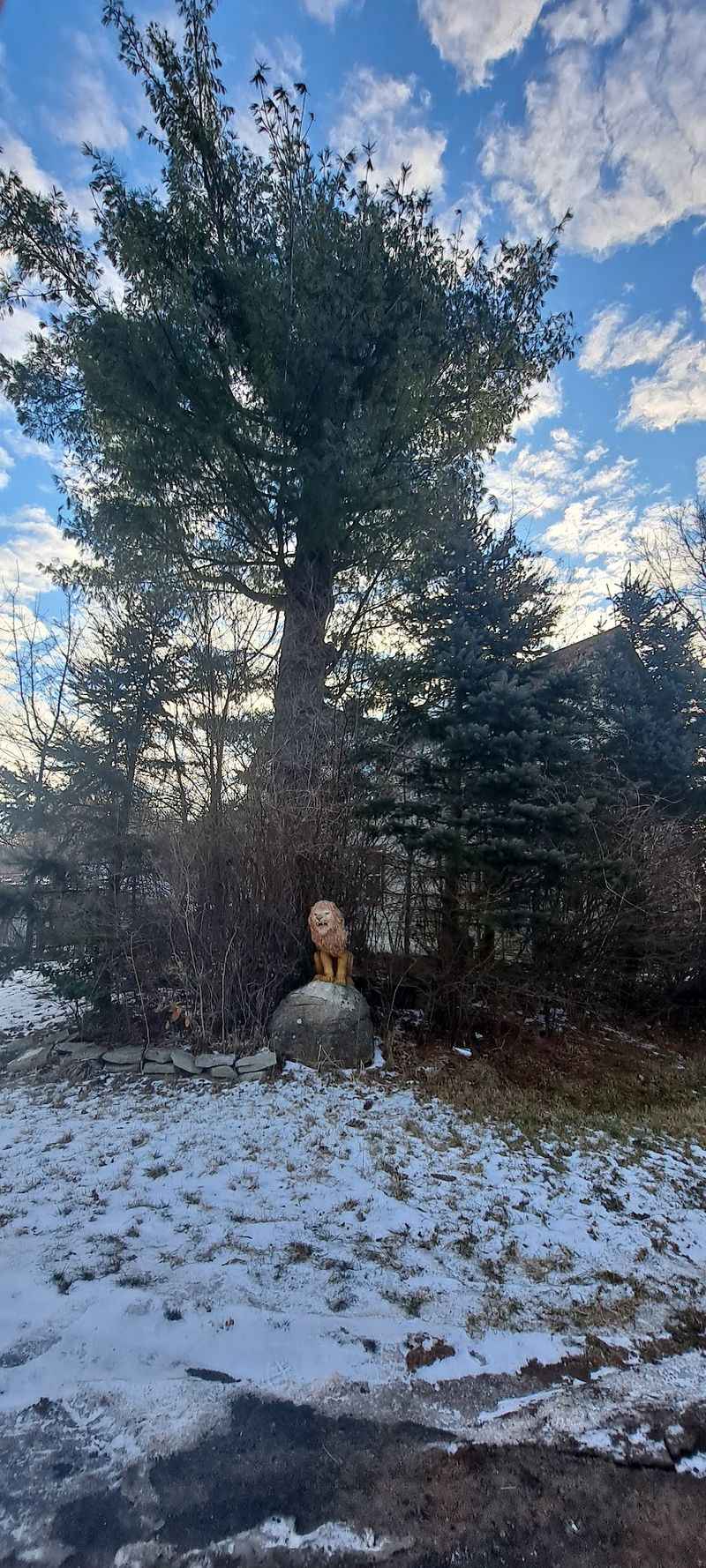
Most trees provide shade, and this one supposedly guards a spirit. That’s the legend behind the white pine growing over Slats’ grave.
At first, the grave was marked with a simple granite block. It was a modest marker for an animal that had greeted movie audiences around the world.
Then Phifer planted a white pine tree right over the spot. According to the story, he believed the roots would hold down the lion’s spirit.
Yeah, I’m definitely looking twice at that. It’s poetic, a little spooky, and very much the kind of thing a showman might do.
Whether you believe it or not, the tree became part of the memorial. Today it’s one of the easiest ways to recognize the site from the road.
There’s something fitting about a living marker for a living legend. A tree keeps growing year after year, kind of like the lion’s reputation.
It’s also a nice reminder that memorials don’t have to be fancy. A pine tree and a simple idea can tell a story better than a giant monument.
Just admire it from the road. The roots have an important job, after all.
That Little Lion Statue Is A Newer Addition
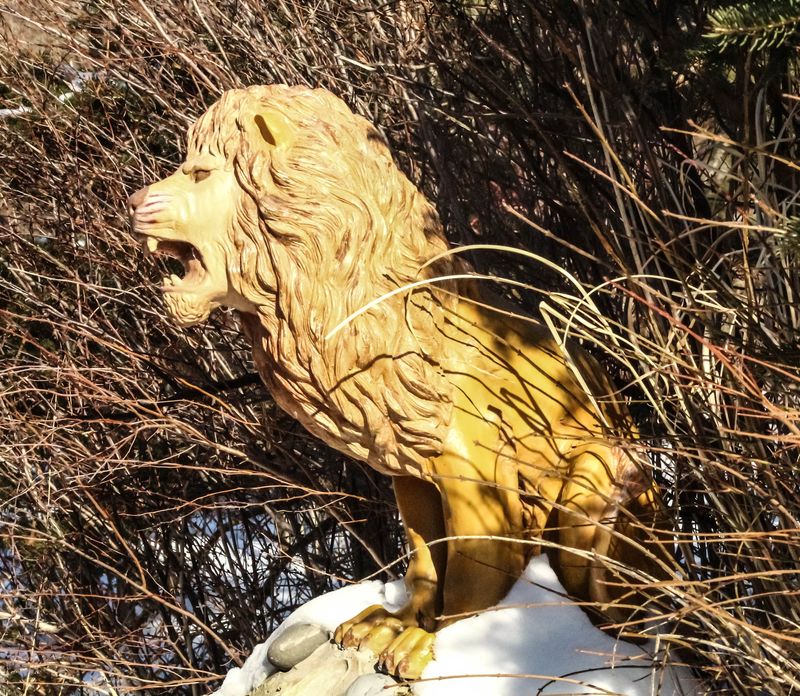
Here’s a twist for history fans. The lion statue that marks the grave today isn’t from the 1930s at all.
It reportedly appeared around 1996, decades after Slats was buried. Before that, the pine tree and the old granite marker told the story on their own.
The statue sits on a rock near the roadside. It’s small and simple, but it’s the clue that makes this spot findable for curious travelers.
Some people might wish for a grander tribute to such a famous lion. I can see why, though the humble look actually fits this quiet setting well.
Think of it as a friendly nod to anyone passing by. One little lion figure points to a much bigger piece of Hollywood history.
It’s also a great photo moment from the road. A quick snapshot of the statue and the pine makes for a fun post with a jaw-dropping caption.
Just remember the statue sits on private property. Snap your picture from the roadside and leave the lawn to the owners.
A small statue, a tall tree, and a giant story. Now that is a lot of history packed into one roadside corner.
Make It A Quick Stop With A Big Movie Trivia Payoff
Short visits can still leave a big impression. A stop at the Grave of Leo the Lion takes only a few minutes, but the story sticks around much longer.
Since the grave sits on private property, plan to enjoy it from the road. Be polite, keep noise down, and don’t step onto the lawn.
Pull over only where it’s safe and legal. Morristown Road is a real working street, so traffic deserves your attention too.
Bring the backstory with you before you go. Knowing about Slats, Phifer, and the pine tree turns a small statue into a memorable moment.
Movie fans especially get a kick out of it. Next time that MGM logo appears before a classic film, you’ll know where the first lion rests.
It’s a fun add-on to a drive through Morris County. The stop pairs well with any day exploring the quiet towns of New Jersey.
Kids might enjoy it as a mini treasure hunt. Ask them to spot the lion statue before anyone else does.
In the end, it’s a tiny roadside pause with a Hollywood-sized secret. I’d say that’s a pretty great trade for five minutes.
