Some places sneak up on you, and the smell of warm cinnamon rolls drifting past a cattle barn is usually the first clue. Tucked into a quiet valley in West Virginia, one small community has been throwing the same big party for well over a century, and folks still drive hours to be part of it.
The story behind it mixes farm pride, wartime pauses, and a stubborn love of tradition that never quite let go. Grab a corn dog in your mind and come see how it all came together.
A Mountain Valley Fair With Deep Roots
Picture a small valley town in the southern mountains, ringed by green pastures and old brick buildings. Every August, its quiet roads fill with trucks, campers, and families carrying folding chairs.
They are all headed to the State Fair of West Virginia, a gathering with roots reaching back to the 1850s.
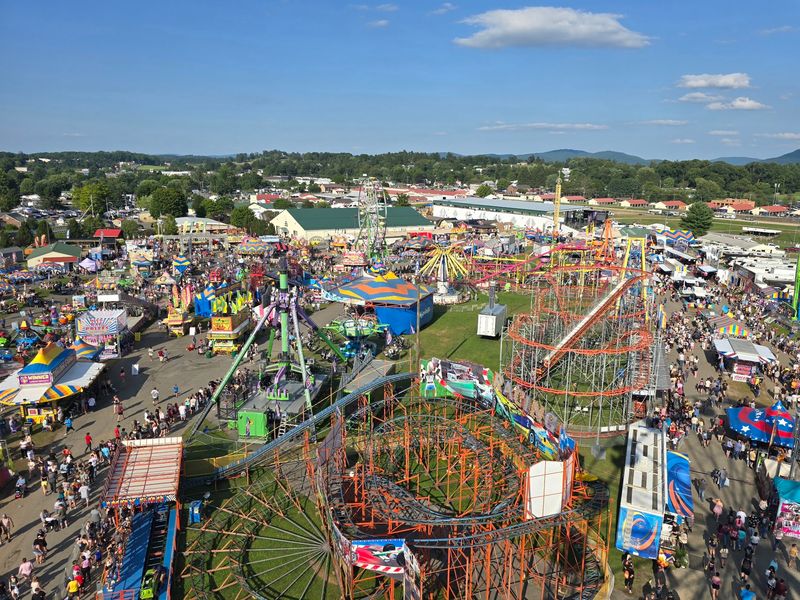
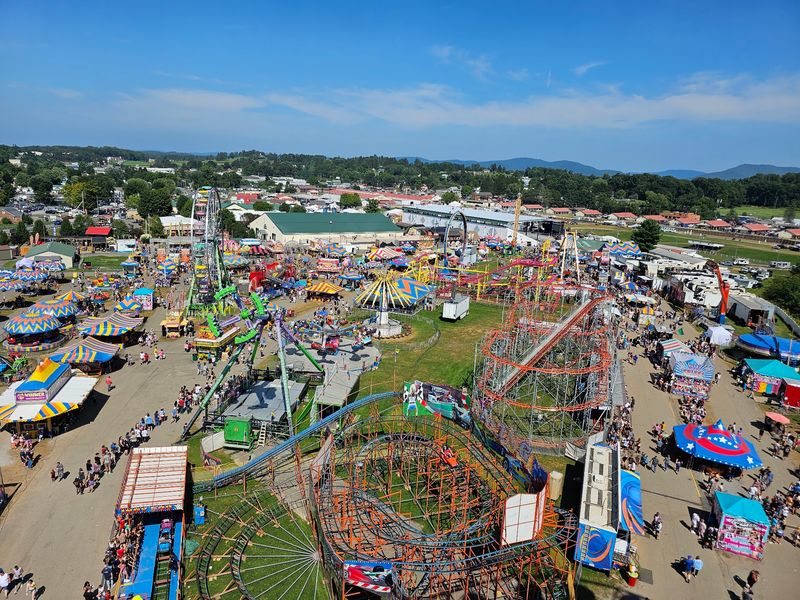
At its heart, the event is an agricultural celebration. Livestock barns, prize vegetables, baked goods, quilts, and craft displays sit right alongside carnival rides and big-name concerts.
Visitors often describe it as a place with something for every age, from toddlers meeting baby goats to grandparents who have attended for decades.
What makes it special is not just its size. It is the way the fair holds onto a farm-country identity while still feeling fresh each summer.
Many locals treat it like a family reunion that happens to include funnel cake.
The fair is often called the oldest continuously running fair tradition in the state, though it did pause during both world wars and in 2020. Even with those breaks, the steady thread of farm exhibitions in this valley has reportedly outlasted rival efforts elsewhere.
That staying power is the real story, and it starts with a grove of trees.
Mr. Nesmith’s Grove and the Fair of 1854
Back in 1854, long before anyone dreamed of grandstand concerts, the Greenbrier Agricultural Society held its first recorded fair. The setting was simple: a shady spot called Mr. Nesmith’s Grove, in what is now the downtown area of the community.
Farmers arrived with their best cattle, their heaviest produce, and household goods worth bragging about. Neighbors compared notes, swapped advice, and judged who had the finest stock.
It was practical, but it was also social, a chance to see faces you might not spot again until harvest was done.
That mix of competition and community still shapes the fair today. When you walk past a blue-ribbon pumpkin or a carefully stitched quilt, you are seeing the same spirit those early farm families brought to the grove.
Here is a fun bit of trivia for history lovers. The fair began only a few years before the Civil War and nearly a decade before West Virginia even became its own state.
So in a way, this farm show is older than the state whose name it now carries.
Do you remember hearing grandparents talk about county fairs of old? Their stories likely echo those first gatherings under the trees.
Cattlemen, 40 Acres, and a Grandstand
Shorthorn cattle had a lot to do with what came next. In 1921, local cattlemen tied to the Shorthorn Association launched the Greenbrier Valley Fair and gave the old tradition a permanent home.
They purchased 40 acres of land between two neighboring towns, in a spot now known, fittingly, as Fairlea. On that ground rose the bones of a real fairground: a half-mile horse racetrack, stables, barns, and a grandstand.
Suddenly the event had room to grow beyond a single grove.
That same year brought something that still pulls at hearts today. The 1921 fair started competitive exhibits for boys’ and girls’ 4-H agricultural clubs.
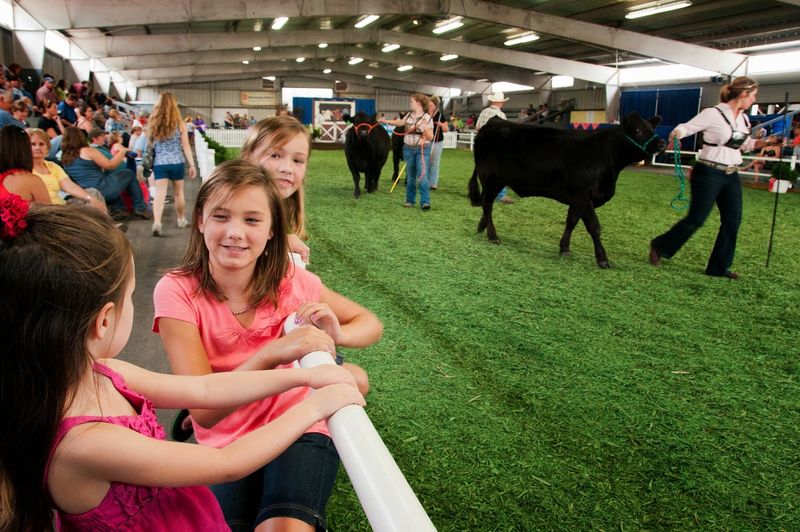
Generations of young people have since raised calves, lambs, and hogs with this show ring as their goal.
Visitors today still praise the 4-H kids, noting how well cared for the animals are and how proudly they are shown. It is easy to see a straight line from those first young exhibitors to the teens leading animals around the arena now.
A century later, those 40 acres remain the backbone of the whole experience. Not bad for a plan hatched by a group of determined cattle folks.
Official State Status and Hard-Won Staying Power
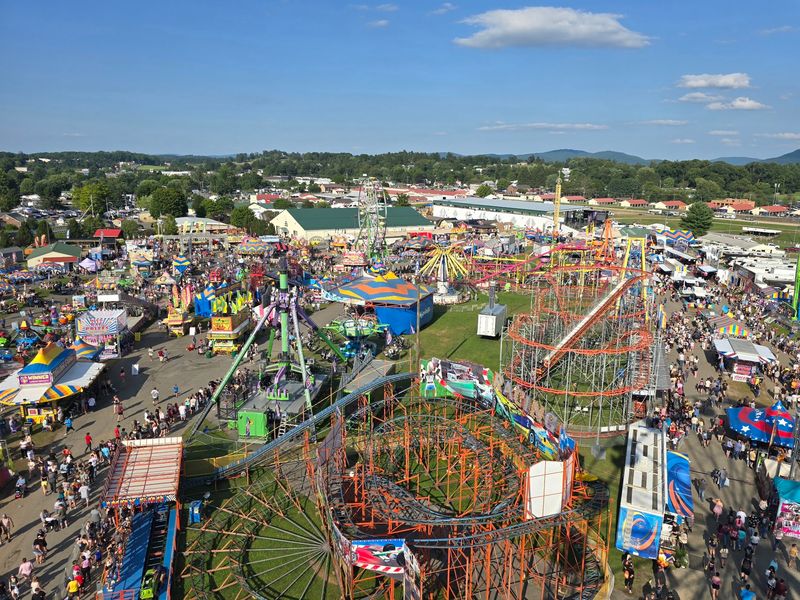
By 1941, lawmakers in Charleston made it official. The West Virginia Legislature proclaimed the valley event the State Fair of West Virginia, giving statewide recognition to a tradition locals already cherished.
The timing was bittersweet. Only a year later, World War II brought cancellations from 1942 through 1945.
Earlier, the fair had also gone quiet in 1917 and 1918 during World War I. More recently, 2020 was skipped too.
So why does it still earn that oldest continuously running label? Folks usually point to the unbroken thread of farm exhibitions in this valley across more than 150 years.
Other state fair attempts reportedly fizzled out.
One example is Wheeling Island. A state fair once took place there, but periodic flooding made it hard to keep going, and it was eventually discontinued.
Meanwhile, the mountain valley version kept coming back after every pause.
That stubborn return is something West Virginians understand well. Hard times come and go, but the things a community truly loves tend to find their way home.
After each break, the barns filled again, the rides spun again, and the cinnamon rolls came out of the oven right on schedule.
Lewisburg, the Historic Town Behind It All
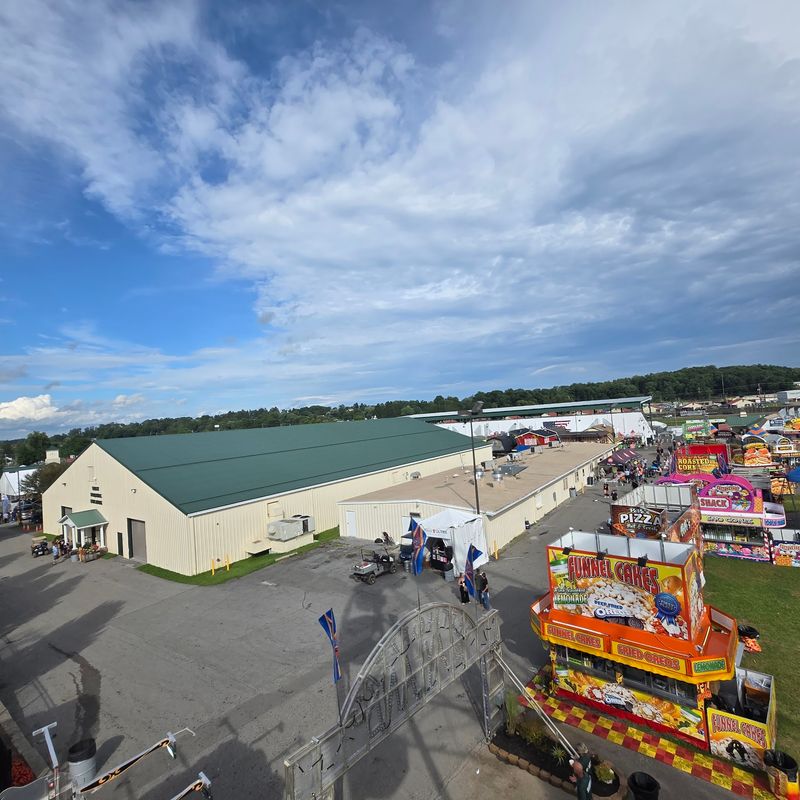
Now for the big reveal. That tiny town at the center of this story is Lewisburg, in Greenbrier County.
Lewisburg is among the oldest communities in West Virginia, with settlement dating to around 1751. It was formally laid out in 1780 and officially established in 1782 by the Virginia General Assembly.
The name honors General Andrew Lewis, who gathered troops here in 1774 before the Battle of Point Pleasant.
Location mattered from the start. The town sat where the Midland and Kanawha trails met, making it a natural crossroads for travelers and traders.
In May 1862, it even became the site of a Civil War battle.
Walk downtown today and you will find preserved 18th and 19th century buildings, part of a National Register Historic District named in 1978. There is also Carnegie Hall, a well-known arts and education center that adds culture to the small-town charm.
Through it all, Lewisburg has stayed an agricultural hub, especially for livestock. That farm backbone explains why a fair took root here and refused to leave.
When cattle are part of daily life, showing them off once a year just makes sense.
Barns, Baby Calves, and Blue-Ribbon Pride
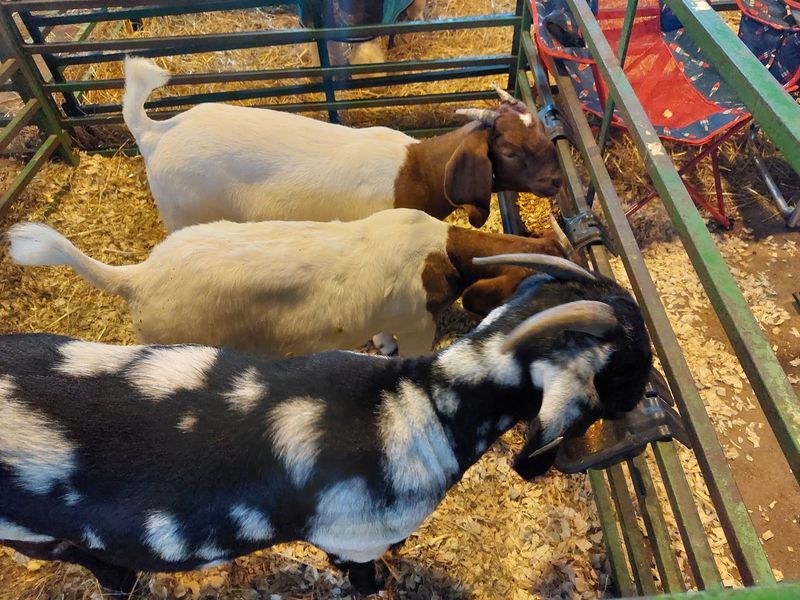
Ask longtime fairgoers about their favorite stop, and plenty will mention the cow birthing center. Visitors describe seeing calves less than a day old, and sometimes one born just minutes earlier.
Few things quiet a crowd faster than a wobbly newborn finding its legs.
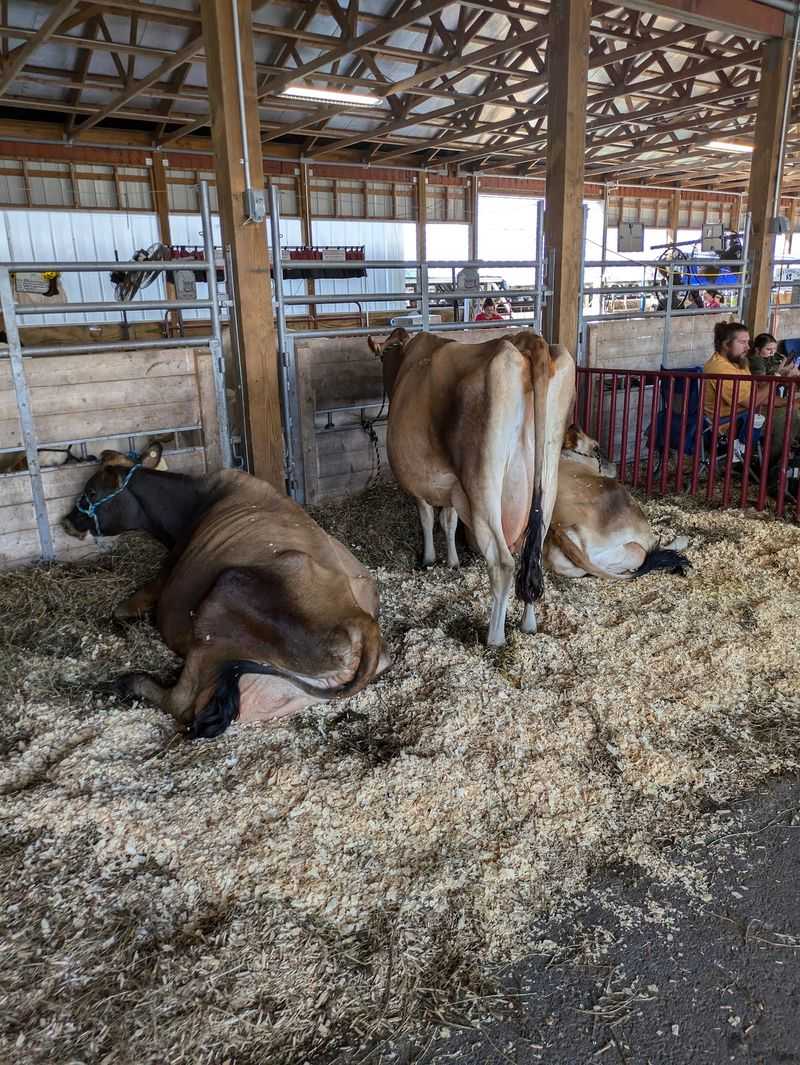
The livestock barns are a highlight on their own. Horses, goats, pigs, sheep, and cattle fill the stalls, and guests often comment on how well the animals are cared for.
One returning visitor summed it up nicely as great people watching and animal watching.
Beyond the barns, exhibit halls showcase what folks across the state can do. Expect prize vegetables, baked goods, beautiful quilts, amateur photography, crafts, and even glass blowing.
Many guests leave saying they learned a surprising amount about West Virginia agriculture.
Groups like the West Virginia State University Extension Service also set up under the grandstand to connect with people interested in farming. It feels a little like a giant county fair, a little like a classroom, and a lot like home.
Tip for families: kids love the baby animals and mini golf, while grown-ups linger over the quilts. Plan extra time here.
Midway Lights, Concerts, and Carnival Treats
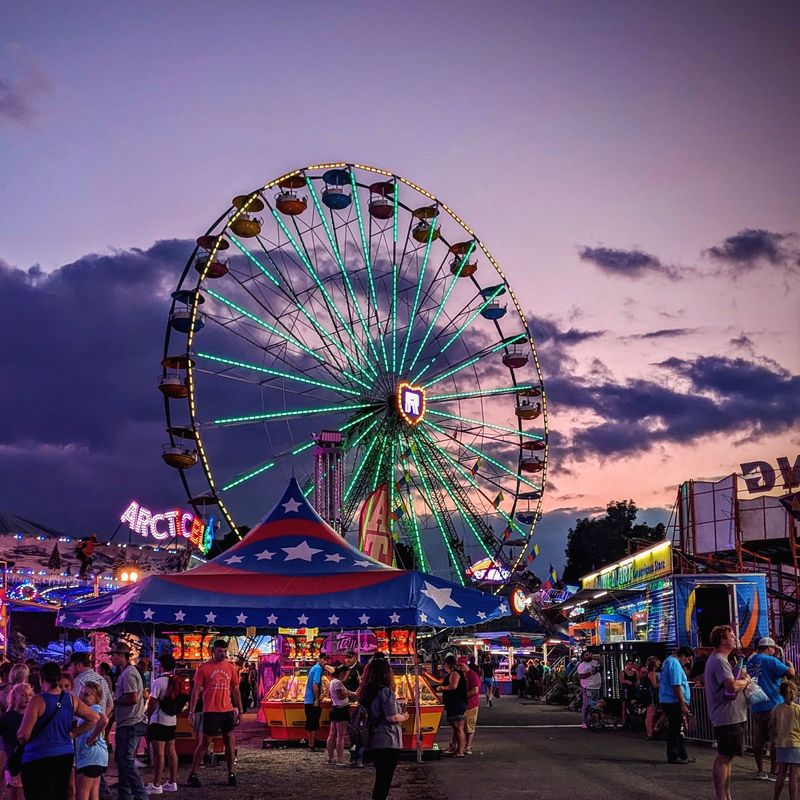
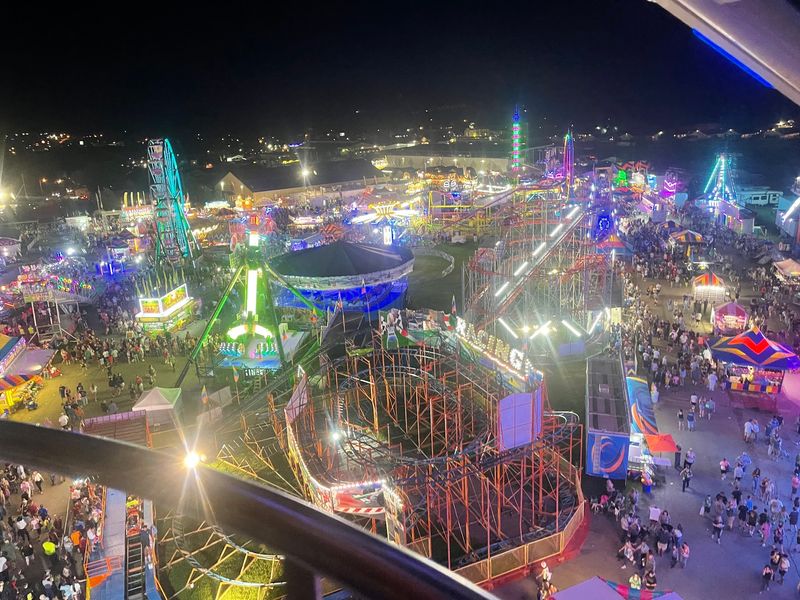
Once the sun dips behind the ridges, the midway glows. Rides spin, the Ferris wheel climbs, and riders often say the view from the top is fantastic.
Music is a huge draw. Concerts happen most nights during the roughly two-week run, and the grandstand has hosted acts like Kansas, T-Pain, and comedian Jeff Dunham.
Some out-of-state visitors now plan whole summer trips around the lineup.
Food might be the true main event, though. Guests rave about the sheer number of vendors, from corn dogs and lemonade to funnel cake and the fair’s famous cinnamon rolls.
As one way of putting it goes, nothing quite compares to carnival deep-fried goodness.
The vibe works for many types of people. Families with young kids enjoy the attractions and baby animals, teens chase thrill rides, and older visitors savor the nostalgic atmosphere.
Some folks have attended for 35 years or more, parking in the same neighbor’s yard every time.
Fair grounds staff also earn praise for keeping things clean. Visitors note sparkling facilities, which counts for a lot on a hot August day.
Evenings tend to feel cooler and livelier, so night owls may enjoy it most.
Planning Your Trip and a Fond Final Word
Good shoes come first. Visitors repeatedly warn that there is lots of walking, so comfortable footwear and some heat planning will help.
Costs deserve an honest look, especially for retirees and families on a budget. Past visitors reported parking around $10 and gate admission roughly $15 to nearly $20 per adult, with all-day ride passes near $35.
Food and drinks can run high, so many families set a spending plan before arriving. Discount admission specials and preordered tickets have been offered in some years, so check the official website ahead of time.
Parking can feel busy, though local police reportedly do a good job directing traffic. Outside drinks are not permitted at some events.
Bringing a blanket or chairs works well for outdoor shows.
The fairgrounds sit at 947 Maplewood Ave, Lewisburg, WV 24901, in the Fairlea area just south of downtown. The grounds also host other gatherings, like flea markets and festivals, throughout the year.
So is it worth the trip? For anyone who loves farm traditions, hometown pride, and a good cinnamon roll, it may be one of the sweetest summer days in the state.
Do you have a favorite fair memory?
