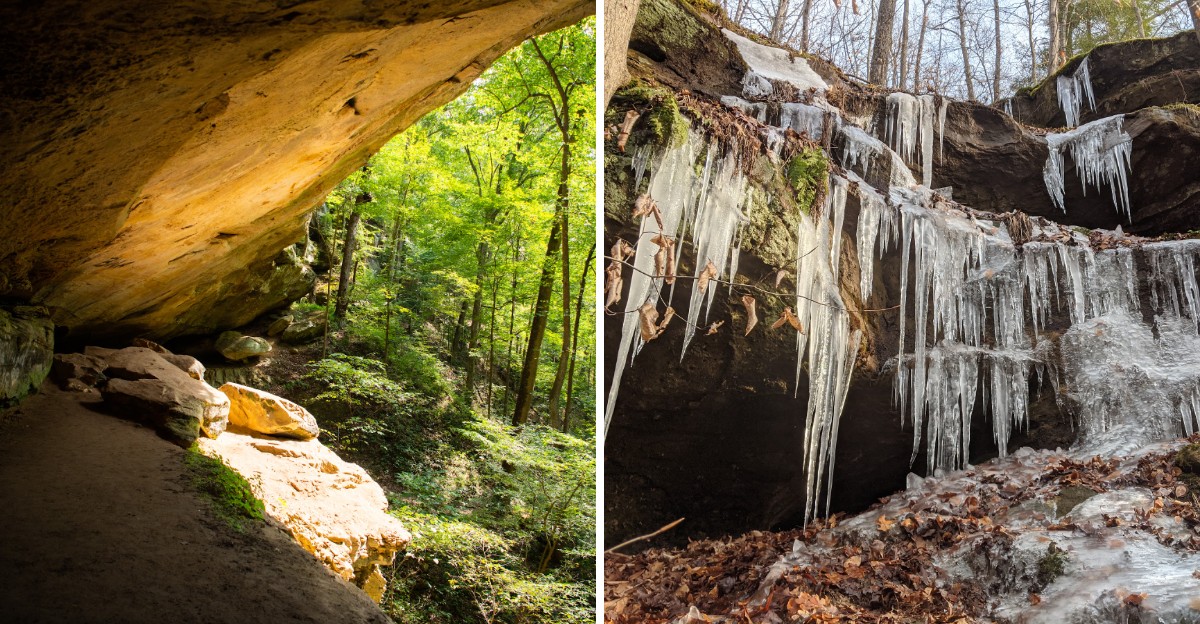
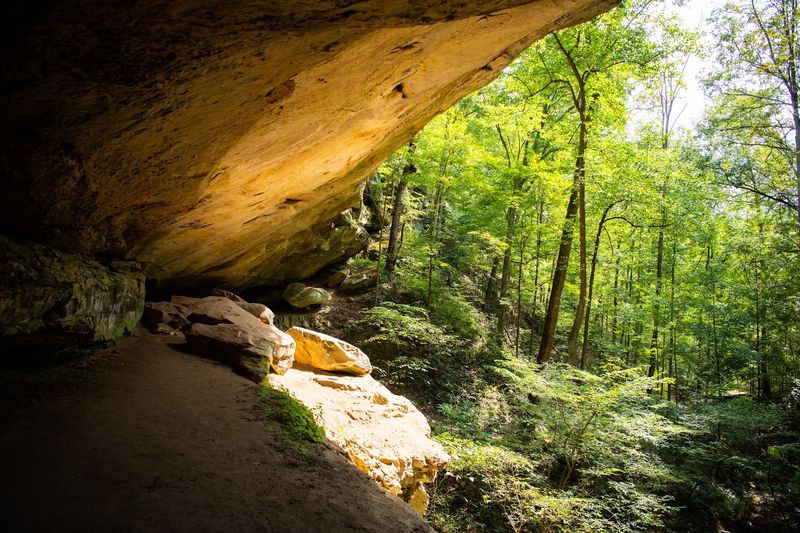
Native Americans may have sheltered under one curved sandstone overhang here about 10,000 years ago. Today, that same rock still stands at the head of a box canyon in southern Indiana.
The cliffs are honeycombed with odd little pockets left by weathered iron ore. Eastern hemlock trees grow in the cool, shady bottom, and seasonal waterfalls spill over the rim after a good rain.
In winter, those falls can freeze into giant icicles.
It’s remarkable that a landscape this rugged can be explored on such a short loop trail. That easy access is also the problem.
There are no trash cans, no restrooms, and only a small parking lot.
I’d hate to see a place with this much natural history lose its charm to litter and trampled moss.
A Canyon This Gorgeous Was Always Going To Get Noticed
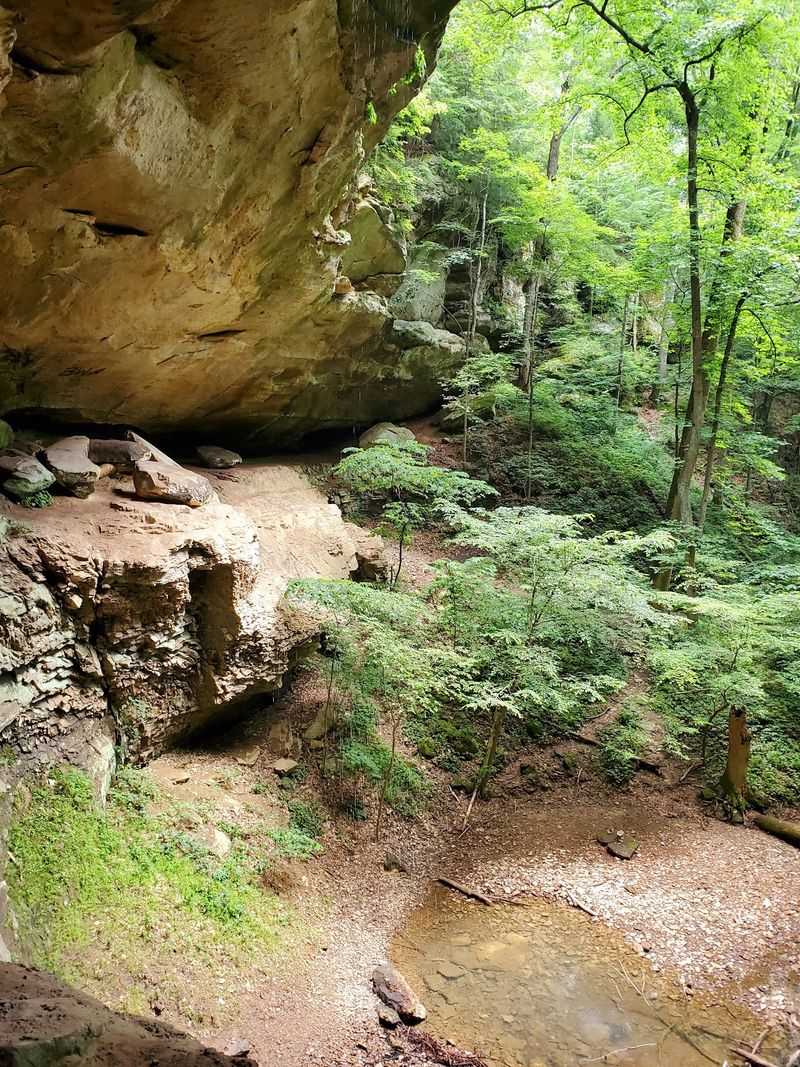
Honeycombed sandstone walls, mossy ledges, and a creek winding through the bottom make Hemlock Cliffs look borrowed from another state. It sits inside the Hoosier National Forest, and the U.S.
Forest Service manages it as a Special Place and Trail.
That label matters more than it sounds. It signals a spot with rare features that need extra care from everyone who visits.
The cliffs come mostly from the Tar Springs Formation, a layer of sandstone with a pitted, spongy look. Weathering iron ores carved those little pockets over a very long time.
Below the sandstone sits Glen Dean Limestone. That layer holds springs and small caves, which adds even more texture to the canyon.
Put all of that within a short loop hike, and you get a recipe for popularity. Photos travel fast online, and a place this striking practically begs to be shared.
Here’s the catch. Every new visitor adds a little wear to soil, plants, and rock that took ages to form.
None of this means you should skip it. It means you should arrive knowing the canyon is fragile, and that your choices on the trail actually count.
No Trash Cans Means Your Backpack Is The Trash Can
Zero. That’s how many trash receptacles you’ll find at Hemlock Cliffs.
There’s also no running water and no restroom on site.
Some folks treat that like an oversight. It’s actually a deliberate setup that asks visitors to follow Leave No Trace principles.
The rule is simple: whatever you carry in, you carry out. That includes snack wrappers, water bottles, tissues, and even orange peels.
Food scraps might seem harmless because they break down eventually. In a cool, shady canyon, they rot slowly and can draw animals toward people and parking lots.
Litter becomes a bigger deal as more people show up. One forgotten bag is ugly, but dozens can change how a whole trail looks and feels.
A little planning solves the whole problem. Toss a spare grocery bag in your pack, and you’ve got an instant trash kit.
Plan your bathroom stops before you arrive, too. English and nearby towns make easy pit stops on the drive in.
Honestly, packing out trash is the easiest favor you can do for this Indiana treasure. It costs nothing, takes seconds, and leaves the moss looking the way nature intended.
Shortcuts Off The Trail Leave Scars That Stick Around
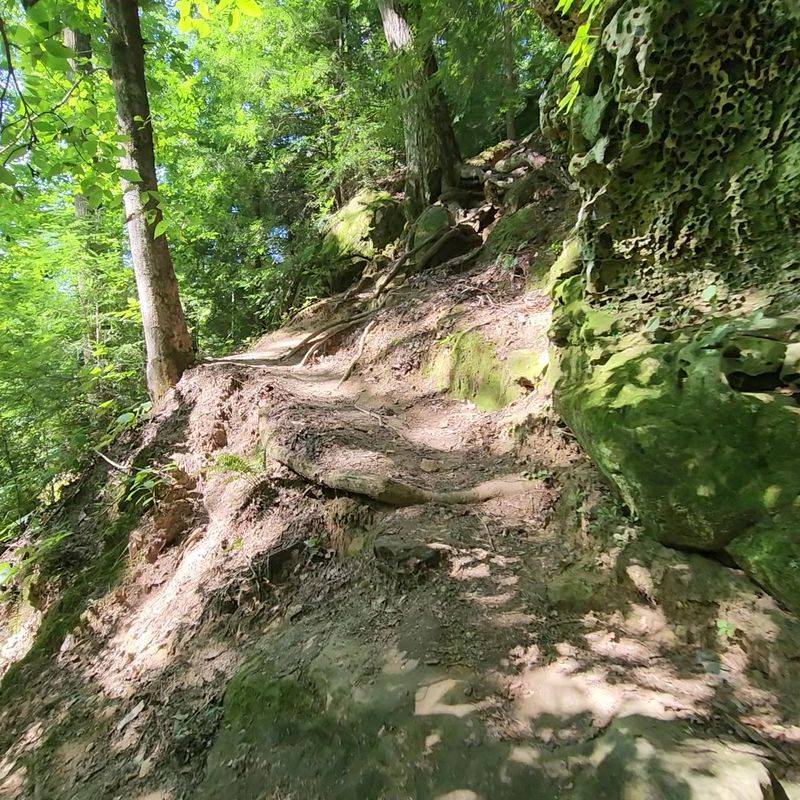
Roots, slick rocks, and washouts make parts of the Hemlock Cliffs Trail genuinely technical. The Forest Service says so plainly, so take that warning seriously.
The loop runs roughly 1 to 1.5 miles, depending on who’s measuring. It can take up to two leisurely hours, especially if you stop for photos every few steps.
Steep spots tempt people to cut corners. Unfortunately, those little shortcuts are where erosion starts.
Each fresh path strips away plants that hold soil in place. Rain then rushes down the bare dirt, digging deeper ruts with every storm.
Multiply one shortcut by hundreds of hikers, and a hillside can start sliding toward the creek. Fixing that damage takes far longer than causing it.
Staying on the marked trail protects the canyon and your ankles at the same time. Win-win.
Wear shoes with real grip, because the trail gets slippery after rain. Trekking poles help a lot on the descent into the canyon.
Slow down on wet days and give yourself extra time. The cliffs aren’t going anywhere, and neither should the soil beneath your boots.
People Called These Rock Shelters Home Long Before Us
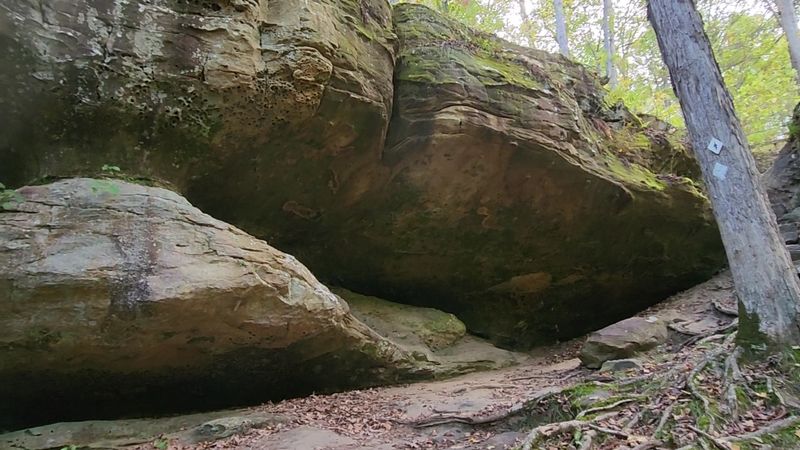
Ten thousand years is a long time to keep a secret. Archaeological evidence shows Native Americans used the rock shelters at Hemlock Cliffs as far back as that.
The big semi-circular shelter at the head of the canyon likely offered protection from weather. Its shape may have helped with defense, too.
Indian Cave and Messmore Falls are both recognized as archaeologically significant sites. That makes this canyon an outdoor history book as much as a hiking spot.
History books can get damaged, though. Digging, scratching, or pocketing a cool-looking stone can erase clues that experts still haven’t studied.
Visitors are asked not to disturb artifacts or the rock shelters themselves. If you spot something that looks old, leave it exactly where it sits.
Snap a photo instead and enjoy the moment. Taking pictures keeps the story intact for the next curious person.
Carving initials into sandstone is another big no. Soft rock scars easily, and those marks basically last forever.
Standing under that overhang should feel humbling. Treat it like a museum without glass cases, because that’s pretty much what it is.
Ice Age Leftovers Are Growing Right Beside The Path
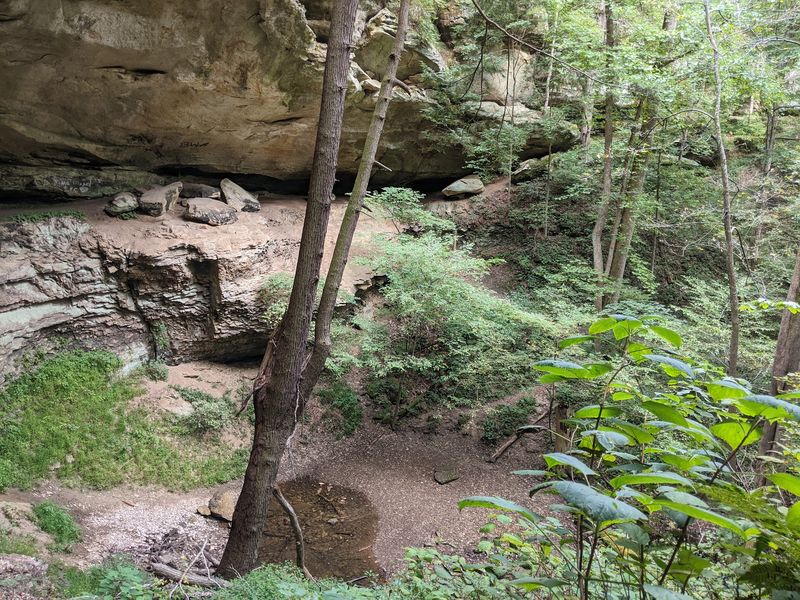
Eastern hemlocks don’t usually hang out this far south in Indiana. They survive here because the canyon stays cool and shady, creating its own little microclimate.
Some of these hemlock populations trace their roots to the last Ice Age. You’re basically hiking past a living time capsule.
The plant list gets even more interesting. Wintergreen, wild geranium, French’s shooting star, mountain laurel, and liverwort all grow in this special pocket.
Many of these plants are small and easy to miss. A single careless step can flatten a patch that took years to establish.
Moss is especially fragile. It clings to rocks and ledges, and peeling it off for a better photo angle damages it fast.
So keep your feet on the trail and your hands off the greenery. Look closely, then let everything be.
Spring is a great time to spot blooms, so bring a phone with a decent zoom. You’ll get your close-up without crushing anything.
Protecting these plants keeps the canyon’s whole personality alive. Without them, it’s just rock, and this rock deserves its leafy sidekicks.
That Small Parking Lot Is Sending You A Message
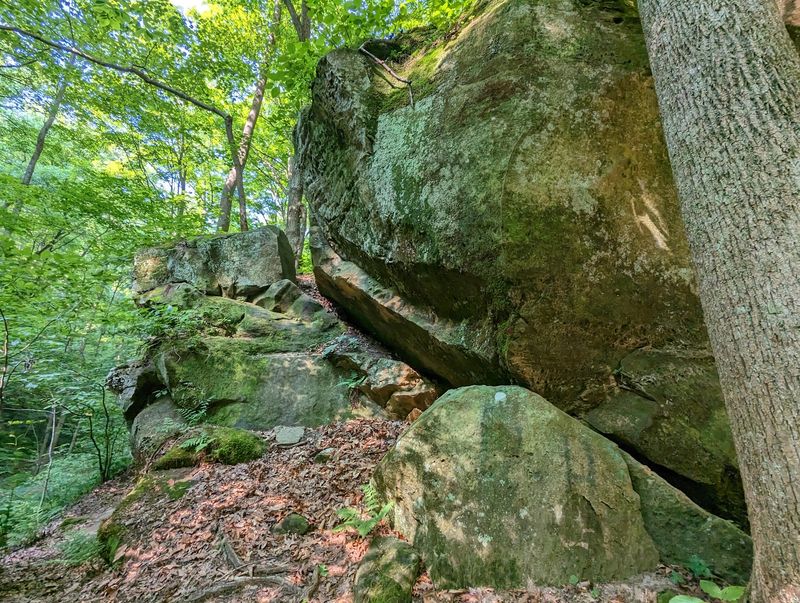
Getting there is half the adventure. The route ends on a gravel country road, so take it slow and watch for dips.
Plug in National Forest Rd, English, IN 47118 for directions. The trailhead sits in Crawford County, deep in Indiana’s forested hills.
Parking is limited, and RVs aren’t allowed in the trail’s lot. That small lot quietly acts as a cap on how many hikers fit at once.
When it’s full, please don’t create your own spot along the road. Parking on roadsides can crush plants, block traffic, and cause headaches for emergency vehicles.
A better plan is to arrive early or pick a weekday. You’ll get a spot, and the trail feels more relaxed with fewer boots on it.
Carpooling helps, too. One car with four friends beats four cars with one person each.
Have a backup hike in mind if the lot is packed. The Hoosier National Forest offers plenty of other trails nearby.
Think of the parking limit as the canyon setting its own guest list. Respecting it keeps the experience peaceful for everyone, including the deer.
The Rulebook Reads Like A Love Letter To The Canyon
Rules can feel like a buzzkill. At Hemlock Cliffs, every one of them exists to protect something specific.
Camping and campfires are banned in the rock shelters. Smoke stains sandstone, and fire rings disturb the soil where artifacts may rest.
Rappelling is restricted in certain areas for resource protection. Ropes and gear can grind away soft sandstone and tear up clinging plants.
Horses, bicycles, motorized vehicles, and e-bikes aren’t allowed on the hiking trail. Wheels and hooves would chew up those narrow, rooty paths in no time.
Each rule targets a kind of damage that grows as more people arrive. A single campfire seems small, but repeated ones leave lasting marks.
Following the rules is the best way to keep the trail open. Damaged areas sometimes get closed off to recover.
So leave the bike on the rack and the marshmallows at home for today. Save the climbing gear for places built for it.
Honestly, hiking here only asks for good shoes and good manners. That’s a pretty fair trade for a Special Place in the Hoosier National Forest.
Chase The Waterfalls When The Weather Does The Work
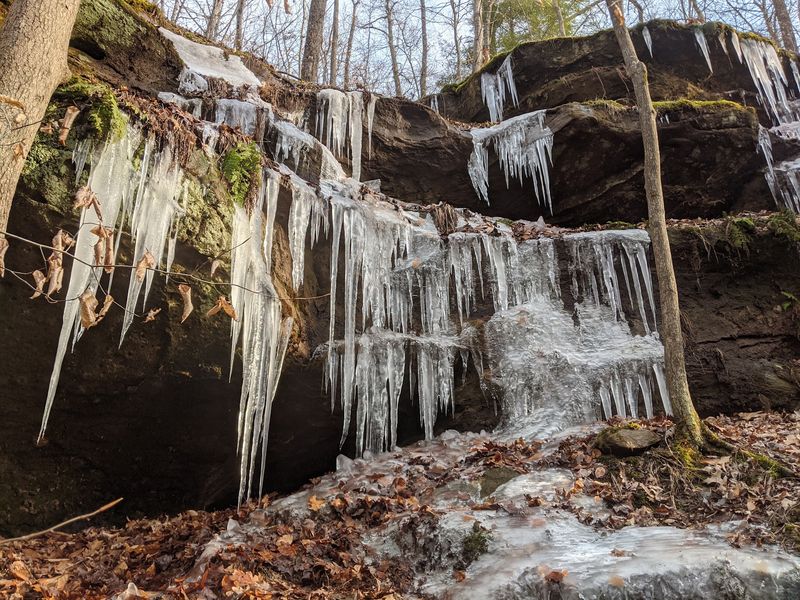
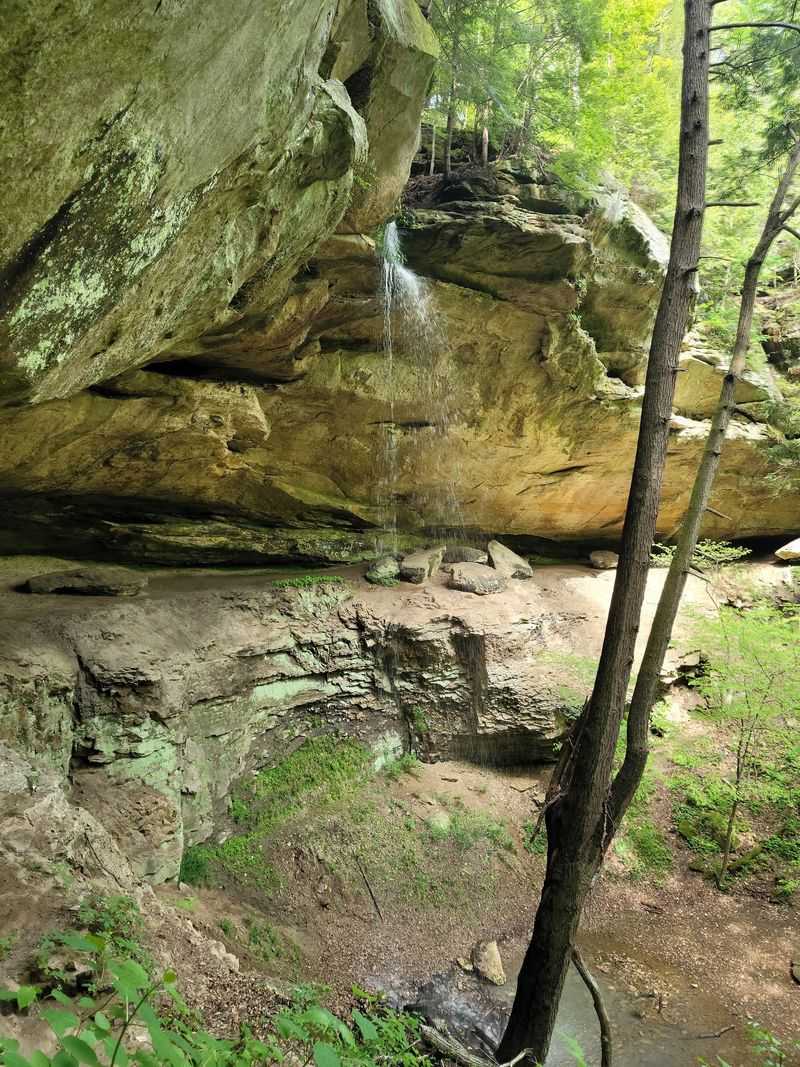
Rain is the secret ingredient. The waterfalls at Hemlock Cliffs are seasonal, so they shine brightest after a good soaking or during cold months.
Hemlock Cliffs Falls and Messmore Cliffs Falls are the headliners. In dry spells, they can shrink to a trickle, so check the forecast before you go.
Winter brings a totally different show. The falls can freeze solid, turning the cliffs into a wall of icicles.
Visiting outside peak summer weekends also spreads out the impact on the trail. Fewer people at once means less pressure on soil and plants.
Icy and wet conditions do raise the stakes, though. Wear traction devices in winter and move carefully near frozen rock.
Don’t drink the creek water, no matter how clear it looks. Hemlock trees can release compounds into it, so bring your own supply.
Give icicles plenty of space, too. Big chunks can break off and fall without warning.
Timing your trip around the weather rewards you with better views. It also gives the canyon a breather between busy stretches, which feels like a smart deal.
Your Quiet Footsteps Help The Locals With Fur And Scales
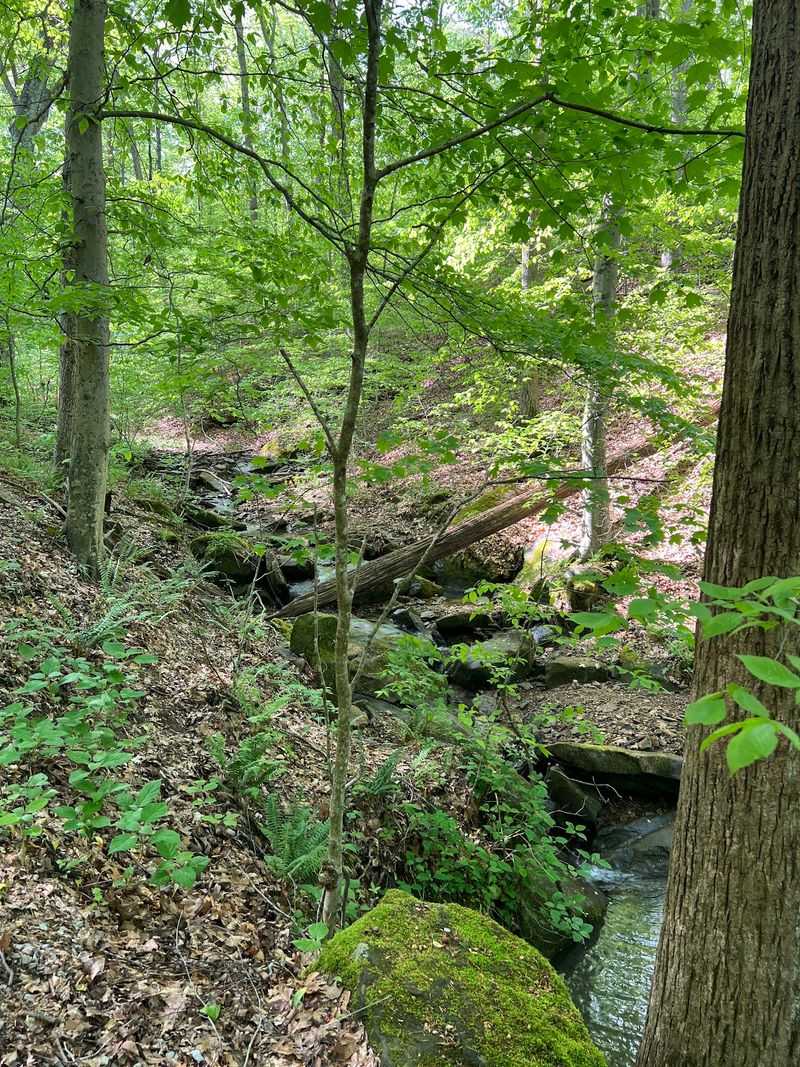
Frogs, deer, squirrels, mice, and birds all share this canyon. Lucky hikers might spot snakes, lizards, salamanders, or even a bobcat.
These animals depend on the same cool, damp habitat that makes the scenery so lush. Noise, litter, and trampled plants all chip away at their home.
Salamanders are a great example. They hide under rocks and logs near water, and flipping those over can expose them.
Keep your distance from anything with legs or wings. Watching quietly gives you a better look anyway.
If you bring a dog, keep it close and clean up after it. A curious pup can scare wildlife or trample delicate creek-side plants.
Small habits really add up here. Stay on the trail, pack out trash, and keep voices low near the creek.
Hemlock Cliffs has survived thousands of years of change. The next chapter depends on how well visitors share it.
So go see this Indiana wonder, soak in those honeycombed cliffs, and leave only footprints on the path. The frogs will thank you, probably with a croak.
