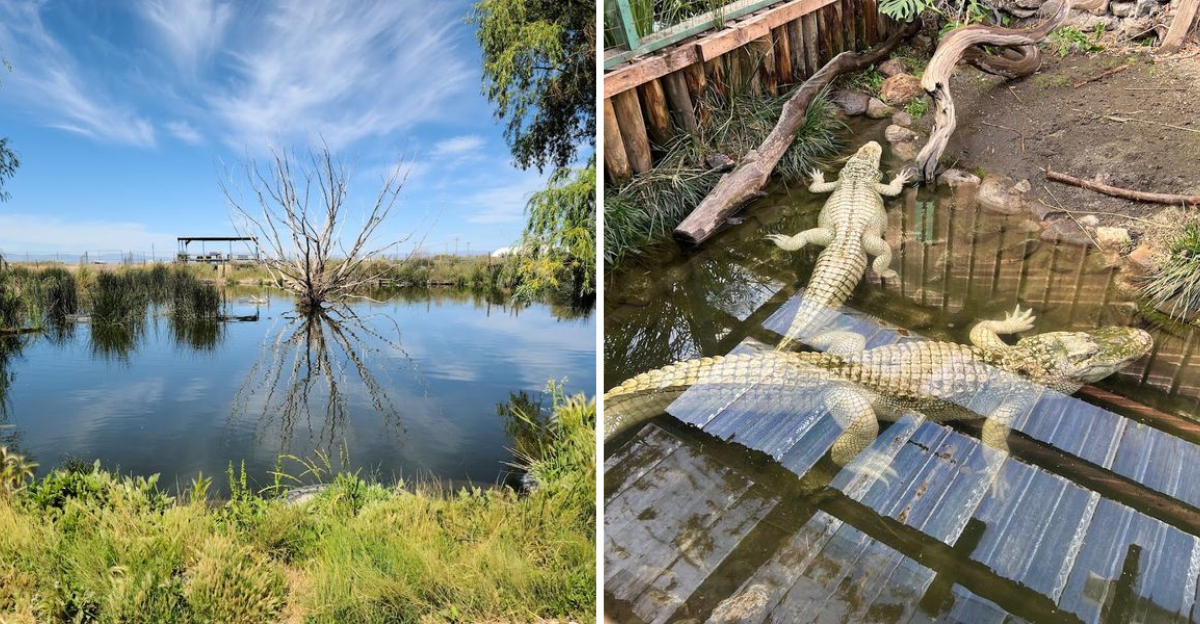
The wide, windswept expanse of Colorado’s San Luis Valley is the last place you would expect to find hundreds of alligators.
High desert and big sky stretch out in every direction, the kind of landscape that feels more like the American West than anything remotely subtropical.
Yet somewhere between the scrub brush and the distant mountain ridges, a geothermal secret has been keeping these ancient reptiles alive and well for decades.
I pulled up expecting a roadside curiosity and left with my jaw still slightly dropped. The place is equal parts working fish farm, animal rescue sanctuary, and one of the most surprising wildlife experiences in the entire country.
Alligators bask in warm pools fed by natural hot springs, completely oblivious to how out of place they should seem. This place is genuinely unlike anything else, and the story of how it came to be is just as wild as the animals living there.
Bring your camera and a healthy respect for prehistoric predators.
The Unlikely Origin Story That Started It All
Nobody planned for Colorado to become alligator country. The whole thing started back in 1977 when Erwin and Lynne Young set up a tilapia and African perch farm on a stretch of land near Mosca, Colorado.
They had tapped into something remarkable beneath the valley floor: a geothermal well that kept water at a steady, warm temperature year-round.
The farm ran smoothly for years, but fish processing created waste, and that waste needed a solution. In 1987, the Youngs introduced 100 baby alligators to handle it.
It was unconventional, maybe even a little audacious, but it worked.
What nobody fully anticipated was how well those alligators would do. The geothermal water hovered around 87 degrees Fahrenheit regardless of the season, giving the gators exactly the warmth they needed to grow, eat, and eventually multiply.
Locals started hearing rumors about gators living up in the Rockies, and curiosity brought people to the farm gates.
By 1990, the Youngs opened the property to the public, and a reptile park was born from what had been a simple farming decision. It is one of those origin stories that sounds almost too strange to be real, the kind of thing you would read in a small-town newspaper and do a double take.
Today, the park has grown into a full rescue and education center, home to hundreds of alligators and dozens of other species. The whole thing started with a fish farm and a practical problem, and somehow it became one of Colorado’s most memorable destinations.
Geothermal Waters: The Secret Keeping Gators Alive in Colorado
The real magic at Colorado Gators is invisible at first glance. It lives underground, in a natural geothermal well that pumps warm water into the park’s ponds around the clock, every single day of the year.
That water stays at roughly 87 degrees Fahrenheit, which is the sweet spot for alligators to remain active, healthy, and comfortable.
Out in the valley, winter temperatures can plunge to 20 or even 30 degrees below zero. The contrast is almost surreal: snow settling across the desert flats while steam rises off gator ponds just a few feet away.
Seeing it in person feels like something out of a nature documentary, the kind of scene that makes you stop and just stare for a moment.
Alligators are cold-blooded, meaning they rely entirely on their environment to regulate body heat. Without that geothermal input, a Colorado winter would be fatal for them.
The warm water is not just a comfort feature; it is the entire reason this park can exist at all. It is a genuinely rare convergence of natural geology and animal husbandry.
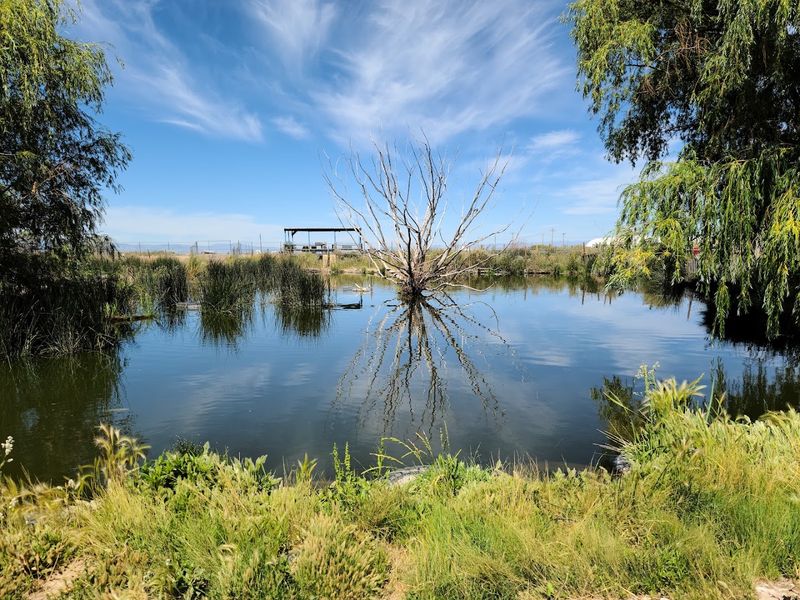
The park has also used this resource to build out wetland areas that feel surprisingly natural, with vegetation, flowing water, and the kind of layered ecosystem that supports both reptiles and birds. The geothermal system does not just sustain the gators; it underpins the whole environment.
It is a reminder that sometimes nature hands you something unexpected, and the best thing you can do is work with it rather than against it.
Hundreds of Gators and the Remarkable Residents You Did Not Expect
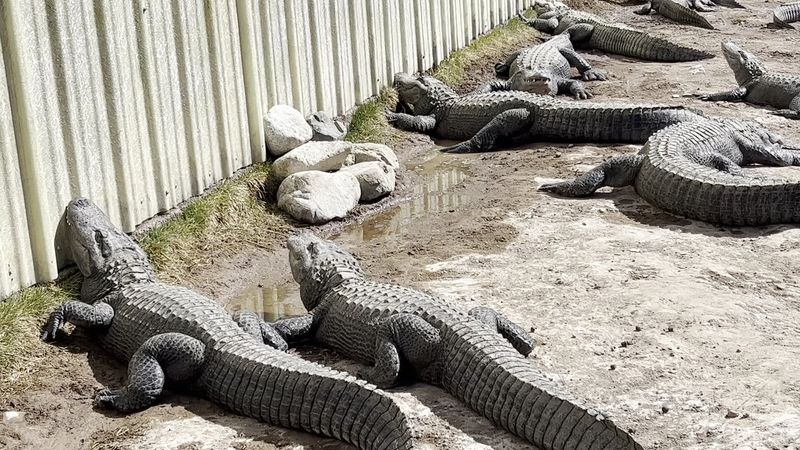
Pulling up to the alligator ponds for the first time, the scale of it genuinely catches you off guard. There are hundreds of them, different sizes, different ages, lounging along banks and gliding through warm water with that unhurried, prehistoric calm that alligators seem to have perfected over millions of years.
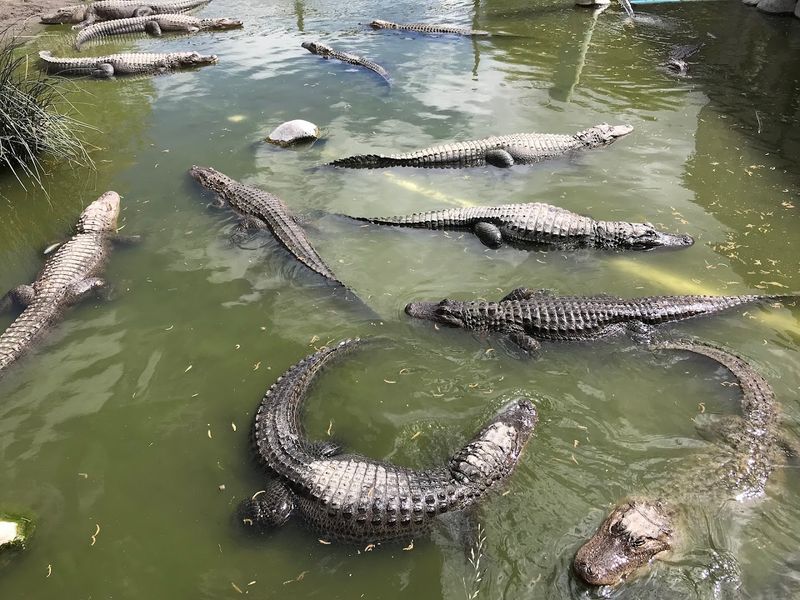
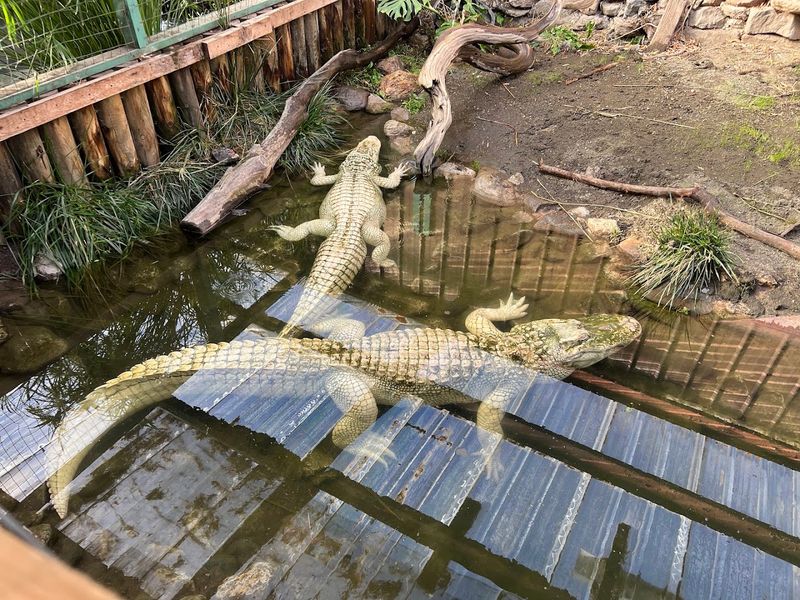
Among the most talked-about residents is Morris, a large alligator with an actual Hollywood credit to his name from the film Happy Gilmore. There are also albino alligators on site, their pale, almost ghostly appearance making them impossible to look away from.
These rare animals draw visitors who have traveled specifically to see them, and honestly, the reaction is always worth watching.
Beyond the American alligators, the park houses Nile crocodiles and caimans, adding a genuinely international flavor to the collection. Massive snapping turtles peer from the water with their ancient, watchful expressions.
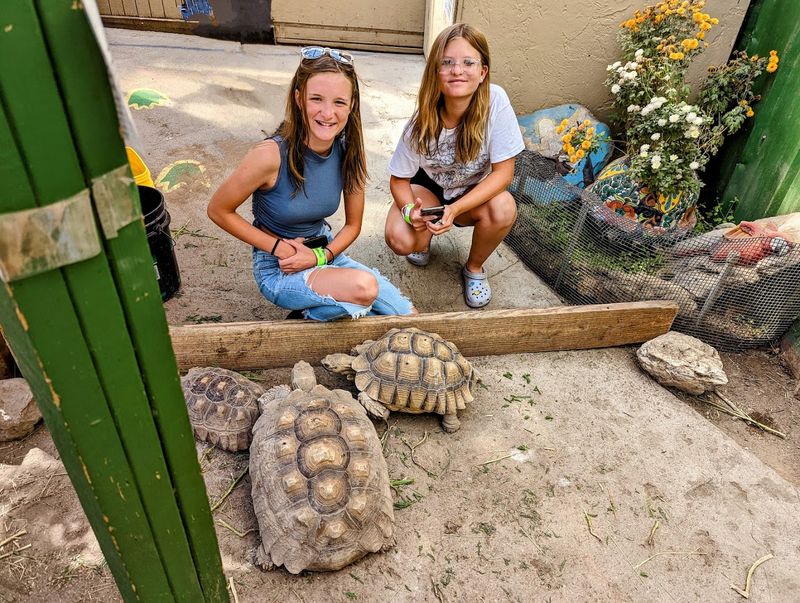
Giant tortoises move slowly through their enclosures with a kind of dignified patience that feels almost meditative to observe.
There are also iguanas, various snake species including venomous ones and impressive pythons, and a bird population that adds constant movement and sound to the whole experience. Over 125 bird species have been spotted at the park, drawn by the warm wetland habitat.
Ostriches and emus roam with surprising confidence, and George the emu has become something of a local celebrity, known for following visitors around with an intensity that is equal parts funny and slightly alarming. The variety here genuinely exceeds what most people expect.
Hands-On Experiences That Make This Park Genuinely Unforgettable
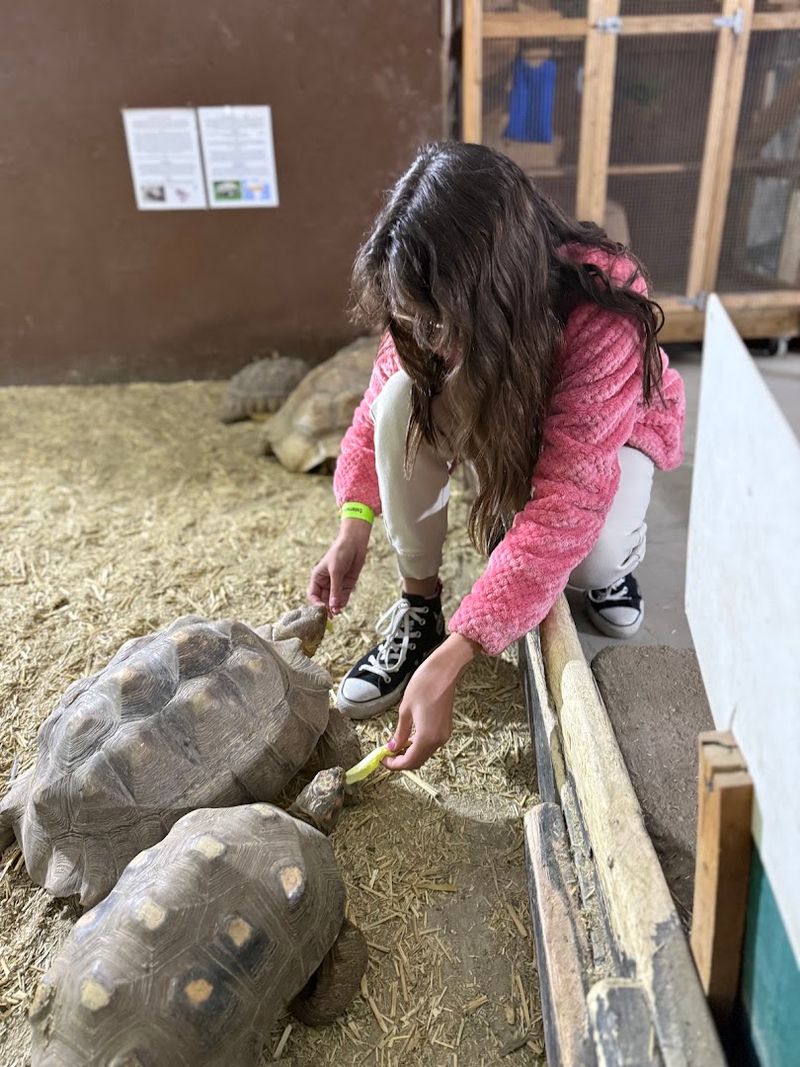
Most wildlife parks ask you to keep a respectful distance. Colorado Gators has a different philosophy entirely, one built around getting you close, engaged, and genuinely connected to the animals in a responsible and educational way.
The difference is noticeable from the moment you walk in.
Every visitor gets the chance to hold a baby alligator. It sounds intimidating, but the experience is surprisingly calm.
The young gators are small, their undersides are softer than expected, and the staff guide you through the whole thing with patience and good humor. It is one of those moments that tends to make grown adults giddy in the best possible way.
Gator Chow is available for purchase, and tossing food to the larger alligators in the outdoor ponds is a rush. Watching a 300-pound animal move with sudden, explosive speed when food hits the water is a vivid reminder of just how powerful these creatures are.
Feeding the tortoises offers a completely different energy, slow, gentle, almost peaceful by comparison.
The park also operates as a working tilapia farm, and visitors can feed the fish directly in the ponds. For adults looking for something more intense, gator wrestling classes give you the chance to learn hands-on from experienced handlers in a controlled, educational setting.
The staff throughout the park are consistently described as knowledgeable, friendly, and clearly passionate about the animals in their care. That enthusiasm is contagious, and it transforms the visit from a simple attraction into something that feels genuinely meaningful.
A Sanctuary Built on Rescue, Not Just Exhibition
There is a depth to Colorado Gators that goes well beyond the spectacle of alligators in the Rockies. The park has quietly become one of the more significant reptile rescue operations in the region, taking in animals that have nowhere else to go.
Many of the snakes, lizards, tortoises, and other reptiles on site arrived as surrendered pets, animals that grew too large or too demanding for owners who had not fully understood what they were taking on.
Some of the park’s earliest rescue animals came from the Denver Zoo and others through the Denver Police Department, which speaks to the breadth of the operation. The staff do not just display these animals; they advocate for them, educate visitors about responsible exotic pet ownership, and provide long-term care for creatures that might otherwise face very grim outcomes.
The park suffered a significant loss in April 2023 when a fire destroyed one of the reptile buildings, taking with it many of the rescue snakes, lizards, tortoises, parrots, and cats housed inside. It was a devastating event, but the park reopened quickly.
The alligators and outdoor animals were unharmed, and the team’s commitment to continuing their mission never wavered.
That resilience says a great deal about the people behind Colorado Gators. Visitors often leave with a deeper awareness of the challenges facing exotic animals and the communities that care for them.
The rescue mission adds a layer of purpose to every ticket purchased, making the visit feel like a contribution to something that genuinely matters beyond the gates.
Planning Your Visit to Colorado Gators Reptile Park
Colorado Gators Reptile Park is open seven days a week from 9 AM to 5 PM, making it easy to work into a broader San Luis Valley itinerary. Many visitors pair it with a trip to Great Sand Dunes National Park, which sits nearby and offers a completely different but equally jaw-dropping natural experience.
Together, the two make for an unforgettable day in one of Colorado’s most underrated regions.
The park is located in Mosca, just north of Alamosa, and is accessible by a straightforward drive through the valley. Plan to spend at least two hours, though many visitors find themselves lingering well past that.
There is genuinely more to see than the outside of the property suggests, and more than a few people have noted that it is far bigger and richer than they anticipated.
Bringing cash is a smart move, both for any optional activities and to leave a tip for the staff, who work hard caring for a large and diverse animal population. The gift shop offers a modest but appealing selection of souvenirs, and staff are happy to answer questions and share information about the animals throughout the visit.
The park welcomes visitors of all ages, and the interactive elements make it particularly engaging for families with kids. That said, adults traveling without children consistently report having just as much fun, sometimes more.
George the emu alone is worth the trip. Colorado Gators is one of those rare places that exceeds expectations quietly and completely.
Address: 9162 Lane 9 North, Mosca, CO 81146
