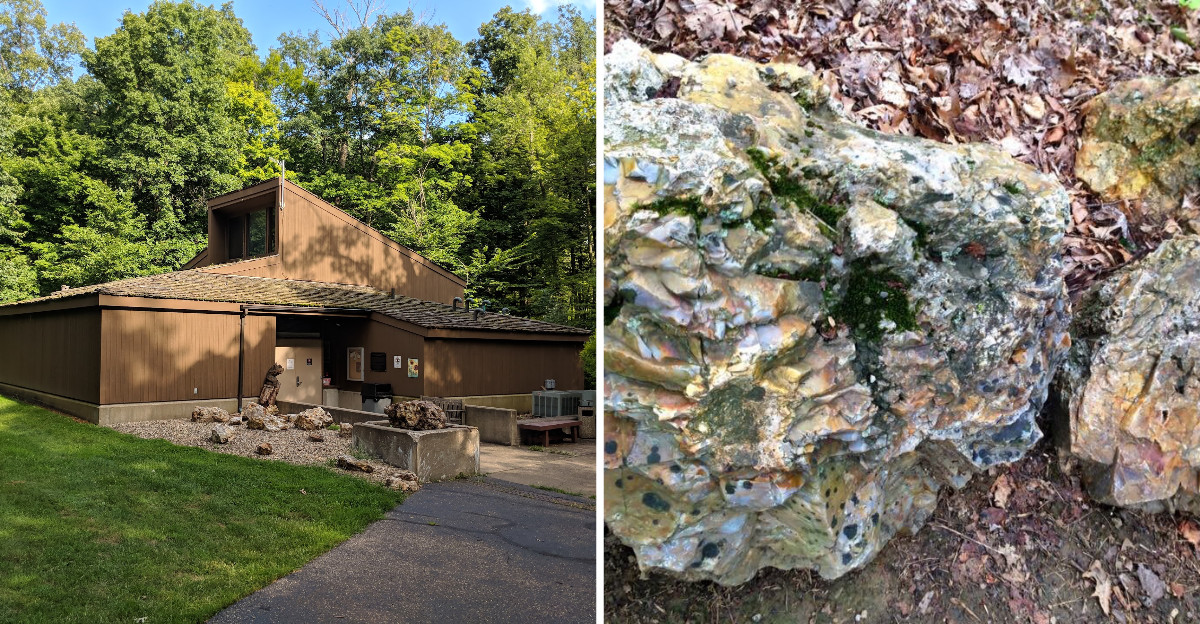
Warm afternoons and golden light through the trees are what a quick woodland stroll turned into, and the reason became clear almost immediately. Chunks of stone glinting along the path, streaked with red, cream, and pale blue, are the reason people walked this Ohio ridge for thousands of years.
Hundreds of old quarry pits spread over more than 2,000 acres, dug by hand long before anyone drew a map of the state. What surprised most is how far that flint traveled, showing up at sites near the Gulf of Mexico and out past the Mississippi River.
A small museum, a shady picnic area, and trails soft enough to darken shoes wait for visitors. History you can actually touch with your eyes makes this ridge one of the quiet best places in Ohio.
The Ridge Itself, 2,000 Acres of Working Ground
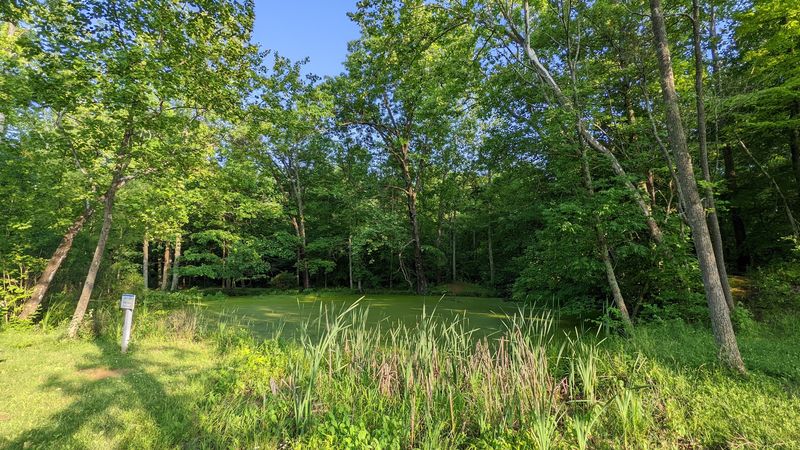
Numbers do not usually stick with me, but this one did. More than 2,000 acres of ridgeline here were worked for flint, and the pits and workshop spots number in the hundreds.
The ridge sits in the Appalachian foothills, running roughly east to west, and it is high enough that the air genuinely feels cooler under the canopy. One reviewer joked it always seems twenty degrees cooler in those woods, and honestly, that matched my experience on a humid day.
What makes the scale hard to grasp is how gentle everything looks now. Grass and leaf litter have smoothed the edges of old digging, so you are walking across an industrial site that reads as quiet forest.
I kept stopping to look down rather than up, which is the opposite of how I normally hike.
Practical tip: the state memorial grounds hold only a portion of the full quarry area, and the rest sits on surrounding private and preserve land. Stick to marked trails, because the terrain off-path is uneven and littered with sharp stone.
Give yourself two hours minimum if you want to actually absorb the place.
Reading the Quarry Pits Underfoot
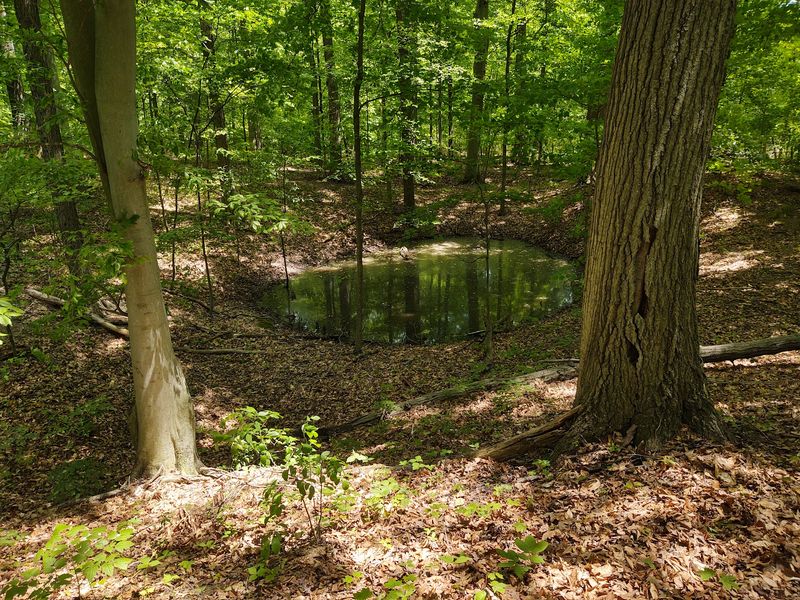
My first pit went right past me. They are not dramatic holes in the ground, just broad dips in the forest floor, and once someone points one out you cannot stop spotting them.
Measurements vary a lot across the ridge. Some run about twelve feet across, others stretch to eighty, with depths anywhere from three feet to twenty.
Mounded spoil piles sit beside many of them, the leftover rock and dirt from hauling flint up by hand.
Workers here used stone hammers, wooden wedges, and controlled heat to crack loose blocks from the bedrock. No metal, no machinery, and no shortcuts, which is what makes the sheer number of pits so humbling.
A few of the deeper depressions now hold rainwater in spring, turning into vernal pools where frogs get noisy at dusk.
Interpretive placards along the main path explain what you are looking at, and I would honestly recommend reading them before you walk rather than after. Once your eye is trained, the whole forest floor starts to look intentional.
Bring a curious kid and they will spot pits faster than you do.
Rainbow Flint, Ohio’s Official Gemstone
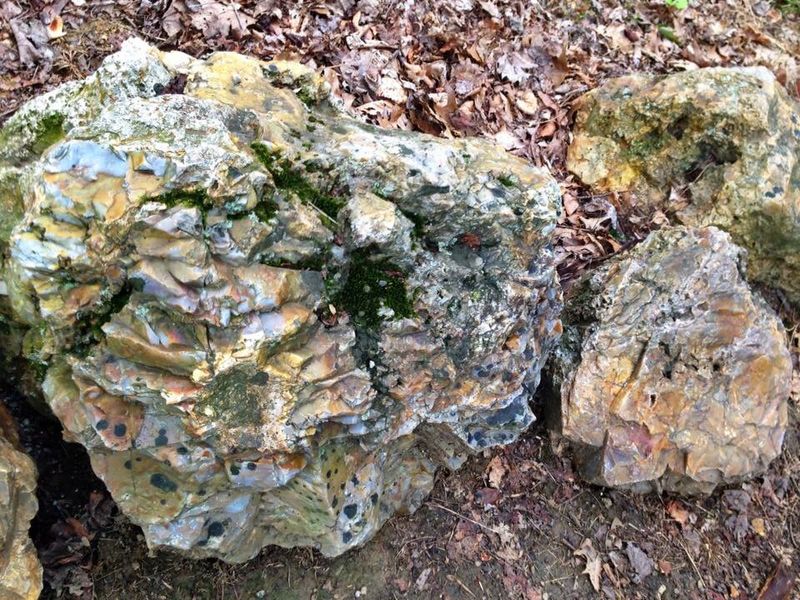
Ohio picked flint as its official gemstone in 1965, and after five minutes on this ridge the reason is obvious. The local variety, called Vanport flint, comes in cream, rust red, dusty blue, soft green, and sometimes several of those in a single palm-sized piece.
Geologists trace it back more than 300 million years to marine sediments, which is a strange thought while standing in a landlocked Ohio forest.
The stone is both hard and brittle, a combination that lets skilled hands strike off flakes with edges sharper than most kitchen knives. Ancient workers also learned that gentle heating improved how it fractured and deepened the color.
I picked up a broken flake just to feel the surface, cool and glassy, then set it right back down.
That part matters. Collecting flint is not permitted on memorial grounds, so admire, photograph, and leave it.
The museum does sell small pieces, which is the honest way to take a souvenir home. Several visitors have gone hunting for a spot to dig nearby and come up empty, so plan on looking rather than gathering.
Flint That Crossed Half a Continent
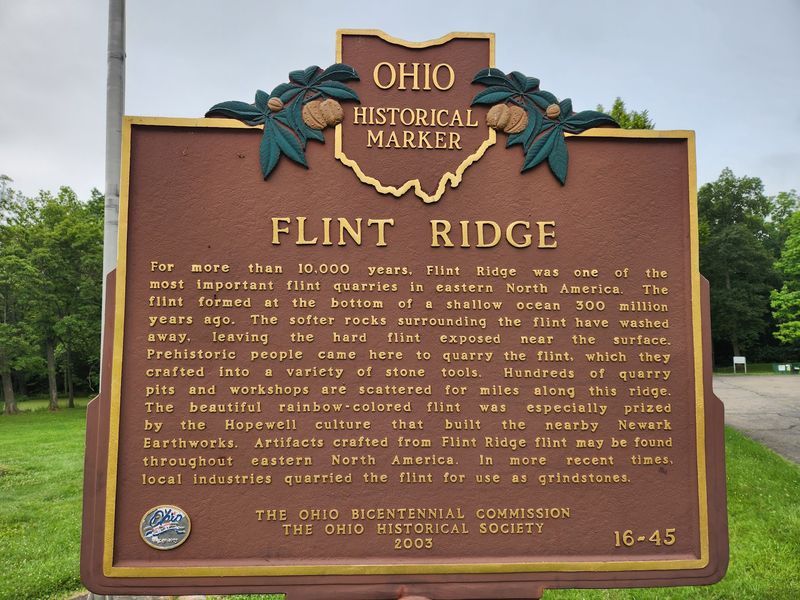
Here is the fact that reframed the whole visit for me: pieces of this Ohio flint have turned up at ancient sites near the Gulf of Mexico, along the Atlantic coast, and west of the Mississippi River as far as the Kansas City area.
No wagons, no roads, no pack animals. Just footpaths, rivers, canoes, and generations of exchange between communities.
The Hopewell culture, centered in this part of Ohio roughly two thousand years ago, prized the material and moved it widely. Blades, spear points, and finely worked ceremonial pieces made from Flint Ridge stone have been recovered at earthwork sites, including places near Newark.
Archaeologists can identify the flint by its distinctive color and structure, which is how the trade routes were mapped in the first place.
I found that easier to picture after seeing finished tools in the museum display beside raw chunks from the pits.
The takeaway is simple and a little startling. A ridge in Licking County supplied one of the most recognizable raw materials in eastern North American prehistory, and the evidence still sits in collections from Kansas to the coast.
The Small Museum Worth the Stop
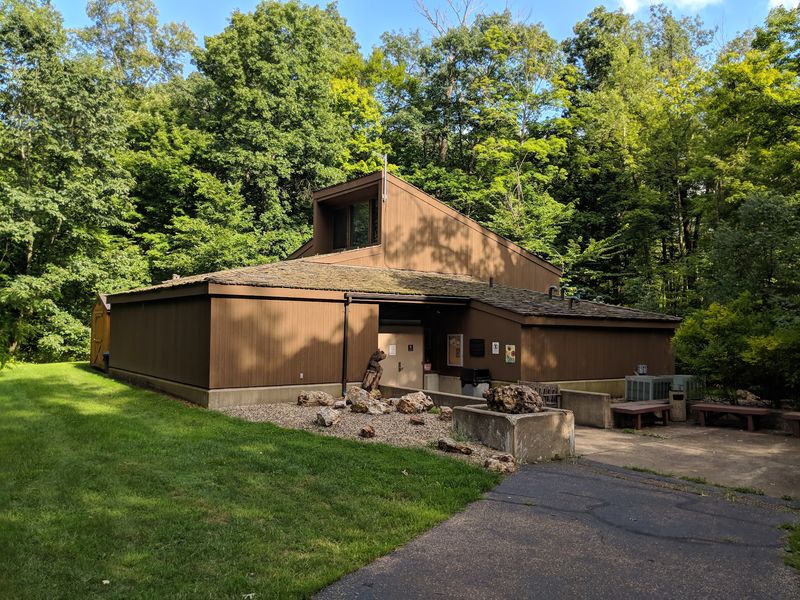
Blink and you drive past it. The museum is a low, modest building tucked near the parking area, and I nearly did the same thing before circling back.
Inside, the exhibits are compact but genuinely well done, walking you through how raw flint became blades, drills, and points. Staff there are happy to show you the difference between a rough chunk and a finished tool, which made the trails outside far more interesting afterward.
Hours are limited, and that trips people up. As of recent listings the museum opens Thursday through Saturday from 10 am to 4 pm, closed Sunday through Wednesday, so a weekend-only trip can leave you looking at locked doors.
Calling ahead at 740-763-4127 is the smart move, especially after storms, since trails occasionally close for hazards.
The trails stay open even when the building is not, so a closed museum does not ruin the day.
Still, seeing worked points indoors before spotting flakes on the path outside connects the two halves of the site in a way signage alone cannot.
That small museum visit changes what you notice once you step outside. Pieces that might have looked like ordinary stone suddenly seem worth a second glance, and the landscape starts making more sense.
Even a short stop inside gives useful context before you head onto the trails and see the material firsthand.
Trails, Benches, and Mud on Your Shoes
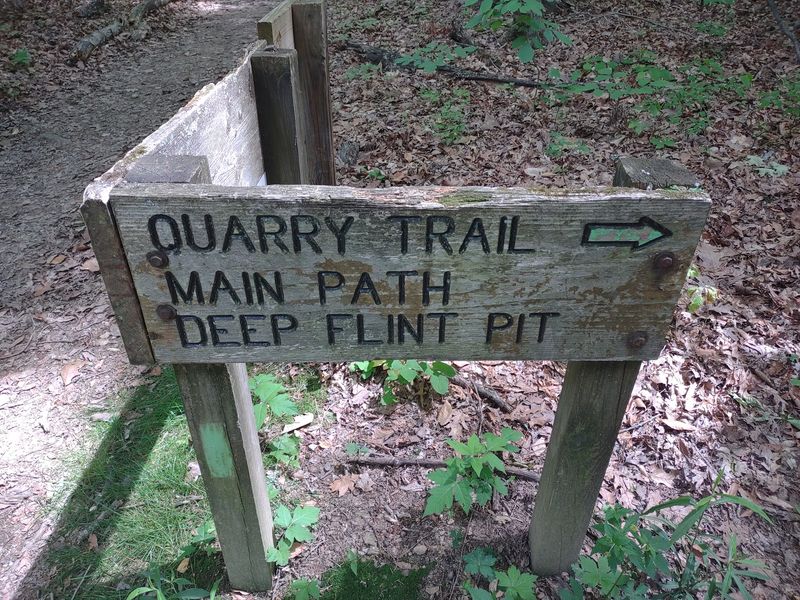
Footwear advice first, because I learned it the practical way. The soil holds water, and a day after rain the unpaved sections turn soft and slick, so a spare pair of shoes in the car is a genuinely good idea.
The main loops run roughly one and a half to two miles total, with shorter options branching off. There is also a paved interpretive path with markers, which makes the site workable for strollers, wheelchairs, and anyone who would rather not tackle exposed roots.
Benches show up at sensible intervals, usually right where the grade has just tested your legs.
Junction markers exist, though a couple of visitors have mentioned the network can feel confusing if you wander off the main loop. Snap a photo of the trailhead map before you start.
Parking is limited, a handful of spaces near the museum, so arriving early on a nice Saturday saves frustration.
Restrooms close seasonally with portable units available. Mosquitoes get busy after wet weather, so tuck repellent in your bag alongside the water bottle.
None of these challenges are serious, but planning ahead makes the walk much easier and leaves more attention for the landscape itself.
Old Trees, Mushrooms, and the Annual Knap-In
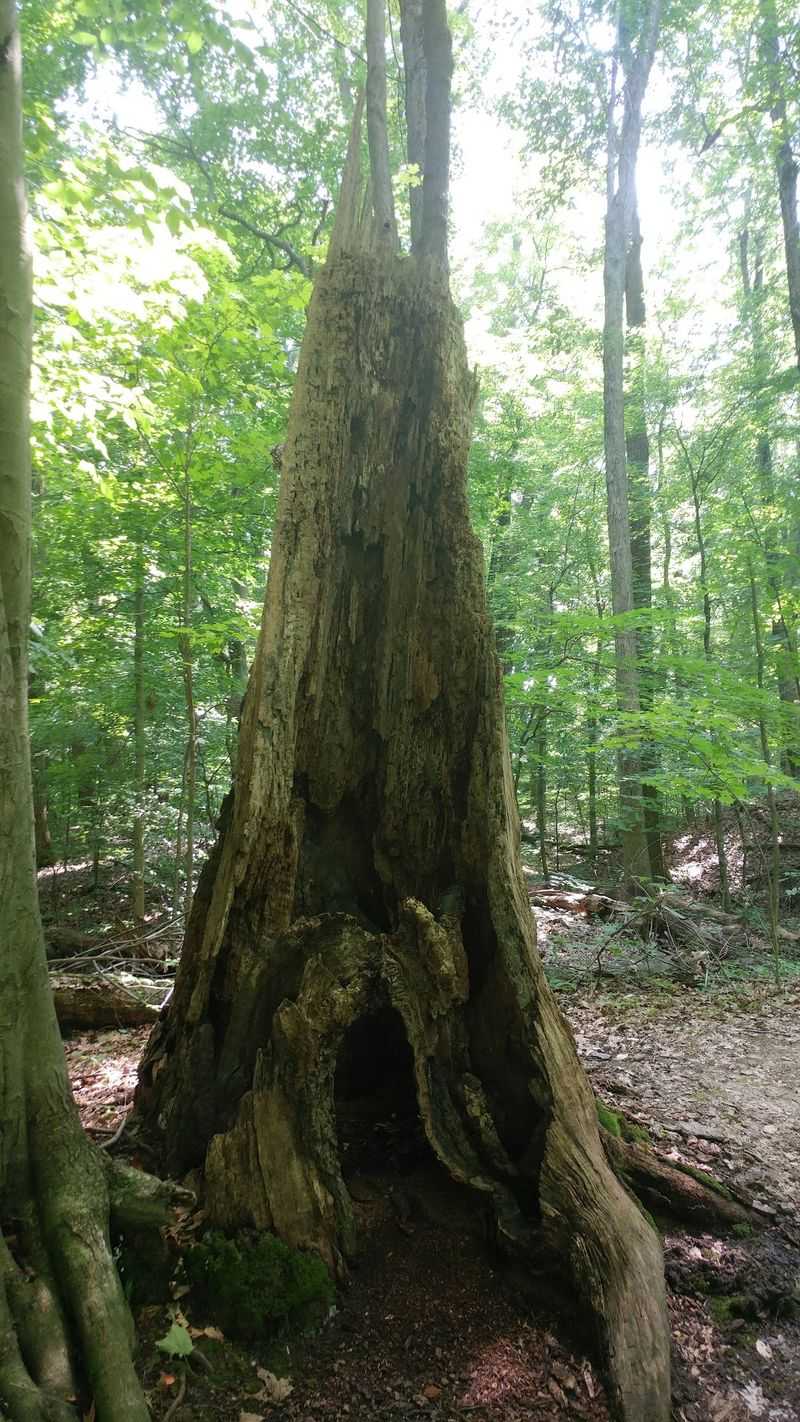
Beyond the archaeology, the forest here is a quiet standout. Licking County holds few stretches of mature beech-maple-oak woodland this intact, and many trunks have been standing well over a century.
Undergrowth stays fairly open, which is part of why the flint is so easy to spot and why the whole place feels airy rather than tangled.
Spring brings wildflowers across the slopes, and after a good soaking rain the fallen logs sprout an impressive variety of mushrooms. I heard woodpeckers working somewhere overhead the entire walk, plus warblers I never managed to see.
White-tailed deer and squirrels are regulars, and the seasonal pools support frogs and salamanders.
The ridge also hosts an annual Knap-In, a gathering where flintknappers shape stone the traditional way while visitors watch and ask questions. Seeing a point emerge from a raw chunk in real time beats any display case.
Picnic tables and a shelter house sit near the parking area, which makes the site an easy half-day outing rather than a rushed stop.
Address: 15300 Flint Ridge Road, Heath, Ohio
