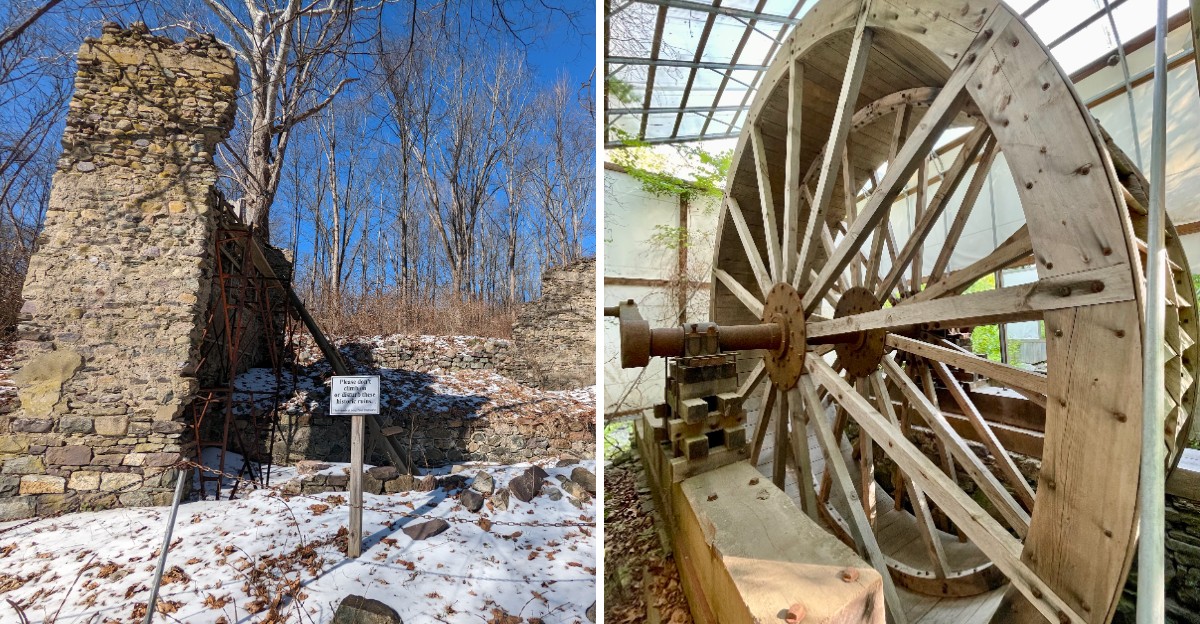
Well, the forest is slowly winning this one. Stone walls, furnace ruins, old foundations, and pieces of waterworks still sit among the trees where an entire ironworking village once buzzed with life.
This New Jersey site dates back to 1766, when Peter Hasenclever brought hundreds of workers and their families to build furnaces, homes, shops, and farms.
Iron made here later played a role during the Revolutionary War, War of 1812, and Civil War.
Then operations ended in 1882, and nature started moving back in. Today, the ruins are scattered through the woods like leftovers from another century.
It is hard not to feel a little nosy wandering past the remains of a village that simply faded into the forest.
A Village Built Around Fire and Water
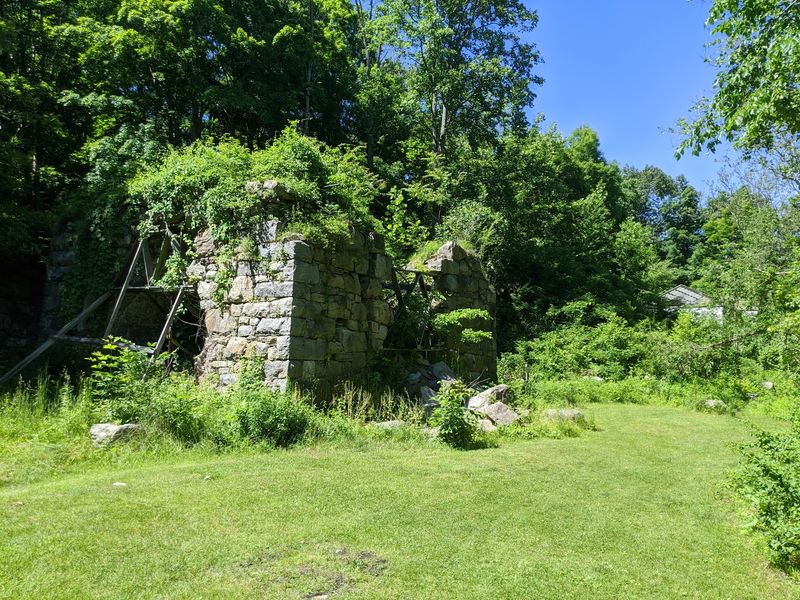
My first thought here was simple. Somebody worked really hard in these woods!
Long Pond Ironworks State Park protects the remains of an ironmaking community that grew up beside the Wanaque River in the Highlands of northern New Jersey.
The whole place began as an iron plantation, which was a fancy way of saying a self-contained work town. There was a furnace for melting ore, a forge for shaping iron, homes for workers, shops, and farms to keep everyone fed.
People did not just clock in and leave. They lived, ate, worked, and raised kids right here.
Today the village sits quietly inside a much larger park. Stone walls poke out of ferns, and old foundations line the paths like puzzle pieces waiting to be put back together.
It is a strange and lovely mix of nature and leftover human effort.
Give yourself time to slow down. Read the small signs along the paths, look closely at the stonework, and try picturing the smoke, noise, and busy crowds that once filled this valley.
Workers Who Crossed an Ocean
Picture packing up your whole life, sailing across the Atlantic, and landing in thick forest to build an iron industry from scratch. That is roughly what happened here in 1766.
A German ironmaster brought hundreds of skilled ironworkers and their families from Europe to start the operation. Some accounts put the number at more than five hundred people.
They carried know-how that was rare in the colonies, from mining and smelting to forging heavy iron goods.
Their new home needed power, and the river delivered it. A dam was built at a spot then called Long Pond, which is known today as Greenwood Lake.
Water from that dam flowed down to turn wheels that pushed air into the furnace and ran the big forge hammers.
Honestly, the planning is impressive. With no modern machines, these families turned a wild valley into a working town.
Keep that in mind as you walk the trails, because almost every stone you see was moved by hand.
Iron That Helped Shape American History
Cannonballs. Hardware.
Cooking stoves. The list of things made here reads like a timeline of American history.
During the Revolutionary War, the ironworks supplied the Continental Army with materials such as cannonballs and iron fittings. Work kept going through the War of 1812.
Later, during the Civil War, the site produced iron for the Union Army, including cast iron stoves used in soldiers’ camps.
That last detail made me smile. Wars are usually remembered for battles, yet somebody also had to keep troops warm and fed, and some of that help came out of these furnaces in a quiet New Jersey valley.
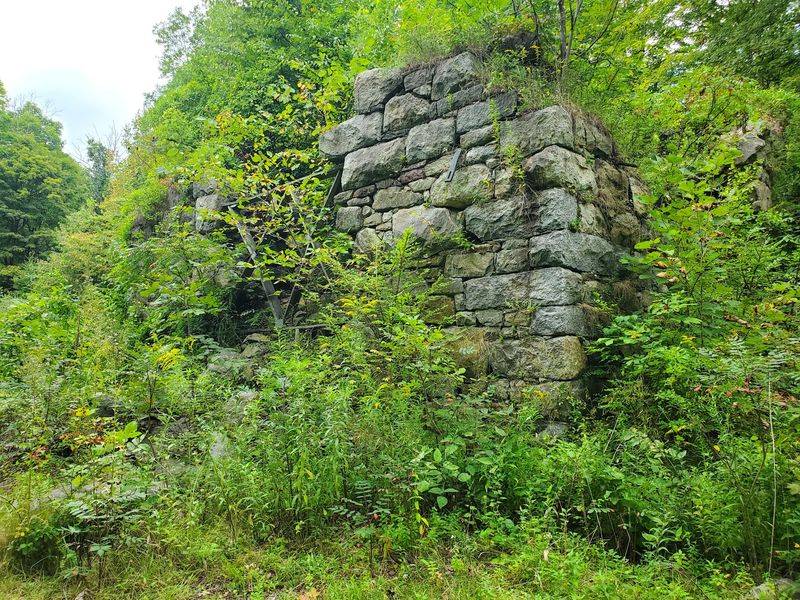
When you see the furnace ruins, take a minute to look at their size. Thick stone walls had to hold in intense heat for long stretches, and they did that job for over a century.
Kids especially seem to love hearing that a pile of old rocks once helped make cannonballs. It turns a simple walk into a real history lesson without anyone noticing they are learning.
Everyday Life in Old Hewitt
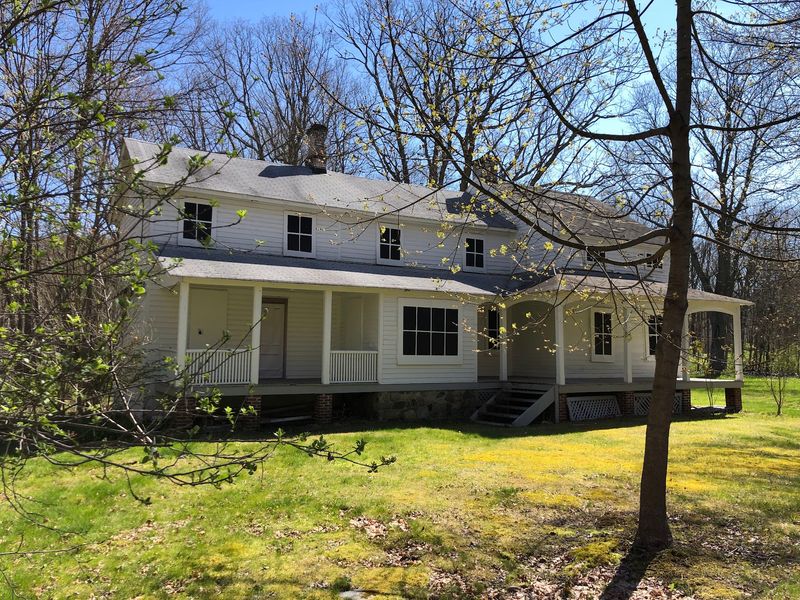
Forget the furnaces for a second and think about breakfast. Hundreds of people needed food, school, church, and a place to pick up mail.
The original village of Hewitt grew right around the ironworks to meet those needs. It had a church, schoolhouses, and a store that also worked as the post office.
Homes and outbuildings were spread through the valley for both workers and managers.
So this was not just a factory. It was a neighborhood, with kids running between houses and families trading news at the store counter.
Daily life moved to the rhythm of the iron business, from early shifts to supply deliveries.
As you explore, notice how close everything sits together. Homes are a short stroll from the work areas, which tells you a lot about how tightly connected life and labor were back then.
A fun way to visit with family is to guess what each building was used for before reading the sign. You might be surprised how often you get it right, and how often you do not.
When the Furnaces Went Cold
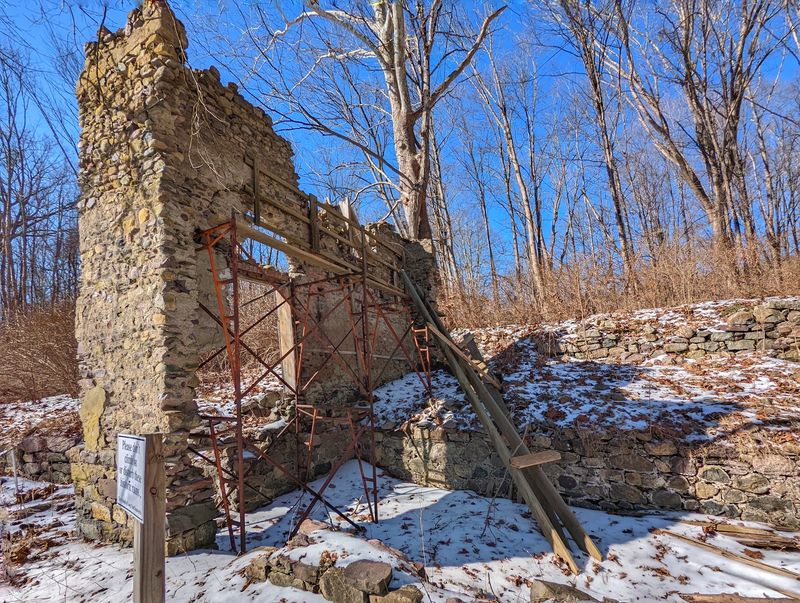
Every boom has an ending, and this one came in 1882. That year the furnace fires went out for good.
The reasons were bigger than one valley. The iron industry was shifting toward furnaces fueled by anthracite coal, and large coalfields in Pennsylvania made that change easy elsewhere.
On top of that, rich iron ore deposits were found in the Midwest, giving other regions a serious edge.
Small charcoal-fired operations like this one simply could not keep up. The same spirit of new ideas that once made the ironworks successful eventually left it behind.
It is a little bittersweet to think about. Yet the shutdown is also the reason so much remains to see today, since nobody tore everything down to build something newer and shinier.
Stand near the old casting areas and look around for a moment. The silence feels heavy in a good way, almost like the valley is resting after a very long shift.
It makes a great spot for a short pause before heading deeper down the trail.
Ice, Sawdust, and Stubborn Neighbors
You might expect everyone packed up the moment the iron stopped flowing. Nope.
Plenty of residents stayed and found new ways to earn a living.
The community kept building. A new school went up in 1895, and a church followed about ten years later.
In 1913 a steam-powered sawmill started running, giving local workers another option.
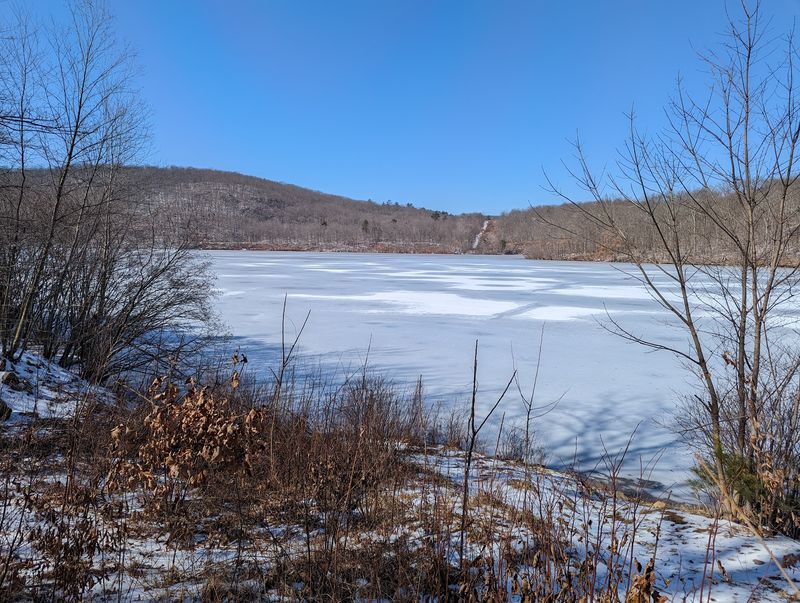
Winter brought its own job too. People cut ice from Greenwood Lake, an important business before home refrigerators came along.
Some residents also started recreation businesses as visitors began heading to the area for fun.
These efforts kept the village alive for a while, but not forever. By the 1930s those industries were fading, and many families moved away to find work elsewhere.
Look for the old ice house ruins during your visit. They are easy to walk past, so keep your eyes open.
Once you spot them, it is fun to imagine giant blocks of lake ice stacked inside, packed tight to last through the hot summer months.
Two Waterwheels With Very Different Stories
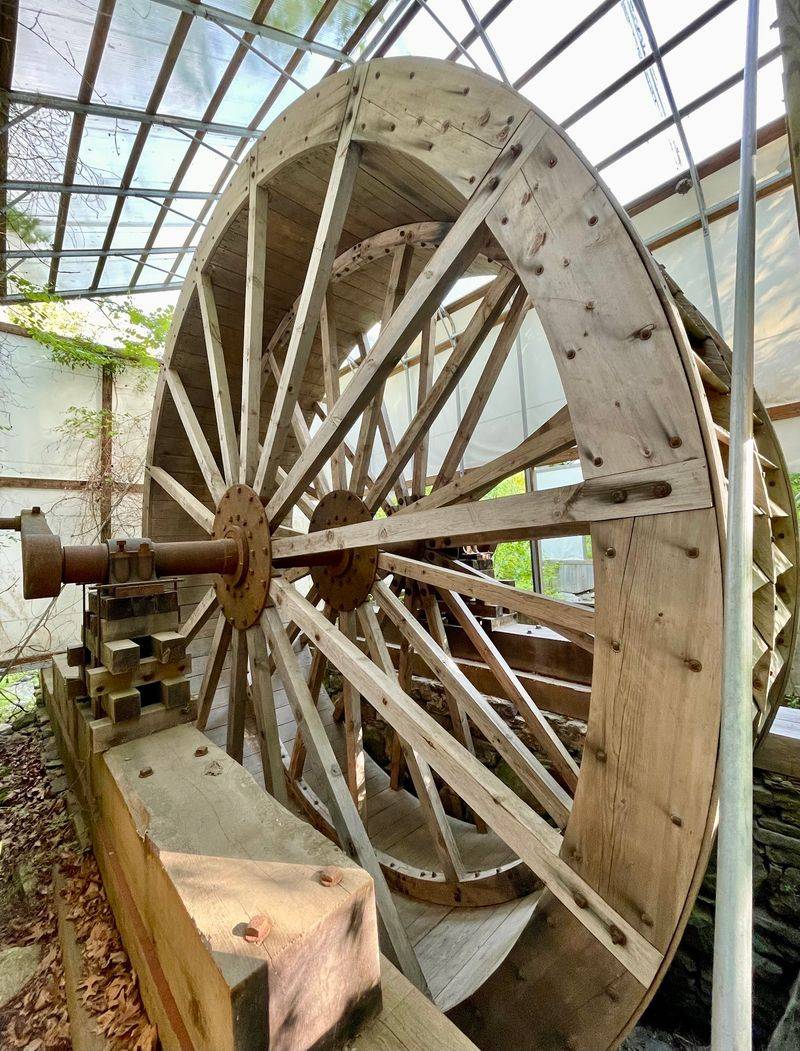
The waterwheels were my favorite surprise, no contest. They are big, a bit dramatic, and full of character.
One wheel has been carefully reconstructed, so you can see how these machines once looked when water poured over them and power flowed to the furnace. Another wheel has been kept in its charred state after a fire in 1957.
Seeing the two side by side tells a story without a single word.
The rebuilt wheel shows the past at its best. The burned one shows how fragile history can be.
Together they make a pretty powerful pair.
Bring a camera, because this area is extremely photogenic. Morning light through the trees looks great on the wooden spokes, and the dark texture of the burned wheel stands out in any season.
Little ones usually ask how a wheel can make a furnace hot. It is a perfect chance to explain that turning wheels powered bellows, which blew air into the fire.
Science and history, both in one stop.
The Old Country Store Turned Museum
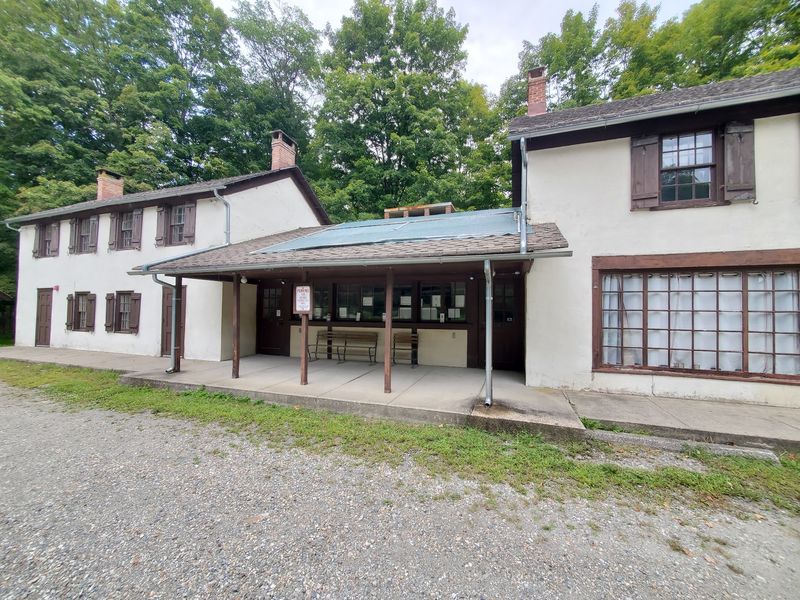
Start here if you can. The museum gives the ruins outside a whole new meaning.
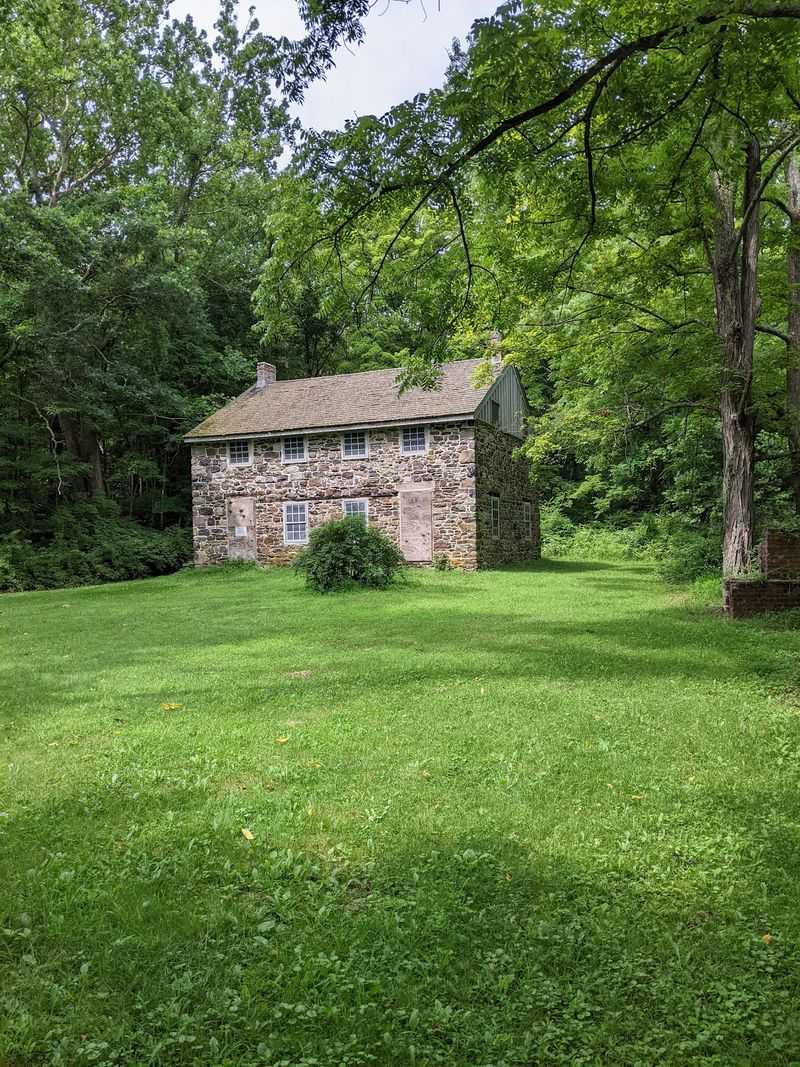
The building was once the Old Country Store, the busy social and shopping center of the village. It has been renovated and now serves as the Long Pond Ironworks Museum, with displays that explain the ironworks and the people who lived around it.
The museum has typically opened seasonally, roughly from spring into late fall, so check ahead before you go.
Inside, the history clicks into place. You learn what the furnaces did, how the village worked, and why it all faded away.
Knowledgeable volunteers and staff are often around to answer questions and point out good short routes to the key sites.
Grab a self-guided tour brochure while you are there. The paths through the historic district are not always obvious, so a map helps a lot.
Match the buildings you see to the numbers on the brochure and you will find your way just fine. It feels a little like a treasure hunt.
Trails, Streams, and Quiet Water
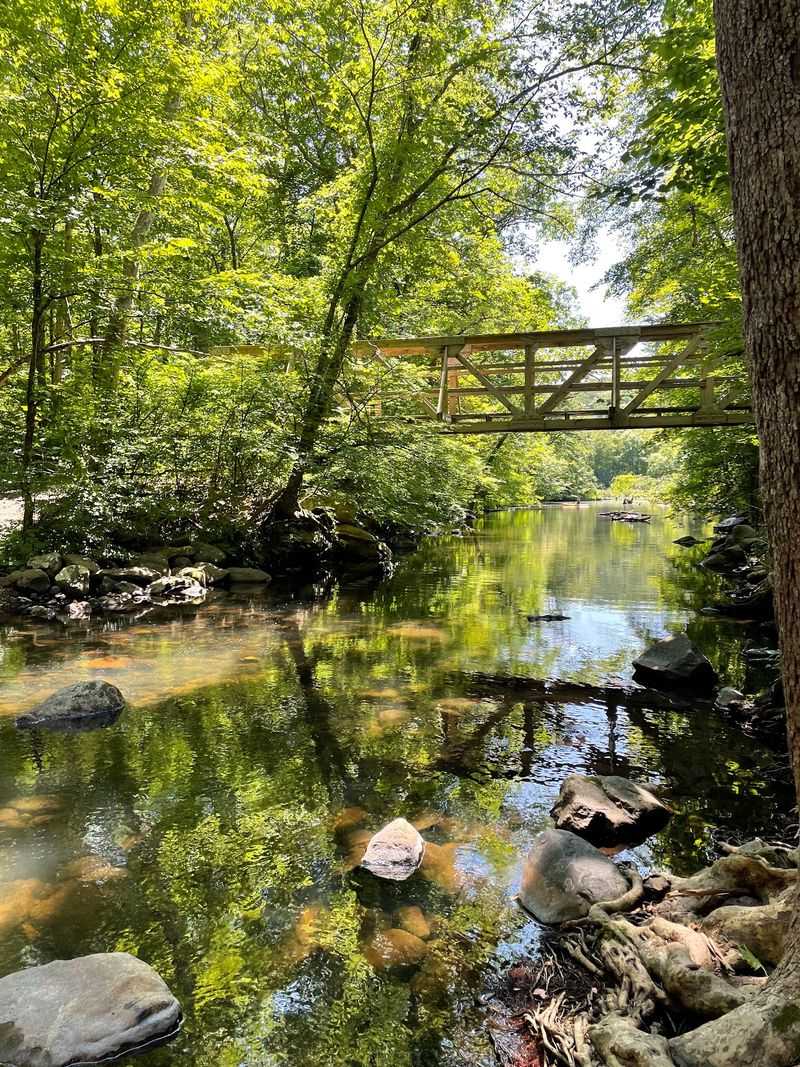
Even if history is not your thing, the trails here are seriously good. The park stretches far beyond the old village into rolling forest.
Miles of paths wind through the woods for hiking and mountain biking, with creeks, hills, and peaceful views along the way. Some routes include stream crossings with ropes strung between trees for support.
Water levels change, so check trail maps and skip a crossing if it looks too high or slippery.
Water lovers have options too. Monksville Reservoir is popular for boating, kayaking, and fishing, and Green Turtle Pond is another spot anglers enjoy.
A quick word about ticks. They can be plentiful in tall grass, so wear long pants, use repellent, and do a full check after your walk.
Your future self will thank you.
Download a trail map before you arrive, since cell service can be spotty in the hills. Pack water and snacks, wear shoes that can handle mud, and plan for a few extra hours.
This place tends to stretch a short visit into a whole day.
Keeping the Crumbling Village Standing
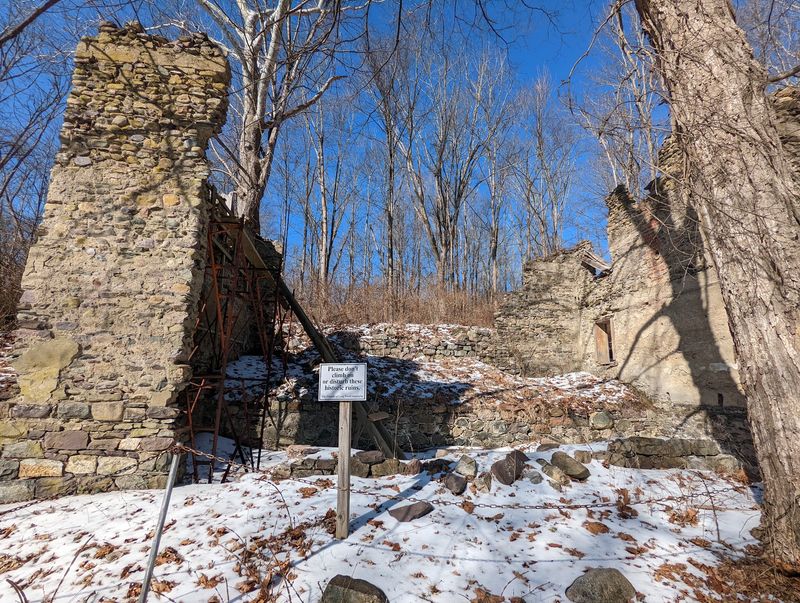
Some buildings here look solid. Others are slowly falling apart, and that is part of the honest charm.
The stone-rubble worker houses show a range of conditions, from mostly intact walls to piles slowly being swallowed by the forest. Research and restoration work continues, and several historic houses have already been stabilized.
The Friends of Long Pond Ironworks, a support group, helps care for the site and offers educational programs.
The whole district is recognized as a National Historic Landmark, which shows just how much this place matters. Still, saving old stone takes time, money, and plenty of patience.
You can help in small ways. Stay on marked paths, never climb on walls, and leave every stone exactly where you found it.
Even a little foot traffic can loosen fragile ruins.
Visiting Long Pond Ironworks State Park is a reminder that history is not only in books. It lives in these woods.
You can find it at Long Pond Ironworks State Park, 1334 County Rd 511, Hewitt, NJ 07421, open most days from morning until late afternoon.
