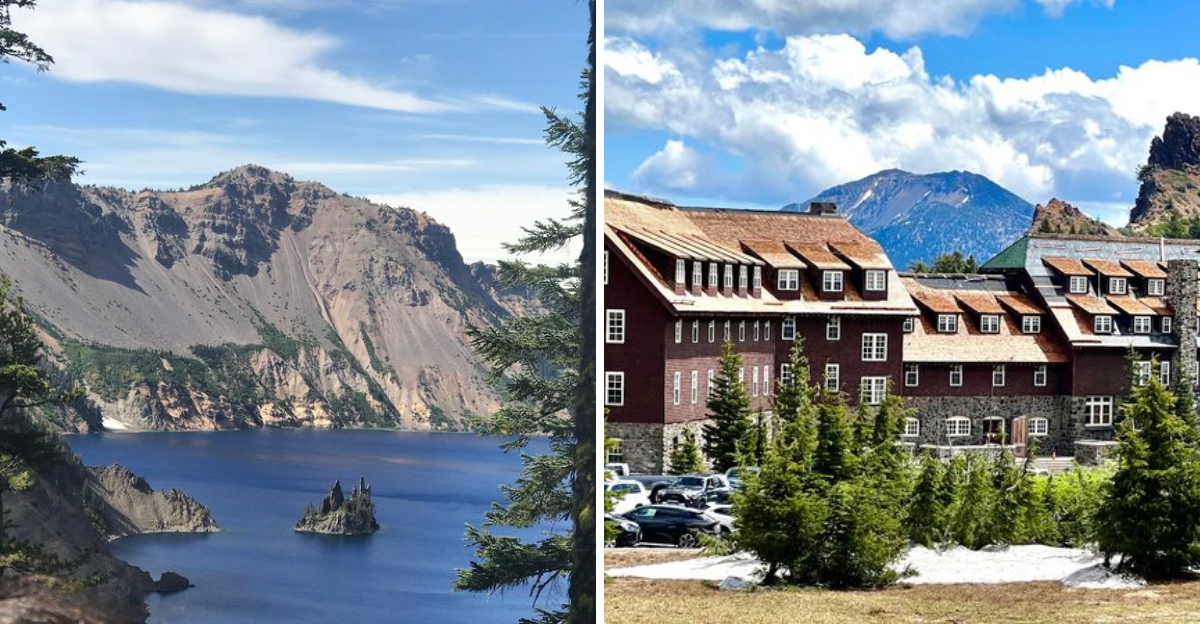
You have seen the photos. They still do not prepare you. The blue is so deep it almost looks fake, like someone turned up the saturation dial too far. You will stand there staring longer than you planned to.
Your neck will get cold from the wind and you will not care. The silence around you feels massive, not empty. Every direction you look is another postcard begging to be taken. You could spend the whole day just walking from one viewpoint to the next.
People come from across the country to see this place. And you get to have it in your backyard. Do not let that go to waste.
The Legendary Blue of the Lake Itself
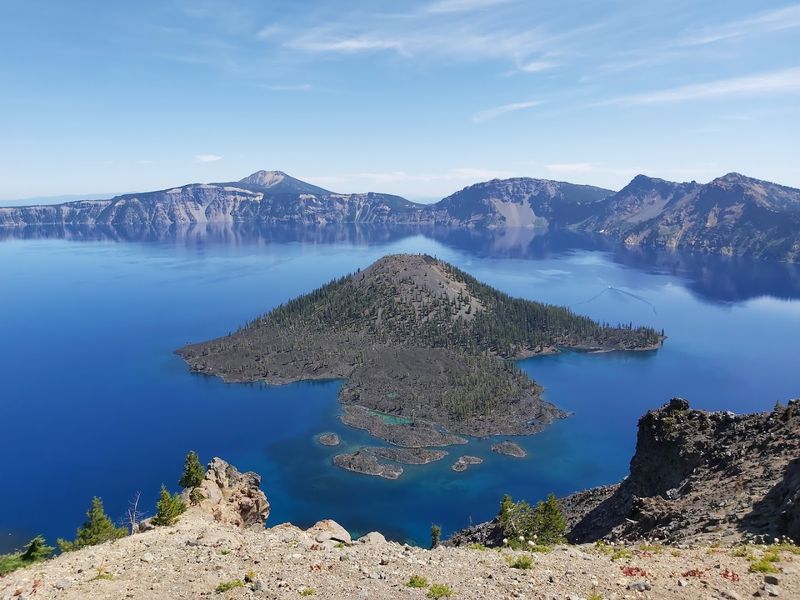
Nothing really prepares you for that first glimpse of the water. The blue is not just pretty.
It is almost aggressive in its intensity, the kind of color that makes you stop walking and stare.
Crater Lake holds the title of the deepest lake in the United States. It reaches depths of nearly 1,943 feet.
Because no rivers flow in or out, the water comes entirely from rain and snowmelt. That purity is exactly why the color looks so unreal.
The clarity is remarkable. You can see far below the surface. Sunlight scatters through the clean water in a way that creates that signature deep cobalt hue.
Photographers and painters have tried to capture it for over a century. Most will tell you the same thing.
The real thing always wins. Standing on the rim and watching the light shift across the surface throughout the day is a genuinely moving experience. Plan to linger longer than you expect.
Rim Drive and the Views That Never Get Old
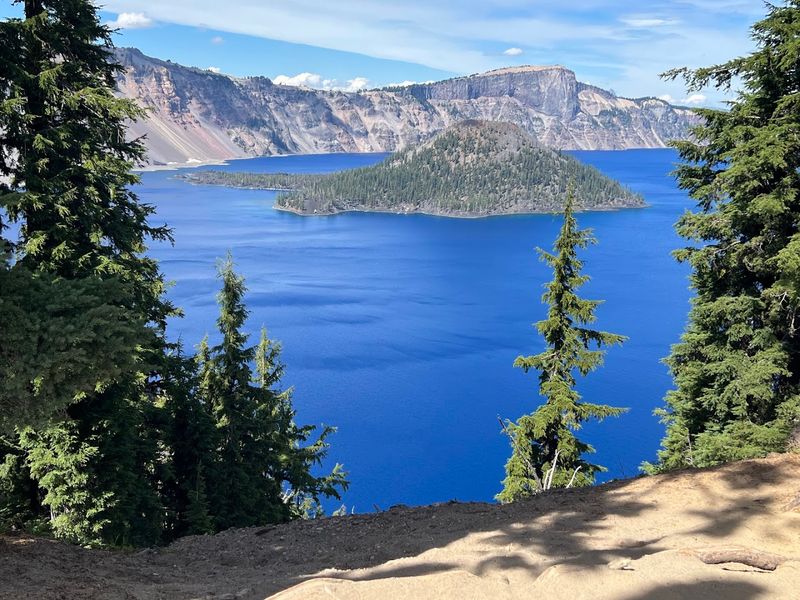
Rim Drive is a 33-mile loop road that circles the entire caldera. I kept pulling over at every single overlook.
Each one felt like a completely different painting.
The road takes you through forests, past volcanic rock formations, and along dramatic cliff edges. Pullouts come up frequently.
Every angle of the lake reveals a slightly different shade of blue depending on the time of day.
Some sections of Rim Drive close during winter due to heavy snowfall. The park receives an average of 43 feet of snow annually.
That number is hard to believe until you see the snowbanks in late spring still towering above your car.
Allow at least half a day to drive the full loop comfortably. Rushing it would be a mistake.
Stop at Cloudcap Overlook for one of the highest vantage points on the rim. The wind up there is brisk and the views are enormous.
Bring a light jacket even in summer.
Wizard Island and the Boat Tour Experience
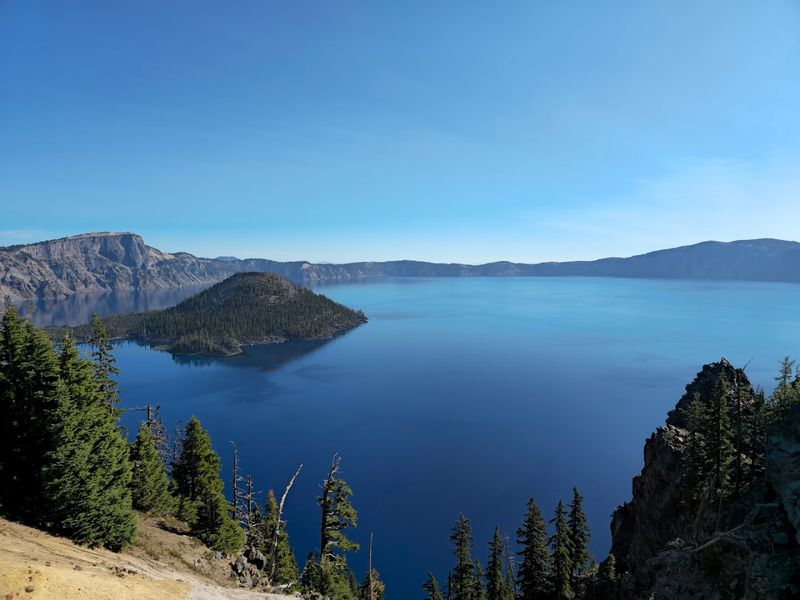
Wizard Island sits right in the middle of the lake like something out of a fantasy novel. It is a cinder cone volcano that formed after the original Mount Mazama collapsed around 7,700 years ago.
The boat tour is the best way to reach it. Tours depart from the Cleetwood Cove dock at the base of the only trail that leads down to the water.
That trail is steep. Trekking poles help on the way back up.
Once on the island, you can hike to the summit crater of Wizard Island itself. The loop trail offers close-up views of the lake from a completely different perspective.
Looking back at the rim from water level is humbling.
Note that the Cleetwood Cove Trail and boat tours may have limited availability or closures depending on the season and renovation schedules. Always check the park website before planning.
Spots on the boat fill up fast. Book as early as you possibly can.
Hiking Trails for Every Skill Level
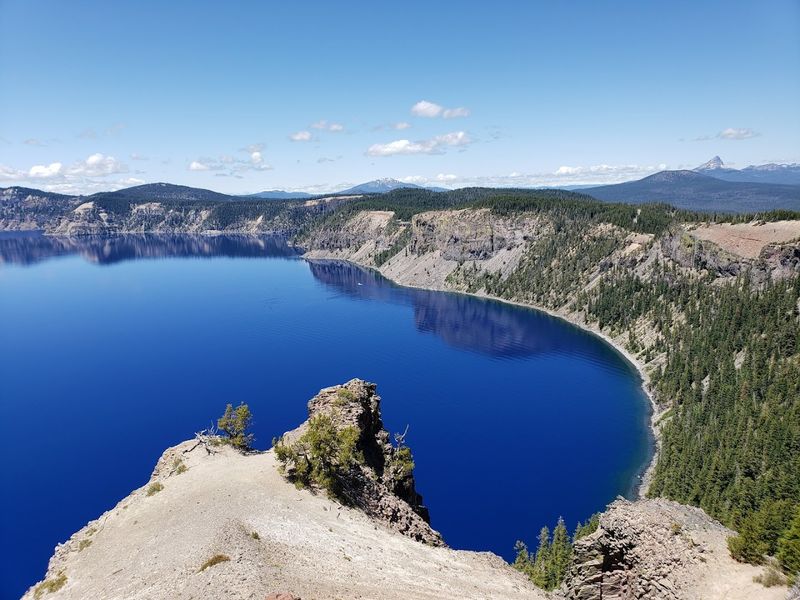
Crater Lake is not just a drive-and-stare destination. The trail network here is genuinely impressive.
There is something for everyone regardless of fitness level.
Sun Notch Trail is a short, relatively easy walk that rewards you with a stunning view of the lake and Phantom Ship, a jagged rock formation that juts dramatically from the water. The name fits.
It looks haunted in the right light.
For something more challenging, the Garfield Peak Trail climbs about 1,000 feet above Rim Village. The panoramic views from the top are worth every step.
Wildflowers line parts of the trail in summer, adding bursts of color against the dark volcanic rock.
Hikers who come in winter should bring traction devices for their shoes. Ice forms quickly on the trails.
Snowshoeing from the Steel Visitor Center is a popular option when snow covers the ground. Rangers often lead snowshoe walks on weekends.
The park feels completely different in winter and that contrast is worth experiencing.
Phantom Ship and the Eerie Beauty of Volcanic Remnants
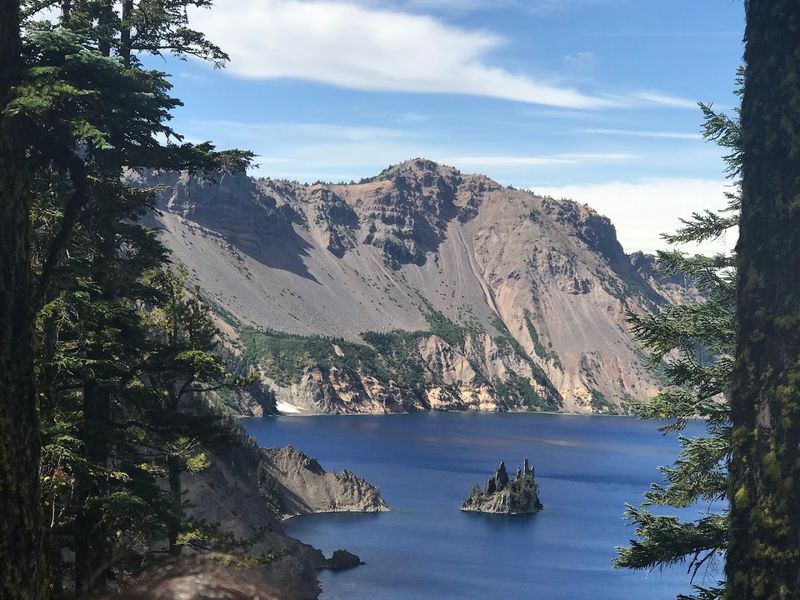
Phantom Ship is one of those sights that genuinely surprises you. It looks small from some viewpoints on the rim.
Up close from the water or from Sun Notch, it is massive.
The formation is estimated to be around 400,000 years old. It is one of the oldest exposed rocks in the entire park.
The jagged spires and dark coloring give it a gothic, almost dramatic quality.
On overcast days, mist sometimes drifts around the base of Phantom Ship. The effect is cinematic.
It earned its name honestly. The rock really does resemble a ghost ship sailing through fog.
Sun Notch Trail is the most popular spot to photograph it. The short loop takes about 30 minutes at an easy pace.
Morning light tends to cast interesting shadows across the formation. Wildlife sightings are common along this trail too.
Chipmunks, deer, and various bird species have all been spotted near the overlook area. Keep your eyes open and your steps quiet.
Stargazing at One of Oregon’s Darkest Skies
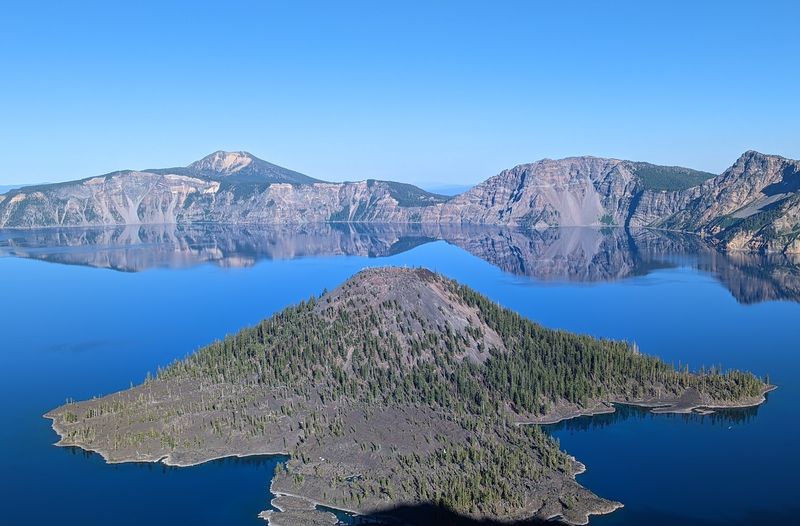
Crater Lake sits far from major cities. Light pollution is minimal out here.
The result is a night sky that will leave you speechless if you have spent most of your life in urban areas.
The park is recognized as an excellent dark sky location. On clear nights, the Milky Way stretches visibly across the sky.
Stars reflect off the lake surface below, doubling the spectacle.
Ranger-led astronomy programs have been offered at the park. One popular event is the informal dark sky presentation held in the community room near Rim Village.
Volunteer rangers walk visitors through constellations, planets, and the science of light pollution. It is educational and genuinely fun.
If you are planning a camping trip, staying overnight dramatically improves your stargazing chances. Mazama Campground is the main campground in the park.
Arriving early in summer is essential since sites fill up quickly. Bring warm layers because temperatures drop sharply after sunset even in July.
The cold is worth it completely.
Winter Visits and the Magic of Snow
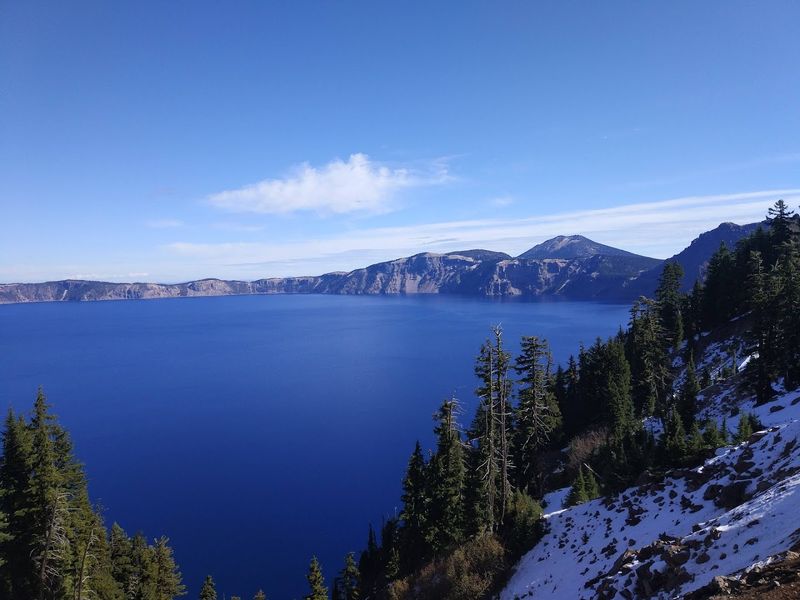
Most people picture Crater Lake in summer. Visiting in winter is a completely different and honestly underrated experience.
The crowds disappear almost entirely.
Snow blankets the rim in thick layers from late fall through spring. The contrast between the white snowpack and the impossibly blue water below is surreal.
Photos from winter visits look almost digitally enhanced even when they are not.
Access is more limited during winter months. Most of Rim Drive closes due to snow.
The south entrance and the road to Rim Village typically remain open. The day lodge at Rim Village stays open through winter and offers a warm spot to rest.
Snowshoeing is popular during this season. The Steel Visitor Center serves as a good starting point.
Rangers sometimes lead guided snowshoe tours on weekends. The final stretch of the trail to the rim is steep.
It is worth every labored step. Bundle up seriously before heading out.
Wind at the rim cuts right through thin jackets and the cold is real up there.
The Historic Crater Lake Lodge
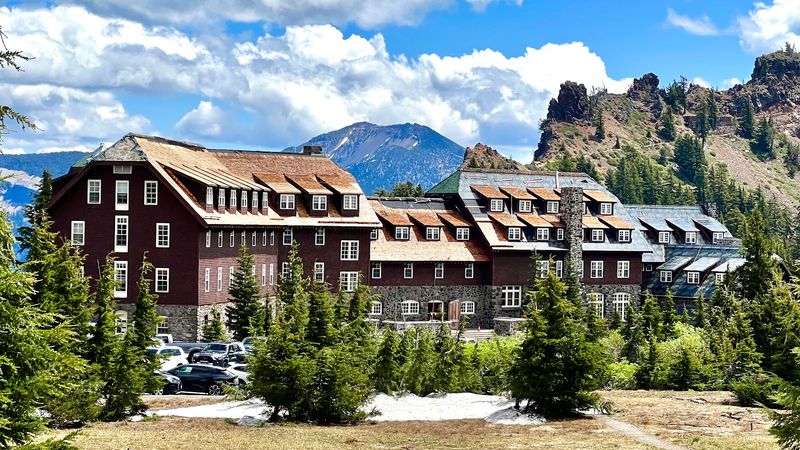
Crater Lake Lodge has been sitting on the rim since 1915. The building has a rustic, old-world charm that feels completely at home in this dramatic landscape.
It was restored in the 1990s and the craftsmanship shows.
The great hall inside is anchored by a large stone fireplace. Rocking chairs line the back porch, which overlooks the lake directly.
Sitting there with a cup of coffee and watching the light change on the water is a genuinely restorative experience.
Rooms at the lodge book out months in advance. The location is unmatched.
Waking up steps from the rim is something few national park experiences can rival.
Even if you are not staying overnight, the lodge is open to visitors during the summer season. The dining room serves meals using locally sourced ingredients where possible.
The gift shop carries regional items and park-themed goods. Walking through the building and taking in its history adds meaningful context to the landscape surrounding it.
It feels lived-in and real, not staged.
Wildlife and the Surprising Biodiversity of the Park
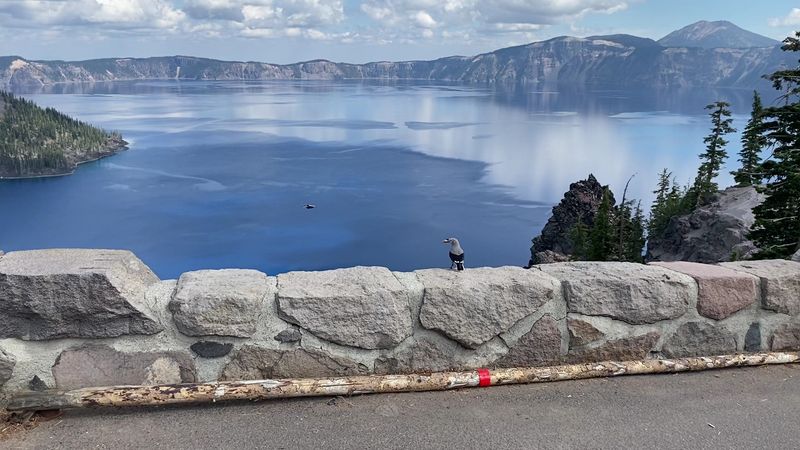
Crater Lake is not just about the lake. The surrounding 183,224 acres of parkland support a wide variety of wildlife.
The diversity caught me off guard on my first visit.
Deer are common and relatively unbothered by visitors along the trails. Chipmunks are practically everywhere near the rim.
Pikas, those small round mammals that look like tiny rabbits, can be spotted in rocky areas if you listen for their sharp calls.
The park is also home to black bears, although sightings require patience and some luck. Bird watchers will find plenty to observe.
Clark’s nutcrackers, Steller’s jays, and various raptors have all been spotted within the park boundaries.
Wildflowers peak in mid-summer along many of the trails. The combination of volcanic soil and mountain elevation creates a unique growing environment.
Butterflies and lizards are common summer visitors near the lower elevations of the park. Keeping a nature journal during your visit is a surprisingly rewarding habit.
You notice far more when you slow down and pay attention to what moves around you.
Practical Tips for Planning Your Visit
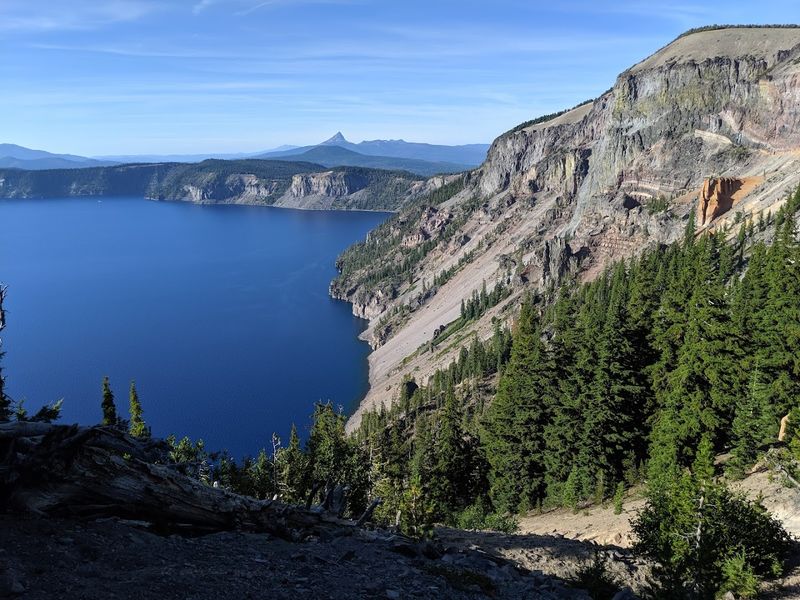
Crater Lake rewards visitors who plan ahead. The park is open 24 hours a day, every day of the year.
However, facilities, trails, and road access vary significantly by season.
The south entrance off Highway 62 is the most reliable year-round access point. The north entrance opens after snowplows clear the road, usually sometime in late spring.
Calling ahead or checking the NPS website before your trip saves real frustration.
Cell service is limited inside the park. Download offline maps before you leave.
A physical park map from the entrance station is always a smart backup.
Parking near Rim Village fills up fast on summer weekends. Arriving before 9 a.m. makes a noticeable difference.
The park phone number is available if you need to reach staff directly at 541-594-3000. The official website at nps.gov/crla has current road conditions and facility updates.
Bring more water than you think you need. The elevation sits around 7,000 feet and the dry mountain air dehydrates faster than most people expect.
