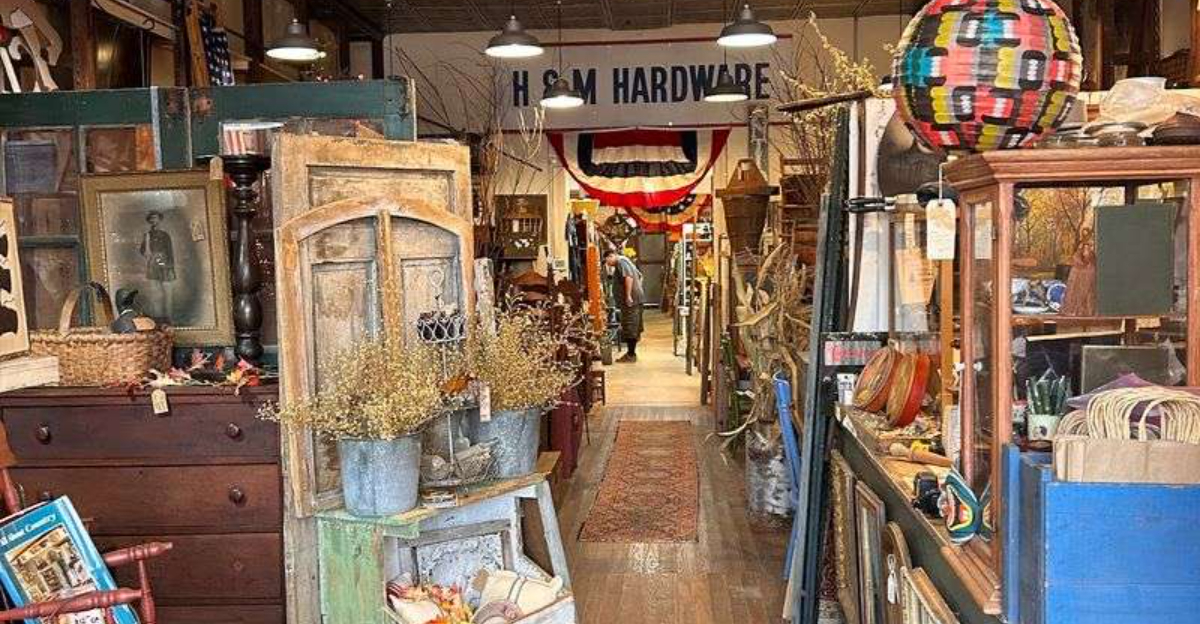
Wooden floors that creak, candy jars lined up like soldiers, and screen doors that slap shut behind every visitor: Indiana still keeps places like this alive.
Scattered across farm country, river bluffs, and forested hollows, a handful of general stores have kept their doors open since the 1800s, quietly outlasting floods, fires, and highways that rerouted traffic somewhere else.
Some sell groceries and deli sandwiches, others sell rock candy and antique tin signs, and a few do all of it at once. Together they form a loose route through small towns that rarely appear on postcards but reward anyone willing to take the long way around.
Each stop carries its own personality, shaped by the families and neighbors who kept showing up year after year. Pack a map, leave the schedule loose, and let these nine survivors set the pace.
1. Cataract General Store, Indiana’s Oldest Survivor
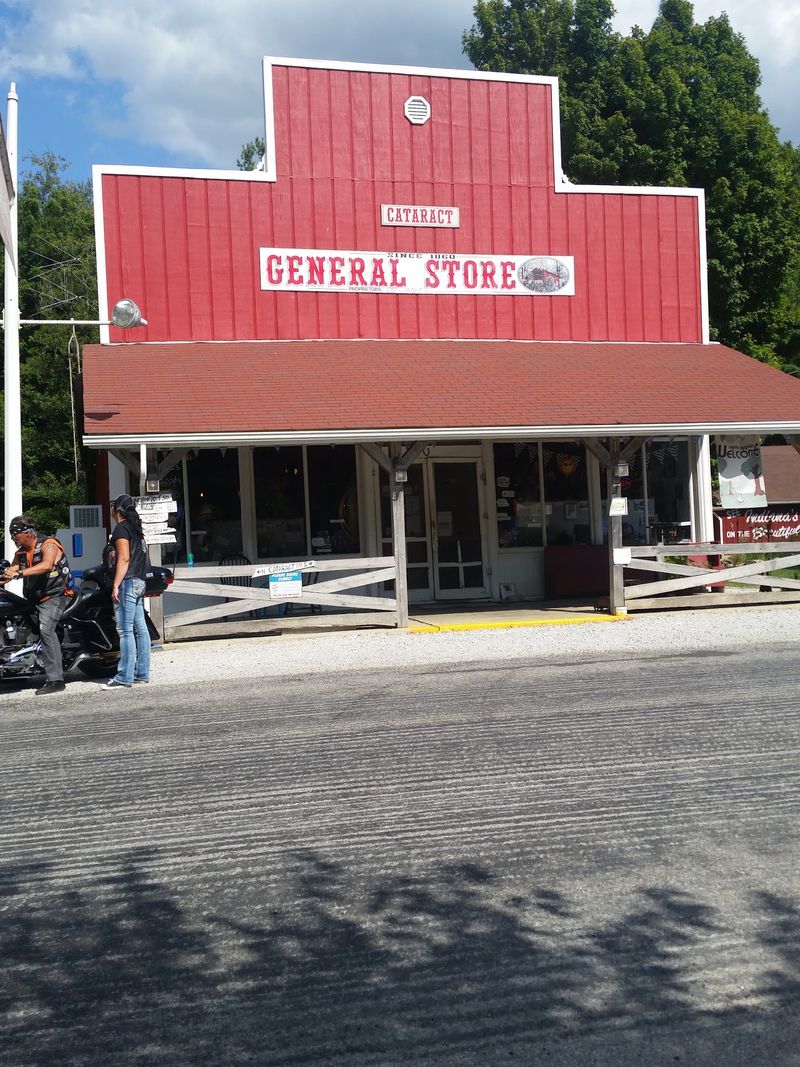
Brick-red boards, a tall chimney stack, and a pair of antique gas pumps standing guard out front make this one impossible to drive past without slowing down.
Built in 1860, the same year Abraham Lincoln won the presidency, it is widely considered the oldest continuously operating general store in the state.
Back then the surrounding village buzzed with grist mills, shops, and a resort that drew visitors from miles away. Most of that is gone.
The store simply kept going.
Inside, vintage Americana shares shelf space with everyday necessities, which is exactly what makes it feel real rather than staged. Old-fashioned candies sit near locally made preserves, soda floats get poured for anyone who asks, and retro signage covers whatever wall space remains.
Groceries, milk, and bread are still stocked for neighbors who need them, alongside toys, knick-knacks, and seasonal decorations that rotate through the year.
Antiques and historical odds and ends fill the corners, giving the place a museum quality nobody planned. Wander slowly and small details keep appearing.
Nearby waterfalls make this a natural pairing for a day outdoors, and plenty of hikers treat the store as both starting point and reward. Grab something sweet, sit outside, and watch how little traffic actually passes by.
Little wonder photographers keep returning here.
Address: 2799 S Cataract Rd, Spencer, IN 47460
2. 1819 General Store in Elizabeth
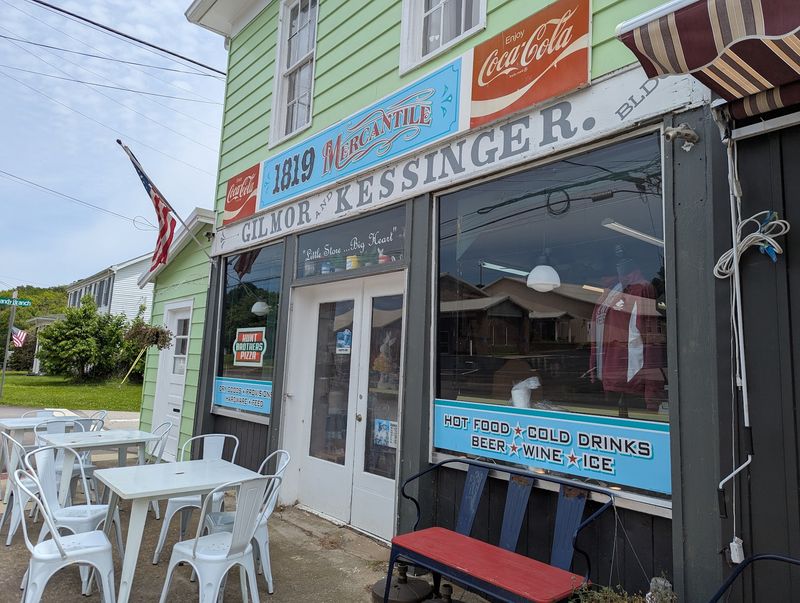
Locals have nicknamed this spot the nerve center of its town, and one visit explains why. Records trace the store’s lineage back to at least 1860, when the Kessinger family ran things, and the building later served as the childhood home of Willard Haas, whose mother managed the grocery business after his father died.
It also goes by 1819 Mercantile, depending on which sign catches the eye first.
The mix inside leans generous. Antique goods and old-fashioned dry goods share room with a deli, pizza, groceries, hardware bits, and novelties nobody expected to find.
Hand-dipped ice cream, freshly cut meats, big breakfasts, and warm plate lunches keep the kitchen busy through most of the day.
A soda fountain that once belonged to a nearby drugstore now anchors the room, joined by a diner-style bar with stools and a small arcade tucked to one side. Morning regulars claim the liars table, where coffee and conversation run long and nobody rushes anybody out.
Antique signs cover the walls in cheerful disorder.
Out front, weathered gas pumps have become an unofficial photo backdrop for high school seniors, which says plenty about how the community feels about the place. Staff greet strangers like neighbors, and that warmth lingers longer than the ice cream does.
Address: 8249 Beech St SE, Elizabeth, IN 47117
3. Laconia General Store and Its Liars Benches
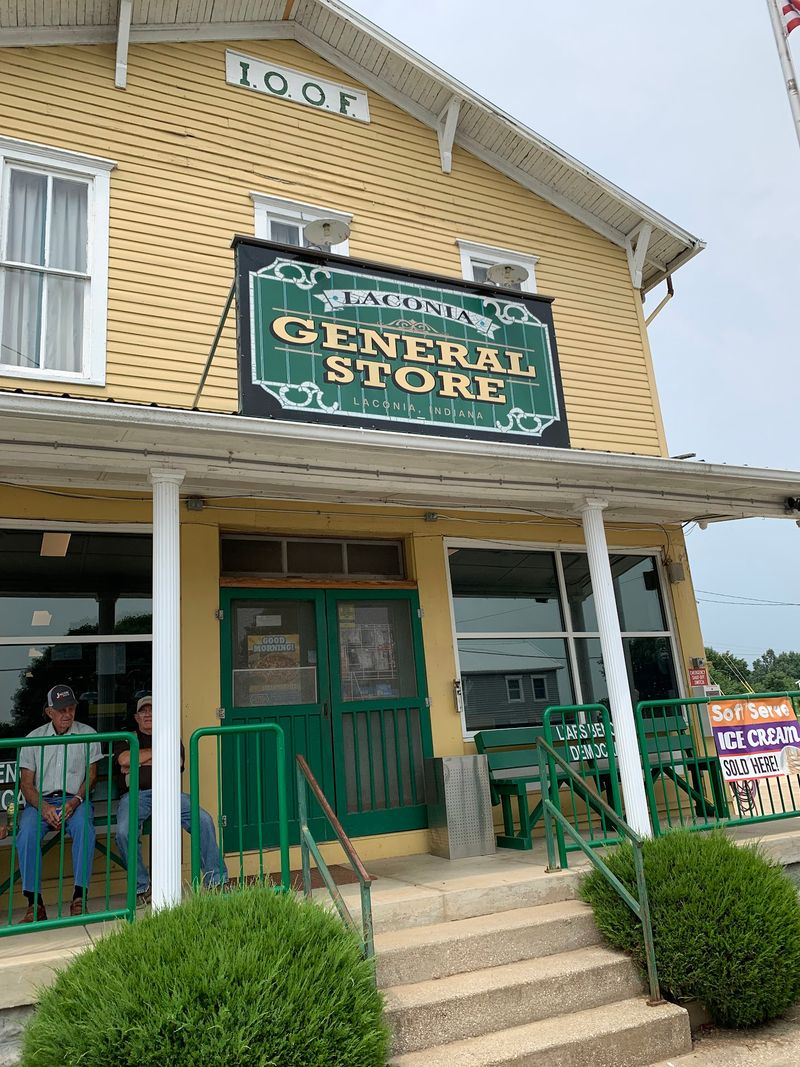
Fire took the original building in 1927, and the community rebuilt it that same year, which tells you how much this store mattered. The first version opened back in 1875, and for decades the upper floor hosted meetings of the Independent Order of Odd Fellows fraternal lodge.
Traces of that history still linger upstairs.
A careful restoration by Bill and Gayle Cook began in 1999 and led to a celebrated re-opening the following year. The exterior now wears a cheerful yellow coat, with a porch built for lingering and a traditional gas pump parked near the steps.
Step through the door and country character takes over: wooden accents, taxidermy displays, and glass tabletops with old newspaper articles pressed underneath.
Shoppers find locally sourced products, household basics, and a deli that turns out sandwiches and hot meals. Original Wolf’s pork wieners and brats are the local favorite, backed up by snacks, cold drinks, and whatever the deli case holds that morning.
Outside, the so-called liars benches serve as the town’s unofficial meeting room, where conversation drifts from weather to crops to whoever just pulled into the lot. During the yearly Celebrate Laconia Festival the whole place hums.
Small towns rarely keep landmarks this well. This one clearly earned its second life.
Address: 11505 Main St SE, Laconia, IN 47135
4. The Verne Store, A Roadside Fixture East of Vincennes
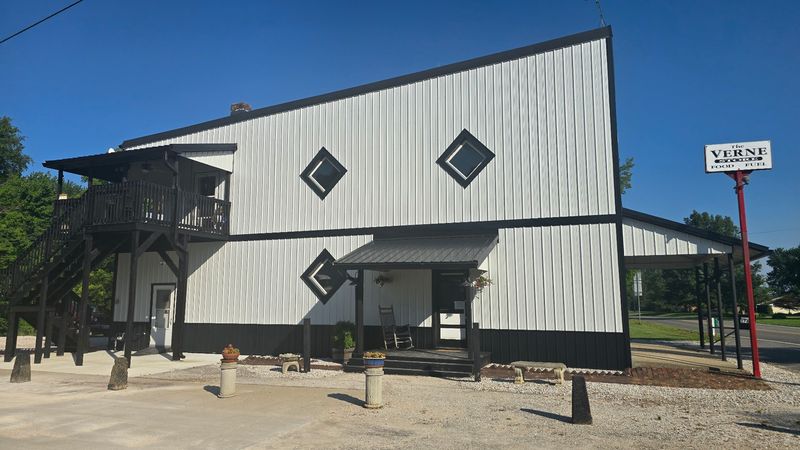
Highway stops like this one usually get overlooked, which is precisely the mistake. Set in the tiny community of Verne, the store has served as a neighborhood fixture for many years and turns up regularly in collections of Indiana’s historic general stores.
Locals know it as much for its diner side as anything else.
Breakfast is the draw for many travelers, and fuel for the vehicle can be handled in the same visit, which captures the multi-purpose spirit that made country stores essential in the first place. One roof, several jobs.
The wider region carries a deep mercantile past. Nearby Vincennes claims the birthplace of Gimbel’s Department Store in 1842, a reminder that big retail names sometimes start on modest Indiana streets.
Conversation inside tends toward farm reports, road conditions, and who is passing through.
Those who slow down long enough often pick up scraps of local history simply by paying attention to the walls and the chatter. Nothing about it feels curated for visitors.
The pace here drops noticeably, which may be the best reason to stop. Order something warm, take a window seat, and watch traffic thin out along the state road.
Simple stops sometimes leave the strongest impression on a long driving day.
Address: 5749 E State Road 61, Vincennes, IN 47591
5. Farmland General Store, Where Candy Rules Half the Room
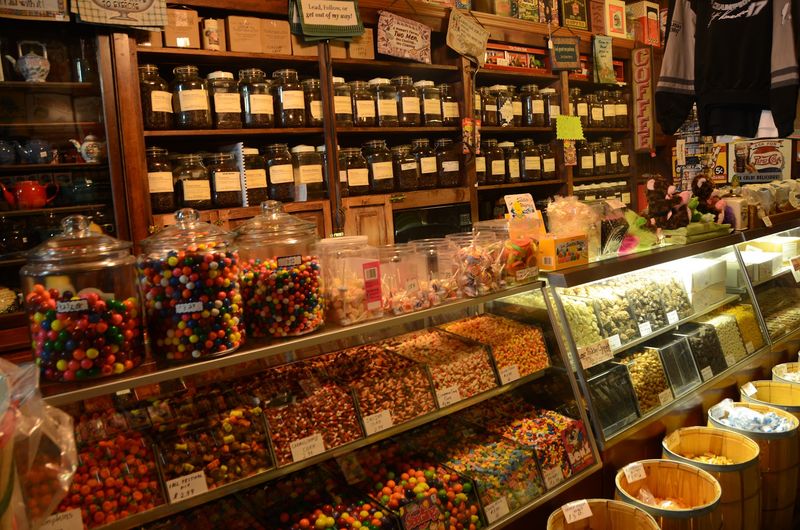
Half of this store is devoted entirely to candy, and that half tends to stop children mid-sentence. Rock candy, taffy, licorice, and a jelly bean selection that stretches on far longer than expected fill the shelves, earning the place its local nickname of Candy and Stuff.
Sweet tooth satisfied, the other half awaits.
Over there, a traditional general store takes shape. Teas and coffees dominate, including 42 different coffee flavors, joined by garden plants, antiques, tin signs, games, and toys that look plucked from an attic.
The family-run shop sits in the heart of a town platted in 1852, the same year the railroad arrived and gave farmers a way to move their harvests.
General merchandise stores were among the earliest businesses to open here, so the building carries on a very old local job. In 1994 the entire downtown historic district joined the National Register of Historic Places, protecting the brick facades that line the main street.
Wandering is encouraged, and rushing feels almost rude.
Grandparents pointing out candies from their own childhood is a common scene, and kids usually leave with a paper bag they refuse to hand over. Charm here comes from clutter, color, and the pleasant chaos of a store that never picked just one specialty.
Address: 113 N Main St, Farmland, IN 47340
6. Stephenson’s General Store in Leavenworth
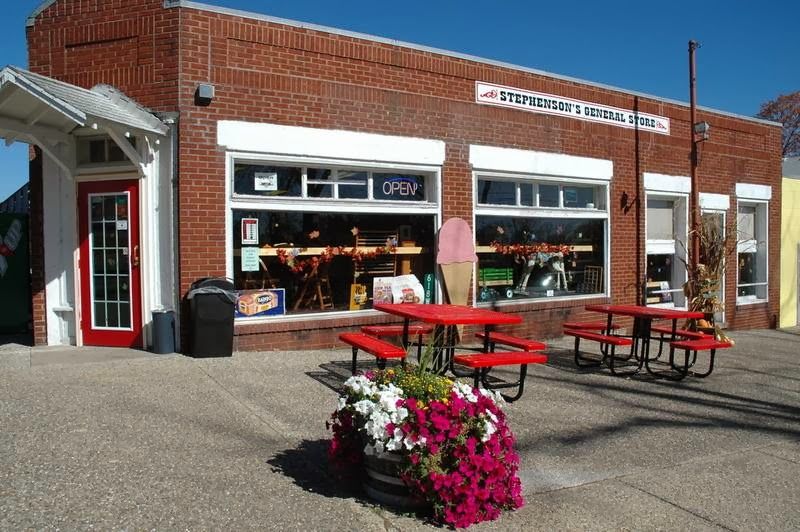
Salvaged lumber from flood-damaged buildings went into this store when it was rebuilt in 1938, a detail that says everything about the town around it. The devastating 1937 Ohio River flood forced the entire community to relocate to higher ground, and the store came right along with it.
Resilience, in board and nail form.
John Ed Stephenson and his sons established the business in 1917 by purchasing an existing hardware store, though commerce ran on the site even earlier, with the Conrad Brothers operating there in 1908. Cabinets and counters dating to the late 1800s still hold merchandise today.
Two floors blend hardware, groceries, gifts, confections, and a living history museum that nobody officially labeled as such.
Old-time tools sit near modern household supplies, and shoppers often need both. A deli and cafe handle hearty breakfasts and lunches, with ice cream available for anyone who saved room.
One wall is dedicated to the 1937 flood through photographs and yellowed newspaper clippings, and it draws quiet crowds.
Regulars get greeted by name, which makes first-time visitors feel like they wandered into someone’s extended family. A coin laundry in the basement rounds out the services, because a real general store solves whatever problem walks through the door.
The Ohio River sits close by for scenic detours.
Address: 618 W Old State Rd 62, Leavenworth, IN 47137
7. Story Inn General Store Deep in the Forest
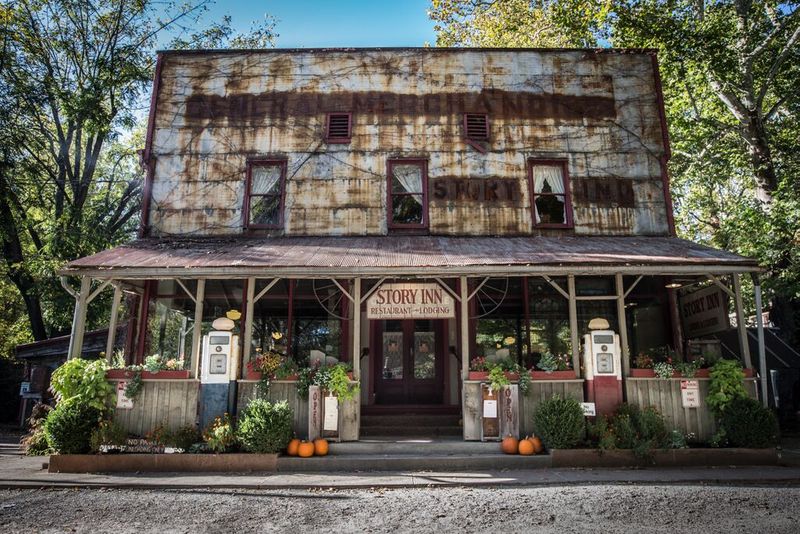
Surrounded by the Hoosier National Forest, this tiny village once supported two general stores, a post office, and a string of other businesses during its most prosperous stretch from 1880 to 1929. Story itself was founded in 1851 through a land grant signed by President Millard Fillmore.
Hard to imagine now, given how quiet the woods have grown.
Today’s inn came together when one of those original stores was converted into a restaurant and the surrounding property was reassembled piece by piece.
The general store building appears to have been rebuilt around 1905 following a fire, and decades of careful rehab work have kept the 1800s mercantile spirit intact.
The whole village is recognized as the Story Historic District on the National Register of Historic Places.
Three roles share one property here: general store, well-regarded restaurant, and bed and breakfast. Farm-to-table cooking anchors the kitchen, while the store side stocks local goods, handmade items, and provisions that suit a rural setting far from any supermarket.
Gravel, trees, and old wood set the mood.
Visitors often arrive planning a quick look and end up staying for a meal, then a walk, then longer. The forest muffles road noise almost completely, which makes the stop feel genuinely removed from ordinary schedules.
Address: 6404 South State Road 135, Nashville, IN 47448
8. Morgantown Antique Co-Op in a Former Hardware Store
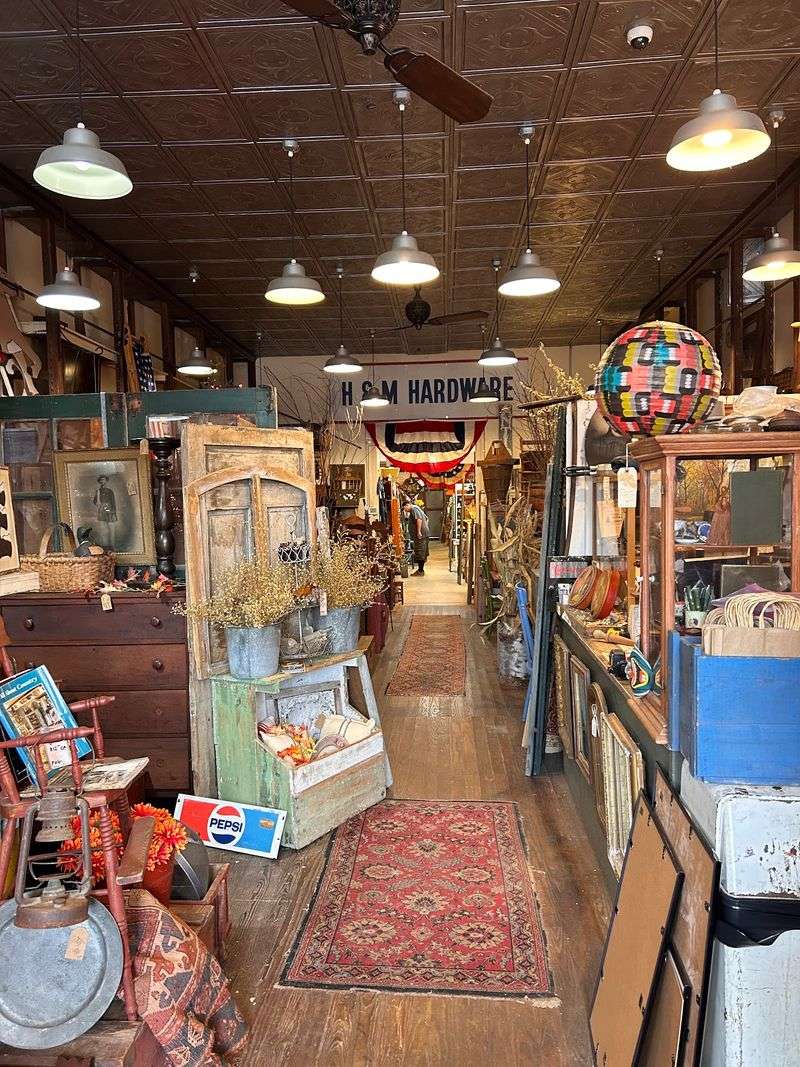
Old hardware stores make excellent antique shops, and this one proves the point. The building once sold nails, tools, and farm supplies, and now it houses a busy co-op filled with oddities gathered by owners who travel in search of unusual finds.
Commerce simply changed costume.
Morgantown was platted in 1831, and by 1835 a general store already anchored the young community. The town’s historic district contains 34 contributing buildings, most of them raised between 1840 and 1956, and the district holds a place on the National Register of Historic Places.
Washington Street still lines up storefront after storefront, giving the block real visual rhythm.
Browsing here rewards patience, since the inventory shifts constantly and no two visits look alike. Furniture, glassware, signs, and objects that defy easy description share the floor.
Nobody hurries shoppers along, and plenty of people treat an afternoon here as the main event rather than a quick errand.
Strictly speaking, daily necessities are not the business anymore, but the co-op keeps a nineteenth-century building useful and full of life, which honors the legacy of local trade in its own way. Neighboring facades add to the charm of the central district, making the whole stroll worthwhile.
Bring curiosity and comfortable shoes.
Address: 129 W Washington St, Morgantown, IN 46160
9. Metamora Grist Mill, Still Grinding After All These Years
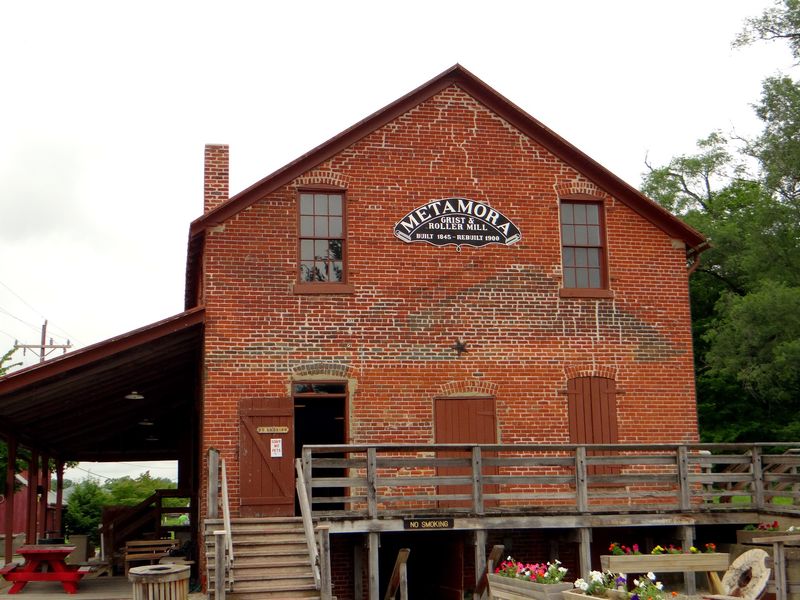
Water still turns the wheel here, and cornmeal still comes out the other end. Jonathan Banes started the operation in 1845 as a cotton mill, originally called the Metamora Cotton Factory, before it shifted to flour milling by 1856.
Nearly two centuries later, the job has barely changed.
Fires in the late 1800s and again in the early 1930s forced rebuilds, which explains the current two-story shape. The State of Indiana took ownership around 1947 and now runs it as a State Historic Site, keeping the machinery working rather than parked behind glass.
Metamora holds the title of Indiana’s only canal town, and its historic district appears on the National Register of Historic Places.
Watching grain move through the mill is oddly hypnotic, and freshly ground cornmeal and flour can be carried home afterward. The sound of the works fills the whole building.
Back doors open onto Clayborne Street, where local vendor booths create a lively marketplace just steps from the machinery.
The mill anchors the Whitewater Canal State Historic Site, which also features the only operating wooden aqueduct left in the United States plus scenic train rides through the countryside. Between the water, the rails, and the shops, a single stop easily fills an entire afternoon.
Address: 19073 Main St, Metamora, IN 47030
