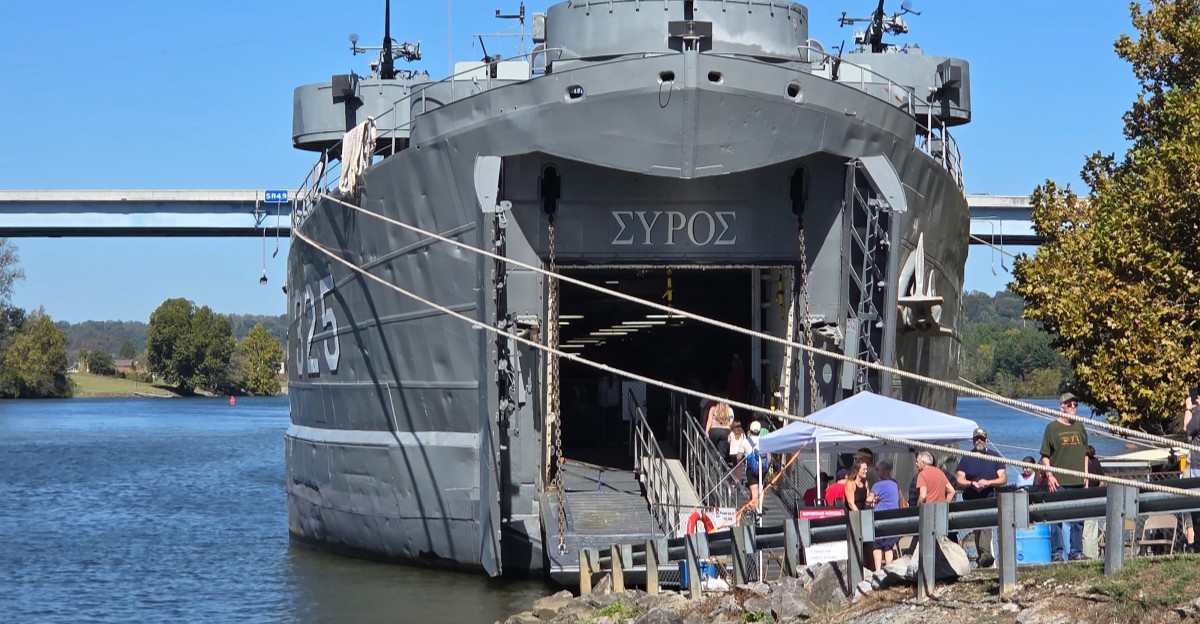
A volunteer crew once sailed a rusty old landing ship about 6,500 miles from Greece to Alabama. Many of those volunteers were veterans, and the ship still ran on its original diesel engines.
That same ship carried 59 vehicles and hundreds of men to Omaha Beach on D-Day. Today it floats on a river in Indiana, and it still leaves home every fall for a cruise.
What makes this ship so unusual is that its history hasn’t ended with its military service. Most museum ships stay parked forever, but this one fires up its engines and visits river towns like a traveling storyteller.
There’s something special about being able to see a piece of history that still moves under its own power.
You can stand where tanks once rolled toward a beach and get a sense of just how much this vessel has witnessed. Its journey from wartime service to a floating museum is quite a story in itself.
A D-Day Veteran That Still Fires Up Its Own Engines
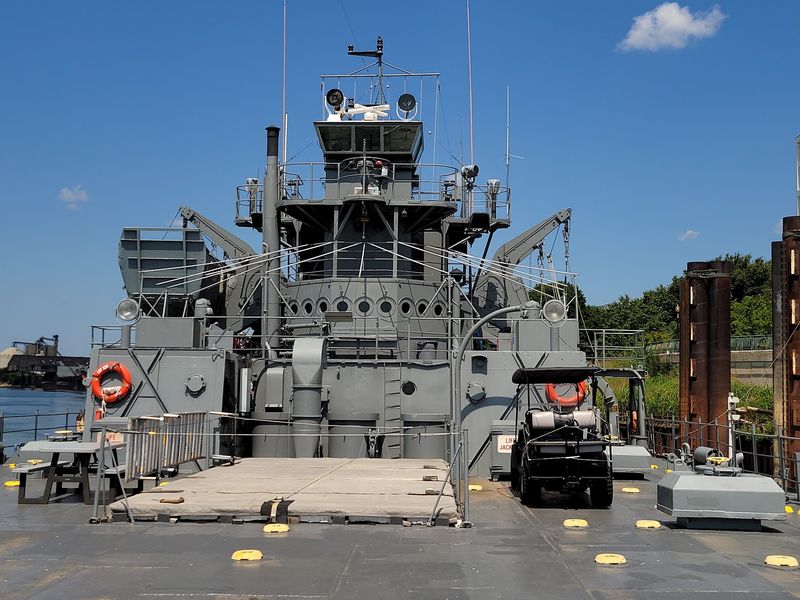
Most ships from the 1940s are long gone. USS LST-325 is the only operational LST in World War II configuration still afloat in US waters.
LST stands for Landing Ship, Tank. Navy LSTs serving before 1955 usually didn’t get names, so this one goes by its hull number.
Workers laid down the ship at the Philadelphia Navy Yard on August 10, 1942. It launched that October and joined the Navy on February 1, 1943.
Here’s the jaw-dropping part. The ship still runs on its original General Motors diesel engines.
Two of them, each rated at 900 horsepower, turn two shafts.
That means you’re not just looking at an old ship. You’re looking at a working machine that built its legend more than 80 years ago and still moves under its own power.
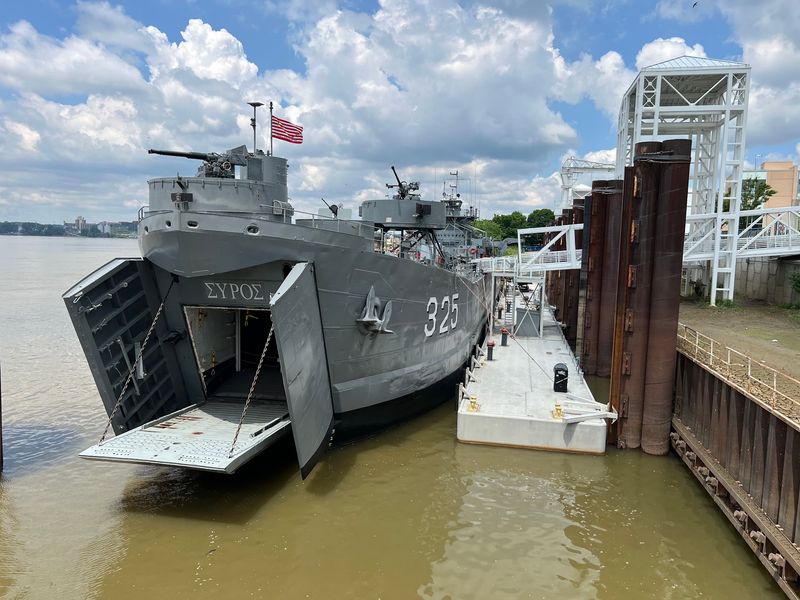
The ship stretches 328 feet long and 50 feet wide. That’s longer than a football field, which makes the first glimpse pretty dramatic from the riverbank.
Its top speed is about 12 knots, roughly 14 mph. So no, it won’t win any races.
But it once had a range of 24,000 nautical miles, which is plenty of bragging rights for any vessel.
I believe that mix of age and grit is what makes it special.
Its Biggest Day Started On Omaha Beach
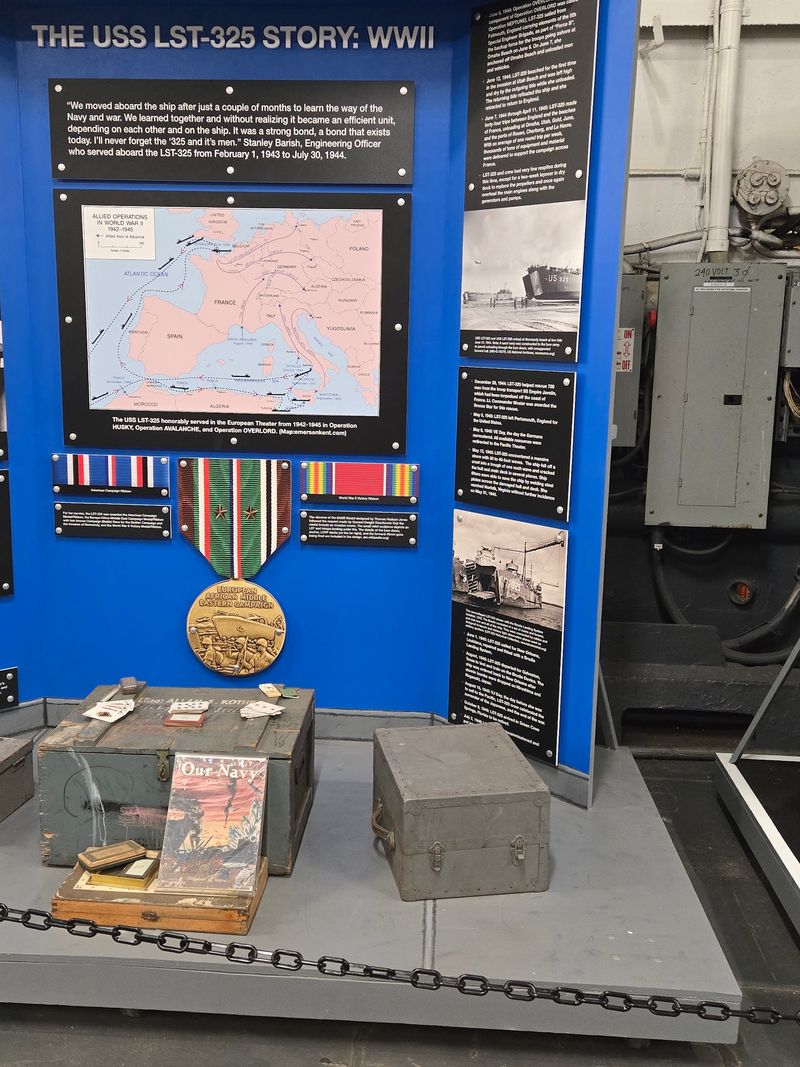
June 6, 1944, put this ship in the history books. USS LST-325 sailed to Omaha Beach during the Normandy landings on D-Day.
On that first trip, it carried 59 vehicles and more than 396 enlisted men. That’s a floating parking lot and a small town packed into one hull.
The work didn’t stop after one day. Over the next nine months, the ship made more than 40 trips across the English Channel.
Each run brought fresh troops and equipment to France. Think of it as the most important delivery route of the 1940s.
Normandy wasn’t even its first big mission. In July 1943, the ship took part in the invasion of Sicily at Gela.
Later it supported the landings at Salerno in Italy. So by the time D-Day arrived, the crew already knew this tough job well.
Standing on its deck, you’re standing on a real piece of that story. No replica, no movie set, just the actual ship.
That connection is what makes a visit feel different from reading a textbook. Kids who yawn at dates often perk up fast when they learn this exact deck crossed the Channel dozens of times.
Greece, Veterans, And A 6,500-Mile Rescue Mission
Plot twist: after World War II, the ship’s story kept going. It was decommissioned in July 1946, then worked Arctic operations with the Military Sea Transportation Service in 1951.
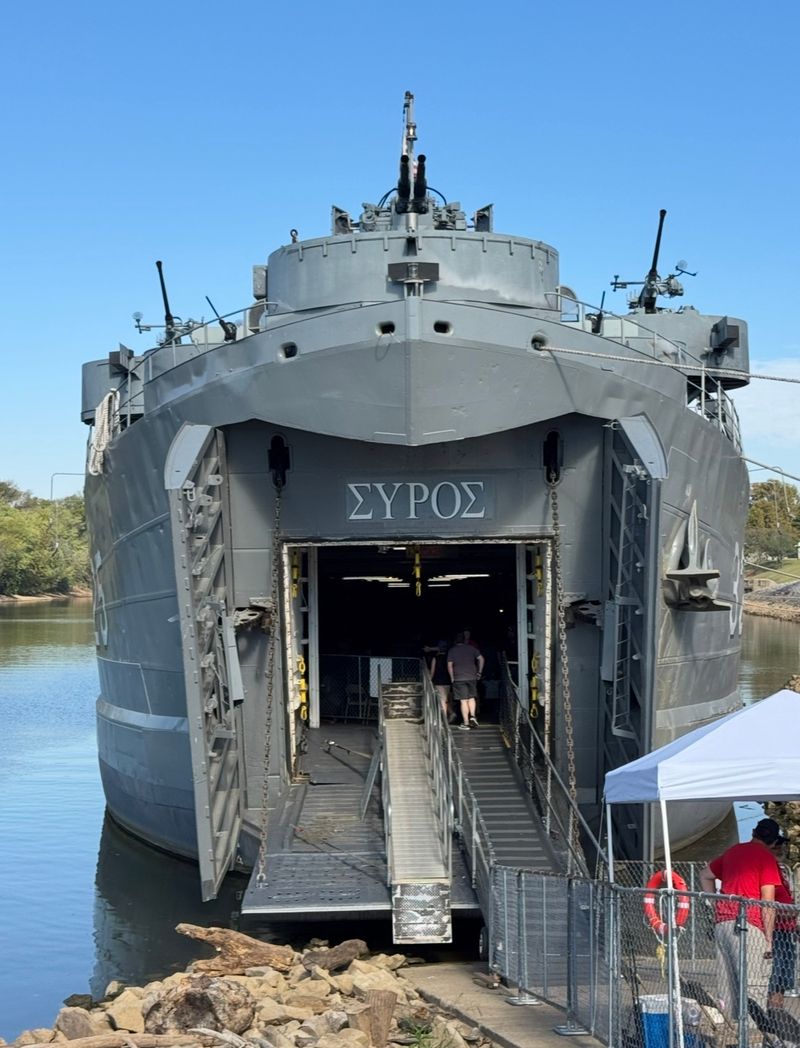
In 1964, the ship moved to the Greek Navy. It served there as RHS Syros until 1999.
Then came the part that sounds like a movie pitch. In 2000, a group of veterans formed the nonprofit USS LST Ship Memorial and acquired the vessel.
A volunteer crew sailed it about 6,500 miles from Crete to Mobile, Alabama. Many of those sailors were older veterans who simply refused to let the ship fade away.
Restoration took eight months after the ship reached Alabama. The public got its first look in September 2001.
I like how this rescue came from regular people with a big goal. No giant government project, just stubborn dedication and a lot of elbow grease.
Knowing this backstory changes how the ship looks. Every polished rail and painted hatch reflects years of volunteer effort.
The ship earned a spot on the National Register of Historic Places in 2009. Not bad for a vessel that once seemed headed toward retirement overseas.
Why An Ohio River City Makes The Perfect Home Port
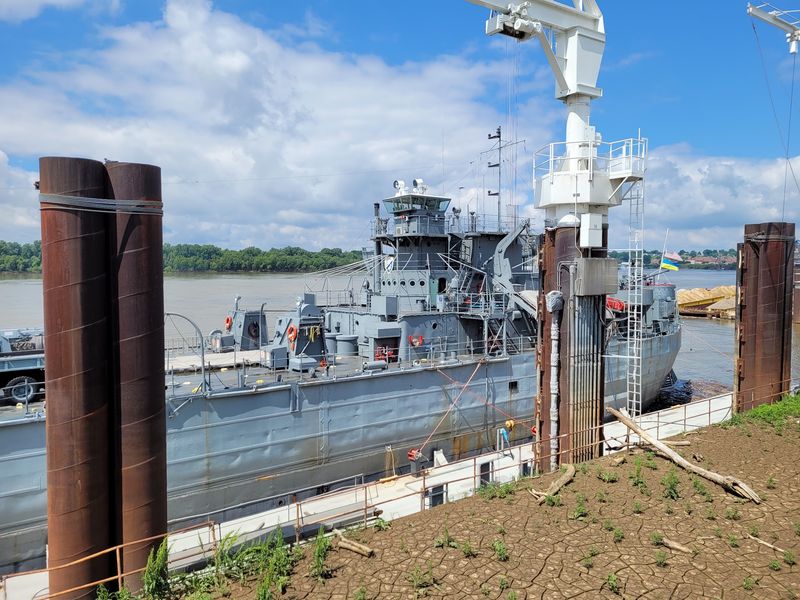
Evansville built LSTs during World War II. That makes it a fitting home for one of the last survivors.
The city is an official WWII Heritage City. It was a key shipbuilding center for these landing ships during the war years.
USS LST-325 arrived at its permanent Indiana home port on October 1, 2005. Its current dock opened on June 13, 2020.
You’ll find it at 610 NW Riverside Dr, Evansville, IN 47708. The ship sits right on the Ohio River, so the setting does half the storytelling for you.
For about eleven months of the year, the ship stays docked here as a museum. That gives you plenty of chances to plan a trip.
The riverfront location makes the visit feel open and scenic. You see the ship floating, not sitting on blocks in a parking lot.
I think there’s something fitting about an Indiana river city caring for a ship like this. The connection to local workers who once built LSTs gives the whole place extra heart.
Bring a camera for the bow shot from shore. That giant gray hull against the water makes quite the photo.
Those Giant Bow Doors Were Built To Hit The Beach
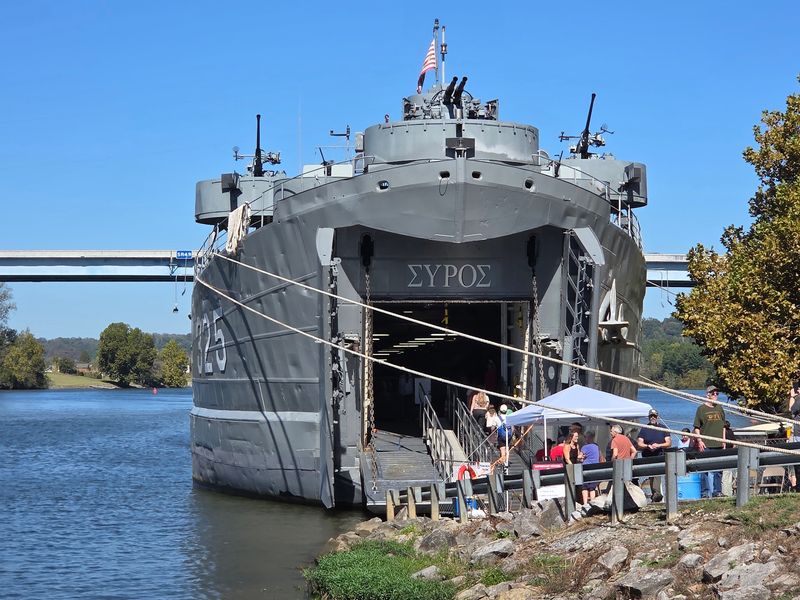
Beaching a ship on purpose sounds like a terrible idea. For an LST, it was the whole point.
The ship has a shallow draft, so it can drive close to shore. Ballast tanks help the crew adjust how deep it sits in the water.
Once it reached the beach, the hinged bow doors swung open. A ramp dropped down, and tanks rolled straight onto the sand.
Getting off the beach took clever planning too. The crew used a stern anchor to pull the ship back into deeper water.
Those famous bow doors are still the star of the exterior. They give the front of the ship a look you won’t confuse with any battleship.
Inside sits the massive Tank Deck. It’s the long open space where vehicles once lined up for the trip.
Walking through it, you get a sense of how much the ship could carry. It feels more like a warehouse than a boat.
Good luck not picturing a row of tanks rumbling forward. The Tank Deck is also the only area accessible for wheelchairs, walkers, and strollers, so everyone can enjoy this standout space.
Bunks, The Galley, And The Captain’s Cabin Tell The Real Story
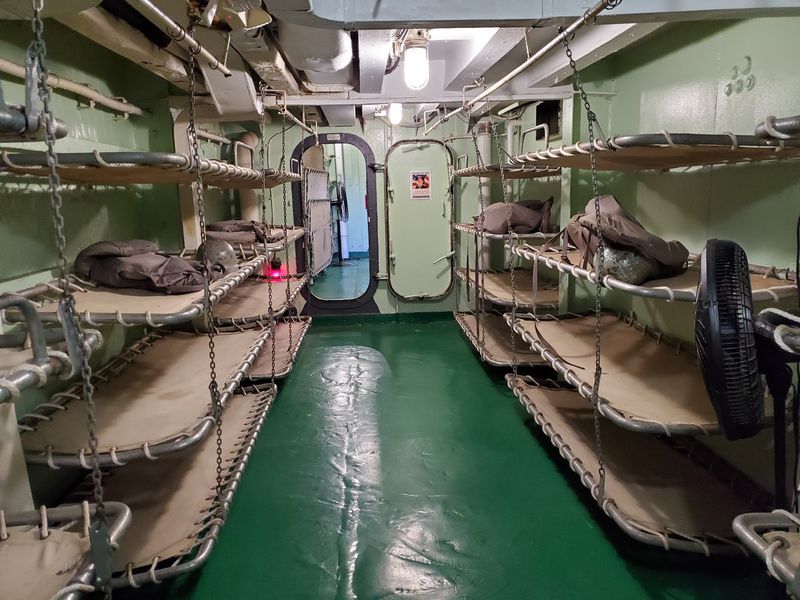
Tight quarters are an understatement here. The crew’s living spaces show just how little room sailors had to call their own.
You can peek into stacked bunks and narrow passages. It quickly makes your own bedroom feel like a palace.
The Mess Deck and Galley show where meals came together for a busy crew. Seeing the kitchen setup helps you imagine feeding hundreds of people at sea.
Then there’s Officer’s Country, plus the Captain’s Cabin. These spaces offer a peek at life higher up the chain of command.
Up top, the Wheel House is where the ship gets steered. Down below, you can head into the engine room, home of those original diesels.
Every area stays in its World War II configuration. That means the spaces look the way they did when real crews lived and worked aboard.
I believe this is the part that sticks with people most. Big battles are hard to picture, but a cramped bunk is easy to understand.
Kids especially tend to connect with these details. It turns sailors from distant figures into real people who needed sleep, food, and a little space.
Volunteers Steer The Ship And The Conversation
Questions are welcome aboard. Volunteer docents stand throughout the ship, ready to explain what you’re seeing.
Tours are mostly self-guided and usually take about an hour. You set the pace, and the volunteers fill in the stories.
Many of the people running and maintaining the ship are veterans. Their knowledge adds depth you won’t get from a sign alone.
QR codes placed around the ship offer extra information. Scan one and you’ll get more background on that spot.
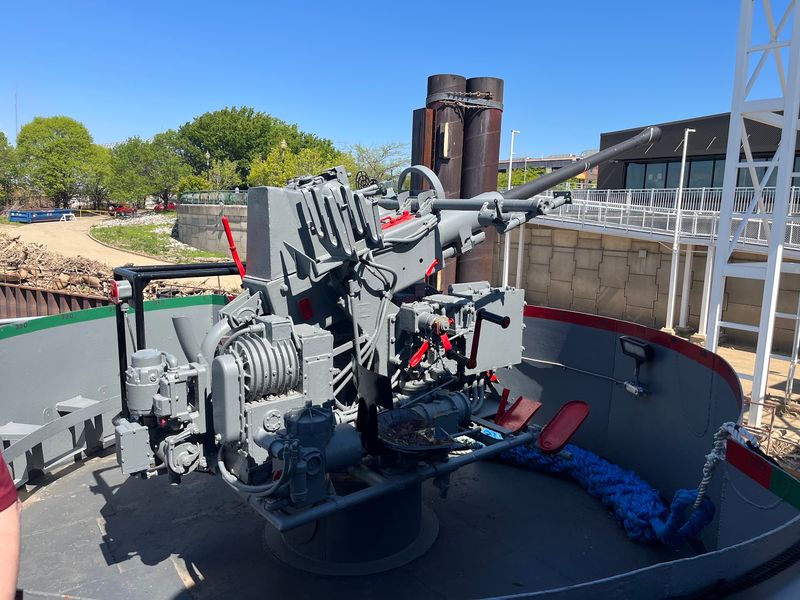
On the stern, you’ll see guns and anchors up close. The ship still carries 40 mm and 20 mm gun mounts from its wartime setup.
Restored equipment, like the M16 MGMC, adds even more to look at. History fans could easily spend extra time back there.
An onsite visitor center displays World War II memorabilia. It’s a great spot to warm up before boarding or wind down afterward.
The gift shop sells souvenirs too. A ship magnet or hat makes a fun reminder of the trip.
My tip? Ask a docent one good question.
The answers often lead to the best stories of the day.
Every Fall, This Museum Packs Up And Hits The River
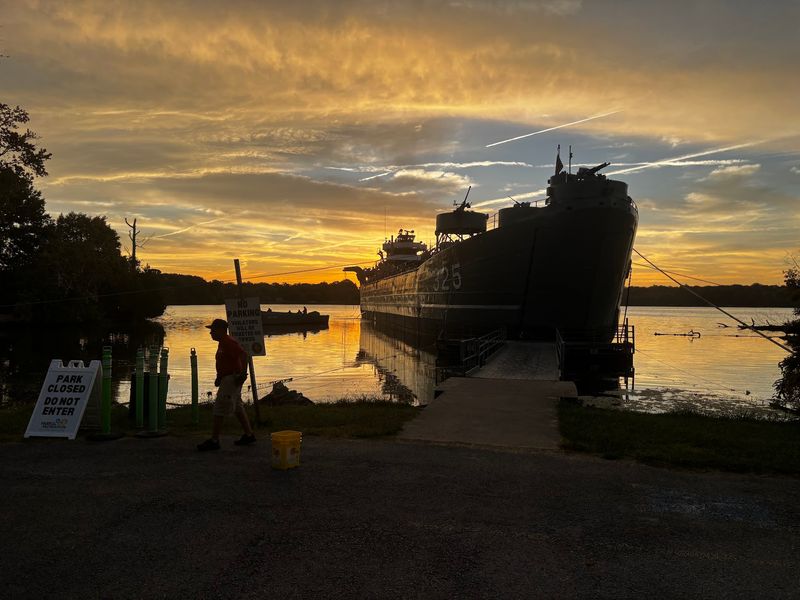
Museums don’t usually go on road trips. USS LST-325 does it every year, just on water.
The annual cruise typically runs about three and a half to four weeks. It usually happens from mid-September to mid-October.
During that trip, the ship visits port cities along the U.S. river system. People in those towns get a chance to tour it close to home.
Visitors don’t ride along as passengers during the travel stretches. The trips are about bringing history to new crowds, not offering cruises.
That ability to sail sets it apart from nearly every museum ship out there. Most stay tied up for good.
Here’s the catch for Indiana visitors. The Evansville location closes for tours while the ship is away.
In 2026, for example, it was closed from September 15 through October 15 for the cruise and a symposium. Tours picked back up on October 16.
So plan around fall if Evansville is your goal. Or keep an eye on the cruise schedule, because the ship might sail right into a river town near you.
Smart Moves Before You Climb Aboard
Comfy shoes are your best friend here. The ship has six flights of stairs, and some passages get narrow.
Hours can shift by season, but the ship generally opens 10 AM to 4 PM on its open days. Check the events calendar before you go, especially in fall or winter.
The ship isn’t climate-controlled. Inside, it can feel much hotter or colder than outdoors, so dress for the weather.
Severe weather, like ice or snow on deck, can close the ship. That’s one more reason to check ahead.
There are no public restrooms on the ship itself. Plan a quick stop before boarding.
The museum and main deck in Evansville are handicap accessible. Below decks, only the Tank Deck works for wheelchairs and strollers.
Watch for low overhead spots, doors, and railings. Parents should keep small kids close, since the ship was built for sailors, not toddlers.
Only certified service animals can come aboard. You can buy tickets at the ship or online, and kids 5 and under get in free.
Busy days fill up, so arriving earlier helps. Then enjoy one of the coolest history stops in Indiana.
