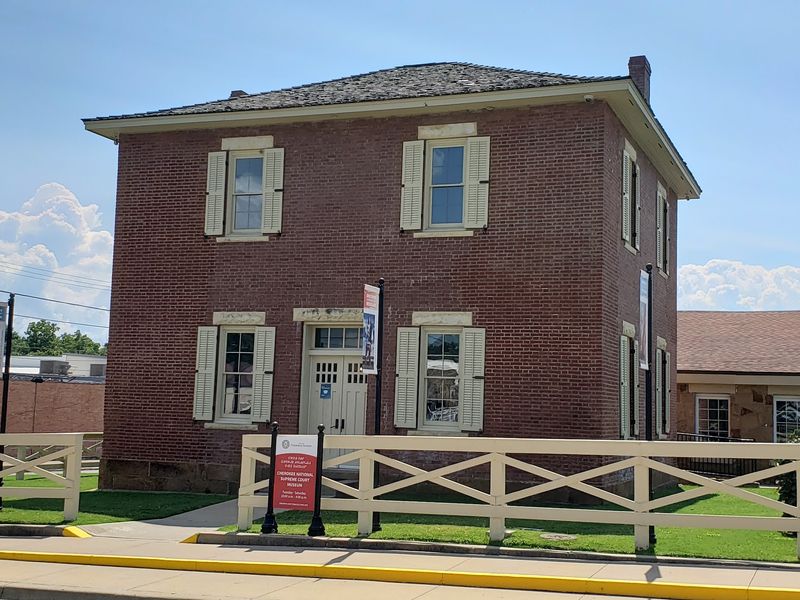
I almost drove right past it, a small brick building on a quiet corner that looked more like an old office than a place worth stopping. Twenty steps inside, I was reading about a Native nation that built its own courts, printed its own newspaper, and wrote its own laws long before Oklahoma was even a state.
It turned a lazy afternoon detour into the best history lesson I have had in years. If you think you already know the story of this land, this little museum may quietly prove you wrong.
A Courthouse That Became a Storyteller
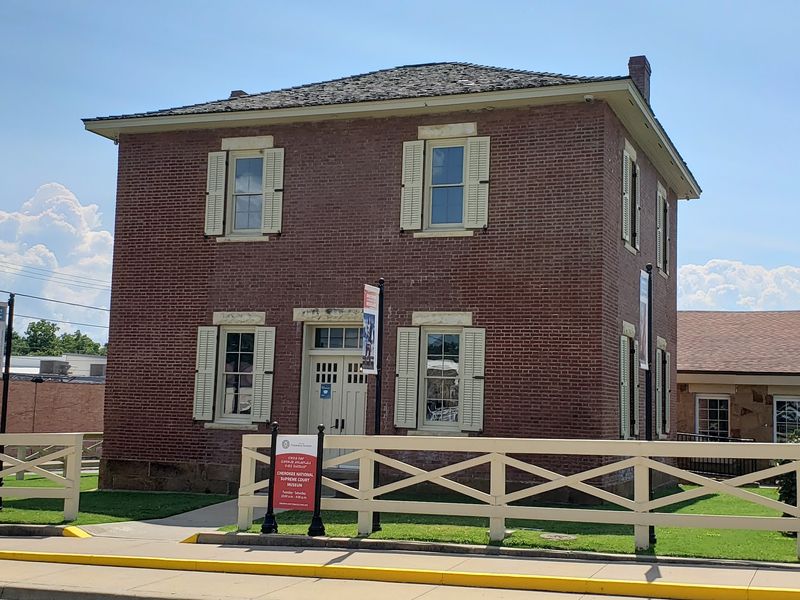
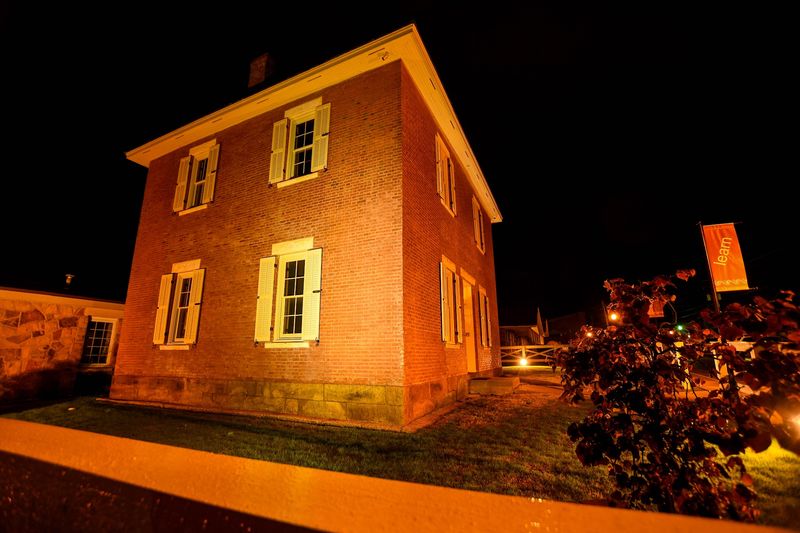
Small buildings sometimes carry the biggest stories. The Cherokee National Supreme Court Museum is one of those places, a modest brick structure that once housed the highest court of the Cherokee Nation and now explains how that court came to be.
The museum sits in the heart of the Cherokee Nation’s capital city in northeastern Oklahoma. Inside, exhibits walk visitors through the Cherokee justice system, the growth of Cherokee printing and newspapers, and the language and syllabary that made that printing possible.
Visitors often describe it as a smaller museum, but one packed with meaning.
What makes it stand out is simple. This is not an outside group explaining tribal history from a distance.
The Cherokee Nation tells its own story here, in its own words, inside a building that played a real role in that story.
For Oklahomans who have driven past it for years, that is the real surprise. A quick stop can turn into an hour of reading, looking, and asking questions you did not expect to ask.
It pairs naturally with a nearby prison museum, which rounds out the picture of how the Nation handled law and order on its own terms.
Laws Written Before Statehood
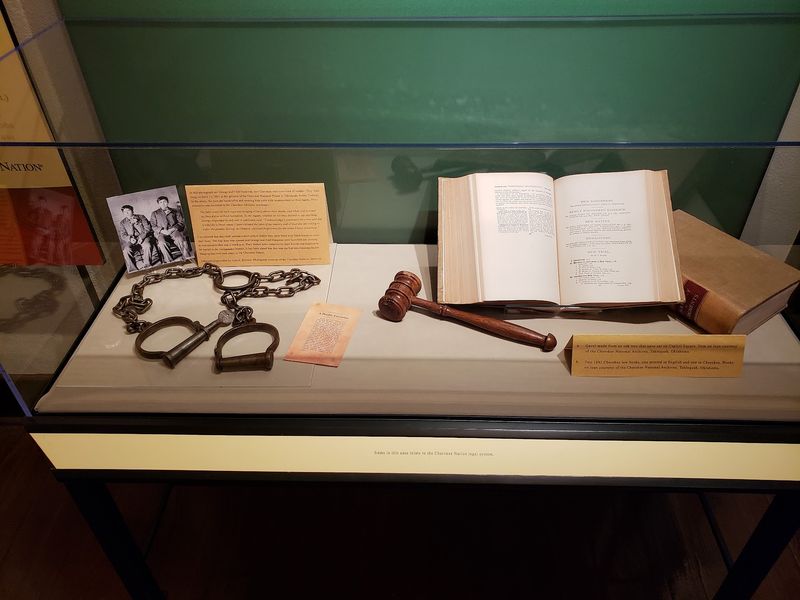
Here is a date worth remembering: October 20, 1820. That is when the Cherokee Nation established its first tribal court under a new judicial branch, decades before Oklahoma had a name.
Only seven years later, in 1827, the Cherokee wrote a constitution. It created a separate and independent judicial branch, complete with a Supreme Court and lesser trial courts.
If that sounds a lot like the United States system, that is part of the point. The Cherokee built a government that outsiders could recognize and respect, while keeping it their own.
The museum lays out this history in a way that feels clear rather than dusty. You can follow how the court system grew, how judges were chosen, and how laws were enforced in communities across the Nation.
Visitors mention that the information on the justice system is especially strong.
For families, these exhibits can spark good conversations. Kids who have studied the three branches of government in school may be surprised to learn a Native nation had its own version right here in Oklahoma.
It gives the classroom lesson a local face, and that tends to stick far longer than a worksheet ever could.
Rebuilding After the Trail
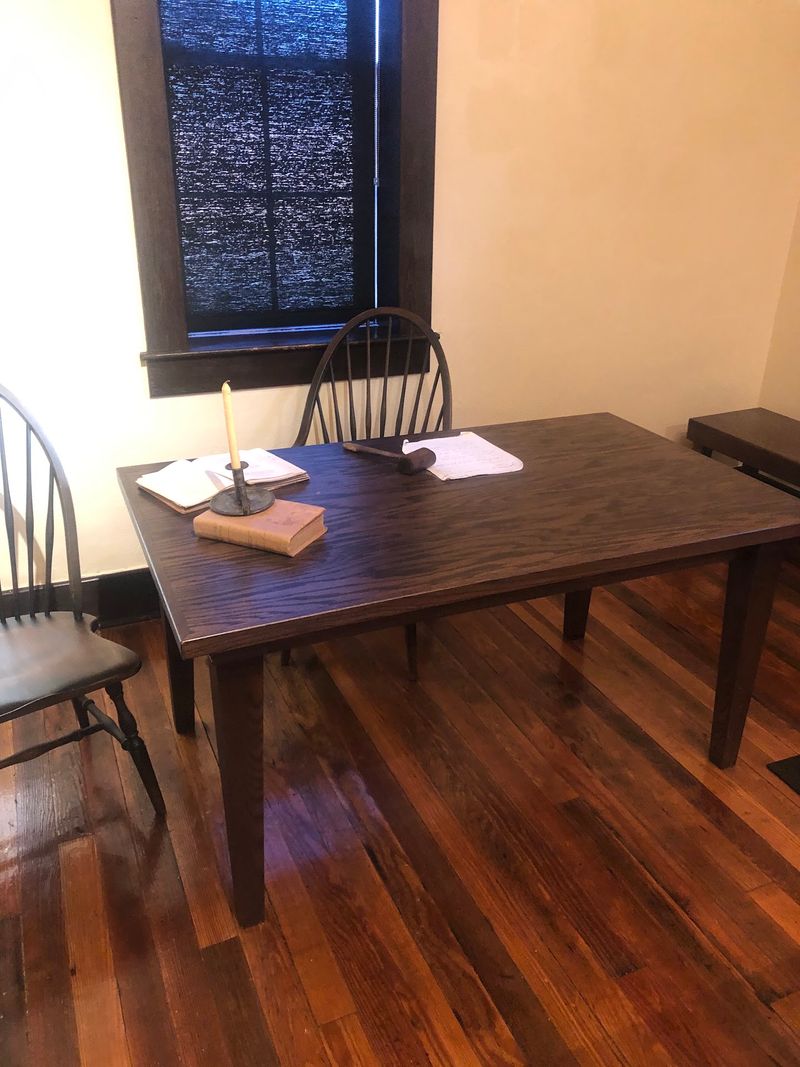
Picture a people forced from their homeland, arriving in Indian Territory, and choosing almost right away to rebuild their courts. That determination is one of the quiet threads running through this museum.
Exhibits cover the Cherokee justice system after the Nation arrived in Indian Territory, and they do not shy away from the pressure that followed. Visitors point out that the displays explain how the Nation kept dealing with continued interference from the United States government, even while running its own schools, courts, and presses.
Two famous U.S. Supreme Court cases help frame the story.
In Cherokee Nation v. Georgia in 1831 and Worcester v.
Georgia in 1832, the high court addressed Cherokee sovereignty, describing the tribe as a domestic dependent nation and affirming its right to govern its people and land. Georgia did not make that easy, and the struggle carried west.
Reading these panels, you start to see the Cherokee courts as more than buildings or paperwork. They were proof that a nation still existed.
Holding court meant holding onto identity, and the museum makes that connection feel personal rather than abstract. It is a thoughtful stretch of the visit worth slowing down for.
The Printing Press Chapter
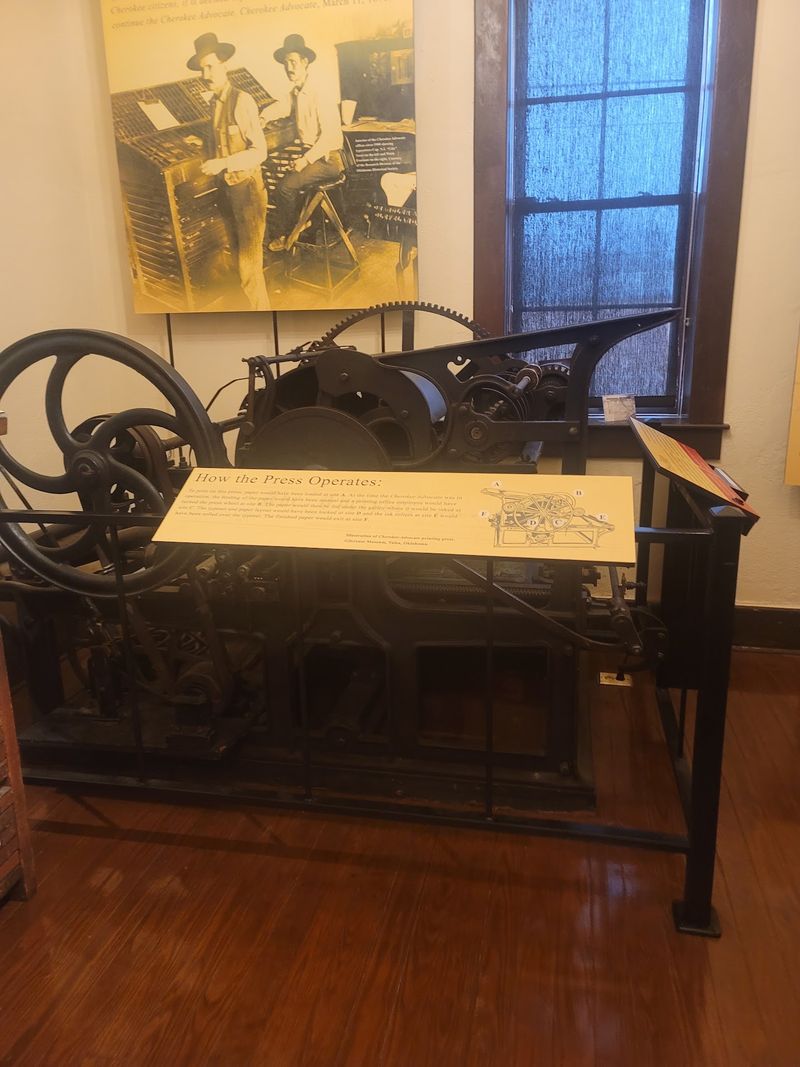
Ink, paper, and a whole lot of courage. Some of the most memorable exhibits here have nothing to do with judges at all.
They tell the story of Cherokee newspapers.
Visitors regularly mention how much they learned about how the Cherokee newspaper came to be and why it eventually came to an end. One Cherokee family said they walked away knowing far more about their own history after this part of the museum alone.
That is a strong sign the displays are doing their job.
The newspaper story ties neatly to the courthouse theme. A nation that prints its own news shares laws, court decisions, and community updates with its citizens.
It also speaks to the outside world, which mattered a great deal during years of pressure and uncertainty.
For anyone who loves old print, typefaces, or small-town papers, this corner will feel like a treat. You get a sense of how much effort went into every single page, from setting type to spreading copies across the Nation.
It is a reminder that news was once handmade, and that for the Cherokee, printing was an act of pride as much as communication. Plan a few extra minutes here.
Syllabary on the Walls
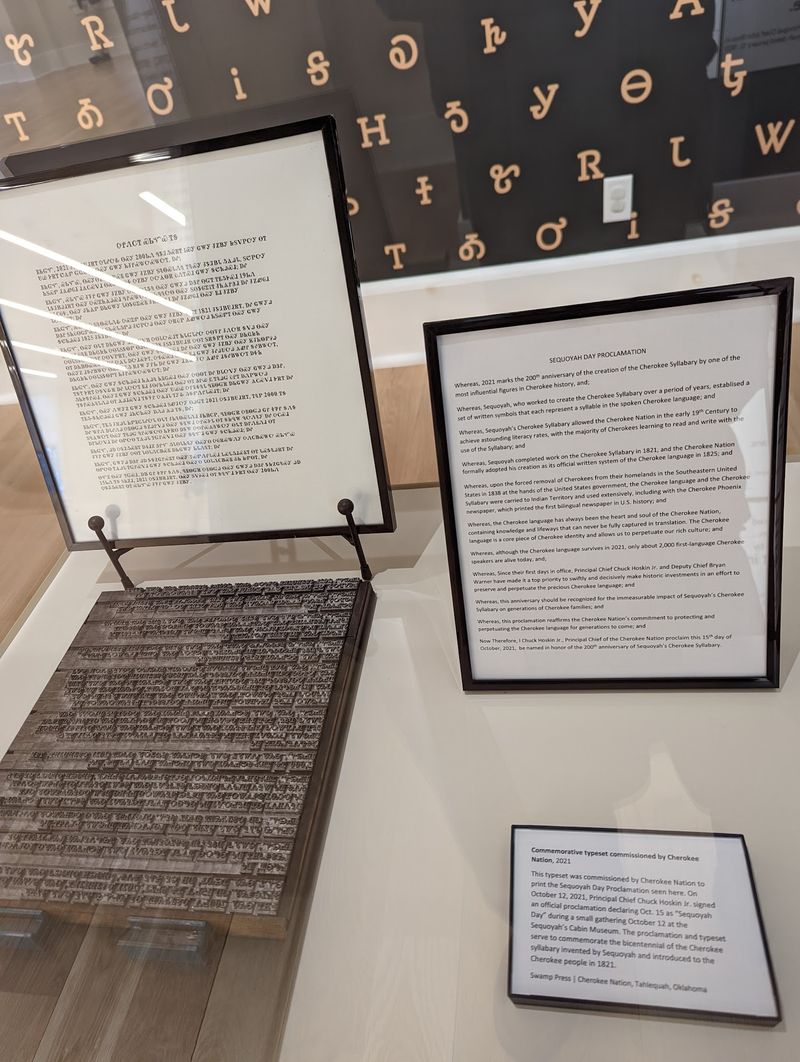
Ever tried reading a language built from symbols you have never seen? Stand in front of the Cherokee syllabary display and you might catch yourself sounding out characters without meaning to.
The museum includes a section about the Cherokee language, the syllabary, and how it connected to Cherokee newspapers. The syllabary gave the Nation a way to write its own language, and that opened the door to printed laws, printed news, and printed records.
Without it, much of what you see elsewhere in the building would look very different.
Kids especially tend to enjoy this part. There is something fun about comparing letters from English to symbols that represent whole sounds.
Parents can turn it into a little game of spotting shapes and guessing what they mean.
This exhibit also shows why the language remains living culture, not a relic. The Cherokee Nation continues to value and teach it today, and seeing the characters on display helps visitors understand why.
A written language is not just a tool. It carries stories, songs, and identity from one generation to the next, and this small gallery makes that feel real.
It is easily one of the most eye-opening stops inside.
Peeking Behind the Restored Walls
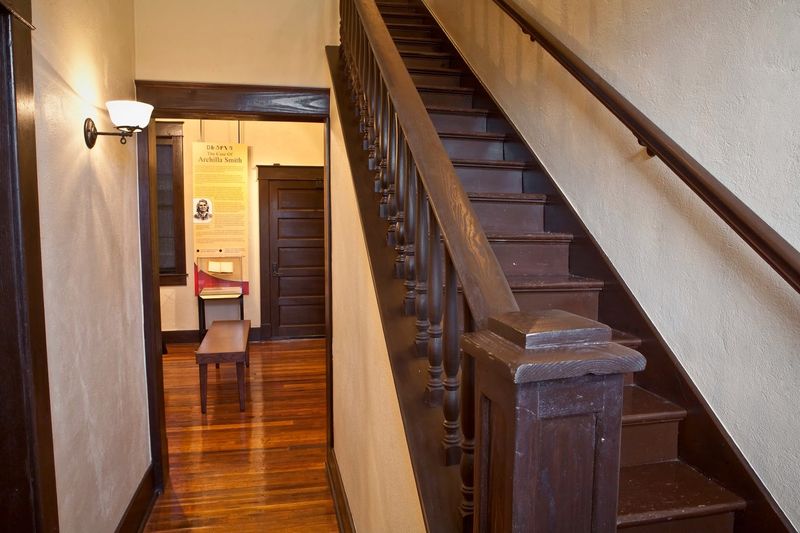
Tiny windows, big payoff. One of the cleverest touches in the museum is easy to miss if you rush through.
Scattered throughout the building are small viewing windows that let you look back at the original conditions of the courthouse before it was rehabilitated. Instead of hiding the old walls completely, the restoration leaves little glimpses of what came before.
You get to see the bones of the place, not just the fresh finish.
Visitors praise how well the old courthouse was converted into a museum, and these windows are a big reason why. They connect the exhibits to the physical building, so you are not only reading history but standing inside it.
It feels a bit like a treasure hunt as you move from room to room.
One honest note: a visitor mentioned the building can smell a little stuffy. That comes with the territory in an old structure, and most people seem to find it part of the charm.
The facilities are described as well kept and maintained, so the age shows in character rather than neglect. Keep your eyes open and count how many windows you can find.
Where Exactly You Will Find It
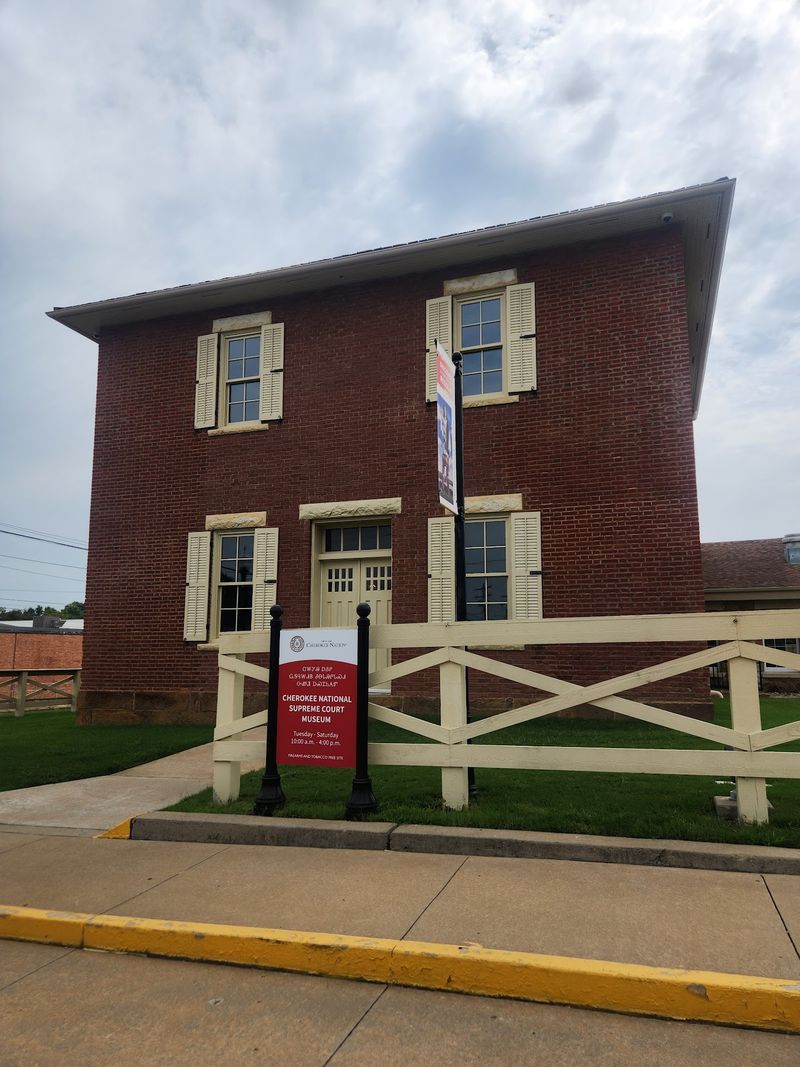
Now for the map pin. The museum sits at 122 E Keetoowah St in Tahlequah, Oklahoma, right in the historic core of the Cherokee Nation’s capital.
Tahlequah makes for an easy day trip from much of eastern Oklahoma. From Tulsa, it is a comfortable drive, and from Muskogee it is closer still.
Folks coming from Oklahoma City will want to plan for a longer haul, but pairing the museum with other stops in town makes the miles feel well spent.
The neighborhood is walkable, and that matters. Just around the corner at 124 E.
Choctaw St sits the Cherokee National Prison Museum, which covers the other half of this justice story. Seeing both on the same trip gives you the courts and the jail, side by side, the way the title promises.
Downtown Tahlequah also has shops and places to grab a bite, so it is easy to stretch a museum visit into a relaxed afternoon. A few visitors even noted the building hosts Pokemon Go stops and gyms, a fun bonus if you have kids or grandkids who play.
History buffs and gamers can share the same sidewalk here without anyone complaining.
An Old Building With Big Claims
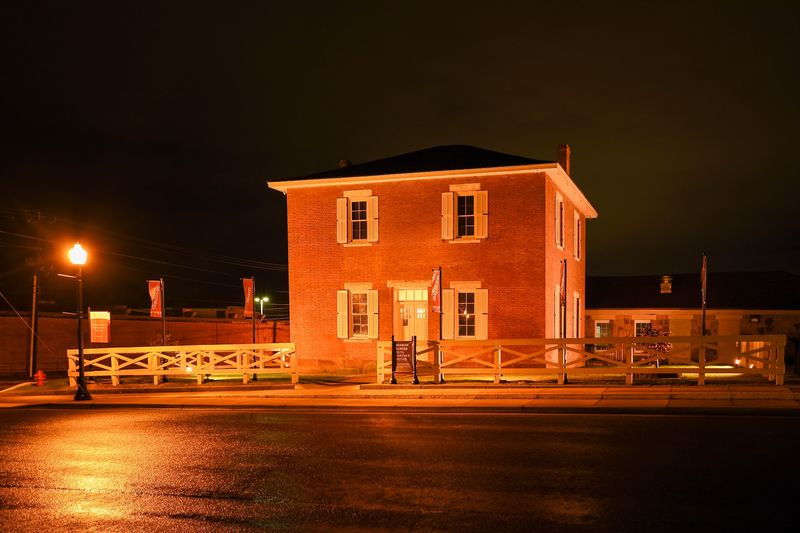
Bragging rights come with age. Some visitors proudly describe this as the oldest building still standing in all of Oklahoma, and they say that alone makes the trip worthwhile.
Whether you come for the claim or the exhibits, the structure itself earns attention. It served as the home of the Cherokee Nation’s highest court, which means real decisions affecting real families were made inside these walls.
Walking the floors, it is hard not to imagine the people who once waited here for their cases to be heard.
Architecture fans will appreciate the plain, sturdy design. It is not flashy, and that is the appeal.
The building feels practical and honest, like the government it once served. Nothing about it tries too hard.
There is also something special about a place that survived so many changes. The Cherokee courts were abolished by the Curtis Act of 1898, then later re-established, and the building stood through all of it.
It watched the Nation lose its courts and later win them back. That kind of staying power is what Oklahoma travelers tend to love most, and this building has it in every brick.
Snap a photo out front before heading inside.
Artifacts, Art, and a Little Gift Shop
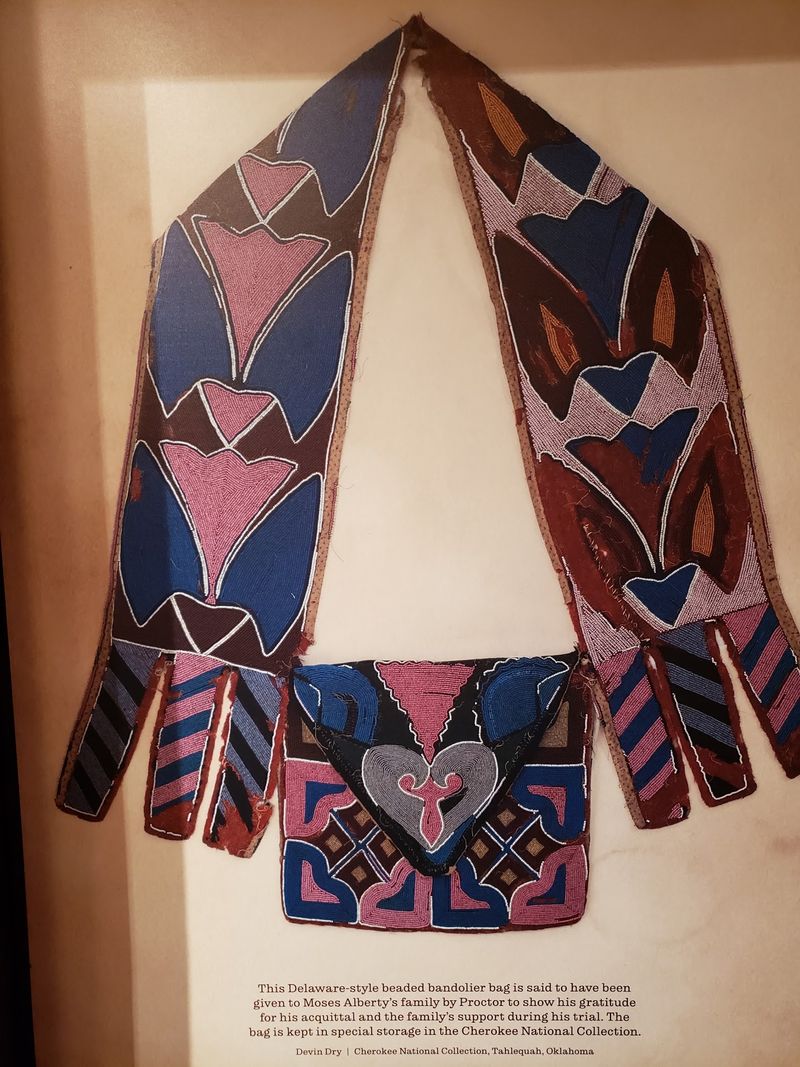
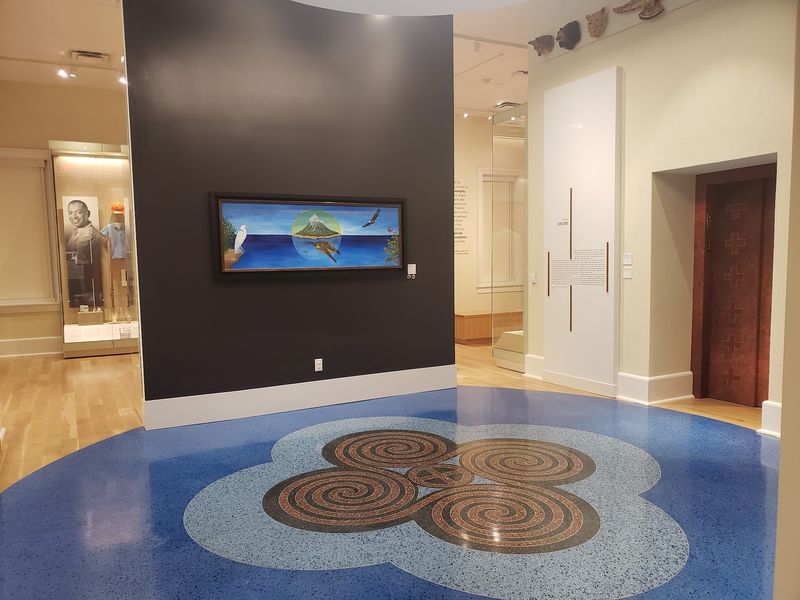
Beyond the reading panels, there is plenty to simply look at. Visitors mention a nice collection of artifacts as well as art, which breaks up the text and gives your eyes a rest between chapters of history.
The art brings a creative voice into what could otherwise be a very serious subject. Seeing Cherokee artistic work alongside court history reminds you that this is a living culture with painters, makers, and storytellers, not just a record of laws and dates.
It balances the visit nicely.
Before you leave, swing through the small gift shop inside. It is not huge, but it is a good spot to pick up a keepsake, a book, or something for the grandkids.
Buying locally here can also support the Cherokee Nation’s cultural work, which feels better than grabbing a generic souvenir at a gas station.
One visiting family even mentioned that staff handed them free stickers of the museum. Little gestures like that stick with kids long after the trip.
Budget-minded travelers will appreciate that you can enjoy the whole place without spending much, and the shop is there if you want to take a piece of the story home.
Friendly Faces at the Front Desk
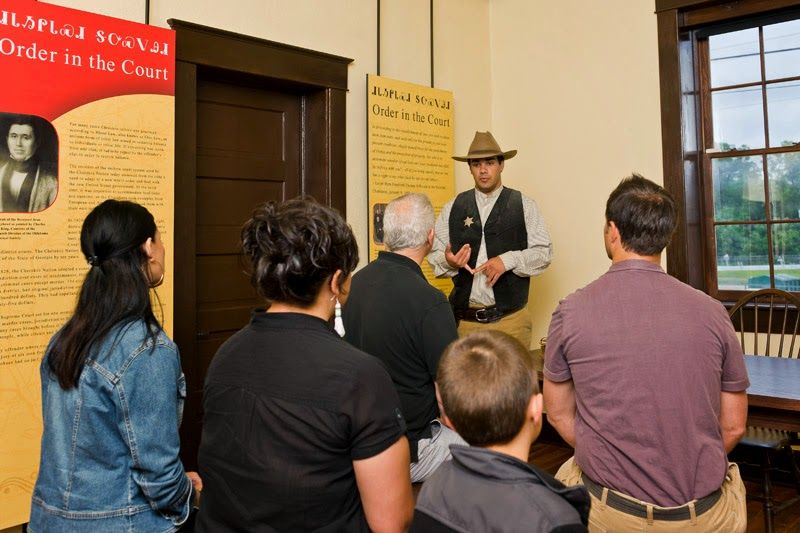
First impressions count, and the people here seem to know it. Visitors keep coming back to the same point: the staff are pleasant, inviting, and genuinely friendly.
A helpful tip from one visitor: the staff are usually off to the right as you enter. If you do not spot them right away, just look that direction and say hello.
They can point you toward exhibits, answer questions, and share context that makes the displays even richer.
This warmth matters for a place focused on tribal history. Many guests are Cherokee citizens exploring their own heritage, while others are curious travelers with no connection at all.
Visitors say the museum is worth it for tribal members and non-tribal members alike, and even for locals who assume they already know the story.
The atmosphere is calm and unhurried. It suits grandparents who like to read every word, families teaching kids about Oklahoma history, and road-trippers who want a meaningful stop without a big crowd.
Nobody rushes you along or makes you feel out of place. Honestly, a friendly conversation at the desk may end up being one of your favorite memories of the day, so do not be shy.
The Jail Just Around the Corner
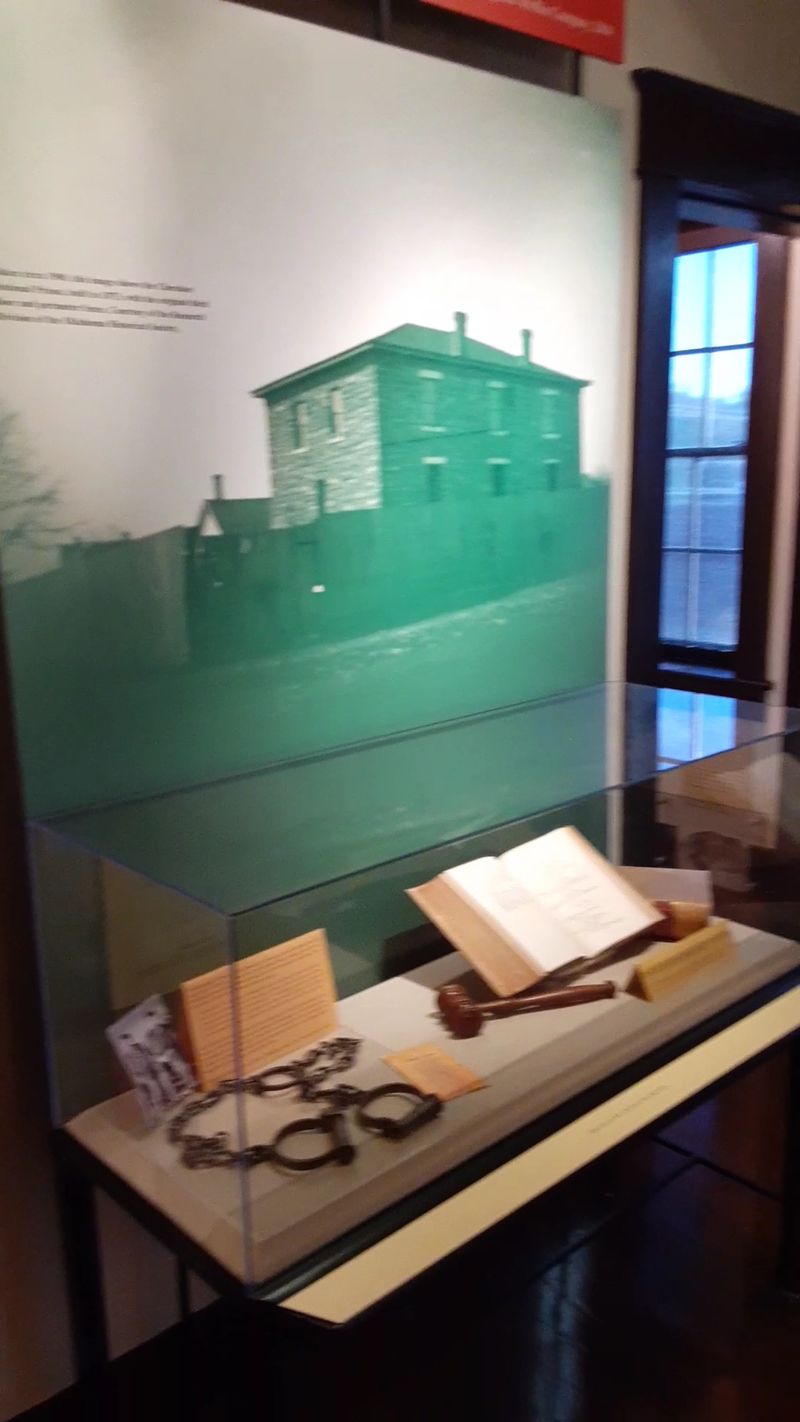
Courts tell only half the story, so walk a short block and meet the other half. The Cherokee National Prison Museum at 124 E.
Choctaw St finishes the picture of Cherokee law and order.
Built in 1875 from native sandstone for about $6,000, the prison was the only penitentiary in Indian Territory until 1901. It was meant for both punishment and reform, and inmates learned trades like blacksmithing.
After tribal control ended around statehood, it served as the Cherokee County Jail until the 1970s, and it joined the National Register of Historic Places on June 28, 1974.
Today it is a two-building site with ironclad cells, a sheriff’s office, a simple prison kitchen, and a working-style blacksmith shop on the grounds. Interactive kiosks share stories of people who spent time there and explain today’s Cherokee Marshal system.
Best of all for budget travelers, admission to the prison museum is listed as free, and it keeps the same Tuesday through Saturday schedule. Kids, teens, and adults are all welcome.
Seeing the courthouse first, then the jail, makes the whole justice system click into place in a way a single stop cannot.
Hours, Timing, and Planning Tips
Timing is everything in a small town. The Cherokee National Supreme Court Museum is typically open Tuesday through Saturday from 10 a.m. to 4 p.m., and it is closed on Sundays and Mondays.
Plan on about an hour inside. Visitors say that is enough to see everything without feeling rushed, though history lovers who read every panel may want a little more.
Add another hour if you are heading over to the prison museum too.
Hours and details can change, so calling ahead is smart. The number is 877-779-6977, and the Visit Cherokee Nation website also lists current information.
Admission details for this museum can shift, so a quick check before you go may save a surprise.
Weather is worth a thought as well. Oklahoma summers get hot, and spring brings storm season, so an indoor stop like this can be a welcome break.
Fall is lovely in the Tahlequah area, with pleasant temperatures for walking between downtown sites. Winter visits work fine too, since everything important is under a roof.
Try arriving close to opening on a weekday if you want the quietest experience and the most time to chat with staff.
Is It Worth the Drive?
Short answer: if you love real Oklahoma stories, yes. This little courthouse will not overwhelm you with size, but it rewards curiosity in a way bigger museums sometimes miss.
Not every visitor walks away wowed. One guest felt the museum offered less Native history than expected, and that is a fair reminder that the focus here is narrow.
It centers on courts, newspapers, and language rather than covering every part of Cherokee life. Go in knowing that, and you will likely appreciate the depth rather than wishing for breadth.
Most visitors describe it as interesting, worthwhile, and a great stop for anyone who enjoys history. Cherokee families say they learned things about their own past.
Travelers say the building alone is worth seeing. Kids get syllabary puzzles and maybe a sticker.
Pair it with the prison museum around the corner, grab lunch downtown, and you have an easy, affordable day trip that feels meaningful. It is the kind of place you mention later to friends, then tag them in a photo with a note that says you have to go.
For Oklahomans hunting proof their state holds deep stories, this one delivers quietly and well.
