Fog sitting low over vineyards in California, valley smelling like wet earth and redwood bark. Stone skeleton of a house built by a famous adventure writer with his own fortune and stubborn ideas was what was sought.
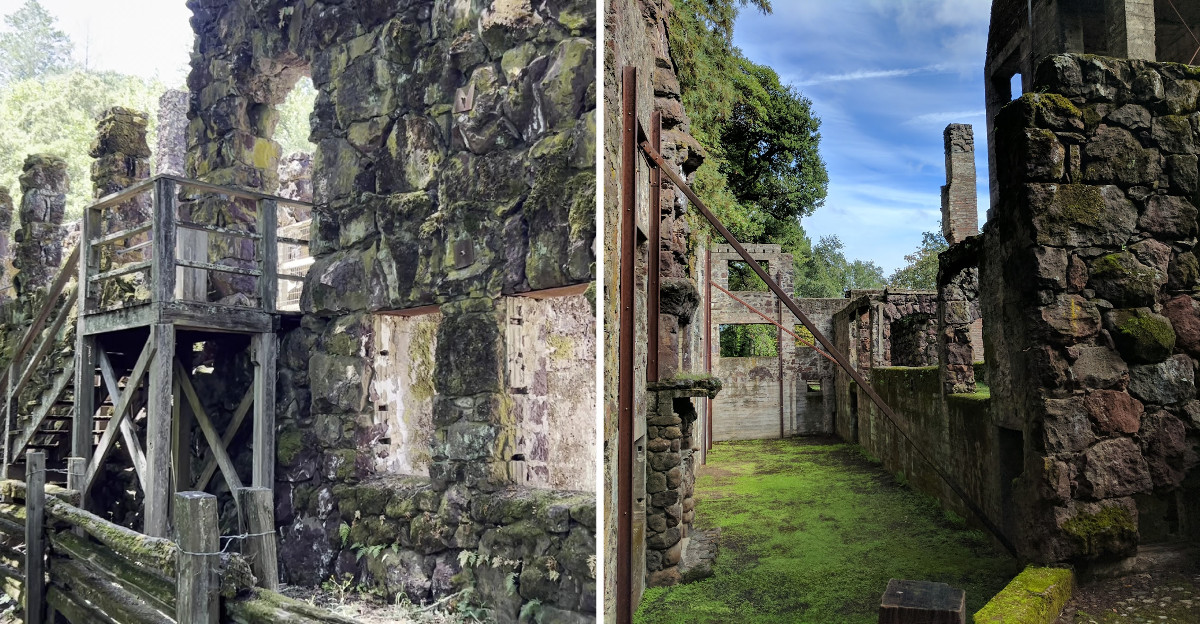
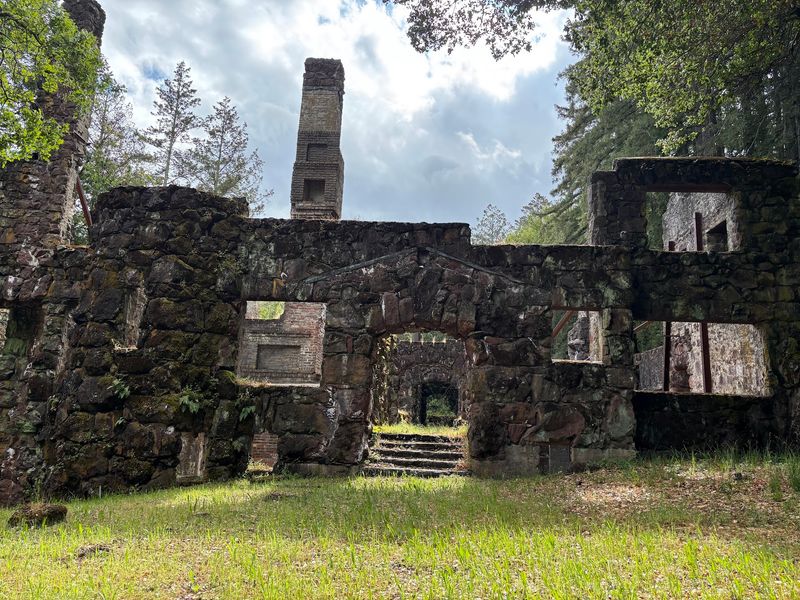
What was found was quieter and stranger than expected, a huge shell of volcanic rock standing in a shady grove with birds echoing off the walls. The writer and his wife planned every room, the library, the sleeping porch on the top floor, and they never got to spend a single night inside.
Fire came in August 1913, just days before the move. Walking around those walls, the thought keeps coming: how a dream can be finished and lost at almost the same moment.
The house was never finished, and its ruins still stand in a state park that bears the writer’s name. Visitors walk the trails and peer through the empty windows, imagining what might have been.
The Ambition Behind Beauty Ranch
Long before there was a Wolf House, there was a ranch. Jack London bought land in Glen Ellen starting in 1905, and he kept adding to it until it sprawled across the hills above the valley.
He called it Beauty Ranch, and he meant it. London was not just a writer out here, he was a farmer who read agricultural books the way other people read novels.
What surprised me most while wandering the property is how much of his energy went into soil, animals and irrigation instead of pages. He experimented with terracing, crop rotation and livestock housing at a time when few people in California were paying attention to any of it.
The house was supposed to be the crown on all that effort, a permanent anchor for a man who had spent his youth at sea, in the Klondike and on the road. He wanted a place that would hold his books, his friends and his work under one enormous roof.
Knowing that context changes how the ruins feel. You are not just looking at a burned mansion, you are looking at the centerpiece of an entire working farm that London believed would outlive him by centuries.
The hills still carry that intention, and the trails let you feel the scale of what he was attempting here.
A House Designed to Outlast a Thousand Years
Twenty-six rooms. Nine fireplaces.
Four stories and roughly 15,000 square feet of floor space.
The numbers sound made up until you stand next to the walls and realize they are not. London worked with San Francisco architect Albert Farr, a well-known figure in California’s Arts and Crafts movement, to design something that looked like it grew out of the hillside rather than being dropped onto it.
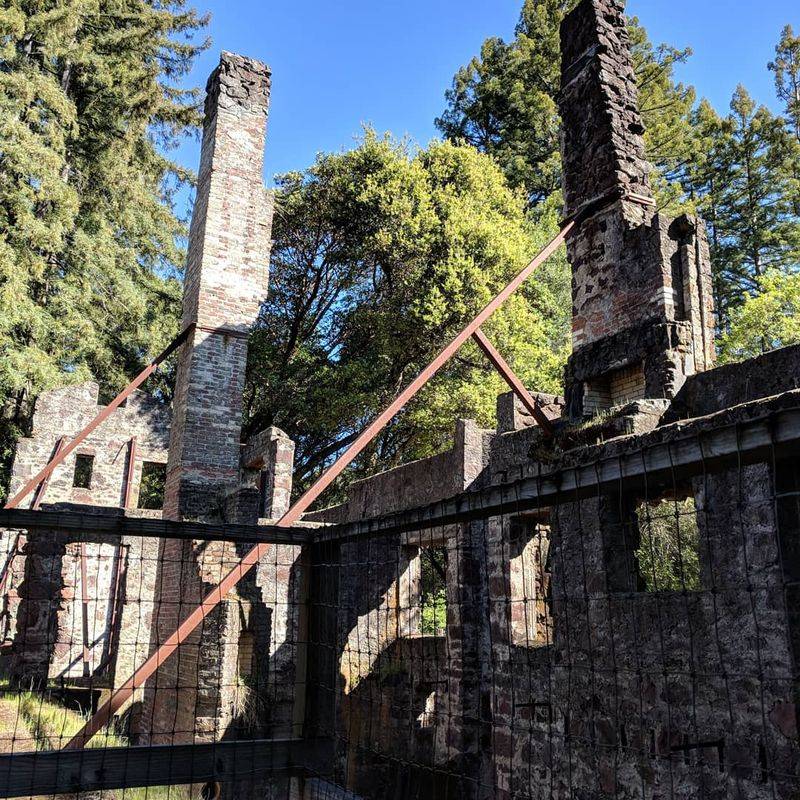
Deep maroon volcanic rock came from a quarry right there in the Valley of the Moon. Redwood logs were used with their bark still attached, which gave the exterior a shaggy, almost wild texture.
Blue slate, cement and Spanish style roof tiles from N. Clark and Sons Pottery completed the look.
London had watched San Francisco fall apart in the 1906 earthquake, and he wanted a home that would shrug off anything nature threw at it.
The interior plans were genuinely modern for 1913, with electric lighting, a hot water system, refrigeration and even a built-in vacuum cleaning setup. There were practical rooms too, including a milk room, root cellar and storeroom.
Every detail pointed toward permanence. He said the place should stand for a thousand years, and looking at those thick walls, it is easy to believe he meant every word of it.
Inside the Rooms That Never Held a Guest
My favorite part of the informational panels at the site is the floor plan, because it turns a pile of rock into an actual home in your head. The great room stretched 18 by 58 feet and rose two full stories, ringed by rough redwood balconies and dominated by an enormous stone fireplace.
There was an alcove built specifically for Charmian’s Steinway grand piano. Music was clearly part of the plan.
Jack’s library measured 19 by 40 feet and sat on the second floor, with his workshop of identical size directly above it, connected by a spiral staircase. He could climb from his books to his desk without passing another soul, which tells you a lot about how he liked to work.
His sleeping quarters were tucked up on the fourth floor with views over the ranch, a spot often described as an eagle’s nest. Charmian had her own apartment within the house.
Standing at the viewing platform, I tried to place each of those rooms in the empty air above the stonework. It is an oddly moving exercise.
Thousands of books, custom furniture and souvenirs from their sailing voyages were waiting to be carried in. None of it ever arrived.
August 22, 1913 and the Fire in the Night
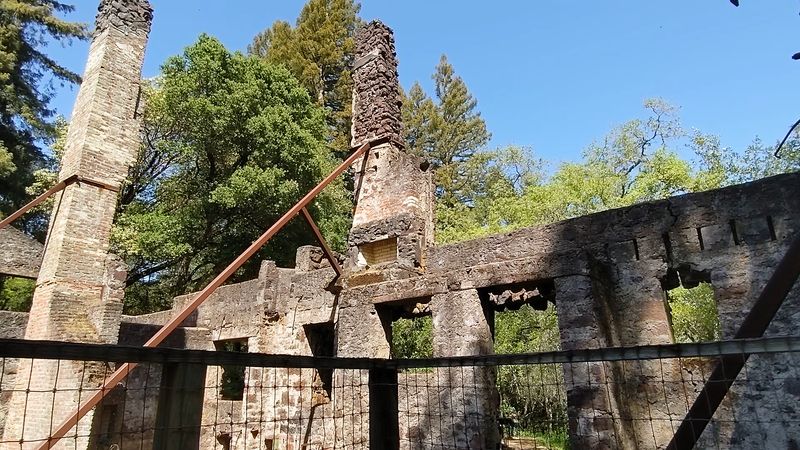
Late on a warm August night in 1913, a ranch worker noticed a glow in the sky above the trees. The Londons were asleep in their small cottage about half a mile away.
By the time they reached the house, there was almost nothing anyone could do. The fire moved through the nearly finished interior with terrifying speed, and the beautiful tile roof collapsed inward.
What survived was the masonry, standing there in the dawn light like a monument to something that had just stopped existing. Arson was suspected right away, and plenty of theories floated around the valley for decades afterward.
No evidence ever supported those claims. A forensic analysis conducted in 1995 concluded the most likely cause was spontaneous combustion of linseed oil soaked rags left behind by workers finishing the woodwork.
That detail always gets me. Not sabotage, not revenge, just a pile of cloth in a hot room at the end of a long workday.
The move-in date was only days away. Reading the timeline on the interpretive signs while standing inside the quiet grove made the whole thing feel immediate rather than historical, and I found myself lingering there longer than I planned.
What the Loss Did to Jack and Charmian
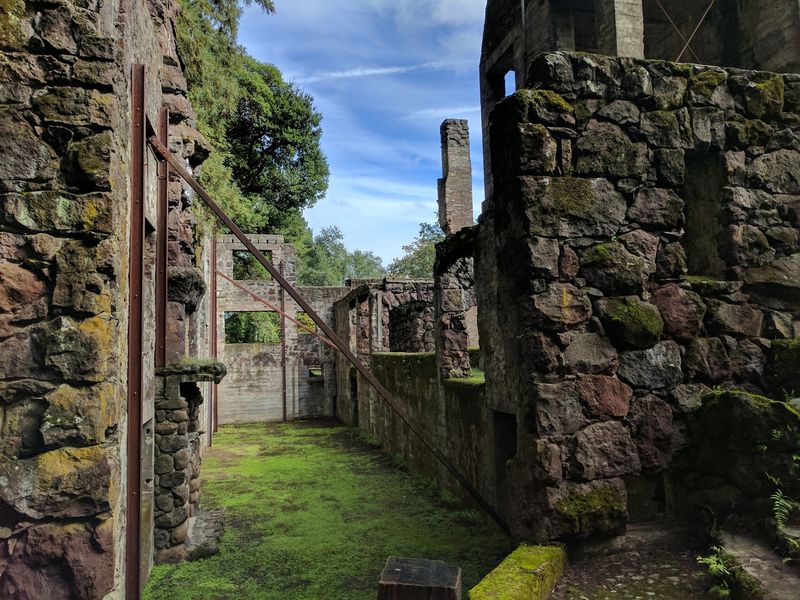
Some losses you can measure in money, and this one had a brutal number attached. Construction had cost roughly seventy-five thousand dollars in 1913, and the insurance payout covered only a fraction of that.
London talked about rebuilding almost immediately. Crews actually began cutting fresh redwood logs, which needed eighteen months of drying before they could be used at all.
The rebuild never happened. His finances were stretched thin across the ranch operations, and his health started slipping in the years that followed.
He died on November 22, 1916, a little over three years after the fire, at just forty years old. Charmian later wrote about how deeply the loss cut into him, describing a sadness he never fully shook.
Walking from the ruins back toward the cottage where the two of them actually lived, the contrast is hard to miss. The cottage is modest, low and comfortable, nothing like the fortress they had planned.
After the fire, they extended it to include a writing study, and that is where he continued working until the end. Seeing the real house after seeing the imagined one reframes the whole visit, and it is worth doing them in that order if you can.
Circling the Stone Walls Today
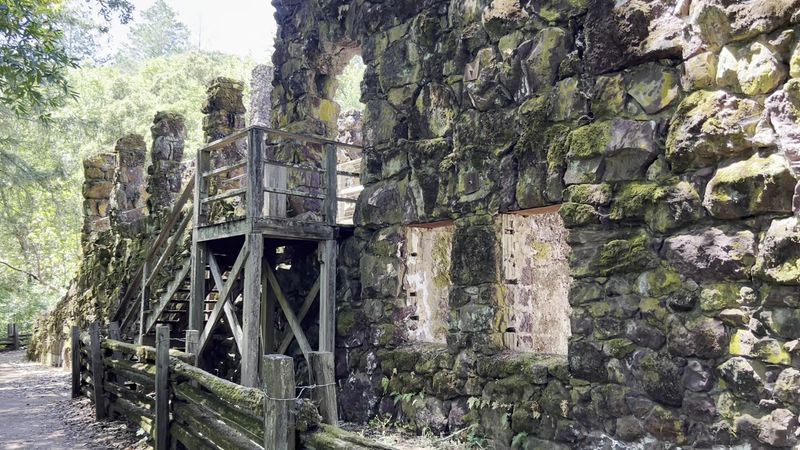
Cool, mossy and slightly damp, the stones feel alive under your hand even on a warm day. A wooden pathway loops visitors safely around the perimeter, and a short staircase leads to a small observation deck that gives you the best overall view of the footprint.
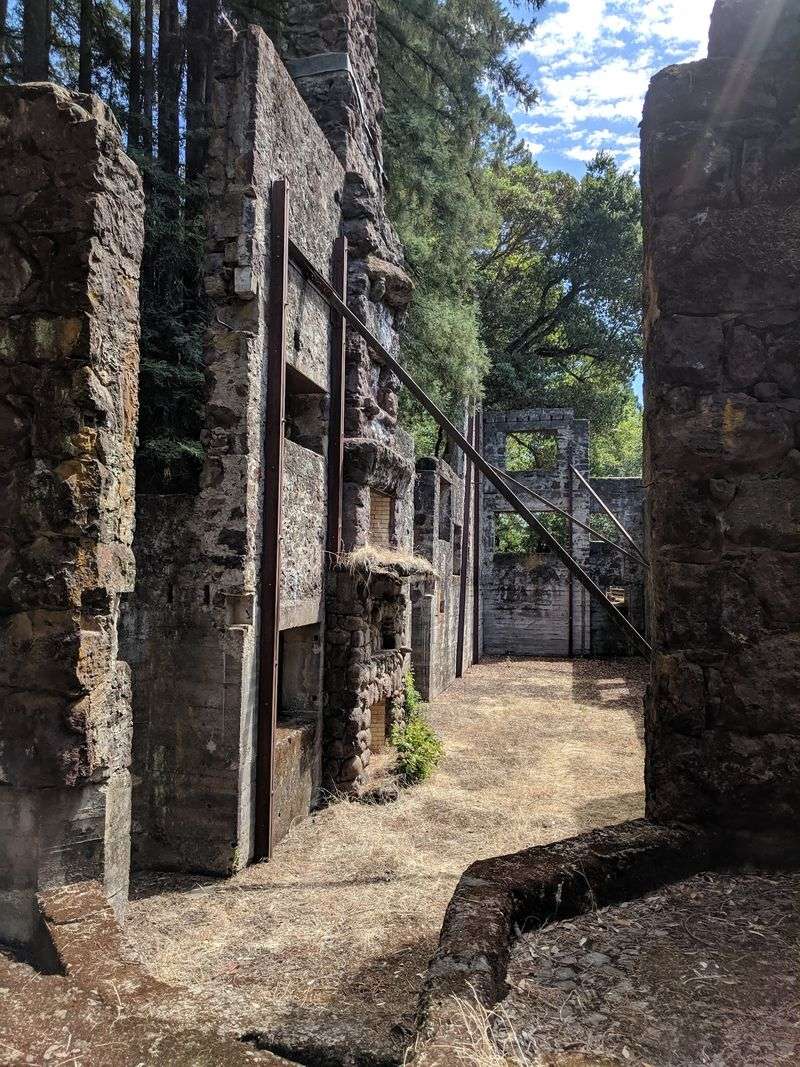
The interior is fenced off because the structure is not stable enough to walk through. Honestly, the outside angles are better anyway.
Steel bracing was added in 1965 to hold the masonry steady, and the tops of the walls were capped with concrete to keep water from working its way in. Those chimneys still climb above the treeline, supported now by heavy steel beams.
The site was named a California Historical Landmark in 1959 and a National Historic Landmark in 1963. Redwoods have grown up close around the walls, so light filters down in patches and shifts constantly.
Early morning is my recommendation. The sun cuts sideways through the openings and the whole structure seems to wake up.
Interpretive signs and maps are placed around the loop, and volunteer docents are often nearby and happy to talk. Benches and shade make it easy to sit for a while, which most visitors end up doing.
Trails, the Museum and Planning Your Visit
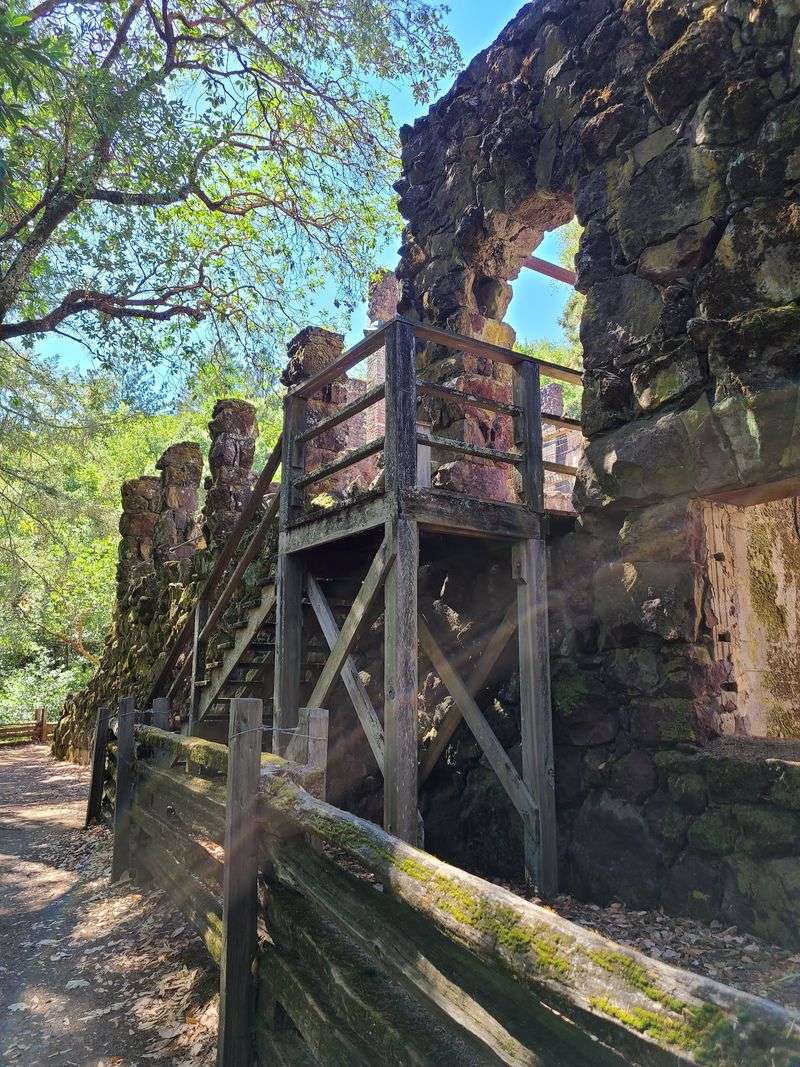
Plan on more than an hour, because the ruins are only one piece of this park. The walk from the parking area to the Wolf House is roughly a mile round trip on a paved path with some real inclines, and a free shuttle runs for anyone who would rather ride.
Sneakers beat sandals here. Bring water too, since there is none along the trail itself.
The House of Happy Walls Museum sits near the start and was built by Charmian London together with Jack’s stepsister Eliza Shepard after his passing. It now holds exhibits on his life, his writing and the ranch.
Elsewhere on the property you will find the stone barns, silos, stables and the famously well-designed circular piggery London nicknamed the Pig Palace. His gravesite is a short walk from the ruins.
Over 29 miles of trails branch out through oak woodland, eucalyptus groves and vineyard edges. Dogs are welcome on the trails, and picnic areas make it easy to stretch the visit into half a day.
Gates open at 9 AM daily and close at 5 PM. Volunteers run much of the operation, and their enthusiasm is genuinely one of the highlights.
Address: 2400 London Ranch Road, Glen Ellen, CA 95442
