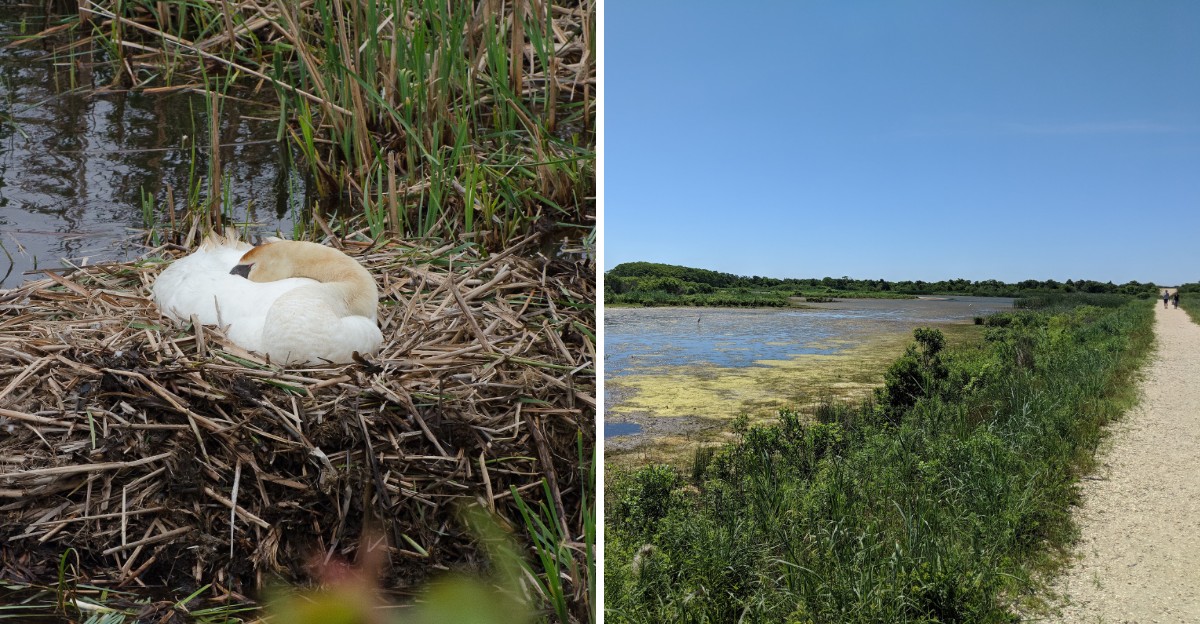
The ocean has a way of grabbing all the attention, with its crowded sand and the steady thump of waves against the shoreline.
But a short drive from all that noise, I found a place where the loudest sound was a heron lifting off a pond.
Flat trails cut through tall grasses, freshwater ponds shimmered under a wide sky, and a lighthouse stood watching in the distance.
Somehow this quiet stretch of New Jersey coast has stayed wild while the towns around it filled up with boardwalks and traffic.
I keep thinking about how ordinary it looks from the road and how completely different it feels once you walk in.
If you like your coastlines with more birds than beach umbrellas, this one is worth the detour.
The Moment The Noise Drops Away
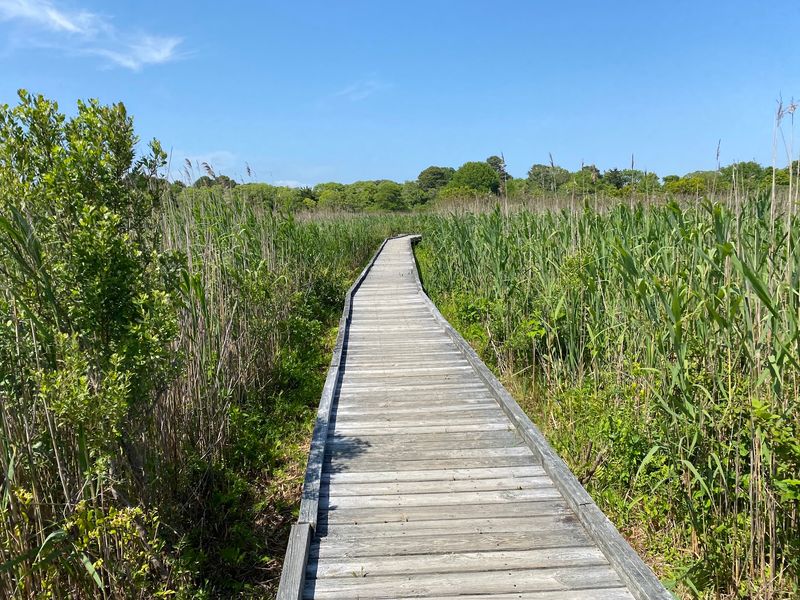
Something shifts the second you turn off Sunset Boulevard and park. The seaside buzz thins out fast, replaced by wind moving through grass and the occasional splash from a nearby pond.
The air smells different here too, more like salty marsh and damp soil than sunscreen and hot pavement. That alone tells you that you have crossed into another kind of coastal world.
Trails at South Cape May Meadows Preserve are flat, wide, and easy to follow, which makes the whole place feel welcoming rather than rugged.
Benches sit along the paths at useful intervals, so you can stop, breathe, and just watch whatever wanders by. Nobody rushes here.
Interpretive signs near the entrance give you a quick sense of what lives in the wetlands before you head deeper in.
My honest advice is to arrive without a plan and let the loop pull you along, because the preserve rewards slow walking far more than brisk exercise. Give yourself at least an hour to really settle into it.
A Front Row Seat On The Atlantic Flyway
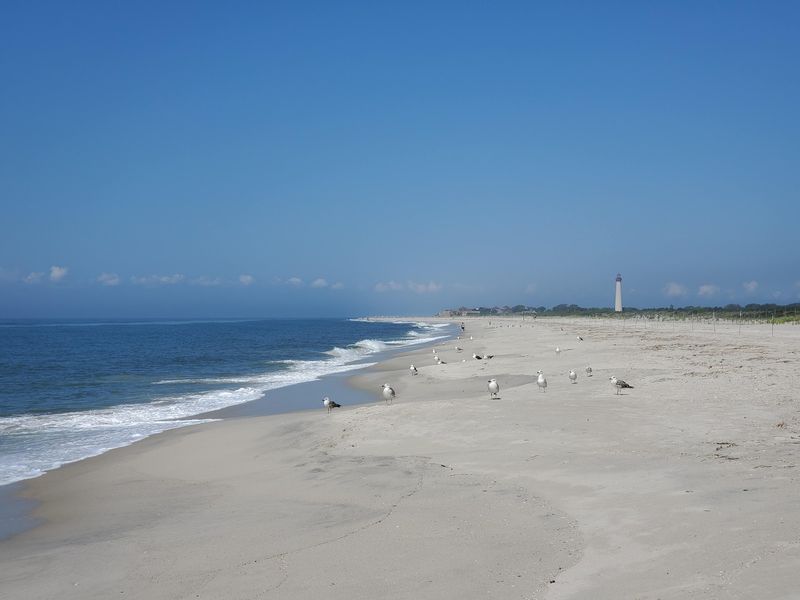
Birders talk about this stretch of coast the way surfers talk about legendary waves. The preserve sits along the Atlantic Flyway, a major migration highway, which means millions of birds pass through each spring and fall.
More than 350 species have been recorded within these 200 acres, a number that still surprises people when they hear it.
Federally endangered piping plovers, least terns, and American oystercatchers nest on the protected beach, which is why sections get roped off during nesting season.
Great blue herons stalk the shallows with impossible patience, and snowy egrets pick their way through the reeds nearby.
Osprey show up too, often visible from the raised viewing platform, and watching one drop from height into the water is worth the trip on its own.
Bring binoculars if you own a pair, because the difference between seeing a distant white speck and identifying a bird is enormous. Early morning tends to be the liveliest window, before heat and foot traffic settle in.
Creatures That Are Not Birds At All
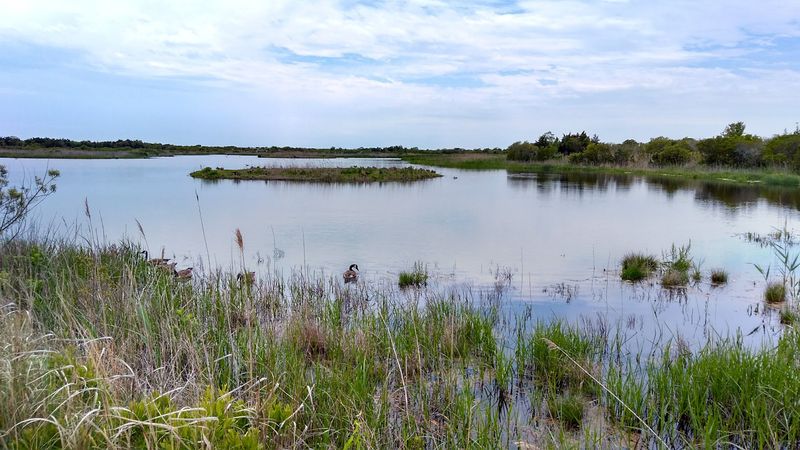
Birds get the headlines, but plenty of other residents share this ground. White-tailed deer graze in the open fields, ears flicking at every sound, and they often let walkers get closer than expected.
Red foxes and raccoons live here too, though they keep a lower profile and tend to move around the edges.
Look along the waterways and you might catch a muskrat pushing through the shallows, or an otter slipping past in a quick silver line.
Warm days bring frogs and toads out in force. Southern gray treefrogs cling to branches, and American and Fowler’s toads hop across the paths.
Summer belongs to the dragonflies and damselflies, whose wings flash like glass whenever the sun hits them right.
Come fall, seaside goldenrod blooms along the beach and fuels monarch butterflies heading toward Mexico, which is one of those small details that makes the place feel enormous in scope.
Watch your step on damp mornings. The little things are everywhere.
Boardwalks, Blinds And Trails Built For Everyone
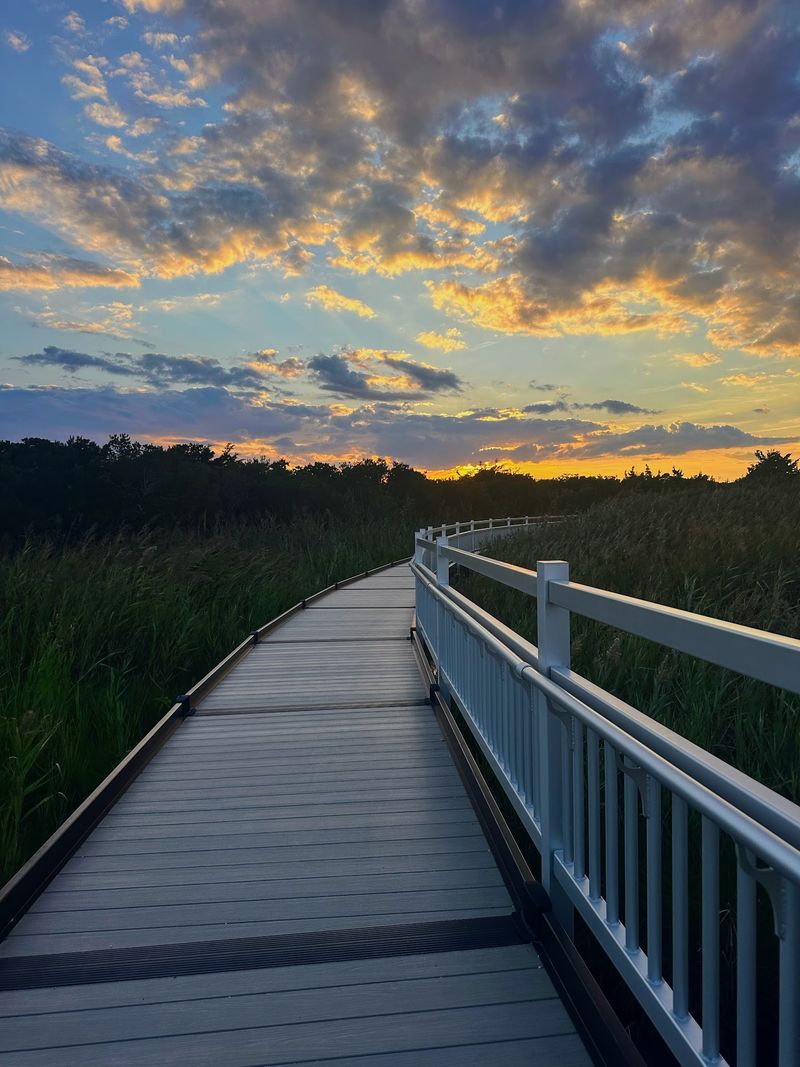
Over two miles of level paths wind through the preserve, and the design clearly puts habitat first without shutting people out.
The half-mile boardwalk is ADA compliant, with handrails and braille signage, so visitors using wheelchairs or walkers can reach the heart of the marsh rather than admiring it from the parking area.
Along the way you pass meadows, freshwater ponds, and gaps in the grass where the Cape May Lighthouse pops into view like a postcard someone left lying around.
An 80-foot bird blind lets you watch shorebirds without spooking them, which is genuinely fun once you realize how differently birds behave when they cannot see you.
Observation platforms give extra height and a broader look across the water.
At the welcome center, an interactive kiosk explains the ecology and history and even plays calls of local birds, which helps enormously if you are still learning who is singing what.
A connector trail heads toward the state park if you want to keep going.
The Vanished Town Beneath The Grass
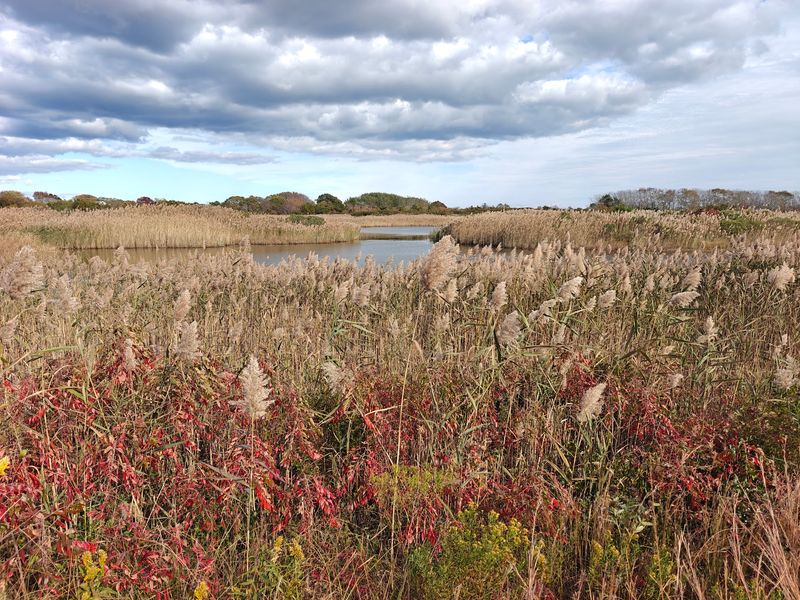
Hard to believe, but this calm expanse was once a Victorian beach town with streets, homes, and big plans. The Borough of South Cape May was established in 1894, laid out in a tidy grid with trolley cars running near the sand.
Developers imagined hotels and cottages filling every block. The ocean had different ideas.
Storms battered the town repeatedly, and a major storm surge in 1936 caused serious damage to what had been built.
The Great Atlantic Hurricane of 1944 finished the job, and the borough was officially dissolved in 1945.
Afterward the land served as grazing fields for cattle, quietly slipping out of the tourist map altogether.
The Nature Conservancy acquired the 200-acre property in 1981, and that purchase set its future as a protected sanctuary.
Knowing all this changes how the meadow looks. Where you see reeds bending in the wind, there were once street corners, and the ocean simply took them back.
Restoration That Actually Worked
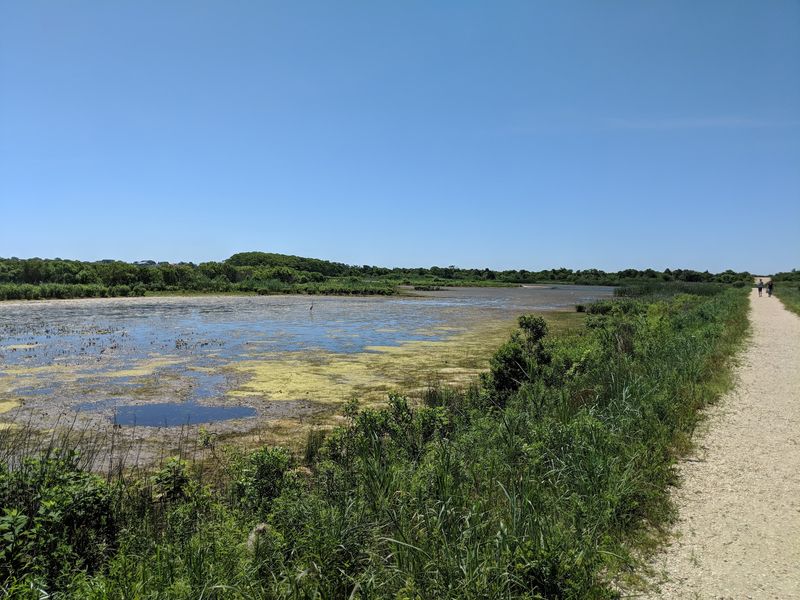
Turning degraded pastureland back into a functioning wetland is not a quick job, and the results here show real patience.
When conservation work began, invasive common reed, Phragmites australis, had taken over huge areas and pushed out native plants that wildlife depends on.
Work with the Army Corps of Engineers and the New Jersey Department of Environmental Protection started in 2004 to repair the freshwater wetlands and the beach system.
Crews handled beach nourishment, rebuilt stable dunes, and reestablished natural freshwater flow through the marsh.
Native vegetation came back, and with it came better foraging and resting habitat for shorebirds passing through.
Water control structures now let managers raise and lower water levels depending on what wildlife needs that season, which also helps buffer nearby communities against coastal flooding.
Walking the loop today, you would never guess how much engineering sits underneath the scenery.
That invisible effort is exactly what keeps the ponds full of birds and the dunes holding their ground against storms.
Four Habitats In One Easy Loop
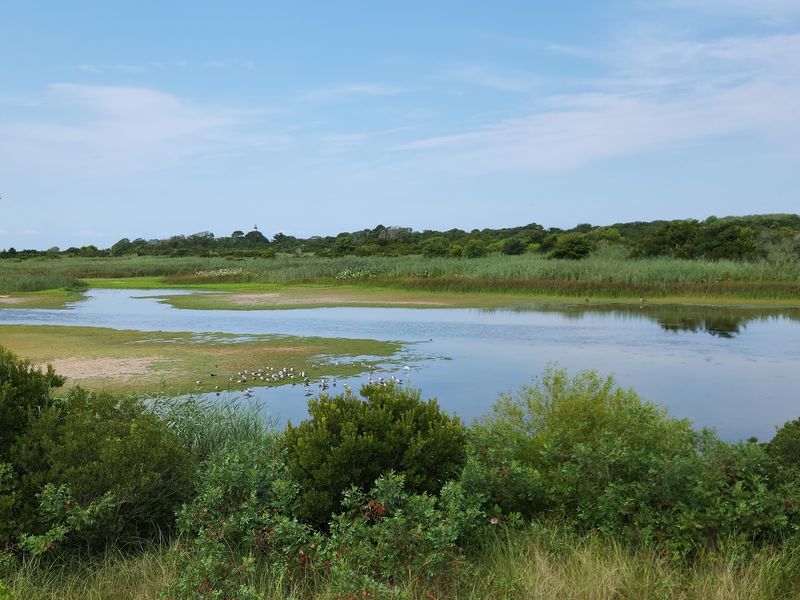
Few walks let you cross this many ecosystems in under an hour. Freshwater wetlands filled with cattails and rose mallow come first, alive with amphibians and wading birds during the warmer months.
Past the ponds, low fields rise into restored dunes covered in plants built for salt and sand, including seaside goldenrod and beach heather.
Then the trail opens onto a full mile of undeveloped beach, which feels almost startling along a coast this popular.
That sand provides nesting ground for vulnerable shorebirds, and the offshore water draws dolphins in summer.
Winter shifts the cast entirely, with scoters and loons moving closer to shore and ducks crowding the deeper ponds.
Having freshwater wetlands sitting right beside the Atlantic is genuinely rare along this shoreline, and that unusual pairing is a big reason so much life concentrates here.
Wear shoes you do not mind getting sandy. The transition from marsh path to open beach happens faster than you expect.
Every Season Puts On A Different Show
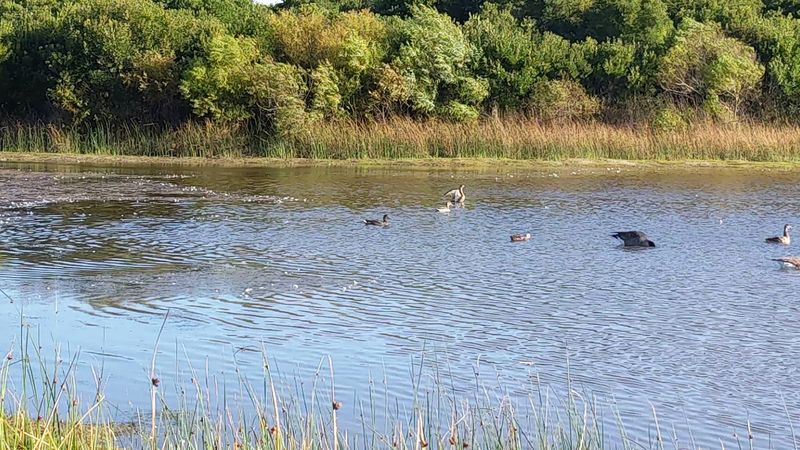
Repeat visitors tend to say the same thing, which is that the meadow never looks twice the same.
Spring and fall carry the biggest bird movement, roughly May into early June and then early September through late October, when migration turns the ponds and hedgerows busy from dawn onward.
Summer swaps migration for nesting drama, with American oystercatchers and least terns raising young on the roped-off beach.
July brings swamp rose mallow blooms across the wetlands, big pink flowers that look almost tropical against the reeds.
Turtles bask along the water edges on hot afternoons if you walk quietly enough to spot them.
Winter empties the trails of people and fills the water with ducks and geese, and the bare landscape has a stark beauty that suits a cold clear morning.
Gates open at 6 AM and close at 8 PM, which gives serious birders that golden early window.
Bug repellent is smart in summer. The mosquitoes feed the birds, but still.
Rules Worth Following Before You Go
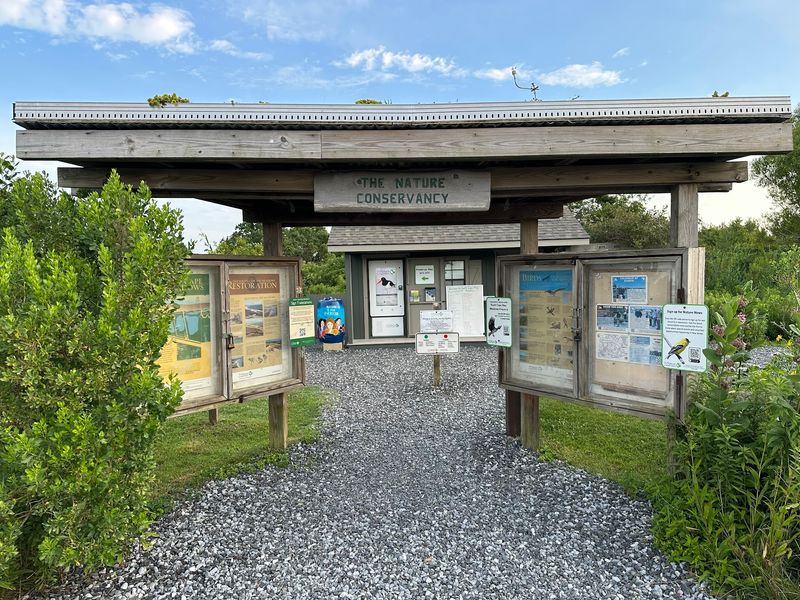
A few ground rules keep this place working the way it does, and they are easy to respect once you understand the reasoning.
Dogs and bicycles are not permitted, since nesting birds and resting migrants react badly to both.
Roped sections on the beach mark nesting zones, and stepping around them protects eggs that blend almost perfectly into the sand.
Stick to marked trails rather than cutting through vegetation, because those grasses shelter more life than they appear to.
Some short spurs are clearly signed as dead ends that bring you closer to the ponds, and those are great little detours for photos.
A whiteboard near the entrance often lists recent bird sightings pulled from eBird, which is a handy way to know what you might find that day.
Restroom facilities are limited, so plan accordingly before arriving.
Quiet voices go a long way here. The less noise you make, the more you end up seeing.
Why The Quiet Sticks With You Afterward
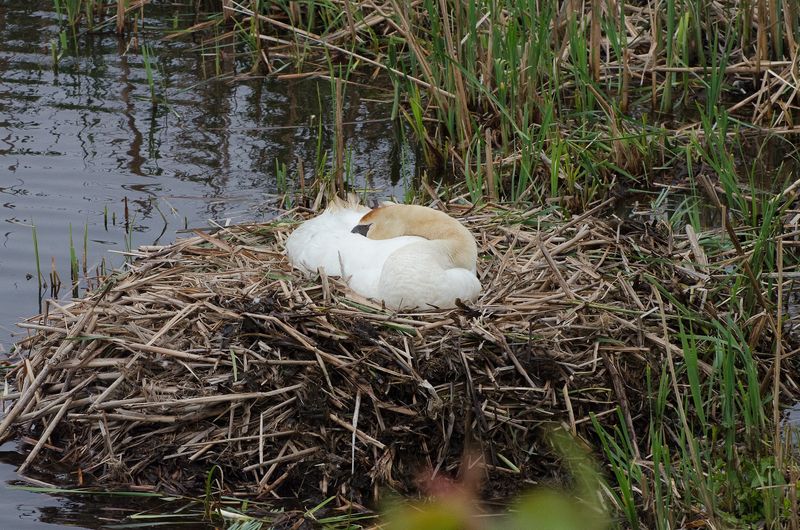
Some places impress you while you are there and fade on the drive home. This one does the opposite.
Maybe it is the scale of the sky over the ponds, or the way a flock lifts all at once and turns like a single organism.
South Cape May Meadows Preserve offers something the busy shore towns nearby simply cannot, which is room to hear yourself think.
Wind moving through marsh grass becomes background music, and the lighthouse in the distance gives every view an anchor point.
Families with young kids do fine on the flat loop, and serious naturalists could spend years here without exhausting the list of what lives on site.
Plan on more than one visit if you can, since the acreage really is too varied to absorb in a single walk.
You will find South Cape May Meadows Preserve at 692 Sunset Blvd, Cape May, NJ 08204, a genuinely wild pocket of New Jersey hiding in plain sight.
