Lightning hit her more than 300 times, mostly on the head. She never moved, never flinched, and kept holding her bundle of grain the whole time.
I noticed that her first trip down took 94 years to happen. A 550-ton crane finally lifted her off her perch in 2018, and Missouri got a rare close-up look.
I’m particularly drawn to how much fuss one bronze lady caused. People lined up to see her on a flatbed trailer.
A petition even tried to keep her from going back up.
One detail I find worth mentioning is her height. She stands over 10 feet tall, yet from the ground she looks almost tiny.
How does a goddess survive a century of storms and still look this good?
She Took More Lightning Hits Than Most Buildings Ever Will
Most of us duck inside when thunder rumbles. The Ceres Statue at the Missouri State Capitol never had that option.
Between 1924 and 2018, lightning struck her more than 300 times. Most of those bolts landed right on her head.
That’s a rough way to spend a stormy afternoon, let alone 94 years of them.
Her spot explains a lot. She stands on the Capitol dome, more than 250 feet above the ground.
That makes her one of the highest points in Jefferson City, so storms basically had her on speed dial.
Here’s the surprising part. The lightning never traveled through the statue itself.
She took the hits on the surface and kept her post without complaint.
Still, all those strikes added up over time. Along with regular weather wear, they left her needing both structural and cosmetic repairs.
Even a goddess needs a little help after decades of electric headaches.
Next time a storm rolls over Missouri, think about her up there. She’s been the tallest lightning target in town for a century.
Honestly, I’d call that the toughest job in state government, and she does it without a single coffee break.
A Roman Goddess Got The Top Job For A Very Missouri Reason
Farming built this state, and the Capitol wanted everyone to know it. So the designers picked Ceres, the Roman goddess of agriculture, for the highest spot.
She represents grain crops, harvests, and fertility. That fits Missouri nicely, where fields and farms have shaped families for generations.
Putting her on the dome was a big public thank-you to farmers.
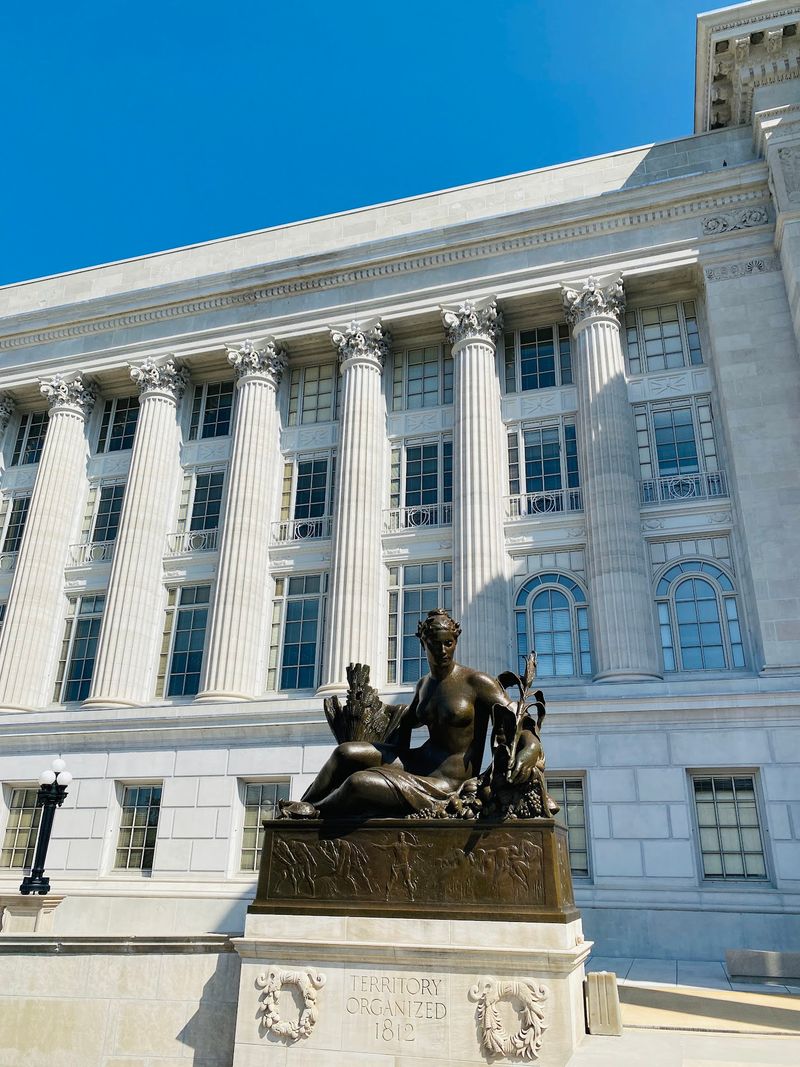
Look closely at photos and you’ll see a key detail. Ceres holds a bundle of grain in her left arm.
It’s a simple symbol, but it tells the whole story without a single word.
I like that the statue celebrates people who grow food. Lots of capitols top their domes with flags or generic figures.
This one points straight at the soil and the hard work behind every meal.
The choice also gives kids an easy history lesson. Ask them why a goddess with wheat sits on a government building.
The answer connects ancient Rome, modern farming, and their own dinner table.
So when you spot her gleaming over Jefferson City, remember the message. She isn’t just decoration.
She’s a reminder that Missouri runs on fields as much as it runs on laws.
Bronze, Copper, And A Surprising Amount Of Weight
Ten feet, four inches. That’s how tall Ceres stands, which means she’d tower over the tallest basketball player you know.
She’s made of bronze, and that bronze is about 94 percent copper. Copper explains her color changes over time.
Weather turns copper greenish, which is why many old statues end up looking minty.
Her weight is another eye-opener. Official figures put her at 1,407 pounds, though some sources list her heavier.
Either way, nobody is carrying her up a staircase.
From the street, she looks surprisingly small. That’s what happens when you sit on a dome more than 250 feet up.
Distance shrinks even a ten-foot goddess into something that looks like a trophy topper.
Seeing her size on the ground in 2018 gave people a fresh perspective. Folks realized just how big and detailed she really is.
It’s a fun reminder that height plays tricks on your eyes.
Bring binoculars if you visit the grounds. You’ll pick out more of her shape and that famous grain bundle.
It’s the closest most of us will ever get to her without a 550-ton crane.
Her 1924 Trip Up Happened In Three Pieces
October 29, 1924, was moving day for Ceres. And she didn’t go up in one piece.
Workers hoisted her to the top of the dome in three separate sections. They used a pulley system to haul each part skyward.
No giant modern cranes, just rope, muscle, and serious nerve.
Think about doing that job. You’re lifting heavy bronze hundreds of feet in the air.
One wrong move and the day gets very loud, very fast.
Once assembled, she stayed put for a remarkably long time. Decades passed.
Cars changed, phones changed, and Missouri changed, but Ceres held her grain and watched over everything below.
In 1995, she got a cleaning and conservation treatment. Crews did that work right on the dome, so she never came down.
Picture scrubbing a statue while the wind whips around you that high up.
That long run makes her 2018 descent feel even bigger. She’d been in the same spot for 94 years by then.
I find it easy to appreciate how well the original 1924 crew did their job, because their work lasted nearly a century.
A 550-Ton Crane Finally Brought Her Down To Earth
November 15, 2018, was a big day in Jefferson City. For the first time in 94 years, Ceres left the dome.
Crews used a 550-ton crane to lift her free. That’s a lot of machine for one statue, but she earned the VIP treatment.
Getting her down safely mattered more than getting her down fast.
Once she touched ground, the fun began. She was placed on a flatbed trailer for public viewing.
People had about two hours to see her up close before she hit the road.
Two hours might sound short. Still, it was a rare chance to stand near a figure that usually lives in the clouds.
Imagine telling friends you saw the Capitol goddess at eye level.
The removal was part of a much larger project. Missouri was putting about $50 million into renovating the whole Capitol building.
Ceres was one important piece of that big puzzle.
If you missed it, don’t feel too bad. Nobody alive before 2018 had seen her come down either.
That’s what made this moment so special for the Missouri State Capitol and everyone watching.
Laser Cleaning Gave Her A Spa Year In Illinois
Lasers aren’t just for sci-fi movies. They helped give Ceres her glow back.
After leaving Missouri, she traveled to the Conservation of Sculpture and Objects Studio in Forest Park, Illinois. Experts there spent about a year caring for her.
That’s a long road trip followed by an even longer makeover.
Laser cleaning was a key step. It safely removed dirt and contaminants without wiping out her natural color.
Old-school scrubbing might have damaged the bronze, so this gentle method made a big difference.
The work didn’t stop there. Her program included needed repairs, fresh patina applications, and protective sealing.
All of it aimed to keep her strong for the next hundred years.
Remember those lightning hits and weather scars? This was the time to fix them.
Structural and cosmetic repairs helped undo decades of stormy abuse.
The price tag was roughly $400,000. That sounds like a lot until you consider she’s a century-old landmark on a state capitol.
Think of it as a long-term investment in Missouri history, with a goddess who should now handle storms for generations.
December 2019 Brought A Homecoming Worth Watching
Homecomings don’t get much higher than this one. After about a year away, Ceres returned to Jefferson City freshly restored.
Before going back up, she got a short public showing. From December 6 to December 9, 2019, she was displayed upright for visitors.
It was the best chance to see her new finish without squinting at the sky.
Standing vertically made a difference too. In 2018, people saw her lying on a trailer.
This time, she looked the way she does on the dome, just much closer.
Then came the big lift. On December 17, 2019, crews raised her back to the top of the Capitol dome.
A winter sky, a giant crane, and a gleaming goddess made quite a scene.
She’s been back in place ever since. Today she still crowns the Missouri State Capitol, holding her grain like nothing ever happened.
That Christmas season gave Jefferson City a pretty unusual gift. Most towns hang lights for the holidays.
This one hung a 1,400-pound bronze goddess back on its tallest building, and honestly, that’s hard to top.
Plan A Visit And Look Up From The Capitol Grounds
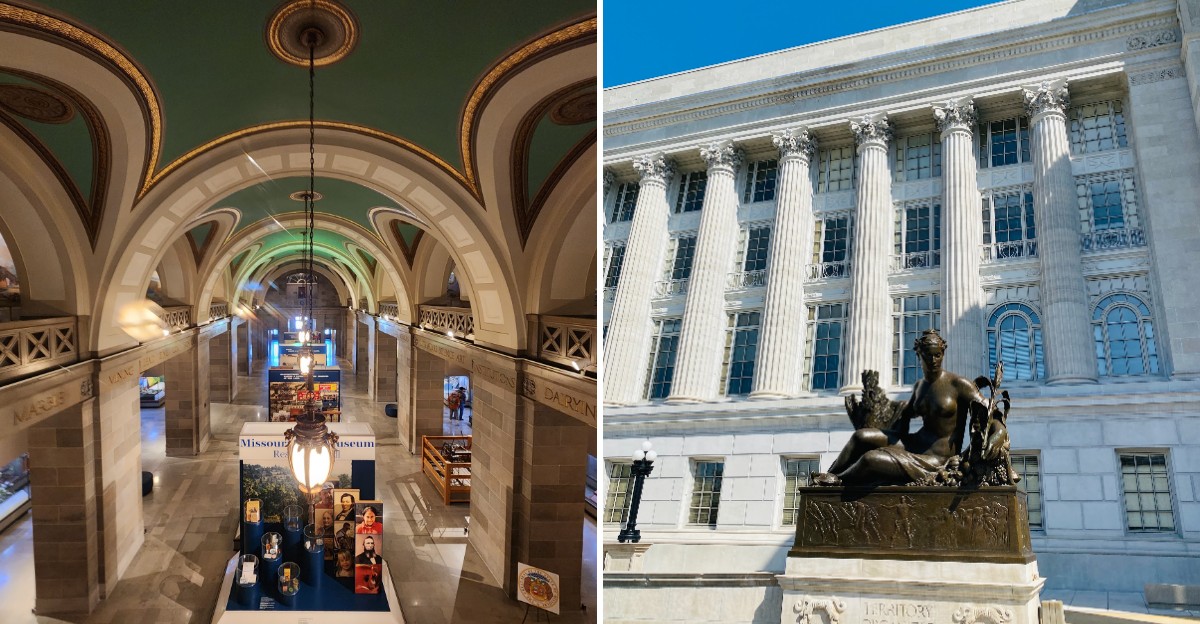
Good news for curious travelers. You can visit Ceres today, though you’ll be admiring her from far below.
She sits atop the Missouri State Capitol at 201 West Capitol Avenue, Jefferson City, MO. The building is open daily, with weekday hours running 8 a.m. to 5 p.m.
Weekends run 8 a.m. to 4 p.m.
Tours of the Capitol are free. You can explore on your own or book a guided tour ahead of time.
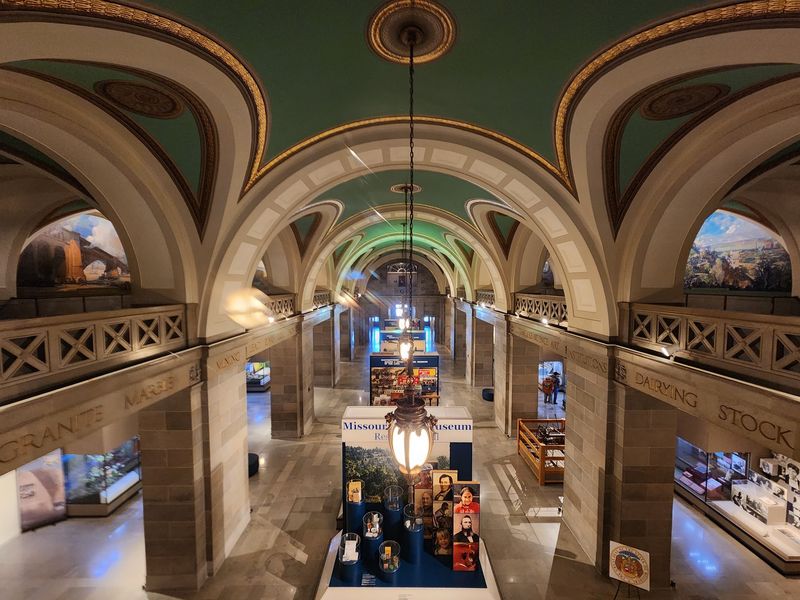
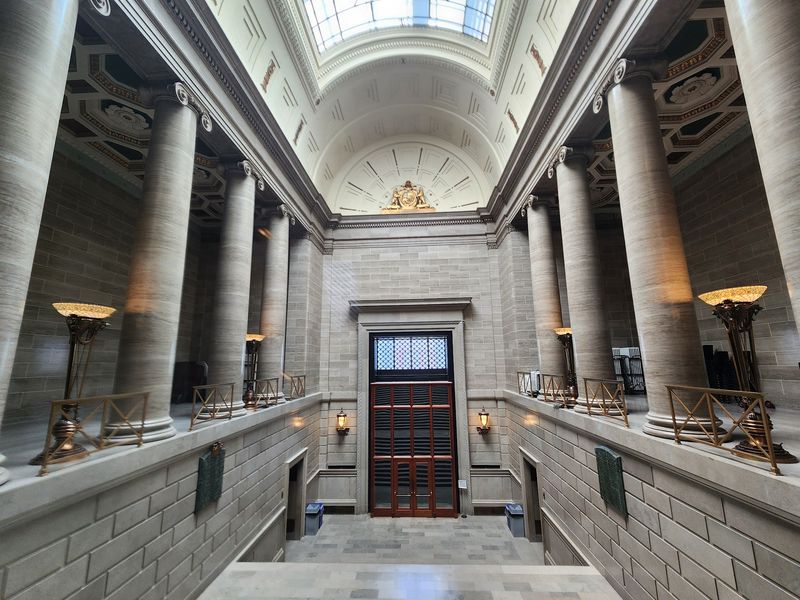
Inside, the Missouri State Museum fills part of the first floor.
For the best Ceres view, step outside and walk around the grounds. Different angles show off her shape against the sky.
A pair of binoculars will help you spot that bundle of grain.
Bring a camera on a clear day for sharp shots of the dome. Stormy days add drama too, though maybe watch from somewhere safe.
She’s the lightning magnet, not you.
Visiting gives the whole story a satisfying ending. You’ll know about the 300-plus strikes, the crane, the lasers, and the debate.
Looking up at her in Missouri feels a lot more meaningful once you know everything she’s been through.
