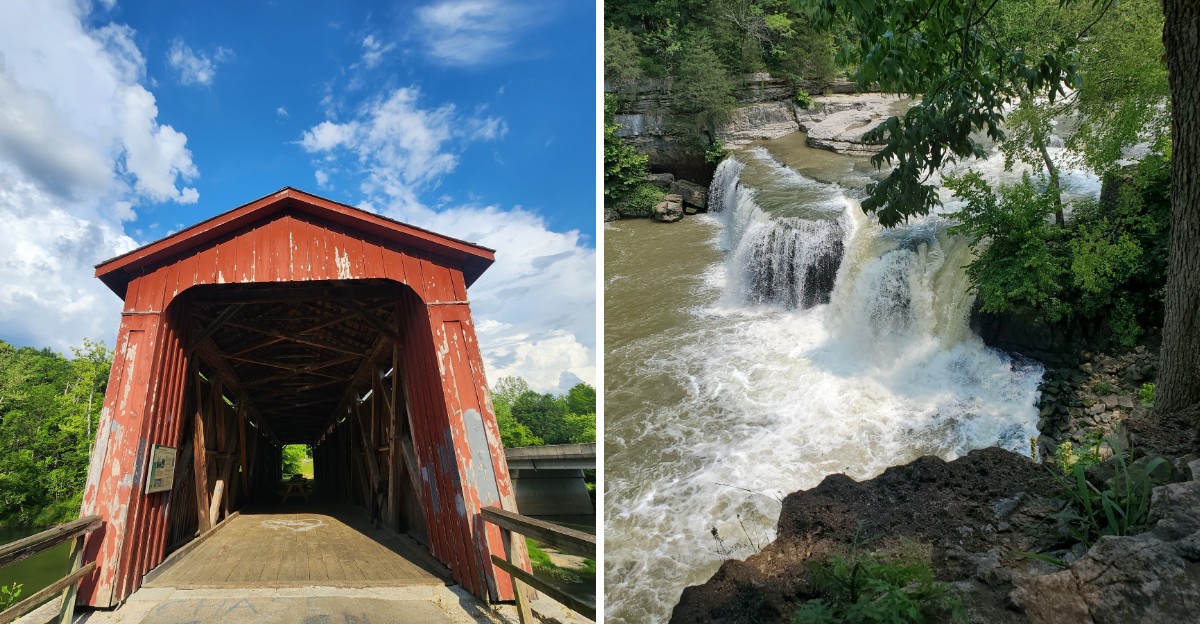
A flood wiped out the first covered bridge here in August 1875. The replacement went up just over a year later, and it’s still standing.
That bridge is the last of its kind in Indiana. Nobody else in the state kept a Smith Type A truss.
Its windows look right out over a waterfall, which feels a little unfair to every other bridge.
I can see why visitors reach for their phones the moment they arrive. The falls below rank as the largest in the state by volume.
A wooden bridge from 1876 framing all that rushing water is practically begging for a photo.
I’d want to take a few pictures, then put my phone away and enjoy the view for a while. So when is the best time to visit this historic spot without getting caught in a crowd?
The Bridge That Outlasted Every Other One Like It
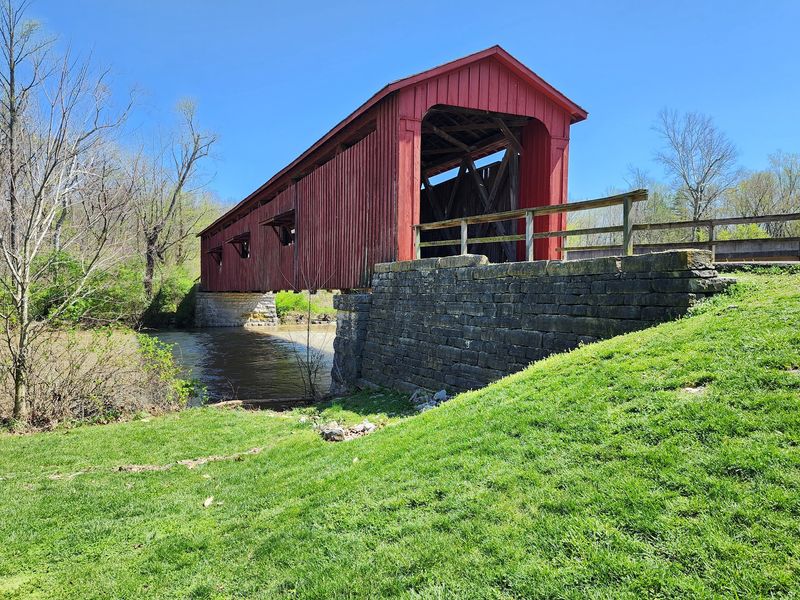
Owen County once had more covered bridges, but only one made it to today. The Cataract Falls Covered Bridge is the sole survivor, and it carries that title quietly.
It’s also the only Smith Type A truss bridge left anywhere in Indiana. That’s a rare label for a structure most folks just call pretty.
The bridge stretches 140 feet in a single span over Mill Creek. One span means no middle supports, just clever wooden engineering doing all the heavy lifting.
The Smith Bridge Company of Toledo, Ohio, built it in December 1876. Somehow, a design from a company in another state became a piece of Hoosier pride.
So why the fuss about geo-tags? A bridge this unique draws attention fast, and old wood appreciates gentle visitors.
That’s really the heart of the local plea. People love sharing it, but they also want it standing for another 150 years.
Go see it anyway. Just treat it like the rare antique it is.
Walk softly, skip the carving of initials, and keep climbing for the trails. The bridge has earned a calm retirement after carrying wagons and cars for over a century.
Honestly, it deserves a thank-you card more than another trending tag.
A Flood Started This Whole Story
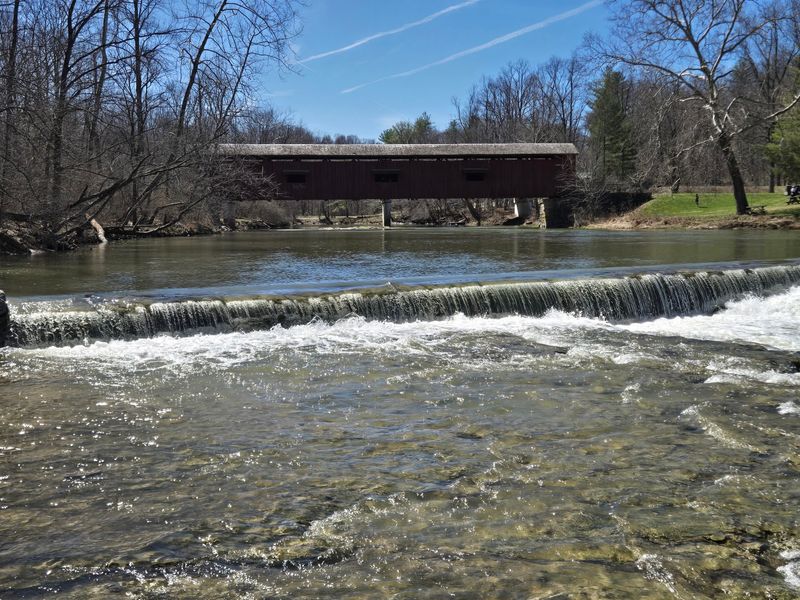
August 2, 1875, was a rough day for this spot. A major flood swept away the original covered bridge that stood here.
Locals didn’t wait around for long. By December 1876, a brand-new bridge crossed the creek, and that’s the one still here today.
The area’s backstory goes back even further. Around 1820, a settler named Isaac Teal built a mill near the Lower Falls.
Then Theodore Jennings bought the land in 1841. He set up mills for flour, wool, barrels, and lumber, which is quite a busy résumé for one creek.
Those mills helped grow the village of Cataract. It became the main settlement in Jennings Township.
Today the mills are gone, but the bridge links you to that hardworking past. Every plank sits on top of a story about people rebuilding after trouble.
I like how the bridge feels like a stubborn little survivor. Floods, traffic, and time all took their shot.
A state historical marker was dedicated in 2008 to tell this tale. Give it a read before you cross.
It takes a minute and makes the walk feel richer. History buffs, this is your moment.
Peek Through the Windows for the Best Free Frame
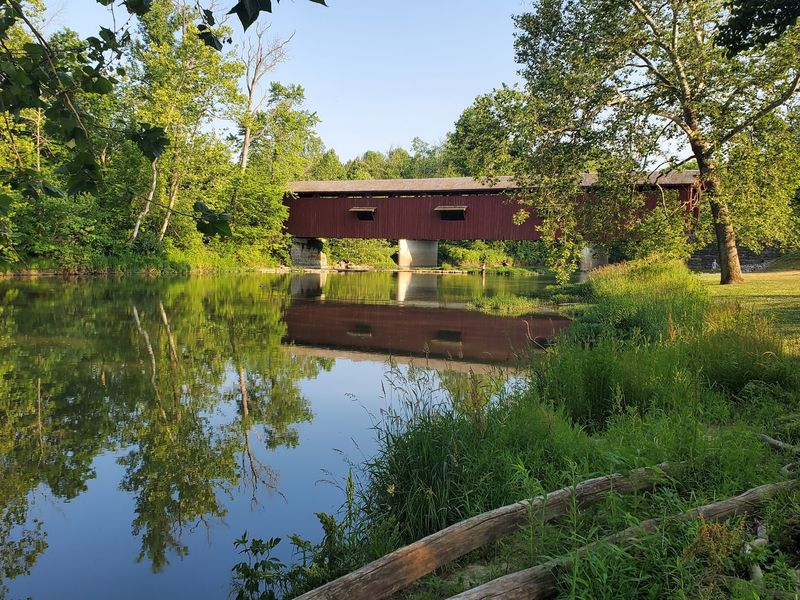
Windows on a bridge might sound odd at first. Here, they turn the walk into a gallery with a live waterfall exhibit.
The openings along the sides give views of the falls below. You get a natural picture frame made of weathered wood.
That’s exactly why the bridge pops up all over social feeds. Wood, water, and light line up in a way phones adore.
Want a smarter approach to photos? Step aside so others can pass through the bridge.
It’s a pedestrian path, so people walk it constantly during open hours. A quick shot and a polite shuffle keeps everyone happy.
Try lingering a moment without the camera too. The sound of moving water carries up into the bridge, and it’s lovely.
Morning and late afternoon often bring softer light for pictures. The recreation area opens at 6 a.m. and closes at 9 p.m.
Plan around that window and you’ll avoid rushing. Rushed photos rarely beat patient ones anyway.
One more tip for the content crowd: maybe tag the state, not the exact pin. Locals would quietly cheer for that kind of courtesy.
Cars Got Kicked Off, and Your Feet Won
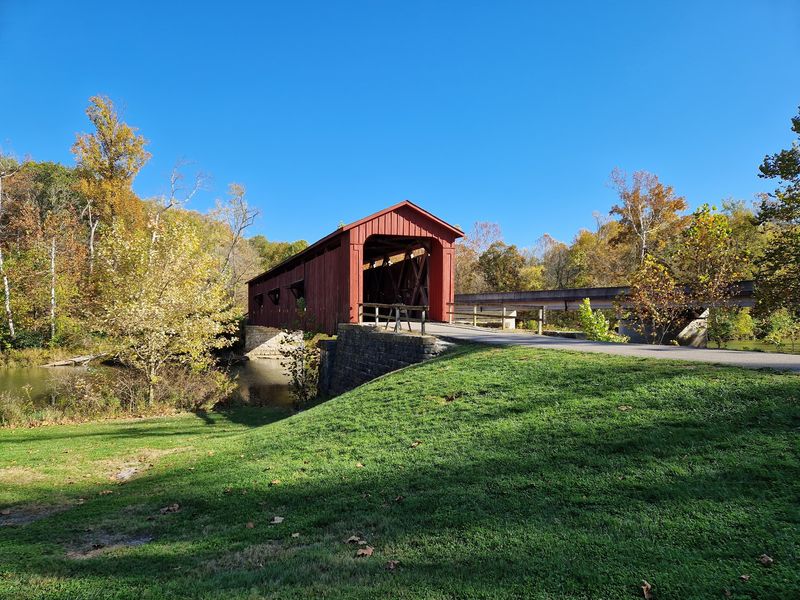
For over a century, wagons and then cars rumbled across these boards. That changed in 1988.
A new concrete bridge was built nearby to carry vehicles. The old covered bridge became a walking-only crossing.
Good call, honestly. Old timber and modern traffic were never going to stay friends forever.
Now you can stroll through at your own pace. Kids can wander, grandparents can pause, and nobody needs to dodge a pickup truck.
The Indiana Department of Natural Resources began extensive repairs in 2000. Work over the years brought new siding, roof shingles, and board decking.
Rehab projects happened in 1995, 2000, and again around 2004 to 2006. The bridge was rededicated in 2006 after all that care.
That’s a lot of effort to keep one bridge looking sharp. It shows how much people here value it.
So when you walk across, you’re stepping on boards someone carefully replaced. A little respect goes a long way.
Keep bikes walked if it gets crowded, and leave the deck clean. Think of it as borrowing a neighbor’s porch for a few minutes.
Indiana’s Biggest Waterfalls Are Right Next Door
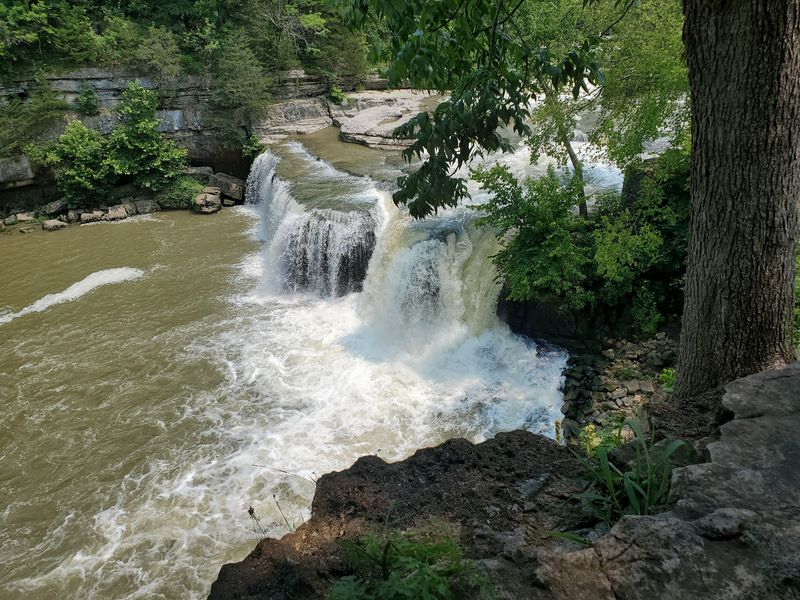
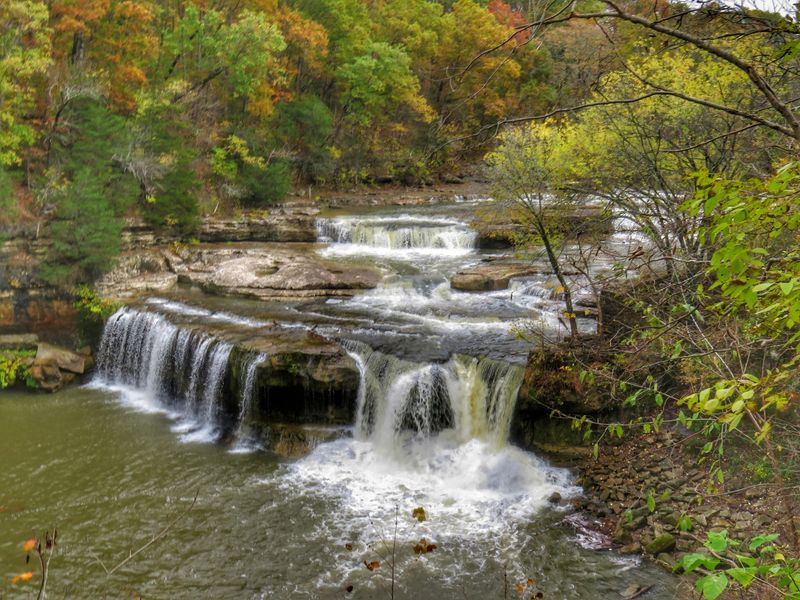
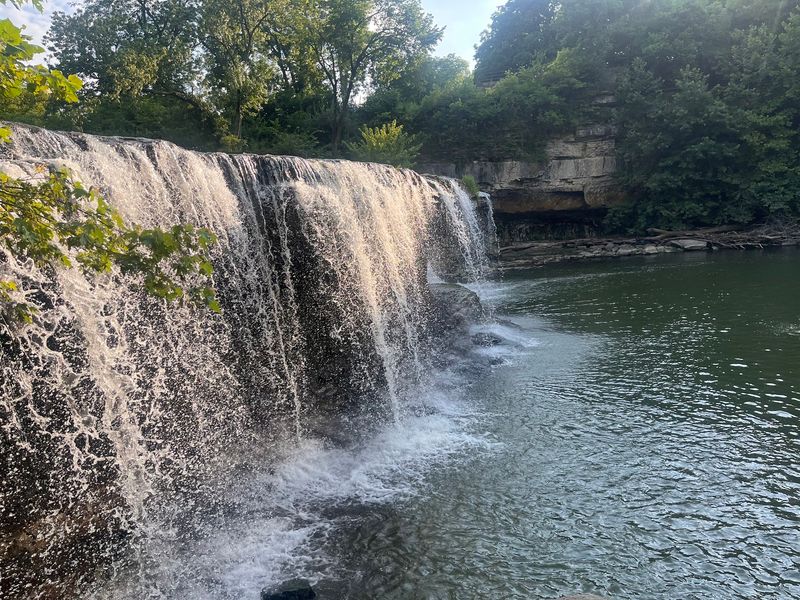
Here’s the bragging-rights fact. Cataract Falls are the largest waterfalls in Indiana by volume.
There are two sets of falls on Mill Creek, the Upper and the Lower. They sit about a mile apart.
The Upper Falls drop roughly 45 feet in total. The Lower Falls tumble about 30 feet, which is still plenty dramatic.
The covered bridge crosses near the Upper Falls area. That pairing is what makes this place so photogenic.
Rain makes a big difference in how the falls look. After a wet stretch, Mill Creek really gets moving.
The rocks around the water can be slick and tricky, though. Stay behind the fences and on safe ground.
Nobody needs a selfie that ends with a sprained ankle. The view from the trail is excellent without any risky scrambling.
I can’t imagine a better soundtrack for a bridge walk. Rushing water beats any playlist.
Bring sturdy shoes and patience with the uneven stone. Your knees will thank you later.
Hike the Mile Between Upper and Lower Falls
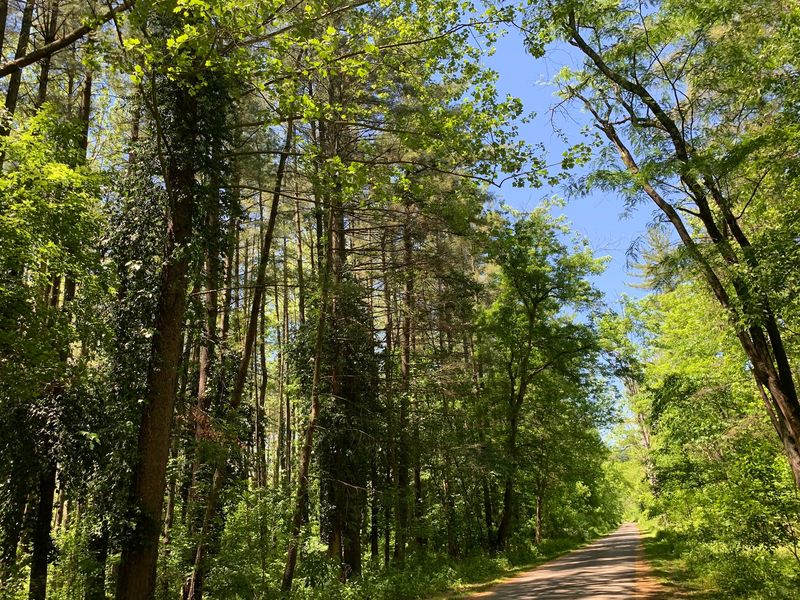
Two waterfalls, one easy trail. That’s a pretty sweet deal for a single stop.
Hiking trails connect the Upper and Lower Falls areas. The distance between the two sets of falls is about a mile.
You can start at the bridge and head toward the lower section. Or drive between the two spots if time is tight.
The walk follows wooded ground near the creek. Expect dirt paths, so skip the fancy sneakers.
The Lower Falls have a wider, shorter drop. They make a nice contrast to the taller Upper Falls.
Pace yourself and enjoy the trees along the way. Spring brings fresh green, while fall color turns the trail golden.
Pack water and a small snack bag. Carry out everything you bring in.
Leaving no trash is one of the easiest ways to keep locals smiling. It also keeps the trail pleasant for the next family.
Spreading out between both falls helps too. Fewer people crammed in one spot means a calmer visit for all.
Find It at the Right Address and Pay at the Gate
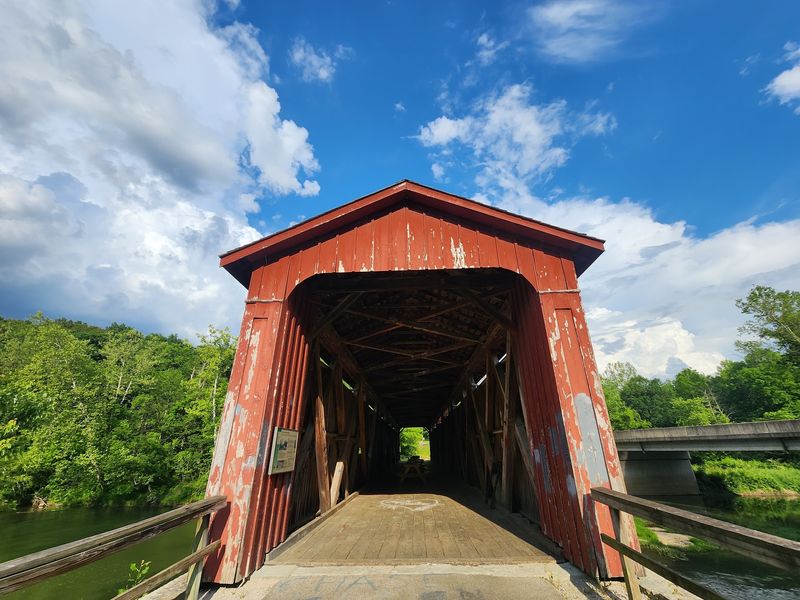
GPS can get creative on back roads, so here’s the pin. Head to 2605 N Cataract Rd, Spencer, IN 47460.
The bridge sits in the Cataract Falls unit of Lieber State Recreation Area. It’s in Owen County, in the small community known as Cataract.
Hours run from 6 a.m. to 9 p.m. daily. That gives you a long window to plan around busy times.
An entrance fee applies to the recreation area. Indiana residents pay a lower rate than out-of-state visitors.
Have payment ready at the gate to keep the line moving. Nobody enjoys being stuck behind a wallet hunt.
Cell service on rural Indiana roads can be spotty. Download your map before you leave town.
Parking areas sit near the falls, which makes access fairly easy. Park only in marked spots to keep roads clear.
Weekday visits may feel more relaxed than peak weekends. Arriving early is a simple way to beat the rush.
Little choices like these help the area handle its growing fame. Smart planning equals a smoother day.
Lunch With a Side of Rushing Water
Sandwiches simply taste better near a waterfall. The grounds around the bridge make an easy picnic stop.
Lieber State Recreation Area offers picnic areas and shelters. That makes it simple to turn a quick visit into a relaxed afternoon.
Playgrounds are part of the wider recreation area too. Kids burn off energy while adults soak in the scenery.
Pack a cooler with your favorite snacks. Cold fruit and lemonade feel just right on a warm Indiana day.
Bring a trash bag and take everything home. Wind and critters love scattering leftover wrappers.
A picnic also slows the whole visit down. Slower visits mean less crowding at the bridge windows.
Spread a blanket, listen to the creek, and give your phone a break. Your camera roll can survive an hour off.
Families love this kind of low-key day. It costs little beyond the gate fee and a grocery run.
Honestly, the best meal views in the county might be right here. No reservation required.
Stretch the Trip Into a Full Lieber Weekend
One bridge can lead to a whole weekend. Lieber State Recreation Area has plenty more to explore.
Cagles Mill Lake offers boat access for boating, tubing, and kayaking. Summer days out on the water feel like a mini vacation.
A beach area welcomes swimmers in season. There’s also a seasonal aquatic center for anyone who prefers a pool.
Camping options include Class A and Class B campsites. Fall asleep under the stars and catch the falls early the next morning.
Curious kids can check out the nature center. It’s a fun way to learn about the local outdoors.
Volleyball courts round out the action. Friendly competition is always better with a lake view.
Spreading your time across the area takes pressure off the bridge. That’s a win for the wood and for your own peace.
The Cataract Falls Covered Bridge stays the star, but the supporting cast is strong. Indiana packed a lot into this corner.
So go, share the joy, and maybe keep the exact pin to yourself. Locals will appreciate it.
