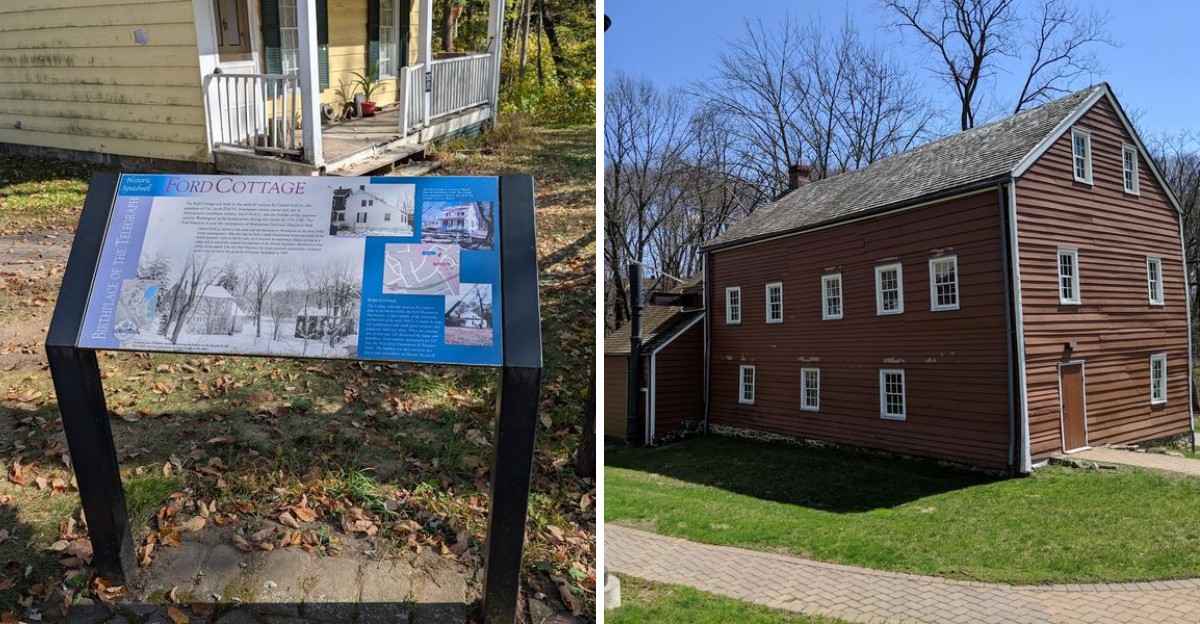
Before WiFi, before cell towers, before you could text your friends from the couch, there was a moment in a New Jersey factory that changed everything.
A 24-foot waterwheel turned outside while two men pulled two miles of wire through the building and sent a message that proved instant communication was possible.
The telegraph was born right here. It was January 1838, and the first words ever sent over that system were “A patient waiter is no loser.”
That is the kind of place this is.
A quiet park now, with a restored waterwheel and a factory that holds the story of how the world learned to talk faster.
You can stand in the same room where it all happened.
And honestly? That is worth the drive.
An Ironworks That Powered a Growing Nation
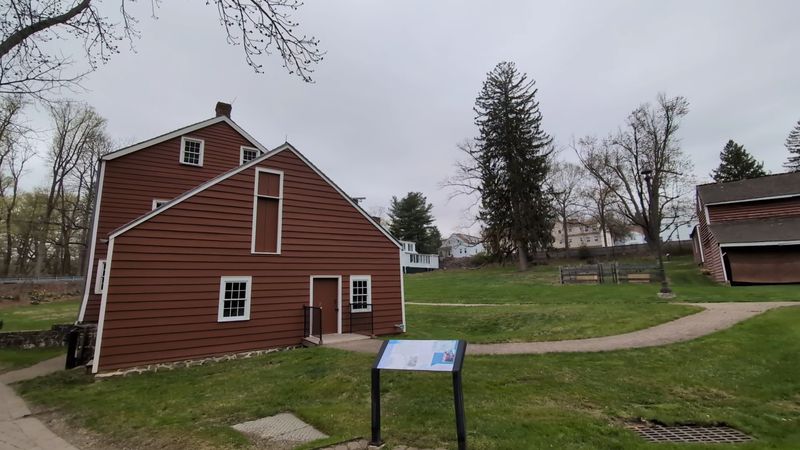
Iron, water, and ambition shaped this corner of Morris County long before anyone thought about sending messages through wires. Speedwell Ironworks sat along the Whippany River and turned raw material into the machinery a young country badly needed.
Farm equipment, mill parts, and steamboat components all came out of the operation, run under the ownership of Stephen Vail. It was a working industrial site, not a quiet country estate.
The most famous project may be the engine components and running gear built here for the SS Savannah, the first steamship to cross the Atlantic Ocean. Think about that for a second.
Machinery from a small New Jersey river valley helped carry a ship across an entire ocean.
Understanding that industrial muscle matters, because it explains everything that came later. Innovation needed skilled workers, tools, forges, and money, and all four happened to sit in the same place at the same time.
Start your visit with that in mind and the buildings stop looking sleepy. They start looking capable.
Two Very Different Minds Behind One Invention
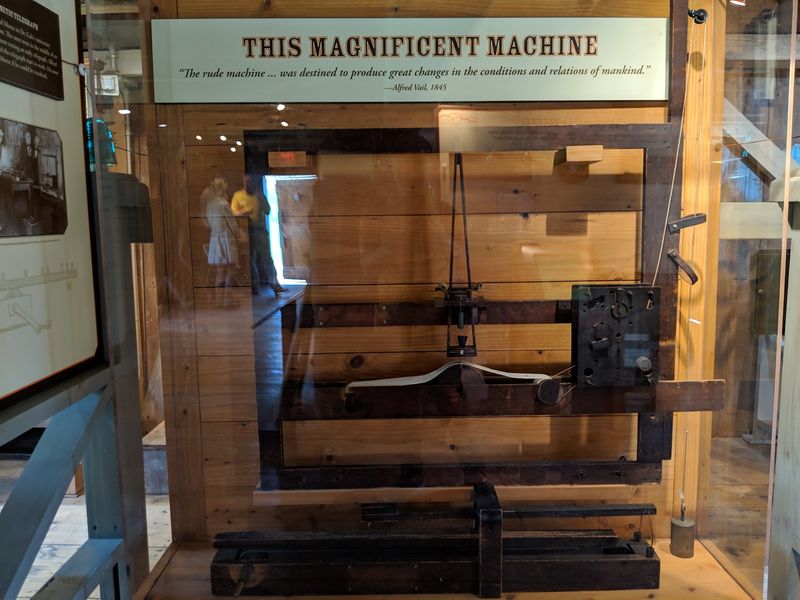
Great inventions rarely come from one brain, and the telegraph is a perfect example. Samuel F.
B. Morse, a painter and professor, dreamed up the concept of sending messages through electrical impulses over long distances.
Brilliant idea. Rough execution.
Alfred Vail, son of the ironworks owner, had the opposite skill set: hands that understood machines and an instinct for making things actually work. In 1837 he saw Morse’s early telegraph experiments at New York University, where he had studied, and immediately recognized what the technology could become.
He teamed up with Morse, offered his mechanical talent, and helped secure his father’s financial backing so the work could continue at the family ironworks. That partnership is the reason a sketchy prototype turned into a usable instrument.
What I find genuinely relatable here is the reminder that ideas need builders. Vision alone doesn’t send a message across two miles of wire.
Exhibits on site give Vail real credit, which feels overdue and satisfying to see.
Inside the Factory Building Where Wires Learned to Talk
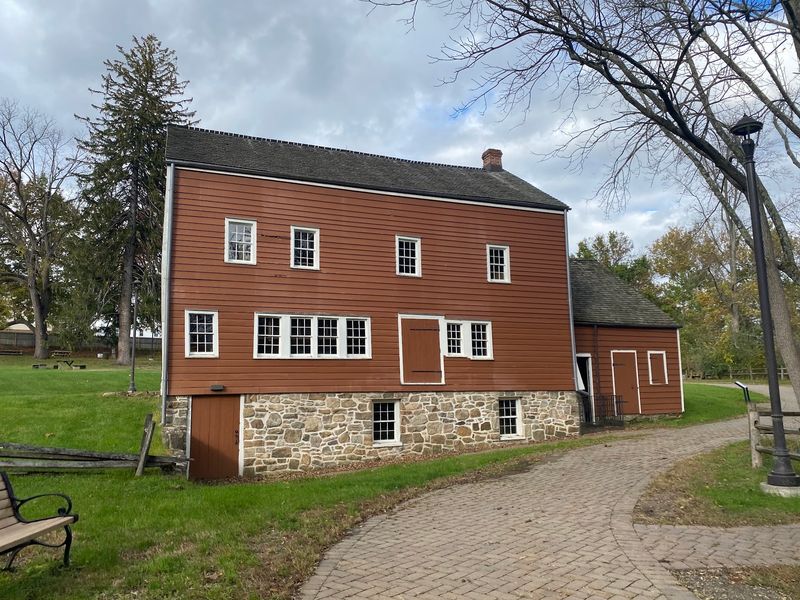
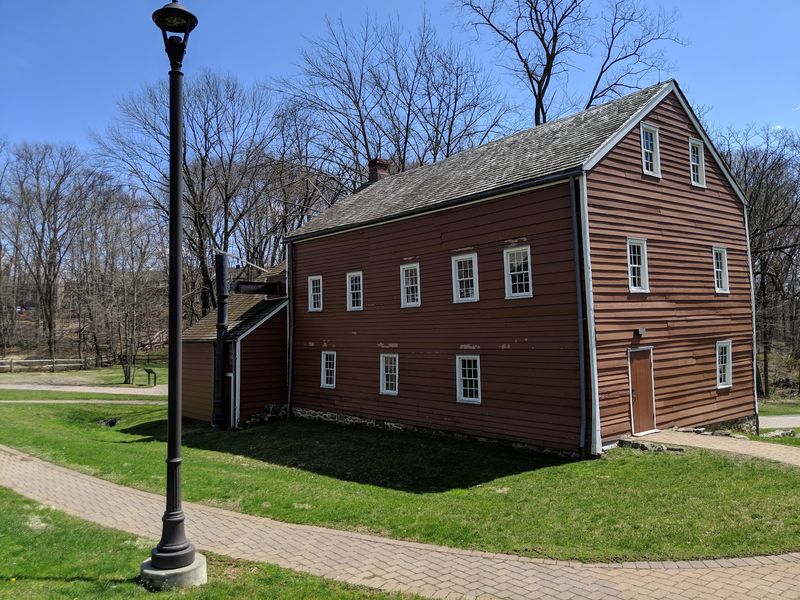
From the outside, the Factory Building looks almost too ordinary for its title. No grand columns, no dramatic entrance, just sturdy timber and windows that let in long slabs of light.
And yet this is the structure where Morse’s concept was hammered, filed, and tested into something practical.
Alfred Vail used the tools, materials, and skilled hands of his father’s ironworks to refine the design until it could be demonstrated publicly and eventually sold commercially. Mechanical improvements happened right here, on these floors.
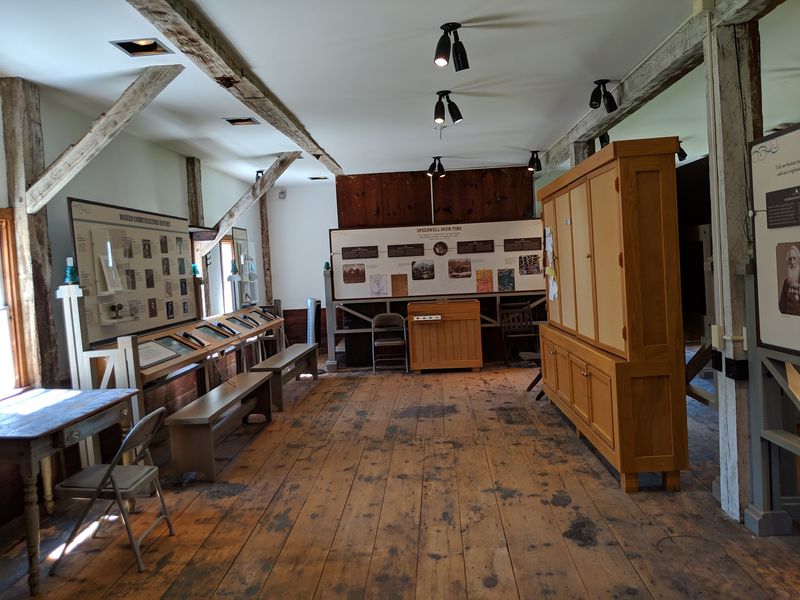
Today the building is known as the Birthplace of the Telegraph, and it holds several floors of exhibits tracing how communication technology evolved from clicking keys to the devices in our pockets. Plan extra time for it.
Visitors regularly find themselves absorbed longer than expected.
What sticks with me is the ordinariness of the setting. World-changing work didn’t need a gleaming laboratory.
It needed a good workshop, stubborn patience, and somebody willing to try again after the fiftieth failed attempt.
January 6, 1838, A Message Sent in Private
Coiled wire, roughly two miles of it, looped and spread through a single room. That was the setup for one of the quietest turning points in modern history.
On January 6, 1838, Alfred Vail and Samuel Morse gathered a small audience inside the Factory Building for a private test of the electromagnetic telegraph. The message they transmitted read: A patient waiter is no loser.
Nine words, more or less, and the world tilted.
The phrase sounds almost like a joke about how long the project had taken, and honestly, it probably was. Years of tinkering deserved a little humor.
What mattered was the proof. Electrical impulses could carry coded language across real distance, reliably, in front of witnesses.
Standing in that room today, knowing exactly what happened there, gives the space a strange weight. No fireworks, no crowds, no headlines that morning.
Just a handful of people watching a machine click out letters and quietly understanding that everything about sending news was about to change.
Five Days Later, The Public Finally Sees It
Word spread fast, and on January 11, 1838, a much larger crowd packed into the ironworks for the first public demonstration of the telegraph. Curiosity had clearly won out over skepticism.
This time the transmitted message was refreshingly practical: Railroad cars just arrived. 345 passengers.
No poetry. Just useful information, delivered instantly, which was exactly the point.
Newspapers of the era praised the invention in enormous terms, describing how the telegraph annihilated time and distance and brought the most distant points of the country into the nearest neighborhood. Reading those phrases now, it’s hard not to think about how we describe the internet.
Business, journalism, railroads, and eventually military planning all shifted because of what happened in this room. Trains could report arrivals.
Papers could print news the same day.
The exhibits do a nice job connecting those dots without lecturing you.
My favorite part is how mundane that second message sounds. Revolutionary technology introduced itself with a passenger count, and somehow that makes it feel more real.
Dots, Dashes, and the Birth of a New Alphabet
Morse code is one of those things almost everyone recognizes and almost nobody knows the backstory of. Morse’s earliest plan involved a bulky dictionary matching words to three and four digit numbers, which would have meant hauling code books everywhere.
Clunky doesn’t quite cover it.
Alfred Vail is widely credited with reshaping that awkward system into the streamlined dot-and-dash alphabet the world came to know. Scholars still debate exactly how the credit should be divided between the two men, and the museum acknowledges that honestly rather than smoothing it over.
Vail also invented the sending key, the component that let operators tap out messages cleanly and quickly.
Because letters could be combined freely, any word in any language could travel down the wire. That flexibility is what made the telegraph usable for ordinary people, not just specialists.
Try tapping out your own name on one of the hands-on displays. It’s harder than it looks, and it gives you instant respect for operators who worked at full speed for hours.
The Vail Homestead and Its Federal Style Charm
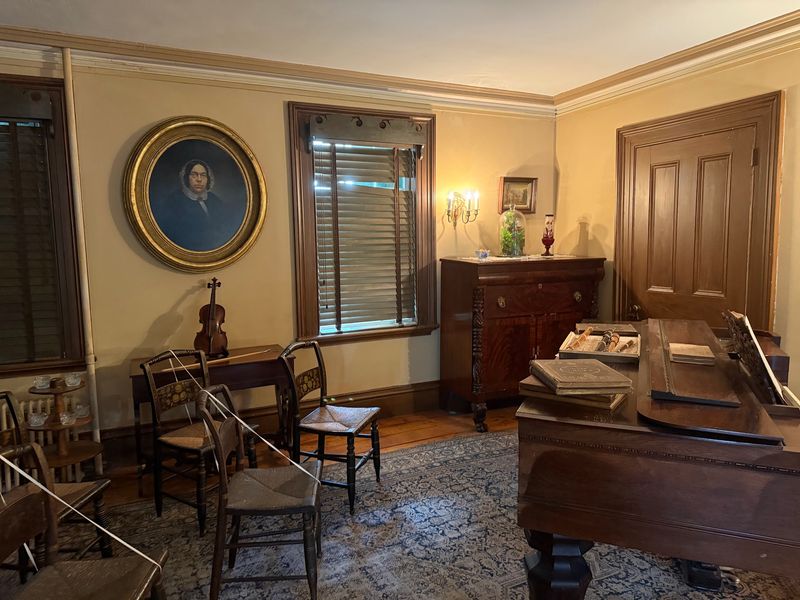
Not everything here is about wires and workshops. The Vail Homestead, an elegant Federal-style residence dating from the early 1800s, shows the domestic side of a prominent industrial family.
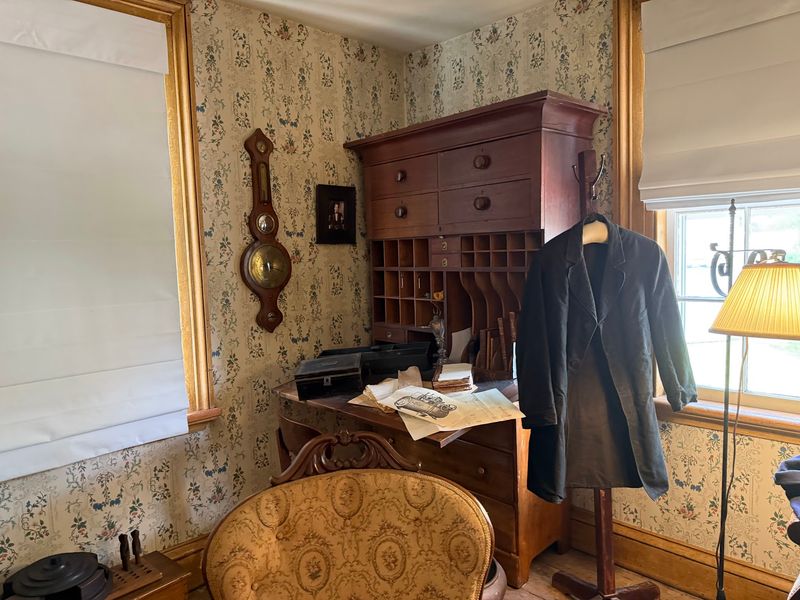
Rooms have been restored to reflect the 1840s, complete with original family furniture and memorabilia that belonged to the household.
Docent-led tours run through the house, and they’re where the site really opens up. Guides connect the household objects to the family’s business decisions, which makes the whole property click together as one story instead of separate attractions.
Book the tour at the Visitor Center before you wander. Learning that the hard way costs you time.
What charmed me most were the small details: the proportions of the windows, the placement of the furniture, the sense of a family living comfortably but practically while enormous experiments happened a short walk away.
Stephen Vail’s home and his forge existed within shouting distance of each other. Work and life overlapped completely, which feels oddly familiar in an age of laptops on kitchen tables.
A Working Waterwheel That Still Turns Heads
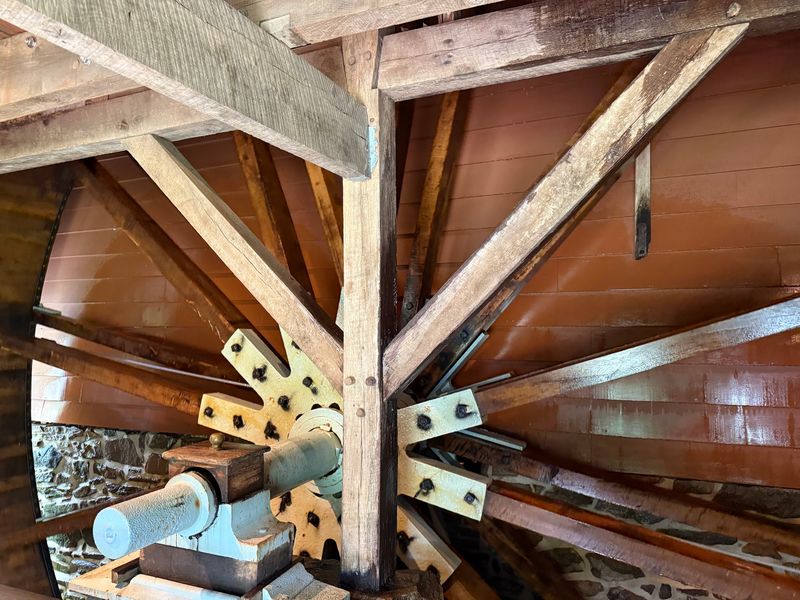
Twenty-four feet of overshot waterwheel, still operational, is the kind of thing that stops conversation mid-sentence. Water pours over the top, gravity does its work, and the whole structure groans into motion.
Kids tend to stare. So do adults, honestly.
Before electricity, this was the engine behind the entire ironworks. Falling water spun the wheel, the wheel drove the machinery, and the machinery shaped iron into parts that traveled across the country and eventually across the Atlantic.
Watching it move makes the physics obvious in a way no diagram manages.
It’s also a good reminder that the telegraph didn’t emerge from nowhere. It grew out of a place that already understood power, motion, and precision.
Photographers love this spot, and the mix of timber, stone, and moving water photographs beautifully in almost any season.
Give yourself a few minutes to just stand and listen. The rhythmic slap of water on wood is oddly calming, and it’s probably the closest you’ll get to hearing what this property sounded like two centuries ago.
Seven Acres, Several Buildings, One Wandering Afternoon
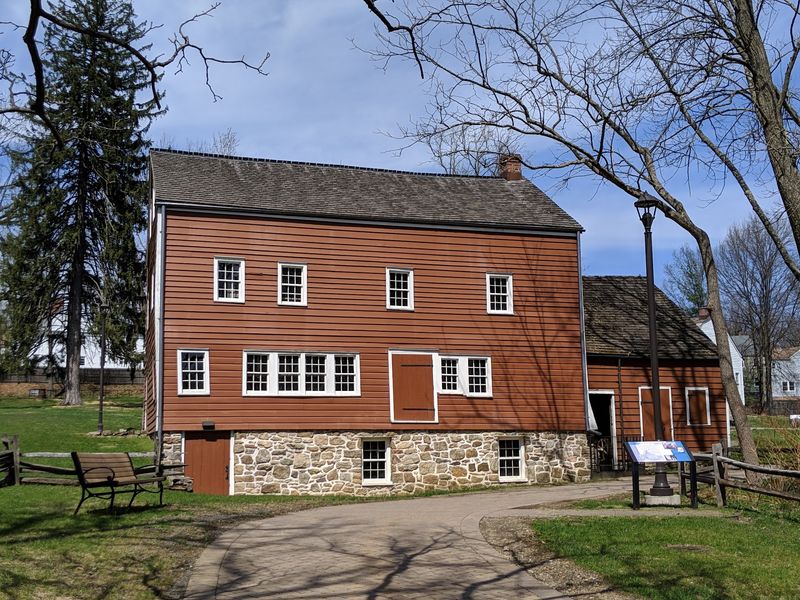
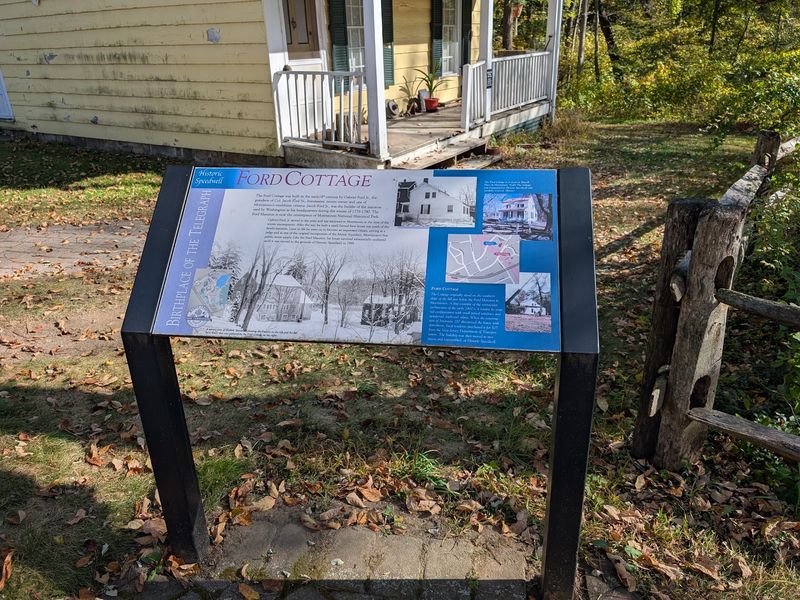
Spread across about seven acres, this National Historic Landmark is maintained by the Morris County Park Commission, and the layout invites unhurried wandering. Paths link building to building under mature trees.
The L’Hommedieu House serves as the Visitor’s Center and holds rotating exhibit galleries, so it makes sense as your first stop.
From there you can explore the Wheelwright Shop, the Carriage House, and other restored structures that show how craft work and daily life actually functioned in the 19th century. Each building has its own exhibits, so nothing feels like filler.
Two hours is a reasonable minimum if you want the guided tour plus the short introductory video.
Hours are limited, currently Thursdays and Saturdays, so checking before you drive out saves disappointment. Parking is plentiful, which is a small mercy.
Historic Speedwell also hosts seasonal programs and events throughout the year, and those tend to bring extra energy to the grounds.
Bring comfortable shoes. The gravel and grass reward slow walking far more than a rushed loop.
Why Standing Here Changes How You See Your Phone
Every technology we take for granted started as somebody’s stubborn experiment, and few places make that clearer than this one. Morse brought the concept, Alfred Vail brought the craftsmanship, and Stephen Vail’s ironworks supplied the means.
Together they cracked open the idea that distance could stop mattering so much.
The ripple effects reached journalism, commerce, transportation, and eventually every conversation we now have through screens. Instant messaging has a family tree, and its roots sit in a New Jersey factory building beside a river.
Exhibits trace that lineage from clicking keys forward, which is a genuinely satisfying way to see progress laid out.
What I appreciate most is how modest the whole story feels. No lightning bolt of genius, just years of adjusting, testing, and refusing to quit.
Historic Speedwell rewards anyone curious about how the modern world got built, and it’s an easy, worthwhile detour for families, photographers, and history lovers alike.
Historic Speedwell is located at 333 Speedwell Ave, Morristown, NJ 07960, United States.
