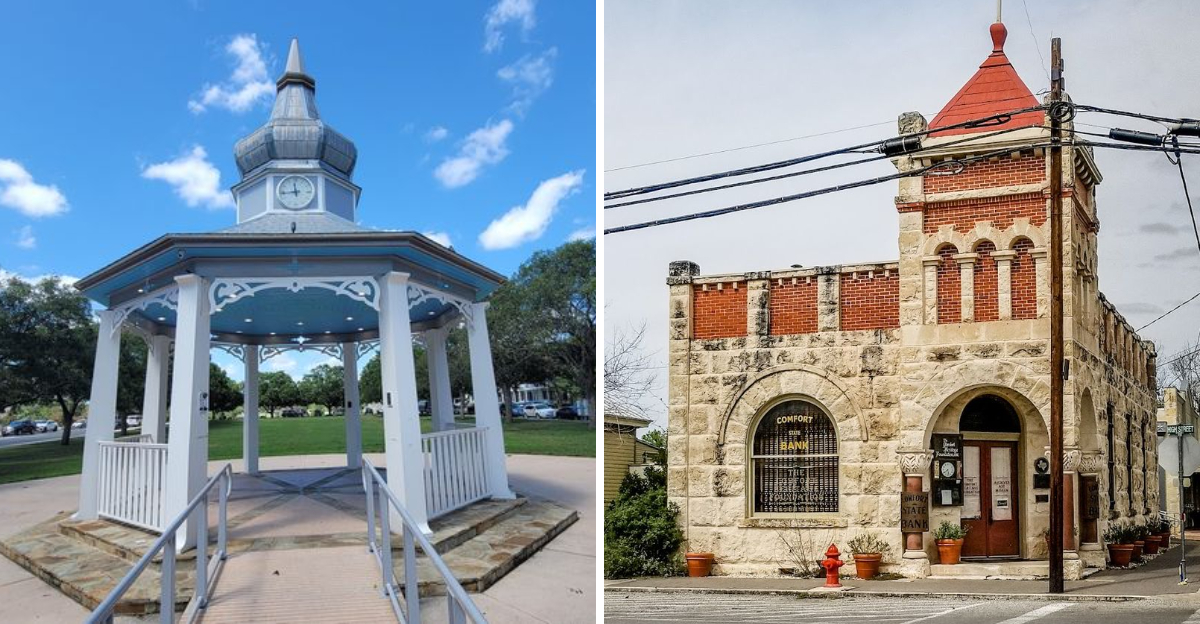
Texas is known for barbecue, tacos, and big skies. But did you know it also has a slice of Germany?
These eight towns are packed with rich German heritage, from old-world architecture to authentic restaurants and bakeries that have been around for generations.
You can walk down streets that feel like they belong in Europe, order schnitzel and bratwurst, and hear the faint echo of polka music drifting from a beer garden.
The history is real, the vibe is charming, and the food is hearty. It is a side of Texas that often gets overlooked, but once you experience it, you will wonder why it took you so long to discover it.
Whether you are exploring historic sites or just enjoying a cold beer and good sausage, these towns offer a trip back in time without leaving the state.
1. New Braunfels
There is a particular kind of energy in New Braunfels that sneaks up on you the moment you arrive. The streets feel purposeful and walkable, the architecture tells stories, and the whole place hums with a pride that goes back nearly two centuries.
Prince Carl of Solms-Braunfels led the first wave of German settlers here in 1845, representing the Adelsverein, a society formed to help Germans find a new life in Texas. What they built has never really stopped thriving.
The historic downtown was designed by Civil Engineer Nicolaus Zink in 1846, and its human scale still makes it one of the most pleasant places to simply wander. You are not rushing from block to block here.
You are noticing things, the carved details above a doorway, the way the river sounds a few streets over.
Naegelin’s Bakery is a must. Established in 1878, it holds the title of the oldest bakery in Texas and still turns out flaky apple strudels, Lebkuchen, and kolaches that taste like they belong somewhere in Bavaria.
The Sophienburg Museum and Archives does a remarkable job of bringing the founding story to life, with artifacts and records that make the past feel genuinely close.
The Faust Street Bridge, an 1887 Whipple truss structure, now serves as a pedestrian landmark and offers a lovely view over the water.
The Comal River itself is a local treasure, rushing clear and green from the ground and flowing two and a half miles before meeting the Guadalupe River, all within city limits.
Both rivers draw visitors for tubing and swimming, which makes for a refreshing contrast after a morning of history.
Every November, the city celebrates Wurstfest, a ten-day event packed with polka music, traditional dancing, and community spirit. It is loud, cheerful, and deeply rooted in the culture that defines this place.
New Braunfels does not just remember its German heritage. It genuinely lives it every single day.
2. Fredericksburg
Fredericksburg has a way of making history feel completely effortless. The streets are lined with structures that date back to the 1840s, the town square still anchors daily life, and the architecture speaks a language that is unmistakably German.
Founded on May 8, 1846, by the Adelsverein with John O. Meusebach leading the settlers, this was only the second German settlement established in Texas.
It was named in honor of Prince Frederick of Prussia, and that Old World identity was never abandoned.
One of the most fascinating footnotes of this town is that its early generations developed their own spoken dialect called Texas German. It blended High German with English and local influences in a way that linguists still study today.
That kind of cultural depth does not happen by accident. It happens when a community is serious about who they are.
The Fredericksburg Historic District contains over 700 historically significant structures. Many homes from the 1840s feature timber-framed fachwerk construction, though later builders turned to local limestone, which became the dominant building material across the region.
Unique Sunday Houses are another charming detail of the town. These were small townhouses built by outlying farmers who needed a place to stay when they came in for church services and business during the weekend.
The Vereins Kirche standing in Marktplatz is a replica of the original Society’s Church, which once served simultaneously as a nondenominational house of worship, a school, a town hall, and even a fort.
That kind of multipurpose ingenuity speaks volumes about the resilience of the people who built it.
The Pioneer Museum complex brings early German settler life into sharp focus through preserved structures and hands-on exhibits.
A self-guided walking tour connects the dots beautifully, leading you past the Zion Lutheran Church from 1853 and the Tatsch Home from 1856. Fredericksburg rewards the curious traveler who slows down and actually looks.
3. Boerne
Boerne carries itself with a kind of quiet confidence that I find genuinely appealing. It does not need to shout about its history because the history is simply there, built into the walls of over 140 structures made from locally quarried limestone.
Founded in 1849 as Tusculum by German immigrants who were largely freethinkers from the Bettina settlement, the town was officially platted and renamed Boerne in 1852 in honor of German author Karl Ludwig Borne. It went on to become the county seat of Kendall County.
The preservation ethic here is serious. Boerne has held onto its original character in a way that many towns simply have not managed, and it shows in every carefully maintained building along the main drag.
The stretch known as the Hill Country Mile along Main Street is a delight to explore, with unique shops and inviting eateries hidden inside buildings that have stood for well over a century.
Cultural life in Boerne carries that same old-world dedication. The Boerne Village Band is one of the oldest continuously active German bands outside of Germany, which is a remarkable distinction for a small Texas Hill Country town.
Local celebrations like Berges Fest keep the community connected to its roots in a way that feels genuine rather than performative.
The Kendall County Courthouse, built in 1870, is the second-oldest courthouse in Texas and serves as a beautiful anchor for the historic downtown. The Joseph Dienger Building from 1884 stands as a prominent example of the enduring craftsmanship brought over by German immigrant families.
It is the kind of building you stop in front of just to appreciate.
The Kuhlmann-King Historical House Complex from the 1880s offers a fascinating glimpse into pioneer life, and a free historic walking tour connects many of the town’s treasures.
The Herff Farm Homestead, established in 1852 and lovingly restored, features walking trails and a farmers market that brings the community together each week.
4. Gruene
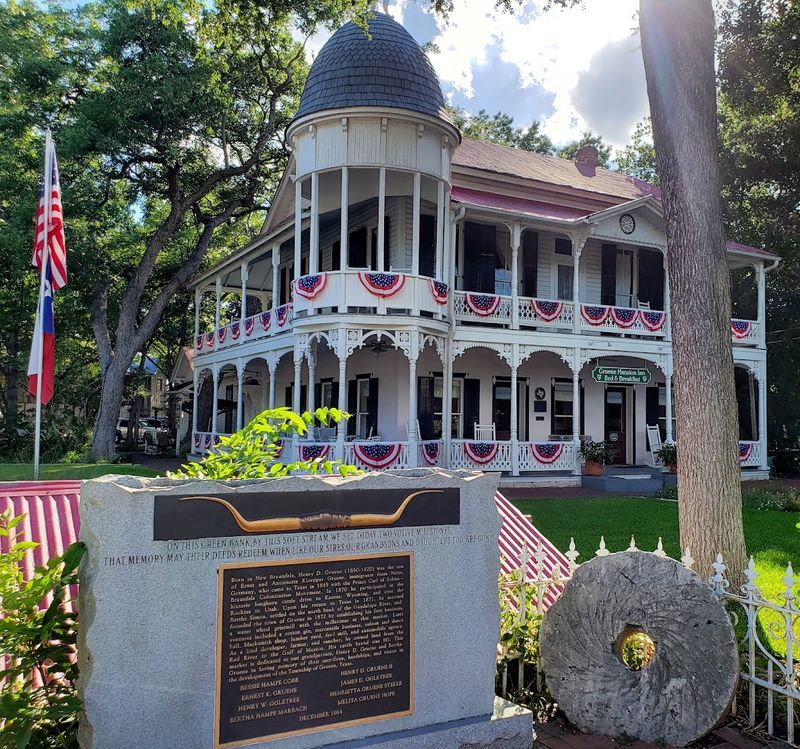
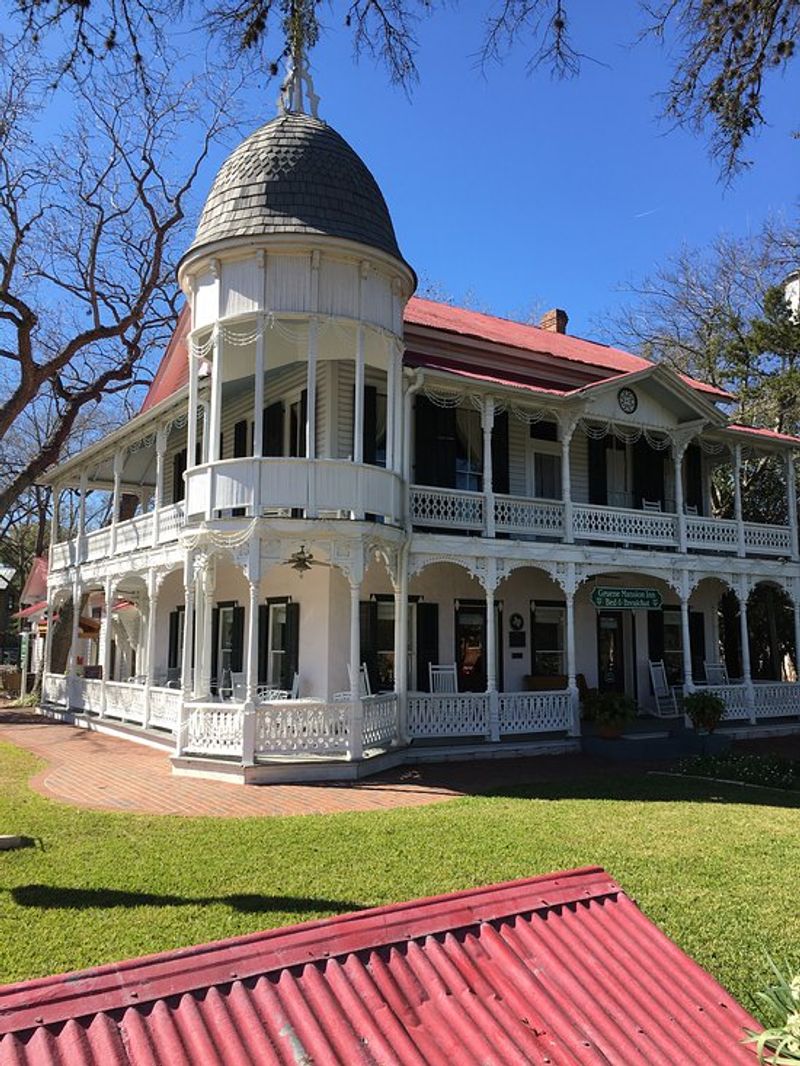
Gruene is one of those rare places that somehow feels both frozen in time and completely alive. The Spanish moss hangs from ancient oaks, the tin roofs catch the afternoon light, and the whole district carries a patina that no designer could fake.
Settled in the 1840s by German cotton farmers and officially founded by Henry D. Gruene in 1872, this small community experienced a dramatic rise and then a painful decline.
The boll weevil plague and the Great Depression hit hard, leaving Gruene nearly a ghost town by the early 20th century.
Its revival in the 1970s through dedicated preservation efforts is one of the better comeback stories in Texas history. Gruene earned a listing on the National Register of Historic Places in 1975, which helped protect what remained and encouraged further restoration.
Today it feels like a place that earned its second chance.
Gruene Hall, built in 1878, is the oldest continually operating dance hall in Texas. It has retained its original layout almost entirely, with a tin roof, open side flaps for warm-weather ventilation, and a dance floor that has absorbed decades of boot heels and laughter.
Live music plays here almost daily, and the famous pickers circles that gather under the old oak trees outside are entirely spontaneous, which makes them all the more special.
The Gruene General Store has been operating since 1878 as well, offering souvenirs, homemade fudge, and Texas-made goods in a setting that still feels like a proper old general store. Henry D.
Gruene’s original Victorian-style home from 1872 now operates as the Gruene Mansion Inn, a historic bed and breakfast with genuine character. The Gristmill River Restaurant, built within the ruins of the old cotton gin in 1977, offers a beautiful view of the Guadalupe River and some very good food.
Gruene Market Days, held on the third weekend of the month from February through November, brings artisans and visitors together in the best possible way.
Address: 1281 Gruene Rd, New Braunfels, TX 78130
5. Comfort
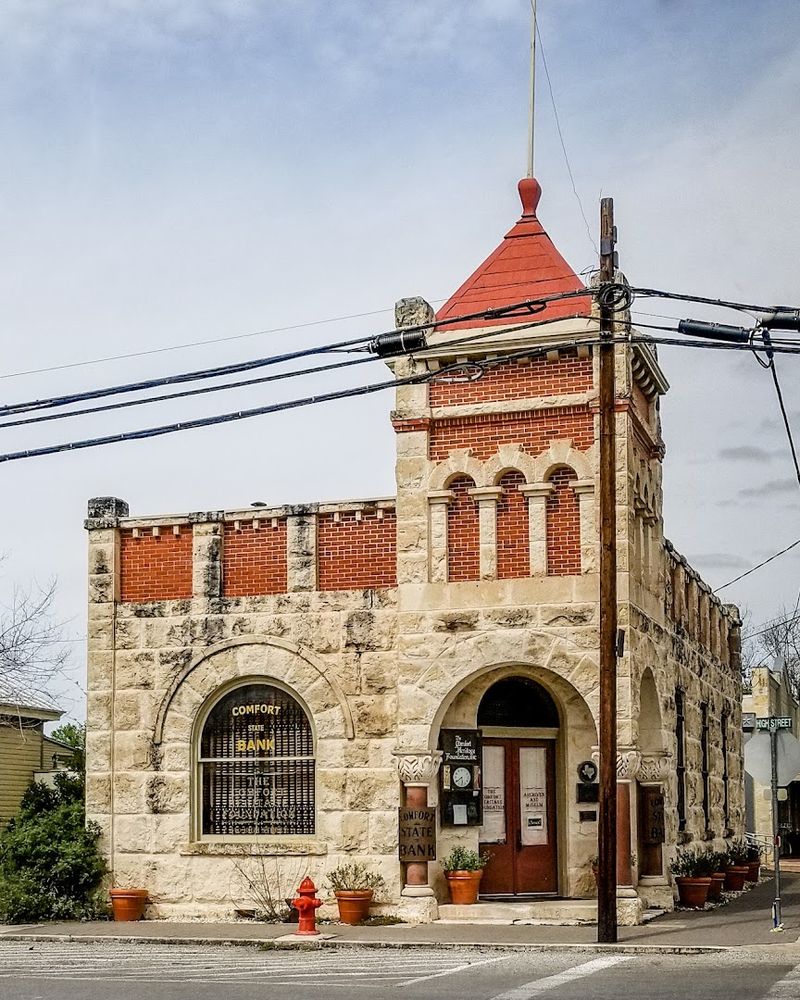
Comfort is the kind of town that earns its name. The pace slows the moment you arrive, the streets are unhurried, and the architecture wraps around you like something from a history book that has been left open for visitors to read.
Settled in 1852 by German freethinkers along the banks of Cypress Creek and platted in 1854 by Ernst Hermann Altgelt, Comfort was founded by people who were deliberately escaping political and religious authoritarianism.
They brought progressive and abolitionist ideals with them, which shaped the town’s character in ways that are still visible today.
During the Civil War, Comfort became a notable center of Union sentiment in Texas, a distinction that set it apart from most of its neighbors. The Treue der Union Monument, dedicated in 1866, stands as the oldest Civil War marker in Texas.
It is also the only state monument dedicated to Union loyalty, honoring German immigrants who remained faithful to the Union and died in the 1862 Battle of Nueces. That monument carries real weight.
Much of the downtown is listed on the National Register of Historic Places, with over 100 structures from the 19th and early 20th centuries still standing.
Many of these buildings feature fachwerk construction, the traditional German building technique using heavy timber framing filled with limestone.
It is a style that looks as sturdy as it feels, and it gives Comfort its unmistakable visual identity.
Several of the historic buildings lining High Street were designed by renowned architect Alfred Giles, including the Ingenhuett-Faust Hotel, now operating as Hotel Giles, and the former U.S. Post Office from 1908.
The Karger Farm from 1894 adds another layer to the town’s agricultural story. The Comfort Public Library occupies a beautifully restored 1916 mercantile building, which is a lovely detail.
Antique shops, art galleries, and charming boutiques fill the historic spaces, making for a genuinely pleasant afternoon of slow exploration.
Address: 347 High St, Comfort, TX 78013
6. Castroville
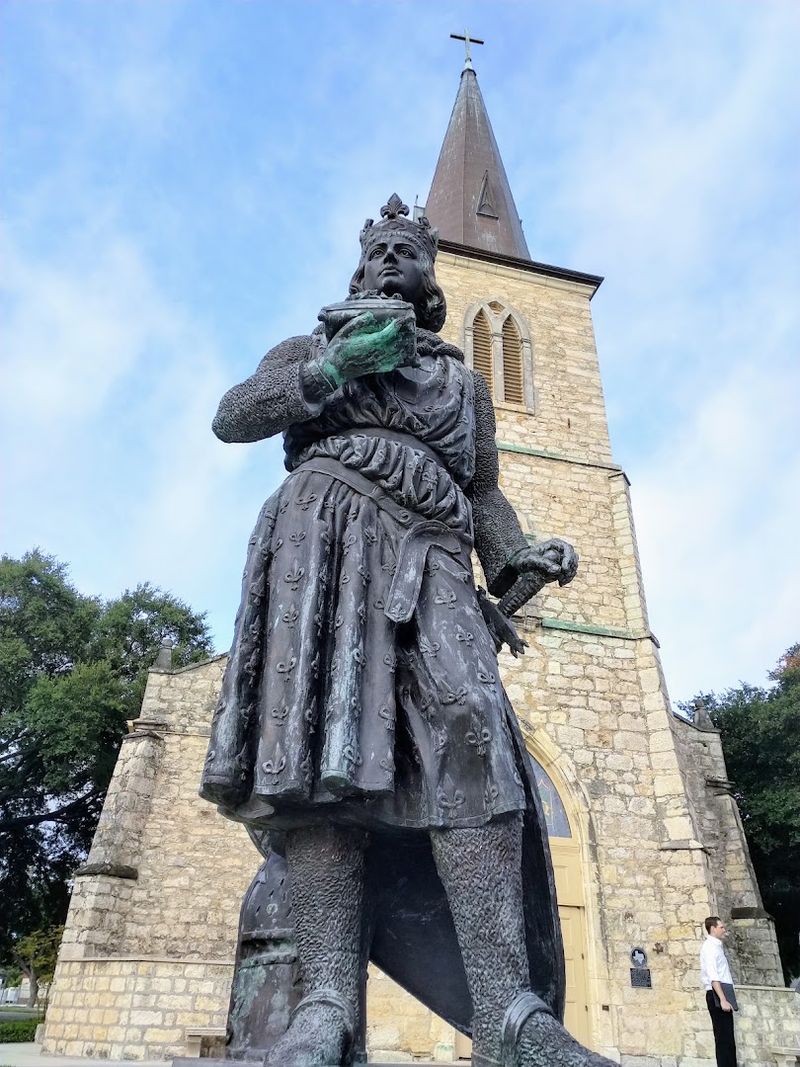
Castroville does not feel quite like anywhere else in Texas. It carries a distinctly European quality, something soft and unhurried, that sets it apart from the moment you pull into town.
Known affectionately as The Little Alsace of Texas, it was founded in 1844 by Henri Castro, who brought families from the Alsace region of France, a territory that sits right on the border with Germany.
For generations, the Alsatian language was spoken here, holding on well into the mid-20th century before gradually fading.
The architecture is what catches your eye first. Steep saltbox roofs, native limestone walls, and beautifully restored cottages line the streets in a style that is classified as Alsatian Vernacular, and it looks like nothing else in the Lone Star State.
The town preserves over 200 historic structures, with more than 50 accessible on a self-guided walking tour. That is an impressive number for a community of this size.
The Steinbach Haus is one of the most remarkable stories in town. This authentic 17th-century half-timbered house was carefully transported from Wahlbach, Alsace, France, all the way to Castroville in 1998, where it now serves as a museum and visitor center.
The Burger Hus, built in 1844, is considered the oldest home in Castroville and was originally used as a simple workers’ residence. It is modest and honest and somehow very moving.
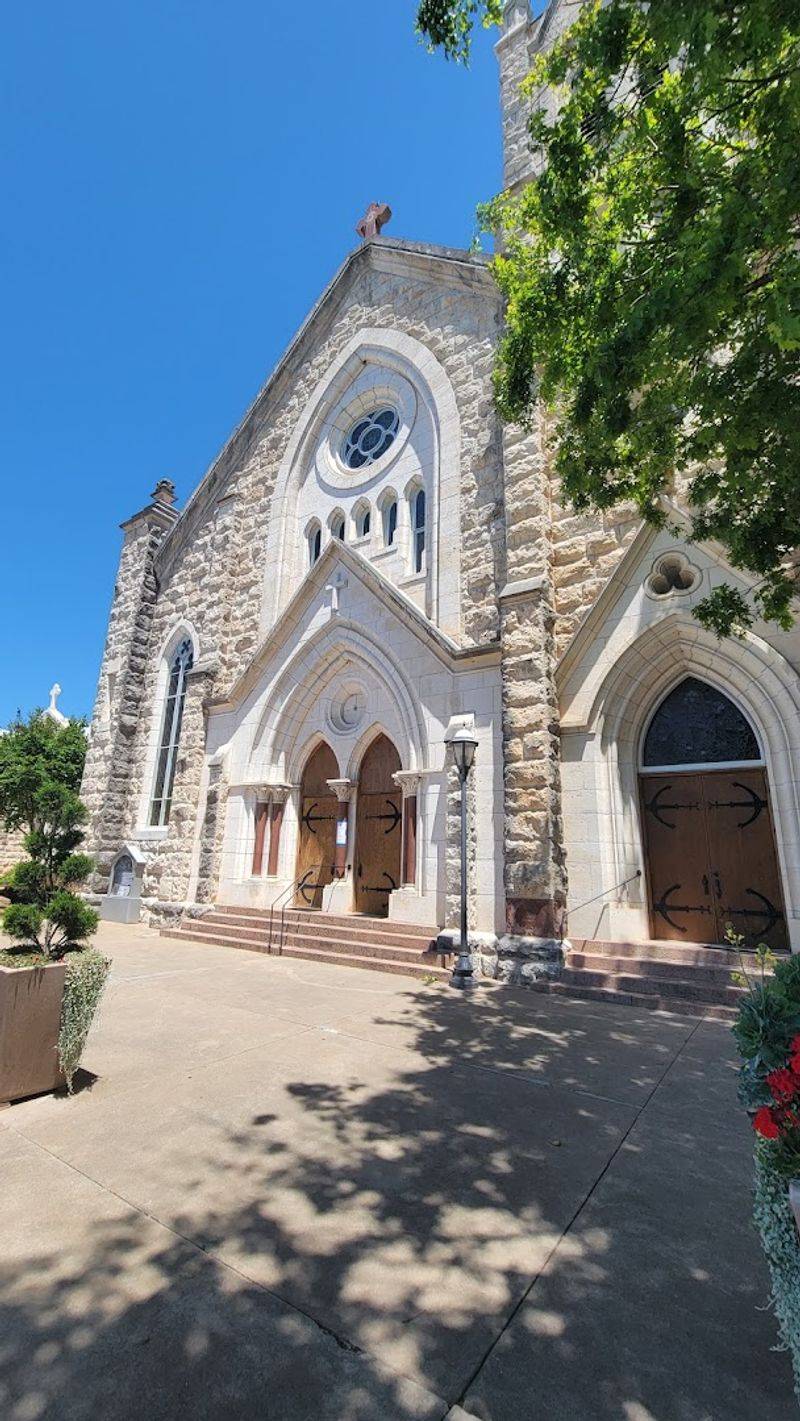
St. Louis Catholic Church, constructed between 1868 and 1870, features ornately carved altars and spectacular stained-glass windows that fill the interior with color.
Haby’s Alsatian Bakery is another genuine highlight, offering traditional pastries and homemade French bread made from an old family recipe.
The Castro Colonies Living History Center at the Biry Haus from 1850 recreates early settler life with real attention to detail.
Castroville Regional Park adds a natural element to the visit, with wooded trails along the scenic Medina River providing a peaceful outdoor escape after a morning of wandering through history.
Address: 402 Florence St, Castroville, TX 78009
7. Waelder
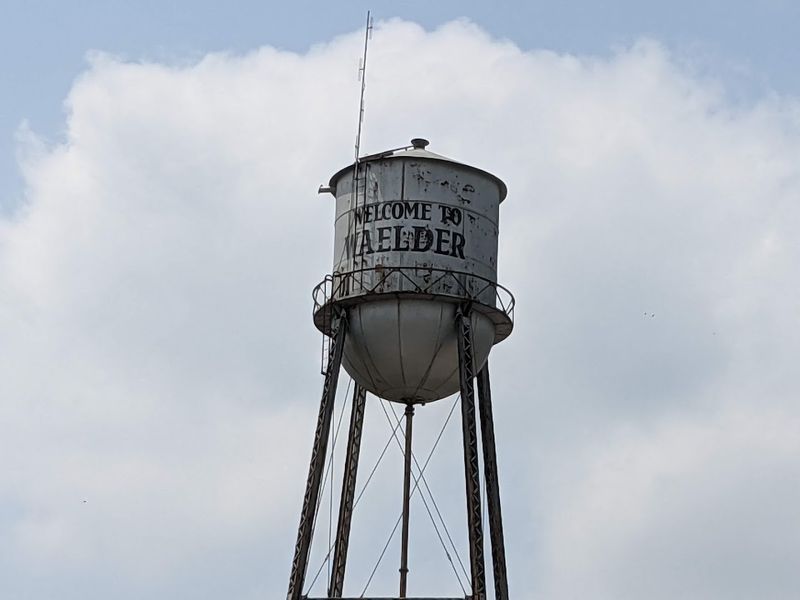
Waelder is easy to miss if you are not looking for it, and that is exactly what makes finding it feel rewarding. Situated in Gonzales County, this small town was established between 1874 and 1881 as a railway depot by the Galveston, Harrisburg, and San Antonio Railway.
It was named after Jacob Waelder, a German-American attorney and legislator who left his mark on Texas law before this town ever bore his name. Many of the early residents relocated here from nearby Hopkinsville, drawn by the promise of a growing rail hub.
By 1900, Waelder had become the second-largest town in Gonzales County, functioning as a busy shipping hub for the surrounding agricultural and ranching operations. That kind of growth speaks to the ambition of the people who settled here.
Waelder is recognized as part of the Texas German Belt, the corridor of communities shaped by German immigrants who arrived between 1831 and 1900, and that heritage runs quietly but steadily through its identity.
The town experienced population decline during World War II and again when Interstate 10 bypassed the community, shifting traffic and commerce away from its streets. Those changes left marks, but they did not erase the town’s character.
What remains is a place with real rural continuity, where civic values and traditions pass from one generation to the next in an unhurried, natural way.
The cultural fabric here is genuinely layered. The population reflects a blend of Hispanic, African American, and Anglo settlers alongside its German roots, which gives Waelder a texture that many similar-sized towns simply do not have.
The R.L. Miller’s General Merchandise Store operated as a local landmark from 1866 until 1979, a remarkable run by any measure.
The Olive Museum and Cultural Center, housed in an old African-American school building, preserves the history of the Armstrong Colony, an early settlement of freed slaves near Flatonia.
Community fairs and barbecue cook-offs are the social heartbeat of Waelder, and they reflect a warmth that the town has clearly never lost.
8. Luckenbach
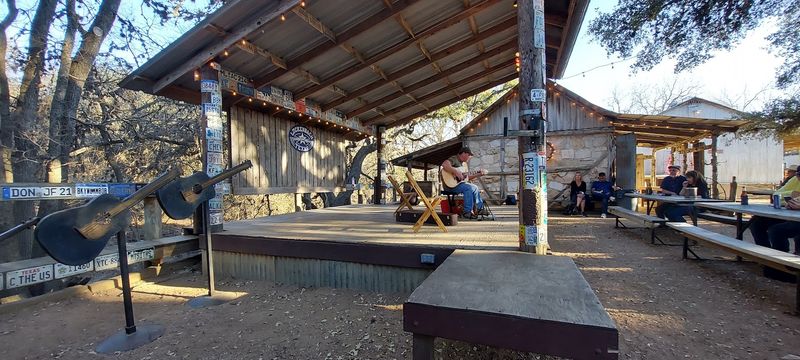
Luckenbach operates on its own logic, and honestly that is its greatest charm. This tiny unincorporated community in the Hill Country is less a town in the traditional sense and more a feeling, a collective agreement that simplicity and good music are enough.
German immigrants, including Jacob Luckenbach, began settling here in the late 1840s and early 1850s.
A post office was established in 1854, and the settlement eventually grew to include a general store, cotton gin, blacksmith shop, and a dance hall, all the essentials for a self-sufficient frontier community.
After 1904, the population declined sharply, and by 1970 Luckenbach was nearly abandoned.
Then John Hondo Crouch and his partners purchased the entire town, which was a genuinely bold move, and transformed it into a legendary music destination built around the motto Everybody’s Somebody in Luckenbach.
Its fame spread far and wide after the 1977 hit song by Waylon Jennings and Willie Nelson put it on the cultural map of America.
The historic Luckenbach Dance Hall has been in operation since 1887, making it one of the oldest continuously active dance halls in Texas. Its maple dance floor has absorbed more than a century of music and movement, and it still hosts dances and concerts nearly every weekend.
The lineup features country and Texas artists who understand exactly what kind of place this is and play accordingly.
Outside, under the shade of enormous ancient oak trees, the pickers circle gathers. It is spontaneous, informal, and completely magnetic.
Musicians show up, sit down, and start playing together. Nobody is performing for anyone in particular.
It just happens, and that is what makes it special.
The General Store, with roots going back to the mid-1800s, once served as the post office and is now a popular spot for browsing souvenirs and soaking in the atmosphere. Luckenbach does not try to impress you.
It just quietly gets under your skin and stays there.
Address: 412 Luckenbach Town Loop, Fredericksburg, TX 78624
