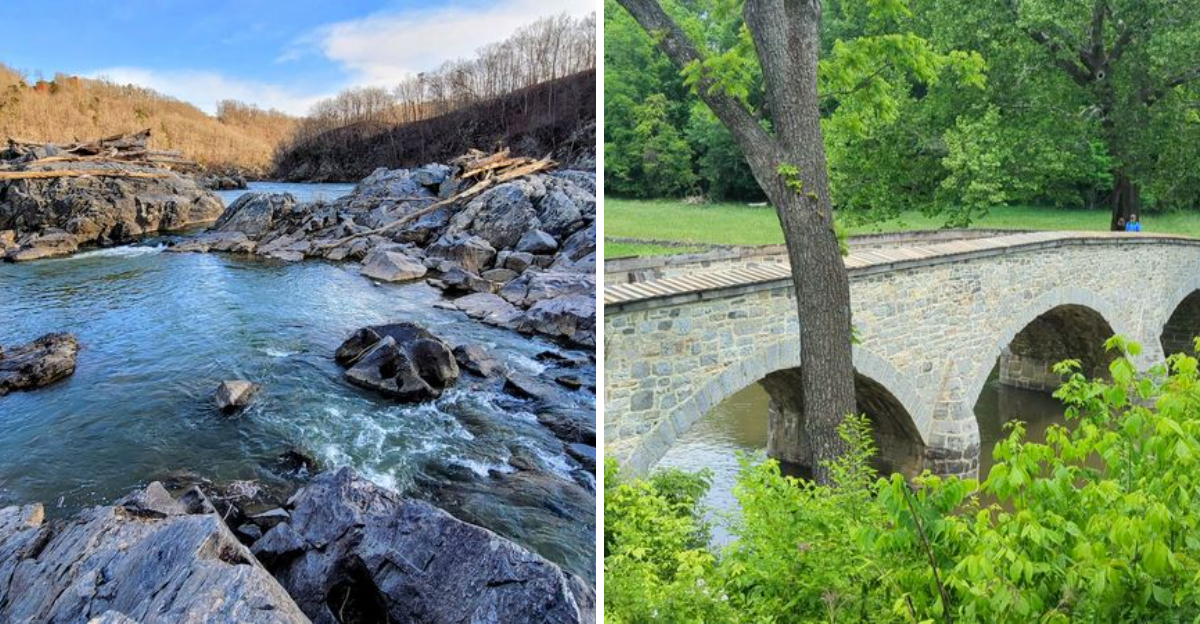
Tourist attractions have their place. Museums, landmarks, and crowded overlooks are fine for a quick visit.
But the best day trips are the ones that offer something different. Experiences you cannot find in a guidebook.
This list highlights ten Maryland day trips built around those unique experiences, from kayaking through quiet waterways to exploring forgotten history. You can step off the usual path and discover something unexpected.
The kind of trip that gives you a story to tell, not just a photo to post. A reminder that adventure does not always come with a ticket booth.
1. Ladew Topiary Gardens, Monkton
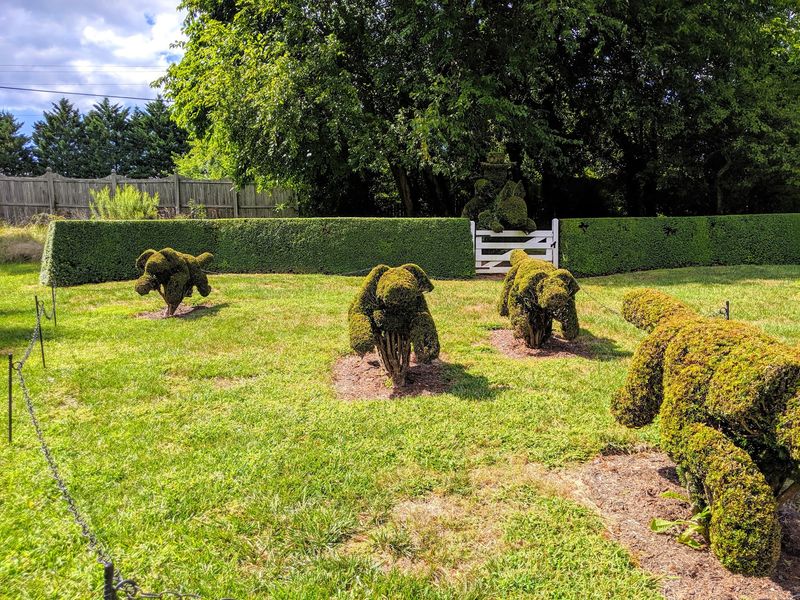
There is something almost dreamlike about rounding a garden path and coming face to face with a full fox hunt scene sculpted entirely from living shrubs.
Ladew Topiary Gardens in Monkton is one of those places that genuinely catches you off guard, no matter how many photos you have seen beforehand.
The scale of it all is what gets you first.
Harvey S. Ladew created this extraordinary landscape in the 1930s, drawing inspiration from his travels across England and Italy.
The result is 22 acres divided into 15 distinct garden rooms, each with its own personality and theme. One moment you are admiring a Chinese junk crafted from yew, the next you are watching butterflies flutter through a seasonal Butterfly House hidden into the grounds.
The nature walk that winds along the property’s edge offers a quieter contrast to the sculptural drama of the main gardens. It is the kind of pause that makes the whole experience feel balanced rather than overwhelming.
You get to breathe a little before the next surprise appears around the bend.
The Manor House adds another layer to the visit, giving you a glimpse into Ladew’s personal world through his collected treasures and distinctive decorating style. Honestly, it feels less like a museum and more like peeking into someone’s very interesting life.
Plan to spend a good half day here because rushing through it would genuinely be a shame.
Address: 3535 Jarrettsville Pike, Monkton, MD 21111
2. Daniels Ghost Town, Patapsco Valley
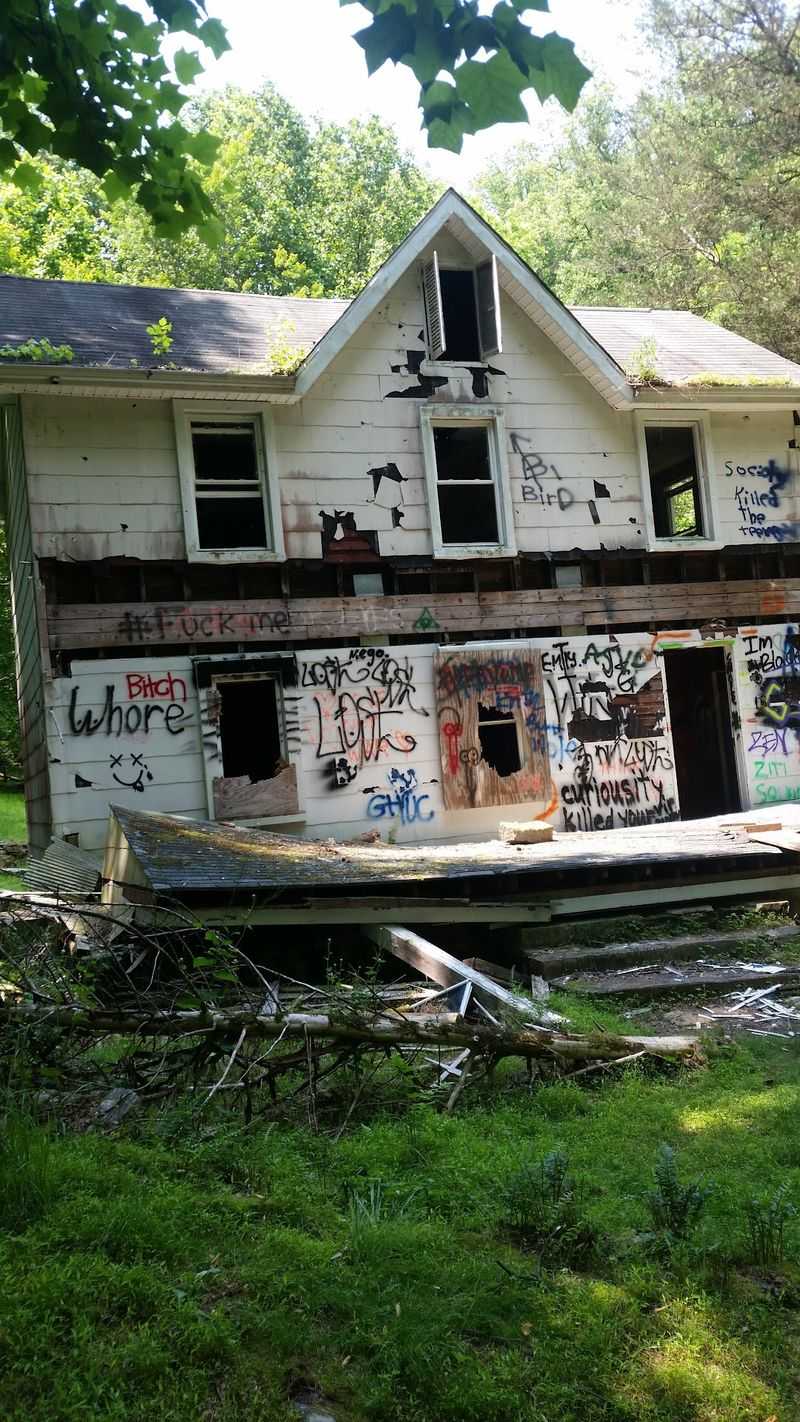
Most ghost towns exist somewhere in the American West, so finding one hidden into a Maryland river valley feels like discovering a secret the state has been keeping. Daniels was once a working mill community with homes, churches, and a rhythm of daily life built entirely around the textile industry.
Then Hurricane Agnes hit in 1972, and the river reclaimed most of what had been built.
What remains today is genuinely haunting in the best possible way. Moss-covered stone foundations peek through the underbrush, old vehicles rust quietly among the trees, and the shells of two churches still stand as reminders of a community that once gathered and celebrated here.
The silence is thick, and it has a texture to it that feels almost respectful.
The trail that follows old Alberton Road is the main route through the site, and it rewards patient walkers who take time to look closely. You start noticing details the further you go, a chimney here, a doorway there, the outline of a yard that someone once tended carefully.
It is more moving than spooky, though it is a little of both.
Now part of Patapsco River Valley State Park, the area is accessible and well worth the short hike from the trailhead. Bring sturdy shoes and a curious mind.
This is not a polished attraction with signage at every turn, and that raw quality is exactly what makes it unforgettable.
Address: 8106 Alberton Rd, Windsor Mill, MD 21244
3. C&O Canal Towpath and Paw Paw Tunnel, Little Orleans
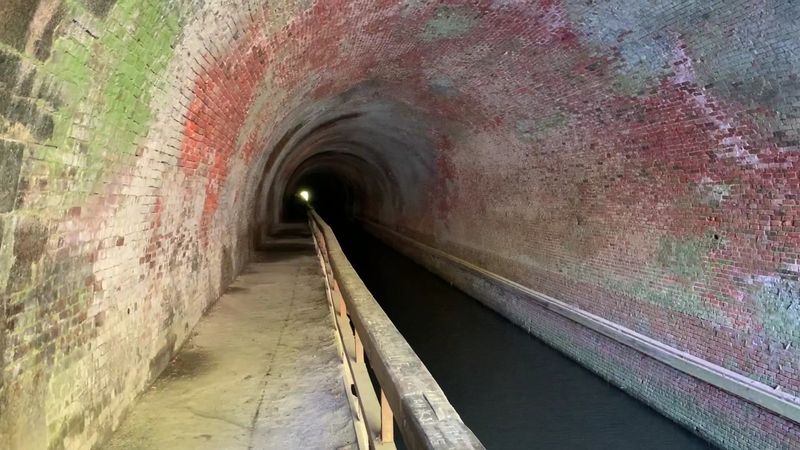
Few experiences along the entire East Coast compare to stepping into the Paw Paw Tunnel and watching the world outside shrink to a pale circle of light behind you.
This brick-lined marvel stretches over 3,000 feet through solid rock, and it took workers more than 12 years to complete it during the 1830s.
That kind of effort shows in every carefully laid brick.
The C&O Canal Towpath near Little Orleans is one of the more remote stretches of the Chesapeake and Ohio Canal National Historical Park, and that remoteness is a big part of its appeal. Out here, the Potomac River rolls quietly alongside the path and the Allegany Foothills rise in the background.
It feels far from everything, which is exactly the point of coming.
Bring a flashlight because the tunnel has no lighting. That sounds like a small detail, but the experience of walking through total darkness with only a beam of light ahead of you is surprisingly memorable.
Some people find it a little unnerving. I found it thrilling in a calm, ancient sort of way.
The Fifteenmile Creek Aqueduct is another highlight in this section, a beautiful piece of 19th-century engineering that carried canal water over a natural stream. Hikers and cyclists both use the towpath, and the pace out here tends to be unhurried and contemplative.
This is a day trip for people who want history they can actually walk through, not just read about on a placard.
Address: Towpath, Chesapeake and Ohio Canal, Oldtown, MD 21555
4. Billy Goat Trail at Great Falls, Potomac
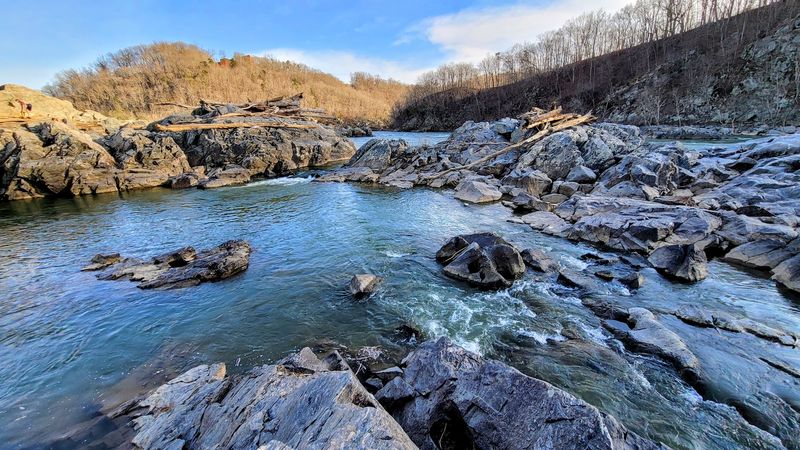
Section A of the Billy Goat Trail is not a gentle stroll, and it does not pretend to be. This is a trail that asks something of you, and it gives back in proportion to the effort.
The Potomac River tears through Mather Gorge just below the path, and the sound of that water crashing over ancient rock is a constant companion as you pick your way across the terrain.
The scrambling here is legitimate. You are hauling yourself over angled boulders, finding handholds, and making small decisions every few steps about where to plant your feet.
For people who find flat trails a little dull, this section of the C&O Canal National Historical Park is a genuine revelation. The landscape feels raw and alive in a way that manicured parks simply cannot replicate.
Great Falls itself is one of the most dramatic natural features in the mid-Atlantic region. Watching that volume of water surge through the narrow gorge gives you a real sense of the river’s power, something photographs never quite capture.
I have been there on a weekday morning when the mist was still rising off the water, and it looked almost prehistoric.
The trailhead at Great Falls Tavern is easy to find, and the visitor center nearby provides good context for the history of the canal and the surrounding landscape. Come prepared with solid footwear and a reasonable fitness level.
The reward at the end is a sense of accomplishment that a typical park visit rarely delivers.
Address: 11710 MacArthur Blvd, Potomac, MD 20854
5. Greenbelt Museum, Greenbelt
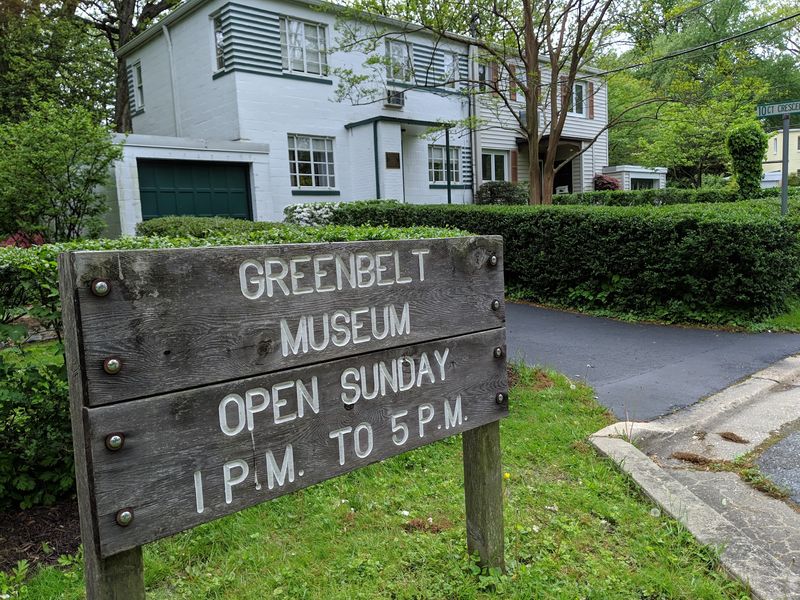
Greenbelt is one of those places that looks like a quiet suburb until you start paying attention. Then you realize the whole town was essentially a social experiment, built from scratch in 1937 by the Roosevelt administration as a model for cooperative, community-centered living.
That backstory changes how you see every curved sidewalk and shared green space.
The Greenbelt Museum sits inside one of the original homes from that era, restored and furnished to reflect what daily life looked like for the families who moved in during the late 1930s.
The rooms are small and practical, and the objects inside tell quiet stories about a time when people believed deeply in the idea of neighbors looking out for neighbors.
It is a surprisingly emotional experience for a house tour.
Walking through the broader town after the museum visit is where things get really interesting. The architecture follows a consistent Art Moderne style, and the layout of the streets was deliberately designed to minimize car traffic and encourage people to walk and gather.
That philosophy is still visible today in how the community functions.
Greenbelt earned its status as a National Historic Landmark for good reason. This is not just history preserved under glass.
It is a living neighborhood that continues to reflect the ideals it was built around, which makes the whole visit feel more meaningful than a typical historic site. Plan to linger a little and let the neighborhood’s character sink in.
Address: 10B Crescent Rd, Greenbelt, MD 20770
6. Savage Mill, Savage

Old mill buildings have a particular kind of atmosphere that is hard to describe but easy to feel the moment you step inside.
Savage Mill carries that feeling in abundance, with its heavy timber beams, worn wooden floors, and the sense that something important once happened in every corner of the space.
The cotton that ran through these machines helped build Maryland’s industrial identity.
Today the mill has been reimagined as a hub for artists and independent makers, and the transformation is genuinely impressive without feeling forced.
Pottery studios, photography galleries, jewelry workshops, and craft shops fill the historic buildings, and the people working inside are usually happy to talk about what they do.
That openness gives the whole place an energy that a typical shopping center could never manufacture.
The Bollman Truss Bridge nearby is worth the short walk on its own. It is a National Historic Landmark and one of the few surviving examples of its structural type in the country, a wrought iron design that was considered cutting-edge engineering in the 1860s.
Standing next to it, you get a real sense of how industrial ambition shaped this part of Maryland.
Savage Mill is the kind of place that rewards slow exploration. Peek into studios, chat with makers, and let yourself get a little lost in the maze of connected buildings.
There is no set route or required stop, which is refreshing. The experience shapes itself around your curiosity, and that flexibility makes it stand out from more scripted attractions.
Address: 8600 Foundry St, Savage, MD 20763
7. Calvert Cliffs State Park, Lusby
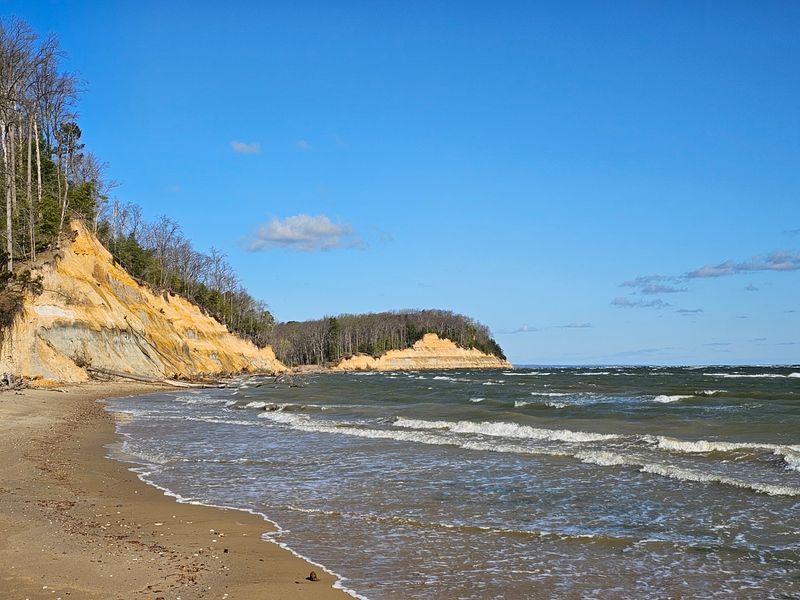
Fossil hunting is one of those activities that sounds simple until you actually find something, and then it becomes completely absorbing.
Calvert Cliffs State Park offers a beach where the tides do a lot of the work for you, washing ancient treasures out of cliffs that formed somewhere between 10 and 20 million years ago during the Miocene epoch.
That number is hard to wrap your head around, but holding a fossilized shark tooth in your palm makes it feel real.
Getting to the fossil beach requires a roughly 1.8-mile walk through mixed woodland, which sets the right pace for the day. The trail is pleasant and not particularly demanding, and arriving at the beach after that walk feels like a small reward before the real searching begins.
Children absolutely love this part. Adults tend to get just as absorbed, though they are usually less vocal about it.
The cliffs themselves are off-limits for climbing due to erosion and safety concerns, but the beach at their base is where the fossils accumulate naturally. Scallop shells, ray teeth, and the Maryland state fossil, Ecphora gardnerae gardnerae, all turn up here with patience and a sharp eye.
Some visitors find multiple shark teeth in a single afternoon.
Calvert Cliffs is one of those rare spots where the activity and the setting reinforce each other perfectly. The wide Chesapeake Bay stretches out in front of you while you search, and the cliffs rise behind you in dramatic layers of ancient sediment.
It is both a science lesson and a genuinely good day outside.
Address: 10540 H G Trueman Rd, Lusby, MD 20657
8. Antietam National Battlefield, Sharpsburg
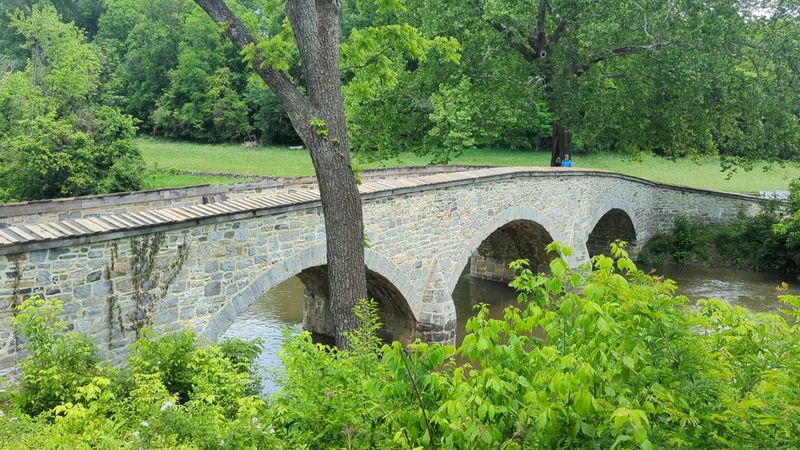
September 17, 1862 was the single bloodiest day in American military history, and Antietam is where it happened. Coming here is not like visiting a museum where history sits behind velvet ropes.
You are standing on the actual ground where those decisions were made, where soldiers crossed that bridge under fire, where the outcome of the Civil War shifted in ways that reverberate to this day.
The self-guided driving tour covers the major landmarks across the battlefield, including the Sunken Road, Burnside Bridge, and Dunker Church. Each stop adds another piece to a story that is both strategically fascinating and deeply human.
Ranger-led walking tours are available seasonally and offer a level of detail and context that enriches the whole experience considerably.
What makes Antietam different from many battlefield sites is the preservation of the rural landscape itself. The farmland, the tree lines, the rolling hills, all of it looks close to how it appeared in 1862.
That continuity between past and present is rare and quietly powerful. You do not have to work hard to imagine what happened here because the land itself holds the shape of that day.
The Emancipation Proclamation followed directly from the Union’s strategic victory here, making Antietam one of the most consequential pieces of ground in American history. Visiting with that knowledge in mind changes the weight of every step you take across the fields.
This is the kind of place that deserves more than a quick pass-through.
Address: 302 E Main St, Sharpsburg, MD 21782
9. Eastern Neck National Wildlife Refuge, Rock Hall
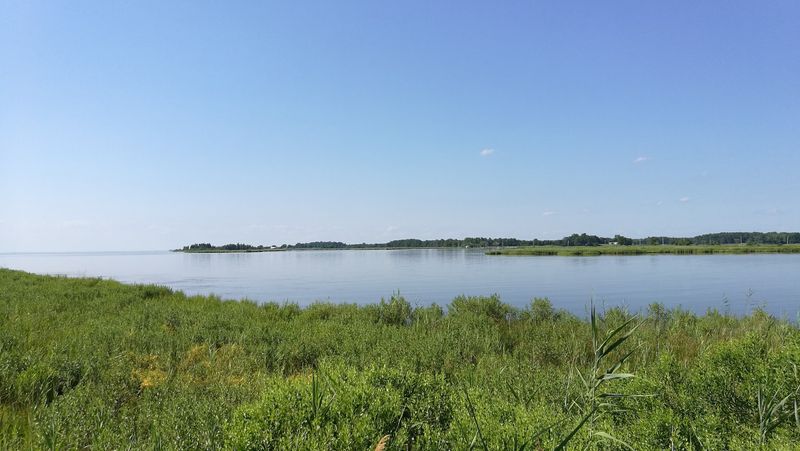
There is a particular kind of quiet that settles over you on an island wildlife refuge, different from the quiet of a park or a trail in the woods. Eastern Neck has that quality in full.
This 2,285-acre sanctuary sits where the Chester River meets the Chesapeake Bay, and the surrounding water seems to muffle the outside world completely once you cross onto the island.
Over 240 bird species have been recorded here, and the seasonal variety is remarkable. Winter brings enormous flocks of tundra swans that are audible long before they are visible, a sound that is genuinely stirring if you have never heard it before.
Bald eagles are a year-round presence, and spotting one perched above the marsh is the kind of moment that tends to stop a conversation mid-sentence.
Seven trails wind through the refuge’s varied habitats, moving between brackish marshes, upland forests, and open grasslands. Each habitat draws different species, so changing your route changes what you encounter.
The trails are not long, but they are productive for wildlife observation in a way that rewards patience over speed.
The views across the Bay from the refuge’s open areas are expansive and genuinely beautiful, especially in the golden light of late afternoon. This is a place for people who find real satisfaction in simply watching the natural world go about its business.
No staged encounters, no crowds, no commentary track. Just the birds, the water, and a lot of open sky.
Address: 1730 Eastern Neck Rd, Rock Hall, MD 21661
10. Assateague Island National Seashore, Berlin
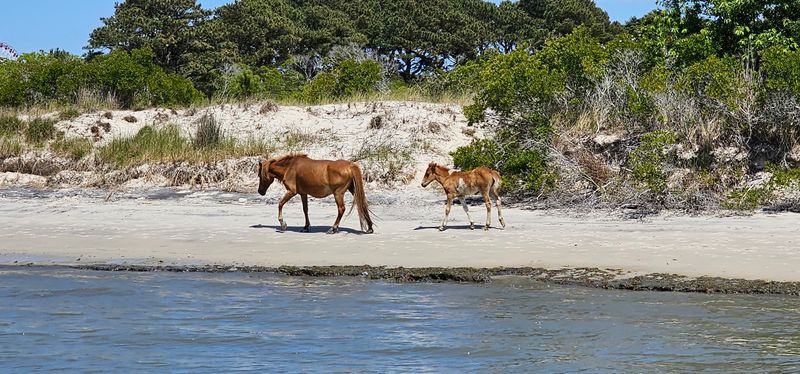
Pulling into Assateague and seeing a small band of wild horses grazing near the parking area is the kind of thing that makes you forget what you were doing for a solid minute. These are not trained animals or park props.
They are genuinely feral horses that have lived on this barrier island for generations, adapting to salt marsh grasses, ocean winds, and the unpredictable rhythms of coastal life.
On the Maryland side, managed by the National Park Service, encounters with the horses can happen almost anywhere. They wander the beaches, move through the campgrounds, and occasionally stand directly in the path of people who are trying to figure out the appropriate response.
The answer, by the way, is to keep your distance and let them carry on. Watching them move on their own terms is the whole point.
The island itself is a dynamic, shifting landscape that goes far beyond the horses. Pristine beaches stretch for miles with very little development in sight, pine forests rise unexpectedly from the sand, and salt marshes teem with shorebirds and crabs.
The contrast between the ocean side and the bay side of the island is striking, and exploring both adds real depth to the visit.
Assateague is a reminder that some of the most powerful travel experiences come from simply being present in a place that operates on its own schedule. The horses are wild, the tides are unpredictable, and the beach changes with every storm.
That sense of genuine wildness is increasingly rare and completely worth the drive.
Address: 7206 National Seashore Lane, Berlin, MD 21811
