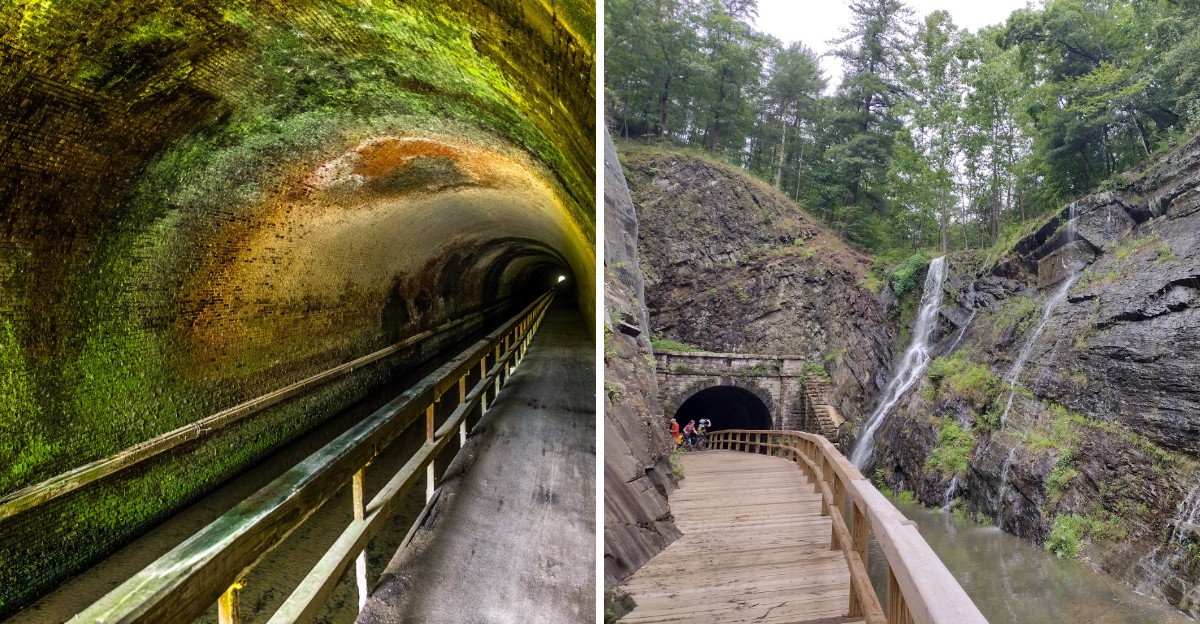
Deep inside a mountain, old rope marks still scar the walls of a tunnel lined with millions of bricks. You can walk through it today, but you’ll need a flashlight.
Daylight disappears surprisingly fast along the narrow towpath.
Engineers expected the shortcut to take two years. Instead, unstable rock, money problems, and bitter labor disputes stretched construction to fourteen.
The goal was to avoid six winding miles of canal beside the river. I can’t get over how much trouble that supposedly simpler route caused.
Now this Maryland landmark offers a very different kind of adventure. Brass markers count off the distance inside, and a steep trail above the tunnel follows the ridge where workers once lived.
The strange part is knowing those workers fought for years to finish a passage you can cross in minutes.
Fourteen Years Late Is Still a Great Story
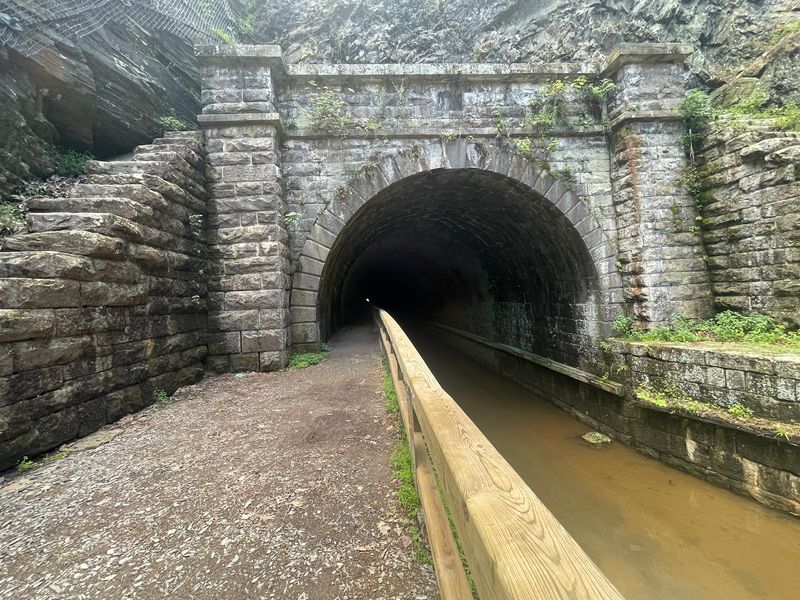
Back in 1836, crews started digging the Paw Paw Tunnel with a plan to finish in about two years. The estimate also came with a price tag of roughly thirty-three thousand dollars.
Both numbers turned out to be wildly hopeful.
The tunnel finally opened in 1850, fourteen years after the first shovel hit the hill. By then, the cost had climbed past six hundred thousand dollars.
That nearly bankrupted the Chesapeake and Ohio Canal Company, which had big dreams of linking the region by water.
So what went wrong? Pretty much everything.
The engineers underestimated the work, and the rock fought back with unstable shale and repeated cave-ins.
Money kept running dry, and workers often went unpaid. Fights broke out among laborers, many of them Irish immigrants.
Honestly, it sounds like the longest group project in Maryland history.
Still, the finished tunnel stands as a tough reminder of what people pulled off with hand tools and grit. Today it belongs to the Chesapeake and Ohio Canal National Historical Park at milepost 155.2.
Knowing the backstory makes every step inside feel heavier, in a good way. You’re walking through fourteen years of stubbornness.
Why Dig Through a Mountain When a River Already Goes Around?
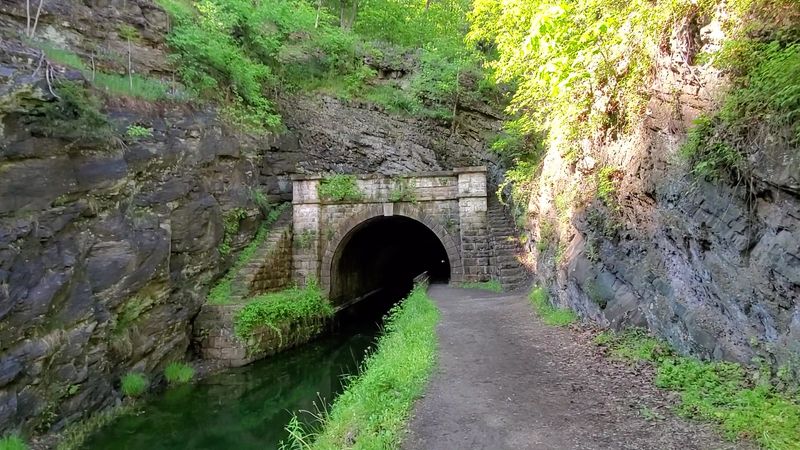
Blame the Potomac River and its dramatic sense of direction. Near this spot, the river twists through five horseshoe-shaped loops called the Paw Paw Bends.
Steep cliffs crowd the water along the way.
Building a canal along those curves would have meant six extra miles of tricky, cliff-hugging construction. Engineers decided a straight shot through the mountain made more sense.
On paper, at least, it looked like the smarter shortcut.
The tunnel did its job once it opened. It trimmed about six miles off the canal route, letting boats skip the whole winding mess.
That’s a solid trade, even if the shortcut took longer than most shortcuts should.
Here’s a fun way to think about it. Mule teams pulled canal boats along the towpath, so every mile saved meant real time and effort for animals and boatmen alike.
Today you can appreciate the bends from above on the Tunnel Hill Trail, which we’ll get to soon. Seeing those loops in person makes the engineers’ decision click.
You’ll probably nod and think, yeah, I’d have tunneled too. Then you’ll remember the fourteen years and maybe reconsider.
Six Million Bricks and Not One Light Switch
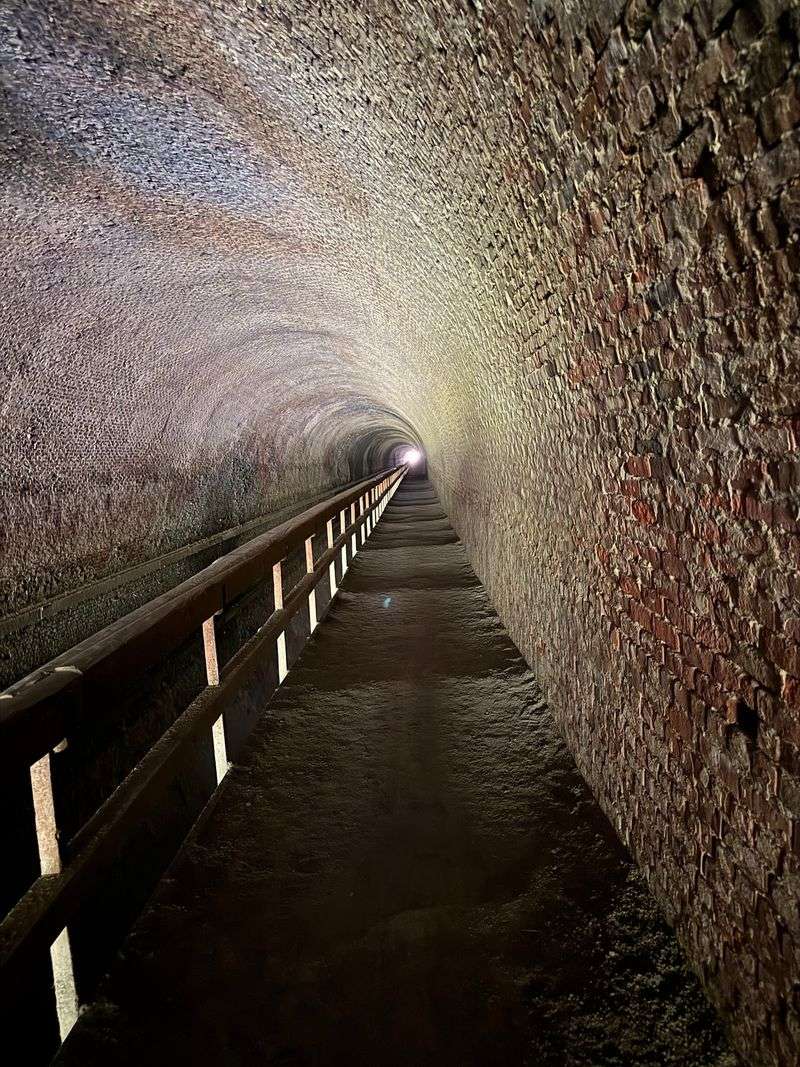
Numbers tell the size of this thing better than adjectives. The Paw Paw Tunnel runs 3,118 feet long, stands about 24 feet high, and stretches roughly 27 feet wide.
More than six million bricks line its walls and ceiling.
Inside, the towpath measures only about four feet across. That’s where mules once walked while boats floated in the channel beside them.
Now it’s your path, with the old canal bed right next to you.
The darkness is total once you’re a little way in. The National Park Service doesn’t light the tunnel, so a flashlight or headlamp is a must.
A phone light works in a pinch, but a stronger beam helps a lot.
The far exit looks like a tiny dot of daylight. It seems close, then it stubbornly refuses to get bigger for a while.
That little optical trick is half the fun.
Watch your footing, because the walkway can be uneven, with cracks and puddles. Water sometimes drips from above too.
Sturdy shoes that can handle a splash will make the walk far more pleasant, and a light jacket helps since it’s often cooler inside.
Look Closely and the Walls Start Talking
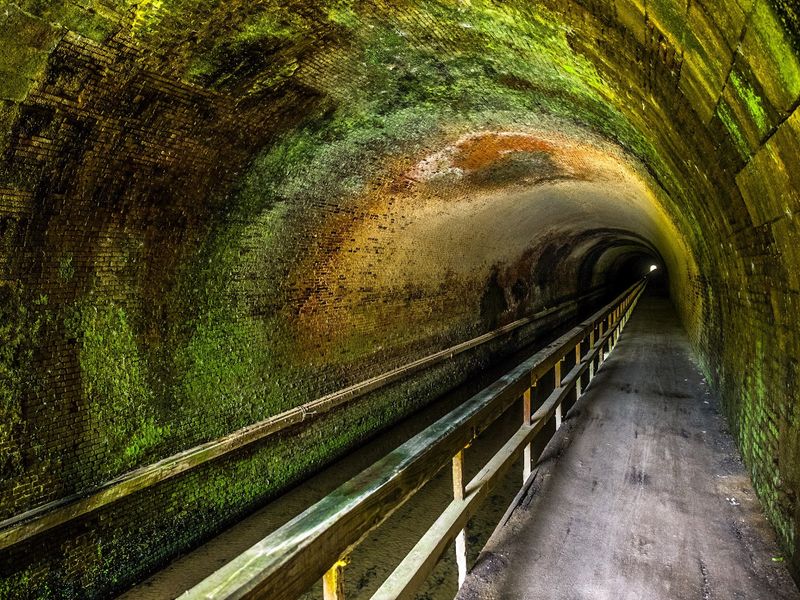
Some of the best details here are small enough to miss. Sweep your flashlight along the walls and railings, and the tunnel starts sharing its secrets.
Slow down, and you’ll get way more out of the walk.
Start with the rope burns. Tow lines pulled by mules rubbed against the structure for years, carving grooves you can still spot today.
It’s like finding fingerprints left by the canal era.
Next, check out the rub rails. These wooden rails protected the walls and boats from scraping.
They’re a practical touch that hints at how busy and bumpy canal traffic could get.
Keep an eye out for weep holes too. They let water drain through the masonry, which matters a lot in a damp mountain tunnel.
Engineers clearly learned a thing or two from all those cave-ins.
Then there are the brass plates marking every 100 feet. They make a great built-in progress tracker, especially for kids who keep asking how much farther.
Counting them turns a dark walk into a little game. By the end, you’ll feel like you just read the tunnel’s diary with a flashlight.
Climb Over the Top for the View the Builders Earned
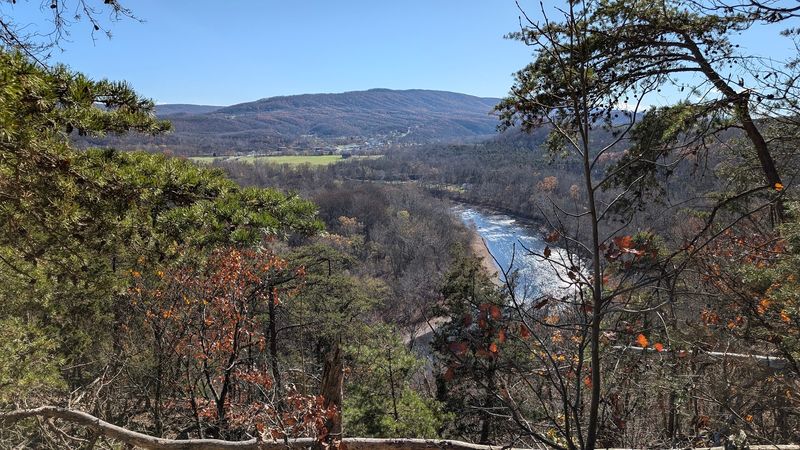
Going through the mountain is great, but going over it offers a whole different reward. The Tunnel Hill Trail climbs above the Paw Paw Tunnel and loops back down the other side.
It runs about two miles.
Fair warning, it’s steep. Signs call it strenuous, so good hiking shoes and some water are smart choices.
Your legs will definitely notice the climb.
The payoff is worth the huffing and puffing. From up high, you get views of the Paw Paw Bends, those looping curves of the Potomac that inspired the tunnel in the first place.
Suddenly the whole project makes sense.
The trail also passes areas where tunnel builders lived during construction. National Park Service markers along the way share bits of that history.
It’s a humbling reminder that those workers spent years right here on this ridge.
A popular plan is to walk through the tunnel one way and return over the hill. That gives you darkness and daylight in one outing.
Just watch your footing near the edges, since some steep drops sit close to the paths. Save this one for a day with plenty of daylight left.
Your GPS Might Send You to the Wrong Hilltop
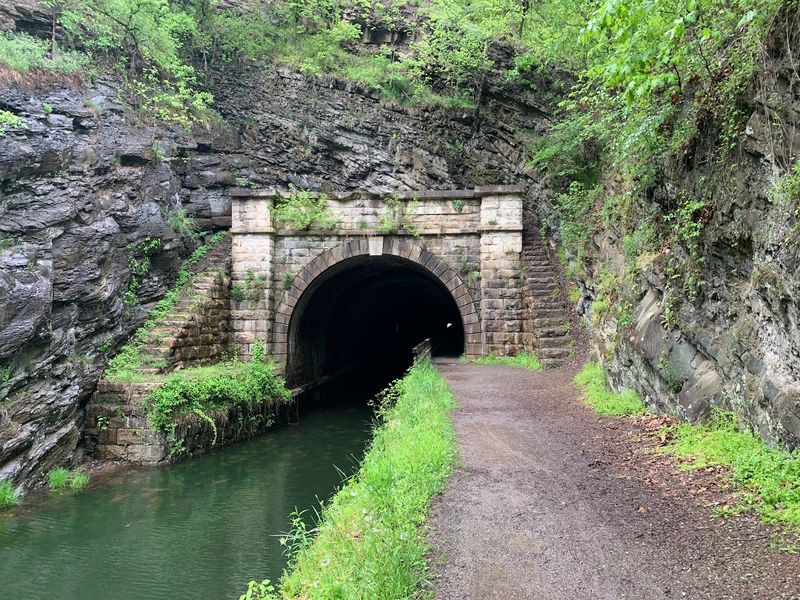
Finding this place can feel like its own little adventure. The tunnel has no traditional street address.
Its listed location is Towpath, Chesapeake and Ohio Canal, Oldtown, MD 21555, United States, which isn’t much help for a car.
Plug in the wrong spot, and you could end up on a narrow dirt road at an upper lot. That one serves the middle of the Tunnel Hill Trail.
It’s about two miles of walking from the tunnel entrance.
The easier move is to search for Paw Paw Tunnel Campground in Oldtown. It sits just off MD Route 51, close to the West Virginia line.
From there, the walk to the tunnel is roughly half a mile.
That stretch follows the flat, wide gravel towpath along the canal. It’s a gentle warm-up before the dark part begins.
Kids and casual walkers can handle it without trouble.
Bonus points for this spot, because the campground has port-a-pots near the parking area. Entry to the tunnel is free too.
Double-check your route before losing cell signal in the hills of western Maryland. Trust me, the right parking lot makes the whole day smoother.
Bikes Welcome, Saddles Not So Much
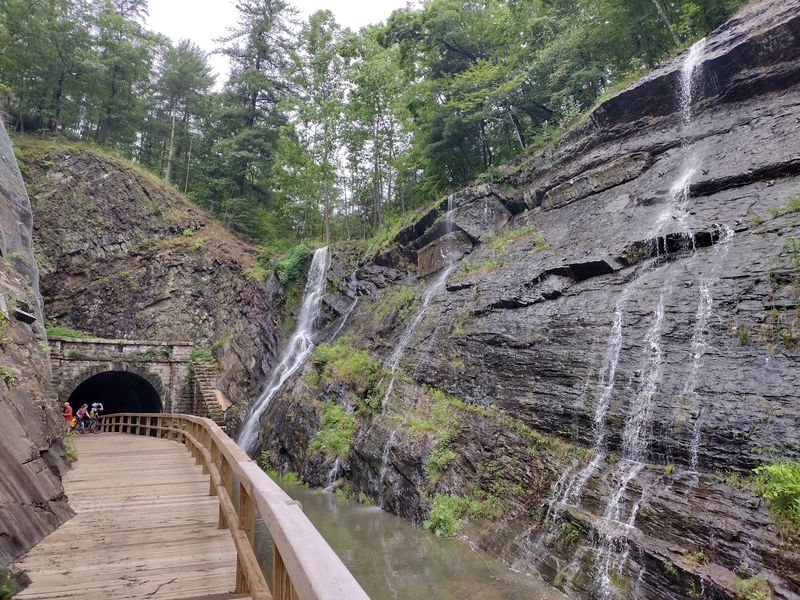
Cyclists love this stretch of the C&O Canal towpath, and for good reason. The tunnel ranks as one of the most memorable moments along the whole route.
Many riders pass through on long trips toward Cumberland or beyond.
One rule matters most, though. Bicyclists must dismount and walk their bikes through the tunnel.
The towpath inside is narrow and dark, so rolling through just isn’t safe for anyone.
Horses aren’t permitted inside either. That keeps the tight walkway calm for walkers and bike pushers.
Imagine meeting a horse in total darkness on a four-foot ledge, and the rule makes perfect sense.
A good headlamp is a cyclist’s best friend here. It frees your hands for steering your bike over bumps and puddles.
A bike light helps, but it won’t always point where your feet need to go.
Walking also gives you a chance to enjoy the tunnel instead of rushing it. You’ll notice the rope grooves and brass plates you’d zip past on wheels.
Think of it as a mandatory slow-down that actually improves the ride. Hop back on once you’re out in the sunshine.
Daylight, Boardwalks, and a Little Fresh Repair Work
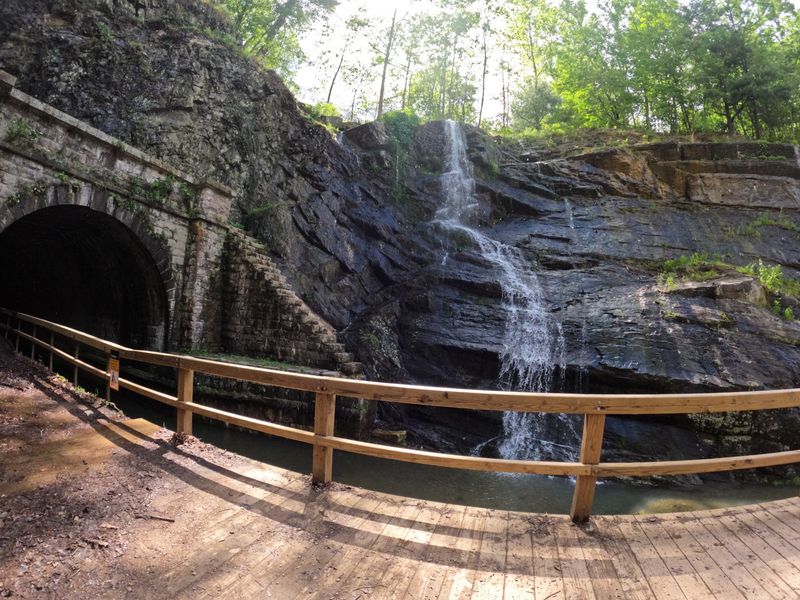
Stepping out of the tunnel feels a bit like waking up. Your eyes adjust, the air warms, and a wooden boardwalk greets you along the cliffside.
It’s a lovely contrast after all that brick and darkness.
That boardwalk got some serious attention recently. Crews finished rock scaling and boardwalk replacement projects in mid-to-late summer of 2023.
The work removed loose rock and refreshed the walkway.
Thanks to those projects, the towpath through the tunnel is fully open again. That’s welcome news, since earlier work had limited access for a while.
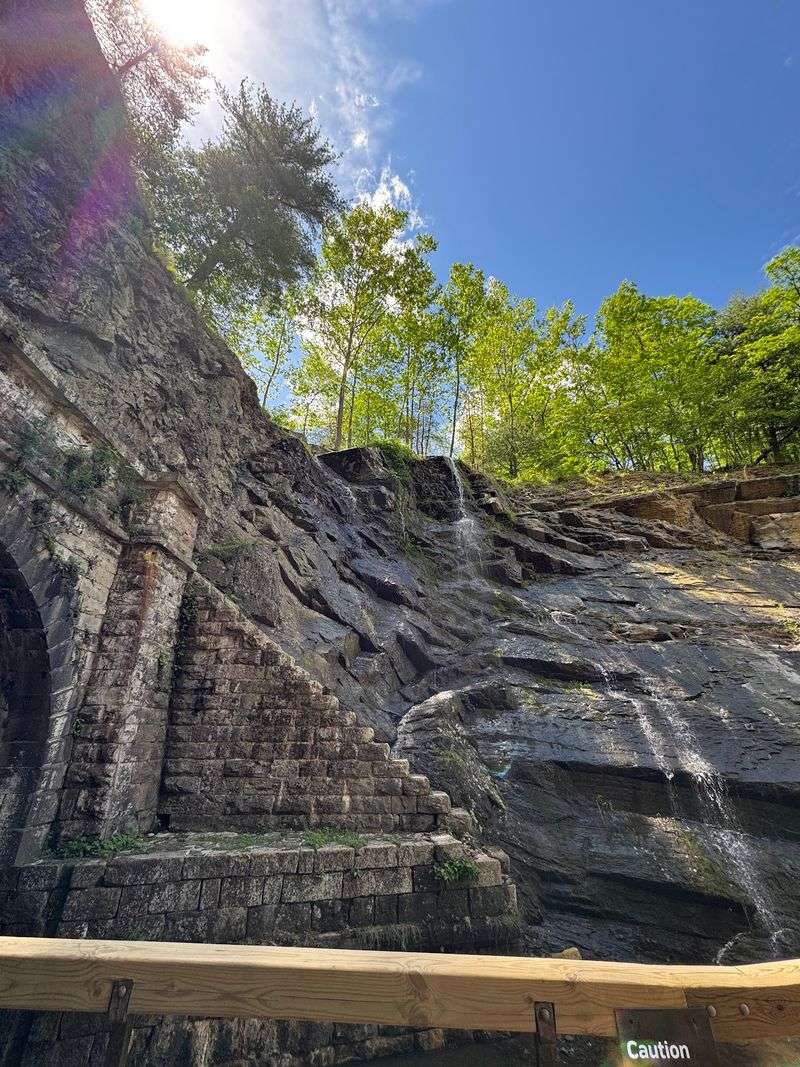
The cliffs here have always needed watching, as the original builders learned the hard way.
Past the boardwalk, the towpath keeps rolling along the old canal. You can turn around for a short outing or keep going for a longer walk.
Hiker-biker campsites sit farther down the trail for those who want to stay out overnight.
This side of the tunnel works well for a snack break and some photos. The light bouncing off the rock walls makes for great pictures.
Then you get to walk back through the darkness and do the whole fun thing again.
Winter Gives the Tunnel a Front Door
Cold weather brings a quirky seasonal change here. During winter months, the south portal of the Paw Paw Tunnel gets boarded up.
It’s a way to protect the brick masonry inside.
The reason comes down to freeze-thaw cycles. Water seeps into the brick, freezes, expands, and slowly causes damage over time.
Blocking the cold air helps the old walls stay healthy.
Don’t worry, you can still walk through. A doorway in the boarded portal keeps the tunnel accessible all season.
It’s a little like the tunnel putting on a coat with a zipper.
Winter visits can be strikingly pretty, with frosty cliffs and bare trees revealing more of the rocky landscape. Dress warmly and plan for slippery spots on the towpath.
Daylight runs short too, so start early.
Fall is another fine time to come, with colorful leaves lining the canal. Summer brings shade along the trail, and the tunnel itself often feels cooler than outside.
Honestly, Maryland’s longest canal tunnel stays interesting in every season. After fourteen years to build, it has earned the right to change outfits a few times a year.
Grab a flashlight and go meet it.
