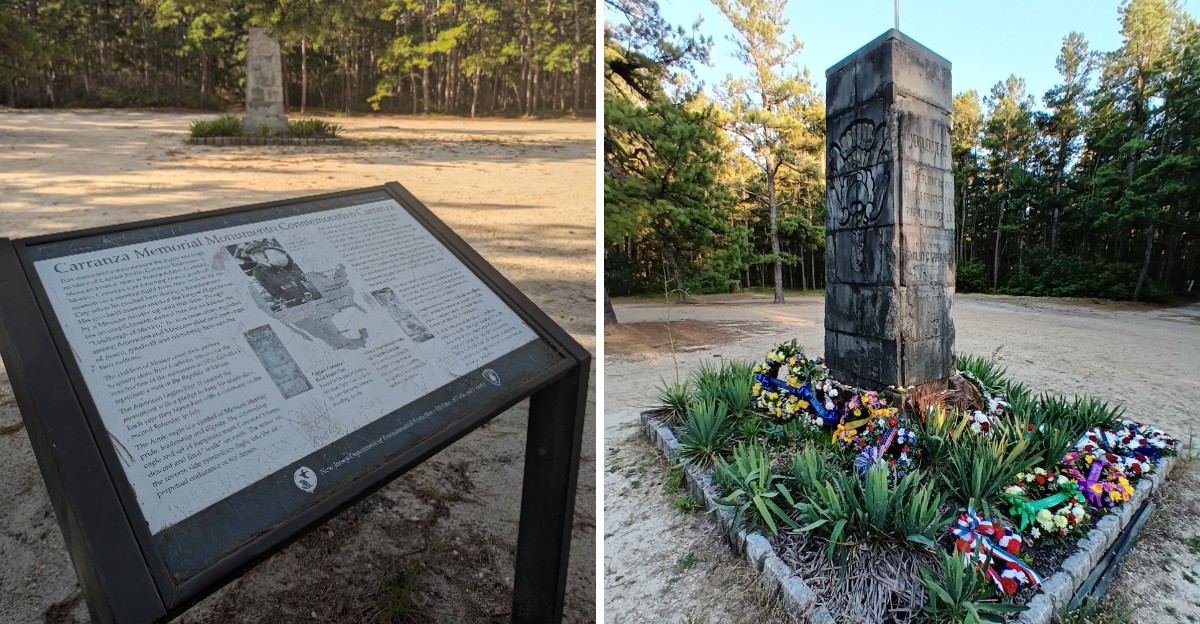
Kids in Mexico saved their coins to pay for a stone monument deep in the New Jersey woods. Yep, a real one, standing right where a famous young pilot went down in 1928.
The stone was quarried in Mexico, then shipped north to a sandy clearing surrounded by pine trees.
That’s the detail I can’t get over. Schoolchildren hundreds of miles away cared enough to send a piece of home to a forest most of them would never see.
The story behind it involves a goodwill flight, a friendship with Charles Lindbergh, and a summer thunderstorm. People still gather here every July to honor him.
And visitors keep leaving pennies at the base, which might be my favorite tradition in the whole state. I’d absolutely make a detour for a place with that kind of heart.
Pocket Change From Mexico Paid For Every Stone
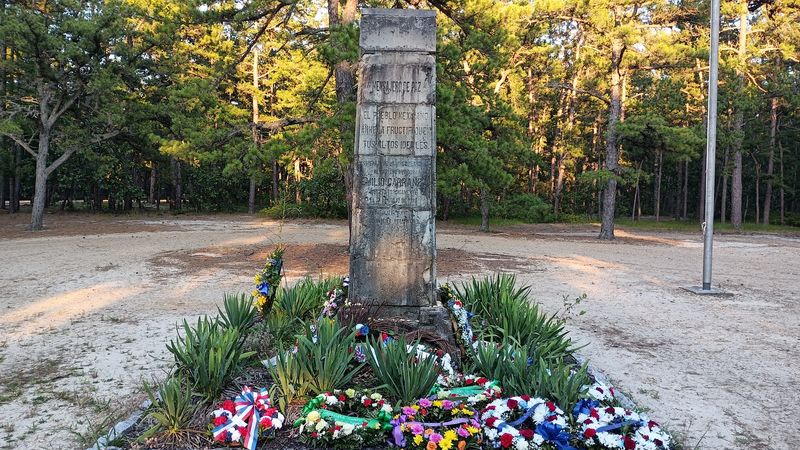
Coins built this thing. The Emilio Carranza Memorial was funded by pennies and pesos donated by schoolchildren across Mexico.
That’s a pretty wild fundraising story when you think about it. These kids were honoring a national hero who crashed far from home in New Jersey.
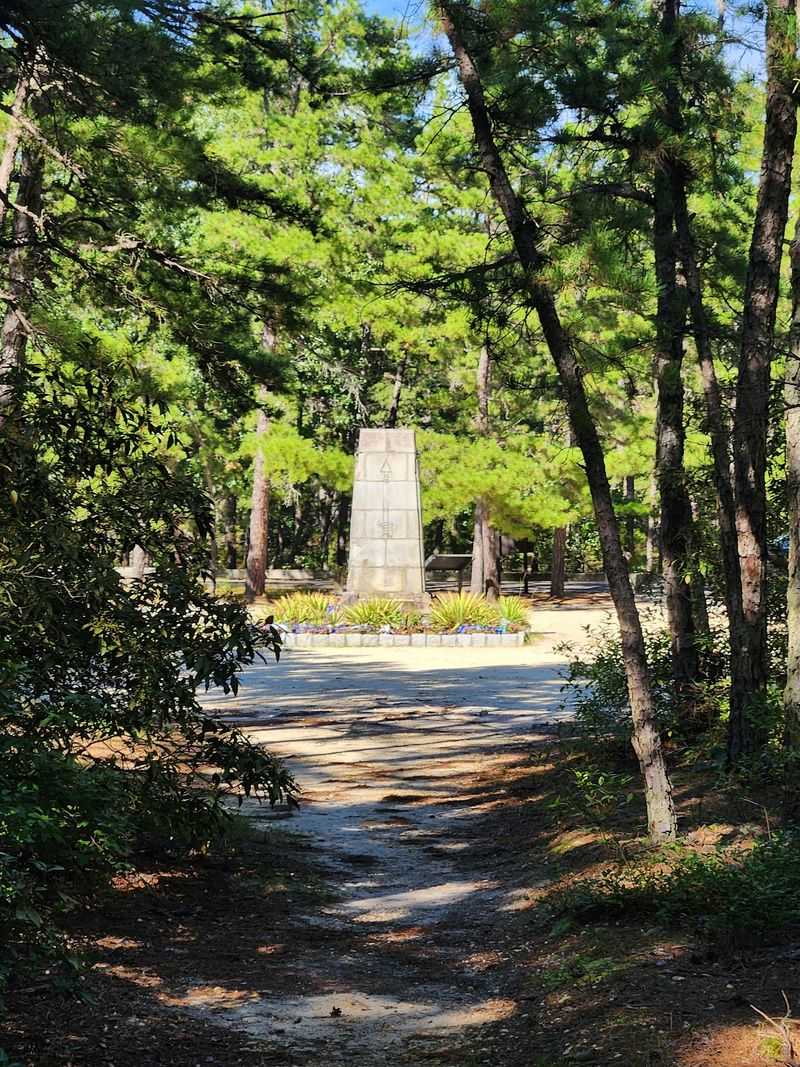
Their gift became a stone pillar about 12 feet tall. It stands at the exact site where the crash happened, deep inside Wharton State Forest.
The inscription makes the young donors’ role crystal clear. It calls the monument a homage of the children of Mexico to the aviator captain.
I’d say that line hits harder once you know the backstory. Most memorials list a committee or a city council as the sponsor.
This one credits kids, and it does so in both English and Spanish. That bilingual message fits the whole purpose of Carranza’s trip.
Today, visitors carry the tradition forward in a small way. Many leave pennies at the base of the monument as a nod to those original donations.
So tuck a coin in your pocket before you head out. It’s a tiny gesture, but it connects you to thousands of kids from nearly a century ago.
Not bad for loose change, right?
Meet The Young Pilot Mexico Called Its Own Lindbergh
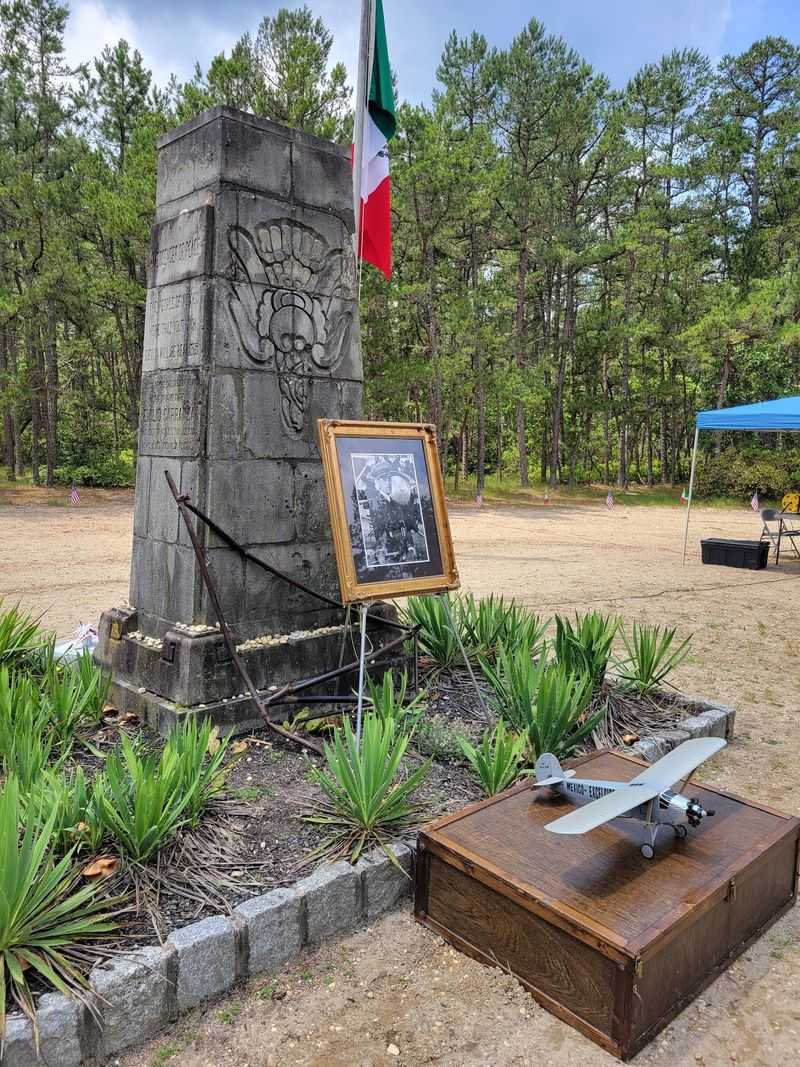
Emilio Carranza was barely in his twenties when he became a national hero. People called him the Lindbergh of Mexico, and he earned that nickname.
He was born on December 9, 1905, in Villa Ramos Arizpe, Coahuila. He was also the great-nephew of Mexican President Venustiano Carranza.
His flying record was seriously impressive. In 1927, he made the first nonstop flight from Mexico City to Ciudad Juarez.
A year later, he flew solo and nonstop from San Diego to Mexico City. That trip ranked as the third-longest nonstop solo flight at the time.
His plane had a fun name too, the Mexico-Excelsior. It was a Ryan Brougham, similar to Charles Lindbergh’s famous Spirit of St. Louis.
And yes, the two pilots actually knew each other. They met in El Paso, Texas, and became friends.
Okay, that’s impressive for someone who couldn’t even rent a car today. Carranza was skilled, bold, and trusted to represent his country.
Knowing his story before you visit changes everything. The pillar stops being just a stone in the woods and becomes a tribute to a real young person with big dreams.
A Friendship Flight That Ended In A Pine Barrens Storm
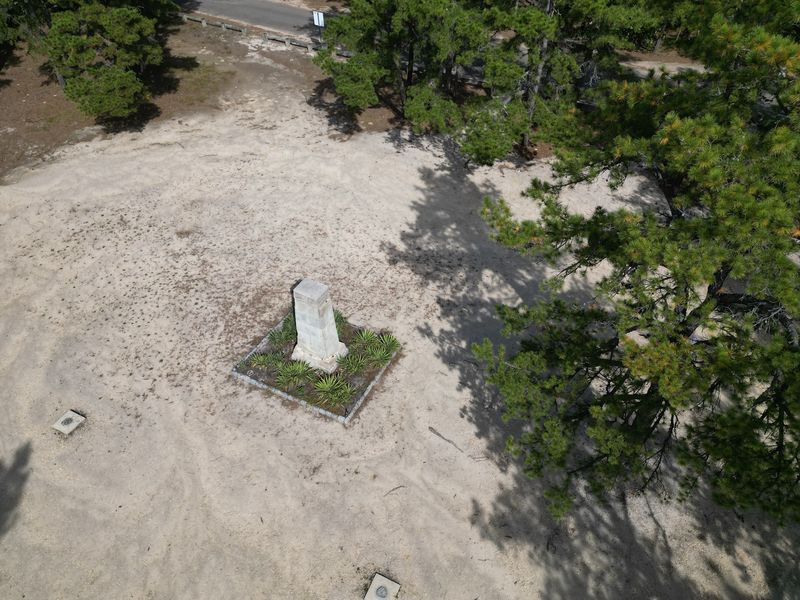
Back in 1928, Lindbergh had already flown to Mexico as a goodwill gesture. Carranza planned to return the favor with a goodwill flight from Mexico City to New York.
The goal was simple and kind. He wanted to build friendship between the two countries.
He made it to New York and got a hero’s welcome. Crowds celebrated him as an international star.
Then came the trip home. On July 12, 1928, his plane went down during a severe thunderstorm over the New Jersey Pine Barrens.
He was only 22. A local woodsman and berry picker named John Carr found him in the forest.
Carranza’s remains traveled back to Mexico by train with full military honors. A pine tree from the crash site was planted at his grave.
That pine tree detail gets me every time. A little piece of this New Jersey forest now grows in Mexico.
Fun fact for sharp-eyed visitors: the monument lists July 13 as the date. Most historical accounts place the crash on July 12, so you’ve got a nice bit of trivia to share with whoever tags along.
Look Closely For The Falling Eagle And Those Footprints
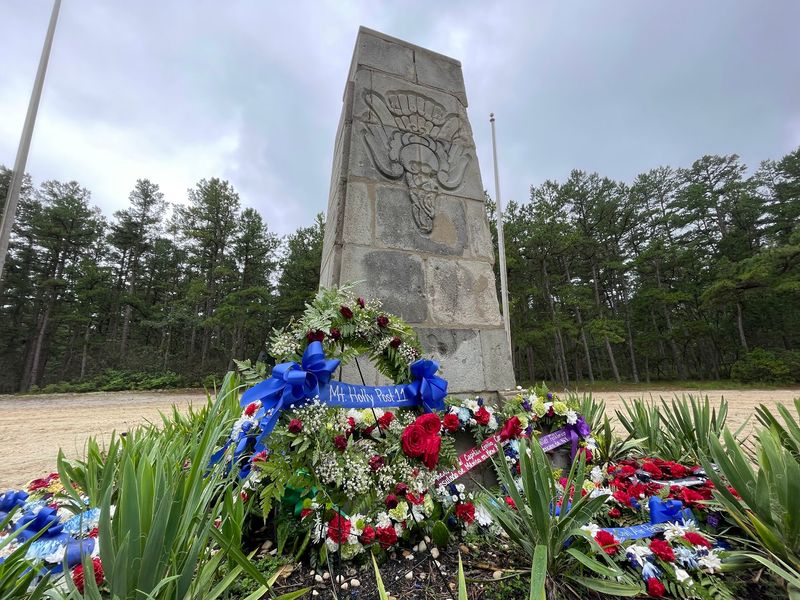
Symbols cover this monument, so slow down and really look. The design packs a lot of meaning into one stone pillar.
Near the top, you’ll spot a falling eagle carved in an Aztec design. It’s a powerful image for a pilot who lost his life in flight.
There’s also an arrow pointing toward the sky. Some see it as a reminder of where Carranza belonged, up in the clouds.
Now check one side for embedded footprints. They represent his final steps on Earth.
Honestly, that’s the detail most people miss. It’s subtle, but it makes the memorial feel personal instead of grand and distant.
Then there’s the inscription, written in English and Spanish. It calls Carranza a Messenger of Peace and expresses hope that his high ideals will be realized.
Reading both languages side by side is worth a minute. It shows how two countries shared one message of respect.
Bring your phone camera and grab close-ups of each carving. Morning or afternoon light can make the carved details easier to see.
You’ll probably notice something new each time you circle the pillar.
Every Block Made The Journey From Mexico
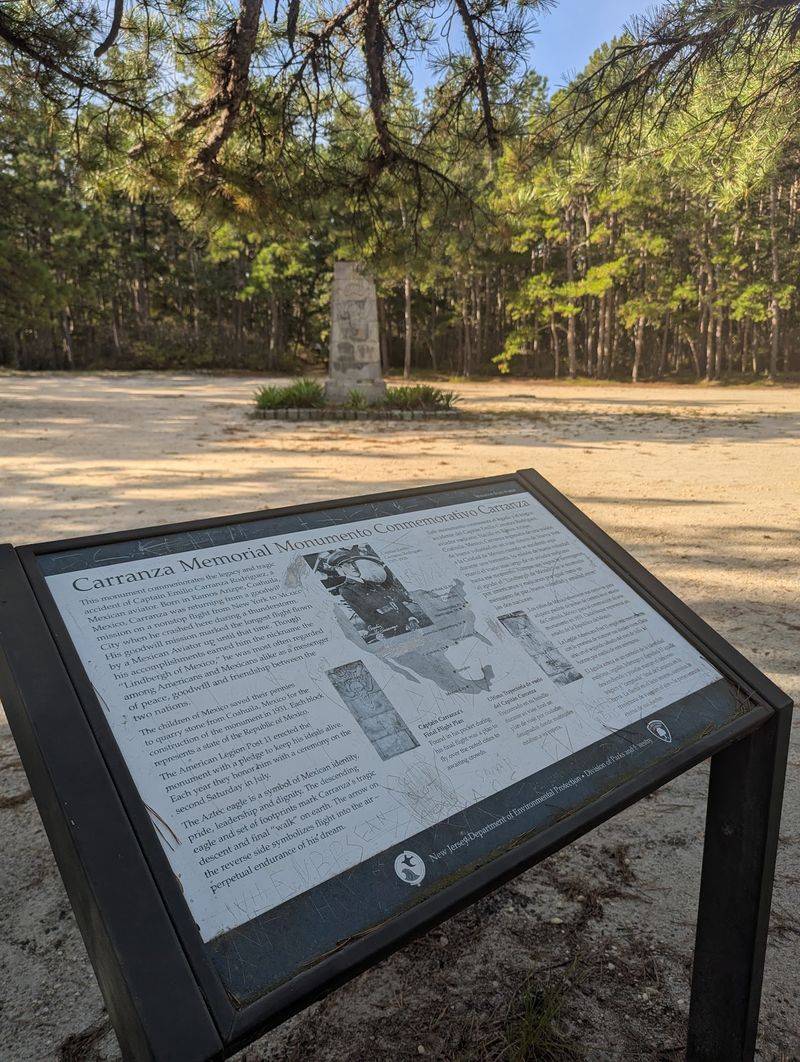
Most monuments use whatever stone is closest. The Emilio Carranza Memorial took the long way.
It was crafted in Mexico using stone brought to New Jersey for the memorial. Then it made the trip all the way to the New Jersey woods.
Here’s the cool part. Each block is reportedly meant to represent a Mexican state.
So the pillar works like a group hug from an entire country. Every region gets a spot in the stack.
The monument went up in the early 1930s. Some sources say 1931, while others say 1933.
Either way, it has stood in this sandy clearing for more than 90 years. Pine Barrens weather is no joke, so that’s a solid track record.
Stand close and notice how the blocks fit together. It’s a simple shape, but the story behind each piece makes it feel bigger than 12 feet.
I’m not sure what’s more surprising, the distance the stone traveled or how well it fits here. Somehow, a chunk of Coahuila looks right at home among the pitch pines.
That says a lot about the care that went into building it.
Getting There Means Sandy Roads And Zero Bars Of Signal
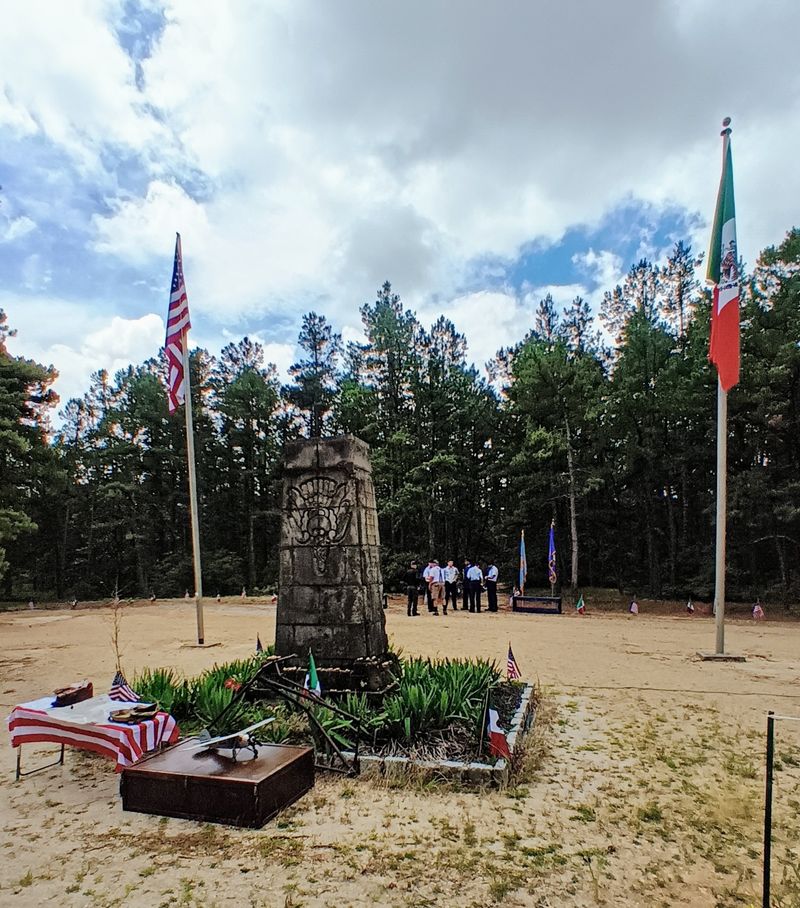
Plan ahead, because this spot sits way out in the pines. The memorial is on Carranza Road, Tabernacle, NJ 08088, in a remote corner of Wharton State Forest.
It’s about 40 miles east of Philadelphia. That makes it a doable day trip from the city.
Coming from the north, the road is paved. South of the memorial, it turns into a sandy, unpaved road typical of the Pine Barrens.
Download your maps before you go. Cell service out here can be spotty or missing.
The grounds are open daily from sunrise to sunset. There’s no entrance fee, which is always a nice surprise.
Parking is usually available near the monument. Dogs are welcome, but they need to stay on a leash.
One heads-up about access. The memorial is partially accessible to visitors with disabilities, although the sandy, uneven terrain may present challenges.
Contact the Batsto Visitor Center for specific accessibility information before visiting.
Also, don’t expect snack stands or diners right next door. Pack your own drinks and food, and carry out your trash.
The pines will thank you.
Lace Up Your Boots For The Batona Trail
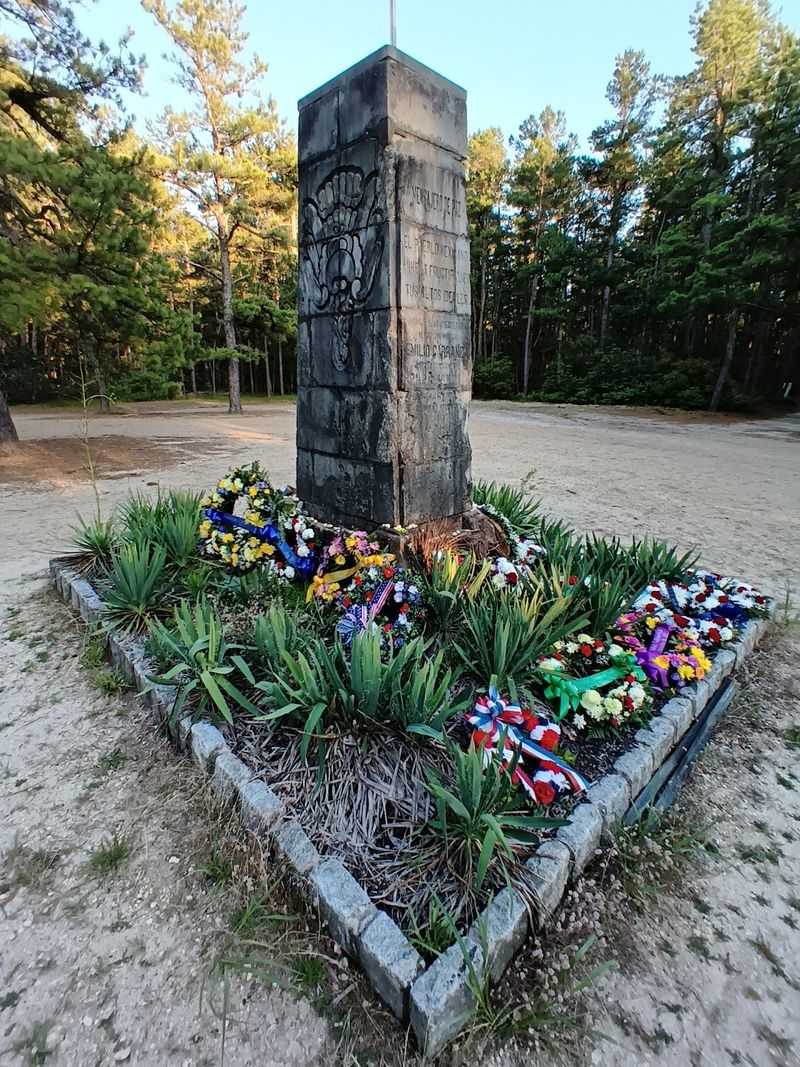
Hikers, this stop doubles as a great starting point. A section of the Batona Trail runs through this part of Wharton State Forest.
The trail is known for its natural beauty and history. It winds through the classic sandy, piney scenery the region is famous for.
You don’t have to tackle a huge hike either. Even a short walk from the memorial gives you a real taste of the Pine Barrens.
The ground is soft and sandy in many spots. Good shoes make a big difference.
Pair your visit with some quiet reflection at the monument first. Then stretch your legs and let the forest do the rest.
Wharton State Forest is part of the New Jersey State Park system, so it’s well worth exploring further. There’s plenty more forest beyond this one clearing.
Bring a trail map since signal can disappear quickly. Water and snacks are smart too, because services are far away.
Leash up your pup if you bring one along. A memorial visit plus a forest stroll?
That’s a pretty great way to fill a Saturday.
Keep An Eye Out For Foxes, Deer, And Carnivorous Plants
The Pine Barrens is one of the most unusual ecosystems in New Jersey. Around the memorial, nature puts on a quiet but fascinating show.
Watch for birds flitting between the pines. Deer and foxes also call this forest home.
Wetter areas hold even stranger surprises. Look for pitcher plants, which trap insects inside their leaves.
Yep, plants that eat bugs, right here in the Garden State. Cranberry bogs also show up in some soggy spots across the region.
The sandy soil and pine trees create a look you won’t find in most of the Northeast. It feels a little like stepping into another world.
That setting adds to the memorial’s calm mood. The clearing feels peaceful and reflective, surrounded by tall pines.
Move slowly and keep your voice low if you want to spot wildlife. Early morning or later afternoon may give you better chances.
Binoculars are handy, and so is a camera with a good zoom. Just remember to stay on paths and leave plants where they grow.
That way, the next visitor gets to enjoy the same wild scenery that surrounds Carranza’s tribute.
