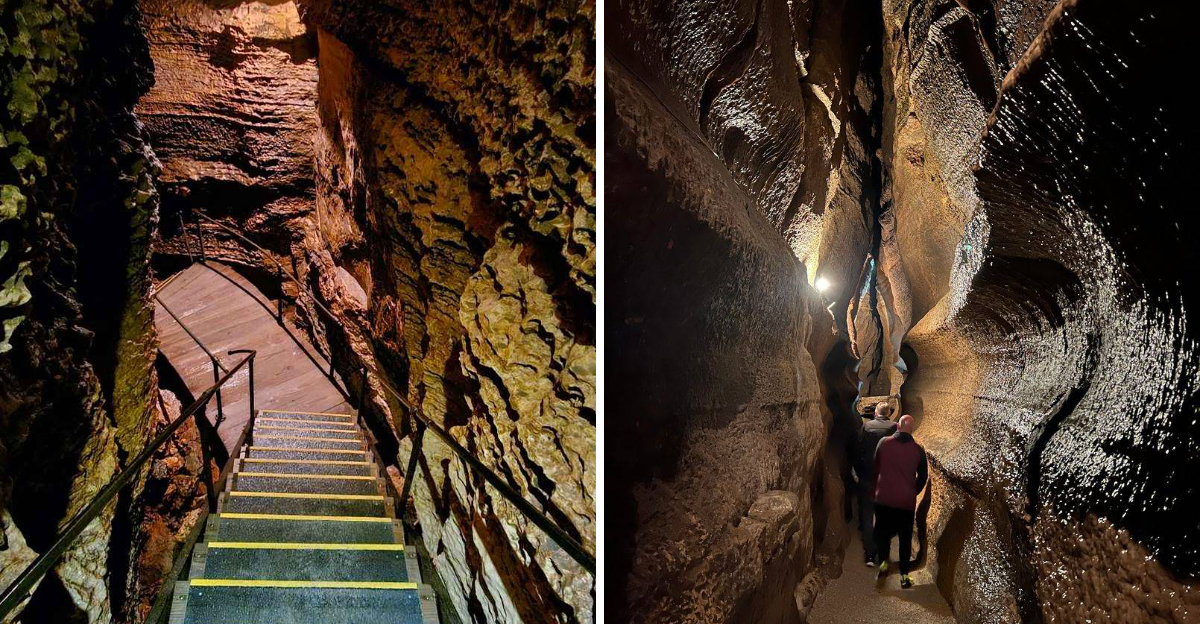
Ice shouldn’t survive summer heat, yet somehow it does here, tucked far enough underground that outside temperatures barely register at all.
Walking deeper into the cave means walking into a completely different climate too, cool air replacing whatever heat waited outside just minutes earlier. Formations built up slowly over years, holding their shape regardless of what season it happens to be aboveground.
Minnesota summers get plenty hot, yet this cave stays consistently cold no matter how brutal conditions get outside. Visitors often bring jackets specifically for the temperature drop, something few expect until someone warns them beforehand.
Minnesota travelers looking to escape summer heat keep finding their way underground here instead of anywhere typical. Some places manage to hold onto winter permanently, hidden just far enough below the surface that seasons simply stop applying.
The Cold That Hits You at the Entrance
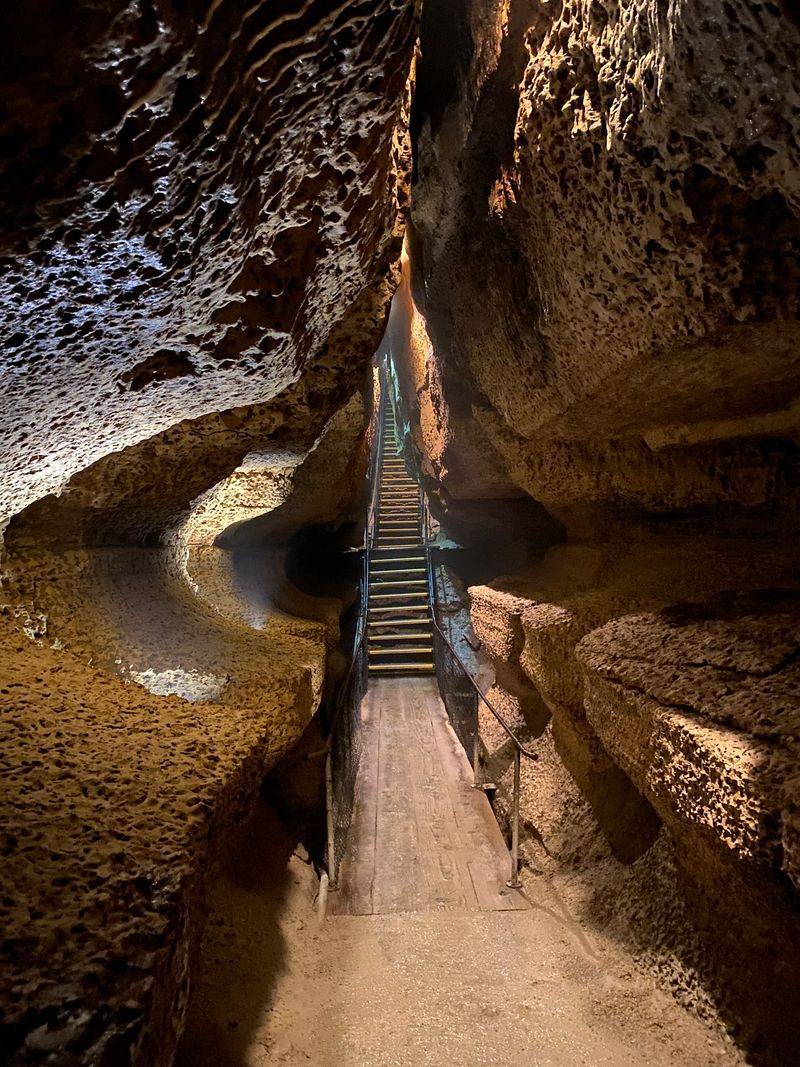
Summer heat vanishes fast here. The cave holds a steady temperature in the upper 40s to low 50s all year, so a July afternoon outside might read 85 degrees while the passages below stay refrigerator-cool.
That contrast is half the fun. Visitors who forget a jacket tend to regret it about ten minutes into the walk, especially in spots where water drips steadily from the ceiling.
A light hoodie or rain shell works well, and long pants help too. Because moisture clings to the walkways, shoes with real grip matter more than fashion, and waterproof soles are a smart choice if the forecast has been wet.
Kids seem to love the chill more than adults do, treating it like a natural air conditioner after a day in the car. What surprised me most was how quickly the body adjusts, then how warm the surface air feels on the way back out. Pack that extra layer even if the parking lot feels sweltering.
Frosty Formations and Crystal-Looking Walls
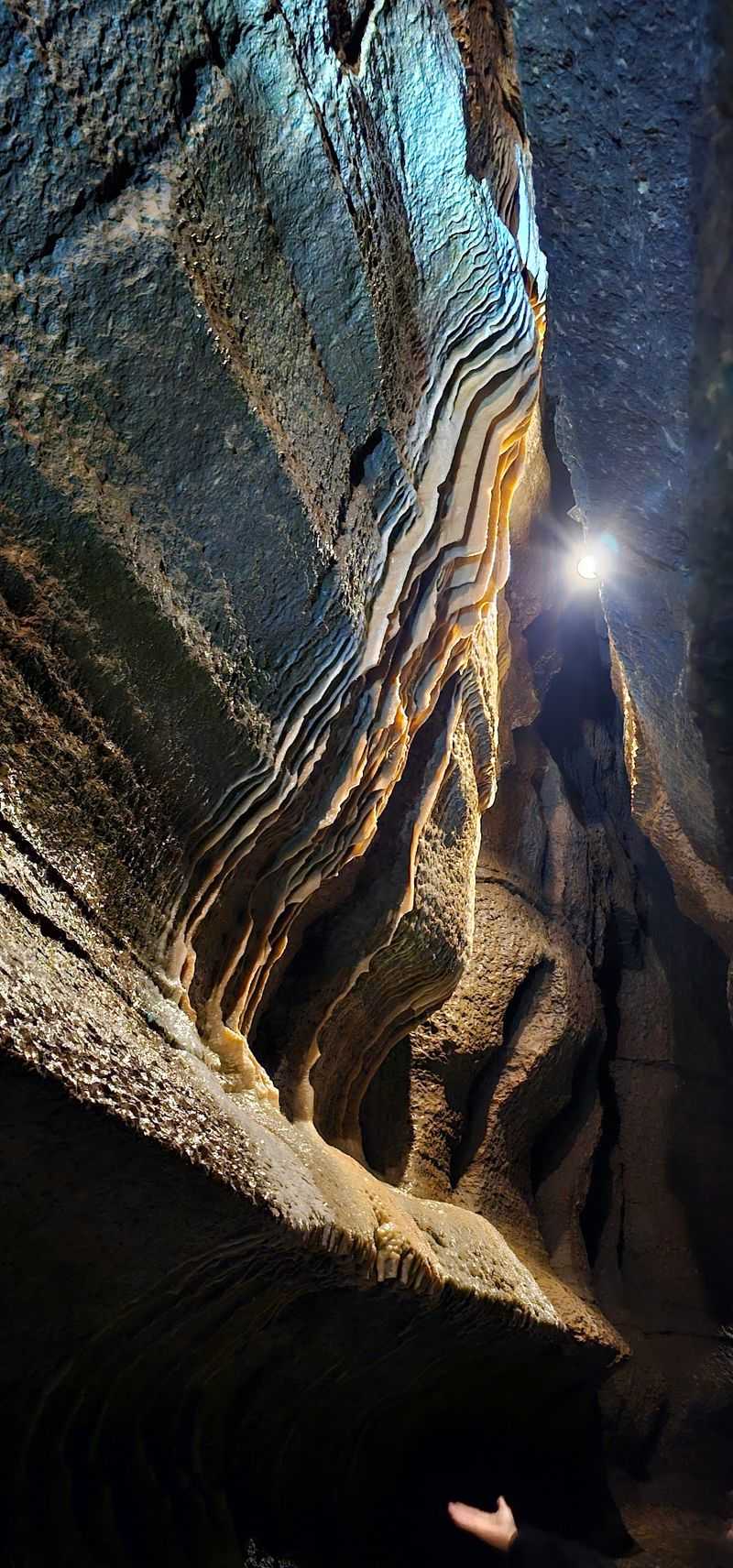
Some sections shimmer in a way that genuinely looks frozen. Mineral deposits build up over thousands of years, leaving pale, crusty coatings and glassy sheets that catch the lights and read as ice at first glance.
Water is the artist here. Droplets seep through limestone, carry dissolved minerals, and slowly leave behind stalactites hanging from above and stalagmites rising from below.
Guides point out the difference with a memorable trick, noting that stalactites hold tight to the ceiling. One formation gets compared to strips of bacon because of the thin, striped ribbon of stone, and honestly, the nickname fits.
Photographs rarely capture it well without a steady hand, since the lighting is soft and intentionally subtle. Slow down in those chambers instead of rushing to the next set of stairs.
Certain rock surfaces even glow under a guide’s special light, a small moment that had everyone in my group leaning in closer for a better look.
A 60-Foot Waterfall Hidden Underground
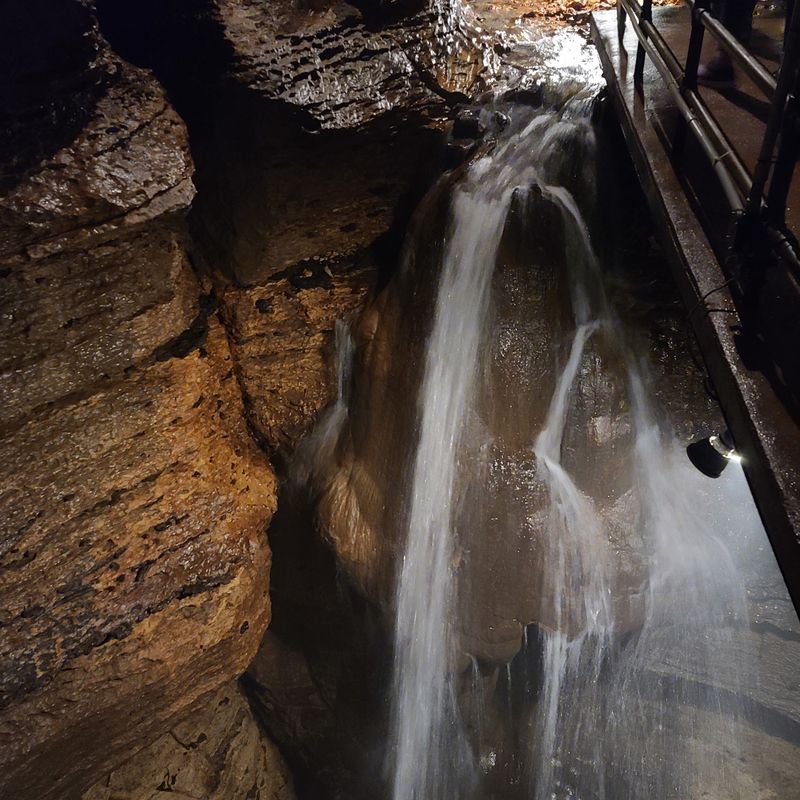
Nothing prepares you for hearing rushing water while standing deep beneath a cornfield. The underground waterfall drops around 60 feet through a shaft in the rock, and the sound bounces off the walls long before the falls come into view.
Mist drifts across the viewing area. Depending on recent rainfall, the flow can be a thundering rush or a thinner ribbon, which means no two visits look quite the same.
Guides usually pause here for a few minutes, giving everyone time to look up into the darkness where the water disappears. It is easily the most photographed spot on the route, though phone cameras struggle with the low light.
Bring a rain jacket if drips bother you, because this section stays noticeably wet. Standing there, listening to water carve stone in real time, gives you a sense of scale that a museum exhibit never could. That single feature makes the whole hour underground worth it.
Fossils Older Than Almost Anything You Have Seen
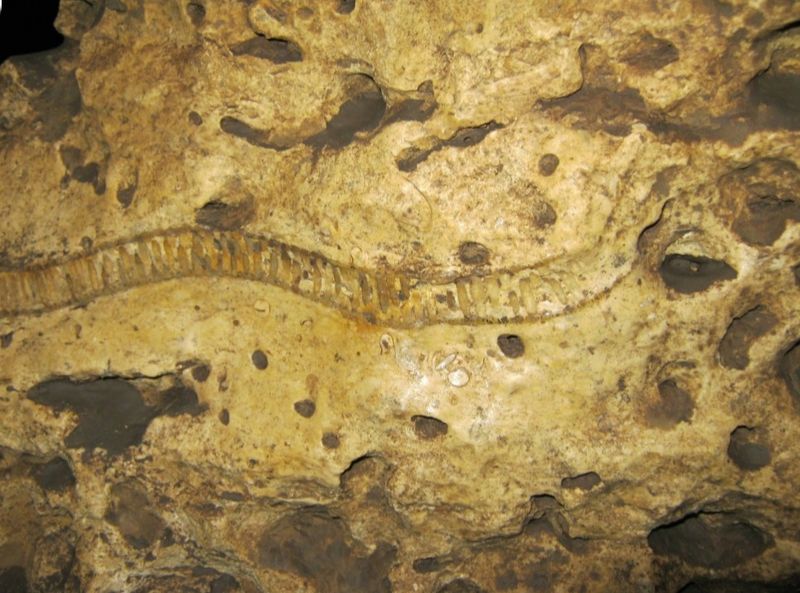
Look closely at the walls and shapes start appearing. Spirals, shells, and coiled outlines sit pressed into the limestone, leftovers from ancient sea creatures that lived when this part of Minnesota sat under warm ocean water.
Some are small enough to miss entirely without a guide pointing them out. Others are surprisingly clear, and once your eyes adjust you begin spotting them everywhere along the passage.
Fossil hunting turns the tour into a game for younger visitors, who race to find the next one. Guides explain how the rock itself formed from layer after layer of sediment and shells, which makes the whole cave feel like a giant history book turned sideways.
Touching is generally discouraged, since oils from hands affect the rock over time. Ask questions if something catches your eye, because the staff genuinely enjoy pointing out details most people walk right past. Millions of years of history, sitting at eye level.
The Story of Three Pigs and a Sinkhole
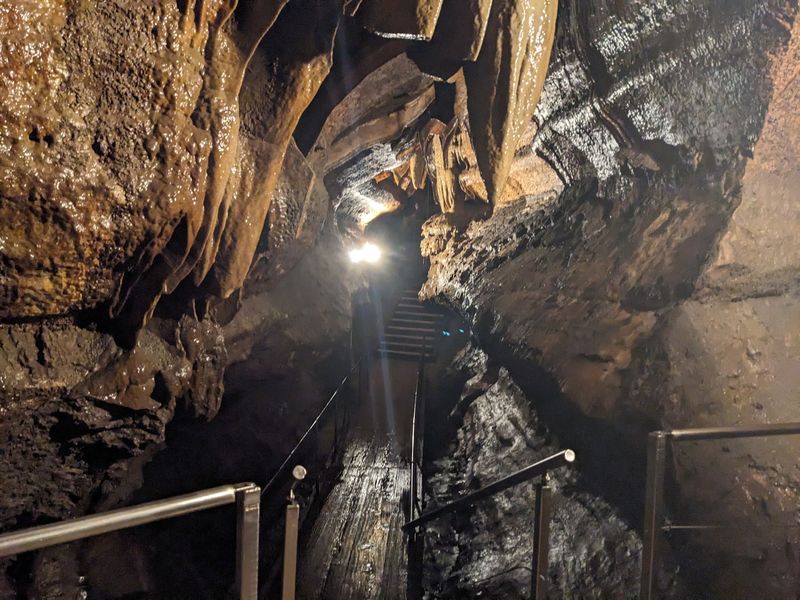
Farm animals get credit for this discovery. Back in the 1920s, pigs went missing on a local farm and turned up in a sinkhole, which led to the discovery of the cave system below.
It sounds too tidy to be true, yet it is the origin story guides share on every tour. The pigs were reportedly fine, which is the detail most visitors want confirmed.
Karst landscapes like this one are full of sinkholes, formed when water dissolves limestone and the surface eventually collapses. Southeastern Minnesota has plenty of them, and driving the back roads you start noticing odd dips in otherwise flat fields.
Knowing the backstory changes how you see the entrance. What began as a farmer’s problem became one of the region’s best-known attractions. Ask your guide about the early exploration days too, when people crawled through passages with far less lighting and no handrails to hold onto.
Stairs, Narrow Passages, and What Your Legs Should Expect
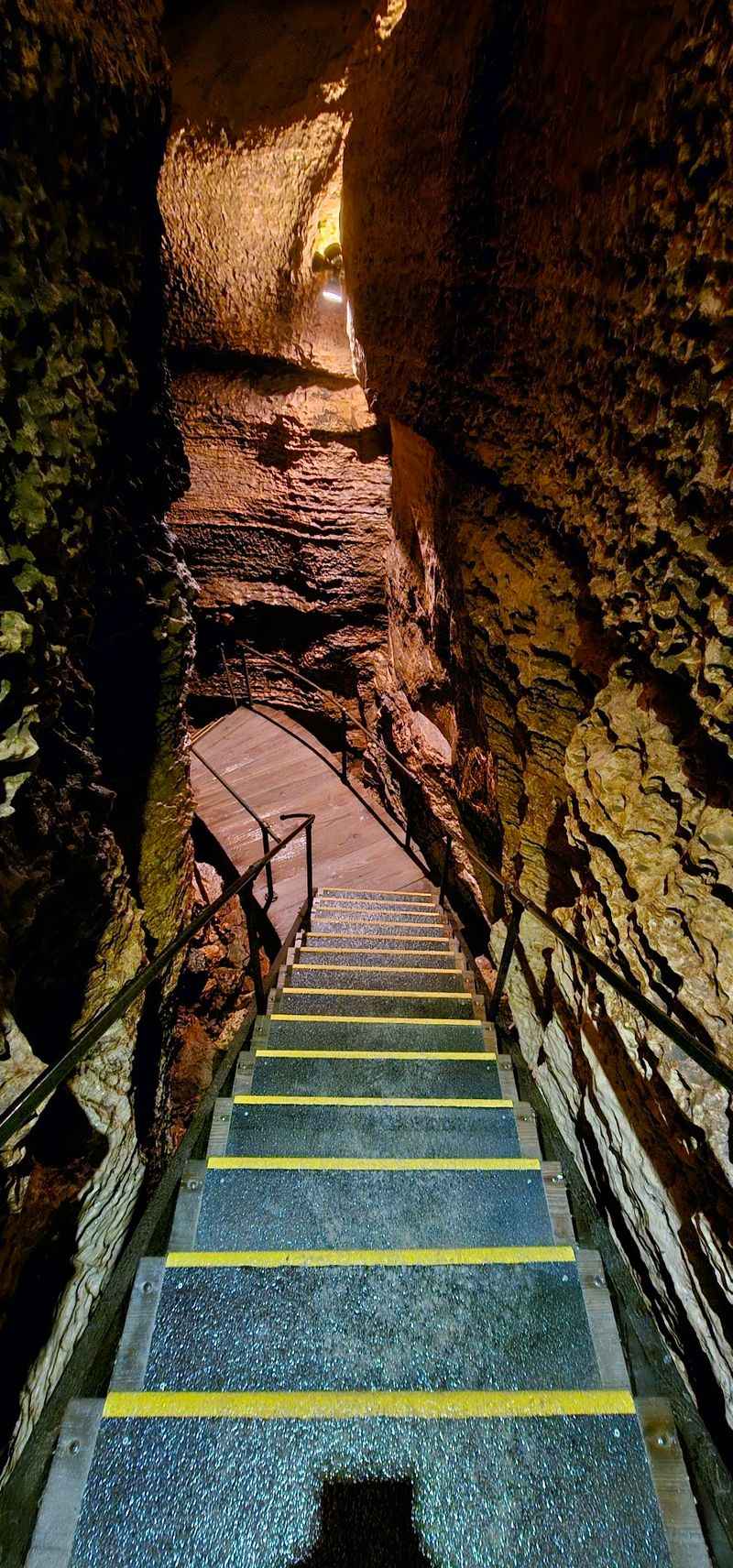
Let me be honest about the workout. The full route runs close to a mile round trip, with several hundred stairs split between the descent and the climb back out.
They come in sections rather than one endless flight, which helps a lot. Handrails line the steeper stretches, and guides encourage everyone to take their time on the return climb.
Certain passages narrow enough that you turn sideways or duck slightly. Broad-shouldered visitors manage fine, though anyone uneasy in tight spaces should mention it to staff before the tour begins.
Strollers and wheelchairs cannot be accommodated, and the damp walkways call for sturdy footwear. Catching your breath on the way up is normal, and nobody rushes you.
Younger kids usually need a hand on the steeper parts. Call ahead at 507-886-6606 if anyone in your group has mobility concerns, because the staff give straight answers about what the route involves.
Guides Who Actually Make the Geology Fun
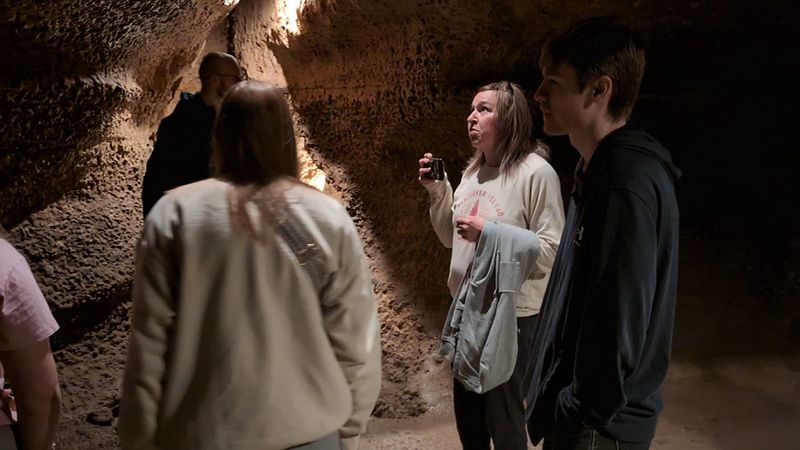
The person leading your group shapes the whole hour. Guides here mix geology, local history, and a steady stream of jokes, and they clearly enjoy watching people react to the bigger chambers.
Questions are welcome. Groups tend to stay small enough that everyone can hear and see, and quieter weekday afternoons sometimes turn into near-private tours.
One thing I appreciated was the pacing. Nobody herds you along, and there is real time built in for photos and looking around instead of a constant march forward.
Explanations stay simple without feeling dumbed down, which works well for families with elementary-age kids. Guides also talk about ongoing conservation work and studies happening in the cave, a detail that adds weight to the experience.
Tours last about an hour from start to finish. If a formation catches your interest, speak up, because the answers you get are often the most memorable part of the visit.
The Underground Chapel Where Couples Say Yes
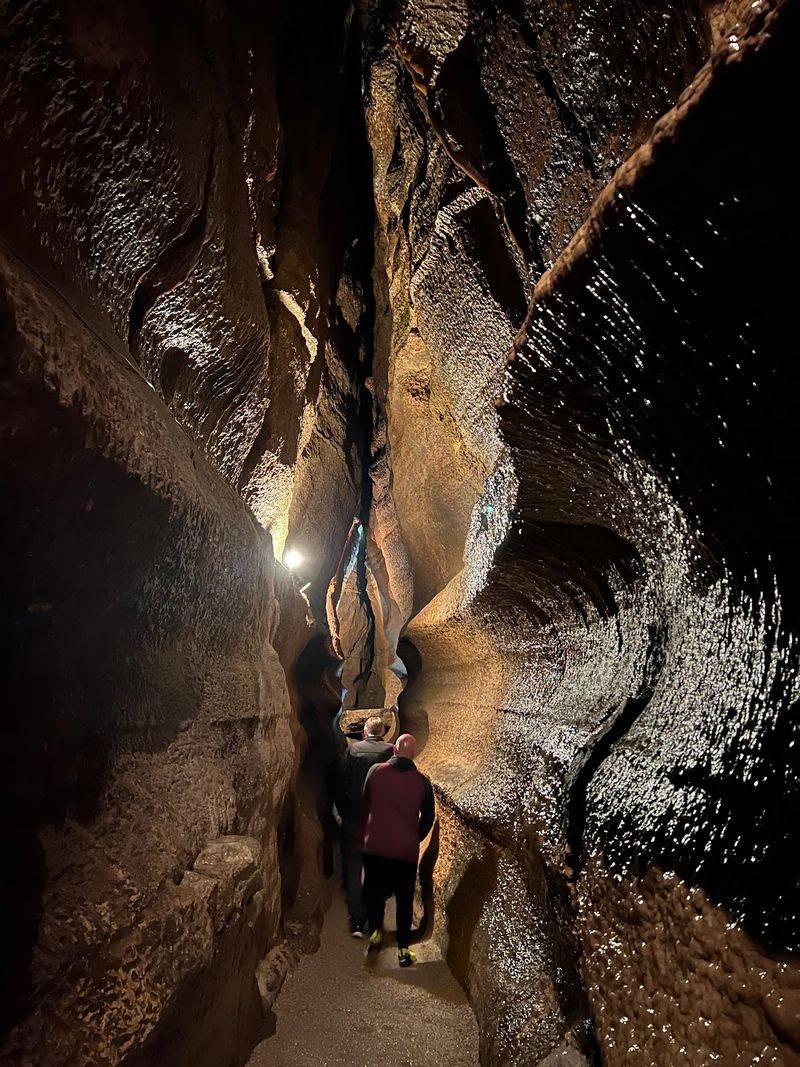
Weddings underground sound like fiction until you see the space. A chamber along the route has been used as a chapel, and couples have exchanged vows there surrounded by limestone walls and cool, still air.
Acoustics in the room are unexpectedly gentle. Sound softens against the rock, which gives the spot a quiet, almost hushed quality compared to the noisier waterfall chamber.
Guides usually mention the tradition and let people take it in for a moment. It is a strange and charming detail that sticks with you long after the tour ends.
Practical note for anyone daydreaming about it: guests would need to handle the same stairs and damp footing as regular visitors. Not exactly a heels situation.
Even without any ceremony happening, the chamber is worth pausing in. There is something calming about standing in a room carved entirely by dripping water over unimaginable stretches of time.
Mini Golf, Gem Mining, and Picnic Tables Above Ground
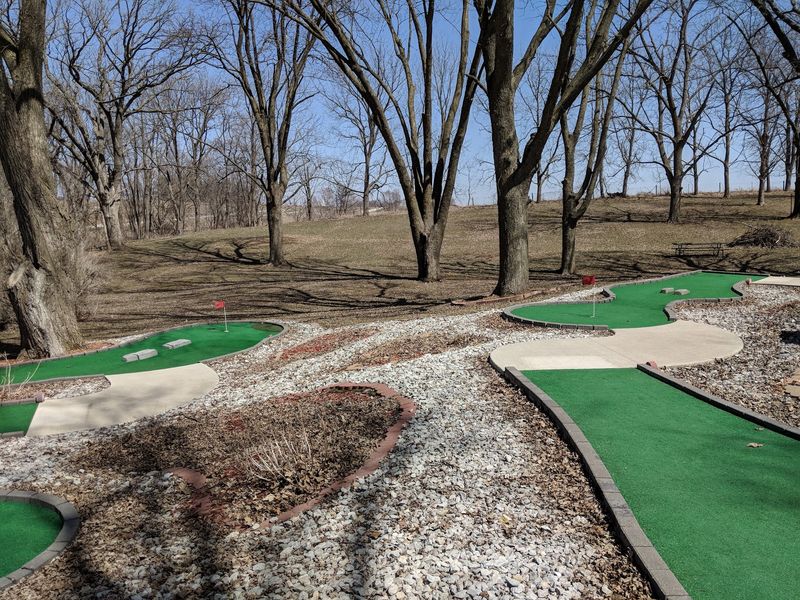
Arriving early turns out to be a good strategy. The grounds above the cave include a mini golf course, a gem mining setup, a playground, and picnic tables scattered across mowed grass.
Families use that time well. Kids burn off energy before spending an hour walking carefully through narrow passages, which makes the tour smoother for everyone.
Food and drinks are not allowed inside the cave, so packing a cooler and eating outside afterward works nicely. Parking is free and close, though the lot can fill on busy summer weekends.
The gift shop deserves a browse too, stocked with rocks, minerals, lamps, and local souvenirs. Waiting for a tour time never feels like dead time here.
Restrooms are clean and easy to find near the visitor center. Give yourself two to three hours total if you want the full experience without watching the clock.
Planning the Drive and Making a Day of It
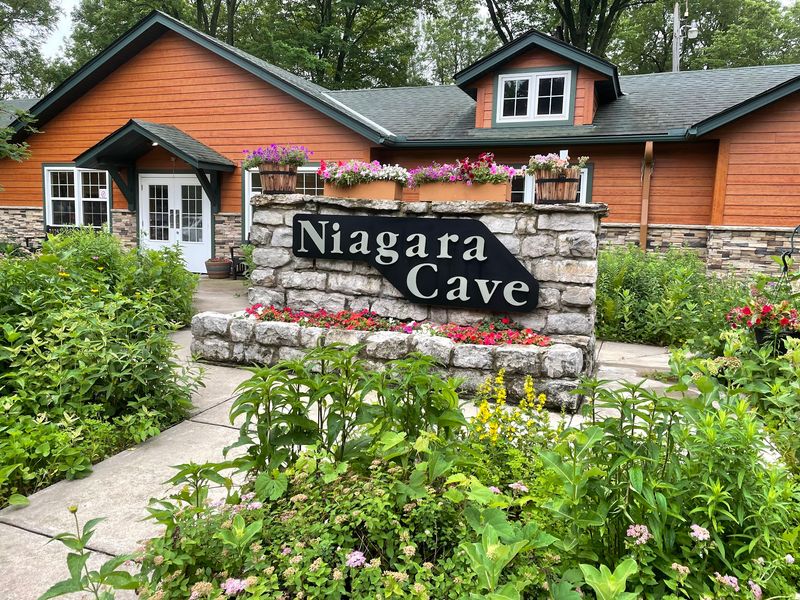
Getting there is part of the appeal. Rolling farmland, red barns, and long gravel side roads fill the drive through Fillmore County, and the scenery keeps things pleasant even before the cave appears.
Booking tickets ahead is the smart move on weekends and holidays, since specific tour times fill up. Walk-ins are possible, though you may wait for the next opening.
Hours shift slightly by day, with slightly earlier openings and later closings on Saturdays, so check before setting out. Harmony itself sits nearby and the surrounding countryside is known for Amish shops and farm stands worth a stop.
Bring water, snacks, grippy shoes, and that jacket you keep hearing about. Cell service can be spotty out here, so download directions before leaving town.
The address is 29842 Co Rd 30, Harmony, MN 55939, United States, and it is easily one of the most surprising half-days in southeastern Minnesota.
