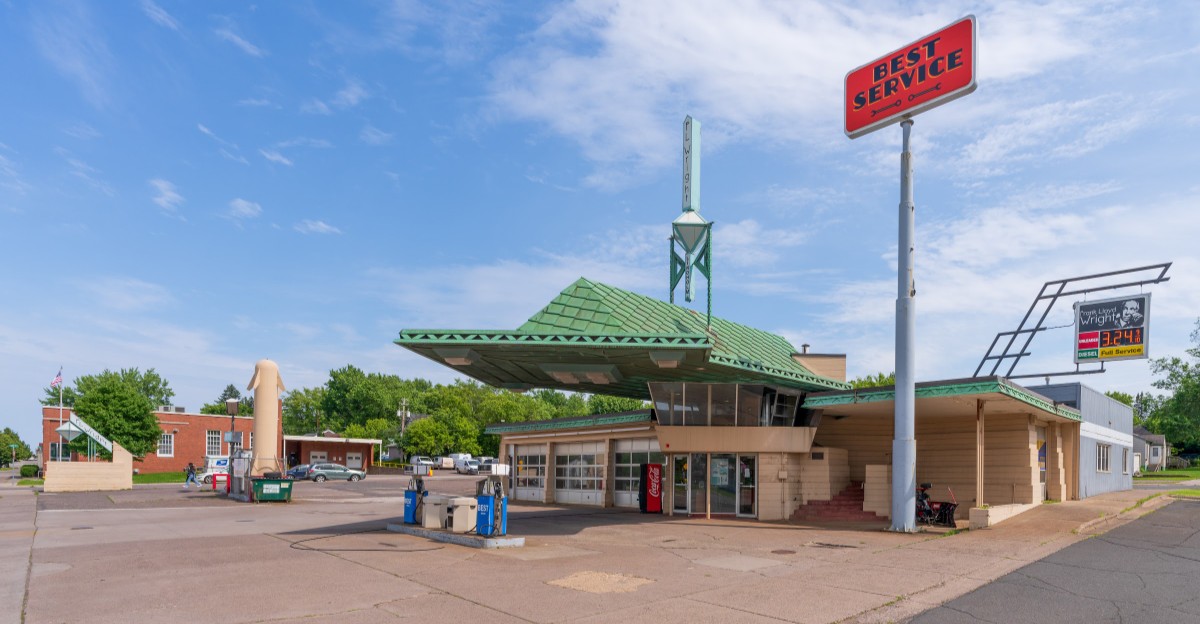
Frank Lloyd Wright, the architect behind Fallingwater, once designed a gas station. Even better, it still pumps fuel today, and an attendant will fill your tank for you.
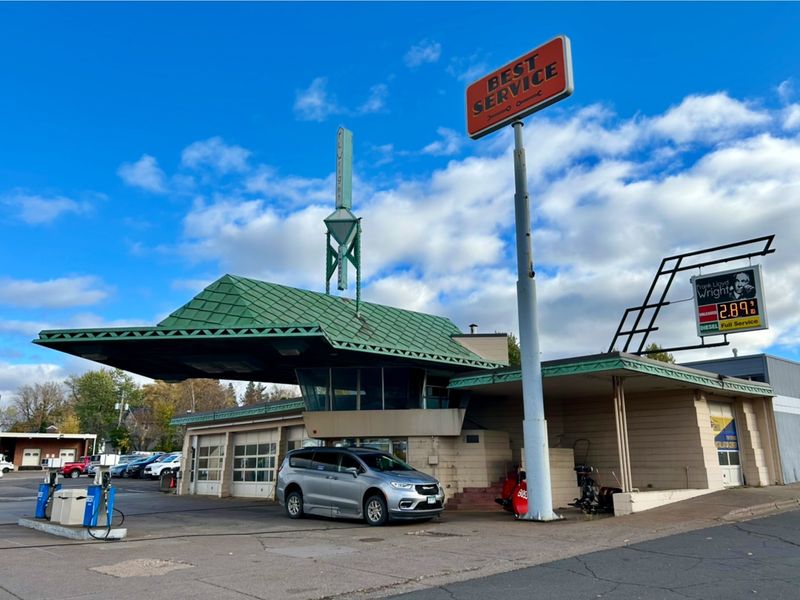
The building has a cantilevered copper roof that juts out like the prow of a ship. Above it sits a glass-walled observation lounge. Wright imagined drivers relaxing up there while their cars got serviced below.
I love that this is not a museum piece behind velvet ropes. It’s a working stop in northern Minnesota, with oil changes, propane fills, and real customers. I believe that makes it one of the most down-to-earth Wright buildings anywhere.
Wright dreamed of turning roadside eyesores into something beautiful. He drew this design for a future city that never got built.
Look Up, Because That Tower Is The Star Of The Show
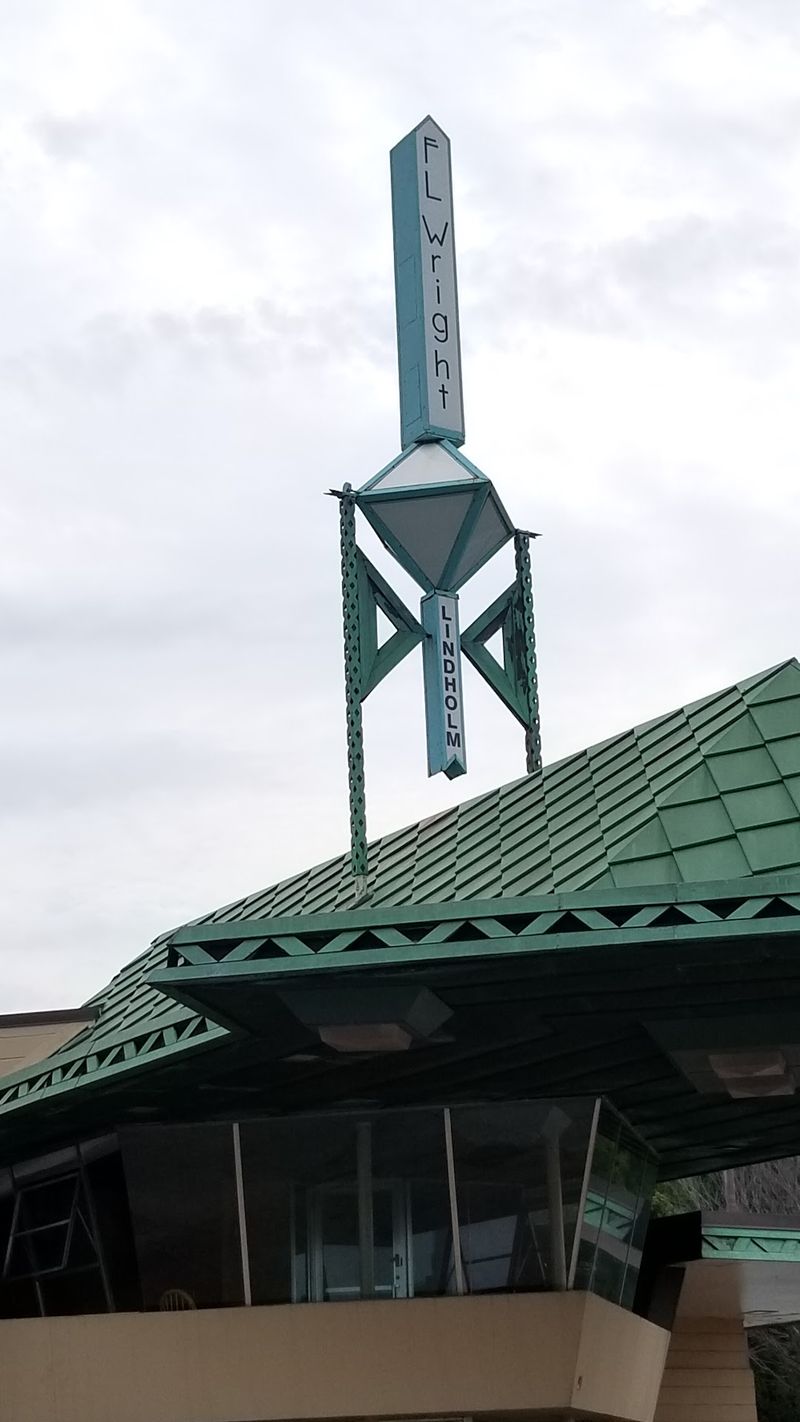
Most gas stations announce themselves with a glowing sign on a pole. Wright had a far more stylish idea.
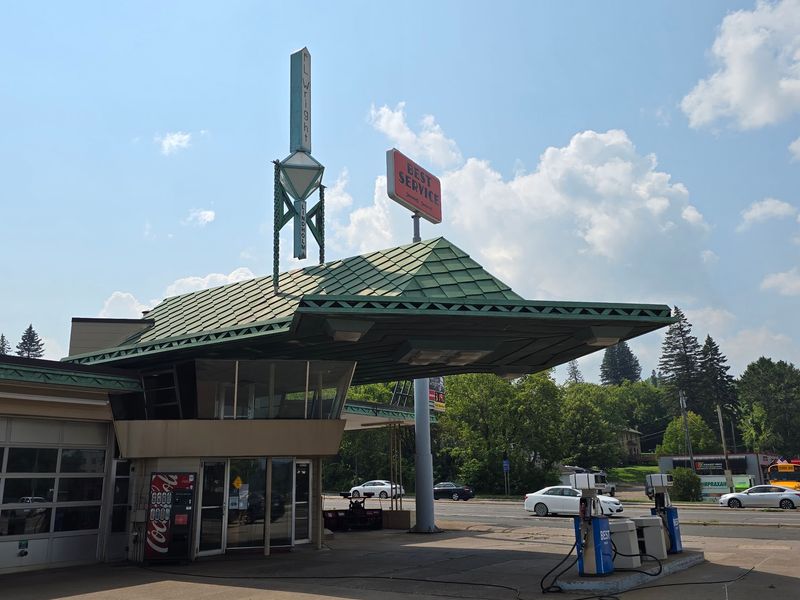
A tall pylon rises above the station like a slim tower. It acts as a landmark, catching your eye from down the street. Wright often liked strong vertical lines paired with long, low shapes, and this building shows that habit nicely.
The tower is part of why the place feels so unusual next to typical roadside stops. It gives the station a confident, almost futuristic look. In the 1950s, that must have seemed like a glimpse of tomorrow.
Photographers, take note. The tower looks great framed against the sky, especially when you step back across the street. Just stay aware of traffic, since Cloquet Avenue is a working road.
Here’s a fun angle to try. Capture the tower and the dramatic roof in the same shot. Together they tell the whole story of Wright’s design in one picture. Your friends back home might not believe it’s a gas station until you show them the pumps.
That Copper Roof Stretches Out Like It’s Defying Gravity
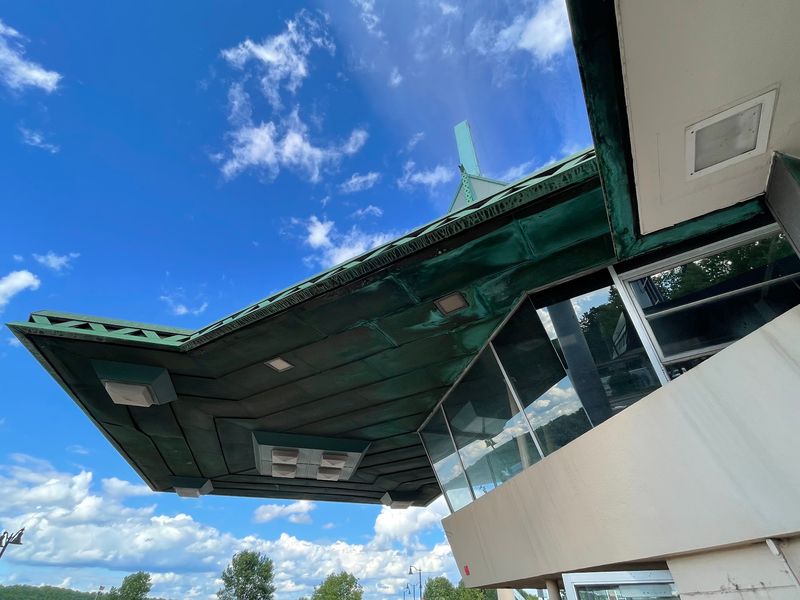
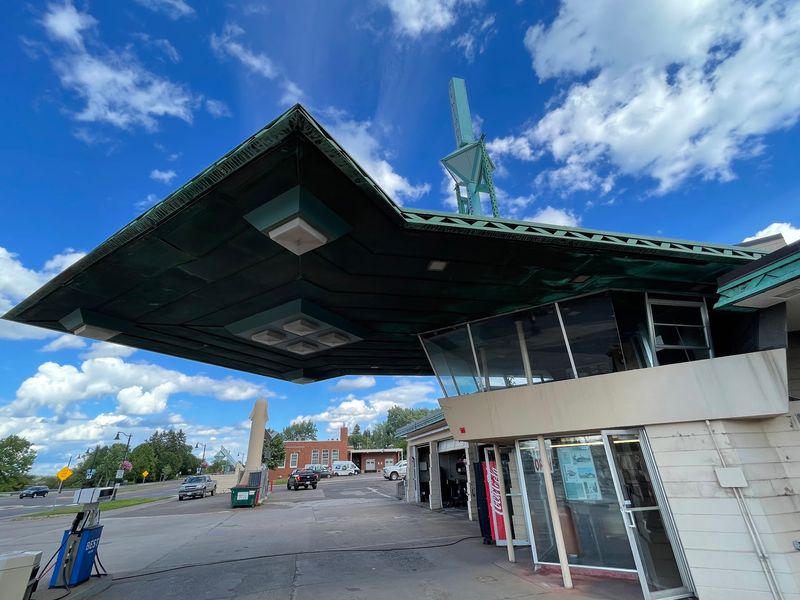
Cantilevers were one of Wright’s favorite tricks. Here, a big copper-clad canopy stretches far out over the fuel area with no posts holding up its tip.
The effect is bold and a little sneaky. Your brain expects support columns, and they simply aren’t there. It’s the same daring spirit that made Fallingwater famous, just on a much smaller scale.
The canopy had a practical side, too. It sheltered drivers and attendants from rain and snow. In northern Minnesota, that’s a very thoughtful feature for a fuel stop.
Wright originally planned for fuel hoses to drop down from the canopy above. That would have kept the ground clear and tidy. Safety rules led to more traditional pumps on the ground instead.
So when you stand underneath, try picturing his first idea. Hoses dangling from overhead would have looked wildly modern for the era. Even without them, the roof remains the most dramatic part of the building. It’s easy to spend a few minutes just staring up at it and wondering how it stays put.
Climb Up To The Lounge Wright Built For Waiting Drivers
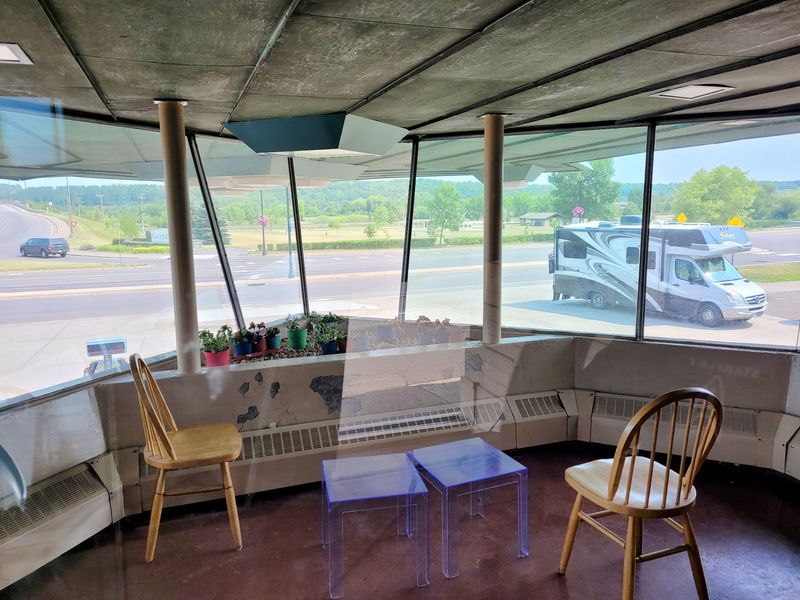
Waiting for an oil change rarely feels fancy. Wright tried to fix that with a glass-walled observation lounge on the upper level.
The idea was simple and kind of charming. Customers could relax upstairs with a view while their cars got serviced below. Rows of windows give the room that panoramic feel Wright used in many of his projects.
Staff have been known to open the upstairs room for curious visitors when time allows. That’s a generous perk at a busy working business. Asking politely is the way to go, and it’s never guaranteed.
The lounge shows how Wright thought about people, not just buildings. He wanted everyday moments to feel a bit more pleasant. Even a fuel stop deserved some comfort and a good view.
Of course, the lounge reflects the 1950s car culture it came from. Back then, road trips were becoming a national pastime. A stylish place to pause fit right into that mood. Standing up there today, you get a small window into how Wright pictured the future of driving.
Yes, Someone Will Actually Pump Your Gas For You
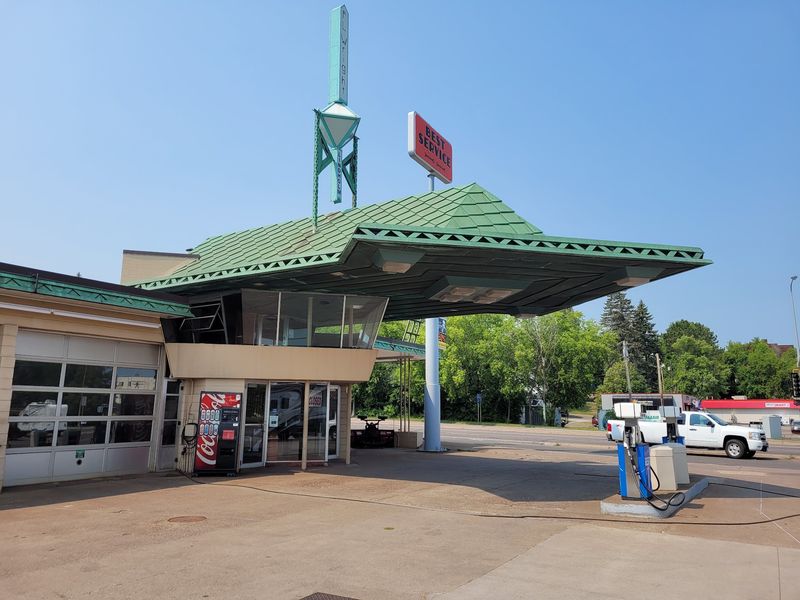
Full service is almost a lost art. At the R.W. Lindholm Service Station, it’s still part of the routine.
An attendant comes out and pumps your fuel while you stay in your car. For many younger drivers, that might be a brand-new experience. For older folks, it can feel like a happy flashback.
That old-school touch matches the building perfectly. A 1950s design paired with 1950s-style service just makes sense. It’s like the whole place agreed to keep a little piece of the past running.
A quick tip before you pull in. The station keeps weekday hours, roughly 8 AM to 5 PM, Monday through Friday. It’s closed on weekends, so plan around that if you want to buy fuel.
You can still admire the outside when it’s closed. Still, there’s something satisfying about filling up at a Wright building. It turns an ordinary errand into a story worth telling. Not many people can say their road trip fuel came from a famous architect’s design.
Need An Oil Change? The Garage Is Open For Business
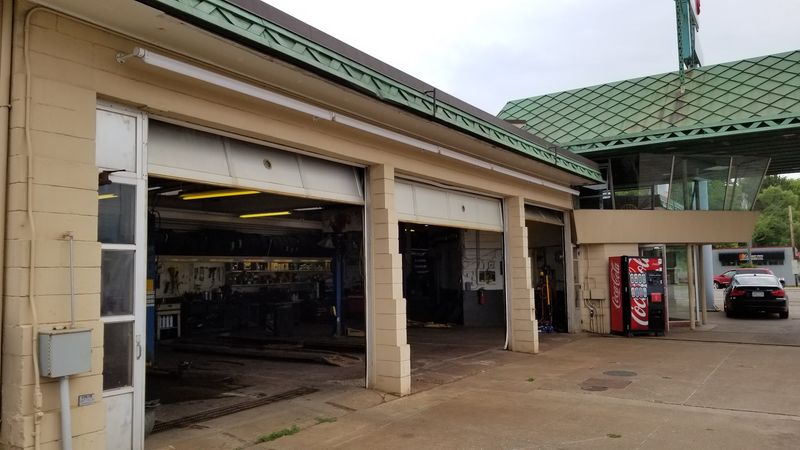
Plenty of famous buildings are look-but-don’t-touch. This one will happily take a look at your car’s struts.
The station works as a real auto service shop. That makes it different from most Wright sites, which tend to operate as museums or private homes. Here, the building still does exactly the job it was designed for.
Local drivers rely on it for regular car care, not just sightseeing. It’s a reminder that great design can also be useful every single day. Wright probably would have liked that.
Propane tank refills are another handy service here. Campers and grillers in the area know that’s a big deal. Heading to a cabin up north? It’s a convenient place to top off.
If you need repairs, calling ahead during business hours is smart. Like any working shop, schedules can fill up. It’s also wise to ask about payment options before work begins. Those small steps help your visit go smoothly, whether you came for a tune-up or just a good look.
A Famous Architect Really Did Draw Up A Filling Station
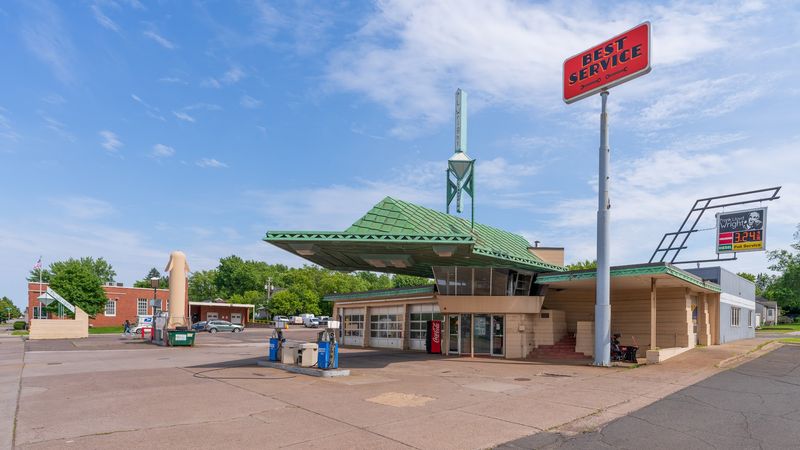
Fame did not stop Frank Lloyd Wright from thinking about the humble gas station. The R.W. Lindholm Service Station in Cloquet, Minnesota, is proof that he took the job seriously.
Wright designed it in the 1950s, and it opened in 1958. It’s widely described as the only gas station built from his plans that actually exists. That alone makes it a bucket-list stop for architecture fans.
The building came from Wright’s larger vision called Broadacre City. In that plan, service stations would act as small community hubs, not just places to grab fuel. They’d be spread out across a landscape built around cars and open land.
Broadacre City stayed a dream on paper. This station, though, turned one slice of it into something you can drive up to. It’s a rare chance to see a big idea shrunk down to street size.
The station is listed on the National Register of Historic Places. Informational plaques on site share the backstory. So you can learn a little history while waiting for your tank to fill.
Grab A Souvenir Before You Hit The Road
Some road trip souvenirs end up in a drawer. A hoodie featuring a Frank Lloyd Wright gas station is harder to forget.
The station has offered merch like T-shirts, magnets, and thick hoodies. They show a detailed drawing of the building. It’s a fun way to prove you found one of the quirkiest Wright sites in the country.
Merch options can change, so don’t count on any one item being in stock. Still, it’s worth asking while you’re there. Supporting the business also helps keep the station going.
A magnet is an easy, budget-friendly pick. It fits in any bag and slaps right onto the fridge back home. Every time you grab a snack, you’ll remember that tower.
Hoodies make sense in this part of Minnesota, where chilly days come early. You’ll get warmth and a conversation starter in one. Someone is bound to ask, “Wait, Frank Lloyd Wright designed a gas station?” Then you get to tell the whole story.
Finding It Is Easy Once You Know Where To Look
Cloquet sits about 20 miles southwest of Duluth. That short drive makes the station an easy side trip from the North Shore.
You’ll find the R.W. Lindholm Service Station at 202 Cloquet Ave, Cloquet, MN 55720. It sits along a main road through town, so you won’t need to wander country lanes. The tower helps you spot it as you get close.
Timing matters if you want the full experience. Weekday business hours give you the best shot at fuel, service, and maybe a peek upstairs. Weekend visits still work for photos of the outside.
The plaques on site are helpful any day of the week. They share the station’s background and design story. Read them before snapping pictures so you know what you’re looking at.
Be respectful while exploring. This is an active business with cars coming and going. Park where you won’t block pumps or service bays. A little courtesy keeps this Minnesota landmark welcoming for the next curious traveler who rolls through.
Turn The Stop Into A Full Northland Day Trip
One gas station makes a fun stop. Pair it with a bit of the Northland, and you’ve got a whole day.
Duluth is close by, and Lake Superior is the obvious headliner there. Walking along the shore after seeing a Wright design feels like a great combo. You get big architecture ideas and a big lake, all in one trip.
Cloquet itself has a history rooted in the lumber industry. The St. Louis River also flows through the area. Jay Cooke State Park, known for its swinging bridge and rugged rocks, sits nearby too.
Fans of Wright can treat this as part of a larger Midwest adventure. Wisconsin, his home state, is packed with his work, including Taliesin in Spring Green. Starting in northern Minnesota adds a rare and quirky chapter to that list.
Plan your route around the station’s weekday hours if you want gas or service. Then let the rest of the day unfold. Few road trips can claim a fuel stop this memorable, so make it count.
